
Archer Daniels Midland (ADM)
Sources, transports and processes crops into food, feed, fuel and nutrition ingredients.
Something off on this page? Send us feedback.
ADM buys crops from farmers, moves them, and turns them into cooking oil, animal feed, sweeteners, ethanol and food ingredients. Most of the sales come from simply handling grain; most of the profit comes from the plants that transform it. No single customer is big enough to matter — what swings the earnings is the rulebook for biofuels. The quieter shift is toward ingredients sold by the recipe rather than by the tonne.
Item facts: H1 FY2026 · six months ended Jun 30, 2026, from filings, earnings calls and company pages.
Judgment weights, not filed revenue
The band summarizes business focus and direction. ~ marks estimates.
7 in detail · 12 more below
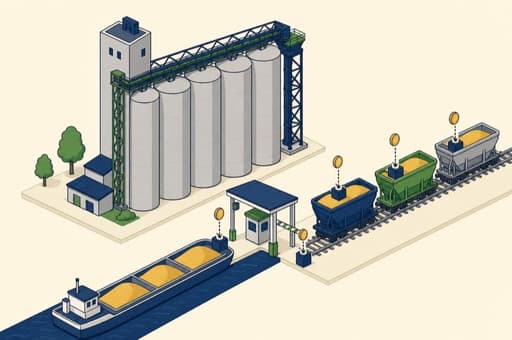
Ag Services
Buying, storing and shipping crops: half of all sales, but only about a fifth of the profit. Profit in the June quarter more than doubled, to $293M, on North American exports and a Brazilian port back at full capacity.
Competes with Agribusiness (Bunge Global) · Grain origination (Cargill) · Grain origination and export (COFCO International)
In plain English
Picture the middleman at a farmers' market, scaled up to continents. ADM buys corn and soybeans at country grain elevators, stores them, then hauls them by truck, rail, barge and ocean vessel to processing plants and export terminals, with financing attached to the deal.
It keeps a thin slice of the value of every tonne that passes through, so the money comes from volume rather than markup. That is why this line can be half the company's sales and still earn less in a quarter than the corn mills that handle a fraction of the volume. What moves it is how big the harvest is and where the crop has to go.
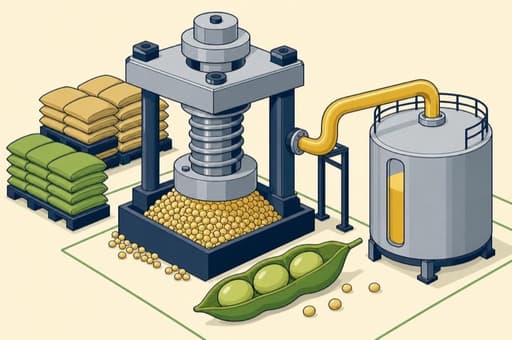
Crushing
Soybeans and other oilseeds pressed into oil and protein meal — the single biggest profit line, at $363M in the June quarter after U.S. biofuel volumes for 2026 and 2027 were settled in March. A year earlier this line had collapsed.
Competes with Agribusiness processing (Bunge Global) · Oilseed crushing (Cargill) · Oilseeds (Louis Dreyfus)
In plain English
A soybean is mostly two useful things: oil and protein. ADM's plants squeeze the beans apart, sending the oil on to food makers and fuel refiners and the protein meal to chicken and hog farms.
The earnings are the gap between what a truckload of beans costs and what the oil and meal fetch — a gap ADM does not set. When regulators fixed how much biofuel must be blended over the next two years, demand for soybean oil firmed and that gap widened; profit here jumped by roughly $330M in a year, after a full year in which it had fallen by four-fifths. Four plants are now being expanded to press more.
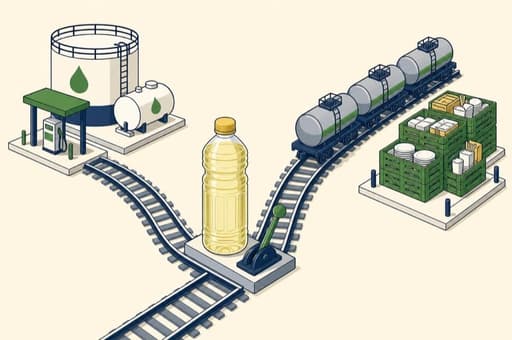
Refined Products and Other
Crude vegetable oil cleaned up into cooking oil, plus biodiesel. Profit slipped 3% in the June quarter to $151M: genuinely better refining in North America and Europe was cancelled out by South American oversupply and timing swings that reverse later.
Competes with Refined and Specialty Oils (Bunge Global) · Refined oils (Cargill) · Renewable diesel (Integrated renewable diesel producers)
In plain English
The oil coming out of a crush plant is murky and strong-tasting. This is the step that fixes that — refining, bleaching and stripping out the smell — until it is the clear bottle of cooking oil on a supermarket shelf, or until it becomes diesel made from vegetable oil.
The buyers are packaged-food companies, restaurant suppliers and fuel blenders, and they pay for the processing on top of the oil itself. The awkward part is that the same soybean oil can go to the frying pan or the fuel tank, and which one wins is settled largely by biofuel mandates rather than by dinner.
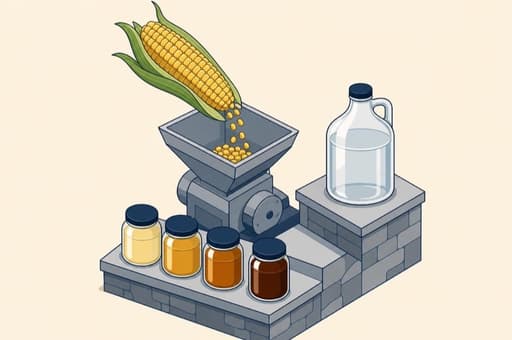
Starches and Sweeteners
Corn and wheat ground into sweeteners, starches and flour, with ethanol made alongside. Under a tenth of sales but more than a fifth of what the businesses earned in the June quarter, at $326M — fuel strength covering for shoppers cutting back on sugar.
Competes with Sweetener and starch portfolio (Ingredion) · Food and beverage solutions (Tate & Lyle) · Corn milling (Cargill)
In plain English
Corn is soaked, cracked and separated into its parts: the starch becomes syrups, thickeners and the sweetener in soft drinks, while wheat is milled into flour. The same mills also ferment corn into ethanol, the alcohol blended into gasoline.
Food and drink manufacturers buy by the tanker-load, many of them customers of long standing, and pay a grinding margin over what the corn cost. Sweetener demand has been slipping as shoppers move to zero-calorie drinks; in the June quarter the fuel side earned enough to more than cover that, which is how a small slice of sales threw off such a large share of the quarter's earnings.
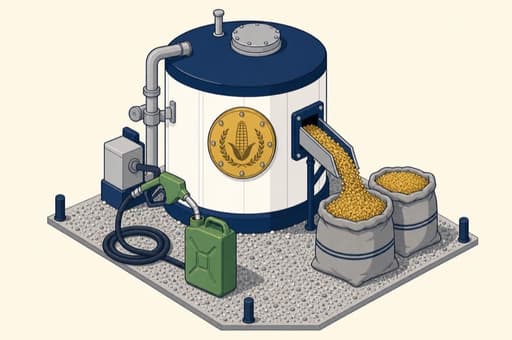
Vantage Corn Processors
ADM's dedicated corn-ethanol business, run apart from the sweetener mills. Smallest of the seven revenue lines and among the fastest-improving: $85M of profit in the June quarter, $52M more than a year before, helped by fuel credits.
Competes with POET ethanol (POET LLC) · Ethanol production (Valero Energy) · Ethanol plants (Green Plains)
In plain English
This is the simpler route through a corn kernel: grind it, ferment the sugar, distil the alcohol that gets blended into gasoline. What is left over — spent grain and corn oil — is sold on as animal feed and as raw material for fuel, so very little goes to waste.
Fuel blenders and gasoline marketers are the buyers. The profit is the gap between corn going in and fuel coming out, plus a federal clean-fuel credit on fuel sold through 2029 that ADM now expects to be worth roughly a quarter of a billion dollars this year across the whole company — up from about $150M assumed earlier.
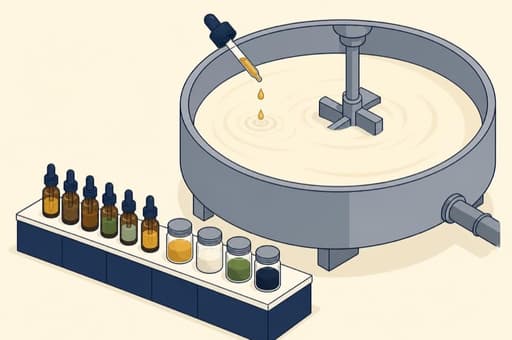
Human Nutrition
Flavors, natural colors and plant proteins sold to food and drink brands — the one line that sets its own price instead of living off a processing gap. Profit rose about half in the June quarter, to $139M, led by flavors across every key region.
Competes with Taste (Givaudan) · Nourish flavors (IFF) · Taste, Nutrition & Health (Kerry Group)
In plain English
Open any packaged food and somebody decided how it should taste, what colour it should be and what gives it body. ADM sells those pieces: flavour blends, colours drawn from plants, proteins pulled out of soybeans, and ingredients sold for health and wellness.
The customers are the brands themselves — food, drink and supplement makers — and they pay by the kilogram for a formula written into their recipe, which holds up far better than a margin set by crop prices. It has its own fragility, though: one wellness customer cancelling a contract was enough to hold the June quarter back. A small base — and flavors have come up more often on each successive earnings call.
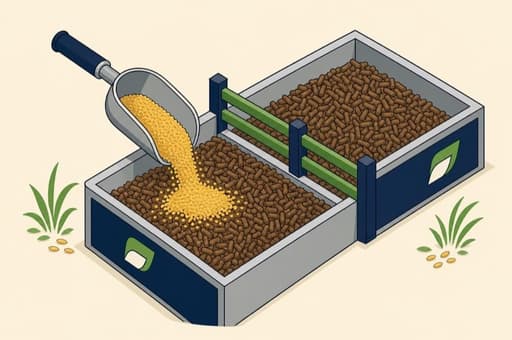
Animal Nutrition
Feed premixes, additives and pet-food ingredients. Shrinking on purpose: June-quarter revenue fell 6% after the plain-feed mills went into a joint venture, while profit rose by half to $33M.
Competes with Cargill Animal Nutrition (Cargill) · Animal Nutrition & Health (dsm-firmenich) · Purina Animal Nutrition (Land O'Lakes)
In plain English
Livestock feed is mostly cheap bulk grain, but a small measured dose of vitamins, minerals and amino acids decides how well the animals actually grow. ADM makes that concentrated dose, along with ingredients that go into pet food and treats.
In February it handed its U.S. complete-feed mills into Akralos, a North American feed venture majority-owned by the animal-nutrition company Alltech, keeping a minority share and the higher-value concentrated-dose business for itself. So sales fell and profit rose at the same time — a smaller line by design, now selling specialty ingredients into the venture it part-owns.


 Ag ServicesBuying, storing and shipping crops: half of all sales, but only about a fifth of the profit. Profit in the June quarter more than doubled, to $293M, on North American exports and a Brazilian port back at full capacity.
Buying, storing and shipping crops: half of all sales, but only about a fifth of the profit. Profit in the June quarter more than doubled, to $293M, on North American exports and a Brazilian port back at full capacity.
In plain English
Picture the middleman at a farmers' market, scaled up to continents. ADM buys corn and soybeans at country grain elevators, stores them, then hauls them by truck, rail, barge and ocean vessel to processing plants and export terminals, with financing attached to the deal.
It keeps a thin slice of the value of every tonne that passes through, so the money comes from volume rather than markup. That is why this line can be half the company's sales and still earn less in a quarter than the corn mills that handle a fraction of the volume. What moves it is how big the harvest is and where the crop has to go.
Competes with Agribusiness (Bunge Global) · Grain origination (Cargill) · Grain origination and export (COFCO International)
 CrushingSoybeans and other oilseeds pressed into oil and protein meal — the single biggest profit line, at $363M in the June quarter after U.S. biofuel volumes for 2026 and 2027 were settled in March. A year earlier this line had collapsed.
Soybeans and other oilseeds pressed into oil and protein meal — the single biggest profit line, at $363M in the June quarter after U.S. biofuel volumes for 2026 and 2027 were settled in March. A year earlier this line had collapsed.
In plain English
A soybean is mostly two useful things: oil and protein. ADM's plants squeeze the beans apart, sending the oil on to food makers and fuel refiners and the protein meal to chicken and hog farms.
The earnings are the gap between what a truckload of beans costs and what the oil and meal fetch — a gap ADM does not set. When regulators fixed how much biofuel must be blended over the next two years, demand for soybean oil firmed and that gap widened; profit here jumped by roughly $330M in a year, after a full year in which it had fallen by four-fifths. Four plants are now being expanded to press more.
Competes with Agribusiness processing (Bunge Global) · Oilseed crushing (Cargill) · Oilseeds (Louis Dreyfus)
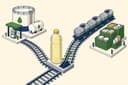 Refined Products and OtherCrude vegetable oil cleaned up into cooking oil, plus biodiesel. Profit slipped 3% in the June quarter to $151M: genuinely better refining in North America and Europe was cancelled out by South American oversupply and timing swings that reverse later.
Crude vegetable oil cleaned up into cooking oil, plus biodiesel. Profit slipped 3% in the June quarter to $151M: genuinely better refining in North America and Europe was cancelled out by South American oversupply and timing swings that reverse later.
In plain English
The oil coming out of a crush plant is murky and strong-tasting. This is the step that fixes that — refining, bleaching and stripping out the smell — until it is the clear bottle of cooking oil on a supermarket shelf, or until it becomes diesel made from vegetable oil.
The buyers are packaged-food companies, restaurant suppliers and fuel blenders, and they pay for the processing on top of the oil itself. The awkward part is that the same soybean oil can go to the frying pan or the fuel tank, and which one wins is settled largely by biofuel mandates rather than by dinner.
Competes with Refined and Specialty Oils (Bunge Global) · Refined oils (Cargill) · Renewable diesel (Integrated renewable diesel producers)
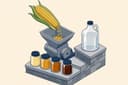 Starches and SweetenersCorn and wheat ground into sweeteners, starches and flour, with ethanol made alongside. Under a tenth of sales but more than a fifth of what the businesses earned in the June quarter, at $326M — fuel strength covering for shoppers cutting back on sugar.
Corn and wheat ground into sweeteners, starches and flour, with ethanol made alongside. Under a tenth of sales but more than a fifth of what the businesses earned in the June quarter, at $326M — fuel strength covering for shoppers cutting back on sugar.
In plain English
Corn is soaked, cracked and separated into its parts: the starch becomes syrups, thickeners and the sweetener in soft drinks, while wheat is milled into flour. The same mills also ferment corn into ethanol, the alcohol blended into gasoline.
Food and drink manufacturers buy by the tanker-load, many of them customers of long standing, and pay a grinding margin over what the corn cost. Sweetener demand has been slipping as shoppers move to zero-calorie drinks; in the June quarter the fuel side earned enough to more than cover that, which is how a small slice of sales threw off such a large share of the quarter's earnings.
Competes with Sweetener and starch portfolio (Ingredion) · Food and beverage solutions (Tate & Lyle) · Corn milling (Cargill)
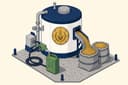 Vantage Corn ProcessorsADM's dedicated corn-ethanol business, run apart from the sweetener mills. Smallest of the seven revenue lines and among the fastest-improving: $85M of profit in the June quarter, $52M more than a year before, helped by fuel credits.
ADM's dedicated corn-ethanol business, run apart from the sweetener mills. Smallest of the seven revenue lines and among the fastest-improving: $85M of profit in the June quarter, $52M more than a year before, helped by fuel credits.
In plain English
This is the simpler route through a corn kernel: grind it, ferment the sugar, distil the alcohol that gets blended into gasoline. What is left over — spent grain and corn oil — is sold on as animal feed and as raw material for fuel, so very little goes to waste.
Fuel blenders and gasoline marketers are the buyers. The profit is the gap between corn going in and fuel coming out, plus a federal clean-fuel credit on fuel sold through 2029 that ADM now expects to be worth roughly a quarter of a billion dollars this year across the whole company — up from about $150M assumed earlier.
Competes with POET ethanol (POET LLC) · Ethanol production (Valero Energy) · Ethanol plants (Green Plains)
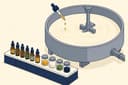 Human NutritionFlavors, natural colors and plant proteins sold to food and drink brands — the one line that sets its own price instead of living off a processing gap. Profit rose about half in the June quarter, to $139M, led by flavors across every key region.
Flavors, natural colors and plant proteins sold to food and drink brands — the one line that sets its own price instead of living off a processing gap. Profit rose about half in the June quarter, to $139M, led by flavors across every key region.
In plain English
Open any packaged food and somebody decided how it should taste, what colour it should be and what gives it body. ADM sells those pieces: flavour blends, colours drawn from plants, proteins pulled out of soybeans, and ingredients sold for health and wellness.
The customers are the brands themselves — food, drink and supplement makers — and they pay by the kilogram for a formula written into their recipe, which holds up far better than a margin set by crop prices. It has its own fragility, though: one wellness customer cancelling a contract was enough to hold the June quarter back. A small base — and flavors have come up more often on each successive earnings call.
Competes with Taste (Givaudan) · Nourish flavors (IFF) · Taste, Nutrition & Health (Kerry Group)
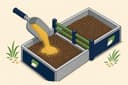 Animal NutritionFeed premixes, additives and pet-food ingredients. Shrinking on purpose: June-quarter revenue fell 6% after the plain-feed mills went into a joint venture, while profit rose by half to $33M.
Feed premixes, additives and pet-food ingredients. Shrinking on purpose: June-quarter revenue fell 6% after the plain-feed mills went into a joint venture, while profit rose by half to $33M.
In plain English
Livestock feed is mostly cheap bulk grain, but a small measured dose of vitamins, minerals and amino acids decides how well the animals actually grow. ADM makes that concentrated dose, along with ingredients that go into pet food and treats.
In February it handed its U.S. complete-feed mills into Akralos, a North American feed venture majority-owned by the animal-nutrition company Alltech, keeping a minority share and the higher-value concentrated-dose business for itself. So sales fell and profit rose at the same time — a smaller line by design, now selling specialty ingredients into the venture it part-owns.
Competes with Cargill Animal Nutrition (Cargill) · Animal Nutrition & Health (dsm-firmenich) · Purina Animal Nutrition (Land O'Lakes)
Named in filings, launches and programs
- Wilmar International (22.5% stake)BrandA minority holding in Singapore-listed Wilmar adds Asian edible-oil earnings without adding sales — $60M of profit share last quarter, plus Wilmar's own Indonesian legal risk.
- North America crush capacity expansionProduct line · AnnouncedFour U.S. plants — Frankfort, Deerfield, Lincoln and Spiritwood — add about 700,000 metric tons a year of oilseed pressing, completing late 2028 into early 2029.
- Green Bison Soy ProcessingBrandSoybean crushing venture with Marathon Petroleum at Spiritwood, North Dakota, feeding renewable diesel; it is one of the four expansion sites.
- Akralos Animal NutritionBrandThe bulk-feed venture with Alltech, live since February 2026 across 40-plus sites; ADM holds 49% and now supplies it rather than running the mills.
- Decatur East / Protein Solutions CenterProduct lineSoy protein plant in Decatur, Illinois, restored during 2025 after earlier incidents; its recovery shows up in Human Nutrition's profit.
- ProFamBrandConcentrated soy protein for meat-alternative products — a named brand sitting inside the Human Nutrition line.
- Carbon capture and sequestrationServiceCarbon dioxide pumped underground at Decatur for about eleven years, roughly 337,000 tons stored; a Nebraska corn mill joined a Tallgrass pipeline in 2025.
- ADM Investor ServicesBrandA wholly owned futures broker clearing trades on the main U.S. commodity exchanges — never once mentioned across the eight earnings calls on file.
- Agrinational InsuranceBrandADM's in-house insurer, carrying the group's own property, casualty, marine and medical risk instead of buying all that cover outside.
- ADM AdvantageCustomer programThe farmer-facing grain marketing service — contracts and apps that keep growers selling their crop through ADM's elevators.
- BioSolutionsProduct linePlant-based replacements for inputs normally made from petroleum, sold out of the same processing network.
- Precision fermentation and natural colorsProduct · AnnouncedNewer ingredient work flagged on the August 2026 call: growing ingredients with microbes, and colours drawn from plants.
Wilmar International (22.5% stake)Brand
A minority holding in Singapore-listed Wilmar adds Asian edible-oil earnings without adding sales — $60M of profit share last quarter, plus Wilmar's own Indonesian legal risk.
North America crush capacity expansionProduct line · Announced
Four U.S. plants — Frankfort, Deerfield, Lincoln and Spiritwood — add about 700,000 metric tons a year of oilseed pressing, completing late 2028 into early 2029.
Green Bison Soy ProcessingBrand
Soybean crushing venture with Marathon Petroleum at Spiritwood, North Dakota, feeding renewable diesel; it is one of the four expansion sites.
Akralos Animal NutritionBrand
The bulk-feed venture with Alltech, live since February 2026 across 40-plus sites; ADM holds 49% and now supplies it rather than running the mills.
Decatur East / Protein Solutions CenterProduct line
Soy protein plant in Decatur, Illinois, restored during 2025 after earlier incidents; its recovery shows up in Human Nutrition's profit.
ProFamBrand
Concentrated soy protein for meat-alternative products — a named brand sitting inside the Human Nutrition line.
Carbon capture and sequestrationService
Carbon dioxide pumped underground at Decatur for about eleven years, roughly 337,000 tons stored; a Nebraska corn mill joined a Tallgrass pipeline in 2025.
ADM Investor ServicesBrand
A wholly owned futures broker clearing trades on the main U.S. commodity exchanges — never once mentioned across the eight earnings calls on file.
Agrinational InsuranceBrand
ADM's in-house insurer, carrying the group's own property, casualty, marine and medical risk instead of buying all that cover outside.
ADM AdvantageCustomer program
The farmer-facing grain marketing service — contracts and apps that keep growers selling their crop through ADM's elevators.
BioSolutionsProduct line
Plant-based replacements for inputs normally made from petroleum, sold out of the same processing network.
Precision fermentation and natural colorsProduct · Announced
Newer ingredient work flagged on the August 2026 call: growing ingredients with microbes, and colours drawn from plants.