
Astera Labs (ALAB)
Connects cloud and AI systems with mixed-signal semiconductors and embedded COSMOS software.
Something off on this page? Send us feedback.
Astera Labs makes the small chips that keep data moving cleanly between the processors, memory and cables packed inside a rack of AI computers. It sells them to the firms that assemble those racks, and most of the money so far has come from one buyer it never names. The newer switch chips, going to more customers, are where it is heading.
Item facts: FY2025 · year ended Dec 31, 2025, plus H1 2026 filings, from filings, earnings calls and company pages.
Judgment weights, not filed revenue
The band summarizes business focus and direction. ~ marks estimates.
9 in detail · 10 more below
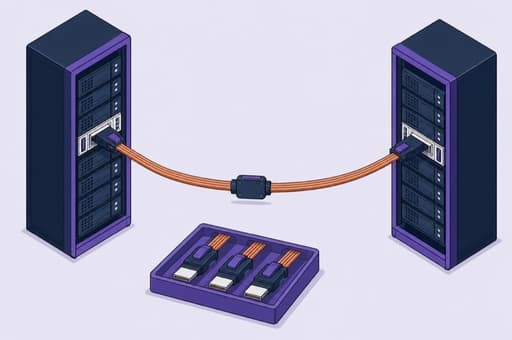
Aries PCIe/CXL Smart DSP Retimers and Smart Cable Modules
The chips that stop a very fast signal from smearing as it crosses copper inside a rack — roughly six of every ten dollars Astera took in last year. Still growing, but the switches are overtaking it as the biggest seller.
Competes with Vantage PCIe retimers (Broadcom) · Alaska P PCIe/CXL retimers (Marvell) · PCIe retimers (Parade)
In plain English
Inside a rack the wires between chips are short, but the signals racing down them run so fast that they arrive smeared — like a shout across a long hall coming out as mush. Aries is a small chip planted partway along the run: it listens to the smeared signal, rebuilds it cleanly and passes it on.
A rack packed with AI processors needs a lot of them, so the companies that assemble those racks buy them in quantity. More processors per rack means more Aries chips per rack, which is how this line rode the build-out — and it is why the newest version, built for the faster generation of the connection, shipped a record quarter in mid-2026.
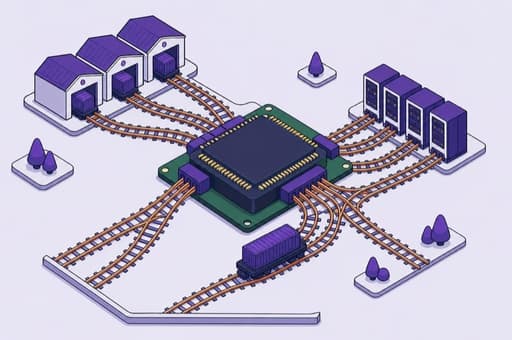
Scorpio P-Series Smart Fabric Switches
The switch chip that ties AI processors to the CPUs, storage and network cards feeding them — more than fifteen cents of every revenue dollar last year. It began at the one big buyer and has since reached other large cloud operators.
Competes with Atlas PCIe switches (Broadcom) · 260-lane PCIe 6.0 switch (Marvell) · Switchtec PCIe switches (Microchip)
In plain English
Picture a rack as a small town. The AI processors do the work, but they need constant deliveries from the CPUs, storage drives and network cards around them, and something has to decide which delivery goes where. Scorpio P is that junction.
The switches come in sizes from 32 lanes up to 320, so a rack builder picks how much traffic one chip has to carry. Astera says it was the only switch of its generation shipping in real volume, which is how a part that started life inside one customer's machines ended up selling to other large cloud builders too.
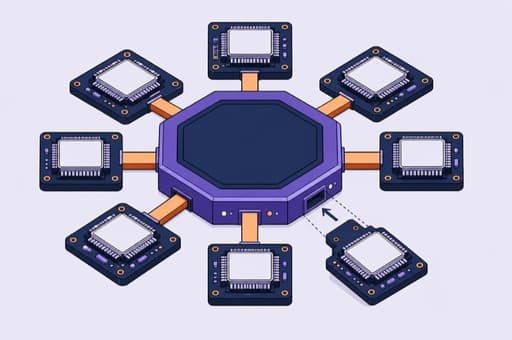
Scorpio X-Series Smart Fabric Switches
The switch that pools the AI processors inside one rack so they behave as a single machine. Barely any revenue last year; management expects it to be the biggest seller by the third quarter of 2026, a quarter earlier than it had planned.
Competes with NVLink Switch (NVIDIA) · 260-lane PCIe 6.0 / CXL 3.0 switches (Marvell) · Tomahawk Ultra (Broadcom)
In plain English
A rack of AI processors only earns its keep if they work as one big brain instead of eighty separate ones. Scorpio X is the hub in the middle that lets them talk straight to each other at full pace, and it carries extra tricks that speed up the moments when every processor has to share its results at once.
The version launched in May 2026 handles 320 lanes of traffic and can hold up to eighty processors in one pool. It reached full production that spring. The catch: it only fits racks whose processors expose an open connection rather than their maker's private one.
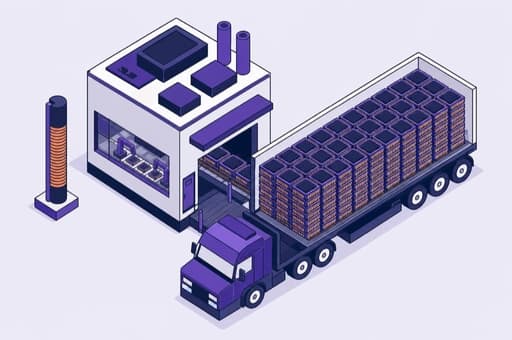
Lead Customer Program (Amazon warrant)
One buyer the company never names was more than seven-tenths of last year's sales; the top three together were about 86%. A share deal signed with an Amazon investment arm is the strongest clue to who that buyer is. Watch whether a second account ever gets close.
Competes with Retimers and PCIe switches (Broadcom) · Retimers and PCIe switches (Marvell) · NVLink Switch (NVIDIA)
In plain English
Most of what Astera sells ends up with a single customer, and the filings only ever call it an end customer — no name. Then, in February 2026, Astera handed an Amazon investment arm the right to buy shares at a fixed price, earned gradually as Amazon's purchases of switches, signal chips and optical parts add up toward $6.5 billion. Put the two together and Amazon is the likely buyer, though nothing filed says so outright.
Those earned share rights are paid for in sales rather than cash: each quarter a slice comes off the top of revenue, $10.2 million of it in the second quarter of 2026.
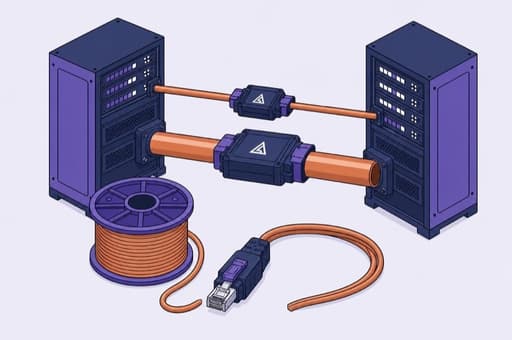
Taurus Ethernet Smart Cable Modules and Smart Signal Conditioners
Chips built into the ends of copper network cables running between servers and the switch above them — roughly a sixth of revenue, and the standout line of last year at more than four times the prior year.
Competes with ZeroFlap active electrical cables (Credo Technology) · Active electrical cable DSP silicon (Marvell) · Ethernet PHY/DSP portfolio (Broadcom)
In plain English
Servers talk to each other over ordinary network cables, and copper is the cheap way to do it — but past a certain speed a plain copper cable garbles the message. Taurus chips live in the cable ends and clean the signal up, so copper keeps working where the job would otherwise need glass fiber.
Cable assemblers buy the chips and build them into the finished cables. Every jump in network speed lets Astera charge more per cable, and a new set of parts launched in mid-2026 takes the next step up; management reckons that roughly doubles what this line can sell into by 2030.
Custom Connectivity Solutions
Chips shaped to one customer's own design instead of sold off the shelf. Nothing has shipped: one design win was reported in the second quarter of 2026, with deliveries set for 2027. The opening is NVIDIA letting outsiders plug into its in-rack link.
Competes with NVLink Fusion custom designs (Marvell) · NVLink Fusion custom designs (MediaTek) · NVLink Fusion custom designs (Alchip)
In plain English
Off-the-shelf parts fit most racks. A few buyers want something built only for their own machine, and they pay twice for it — an engineering fee while it is being designed, then a price per chip once it ships.
The way in here is NVLink Fusion: NVIDIA opened up the connection it uses inside its own racks so other firms can hang their hardware off it, and named Astera among the first to do so. Astera has announced one win and says shipments begin in 2027. It is a genuine opening and also a dependency — it works only while NVIDIA keeps that door open, and bigger chip-design shops are bidding for the same jobs.
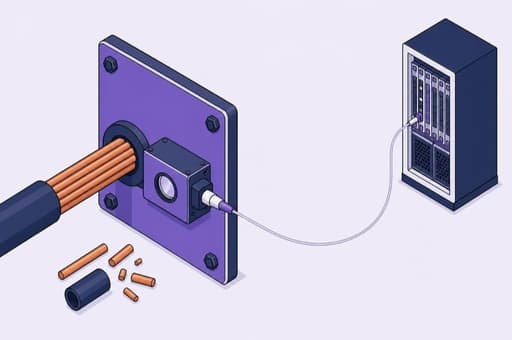
Optical Engines and Photonics Roadmap
Work on links that carry data as light for the stretches copper cannot manage. Nothing on sale: management points to first deployments in 2027 and a more tightly built-in version from 2028.
Competes with Co-packaged optics programme (Broadcom) · Optical DSP silicon (Marvell) · Optical fabric roadmap (NVIDIA)
In plain English
Copper carries a very fast signal only so far before it gives up, and AI clusters keep growing past the size of one rack. The alternative is to send the data as light down a glass thread, which needs a small part at each end that turns electricity into light and back again.
Astera is building that part, and bought aiXscale Photonics, a German firm that specialises in joining glass fiber to a chip. Nothing is being sold yet — management talks about deployments in 2027 and a version built into the chip package from 2028. Optical parts also count toward the purchase total in the Amazon share deal.
COSMOS Software Suite
The software that sets up, watches over and tunes every Astera chip a customer owns. It has no price of its own, ships with the hardware, and since 2026 also steers traffic through the switches.
Competes with NVLink fabric management stack (NVIDIA) · Device-management software (Broadcom) · Device-management software (Marvell)
In plain English
Every Astera chip arrives with COSMOS, a set of programs that lets one operator configure, monitor and fine-tune thousands of those chips at once. Without it, a rack full of parts from several vendors is a closed box when something goes wrong.
Nobody writes a cheque for COSMOS — it comes with the chips. Its job is to make customers stick: once a cloud operator has wired it into its own systems, switching to a rival's silicon means doing that work again. From 2026 it also drives the traffic-shaping features that Scorpio X is sold on.
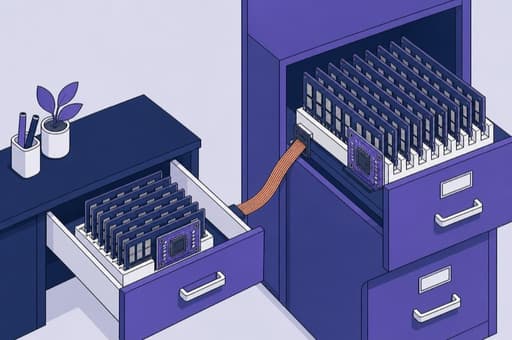
Leo CXL Smart Memory Controllers
Chips that let a server borrow extra memory from a cabinet beside it. A sliver of revenue so far; the reason to watch is AI answering work, where holding more of the conversation in cheaper memory saves money.
Competes with Structera X memory controllers (Marvell) · CXL memory controllers (Montage Technology) · CXL memory controllers (Rambus)
In plain English
Servers run out of memory long before they run out of computing power, and the memory packed right beside an AI processor is the priciest kind there is. Leo is a controller chip that lets a server reach across to a separate cabinet of ordinary memory sticks and use it almost as if it were its own.
It is early. Astera is shipping in volume to two US customers, and Microsoft is trialling it in its cloud, with Intel supplying the main processor and SAP running real business software on it, ahead of a general release expected by the end of 2026. The market for these controllers is still small, so this is a bet on habits changing, not an engine.


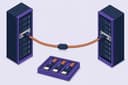 Aries PCIe/CXL Smart DSP Retimers and Smart Cable ModulesThe chips that stop a very fast signal from smearing as it crosses copper inside a rack — roughly six of every ten dollars Astera took in last year. Still growing, but the switches are overtaking it as the biggest seller.
The chips that stop a very fast signal from smearing as it crosses copper inside a rack — roughly six of every ten dollars Astera took in last year. Still growing, but the switches are overtaking it as the biggest seller.
In plain English
Inside a rack the wires between chips are short, but the signals racing down them run so fast that they arrive smeared — like a shout across a long hall coming out as mush. Aries is a small chip planted partway along the run: it listens to the smeared signal, rebuilds it cleanly and passes it on.
A rack packed with AI processors needs a lot of them, so the companies that assemble those racks buy them in quantity. More processors per rack means more Aries chips per rack, which is how this line rode the build-out — and it is why the newest version, built for the faster generation of the connection, shipped a record quarter in mid-2026.
Competes with Vantage PCIe retimers (Broadcom) · Alaska P PCIe/CXL retimers (Marvell) · PCIe retimers (Parade)
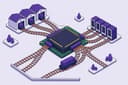 Scorpio P-Series Smart Fabric SwitchesThe switch chip that ties AI processors to the CPUs, storage and network cards feeding them — more than fifteen cents of every revenue dollar last year. It began at the one big buyer and has since reached other large cloud operators.
The switch chip that ties AI processors to the CPUs, storage and network cards feeding them — more than fifteen cents of every revenue dollar last year. It began at the one big buyer and has since reached other large cloud operators.
In plain English
Picture a rack as a small town. The AI processors do the work, but they need constant deliveries from the CPUs, storage drives and network cards around them, and something has to decide which delivery goes where. Scorpio P is that junction.
The switches come in sizes from 32 lanes up to 320, so a rack builder picks how much traffic one chip has to carry. Astera says it was the only switch of its generation shipping in real volume, which is how a part that started life inside one customer's machines ended up selling to other large cloud builders too.
Competes with Atlas PCIe switches (Broadcom) · 260-lane PCIe 6.0 switch (Marvell) · Switchtec PCIe switches (Microchip)
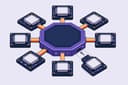 Scorpio X-Series Smart Fabric SwitchesThe switch that pools the AI processors inside one rack so they behave as a single machine. Barely any revenue last year; management expects it to be the biggest seller by the third quarter of 2026, a quarter earlier than it had planned.
The switch that pools the AI processors inside one rack so they behave as a single machine. Barely any revenue last year; management expects it to be the biggest seller by the third quarter of 2026, a quarter earlier than it had planned.
In plain English
A rack of AI processors only earns its keep if they work as one big brain instead of eighty separate ones. Scorpio X is the hub in the middle that lets them talk straight to each other at full pace, and it carries extra tricks that speed up the moments when every processor has to share its results at once.
The version launched in May 2026 handles 320 lanes of traffic and can hold up to eighty processors in one pool. It reached full production that spring. The catch: it only fits racks whose processors expose an open connection rather than their maker's private one.
Competes with NVLink Switch (NVIDIA) · 260-lane PCIe 6.0 / CXL 3.0 switches (Marvell) · Tomahawk Ultra (Broadcom)
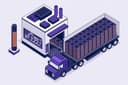 Lead Customer Program (Amazon warrant)One buyer the company never names was more than seven-tenths of last year's sales; the top three together were about 86%. A share deal signed with an Amazon investment arm is the strongest clue to who that buyer is. Watch whether a second account ever gets close.
One buyer the company never names was more than seven-tenths of last year's sales; the top three together were about 86%. A share deal signed with an Amazon investment arm is the strongest clue to who that buyer is. Watch whether a second account ever gets close.
In plain English
Most of what Astera sells ends up with a single customer, and the filings only ever call it an end customer — no name. Then, in February 2026, Astera handed an Amazon investment arm the right to buy shares at a fixed price, earned gradually as Amazon's purchases of switches, signal chips and optical parts add up toward $6.5 billion. Put the two together and Amazon is the likely buyer, though nothing filed says so outright.
Those earned share rights are paid for in sales rather than cash: each quarter a slice comes off the top of revenue, $10.2 million of it in the second quarter of 2026.
Competes with Retimers and PCIe switches (Broadcom) · Retimers and PCIe switches (Marvell) · NVLink Switch (NVIDIA)
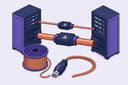 Taurus Ethernet Smart Cable Modules and Smart Signal ConditionersChips built into the ends of copper network cables running between servers and the switch above them — roughly a sixth of revenue, and the standout line of last year at more than four times the prior year.
Chips built into the ends of copper network cables running between servers and the switch above them — roughly a sixth of revenue, and the standout line of last year at more than four times the prior year.
In plain English
Servers talk to each other over ordinary network cables, and copper is the cheap way to do it — but past a certain speed a plain copper cable garbles the message. Taurus chips live in the cable ends and clean the signal up, so copper keeps working where the job would otherwise need glass fiber.
Cable assemblers buy the chips and build them into the finished cables. Every jump in network speed lets Astera charge more per cable, and a new set of parts launched in mid-2026 takes the next step up; management reckons that roughly doubles what this line can sell into by 2030.
Competes with ZeroFlap active electrical cables (Credo Technology) · Active electrical cable DSP silicon (Marvell) · Ethernet PHY/DSP portfolio (Broadcom)
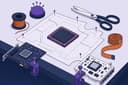 Custom Connectivity SolutionsChips shaped to one customer's own design instead of sold off the shelf. Nothing has shipped: one design win was reported in the second quarter of 2026, with deliveries set for 2027. The opening is NVIDIA letting outsiders plug into its in-rack link.
Chips shaped to one customer's own design instead of sold off the shelf. Nothing has shipped: one design win was reported in the second quarter of 2026, with deliveries set for 2027. The opening is NVIDIA letting outsiders plug into its in-rack link.
In plain English
Off-the-shelf parts fit most racks. A few buyers want something built only for their own machine, and they pay twice for it — an engineering fee while it is being designed, then a price per chip once it ships.
The way in here is NVLink Fusion: NVIDIA opened up the connection it uses inside its own racks so other firms can hang their hardware off it, and named Astera among the first to do so. Astera has announced one win and says shipments begin in 2027. It is a genuine opening and also a dependency — it works only while NVIDIA keeps that door open, and bigger chip-design shops are bidding for the same jobs.
Competes with NVLink Fusion custom designs (Marvell) · NVLink Fusion custom designs (MediaTek) · NVLink Fusion custom designs (Alchip)
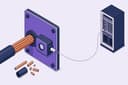 Optical Engines and Photonics RoadmapWork on links that carry data as light for the stretches copper cannot manage. Nothing on sale: management points to first deployments in 2027 and a more tightly built-in version from 2028.
Work on links that carry data as light for the stretches copper cannot manage. Nothing on sale: management points to first deployments in 2027 and a more tightly built-in version from 2028.
In plain English
Copper carries a very fast signal only so far before it gives up, and AI clusters keep growing past the size of one rack. The alternative is to send the data as light down a glass thread, which needs a small part at each end that turns electricity into light and back again.
Astera is building that part, and bought aiXscale Photonics, a German firm that specialises in joining glass fiber to a chip. Nothing is being sold yet — management talks about deployments in 2027 and a version built into the chip package from 2028. Optical parts also count toward the purchase total in the Amazon share deal.
Competes with Co-packaged optics programme (Broadcom) · Optical DSP silicon (Marvell) · Optical fabric roadmap (NVIDIA)
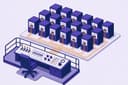 COSMOS Software SuiteThe software that sets up, watches over and tunes every Astera chip a customer owns. It has no price of its own, ships with the hardware, and since 2026 also steers traffic through the switches.
The software that sets up, watches over and tunes every Astera chip a customer owns. It has no price of its own, ships with the hardware, and since 2026 also steers traffic through the switches.
In plain English
Every Astera chip arrives with COSMOS, a set of programs that lets one operator configure, monitor and fine-tune thousands of those chips at once. Without it, a rack full of parts from several vendors is a closed box when something goes wrong.
Nobody writes a cheque for COSMOS — it comes with the chips. Its job is to make customers stick: once a cloud operator has wired it into its own systems, switching to a rival's silicon means doing that work again. From 2026 it also drives the traffic-shaping features that Scorpio X is sold on.
Competes with NVLink fabric management stack (NVIDIA) · Device-management software (Broadcom) · Device-management software (Marvell)
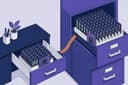 Leo CXL Smart Memory ControllersChips that let a server borrow extra memory from a cabinet beside it. A sliver of revenue so far; the reason to watch is AI answering work, where holding more of the conversation in cheaper memory saves money.
Chips that let a server borrow extra memory from a cabinet beside it. A sliver of revenue so far; the reason to watch is AI answering work, where holding more of the conversation in cheaper memory saves money.
In plain English
Servers run out of memory long before they run out of computing power, and the memory packed right beside an AI processor is the priciest kind there is. Leo is a controller chip that lets a server reach across to a separate cabinet of ordinary memory sticks and use it almost as if it were its own.
It is early. Astera is shipping in volume to two US customers, and Microsoft is trialling it in its cloud, with Intel supplying the main processor and SAP running real business software on it, ahead of a general release expected by the end of 2026. The market for these controllers is still small, so this is a bet on habits changing, not an engine.
Competes with Structera X memory controllers (Marvell) · CXL memory controllers (Montage Technology) · CXL memory controllers (Rambus)
Named in filings, launches and programs
- Aries PCIe Smart GearboxProductA lane-speed converter inside the Aries family; management named it one of the growth drivers in the second quarter of 2026.
- Aries Smart Cable ModulesProductAries silicon built into cable ends, so a longer copper run between boards still delivers a clean signal.
- Scorpio X-Series 320 LaneProductThe May 2026 flagship: 320 lanes in one chip, pooling up to eighty processors. In volume production since the second quarter.
- Hypercast and In-Network ComputeProductFeatures inside Scorpio X that management says can double the speed of the moments when processors swap results; reached through the COSMOS software.
- UALink-enabled Scorpio X-SeriesProduct · AnnouncedA version speaking UALink, an industry-agreed in-rack connection. Available in the second half of 2026, with first revenue expected in 2027.
- Taurus 3.2T Retimers and RedriversProduct · AnnouncedLaunched July 2026 at 200 gigabits per lane, on the board outline the industry agreed on; AMD is quoted as a partner.
- COSMOS Developer Kit and ExplorerPlatformThe hands-on pieces of the software: a kit for customers' own engineers and a tool for inspecting what the chips are doing.
- Leo memory-offload design winCustomer program · Pre-revenueA win reported in May 2026 putting borrowed memory behind AI answering work; shipments slated for 2027.
- aiXscale PhotonicsBrandGerman fiber-to-chip specialist bought in November 2025, now wholly owned; it supplies the coupling know-how behind the optical work.
- Technology ServiceServiceA small services line — $3.2 million in 2024, under one percent of revenue, and never broken out on its own since.
Aries PCIe Smart GearboxProduct
A lane-speed converter inside the Aries family; management named it one of the growth drivers in the second quarter of 2026.
Aries Smart Cable ModulesProduct
Aries silicon built into cable ends, so a longer copper run between boards still delivers a clean signal.
Scorpio X-Series 320 LaneProduct
The May 2026 flagship: 320 lanes in one chip, pooling up to eighty processors. In volume production since the second quarter.
Hypercast and In-Network ComputeProduct
Features inside Scorpio X that management says can double the speed of the moments when processors swap results; reached through the COSMOS software.
UALink-enabled Scorpio X-SeriesProduct · Announced
A version speaking UALink, an industry-agreed in-rack connection. Available in the second half of 2026, with first revenue expected in 2027.
Taurus 3.2T Retimers and RedriversProduct · Announced
Launched July 2026 at 200 gigabits per lane, on the board outline the industry agreed on; AMD is quoted as a partner.
COSMOS Developer Kit and ExplorerPlatform
The hands-on pieces of the software: a kit for customers' own engineers and a tool for inspecting what the chips are doing.
Leo memory-offload design winCustomer program · Pre-revenue
A win reported in May 2026 putting borrowed memory behind AI answering work; shipments slated for 2027.
aiXscale PhotonicsBrand
German fiber-to-chip specialist bought in November 2025, now wholly owned; it supplies the coupling know-how behind the optical work.
Technology ServiceService
A small services line — $3.2 million in 2024, under one percent of revenue, and never broken out on its own since.