
Applied Materials (AMAT)
Builds wafer-fabrication tools and services across chipmaking’s materials-engineering steps.
Something off on this page? Send us feedback.
Applied Materials sells the machines that build, carve, alter, inspect and connect the tiny layers inside chips, then keeps those machines running with parts, service and software. Chipmaking equipment still dominates, but ways of stacking chips together are growing fastest and the service business cushions swings in factory spending. The whole model depends on a few giant customers, hard-to-source components and permission to ship across borders.
Item facts: FY2025 · year ended Oct 26, 2025, from filings, earnings calls and company pages.
Judgment weights, not filed revenue
The band summarizes business focus and direction. ~ marks estimates.
8 in detail · 14 more below
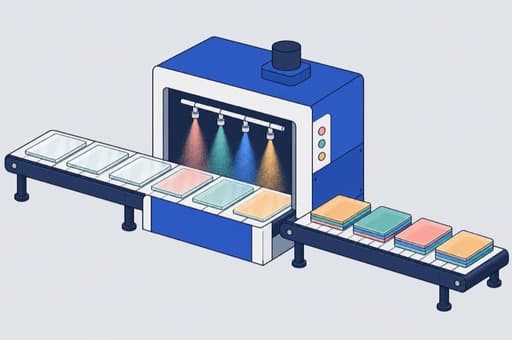
Materials Deposition
Machines lay the ultra-thin films that become a chip's switches and connections. Metal-deposition sales alone neared $1.2B in FY2025 Q3; watch new factories starting production, export permission and scarce components.
Competes with Pulsar, EmerALD and XP8 (ASM International) · Striker (Lam Research)
In plain English
Start with a blank silicon disc. Applied's deposition machines coat it with films only atoms thick, one controlled layer at a time—the industrial version of repainting a room, except every coat helps form a tiny switch, memory cell or connection.
Chipmakers buy a system after proving its process works in their factories, then add more chambers as production rises and designs need extra layers. Across Applied as a whole, two unnamed customers accounted for 19% and 15% of FY2025 sales, so a few factory plans can move this business sharply.
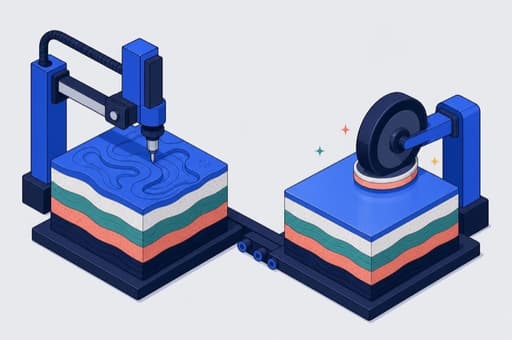
Materials Removal
These systems carve patterns and flatten each new layer so the next one fits. Carving-system sales first topped $1B in FY2025 Q3; the risk is that a flawed process delays customer approval.
Competes with Kiyo, Sense.i and Flex (Lam Research) · F-REX (Ebara)
In plain English
After layers go on, selected pieces must come off. One set of Applied machines uses energized gas to cut impossibly small grooves; another polishes the surface flat, much as a carpenter sands a tabletop before adding the next coat.
A chip factory pays for these systems once they can repeat the same cut or polish across thousands of silicon discs without ruining them. Smaller and taller chip structures require more work, but sales still arrive in waves as customers open capacity and approve each process.
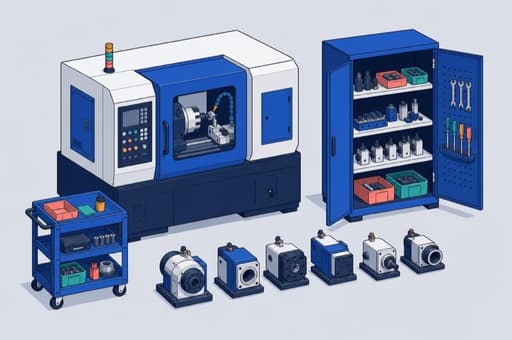
Applied Global Services
This steadier business carried $7.14B of the company's $15B of work already ordered at FY2025 end. Its job is to keep installed machines productive—and keep cash coming in when customers pause new-equipment purchases.
Competes with Customer Support upgrades and spares (Lam Research) · SERVICE ADVANTAGE and TELeMetrics (Tokyo Electron)
In plain English
When a chipmaking machine stops, an expensive factory can lose production quickly. Applied sells the spare parts, maintenance visits, upgrades and control software that keep its own installed equipment working—closer to caring for an airliner fleet than making a one-time appliance sale.
Factories pay as parts wear out and also through service plans, usually lasting no more than a year. By May 2025, about nine-tenths of this business repeated and roughly two-thirds sat under subscriptions. More active machines mean more service work; idle factories and weak renewals mean less.

Materials Modification
Machines fire charged atoms into silicon and heat the material so a chip behaves as designed. Applied held more than half of the 2023 implant-equipment market; customers still must approve each process.
Competes with Purion (Axcelis Technologies) · TELINDY and TELFORMULA (Tokyo Electron)
In plain English
Some chip features need their electrical behavior changed without adding or cutting a layer. Applied sells machines that fire a controlled stream of charged atoms into a silicon disc, then heat it so those atoms settle into useful positions—like seasoning dough and baking the result into place.
Logic, memory and power-chip makers buy these tools for each production line after proving the treatment improves performance without damaging the surface. That approval can be slow, but once a method is built into a chip recipe, added factory capacity creates more tool demand.

Materials Analysis
Inspection machines find tiny defects before they spoil more chips. Management expected calendar 2026 sales from its sharper electron-powered microscopes to top $1B; the watchpoint is scanning fast enough for everyday production.
Competes with 39xx, eDR, Archer and Spectra (KLA) · CD-SEM and defect-review SEM (Hitachi High-Tech)
In plain English
Making a chip means repeating hundreds of delicate steps, and one invisible mistake can waste everything added afterward. Applied's optical and electron-beam machines act like microscopes on an assembly line: they find defects, measure patterns and help engineers fix a drifting process sooner.
Factories buy the scanners because finding a problem early raises the share of usable chips from each batch. As structures get smaller and three-dimensional stacks get costlier, inspection becomes more valuable. The catch is speed: a wonderfully sharp scan earns little if it slows the factory too much.
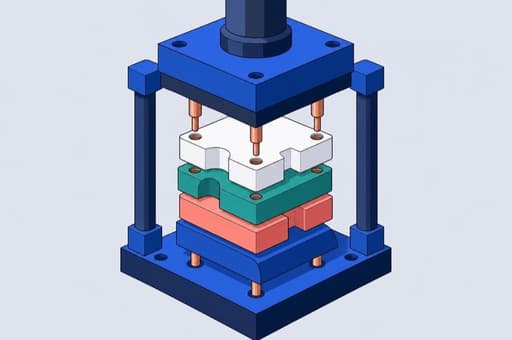
Heterogeneous Integration
This equipment connects several specialized chips into one tightly packed unit. Management expected calendar 2026 packaging growth above 70%, but from a roughly $1.5B FY2025 base; reliable stacked-chip output is the test.
Competes with Datacon 8800 CHAMEO (Besi) · Syndion and related systems (Lam Research)
In plain English
Modern AI systems often need several specialized chips stacked or placed side by side, then joined with dense electrical paths. Applied supplies machines that drill the vertical routes, lay copper, flatten surfaces, inspect the work and help bond the pieces—more like assembling a layered sandwich than carving one chip alone.
Memory makers, chip factories and outside assembly companies pay for each production system as they add this capacity. Demand is racing upward from a smaller base, but every layer must align and work: one bad piece can spoil an expensive stack.
Display
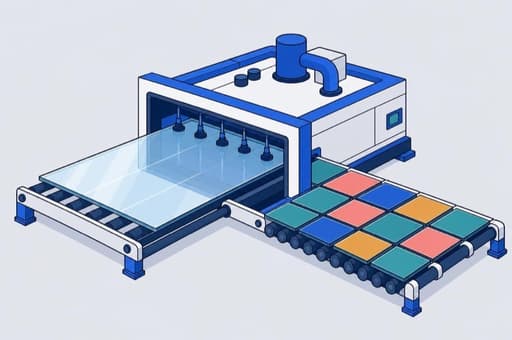
Large-area machines form the working layers inside flat screens. Display reached $263M in FY2025 Q3, up from $183M in Q1, but factory projects make this small business uneven from quarter to quarter.
Competes with System-ELVESS (Canon Tokki) · Display sputtering and OLED equipment (ULVAC)
In plain English
Picture a television-sized sheet of glass moving through a machine that lays down the tiny switches and light-producing layers behind each pixel. Applied builds that large-area production equipment for panel makers; it is chipmaking's broad-sheet cousin, built around similar control of thin materials.
Customers pay when they build or convert a screen factory, particularly for newer organic light-emitting displays. Those projects are large and infrequent, so sales jump when a line is equipped and fall between builds. Demand for phones, televisions and other devices ultimately sets the timetable.
EPIC Center
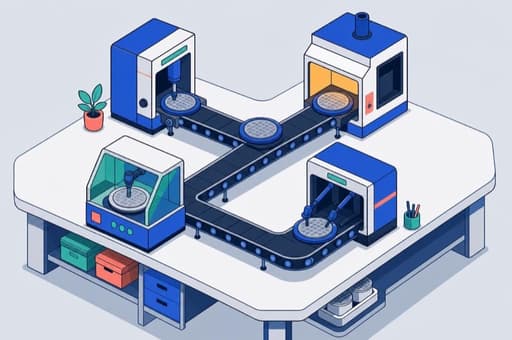
A shared development center lets customers and suppliers test new chipmaking steps beside Applied before factory deployment. It has no separately disclosed sales; watch whether the collaborations become approved processes and future equipment orders.
Competes with NanoIC pilot line (imec) · APECS pilot line (Fraunhofer-Gesellschaft)
In plain English
Instead of each company testing a difficult new manufacturing step alone, EPIC puts Applied's engineers, chipmakers, equipment partners and universities in one shared development center. Samsung, TSMC, SK hynix, Micron and other participants can try linked processes before committing them to full factories.
Applied earns no separately disclosed revenue from the center today. Its economic purpose is earlier placement: solve a customer's production problem while the factory plan is still being shaped, so Applied's machines and partner tools are already working together when large-scale buying begins.


 Materials DepositionMachines lay the ultra-thin films that become a chip's switches and connections. Metal-deposition sales alone neared $1.2B in FY2025 Q3; watch new factories starting production, export permission and scarce components.
Machines lay the ultra-thin films that become a chip's switches and connections. Metal-deposition sales alone neared $1.2B in FY2025 Q3; watch new factories starting production, export permission and scarce components.
In plain English
Start with a blank silicon disc. Applied's deposition machines coat it with films only atoms thick, one controlled layer at a time—the industrial version of repainting a room, except every coat helps form a tiny switch, memory cell or connection.
Chipmakers buy a system after proving its process works in their factories, then add more chambers as production rises and designs need extra layers. Across Applied as a whole, two unnamed customers accounted for 19% and 15% of FY2025 sales, so a few factory plans can move this business sharply.
Competes with Pulsar, EmerALD and XP8 (ASM International) · Striker (Lam Research)
 Materials RemovalThese systems carve patterns and flatten each new layer so the next one fits. Carving-system sales first topped $1B in FY2025 Q3; the risk is that a flawed process delays customer approval.
These systems carve patterns and flatten each new layer so the next one fits. Carving-system sales first topped $1B in FY2025 Q3; the risk is that a flawed process delays customer approval.
In plain English
After layers go on, selected pieces must come off. One set of Applied machines uses energized gas to cut impossibly small grooves; another polishes the surface flat, much as a carpenter sands a tabletop before adding the next coat.
A chip factory pays for these systems once they can repeat the same cut or polish across thousands of silicon discs without ruining them. Smaller and taller chip structures require more work, but sales still arrive in waves as customers open capacity and approve each process.
Competes with Kiyo, Sense.i and Flex (Lam Research) · F-REX (Ebara)
 Applied Global ServicesThis steadier business carried $7.14B of the company's $15B of work already ordered at FY2025 end. Its job is to keep installed machines productive—and keep cash coming in when customers pause new-equipment purchases.
This steadier business carried $7.14B of the company's $15B of work already ordered at FY2025 end. Its job is to keep installed machines productive—and keep cash coming in when customers pause new-equipment purchases.
In plain English
When a chipmaking machine stops, an expensive factory can lose production quickly. Applied sells the spare parts, maintenance visits, upgrades and control software that keep its own installed equipment working—closer to caring for an airliner fleet than making a one-time appliance sale.
Factories pay as parts wear out and also through service plans, usually lasting no more than a year. By May 2025, about nine-tenths of this business repeated and roughly two-thirds sat under subscriptions. More active machines mean more service work; idle factories and weak renewals mean less.
Competes with Customer Support upgrades and spares (Lam Research) · SERVICE ADVANTAGE and TELeMetrics (Tokyo Electron)
 Materials ModificationMachines fire charged atoms into silicon and heat the material so a chip behaves as designed. Applied held more than half of the 2023 implant-equipment market; customers still must approve each process.
Machines fire charged atoms into silicon and heat the material so a chip behaves as designed. Applied held more than half of the 2023 implant-equipment market; customers still must approve each process.
In plain English
Some chip features need their electrical behavior changed without adding or cutting a layer. Applied sells machines that fire a controlled stream of charged atoms into a silicon disc, then heat it so those atoms settle into useful positions—like seasoning dough and baking the result into place.
Logic, memory and power-chip makers buy these tools for each production line after proving the treatment improves performance without damaging the surface. That approval can be slow, but once a method is built into a chip recipe, added factory capacity creates more tool demand.
Competes with Purion (Axcelis Technologies) · TELINDY and TELFORMULA (Tokyo Electron)
 Materials AnalysisInspection machines find tiny defects before they spoil more chips. Management expected calendar 2026 sales from its sharper electron-powered microscopes to top $1B; the watchpoint is scanning fast enough for everyday production.
Inspection machines find tiny defects before they spoil more chips. Management expected calendar 2026 sales from its sharper electron-powered microscopes to top $1B; the watchpoint is scanning fast enough for everyday production.
In plain English
Making a chip means repeating hundreds of delicate steps, and one invisible mistake can waste everything added afterward. Applied's optical and electron-beam machines act like microscopes on an assembly line: they find defects, measure patterns and help engineers fix a drifting process sooner.
Factories buy the scanners because finding a problem early raises the share of usable chips from each batch. As structures get smaller and three-dimensional stacks get costlier, inspection becomes more valuable. The catch is speed: a wonderfully sharp scan earns little if it slows the factory too much.
Competes with 39xx, eDR, Archer and Spectra (KLA) · CD-SEM and defect-review SEM (Hitachi High-Tech)
 Heterogeneous IntegrationThis equipment connects several specialized chips into one tightly packed unit. Management expected calendar 2026 packaging growth above 70%, but from a roughly $1.5B FY2025 base; reliable stacked-chip output is the test.
This equipment connects several specialized chips into one tightly packed unit. Management expected calendar 2026 packaging growth above 70%, but from a roughly $1.5B FY2025 base; reliable stacked-chip output is the test.
In plain English
Modern AI systems often need several specialized chips stacked or placed side by side, then joined with dense electrical paths. Applied supplies machines that drill the vertical routes, lay copper, flatten surfaces, inspect the work and help bond the pieces—more like assembling a layered sandwich than carving one chip alone.
Memory makers, chip factories and outside assembly companies pay for each production system as they add this capacity. Demand is racing upward from a smaller base, but every layer must align and work: one bad piece can spoil an expensive stack.
Competes with Datacon 8800 CHAMEO (Besi) · Syndion and related systems (Lam Research)
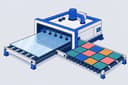 DisplayLarge-area machines form the working layers inside flat screens. Display reached $263M in FY2025 Q3, up from $183M in Q1, but factory projects make this small business uneven from quarter to quarter.
Large-area machines form the working layers inside flat screens. Display reached $263M in FY2025 Q3, up from $183M in Q1, but factory projects make this small business uneven from quarter to quarter.
In plain English
Picture a television-sized sheet of glass moving through a machine that lays down the tiny switches and light-producing layers behind each pixel. Applied builds that large-area production equipment for panel makers; it is chipmaking's broad-sheet cousin, built around similar control of thin materials.
Customers pay when they build or convert a screen factory, particularly for newer organic light-emitting displays. Those projects are large and infrequent, so sales jump when a line is equipped and fall between builds. Demand for phones, televisions and other devices ultimately sets the timetable.
Competes with System-ELVESS (Canon Tokki) · Display sputtering and OLED equipment (ULVAC)
 EPIC CenterA shared development center lets customers and suppliers test new chipmaking steps beside Applied before factory deployment. It has no separately disclosed sales; watch whether the collaborations become approved processes and future equipment orders.
A shared development center lets customers and suppliers test new chipmaking steps beside Applied before factory deployment. It has no separately disclosed sales; watch whether the collaborations become approved processes and future equipment orders.
In plain English
Instead of each company testing a difficult new manufacturing step alone, EPIC puts Applied's engineers, chipmakers, equipment partners and universities in one shared development center. Samsung, TSMC, SK hynix, Micron and other participants can try linked processes before committing them to full factories.
Applied earns no separately disclosed revenue from the center today. Its economic purpose is earlier placement: solve a customer's production problem while the factory plan is still being shaped, so Applied's machines and partner tools are already working together when large-scale buying begins.
Competes with NanoIC pilot line (imec) · APECS pilot line (Fraunhofer-Gesellschaft)
Named in filings, launches and programs
- Integrated Materials SolutionPlatformLinks several chipmaking steps into one tuned process; management said these solutions were about 30% of chip-systems revenue in FY2024.
- AIxPlatformConnects machine sensors, analysis and service; tens of thousands of machine chambers were connected by August 2026.
- EnduraPlatformA modular cluster of vacuum chambers used for metal deposition and related chipmaking steps.
- ProducerPlatformA multi-chamber deposition platform; its Avila 2 setup arrived for stacked memory packaging in June 2026.
- CenturaPlatformA cluster platform for crystal growth, heating and deposition; an enhanced version launched for memory chips in June 2026.
- Centris Sym3 Z MagnumProduct · RampingA conductor-carving system with a few hundred machine chambers deployed by May 2026.
- VIIStaProduct lineThe charged-atom treatment family for silicon and other chip materials.
- ReflexionProduct lineA family of systems that polishes chip layers flat before the next production step.
- MAX OLEDProduct · AnnouncedA next-generation organic-display production system; the latest explicit update said it was not yet contributing revenue.
- NEXX SystemsBrand · AnnouncedA panel-level copper-plating business under an announced acquisition agreement; closing had not been verified.
- KinexProductA Besi partnership that joins individual chips to silicon discs or bonds two discs together.
- SENZPlatform · AnnouncedA combined optics, sensing and vision-correction platform for AI smart glasses, unveiled in June 2026.
- EssilorLuxottica joint developmentCustomer programA long-term agreement to develop and commercialize optical systems for glasses that place digital images over the wearer's view.
- Apple American Manufacturing ProgramCustomer programApplied supplies Austin-made chip equipment to Texas Instruments' U.S. factories under Apple's manufacturing program.
Integrated Materials SolutionPlatform
Links several chipmaking steps into one tuned process; management said these solutions were about 30% of chip-systems revenue in FY2024.
AIxPlatform
Connects machine sensors, analysis and service; tens of thousands of machine chambers were connected by August 2026.
EnduraPlatform
A modular cluster of vacuum chambers used for metal deposition and related chipmaking steps.
ProducerPlatform
A multi-chamber deposition platform; its Avila 2 setup arrived for stacked memory packaging in June 2026.
CenturaPlatform
A cluster platform for crystal growth, heating and deposition; an enhanced version launched for memory chips in June 2026.
Centris Sym3 Z MagnumProduct · Ramping
A conductor-carving system with a few hundred machine chambers deployed by May 2026.
VIIStaProduct line
The charged-atom treatment family for silicon and other chip materials.
ReflexionProduct line
A family of systems that polishes chip layers flat before the next production step.
MAX OLEDProduct · Announced
A next-generation organic-display production system; the latest explicit update said it was not yet contributing revenue.
NEXX SystemsBrand · Announced
A panel-level copper-plating business under an announced acquisition agreement; closing had not been verified.
KinexProduct
A Besi partnership that joins individual chips to silicon discs or bonds two discs together.
SENZPlatform · Announced
A combined optics, sensing and vision-correction platform for AI smart glasses, unveiled in June 2026.
EssilorLuxottica joint developmentCustomer program
A long-term agreement to develop and commercialize optical systems for glasses that place digital images over the wearer's view.
Apple American Manufacturing ProgramCustomer program
Applied supplies Austin-made chip equipment to Texas Instruments' U.S. factories under Apple's manufacturing program.