
AMETEK (AME)
Builds precision instruments and engineered components for industrial, aerospace, power and medical markets.
Something off on this page? Send us feedback.
AMETEK makes the small, exacting hardware that other companies build into their own machines — analyzers that sniff a refinery's gas, motors the size of a fist, sensors bolted inside jet engines, metal parts that end up in someone's hip. Nothing it sells is a household name, and no single product carries the company. It grows the way it always has: by buying more niche businesses and folding them in.
Item facts: FY2025 · year ended Dec 31, 2025, from filings, earnings calls and company pages.
Judgment weights, not filed revenue
The band summarizes business focus and direction. ~ marks estimates.
9 in detail · 19 more below
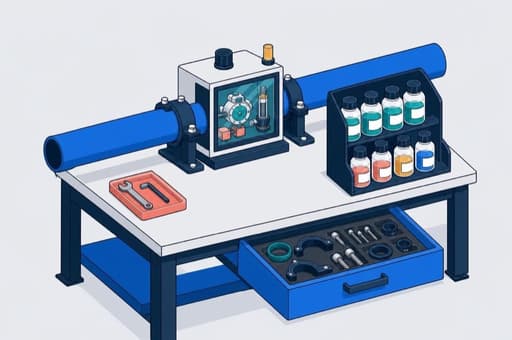
Process & Analytical Instruments
The biggest slice: analyzers and sensors that tell a refinery, steel mill or drug plant what is actually inside a pipe or a furnace. After a soft 2025, management now expects mid-single-digit growth — watch industrial spending.
Competes with Rosemount process analyzers (Emerson) · Process analytics (ABB) · Gas and liquid analyzers (Yokogawa)
In plain English
Every refinery, chemical plant and steel mill has to know what is moving through its pipes: how much, how hot, how pure, how much of it is escaping into the air. AMETEK sells the instruments that answer those questions, under names like SPECTRO and Brookfield that plant engineers know and nobody else does.
The money is unglamorous and sticky. An analyzer gets written into a plant's design and stays there for years, and the plant keeps buying spares, calibrations and consumables for it. No single buyer matters much — across AMETEK's instrument side, no customer is even a fiftieth of sales.
Indicor Instrumentation
Ten instrument businesses bought in one $5.0B cash deal that closed in August 2026, adding about $1.1B of yearly sales — roughly half of it repeat work: spares, supplies and service. The test: squeezing promised savings out of units that ran themselves.
Competes with Buehler sample preparation (Illinois Tool Works) · Refinery fuel analyzers (Emerson)
In plain English
Buying a small conglomerate off the shelf. Ten separate instrument makers that a private-equity owner had bundled together, among them Struers, which prepares metal samples so labs can inspect them, and PAC, which analyzes fuels for refiners.
They earn the way AMETEK's own businesses do: sell a machine once, then sell the spares, supplies and service that keep it running — about half their sales. AMETEK paid $5.0B for that, expects roughly $350M of it to land in this year's revenue, and plans to make the deal pay by handing the ten a shared purchasing and back-office system they never had.
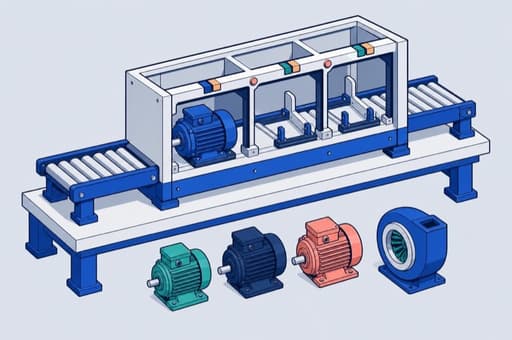
Automation & Engineered Solutions
Motors, blowers, pumps, connectors and medical parts sold to machine builders — the fastest-growing part of AMETEK, with orders up 35% in the June quarter. That surge is why the company-wide backlog reached a record $4.11B.
Competes with Precision brushless motors (maxon) · Portescap motors (Regal Rexnord) · Blowers for medical and industrial gear (ebm-papst)
In plain English
Look inside a packaging line, a piece of hospital equipment or a chip-making tool and you find small things that spin, push or connect: brushless motors, blowers, pumps, plugs and sockets. AMETEK makes those parts and sells them to the firms that build the machines.
Why it keeps earning: a machine builder picks a motor once, designs the product around it, then reorders it for as long as that machine sells. Sales here are growing in the mid-teens with profit margins climbing, and orders are running well ahead of shipments. The pull is coming from medical devices, chip-making equipment and factory automation.
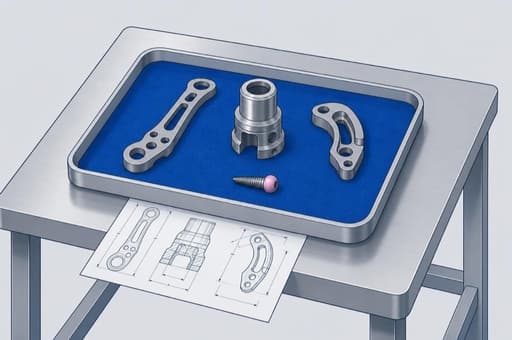
Paragon Medical
AMETEK's largest single named business: it designs and builds surgical instruments, implant parts and drug-delivery components for medical-device brands. Bought for about $1.9B in 2023, and management says its profitability now matches the rest of AMETEK.
Competes with Orthopedic contract manufacturing (Tecomet) · Implants and instruments (Orchid Orthopedic Solutions) · Medical outsourcing capacity (Integer Holdings)
In plain English
Medical-device companies do not always make their own metal. When a brand sells a knee implant or a surgical tool, someone has to design and machine the tiny, exacting pieces and the single-use instruments that go with them. Paragon is that someone.
Once a part is approved for use in surgery, switching suppliers means proving it all over again, so the orders repeat for years. That is the appeal: a $1.9B purchase in 2023 on about $500M of sales at the time, grown since on orthopedics, drug-delivery devices and robotic surgery work.
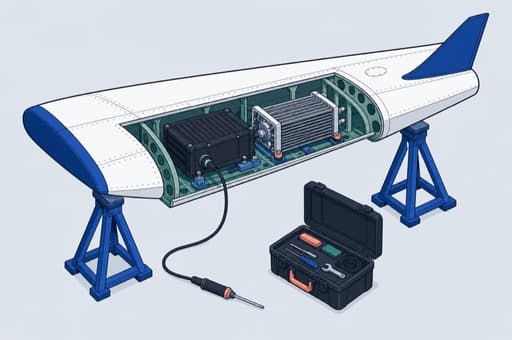
Aerospace & Defense
Sensors, cockpit instruments, rugged computers and heat exchangers that go inside aircraft and defense equipment — about 18% of sales, roughly 60% of it defense. Guided to low-double-digit growth, the fastest of the four markets AMETEK guides to.
Competes with Meggitt aerospace heat exchangers (Parker Meggitt) · VPX rugged computing (Mercury Systems) · Defense Solutions boards (Curtiss-Wright)
In plain English
Aircraft and military kit are full of instruments that quietly measure things: how hot the engine is running, how much fuel is left, how much a part is vibrating, what the crew sees on the cockpit display. AMETEK makes many of those, plus computers built to keep working where ordinary ones would fail and the heat exchangers that carry warmth away from the electronics.
Aircraft last decades, so a part designed in early gets repaired and replaced for as long as the plane flies. AMETEK's own repair shops do that work, widened this year by buying First Aviation Services and its six US sites.
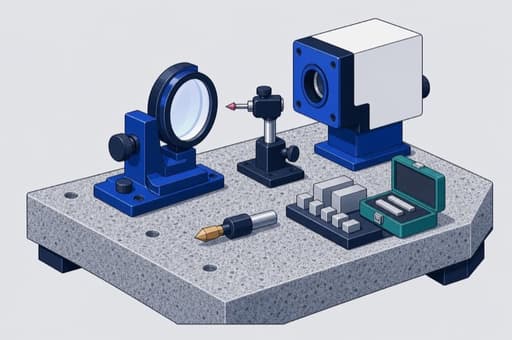
Ultra Precision Technologies
Measuring instruments and optics for work where the error you care about is too small to see — chipmakers most of all. Roughly 15% of sales, enlarged by the $920M FARO purchase. Growth follows semiconductor equipment spending.
Competes with White-light interferometers (Bruker) · Process control metrology (KLA) · Industrial measuring machines (Carl Zeiss)
In plain English
How do you check that a lens or a machined surface came out right when the flaw you are hunting is far too small to see? You use light. This part of AMETEK — Zygo, Taylor Hobson, Precitech and others — builds the instruments that measure at that scale, and makes the ultra-smooth optics themselves.
The best customers are the companies that build chip-making machines: AMETEK's optics are designed right into their platforms, and they keep buying as chips get smaller. Management says orders for its semiconductor optics and measuring systems have stepped up.
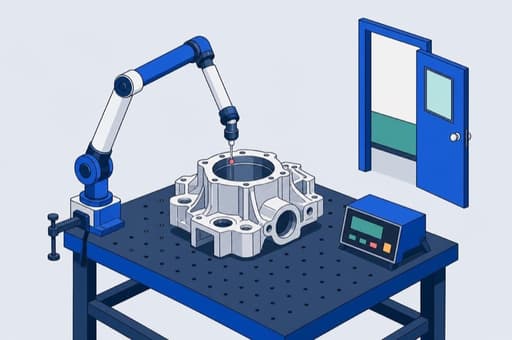
FARO Technologies
Portable arms and scanners that let a worker measure a big object — a car body, an aircraft part — right where it sits instead of carrying it to a lab. Bought in July 2025 for about $920M, adding roughly $340M of sales.
Competes with Absolute Arm portable measuring arms (Hexagon) · Metrology scanning systems (Nikon Metrology) · Measurement sensors and scanners (Keyence)
In plain English
A traditional measuring machine sits bolted in a lab and you bring the part to it. FARO's kit works the other way round: a jointed measuring arm that a technician carries to the object and traces over it, building an exact digital copy on the spot.
Factories and quality labs buy them to check that what they just built matches the drawing, which is cheaper than discovering a bad batch later. AMETEK paid roughly $920M for the business in July 2025 and slotted it in beside its own measurement brands.
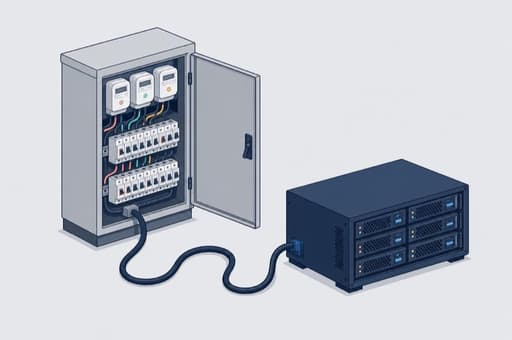
Power Instrumentation & Systems
Meters, backup-power gear and electrical test benches sold to utilities, equipment makers and, newly, data centers — about 10% of sales. Management still guides mid-single-digit growth here, slower than the orders imply.
Competes with Backup power and conditioning (Schneider Electric) · UPS systems (Eaton) · Fluke power analyzers (Fortive)
In plain English
Electricity has to be measured, cleaned up, and kept from dropping out. AMETEK sells the boxes that do it: meters that track how much power flows where, conditioning and backup units that stop sensitive equipment choking on a rough supply, and benches that test whether a piece of electrical gear behaves.
The customers have always been utilities and the firms that build grid equipment. The newer one is the data-center business, which needs enormous, dependable power and will pay to be sure of it before it builds. Management calls this the critical physical layer under the AI build-out.
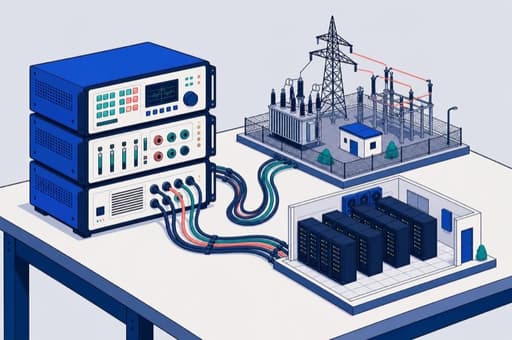
RTDS Technologies
Rigs that let an engineer crash-test a power grid on a bench before switching on the real one. Small inside AMETEK, but a data-center operator ordered one this year to de-risk a build — the clearest change in what management talks about.
Competes with Real-time grid simulators (OPAL-RT) · Hardware-in-the-loop simulators (Typhoon HIL)
In plain English
Before you switch on a new substation or a giant data-center campus, you would like to know what happens when something fails in the middle of the night. RTDS sells a rig that runs a simulated grid in real time, lets you wire your actual protection and control gear into it, then throws simulated trouble at it.
Utilities have bought this for years to test their own kit. Now the people building data centers are buying it too, because a mistake in a facility that size is expensive to find out about live. Still a small line inside the power business.


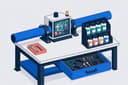 Process & Analytical InstrumentsThe biggest slice: analyzers and sensors that tell a refinery, steel mill or drug plant what is actually inside a pipe or a furnace. After a soft 2025, management now expects mid-single-digit growth — watch industrial spending.
The biggest slice: analyzers and sensors that tell a refinery, steel mill or drug plant what is actually inside a pipe or a furnace. After a soft 2025, management now expects mid-single-digit growth — watch industrial spending.
In plain English
Every refinery, chemical plant and steel mill has to know what is moving through its pipes: how much, how hot, how pure, how much of it is escaping into the air. AMETEK sells the instruments that answer those questions, under names like SPECTRO and Brookfield that plant engineers know and nobody else does.
The money is unglamorous and sticky. An analyzer gets written into a plant's design and stays there for years, and the plant keeps buying spares, calibrations and consumables for it. No single buyer matters much — across AMETEK's instrument side, no customer is even a fiftieth of sales.
Competes with Rosemount process analyzers (Emerson) · Process analytics (ABB) · Gas and liquid analyzers (Yokogawa)
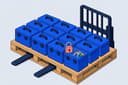 Indicor InstrumentationTen instrument businesses bought in one $5.0B cash deal that closed in August 2026, adding about $1.1B of yearly sales — roughly half of it repeat work: spares, supplies and service. The test: squeezing promised savings out of units that ran themselves.
Ten instrument businesses bought in one $5.0B cash deal that closed in August 2026, adding about $1.1B of yearly sales — roughly half of it repeat work: spares, supplies and service. The test: squeezing promised savings out of units that ran themselves.
In plain English
Buying a small conglomerate off the shelf. Ten separate instrument makers that a private-equity owner had bundled together, among them Struers, which prepares metal samples so labs can inspect them, and PAC, which analyzes fuels for refiners.
They earn the way AMETEK's own businesses do: sell a machine once, then sell the spares, supplies and service that keep it running — about half their sales. AMETEK paid $5.0B for that, expects roughly $350M of it to land in this year's revenue, and plans to make the deal pay by handing the ten a shared purchasing and back-office system they never had.
Competes with Buehler sample preparation (Illinois Tool Works) · Refinery fuel analyzers (Emerson)
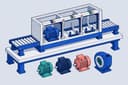 Automation & Engineered SolutionsMotors, blowers, pumps, connectors and medical parts sold to machine builders — the fastest-growing part of AMETEK, with orders up 35% in the June quarter. That surge is why the company-wide backlog reached a record $4.11B.
Motors, blowers, pumps, connectors and medical parts sold to machine builders — the fastest-growing part of AMETEK, with orders up 35% in the June quarter. That surge is why the company-wide backlog reached a record $4.11B.
In plain English
Look inside a packaging line, a piece of hospital equipment or a chip-making tool and you find small things that spin, push or connect: brushless motors, blowers, pumps, plugs and sockets. AMETEK makes those parts and sells them to the firms that build the machines.
Why it keeps earning: a machine builder picks a motor once, designs the product around it, then reorders it for as long as that machine sells. Sales here are growing in the mid-teens with profit margins climbing, and orders are running well ahead of shipments. The pull is coming from medical devices, chip-making equipment and factory automation.
Competes with Precision brushless motors (maxon) · Portescap motors (Regal Rexnord) · Blowers for medical and industrial gear (ebm-papst)
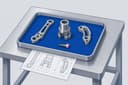 Paragon MedicalAMETEK's largest single named business: it designs and builds surgical instruments, implant parts and drug-delivery components for medical-device brands. Bought for about $1.9B in 2023, and management says its profitability now matches the rest of AMETEK.
AMETEK's largest single named business: it designs and builds surgical instruments, implant parts and drug-delivery components for medical-device brands. Bought for about $1.9B in 2023, and management says its profitability now matches the rest of AMETEK.
In plain English
Medical-device companies do not always make their own metal. When a brand sells a knee implant or a surgical tool, someone has to design and machine the tiny, exacting pieces and the single-use instruments that go with them. Paragon is that someone.
Once a part is approved for use in surgery, switching suppliers means proving it all over again, so the orders repeat for years. That is the appeal: a $1.9B purchase in 2023 on about $500M of sales at the time, grown since on orthopedics, drug-delivery devices and robotic surgery work.
Competes with Orthopedic contract manufacturing (Tecomet) · Implants and instruments (Orchid Orthopedic Solutions) · Medical outsourcing capacity (Integer Holdings)
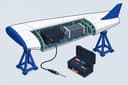 Aerospace & DefenseSensors, cockpit instruments, rugged computers and heat exchangers that go inside aircraft and defense equipment — about 18% of sales, roughly 60% of it defense. Guided to low-double-digit growth, the fastest of the four markets AMETEK guides to.
Sensors, cockpit instruments, rugged computers and heat exchangers that go inside aircraft and defense equipment — about 18% of sales, roughly 60% of it defense. Guided to low-double-digit growth, the fastest of the four markets AMETEK guides to.
In plain English
Aircraft and military kit are full of instruments that quietly measure things: how hot the engine is running, how much fuel is left, how much a part is vibrating, what the crew sees on the cockpit display. AMETEK makes many of those, plus computers built to keep working where ordinary ones would fail and the heat exchangers that carry warmth away from the electronics.
Aircraft last decades, so a part designed in early gets repaired and replaced for as long as the plane flies. AMETEK's own repair shops do that work, widened this year by buying First Aviation Services and its six US sites.
Competes with Meggitt aerospace heat exchangers (Parker Meggitt) · VPX rugged computing (Mercury Systems) · Defense Solutions boards (Curtiss-Wright)
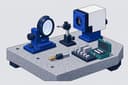 Ultra Precision TechnologiesMeasuring instruments and optics for work where the error you care about is too small to see — chipmakers most of all. Roughly 15% of sales, enlarged by the $920M FARO purchase. Growth follows semiconductor equipment spending.
Measuring instruments and optics for work where the error you care about is too small to see — chipmakers most of all. Roughly 15% of sales, enlarged by the $920M FARO purchase. Growth follows semiconductor equipment spending.
In plain English
How do you check that a lens or a machined surface came out right when the flaw you are hunting is far too small to see? You use light. This part of AMETEK — Zygo, Taylor Hobson, Precitech and others — builds the instruments that measure at that scale, and makes the ultra-smooth optics themselves.
The best customers are the companies that build chip-making machines: AMETEK's optics are designed right into their platforms, and they keep buying as chips get smaller. Management says orders for its semiconductor optics and measuring systems have stepped up.
Competes with White-light interferometers (Bruker) · Process control metrology (KLA) · Industrial measuring machines (Carl Zeiss)
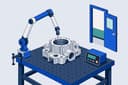 FARO TechnologiesPortable arms and scanners that let a worker measure a big object — a car body, an aircraft part — right where it sits instead of carrying it to a lab. Bought in July 2025 for about $920M, adding roughly $340M of sales.
Portable arms and scanners that let a worker measure a big object — a car body, an aircraft part — right where it sits instead of carrying it to a lab. Bought in July 2025 for about $920M, adding roughly $340M of sales.
In plain English
A traditional measuring machine sits bolted in a lab and you bring the part to it. FARO's kit works the other way round: a jointed measuring arm that a technician carries to the object and traces over it, building an exact digital copy on the spot.
Factories and quality labs buy them to check that what they just built matches the drawing, which is cheaper than discovering a bad batch later. AMETEK paid roughly $920M for the business in July 2025 and slotted it in beside its own measurement brands.
Competes with Absolute Arm portable measuring arms (Hexagon) · Metrology scanning systems (Nikon Metrology) · Measurement sensors and scanners (Keyence)
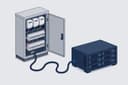 Power Instrumentation & SystemsMeters, backup-power gear and electrical test benches sold to utilities, equipment makers and, newly, data centers — about 10% of sales. Management still guides mid-single-digit growth here, slower than the orders imply.
Meters, backup-power gear and electrical test benches sold to utilities, equipment makers and, newly, data centers — about 10% of sales. Management still guides mid-single-digit growth here, slower than the orders imply.
In plain English
Electricity has to be measured, cleaned up, and kept from dropping out. AMETEK sells the boxes that do it: meters that track how much power flows where, conditioning and backup units that stop sensitive equipment choking on a rough supply, and benches that test whether a piece of electrical gear behaves.
The customers have always been utilities and the firms that build grid equipment. The newer one is the data-center business, which needs enormous, dependable power and will pay to be sure of it before it builds. Management calls this the critical physical layer under the AI build-out.
Competes with Backup power and conditioning (Schneider Electric) · UPS systems (Eaton) · Fluke power analyzers (Fortive)
 RTDS TechnologiesRigs that let an engineer crash-test a power grid on a bench before switching on the real one. Small inside AMETEK, but a data-center operator ordered one this year to de-risk a build — the clearest change in what management talks about.
Rigs that let an engineer crash-test a power grid on a bench before switching on the real one. Small inside AMETEK, but a data-center operator ordered one this year to de-risk a build — the clearest change in what management talks about.
In plain English
Before you switch on a new substation or a giant data-center campus, you would like to know what happens when something fails in the middle of the night. RTDS sells a rig that runs a simulated grid in real time, lets you wire your actual protection and control gear into it, then throws simulated trouble at it.
Utilities have bought this for years to test their own kit. Now the people building data centers are buying it too, because a mistake in a facility that size is expensive to find out about live. Still a small line inside the power business.
Competes with Real-time grid simulators (OPAL-RT) · Hardware-in-the-loop simulators (Typhoon HIL)
Named in filings, launches and programs
- ZygoBrandOptical measuring systems and ultra-precise optics; its parts end up inside the machines that make advanced chips.
- Abaco SystemsBrandRugged computers for aircraft and defense vehicles; won a semiconductor-equipment order in early 2026.
- Hughes-TreitlerBrandAerospace heat exchangers; launched its MicroFoil design in the June 2026 quarter.
- RaulandBrandClinical communication systems for hospitals, sold as the Responder platform; an award for it was cited in late 2025.
- AlphasenseBrandGas sensors; its lead-free oxygen sensor won AMETEK's own 2026 innovation award.
- CreaformBrandPortable 3D scanners a technician can carry onto the shop floor.
- Reichert TechnologiesBrandEye-examination instruments for ophthalmic practices, broadened by the LKC Technologies deal announced in February 2026.
- First Aviation ServicesBrandAviation and defense repair work, about $80M of sales; closed May 2026 and added six US service sites.
- Kern MicrotechnikBrandPrecision machining and optical inspection, bought January 2025; its machining also feeds AMETEK's own precision work.
- Virtek VisionBrandLaser projection and inspection systems used in manufacturing.
- SPECTROBrandSpectrometers that identify which metals and elements a sample is made of.
- AMETEK LandBrandMeasures temperature and how well something is burning, without touching it.
- Dunkermotoren / Haydon Kerk PittmanBrandBrushless motors and linear-motion parts — the workhorses behind the automation business.
- Powervar / SurgeXBrandPower conditioning and surge protection that keeps sensitive equipment safe from a rough electrical supply.
- Precitech / Taylor Hobson / Solartron / TMCBrandDiamond turning, surface measurement, displacement sensing and vibration isolation — the bench beneath the measurement brands.
- StruersBrand · RampingThe largest of the ten Indicor units: prepares metal and material samples so labs can inspect them; joins the instruments side.
- AMOTBrand · RampingActuation and process automation from Indicor — a former rival, now placed inside AMETEK's automation business.
- PACBrand · RampingIndicor's energy analyzers, used by refiners and fuel labs.
- TechnologBrand · RampingUK infrastructure monitoring, one of the ten businesses that arrived with Indicor.
ZygoBrand
Optical measuring systems and ultra-precise optics; its parts end up inside the machines that make advanced chips.
Abaco SystemsBrand
Rugged computers for aircraft and defense vehicles; won a semiconductor-equipment order in early 2026.
Hughes-TreitlerBrand
Aerospace heat exchangers; launched its MicroFoil design in the June 2026 quarter.
RaulandBrand
Clinical communication systems for hospitals, sold as the Responder platform; an award for it was cited in late 2025.
AlphasenseBrand
Gas sensors; its lead-free oxygen sensor won AMETEK's own 2026 innovation award.
CreaformBrand
Portable 3D scanners a technician can carry onto the shop floor.
Reichert TechnologiesBrand
Eye-examination instruments for ophthalmic practices, broadened by the LKC Technologies deal announced in February 2026.
First Aviation ServicesBrand
Aviation and defense repair work, about $80M of sales; closed May 2026 and added six US service sites.
Kern MicrotechnikBrand
Precision machining and optical inspection, bought January 2025; its machining also feeds AMETEK's own precision work.
Virtek VisionBrand
Laser projection and inspection systems used in manufacturing.
SPECTROBrand
Spectrometers that identify which metals and elements a sample is made of.
AMETEK LandBrand
Measures temperature and how well something is burning, without touching it.
Dunkermotoren / Haydon Kerk PittmanBrand
Brushless motors and linear-motion parts — the workhorses behind the automation business.
Powervar / SurgeXBrand
Power conditioning and surge protection that keeps sensitive equipment safe from a rough electrical supply.
Precitech / Taylor Hobson / Solartron / TMCBrand
Diamond turning, surface measurement, displacement sensing and vibration isolation — the bench beneath the measurement brands.
StruersBrand · Ramping
The largest of the ten Indicor units: prepares metal and material samples so labs can inspect them; joins the instruments side.
AMOTBrand · Ramping
Actuation and process automation from Indicor — a former rival, now placed inside AMETEK's automation business.
PACBrand · Ramping
Indicor's energy analyzers, used by refiners and fuel labs.
TechnologBrand · Ramping
UK infrastructure monitoring, one of the ten businesses that arrived with Indicor.