
Ameriprise Financial (AMP)
Combines a U.S. financial-advice network with global asset management, annuities and insurance.
Something off on this page? Send us feedback.
Ameriprise is a force of about ten thousand financial advisors looking after the savings of comfortable American households, charging a yearly slice of whatever they manage. Bolted onto that advice business are a fund manager, a life insurer and a small branchless bank that live off the same clients. The advice platform is where the growth sits; the others supply things to sell and interest on client cash.
Item facts: FY2025 · year ended Dec 31, 2025, from filings, earnings calls and company pages.
Judgment weights, not filed revenue
The band summarizes business focus and direction. ~ marks estimates.
7 in detail · 9 more below

Ameriprise wrap accounts & the Signature Wealth Program
The fee engine: clients pay a yearly percentage on the money their advisor manages. Balances reached $732B by mid-2026, up 19% in a year — though last quarter more client money walked out ($6.9B) than arrived ($3.1B).
Competes with Advisory assets (LPL Financial) · Fee-based accounts, Private Client Group (Raymond James) · Wealth management platform (Morgan Stanley)
In plain English
One yearly charge covers the picking, the paperwork and the phone calls — a flat percentage of whatever sits in the account, instead of a bill for every trade. That is a wrap account.
Ameriprise advisors park client savings in these accounts and the firm bills roughly one percent a year, every year, whether the client does anything or not. Rising markets lift the revenue on their own, with nothing new sold. Signature Wealth, launched in 2025, is the newer account design inside the platform, and management calls it their fastest-growing platform launch.

Ameriprise Financial Institutions Group
Runs the investment arms of other banks and credit unions. Comerica's 89 advisors and $18.5B leave by the end of September 2026; Huntington brings roughly 260 advisors and $28B in the fourth quarter, which management expects to more than offset it.
Competes with Institution Services (LPL Financial) · Financial Institutions programs (Cetera) · Bank and credit-union investment programs (Osaic)
In plain English
A regional bank wants to offer its customers investment advice without building the whole apparatus — the licensed advisors, the paperwork, the trading plumbing. Ameriprise rents out the apparatus and staffs it.
The partner bank keeps its customers and its share of the program's takings; Ameriprise supplies the platform, the trade processing and the advisor support, and those client assets swell the advice platform's totals. Good business, until the partner itself is bought: Comerica's program ended early after Fifth Third acquired it, with a one-time $25M make-whole payment disclosed in early 2026. Huntington signed on in the same stretch.

RiverSource annuities
The in-house annuity book, sold almost entirely by Ameriprise's own advisors. Insurance-unit sales rose 20% in the June 2026 quarter, led by index-linked contracts and plainer ones sold without a lifetime-income promise attached, while the older guaranteed-income contracts keep shrinking.
Competes with Variable annuities (Equitable) · Variable annuities (Jackson National Life) · Variable annuities (Lincoln Financial)
In plain English
An annuity is a bargain with an insurance company: hand over a lump sum now, and it promises money back later — for a set stretch, for as long as you live, or in step with how a market index does.
RiverSource, the group's insurer, writes those contracts; Ameriprise advisors sell them to the clients they already advise, which is why the firm earns twice on one sale. The income is a yearly slice of each account plus charges for the promises attached. Contracts guaranteeing lifetime income are running off as clients withdraw; the newer index-linked ones are what sells.

RiverSource life and disability insurance
Permanent life policies with an investment pot inside, plus income cover for illness and injury. Management named this line, alongside index-linked annuities, behind the 20% rise in insurance-unit sales in the June 2026 quarter.
Competes with Variable universal life (Equitable) · Indexed universal life (Pacific Life) · Individual disability income (Unum)
In plain English
Permanent life insurance with a savings pot attached. Premiums come in; part buys the payout when the policyholder dies, part goes into investment funds held inside the policy, and the insurer takes its charges out along the way.
Families buy these for estate and tax planning as much as for bare protection, so the buyers are the same well-off households the advisors already serve — the policy gets written by the person already running their accounts. Alongside it sits disability cover, which replaces part of a paycheque when illness or injury stops the work, and which the firm has been pushing with faster sign-up.

Columbia Threadneedle Investments
The in-house fund manager, $759B under management by mid-2026 at about 47 cents a year per $100. Profitability runs above its own 35–39% target, but clients keep pulling money out — $6.5B more left than arrived last quarter.
Competes with Active funds and separately managed accounts (T. Rowe Price) · iShares index funds (BlackRock) · Index funds (Vanguard)
In plain English
The part of the group that actually picks the shares and bonds. It runs funds and tailored portfolios under the Columbia name in the United States and the Threadneedle name across Europe and Asia, for institutions, other firms' advisors and Ameriprise's own clients.
Pay is a thin annual slice of the pot — roughly forty-seven cents a year per hundred dollars — so earnings follow the size of the pot, not how busy anyone is. The pot grows because markets rise, not because money is arriving: cheap index funds keep drawing away the customers who once paid humans to choose.
Brokerage and distribution
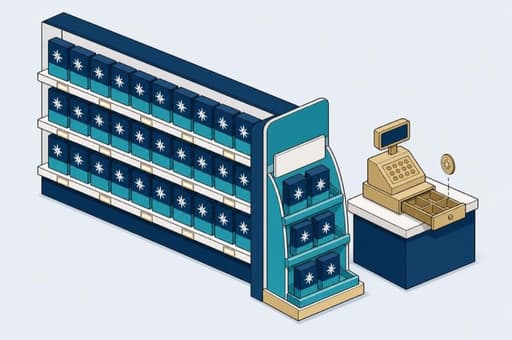
The paid-per-sale side: commissions when advisors place a fund, annuity or trade, plus payments from outside product firms for access to those advisors. Worth about $2.2B in 2025 and up 13% in the June 2026 quarter.
Competes with Commission-based brokerage (LPL Financial) · Private Client Group brokerage (Raymond James) · Direct-to-consumer brokerage (Charles Schwab)
In plain English
Not everything a client buys is billed as a yearly percentage. Some of it still pays the old way — a one-off cut when the advisor places an annuity, a fund or a stock trade.
Outside fund and annuity companies pay too, for the right to put their products in front of Ameriprise's advisors: a supermarket charging brands for eye-level shelf space. Sales have grown lately on strong annuity demand, but this runs against a long tide, because American retail money keeps migrating from per-sale commissions to the flat annual fee. It is also the leg most exposed to clients who trade for themselves.
Ameriprise Bank, FSB and the client cash program
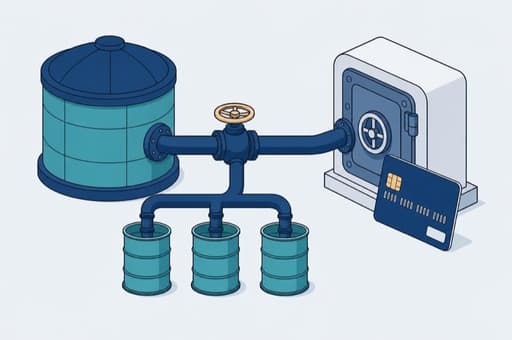
The bank holding clients' idle cash and lending against their portfolios: $25.5B of assets yielding 4.7%, lending up 61% in a year. Yet bank earnings grew only low single digits last quarter, so the ramp lags the asset growth.
Competes with Private Bank sweep deposits (Morgan Stanley) · Merrill sweep deposits (Bank of America) · Client cash program (LPL Financial)
In plain English
Every advice client leaves some cash sitting idle between decisions. Ameriprise sweeps that cash into a bank it owns — a federally chartered savings bank with no branches and no walk-in customers, just the advisors' clients.
The bank buys bonds with the money or lends it back out, and keeps the gap between what it earns and what it pays depositors. It has been adding things advisors can offer: savings certificates, home equity lines, mortgages, cards, loans against a portfolio. The catch is where the rest of the cash sits — about $46.6B in outside money market funds, earning Ameriprise almost nothing.


 Ameriprise wrap accounts & the Signature Wealth ProgramThe fee engine: clients pay a yearly percentage on the money their advisor manages. Balances reached $732B by mid-2026, up 19% in a year — though last quarter more client money walked out ($6.9B) than arrived ($3.1B).
The fee engine: clients pay a yearly percentage on the money their advisor manages. Balances reached $732B by mid-2026, up 19% in a year — though last quarter more client money walked out ($6.9B) than arrived ($3.1B).
In plain English
One yearly charge covers the picking, the paperwork and the phone calls — a flat percentage of whatever sits in the account, instead of a bill for every trade. That is a wrap account.
Ameriprise advisors park client savings in these accounts and the firm bills roughly one percent a year, every year, whether the client does anything or not. Rising markets lift the revenue on their own, with nothing new sold. Signature Wealth, launched in 2025, is the newer account design inside the platform, and management calls it their fastest-growing platform launch.
Competes with Advisory assets (LPL Financial) · Fee-based accounts, Private Client Group (Raymond James) · Wealth management platform (Morgan Stanley)
 Ameriprise Financial Institutions GroupRuns the investment arms of other banks and credit unions. Comerica's 89 advisors and $18.5B leave by the end of September 2026; Huntington brings roughly 260 advisors and $28B in the fourth quarter, which management expects to more than offset it.
Runs the investment arms of other banks and credit unions. Comerica's 89 advisors and $18.5B leave by the end of September 2026; Huntington brings roughly 260 advisors and $28B in the fourth quarter, which management expects to more than offset it.
In plain English
A regional bank wants to offer its customers investment advice without building the whole apparatus — the licensed advisors, the paperwork, the trading plumbing. Ameriprise rents out the apparatus and staffs it.
The partner bank keeps its customers and its share of the program's takings; Ameriprise supplies the platform, the trade processing and the advisor support, and those client assets swell the advice platform's totals. Good business, until the partner itself is bought: Comerica's program ended early after Fifth Third acquired it, with a one-time $25M make-whole payment disclosed in early 2026. Huntington signed on in the same stretch.
Competes with Institution Services (LPL Financial) · Financial Institutions programs (Cetera) · Bank and credit-union investment programs (Osaic)
 RiverSource annuitiesThe in-house annuity book, sold almost entirely by Ameriprise's own advisors. Insurance-unit sales rose 20% in the June 2026 quarter, led by index-linked contracts and plainer ones sold without a lifetime-income promise attached, while the older guaranteed-income contracts keep shrinking.
The in-house annuity book, sold almost entirely by Ameriprise's own advisors. Insurance-unit sales rose 20% in the June 2026 quarter, led by index-linked contracts and plainer ones sold without a lifetime-income promise attached, while the older guaranteed-income contracts keep shrinking.
In plain English
An annuity is a bargain with an insurance company: hand over a lump sum now, and it promises money back later — for a set stretch, for as long as you live, or in step with how a market index does.
RiverSource, the group's insurer, writes those contracts; Ameriprise advisors sell them to the clients they already advise, which is why the firm earns twice on one sale. The income is a yearly slice of each account plus charges for the promises attached. Contracts guaranteeing lifetime income are running off as clients withdraw; the newer index-linked ones are what sells.
Competes with Variable annuities (Equitable) · Variable annuities (Jackson National Life) · Variable annuities (Lincoln Financial)
 RiverSource life and disability insurancePermanent life policies with an investment pot inside, plus income cover for illness and injury. Management named this line, alongside index-linked annuities, behind the 20% rise in insurance-unit sales in the June 2026 quarter.
Permanent life policies with an investment pot inside, plus income cover for illness and injury. Management named this line, alongside index-linked annuities, behind the 20% rise in insurance-unit sales in the June 2026 quarter.
In plain English
Permanent life insurance with a savings pot attached. Premiums come in; part buys the payout when the policyholder dies, part goes into investment funds held inside the policy, and the insurer takes its charges out along the way.
Families buy these for estate and tax planning as much as for bare protection, so the buyers are the same well-off households the advisors already serve — the policy gets written by the person already running their accounts. Alongside it sits disability cover, which replaces part of a paycheque when illness or injury stops the work, and which the firm has been pushing with faster sign-up.
Competes with Variable universal life (Equitable) · Indexed universal life (Pacific Life) · Individual disability income (Unum)
 Columbia Threadneedle InvestmentsThe in-house fund manager, $759B under management by mid-2026 at about 47 cents a year per $100. Profitability runs above its own 35–39% target, but clients keep pulling money out — $6.5B more left than arrived last quarter.
The in-house fund manager, $759B under management by mid-2026 at about 47 cents a year per $100. Profitability runs above its own 35–39% target, but clients keep pulling money out — $6.5B more left than arrived last quarter.
In plain English
The part of the group that actually picks the shares and bonds. It runs funds and tailored portfolios under the Columbia name in the United States and the Threadneedle name across Europe and Asia, for institutions, other firms' advisors and Ameriprise's own clients.
Pay is a thin annual slice of the pot — roughly forty-seven cents a year per hundred dollars — so earnings follow the size of the pot, not how busy anyone is. The pot grows because markets rise, not because money is arriving: cheap index funds keep drawing away the customers who once paid humans to choose.
Competes with Active funds and separately managed accounts (T. Rowe Price) · iShares index funds (BlackRock) · Index funds (Vanguard)
 Brokerage and distributionThe paid-per-sale side: commissions when advisors place a fund, annuity or trade, plus payments from outside product firms for access to those advisors. Worth about $2.2B in 2025 and up 13% in the June 2026 quarter.
The paid-per-sale side: commissions when advisors place a fund, annuity or trade, plus payments from outside product firms for access to those advisors. Worth about $2.2B in 2025 and up 13% in the June 2026 quarter.
In plain English
Not everything a client buys is billed as a yearly percentage. Some of it still pays the old way — a one-off cut when the advisor places an annuity, a fund or a stock trade.
Outside fund and annuity companies pay too, for the right to put their products in front of Ameriprise's advisors: a supermarket charging brands for eye-level shelf space. Sales have grown lately on strong annuity demand, but this runs against a long tide, because American retail money keeps migrating from per-sale commissions to the flat annual fee. It is also the leg most exposed to clients who trade for themselves.
Competes with Commission-based brokerage (LPL Financial) · Private Client Group brokerage (Raymond James) · Direct-to-consumer brokerage (Charles Schwab)
 Ameriprise Bank, FSB and the client cash programThe bank holding clients' idle cash and lending against their portfolios: $25.5B of assets yielding 4.7%, lending up 61% in a year. Yet bank earnings grew only low single digits last quarter, so the ramp lags the asset growth.
The bank holding clients' idle cash and lending against their portfolios: $25.5B of assets yielding 4.7%, lending up 61% in a year. Yet bank earnings grew only low single digits last quarter, so the ramp lags the asset growth.
In plain English
Every advice client leaves some cash sitting idle between decisions. Ameriprise sweeps that cash into a bank it owns — a federally chartered savings bank with no branches and no walk-in customers, just the advisors' clients.
The bank buys bonds with the money or lends it back out, and keeps the gap between what it earns and what it pays depositors. It has been adding things advisors can offer: savings certificates, home equity lines, mortgages, cards, loans against a portfolio. The catch is where the rest of the cash sits — about $46.6B in outside money market funds, earning Ameriprise almost nothing.
Competes with Private Bank sweep deposits (Morgan Stanley) · Merrill sweep deposits (Bank of America) · Client cash program (LPL Financial)
Named in filings, launches and programs
- Ameriprise Financial ServicesBrandThe licensed firm the retail advisors work through — where the planning and advice money is collected.
- Ameriprise Financial Planning ServiceServiceA fixed fee for a written financial plan, priced by how complicated the client's affairs are. The on-ramp to a managed account.
- American Enterprise Investment ServicesServiceThe in-house arm that processes and settles the advisors' client trades, rather than renting that job out.
- Ameriprise Certificate CompanyBrandSells plain savings certificates at a set rate — roughly $7B outstanding by mid-2026, down from $8.2B at the end of 2025; a recent seven-month offer paid 4.25%.
- Ameriprise Personal Wealth GroupServiceA central team of advisors, expanded as a handover option for advisors who are retiring.
- Advice Insights and AI advisor toolsPlatform · RampingSoftware inside roughly $1B a year of technology and AI spending; automated meeting notes alone are credited with saving advisors 10–20 hours a week.
- Seligman InvestmentsBrandA Silicon Valley technology and healthcare investing team inside the fund arm, $31.4bn in early 2026; its performance fees made Q4 2025 look unusually good.
- Columbia Threadneedle active ETFsProduct line · RampingStock-exchange-traded funds whose holdings the managers still choose: two income-focused US funds launched in July 2026, three more in Europe.
- Columbia Threadneedle alternatives and EMEA real estateProduct lineProperty funds and other investments outside ordinary shares and bonds — part of a roughly $70bn alternatives business.
Ameriprise Financial ServicesBrand
The licensed firm the retail advisors work through — where the planning and advice money is collected.
Ameriprise Financial Planning ServiceService
A fixed fee for a written financial plan, priced by how complicated the client's affairs are. The on-ramp to a managed account.
American Enterprise Investment ServicesService
The in-house arm that processes and settles the advisors' client trades, rather than renting that job out.
Ameriprise Certificate CompanyBrand
Sells plain savings certificates at a set rate — roughly $7B outstanding by mid-2026, down from $8.2B at the end of 2025; a recent seven-month offer paid 4.25%.
Ameriprise Personal Wealth GroupService
A central team of advisors, expanded as a handover option for advisors who are retiring.
Advice Insights and AI advisor toolsPlatform · Ramping
Software inside roughly $1B a year of technology and AI spending; automated meeting notes alone are credited with saving advisors 10–20 hours a week.
Seligman InvestmentsBrand
A Silicon Valley technology and healthcare investing team inside the fund arm, $31.4bn in early 2026; its performance fees made Q4 2025 look unusually good.
Columbia Threadneedle active ETFsProduct line · Ramping
Stock-exchange-traded funds whose holdings the managers still choose: two income-focused US funds launched in July 2026, three more in Europe.
Columbia Threadneedle alternatives and EMEA real estateProduct line
Property funds and other investments outside ordinary shares and bonds — part of a roughly $70bn alternatives business.