
Air Products (APD)
Supplies industrial gases through customer-adjacent plants, pipelines, bulk deliveries and cylinders.
Something off on this page? Send us feedback.
Air Products is mostly a utility for factories: it builds gas plants beside big customers and runs delivery routes for everyone else. Those two mature engines still make nearly all the sales, while the company refocuses on dependable long-term contracts and tries to turn one giant clean-fuel project into a business.
Item facts: FY2025 · year ended Sep 30, 2025, from filings, earnings calls and company pages.
Judgment weights, not filed revenue
The band summarizes business focus and direction. ~ marks estimates.
8 in detail · 9 more below
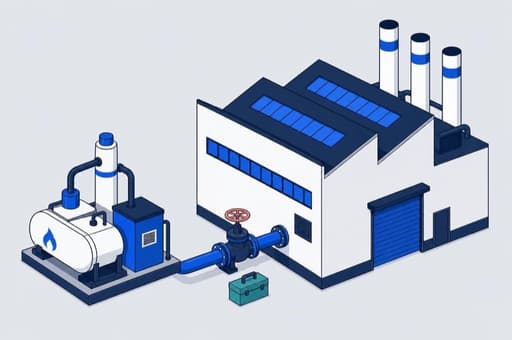
On-site Gases
Gas plants beside customers are the main engine, and recent quarterly sales are growing. Air Products has $28 billion of promised business across the company; keeping plants running and customers producing is what turns those promises into cash.
Competes with On-Site Gas Supply (Linde) · Large Industries (Air Liquide)
In plain English
Think of this as a boiler room that Air Products builds and runs next door to someone else's factory. It separates or makes the gases that a refinery, steel mill, chemical plant, or chip factory needs every day, then sends them across a short pipe.
The customer avoids buying its own gas plant and signs up for roughly fifteen to twenty years. Air Products gets fixed payments or a promised minimum order, can adjust for energy costs, and earns its return by keeping an expensive plant busy and reliable.
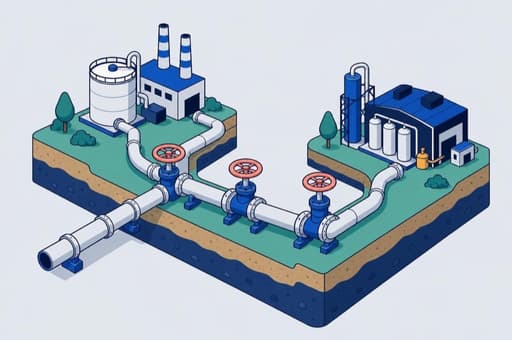
Hydrogen and HyCO Supply Networks
A large shared network carries hydrogen and carbon monoxide to refiners and chemical plants. New facilities helped growth recently, but customer production, reliable flow, and the cost of natural gas decide how well it pays.
Competes with U.S. Gulf Coast hydrogen pipeline (Air Liquide) · HyCO plants and pipelines (Linde)
In plain English
Here the product usually travels through pipes, not on trucks. Air Products makes hydrogen and carbon monoxide—gases refiners and chemical plants use to clean fuels or make other chemicals—at dedicated plants or from streams another factory would otherwise waste.
Several customers can connect to one local network, spreading the cost of the pipes and production equipment. They pay for steady supply while Air Products keeps the system flowing; contracts often pass changing natural-gas costs through to the buyer.
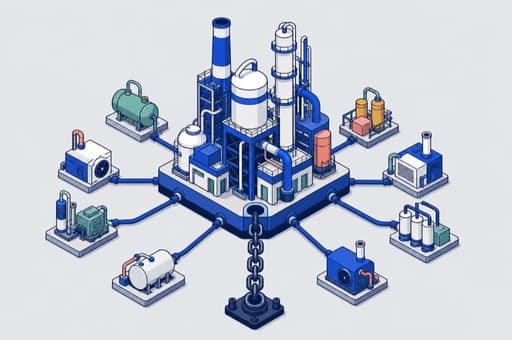
Jazan Integrated Gasification and Power Company
A single-purpose utility serving Saudi Aramco's Jazan complex with gas, power, steam, and hydrogen. Its long customer agreement is the attraction; refinery uptime, financing, and the partners' decisions are the watchpoints.
Competes with Low-carbon ammonia gas complex (Linde) · Large Industries supply (Air Liquide)
In plain English
One Saudi industrial complex gets its own all-in-one utility company. Jazan Integrated Gasification and Power Company runs the machinery that supplies Saudi Aramco's Jazan site with power, steam, hydrogen, and other gases, rather than selling into an open market.
Air Products owns most of the venture alongside Saudi and regional partners. Aramco pays under a long agreement that began in fiscal two thousand twenty-two, and the venture sends money back to its owners after operating and financing needs are met.
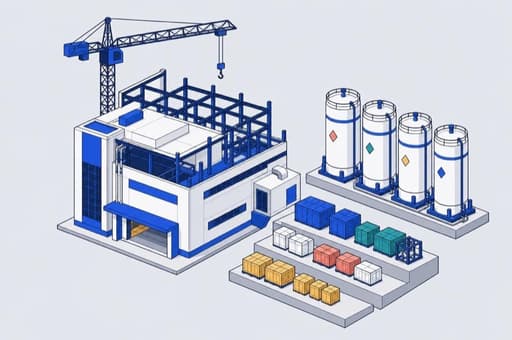
Samsung Electronics Next-Generation Semiconductor Fab Supply
A future South Korean chip factory will buy four essential gases from Air Products in phases through fiscal 2030. The deal strengthens the electronics pipeline, but construction timing and the factory's approval of gas purity come first.
Competes with Samsung South Korea gas expansion (Linde) · Semiconductor carrier-gas systems (Air Liquide)
In plain English
A chip factory needs extraordinary amounts of very clean gas before it can make a single chip. Under this deal, Air Products will build and own the nearby production equipment and storage system for Samsung's new South Korean factory.
Samsung will buy nitrogen, oxygen, argon, and hydrogen as the site opens in stages. That can become years of recurring gas sales without Samsung owning the supply plant, but Air Products earns nothing from operations until the equipment is finished, tested, and accepted.
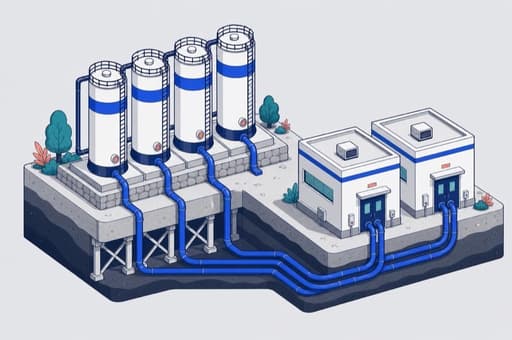
Taiwan Integrated Gas Supply Network
Four plants and underground pipes will extend the Taiwan network for new chip-making and chip-packing sites. The customer is unnamed, so the practical tests are its building schedule, permits, power, and exacting gas-quality checks.
Competes with Semiconductor carrier-gas supply (Air Liquide) · Electronics on-site supply (Linde)
In plain English
Instead of starting from an empty lot, this award extends a gas system Air Products already runs in Taiwan. Four large plants will feed nitrogen, oxygen, argon, and helium through buried pipes to an unnamed chipmaker's new factories.
That shared network is the advantage: new equipment can plug into existing supply rather than stand alone. The customer pays under a long contract once production begins, while Air Products must first build through permits and possible earthquakes and prove that every gas is clean enough for delicate chipmaking.
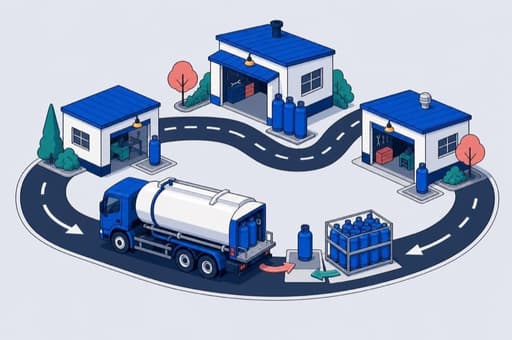
Merchant Gases
Tankers and cylinders bring industrial gases to customers too small or scattered for their own plant. Recent sales improved, but shorter contracts make factory demand and efficient delivery routes matter more; the Americas are growing while Europe is difficult.
Competes with Bulk and Packaged Gases (Linde) · Industrial Merchant (Air Liquide)
In plain English
The unglamorous delivery round that supplies much of industry. Air Products fills tankers and portable cylinders with gases, then drives them to manufacturers, hospitals, food processors, metal shops, aerospace users, and smaller chip plants.
Customers order what they need or sign contracts generally lasting no more than five years, usually without promising a minimum purchase. Air Products makes money by putting plenty of paying stops on each route and adjusting prices when costs change. Empty trucks, weak factories, or scarce containers hurt faster here than in the long on-site contracts.
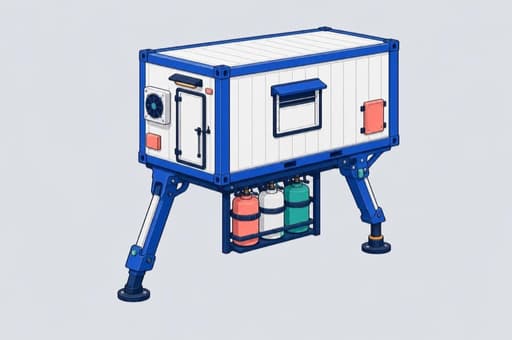
Helium
A small but unusually sensitive gas line serving chipmaking, medical scanners, and rockets. Supply comes from only a few countries, so a disruption can move costs and earnings far more than helium's sales weight suggests.
Competes with Liquid helium supply (Linde) · Global Helium and MRI supply (Air Liquide)
In plain English
Helium is hard to replace wherever something must be kept extremely cold or safely pressurized. Air Products buys it from sources in the United States, Qatar, and Algeria, stores it in Texas, and moves it around the world in specially insulated containers.
Chip factories, medical-scanner operators, and launch providers pay for dependable supply, not just the gas itself. The catch is that helium comes as a by-product from a limited set of facilities: when one source or shipping route falters, Air Products must lean on stored inventory and reset prices.
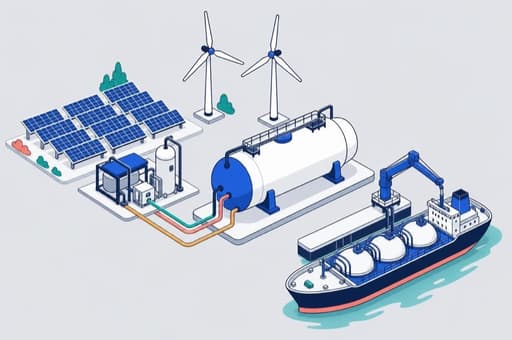
NEOM Green Hydrogen Project
A huge Saudi complex is meant to turn renewable power into hydrogen and then ammonia for shipping. Yara, the transport and sales partner, will market unused output; getting the plant running and ammonia prices are the crucial tests, with no material fiscal 2027 effect expected.
Competes with Duqm green ammonia (ACME) · Kakinada renewable ammonia (AM Green)
In plain English
This is the big attempt to create a new clean-fuel business. A Saudi complex owned equally by Air Products, ACWA Power, and NEOM Company will use renewable electricity to split water into hydrogen, then turn that hydrogen into ammonia, a liquid that is easier to ship.
Air Products must take the output offered to it. It can use some for European customers, while Yara transports and sells the rest for a fee and a share of extra gains. Money arrives only after the plant works reliably and buyers accept the market price, which leaves Air Products carrying most of that price risk.


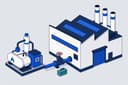 On-site GasesGas plants beside customers are the main engine, and recent quarterly sales are growing. Air Products has $28 billion of promised business across the company; keeping plants running and customers producing is what turns those promises into cash.
Gas plants beside customers are the main engine, and recent quarterly sales are growing. Air Products has $28 billion of promised business across the company; keeping plants running and customers producing is what turns those promises into cash.
In plain English
Think of this as a boiler room that Air Products builds and runs next door to someone else's factory. It separates or makes the gases that a refinery, steel mill, chemical plant, or chip factory needs every day, then sends them across a short pipe.
The customer avoids buying its own gas plant and signs up for roughly fifteen to twenty years. Air Products gets fixed payments or a promised minimum order, can adjust for energy costs, and earns its return by keeping an expensive plant busy and reliable.
Competes with On-Site Gas Supply (Linde) · Large Industries (Air Liquide)
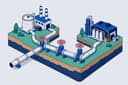 Hydrogen and HyCO Supply NetworksA large shared network carries hydrogen and carbon monoxide to refiners and chemical plants. New facilities helped growth recently, but customer production, reliable flow, and the cost of natural gas decide how well it pays.
A large shared network carries hydrogen and carbon monoxide to refiners and chemical plants. New facilities helped growth recently, but customer production, reliable flow, and the cost of natural gas decide how well it pays.
In plain English
Here the product usually travels through pipes, not on trucks. Air Products makes hydrogen and carbon monoxide—gases refiners and chemical plants use to clean fuels or make other chemicals—at dedicated plants or from streams another factory would otherwise waste.
Several customers can connect to one local network, spreading the cost of the pipes and production equipment. They pay for steady supply while Air Products keeps the system flowing; contracts often pass changing natural-gas costs through to the buyer.
Competes with U.S. Gulf Coast hydrogen pipeline (Air Liquide) · HyCO plants and pipelines (Linde)
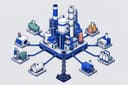 Jazan Integrated Gasification and Power CompanyA single-purpose utility serving Saudi Aramco's Jazan complex with gas, power, steam, and hydrogen. Its long customer agreement is the attraction; refinery uptime, financing, and the partners' decisions are the watchpoints.
A single-purpose utility serving Saudi Aramco's Jazan complex with gas, power, steam, and hydrogen. Its long customer agreement is the attraction; refinery uptime, financing, and the partners' decisions are the watchpoints.
In plain English
One Saudi industrial complex gets its own all-in-one utility company. Jazan Integrated Gasification and Power Company runs the machinery that supplies Saudi Aramco's Jazan site with power, steam, hydrogen, and other gases, rather than selling into an open market.
Air Products owns most of the venture alongside Saudi and regional partners. Aramco pays under a long agreement that began in fiscal two thousand twenty-two, and the venture sends money back to its owners after operating and financing needs are met.
Competes with Low-carbon ammonia gas complex (Linde) · Large Industries supply (Air Liquide)
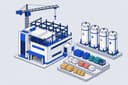 Samsung Electronics Next-Generation Semiconductor Fab SupplyA future South Korean chip factory will buy four essential gases from Air Products in phases through fiscal 2030. The deal strengthens the electronics pipeline, but construction timing and the factory's approval of gas purity come first.
A future South Korean chip factory will buy four essential gases from Air Products in phases through fiscal 2030. The deal strengthens the electronics pipeline, but construction timing and the factory's approval of gas purity come first.
In plain English
A chip factory needs extraordinary amounts of very clean gas before it can make a single chip. Under this deal, Air Products will build and own the nearby production equipment and storage system for Samsung's new South Korean factory.
Samsung will buy nitrogen, oxygen, argon, and hydrogen as the site opens in stages. That can become years of recurring gas sales without Samsung owning the supply plant, but Air Products earns nothing from operations until the equipment is finished, tested, and accepted.
Competes with Samsung South Korea gas expansion (Linde) · Semiconductor carrier-gas systems (Air Liquide)
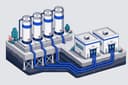 Taiwan Integrated Gas Supply NetworkFour plants and underground pipes will extend the Taiwan network for new chip-making and chip-packing sites. The customer is unnamed, so the practical tests are its building schedule, permits, power, and exacting gas-quality checks.
Four plants and underground pipes will extend the Taiwan network for new chip-making and chip-packing sites. The customer is unnamed, so the practical tests are its building schedule, permits, power, and exacting gas-quality checks.
In plain English
Instead of starting from an empty lot, this award extends a gas system Air Products already runs in Taiwan. Four large plants will feed nitrogen, oxygen, argon, and helium through buried pipes to an unnamed chipmaker's new factories.
That shared network is the advantage: new equipment can plug into existing supply rather than stand alone. The customer pays under a long contract once production begins, while Air Products must first build through permits and possible earthquakes and prove that every gas is clean enough for delicate chipmaking.
Competes with Semiconductor carrier-gas supply (Air Liquide) · Electronics on-site supply (Linde)
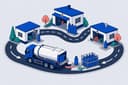 Merchant GasesTankers and cylinders bring industrial gases to customers too small or scattered for their own plant. Recent sales improved, but shorter contracts make factory demand and efficient delivery routes matter more; the Americas are growing while Europe is difficult.
Tankers and cylinders bring industrial gases to customers too small or scattered for their own plant. Recent sales improved, but shorter contracts make factory demand and efficient delivery routes matter more; the Americas are growing while Europe is difficult.
In plain English
The unglamorous delivery round that supplies much of industry. Air Products fills tankers and portable cylinders with gases, then drives them to manufacturers, hospitals, food processors, metal shops, aerospace users, and smaller chip plants.
Customers order what they need or sign contracts generally lasting no more than five years, usually without promising a minimum purchase. Air Products makes money by putting plenty of paying stops on each route and adjusting prices when costs change. Empty trucks, weak factories, or scarce containers hurt faster here than in the long on-site contracts.
Competes with Bulk and Packaged Gases (Linde) · Industrial Merchant (Air Liquide)
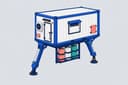 HeliumA small but unusually sensitive gas line serving chipmaking, medical scanners, and rockets. Supply comes from only a few countries, so a disruption can move costs and earnings far more than helium's sales weight suggests.
A small but unusually sensitive gas line serving chipmaking, medical scanners, and rockets. Supply comes from only a few countries, so a disruption can move costs and earnings far more than helium's sales weight suggests.
In plain English
Helium is hard to replace wherever something must be kept extremely cold or safely pressurized. Air Products buys it from sources in the United States, Qatar, and Algeria, stores it in Texas, and moves it around the world in specially insulated containers.
Chip factories, medical-scanner operators, and launch providers pay for dependable supply, not just the gas itself. The catch is that helium comes as a by-product from a limited set of facilities: when one source or shipping route falters, Air Products must lean on stored inventory and reset prices.
Competes with Liquid helium supply (Linde) · Global Helium and MRI supply (Air Liquide)
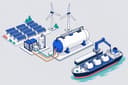 NEOM Green Hydrogen ProjectA huge Saudi complex is meant to turn renewable power into hydrogen and then ammonia for shipping. Yara, the transport and sales partner, will market unused output; getting the plant running and ammonia prices are the crucial tests, with no material fiscal 2027 effect expected.
A huge Saudi complex is meant to turn renewable power into hydrogen and then ammonia for shipping. Yara, the transport and sales partner, will market unused output; getting the plant running and ammonia prices are the crucial tests, with no material fiscal 2027 effect expected.
In plain English
This is the big attempt to create a new clean-fuel business. A Saudi complex owned equally by Air Products, ACWA Power, and NEOM Company will use renewable electricity to split water into hydrogen, then turn that hydrogen into ammonia, a liquid that is easier to ship.
Air Products must take the output offered to it. It can use some for European customers, while Yara transports and sells the rest for a fee and a share of extra gains. Money arrives only after the plant works reliably and buyers accept the market price, which leaves Air Products carrying most of that price risk.
Competes with Duqm green ammonia (ACME) · Kakinada renewable ammonia (AM Green)
Named in filings, launches and programs
- Sale of EquipmentProduct lineGas-making machinery and containers supplied 4.3% of fiscal 2025 revenue; sales have shrunk sharply since the LNG equipment business was sold.
- Air Products San FuBrandTaiwan operating company that owns the island's connected semiconductor-gas network and will carry out the new four-plant award.
- PRISM Membrane SystemsProduct lineCompact separators that make nitrogen, dry air, recover hydrogen, upgrade biogas, or enrich oxygen at a customer's site.
- RotoflowBrandPrecision spinning machinery for gas-processing systems, backed by service and repair hubs after the equipment is installed.
- Gardner CryogenicsBrandSpecialized containers for moving and storing extremely cold helium and hydrogen, including equipment used in Air Products' own helium network.
- Blue Hydrogen Industrial Gases CompanyCustomer program · RampingSaudi venture building hydrogen, nitrogen, and oxygen plants and pipelines for an industrial area in Jubail.
- Alberta Net-Zero Hydrogen Energy ComplexCustomer program · RampingCanadian clean-hydrogen project still absorbing construction spending, with no updated opening date given in the latest quarter.
- NASA Liquid Hydrogen Supply ContractsCustomer programMore than $140 million of liquid-hydrogen supply awards announced for several NASA facilities across the United States.
- Other Electronics Backlog WinsCustomer program · AnnouncedUnnamed electronics projects among more than $1.5 billion of traditional wins added during the six months through July 2026.
Sale of EquipmentProduct line
Gas-making machinery and containers supplied 4.3% of fiscal 2025 revenue; sales have shrunk sharply since the LNG equipment business was sold.
Air Products San FuBrand
Taiwan operating company that owns the island's connected semiconductor-gas network and will carry out the new four-plant award.
PRISM Membrane SystemsProduct line
Compact separators that make nitrogen, dry air, recover hydrogen, upgrade biogas, or enrich oxygen at a customer's site.
RotoflowBrand
Precision spinning machinery for gas-processing systems, backed by service and repair hubs after the equipment is installed.
Gardner CryogenicsBrand
Specialized containers for moving and storing extremely cold helium and hydrogen, including equipment used in Air Products' own helium network.
Blue Hydrogen Industrial Gases CompanyCustomer program · Ramping
Saudi venture building hydrogen, nitrogen, and oxygen plants and pipelines for an industrial area in Jubail.
Alberta Net-Zero Hydrogen Energy ComplexCustomer program · Ramping
Canadian clean-hydrogen project still absorbing construction spending, with no updated opening date given in the latest quarter.
NASA Liquid Hydrogen Supply ContractsCustomer program
More than $140 million of liquid-hydrogen supply awards announced for several NASA facilities across the United States.
Other Electronics Backlog WinsCustomer program · Announced
Unnamed electronics projects among more than $1.5 billion of traditional wins added during the six months through July 2026.