
Ares Management (ARES)
Manages credit-led alternative investment strategies across private markets and real assets.
Something off on this page? Send us feedback.
Ares invests other people's money and charges a fee for doing it — above all by lending to mid-sized companies that buyout firms own. Institutions supply most of the capital, but individual savers are the fastest-growing source. A large purchase last year added warehouses and data-center development to the mix. Steady management fees pay the bills; the share of investment profits arrives in lumps, when it arrives at all.
Item facts: FY2025 · year ended Dec 31, 2025, from filings, earnings calls and company pages.
Judgment weights, not filed revenue
The band summarizes business focus and direction. ~ marks estimates.
9 in detail · 16 more below
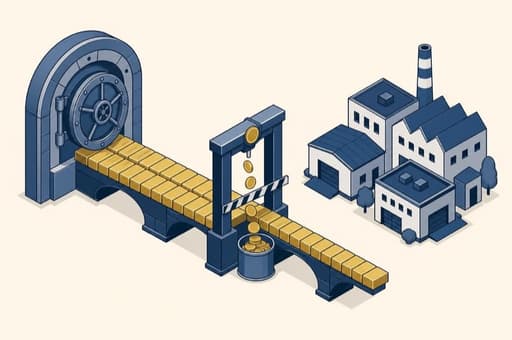
U.S. and European Direct Lending
Loans to mid-sized companies owned by buyout firms — the largest fee pool here, with roughly $52B of new U.S. loans in the year to June 2026. Firm-wide, $92.6B sits committed but not yet invested: about $828M of future yearly fees waiting on deals.
Competes with OBDC · listed lending fund (Blue Owl) · GCRED (Golub) · HLEND (HPS)
In plain English
Picture a company too big for a loan from the local bank and too small to sell bonds. A buyout firm owns it, needs cash to grow it, and calls Ares.
Ares puts money from pension funds and, increasingly, ordinary savers into those loans, then takes roughly a penny a year on every dollar it looks after, plus a slice of the interest collected. The money is spread across thousands of borrowers and more than 2,850 institutional clients — no single client is worth more than a tenth of revenue. The catch: no takeovers, no new loans, and mid-sized deal counts fell 41% in early 2026.
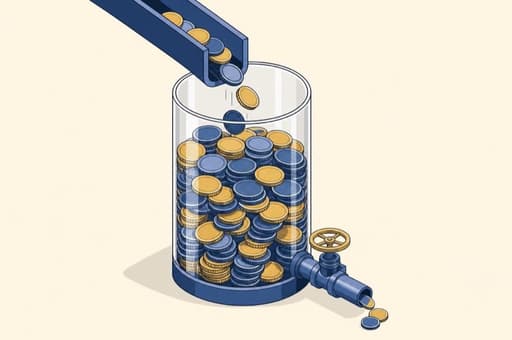
Ares Strategic Income Fund (ASIF)
The lending fund sold to individuals through advisers — about $23B, with $11.5B gathered in 2025 alone. Twice this year investors asked to pull out more than the rules allow and withdrawals were rationed; by late July the requests had cooled.
Competes with BCRED · non-traded lending fund (Blackstone) · Apollo Debt Solutions (Apollo) · OCIC · non-traded lending fund (Blue Owl)
In plain English
A fund you buy through a financial adviser. It lends to companies and passes on the interest it collects, but it is not listed on any exchange, so there is no market to sell your stake into.
Instead ASIF buys shares back itself, up to 5% of the fund each quarter. In two quarters of 2026 requests ran past that line — 14.4% of shares in the spring — and everyone got a proportion of what they asked for. Ares reckons a full year at the 5% limit with no new money in would cost about 1% of its fee-paying assets. By late July, requests across its core U.S. wealth funds were back near 2.5%.
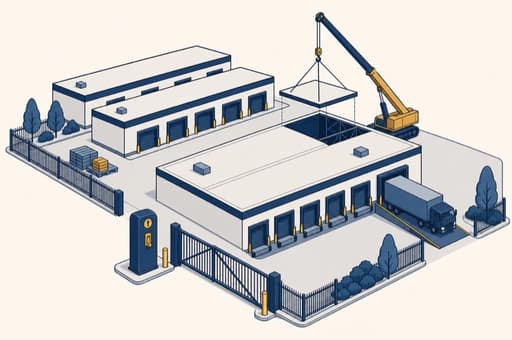
Real Assets Group
Warehouses, property funds and infrastructure. Fee revenue jumped to $714M in 2025 from $402M, the leap arriving with the GCP International purchase, and property values now gate the fee upside on its property trusts.
Competes with Link Logistics warehouses (Blackstone) · U.S. warehouse portfolio (Prologis) · infrastructure funds (Brookfield)
In plain English
Warehouses where online orders wait to be delivered, student housing, data-center campuses — plus loans made against buildings like them.
Investors hand Ares money to buy, build and rent these out; Ares charges a yearly fee on the value it looks after and keeps a slice of the gains. The scale arrived by purchase: GCP International cost $3.7B upfront in March 2025 and brought about $42B of assets across Japan, Europe, the U.S., Brazil and Vietnam, a Tokyo-listed property trust, and most of the thousand-odd people Ares added to its payroll that year.
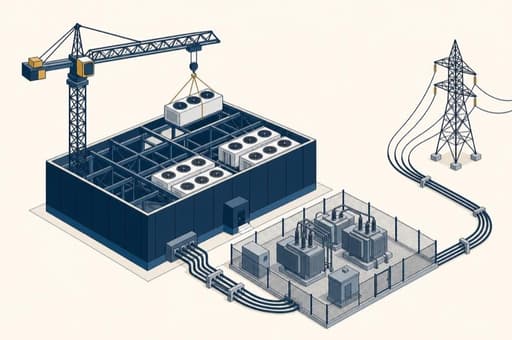
Ada Infrastructure
The data-center developer that came with the GCP purchase: seven campuses and twenty-two projects under way at mid-2026, about a gigawatt of power in all. Securing electricity, not finding tenants, is what sets the pace.
Competes with hyperscale campuses (Vantage) · hyperscale campuses (QTS) · hyperscale campuses (Aligned)
In plain English
Somewhere behind every chatbot answer sits a shed full of computers that needs land, cooling and an enormous electricity hookup. Ada builds those sheds.
The money works like any development business: buy the land, secure the power, put up the building, sign a long lease with a company that needs computing space, then collect rent — and Ares charges its investors a fee on the value all the while. Ada arrived inside the GCP International deal in March 2025. The scarce ingredient is not concrete or demand; it is the power connection, and Ares has not said which companies will take the space.

Alternative Credit (Pathfinder)
Lending against things rather than company profits — auto leases, aircraft, royalties, home loans. About $57B managed by March 2026, and the newest fund closed at $8.5B against a $6.5B target. Its 16.4% gross return led every credit strategy here.
Competes with Asset-Based Finance Fund (KKR) · asset-backed lending platform (Apollo) · asset-backed lending platform (Blackstone)
In plain English
Ordinary company lending asks one question: does this business earn enough to pay us back? This asks a different one — what is standing behind the loan? A fleet of leased cars, an aircraft, a pool of home loans, a stream of royalties.
Banks used to hold most of this and are stepping back, so Ares buys the loans or lends against the pools, often through standing agreements to take a steady flow from the original lender and through ventures like a $1.5B auto-lease partnership. Investors pay a yearly fee on what they commit. Ares says it runs four of the five largest institutional funds of this kind.

Liquid, Opportunistic and APAC Credit
The traded end: bundled company loans, high-yield bonds, rescue financing and an Asia-Pacific book. About $38B of loan bundles puts Ares fifth, behind Blackstone, Carlyle, Golub and Apollo, and the fees here are the thinnest it charges.
Competes with bundled-loan funds (Blackstone) · bundled-loan funds (Carlyle) · Redding Ridge bundled-loan funds (Apollo)
In plain English
The unglamorous corner that helps keep the lights on. Big companies borrow through loans that banks arrange and then sell on in pieces; Ares buys those pieces, parcels a few hundred of them into a single vehicle, and sells slices of the income onward — the safest slice goes to banks and insurers, and their appetite decides whether a deal works at all.
Alongside that sit rescue money for companies in trouble and a separate Asia-Pacific book. Fees are a fraction of a percent, far below what the private funds charge, but the contracts run about nine years, so the revenue barely moves either way.

Secondaries Group
Buying investors' existing stakes in private funds from people who want out early. Fee revenue was $331.6M in 2025 and assets rose 30% in a year — the fastest-growing group at Ares, though still one of the smallest.
Competes with SPRIM (StepStone) · C-SPEF (Coller Capital) · Global Private Secondary Fund (Hamilton Lane)
In plain English
Money put into a private fund is locked up for years. Suppose a university endowment committed six years ago and now wants its cash back early — somebody has to buy that seat at the table. Ares is one of the buyers, and it also finances deals where a fund manager rolls a company into a fresh vehicle instead of selling it.
It buys with investors' money and charges the usual yearly fee plus a share of the gains. Business is best when companies are hard to sell, because that is when investors run short of cash coming back — which is where the industry has been.

Private Equity Group
Buying whole companies — the smallest and slowest group: $139.2M of fee revenue in 2025, with assets up 3% while the firm as a whole grew 17%. Its real value is $123M of profit share waiting on sales.
Competes with flagship buyout funds (KKR) · flagship buyout funds (Blackstone) · flagship buyout funds (Carlyle)
In plain English
The classic version of this business: raise a pot from pension funds, buy companies outright, run them for years, sell them, keep a slice of the profit.
Ares has one, and it is the part that has stopped growing — assets barely moved last year while every other group expanded. The funds themselves do their job: the sixth flagship shows a 19.5% annual gross return since it started. But the payoff only lands when a company is sold, and selling has been slow. Treat it as a stored-up payday rather than an engine — unusually, the profit share here can be paid out before the whole fund is wound up.

Ares Insurance Solutions and Aspida
Aspida sells retirement annuities and reinsures them, holding over $31B by March 2026. The direct fees are tiny, but its money buys Ares' own credit funds, and its fee-paying assets grew 54% in a year — the fastest of any group.
Competes with Athene annuities (Apollo) · Global Atlantic (KKR) · fixed indexed annuities (F&G)
In plain English
An annuity is a bargain a saver strikes with an insurer: hand over a lump sum now, receive a stream of payments later. Aspida — the insurer Ares started in 2019 and runs alongside itself, from Durham, North Carolina, with a reinsurance arm in Bermuda that takes on other insurers' policies — does exactly that.
Why it matters more than the fee line suggests: that money sits still for decades, which is precisely what Ares' lending funds want. Aspida's savings buy asset-backed credit and infrastructure loans from Ares, which charges to manage them. Apollo built the template with Athene, roughly ten times Aspida's size; Ares has never said publicly how much of Aspida it owns.


 U.S. and European Direct LendingLoans to mid-sized companies owned by buyout firms — the largest fee pool here, with roughly $52B of new U.S. loans in the year to June 2026. Firm-wide, $92.6B sits committed but not yet invested: about $828M of future yearly fees waiting on deals.
Loans to mid-sized companies owned by buyout firms — the largest fee pool here, with roughly $52B of new U.S. loans in the year to June 2026. Firm-wide, $92.6B sits committed but not yet invested: about $828M of future yearly fees waiting on deals.
In plain English
Picture a company too big for a loan from the local bank and too small to sell bonds. A buyout firm owns it, needs cash to grow it, and calls Ares.
Ares puts money from pension funds and, increasingly, ordinary savers into those loans, then takes roughly a penny a year on every dollar it looks after, plus a slice of the interest collected. The money is spread across thousands of borrowers and more than 2,850 institutional clients — no single client is worth more than a tenth of revenue. The catch: no takeovers, no new loans, and mid-sized deal counts fell 41% in early 2026.
Competes with OBDC · listed lending fund (Blue Owl) · GCRED (Golub) · HLEND (HPS)
 Ares Strategic Income Fund (ASIF)The lending fund sold to individuals through advisers — about $23B, with $11.5B gathered in 2025 alone. Twice this year investors asked to pull out more than the rules allow and withdrawals were rationed; by late July the requests had cooled.
The lending fund sold to individuals through advisers — about $23B, with $11.5B gathered in 2025 alone. Twice this year investors asked to pull out more than the rules allow and withdrawals were rationed; by late July the requests had cooled.
In plain English
A fund you buy through a financial adviser. It lends to companies and passes on the interest it collects, but it is not listed on any exchange, so there is no market to sell your stake into.
Instead ASIF buys shares back itself, up to 5% of the fund each quarter. In two quarters of 2026 requests ran past that line — 14.4% of shares in the spring — and everyone got a proportion of what they asked for. Ares reckons a full year at the 5% limit with no new money in would cost about 1% of its fee-paying assets. By late July, requests across its core U.S. wealth funds were back near 2.5%.
Competes with BCRED · non-traded lending fund (Blackstone) · Apollo Debt Solutions (Apollo) · OCIC · non-traded lending fund (Blue Owl)
 Real Assets GroupWarehouses, property funds and infrastructure. Fee revenue jumped to $714M in 2025 from $402M, the leap arriving with the GCP International purchase, and property values now gate the fee upside on its property trusts.
Warehouses, property funds and infrastructure. Fee revenue jumped to $714M in 2025 from $402M, the leap arriving with the GCP International purchase, and property values now gate the fee upside on its property trusts.
In plain English
Warehouses where online orders wait to be delivered, student housing, data-center campuses — plus loans made against buildings like them.
Investors hand Ares money to buy, build and rent these out; Ares charges a yearly fee on the value it looks after and keeps a slice of the gains. The scale arrived by purchase: GCP International cost $3.7B upfront in March 2025 and brought about $42B of assets across Japan, Europe, the U.S., Brazil and Vietnam, a Tokyo-listed property trust, and most of the thousand-odd people Ares added to its payroll that year.
Competes with Link Logistics warehouses (Blackstone) · U.S. warehouse portfolio (Prologis) · infrastructure funds (Brookfield)
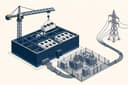 Ada InfrastructureThe data-center developer that came with the GCP purchase: seven campuses and twenty-two projects under way at mid-2026, about a gigawatt of power in all. Securing electricity, not finding tenants, is what sets the pace.
The data-center developer that came with the GCP purchase: seven campuses and twenty-two projects under way at mid-2026, about a gigawatt of power in all. Securing electricity, not finding tenants, is what sets the pace.
In plain English
Somewhere behind every chatbot answer sits a shed full of computers that needs land, cooling and an enormous electricity hookup. Ada builds those sheds.
The money works like any development business: buy the land, secure the power, put up the building, sign a long lease with a company that needs computing space, then collect rent — and Ares charges its investors a fee on the value all the while. Ada arrived inside the GCP International deal in March 2025. The scarce ingredient is not concrete or demand; it is the power connection, and Ares has not said which companies will take the space.
Competes with hyperscale campuses (Vantage) · hyperscale campuses (QTS) · hyperscale campuses (Aligned)
 Alternative Credit (Pathfinder)Lending against things rather than company profits — auto leases, aircraft, royalties, home loans. About $57B managed by March 2026, and the newest fund closed at $8.5B against a $6.5B target. Its 16.4% gross return led every credit strategy here.
Lending against things rather than company profits — auto leases, aircraft, royalties, home loans. About $57B managed by March 2026, and the newest fund closed at $8.5B against a $6.5B target. Its 16.4% gross return led every credit strategy here.
In plain English
Ordinary company lending asks one question: does this business earn enough to pay us back? This asks a different one — what is standing behind the loan? A fleet of leased cars, an aircraft, a pool of home loans, a stream of royalties.
Banks used to hold most of this and are stepping back, so Ares buys the loans or lends against the pools, often through standing agreements to take a steady flow from the original lender and through ventures like a $1.5B auto-lease partnership. Investors pay a yearly fee on what they commit. Ares says it runs four of the five largest institutional funds of this kind.
Competes with Asset-Based Finance Fund (KKR) · asset-backed lending platform (Apollo) · asset-backed lending platform (Blackstone)
 Liquid, Opportunistic and APAC CreditThe traded end: bundled company loans, high-yield bonds, rescue financing and an Asia-Pacific book. About $38B of loan bundles puts Ares fifth, behind Blackstone, Carlyle, Golub and Apollo, and the fees here are the thinnest it charges.
The traded end: bundled company loans, high-yield bonds, rescue financing and an Asia-Pacific book. About $38B of loan bundles puts Ares fifth, behind Blackstone, Carlyle, Golub and Apollo, and the fees here are the thinnest it charges.
In plain English
The unglamorous corner that helps keep the lights on. Big companies borrow through loans that banks arrange and then sell on in pieces; Ares buys those pieces, parcels a few hundred of them into a single vehicle, and sells slices of the income onward — the safest slice goes to banks and insurers, and their appetite decides whether a deal works at all.
Alongside that sit rescue money for companies in trouble and a separate Asia-Pacific book. Fees are a fraction of a percent, far below what the private funds charge, but the contracts run about nine years, so the revenue barely moves either way.
Competes with bundled-loan funds (Blackstone) · bundled-loan funds (Carlyle) · Redding Ridge bundled-loan funds (Apollo)
 Secondaries GroupBuying investors' existing stakes in private funds from people who want out early. Fee revenue was $331.6M in 2025 and assets rose 30% in a year — the fastest-growing group at Ares, though still one of the smallest.
Buying investors' existing stakes in private funds from people who want out early. Fee revenue was $331.6M in 2025 and assets rose 30% in a year — the fastest-growing group at Ares, though still one of the smallest.
In plain English
Money put into a private fund is locked up for years. Suppose a university endowment committed six years ago and now wants its cash back early — somebody has to buy that seat at the table. Ares is one of the buyers, and it also finances deals where a fund manager rolls a company into a fresh vehicle instead of selling it.
It buys with investors' money and charges the usual yearly fee plus a share of the gains. Business is best when companies are hard to sell, because that is when investors run short of cash coming back — which is where the industry has been.
Competes with SPRIM (StepStone) · C-SPEF (Coller Capital) · Global Private Secondary Fund (Hamilton Lane)
 Private Equity GroupBuying whole companies — the smallest and slowest group: $139.2M of fee revenue in 2025, with assets up 3% while the firm as a whole grew 17%. Its real value is $123M of profit share waiting on sales.
Buying whole companies — the smallest and slowest group: $139.2M of fee revenue in 2025, with assets up 3% while the firm as a whole grew 17%. Its real value is $123M of profit share waiting on sales.
In plain English
The classic version of this business: raise a pot from pension funds, buy companies outright, run them for years, sell them, keep a slice of the profit.
Ares has one, and it is the part that has stopped growing — assets barely moved last year while every other group expanded. The funds themselves do their job: the sixth flagship shows a 19.5% annual gross return since it started. But the payoff only lands when a company is sold, and selling has been slow. Treat it as a stored-up payday rather than an engine — unusually, the profit share here can be paid out before the whole fund is wound up.
Competes with flagship buyout funds (KKR) · flagship buyout funds (Blackstone) · flagship buyout funds (Carlyle)
 Ares Insurance Solutions and AspidaAspida sells retirement annuities and reinsures them, holding over $31B by March 2026. The direct fees are tiny, but its money buys Ares' own credit funds, and its fee-paying assets grew 54% in a year — the fastest of any group.
Aspida sells retirement annuities and reinsures them, holding over $31B by March 2026. The direct fees are tiny, but its money buys Ares' own credit funds, and its fee-paying assets grew 54% in a year — the fastest of any group.
In plain English
An annuity is a bargain a saver strikes with an insurer: hand over a lump sum now, receive a stream of payments later. Aspida — the insurer Ares started in 2019 and runs alongside itself, from Durham, North Carolina, with a reinsurance arm in Bermuda that takes on other insurers' policies — does exactly that.
Why it matters more than the fee line suggests: that money sits still for decades, which is precisely what Ares' lending funds want. Aspida's savings buy asset-backed credit and infrastructure loans from Ares, which charges to manage them. Apollo built the template with Athene, roughly ten times Aspida's size; Ares has never said publicly how much of Aspida it owns.
Competes with Athene annuities (Apollo) · Global Atlantic (KKR) · fixed indexed annuities (F&G)
Named in filings, launches and programs
- Ares Wealth Management SolutionsPlatform · RampingThe sales arm that puts private funds in front of individual investors through advisers — over $76B gathered, with $100B targeted by 2028.
- Ares Capital Corporation (ARCC)Customer programThe stock-market-listed lending fund Ares runs, the largest in the U.S.: a $29.3B loan book at mid-2026, and one of Ares' biggest single fee sources.
- Ares Senior Direct Lending Fund IIIProductThe U.S. senior lending flagship for institutions; took $3.7B of debt commitments in 2025, with the next version opening to investors in autumn 2026.
- Ares Capital Europe franchiseProduct lineThe European arm of the same company-lending business; the seventh fund in the series launches in early 2027.
- Ares Pathfinder Fund IIIProductThe newest asset-backed fund, closed at $8.5B in June 2026 — above its target and above the $6.6B its predecessor raised.
- Ares Private Markets Fund (APMF)Customer programThe always-open fund for individuals buying second-hand stakes in private funds; up 16.2% over twelve months and the biggest contributor to Ares' performance-linked fees in the June 2026 quarter.
- Ares Industrial Real Estate Income TrustCustomer programA warehouse-owning property trust sold to individual investors — 276 buildings worth $10.7B at mid-2026.
- Ares Real Estate Income TrustCustomer programThe broader property trust for individuals: 148 properties worth $8.9B, climbing back toward the level where performance fees start again.
- Ares Core Infrastructure FundCustomer program · RampingAn always-open infrastructure fund that has gathered over $5.7B in two years.
- Ares Dynamic Credit Allocation FundCustomer programA small NYSE-listed credit fund paying $0.1125 a share every month.
- Japan Logistics Development Partners VProductThe fifth Japanese warehouse development fund, closed at its maximum size of ¥612B — about $4B — on 31 August 2026.
- GLP J-REITCustomer programA Tokyo-listed property trust that came with the GCP purchase; it has returned 13.6% a year since 2012.
- Whitestone REIT portfolioBrandFifty-four properties taken off the stock market for $1.7B in July 2026.
- Sports, Media and Entertainment strategyProduct lineInvesting in sports, media and entertainment; products were still in development as of late 2024, in a market Ares sizes above $750B.
- Infrastructure debt fund VIProduct · AnnouncedThe sixth infrastructure lending fund, due to close during 2026 above the $5B its predecessor raised.
- Capital solutions businessProduct · AnnouncedA growth push named on the July 2026 call, to be built in-house and with partners; no size disclosed yet.
Ares Wealth Management SolutionsPlatform · Ramping
The sales arm that puts private funds in front of individual investors through advisers — over $76B gathered, with $100B targeted by 2028.
Ares Capital Corporation (ARCC)Customer program
The stock-market-listed lending fund Ares runs, the largest in the U.S.: a $29.3B loan book at mid-2026, and one of Ares' biggest single fee sources.
Ares Senior Direct Lending Fund IIIProduct
The U.S. senior lending flagship for institutions; took $3.7B of debt commitments in 2025, with the next version opening to investors in autumn 2026.
Ares Capital Europe franchiseProduct line
The European arm of the same company-lending business; the seventh fund in the series launches in early 2027.
Ares Pathfinder Fund IIIProduct
The newest asset-backed fund, closed at $8.5B in June 2026 — above its target and above the $6.6B its predecessor raised.
Ares Private Markets Fund (APMF)Customer program
The always-open fund for individuals buying second-hand stakes in private funds; up 16.2% over twelve months and the biggest contributor to Ares' performance-linked fees in the June 2026 quarter.
Ares Industrial Real Estate Income TrustCustomer program
A warehouse-owning property trust sold to individual investors — 276 buildings worth $10.7B at mid-2026.
Ares Real Estate Income TrustCustomer program
The broader property trust for individuals: 148 properties worth $8.9B, climbing back toward the level where performance fees start again.
Ares Core Infrastructure FundCustomer program · Ramping
An always-open infrastructure fund that has gathered over $5.7B in two years.
Ares Dynamic Credit Allocation FundCustomer program
A small NYSE-listed credit fund paying $0.1125 a share every month.
Japan Logistics Development Partners VProduct
The fifth Japanese warehouse development fund, closed at its maximum size of ¥612B — about $4B — on 31 August 2026.
GLP J-REITCustomer program
A Tokyo-listed property trust that came with the GCP purchase; it has returned 13.6% a year since 2012.
Whitestone REIT portfolioBrand
Fifty-four properties taken off the stock market for $1.7B in July 2026.
Sports, Media and Entertainment strategyProduct line
Investing in sports, media and entertainment; products were still in development as of late 2024, in a market Ares sizes above $750B.
Infrastructure debt fund VIProduct · Announced
The sixth infrastructure lending fund, due to close during 2026 above the $5B its predecessor raised.
Capital solutions businessProduct · Announced
A growth push named on the July 2026 call, to be built in-house and with partners; no size disclosed yet.