
ATI (ATI)
Produces advanced alloys, forgings, and components for aerospace, defense, and demanding industrial applications.
Something off on this page? Send us feedback.
ATI melts, forges and machines metals built to survive places ordinary metal cannot — the hot core of a jet engine, a naval reactor, a missile in flight. Most of what it sells now goes to aircraft and defense programs, and management is steering further that way. The plainer industrial metal it has long rolled is being set aside on purpose to make room.
Item facts: FY2025 · year ended December 28, 2025, from filings, earnings calls and company pages.
Judgment weights, not filed revenue
The band summarizes business focus and direction. ~ marks estimates.
8 in detail · 11 more below
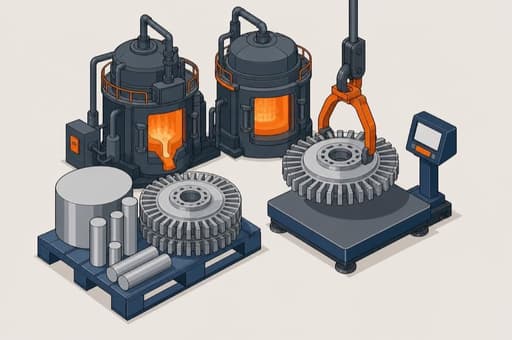
Jet Engine Materials
Nickel and titanium sold by the pound to engine makers and their forging shops. Sales rose 21% in FY2025, and the company's whole confirmed order book reached $4.4B by mid-2026, roughly 70% of it shipping inside a year.
Competes with Special Metals nickel alloys (Precision Castparts) · Specialty Alloys Operations (Carpenter Technology) · VDM Metals nickel alloys (Acerinox)
In plain English
Inside a jet engine, the parts closest to the fire sit in air hot enough to soften ordinary steel while spinning hard enough to tear themselves apart. They are made from recipes of nickel, cobalt and titanium that ATI melts in vacuum furnaces and sells as ingots, bars and billets — the rough shapes an engine maker's forging chain turns into discs, rings, cases and shafts.
The money comes from being approved. An engine maker spends years testing a supplier's exact recipe before a part may fly, so an approved position is hard to dislodge. ATI makes six of the seven most advanced engine nickel recipes and is the sole source on five, and next-generation engines carry more than double the content of the ones they replace.
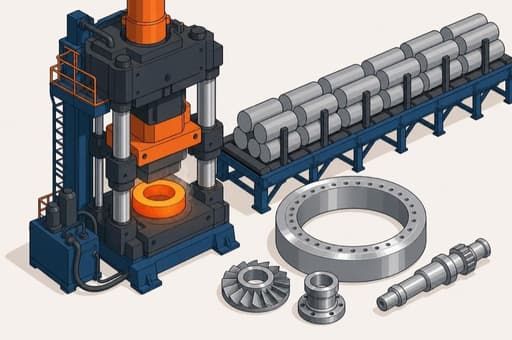
Jet Engine Forgings and Machined Components
The step after melting: pressing hot alloy into engine rings, discs and shafts, then machining them. About a tenth of sales, and capacity-bound — the slowest presses are booked more than two years out.
Competes with Precision forgings (Aubert & Duval) · Forged products (Precision Castparts) · Engine products (Howmet Aerospace)
In plain English
Melting the metal is only half the job. The other half is squeezing it: heating a chunk of alloy and pressing it into the rough shape of a ring, disc or shaft, then machining it to final form. ATI does this to metal it melted itself, so it earns on the same pound twice.
Presses that can do this are scarce. ATI's slowest type, isothermal forging, is booked more than two years ahead, which tells you the queue is the product — engine makers pay for a place in it. Pratt & Whitney, working through accelerated shop visits on its geared turbofan engines, grew its ATI forging content six-fold between 2023 and 2025.
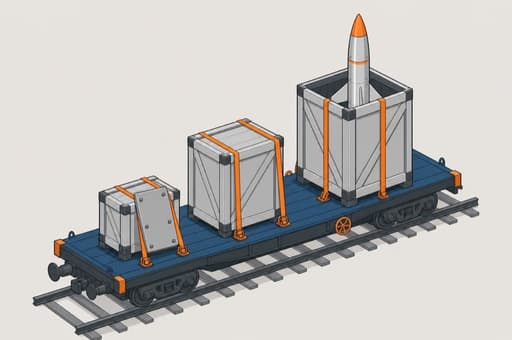
Defense Materials
Metal for naval reactors, missiles, armor and rotorcraft. It grew 36% in the second quarter of FY2026, an all-time high. Aerospace and defense together were 68% of FY2025 sales, and management expects above 70% this year.
Competes with Defense-grade titanium alloys (Howmet Aerospace) · Nickel and specialty alloys (Haynes International) · CEZUS refractory metals (Framatome)
In plain English
A submarine reactor has to run for years with no repair shop nearby; a missile has to work the one time it flies; armor has to stop what hits it. All three are metal problems, and ATI supplies the metal — titanium, nickel, and the little-known metals niobium and hafnium.
The buyers are governments and their contractors, spending on schedules set by ship counts and stockpile refills rather than by the economy, which makes the demand visible years ahead. Missiles are the fastest-moving piece: up more than fourfold in the second quarter of FY2026, though from a small base, and roughly a fifth of defense sales.
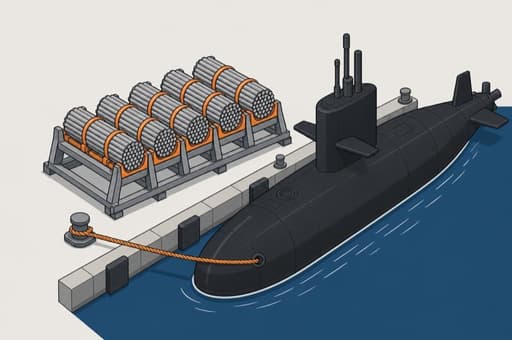
BWXT Naval Nuclear Material Agreement
A five-year deal to supply the specialty metal behind U.S. naval nuclear propulsion, running through 2030 and worth roughly $1B. It more than doubles what the work brings in each year, mostly on price; shipments started early, in mid-2026.
Competes with Western Zirconium nuclear-grade zirconium (Westinghouse) · CEZUS zirconium and hafnium (Framatome)
In plain English
BWX Technologies supplies the U.S. Navy's reactor programme — the propulsion that drives its submarines and carriers — and ATI has supplied the specialty metal behind that work for decades. In mid-2026 the two extended the arrangement for another five years.
What changed is the price, not the relationship. Management says the new terms more than double the annual revenue of the old contract — about two-thirds of the increase from price and mix, one-third from shipping more — at margins like its aerospace work. Picture a long-standing tenant renewing at today's rent rather than the rent agreed a decade ago. It is also the most visible money in ATI's book, since navy hull counts and refuelling dates are set years ahead.
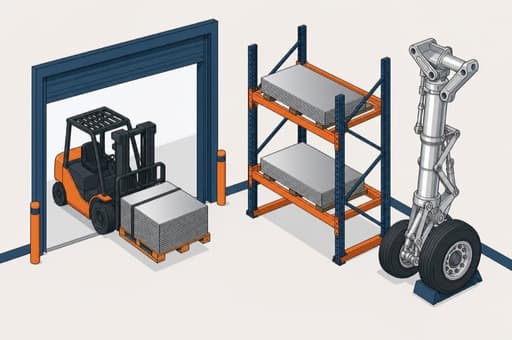
Airframe Titanium Mill Products
Titanium plate, sheet, strip and bar for aircraft structures and landing gear. It went backwards first — airframe sales fell 9% in early FY2026 as customers ran down stock — with growth pushed into the back half against firm orders.
Competes with Titanium mill products (Howmet Aerospace) · Titanium products (Precision Castparts) · Aerospace titanium (VSMPO-AVISMA)
In plain English
Everything on an aircraft that is not the engine — the structure of the wings and body, and the legs that carry the plane on the ground — needs metal that is strong without being heavy. Titanium is the expensive answer, and ATI rolls and forges it into plate, sheet, strip and bar for the planemakers and their parts suppliers. Landing-gear alloys are the strongest category.
This line had a bad stretch first. Aircraft suppliers had ordered ahead, so they worked down what was already in their own storerooms before buying again, and ATI's airframe sales slipped through the first half of FY2026 even though the orders behind them held. By mid-2026 order patterns had lined back up with the build rates the planemakers have announced.
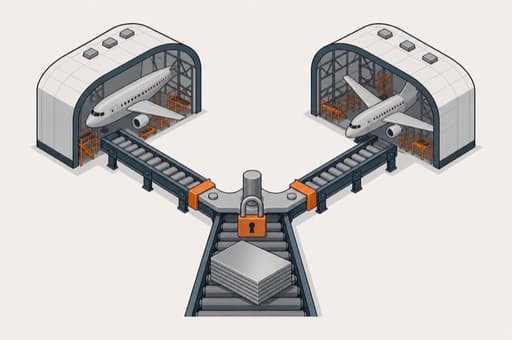
Airbus and Boeing Titanium Agreements
Two supply deals signed three months apart in 2025: an Airbus agreement approaching $1B over five years that makes ATI its leading supplier of rolled titanium sheet and plate, and an extended Boeing deal carrying minimum volumes.
Competes with Aerospace titanium (VSMPO-AVISMA) · Titanium mill products (Howmet Aerospace) · Titanium products (Precision Castparts)
In plain English
Two customers, two contracts, signed within three months of each other. Airbus named ATI its leading supplier of rolled titanium sheet and plate under an agreement approaching $1B over five years — against the roughly $75M a year of Airbus business ATI had been assuming in its own plans. Boeing extended a decades-old relationship to cover bar-shaped products as well as sheet and plate, with minimum volumes written in.
A minimum-volume contract is the difference between a shop hoping its regulars come back and one paid a retainer whether they do or not. It is also why the new sheet plant in South Carolina and a new titanium furnace were built to feed this metal.
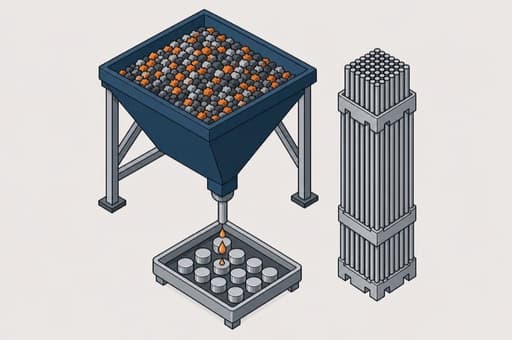
ATI Specialty Alloys + Components
The Oregon business making zirconium, hafnium and niobium — ATI says it is one of only three Western producers qualified for nuclear and aerospace work. Small and scarce, and the biggest single reason its division's margins jumped in mid-2026; the question is how much capacity defense takes.
Competes with CEZUS zirconium and hafnium (Framatome) · Western Zirconium (Westinghouse)
In plain English
Zirconium, hafnium and niobium are metals most people never hear of and cannot easily swap for something else. Zirconium goes into nuclear fuel and chemical plant equipment; hafnium and niobium go into naval reactors and missile parts. ATI has made them in Albany, Oregon since 1956.
Two things make this small business matter. Making these metals to nuclear and aerospace standards needs approvals very few plants hold — ATI says it is one of three in the Western world — and hafnium only appears as a leftover of purifying zirconium, so nobody can simply make more of it on its own. When China tightened exports, prices moved, and management credits that for the strongest margins this division has recorded.
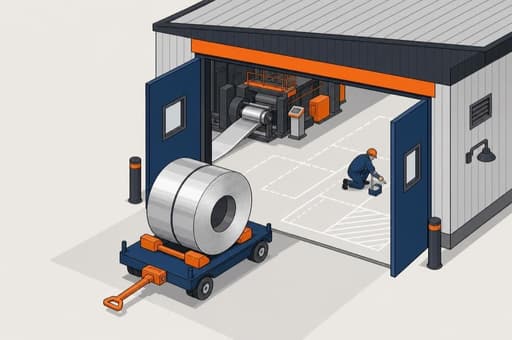
Specialty Rolled Products
Plate, sheet and precision strip for industrial, medical and electronics customers — roughly an eighth of sales and shrinking on purpose, guided down slightly in FY2026 so the mills can take aerospace and defense work instead.
Competes with VDM Metals rolled alloys (Acerinox) · High-performance alloy sheet and plate (Haynes International)
In plain English
Plate, sheet and thin rolled strip, sold to factory-equipment makers, medical device firms and electronics customers. It is the ordinary end of ATI's catalogue: steady, unexciting work that keeps the mills busy.
It is now being pruned on purpose. An hour of furnace and mill time spent on a routine order is an hour not spent on aerospace metal that earns more, so ATI is letting the weaker parts of this book go and has guided it down slightly for FY2026. Medical and consumer electronics materials run at a few percent of sales each and have been pushed down the priority list the same way.


 Jet Engine MaterialsNickel and titanium sold by the pound to engine makers and their forging shops. Sales rose 21% in FY2025, and the company's whole confirmed order book reached $4.4B by mid-2026, roughly 70% of it shipping inside a year.
Nickel and titanium sold by the pound to engine makers and their forging shops. Sales rose 21% in FY2025, and the company's whole confirmed order book reached $4.4B by mid-2026, roughly 70% of it shipping inside a year.
In plain English
Inside a jet engine, the parts closest to the fire sit in air hot enough to soften ordinary steel while spinning hard enough to tear themselves apart. They are made from recipes of nickel, cobalt and titanium that ATI melts in vacuum furnaces and sells as ingots, bars and billets — the rough shapes an engine maker's forging chain turns into discs, rings, cases and shafts.
The money comes from being approved. An engine maker spends years testing a supplier's exact recipe before a part may fly, so an approved position is hard to dislodge. ATI makes six of the seven most advanced engine nickel recipes and is the sole source on five, and next-generation engines carry more than double the content of the ones they replace.
Competes with Special Metals nickel alloys (Precision Castparts) · Specialty Alloys Operations (Carpenter Technology) · VDM Metals nickel alloys (Acerinox)
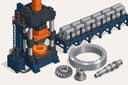 Jet Engine Forgings and Machined ComponentsThe step after melting: pressing hot alloy into engine rings, discs and shafts, then machining them. About a tenth of sales, and capacity-bound — the slowest presses are booked more than two years out.
The step after melting: pressing hot alloy into engine rings, discs and shafts, then machining them. About a tenth of sales, and capacity-bound — the slowest presses are booked more than two years out.
In plain English
Melting the metal is only half the job. The other half is squeezing it: heating a chunk of alloy and pressing it into the rough shape of a ring, disc or shaft, then machining it to final form. ATI does this to metal it melted itself, so it earns on the same pound twice.
Presses that can do this are scarce. ATI's slowest type, isothermal forging, is booked more than two years ahead, which tells you the queue is the product — engine makers pay for a place in it. Pratt & Whitney, working through accelerated shop visits on its geared turbofan engines, grew its ATI forging content six-fold between 2023 and 2025.
Competes with Precision forgings (Aubert & Duval) · Forged products (Precision Castparts) · Engine products (Howmet Aerospace)
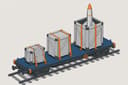 Defense MaterialsMetal for naval reactors, missiles, armor and rotorcraft. It grew 36% in the second quarter of FY2026, an all-time high. Aerospace and defense together were 68% of FY2025 sales, and management expects above 70% this year.
Metal for naval reactors, missiles, armor and rotorcraft. It grew 36% in the second quarter of FY2026, an all-time high. Aerospace and defense together were 68% of FY2025 sales, and management expects above 70% this year.
In plain English
A submarine reactor has to run for years with no repair shop nearby; a missile has to work the one time it flies; armor has to stop what hits it. All three are metal problems, and ATI supplies the metal — titanium, nickel, and the little-known metals niobium and hafnium.
The buyers are governments and their contractors, spending on schedules set by ship counts and stockpile refills rather than by the economy, which makes the demand visible years ahead. Missiles are the fastest-moving piece: up more than fourfold in the second quarter of FY2026, though from a small base, and roughly a fifth of defense sales.
Competes with Defense-grade titanium alloys (Howmet Aerospace) · Nickel and specialty alloys (Haynes International) · CEZUS refractory metals (Framatome)
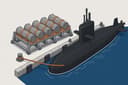 BWXT Naval Nuclear Material AgreementA five-year deal to supply the specialty metal behind U.S. naval nuclear propulsion, running through 2030 and worth roughly $1B. It more than doubles what the work brings in each year, mostly on price; shipments started early, in mid-2026.
A five-year deal to supply the specialty metal behind U.S. naval nuclear propulsion, running through 2030 and worth roughly $1B. It more than doubles what the work brings in each year, mostly on price; shipments started early, in mid-2026.
In plain English
BWX Technologies supplies the U.S. Navy's reactor programme — the propulsion that drives its submarines and carriers — and ATI has supplied the specialty metal behind that work for decades. In mid-2026 the two extended the arrangement for another five years.
What changed is the price, not the relationship. Management says the new terms more than double the annual revenue of the old contract — about two-thirds of the increase from price and mix, one-third from shipping more — at margins like its aerospace work. Picture a long-standing tenant renewing at today's rent rather than the rent agreed a decade ago. It is also the most visible money in ATI's book, since navy hull counts and refuelling dates are set years ahead.
Competes with Western Zirconium nuclear-grade zirconium (Westinghouse) · CEZUS zirconium and hafnium (Framatome)
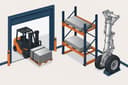 Airframe Titanium Mill ProductsTitanium plate, sheet, strip and bar for aircraft structures and landing gear. It went backwards first — airframe sales fell 9% in early FY2026 as customers ran down stock — with growth pushed into the back half against firm orders.
Titanium plate, sheet, strip and bar for aircraft structures and landing gear. It went backwards first — airframe sales fell 9% in early FY2026 as customers ran down stock — with growth pushed into the back half against firm orders.
In plain English
Everything on an aircraft that is not the engine — the structure of the wings and body, and the legs that carry the plane on the ground — needs metal that is strong without being heavy. Titanium is the expensive answer, and ATI rolls and forges it into plate, sheet, strip and bar for the planemakers and their parts suppliers. Landing-gear alloys are the strongest category.
This line had a bad stretch first. Aircraft suppliers had ordered ahead, so they worked down what was already in their own storerooms before buying again, and ATI's airframe sales slipped through the first half of FY2026 even though the orders behind them held. By mid-2026 order patterns had lined back up with the build rates the planemakers have announced.
Competes with Titanium mill products (Howmet Aerospace) · Titanium products (Precision Castparts) · Aerospace titanium (VSMPO-AVISMA)
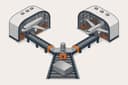 Airbus and Boeing Titanium AgreementsTwo supply deals signed three months apart in 2025: an Airbus agreement approaching $1B over five years that makes ATI its leading supplier of rolled titanium sheet and plate, and an extended Boeing deal carrying minimum volumes.
Two supply deals signed three months apart in 2025: an Airbus agreement approaching $1B over five years that makes ATI its leading supplier of rolled titanium sheet and plate, and an extended Boeing deal carrying minimum volumes.
In plain English
Two customers, two contracts, signed within three months of each other. Airbus named ATI its leading supplier of rolled titanium sheet and plate under an agreement approaching $1B over five years — against the roughly $75M a year of Airbus business ATI had been assuming in its own plans. Boeing extended a decades-old relationship to cover bar-shaped products as well as sheet and plate, with minimum volumes written in.
A minimum-volume contract is the difference between a shop hoping its regulars come back and one paid a retainer whether they do or not. It is also why the new sheet plant in South Carolina and a new titanium furnace were built to feed this metal.
Competes with Aerospace titanium (VSMPO-AVISMA) · Titanium mill products (Howmet Aerospace) · Titanium products (Precision Castparts)
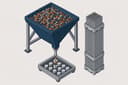 ATI Specialty Alloys + ComponentsThe Oregon business making zirconium, hafnium and niobium — ATI says it is one of only three Western producers qualified for nuclear and aerospace work. Small and scarce, and the biggest single reason its division's margins jumped in mid-2026; the question is how much capacity defense takes.
The Oregon business making zirconium, hafnium and niobium — ATI says it is one of only three Western producers qualified for nuclear and aerospace work. Small and scarce, and the biggest single reason its division's margins jumped in mid-2026; the question is how much capacity defense takes.
In plain English
Zirconium, hafnium and niobium are metals most people never hear of and cannot easily swap for something else. Zirconium goes into nuclear fuel and chemical plant equipment; hafnium and niobium go into naval reactors and missile parts. ATI has made them in Albany, Oregon since 1956.
Two things make this small business matter. Making these metals to nuclear and aerospace standards needs approvals very few plants hold — ATI says it is one of three in the Western world — and hafnium only appears as a leftover of purifying zirconium, so nobody can simply make more of it on its own. When China tightened exports, prices moved, and management credits that for the strongest margins this division has recorded.
Competes with CEZUS zirconium and hafnium (Framatome) · Western Zirconium (Westinghouse)
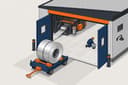 Specialty Rolled ProductsPlate, sheet and precision strip for industrial, medical and electronics customers — roughly an eighth of sales and shrinking on purpose, guided down slightly in FY2026 so the mills can take aerospace and defense work instead.
Plate, sheet and precision strip for industrial, medical and electronics customers — roughly an eighth of sales and shrinking on purpose, guided down slightly in FY2026 so the mills can take aerospace and defense work instead.
In plain English
Plate, sheet and thin rolled strip, sold to factory-equipment makers, medical device firms and electronics customers. It is the ordinary end of ATI's catalogue: steady, unexciting work that keeps the mills busy.
It is now being pruned on purpose. An hour of furnace and mill time spent on a routine order is an hour not spent on aerospace metal that earns more, so ATI is letting the weaker parts of this book go and has guided it down slightly for FY2026. Medical and consumer electronics materials run at a few percent of sales each and have been pushed down the priority list the same way.
Competes with VDM Metals rolled alloys (Acerinox) · High-performance alloy sheet and plate (Haynes International)
Named in filings, launches and programs
- Capacity programme — EB2 furnace, nickel melt expansion, Chihuahua machiningProduct · Pre-revenueNew furnaces and a Mexican machining site, still being approved by customers; the nickel expansion targets about $350M of extra annual revenue by 2028.
- Cameco zirconium agreementCustomer programFive-year, roughly $250M deal announced in April 2026 to supply zirconium for nuclear fuel. Counted inside the Oregon specialty metals business.
- Land-based gas turbine alloysProduct lineMetal for the turbines that generate electricity — the non-nuclear half of specialty energy, tied by management to power demand from AI computing.
- Titanium armor plate and sheetProduct lineArmor for ground vehicles. General Dynamics Land Systems named ATI its 2025 Supplier of the Year, citing the XM30 prototype vehicle.
- Pageland, South Carolina titanium sheet plantProduct lineSheet mill that came online in June 2025, adding titanium alloy sheet to the catalogue and feeding the airframer contracts.
- Zircadyne zirconiumBrandATI's branded zirconium for chemical processing equipment, made by the Albany, Oregon operation alongside its nuclear-grade material.
- Metallic powder alloys and 3D-printed aerospace partsProduct lineListed in the company's own description of its aerospace materials business, but barely mentioned on earnings calls — small for now.
- Medical materialsProduct lineAlloys for medical uses, three to four percent of sales and de-prioritised as capacity shifts toward aerospace and defense.
- Consumer electronics materialsProduct lineMetal for consumer devices, three to four percent of sales and likewise being stepped back from.
- Chemical-process and oil-and-gas alloysProduct lineCorrosion-resistant metal for chemical plants and energy equipment — the industrial tail of the rolled products business.
- Shanghai STAL Precision Stainless SteelBrandA 60%-owned joint venture in China that makes precision stainless steel strip, separate from the standard stainless sheet business ATI exited.
Capacity programme — EB2 furnace, nickel melt expansion, Chihuahua machiningProduct · Pre-revenue
New furnaces and a Mexican machining site, still being approved by customers; the nickel expansion targets about $350M of extra annual revenue by 2028.
Cameco zirconium agreementCustomer program
Five-year, roughly $250M deal announced in April 2026 to supply zirconium for nuclear fuel. Counted inside the Oregon specialty metals business.
Land-based gas turbine alloysProduct line
Metal for the turbines that generate electricity — the non-nuclear half of specialty energy, tied by management to power demand from AI computing.
Titanium armor plate and sheetProduct line
Armor for ground vehicles. General Dynamics Land Systems named ATI its 2025 Supplier of the Year, citing the XM30 prototype vehicle.
Pageland, South Carolina titanium sheet plantProduct line
Sheet mill that came online in June 2025, adding titanium alloy sheet to the catalogue and feeding the airframer contracts.
Zircadyne zirconiumBrand
ATI's branded zirconium for chemical processing equipment, made by the Albany, Oregon operation alongside its nuclear-grade material.
Metallic powder alloys and 3D-printed aerospace partsProduct line
Listed in the company's own description of its aerospace materials business, but barely mentioned on earnings calls — small for now.
Medical materialsProduct line
Alloys for medical uses, three to four percent of sales and de-prioritised as capacity shifts toward aerospace and defense.
Consumer electronics materialsProduct line
Metal for consumer devices, three to four percent of sales and likewise being stepped back from.
Chemical-process and oil-and-gas alloysProduct line
Corrosion-resistant metal for chemical plants and energy equipment — the industrial tail of the rolled products business.
Shanghai STAL Precision Stainless SteelBrand
A 60%-owned joint venture in China that makes precision stainless steel strip, separate from the standard stainless sheet business ATI exited.