
Franklin Templeton (BEN)
Runs specialist investment strategies across public and private markets for clients worldwide.
Something off on this page? Send us feedback.
Franklin Templeton looks after other people's savings and keeps a sliver of them each year as its fee. Stock and bond funds sold through advisors still pay for most of it, and a scandal at its Western Asset bond arm drained money for two years. What it is becoming sits elsewhere: private lending, property, secondhand stakes in buyout funds, and cheaper ways to package the same investing.
Item facts: FY2025 · year ended Sep 30, 2025, from filings, earnings calls and company pages.
Judgment weights, not filed revenue
The band summarizes business focus and direction. ~ marks estimates.
8 in detail · 13 more below
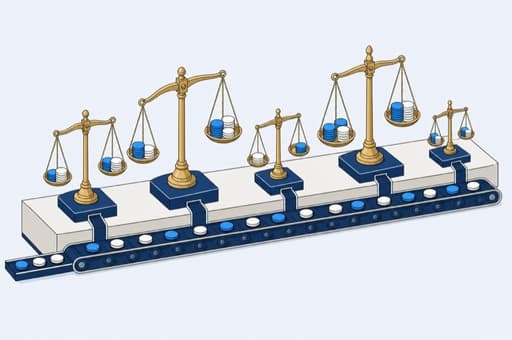
Equity specialist managers
Five stock-picking houses — ClearBridge, Royce, Templeton Global Investments, Franklin Equity Group, Franklin Mutual Series — sold through advisors. Equity is the biggest pot of assets at $775.1B in August 2026; index funds set the ceiling on what it can charge.
Competes with American Funds equity range (Capital Group) · Active equity funds (T. Rowe Price) · Index equity funds (Vanguard)
In plain English
Five separate teams of stock pickers, each with its own chief and its own style, parked under one roof and sold by one sales force. A saver or their advisor puts money into one of the funds, and Franklin takes a small annual percentage of whatever that pot is worth — when markets rise, the fee rises with them, no new customers required.
The squeeze comes from funds that simply buy the whole market for a fraction of the price, so these teams have to keep beating them to justify the cost. Much of the money arrives through advisors who are paid out of the fund's fees — cash that lands at Franklin and largely flows straight back out.

ETFs, managed accounts and Canvas
The three cheaper wrappers the same investing is sold through — funds that trade like shares, accounts run for one household, and Canvas, which builds a personal index around a client's tax bill. All three hit records at mid-2026.
Competes with Parametric Custom Core (Morgan Stanley) · Aperio direct indexing (BlackRock) · Active ETF range (JPMorgan)
In plain English
Same cooking, cheaper packaging. A fund that trades like a share can be bought in a click and costs little to run; a managed account holds the actual shares in the client's own name; Canvas, which came with the O'Shaughnessy purchase, builds each client a personal index shaped around their tax bill.
Franklin earns fewer pennies on the dollar here than on a traditional fund, but the plumbing is already built and barely costs more as it fills — that is management's whole margin argument. The brokerages that decide which products get shelf space keep raising what they charge to carry them, and that comes straight out of the gain.

Lexington Partners
Buys secondhand stakes in buyout funds from investors who need out early. $83B of assets in January 2026, up 46% since Franklin bought it in 2022; its last flagship fund closed at $22.7B. Revenue arrives in steps, as funds close.
Competes with Ardian Secondary Fund IX (Ardian) · Strategic Partners IX (Blackstone) · Secondaries funds (HarbourVest)
In plain English
Big institutions lock money into buyout funds for a decade, and sometimes need it back sooner. Lexington is the buyer on the other side: it takes those positions off their hands at a haggled price and waits for the eventual payouts — rather like buying a season ticket off someone who has to move away.
It charges a yearly fee on money investors have pledged to it, plus a cut of the profits when deals work out. So the fee base jumps when a big fund closes and then sits flat until the next one. Its last flagship took about a fifth of its money from wealthy individuals rather than institutions.
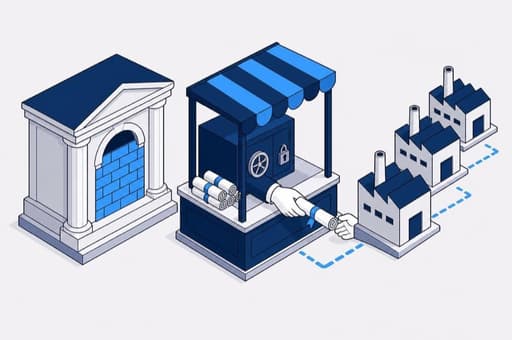
Benefit Street Partners
The private lending arm — loans to mid-sized companies, property debt and packaged loan pools — $96B at June 2026 and now the single name for US and European credit. Across all of Franklin's private-market teams, $33B was raised by late July against a full-year goal near $40B.
Competes with Direct lending funds (Ares) · BCRED private credit fund (Blackstone) · Direct lending funds (Blue Owl)
In plain English
When a medium-sized company needs to borrow and a bank would rather not, this is who lends instead. Benefit Street writes the loan, keeps it, and collects the interest on behalf of pension funds, insurers and wealthy savers whose money it has pooled.
Franklin takes a management fee on that pool and a share of the gains. The risks are plain enough: these borrowers are not the safest, defaults and interest rates decide how it ends, and investors across the industry have already asked for roughly $20 billion of their money back.

Clarion Partners
The property arm: warehouses, apartments and self-storage bought for pension funds and wealthy clients. Up just under 40% since Franklin bought it in 2020, and a September 2026 deal for Stoneshield roughly triples its European property book.
Competes with Real Estate core funds (Nuveen) · BREIT property fund (Blackstone) · Real Estate core funds (PGIM)
In plain English
Landlording, at institutional scale. Clarion buys warehouses, apartment blocks and self-storage with money pooled from pension funds and wealthy clients, collects the rent, and keeps a percentage of what those buildings are worth each year.
Values here swing with property markets and the cost of money, and in funds that let investors leave whenever they like, people sometimes have to queue for their cash. Management says the portfolio has stayed in positive return through a hard stretch for raising new money, with warehouses, apartments and storage out front. In September 2026 it agreed to take majority control of Stoneshield, a European real-assets firm with $9B, whose founders keep the rest and keep running it.

Franklin Templeton Fixed Income
Bonds: Brandywine, Putnam's bond teams and Western Asset on one platform management sizes at $520B. Western settled a $100M penalty with the SEC in June 2026, and a record $28.6B of newly won mandates is waiting to be funded.
Competes with Core and core-plus bond funds (PIMCO) · Core fixed income funds (Loomis Sayles) · Multi-asset credit funds (Blackstone Credit)
In plain English
Lending to governments and companies by buying their bonds, on behalf of pension funds, insurers and ordinary savers — and being paid a slice of the pot for doing it. The fees per dollar are thinner than on stocks, so this business lives on sheer size.
It has spent two years digging out. Western Asset, which came with the Legg Mason purchase in 2020, lost clients after regulators alleged a former co-chief investment officer steered winning trades to favoured accounts; the firm paid $100 million in June 2026 to close the investigations into itself, while his criminal case continues. Everything outside Western has taken in more money than it lost for ten straight quarters.
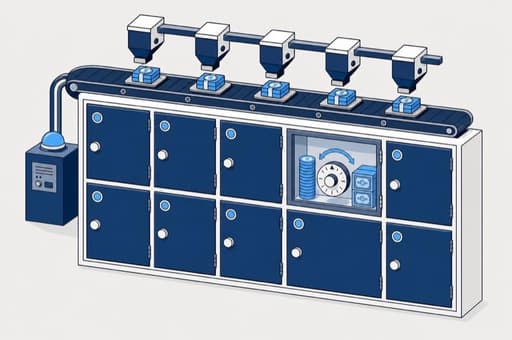
Putnam Investments
Bought from Great-West Lifeco in 2024, Putnam runs money inside workplace retirement plans and insurers' portfolios — $180B by late 2024, and the way into Empower, which keeps the records for more than $1.8 trillion of retirement savings.
Competes with Target Retirement target-date funds (Vanguard) · LifePath target-date funds (BlackRock) · Insurance sub-advisory mandates (PGIM)
In plain English
The money taken out of American paychecks every fortnight has to go somewhere. Putnam runs a lot of it: funds that quietly shift from shares to bonds as a worker nears retirement, and accounts built to hold their value rather than grow fast. Insurers also hire it to run their own pots — $15.7 billion of such money arrived in fiscal 2025.
Franklin bought Putnam to get inside that pipe. With Empower, the firm that keeps the records for those workplace plans, it is trying to sell private-market investments into them — slowly, because management calls it an incredibly litigious space and take-up has been slower without new legislation.
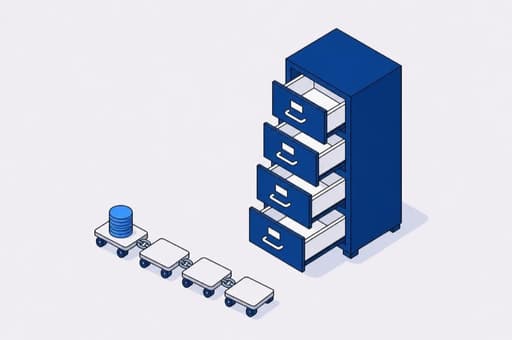
Franklin Templeton Digital Assets
Benji, the system that records who owns Franklin's cash fund on a blockchain, plus the crypto team bought in June 2026. $3.2B at mid-2026, up from $1.8B two quarters earlier — still a rounding error against $1.83 trillion managed.
Competes with BUIDL cash fund (BlackRock) · USYC cash token (Circle) · OUSG and USDY (Ondo)
In plain English
Start with the dullest product in finance: a fund where cash waits and earns a little interest. Franklin keeps the ownership record for its version on a blockchain — the shared digital ledger crypto runs on — instead of in its own back office. That costs less to operate, and it lets the fund sit beside a customer's coins on an exchange or in a wallet.
The fee is the same small annual slice as on any cash fund, on very little money so far. The pitch is aimed at people holding digital dollars that pay them nothing: park it here and it pays. BlackRock's equivalent is bigger, and the whole market is young.


 Equity specialist managersFive stock-picking houses — ClearBridge, Royce, Templeton Global Investments, Franklin Equity Group, Franklin Mutual Series — sold through advisors. Equity is the biggest pot of assets at $775.1B in August 2026; index funds set the ceiling on what it can charge.
Five stock-picking houses — ClearBridge, Royce, Templeton Global Investments, Franklin Equity Group, Franklin Mutual Series — sold through advisors. Equity is the biggest pot of assets at $775.1B in August 2026; index funds set the ceiling on what it can charge.
In plain English
Five separate teams of stock pickers, each with its own chief and its own style, parked under one roof and sold by one sales force. A saver or their advisor puts money into one of the funds, and Franklin takes a small annual percentage of whatever that pot is worth — when markets rise, the fee rises with them, no new customers required.
The squeeze comes from funds that simply buy the whole market for a fraction of the price, so these teams have to keep beating them to justify the cost. Much of the money arrives through advisors who are paid out of the fund's fees — cash that lands at Franklin and largely flows straight back out.
Competes with American Funds equity range (Capital Group) · Active equity funds (T. Rowe Price) · Index equity funds (Vanguard)
 ETFs, managed accounts and CanvasThe three cheaper wrappers the same investing is sold through — funds that trade like shares, accounts run for one household, and Canvas, which builds a personal index around a client's tax bill. All three hit records at mid-2026.
The three cheaper wrappers the same investing is sold through — funds that trade like shares, accounts run for one household, and Canvas, which builds a personal index around a client's tax bill. All three hit records at mid-2026.
In plain English
Same cooking, cheaper packaging. A fund that trades like a share can be bought in a click and costs little to run; a managed account holds the actual shares in the client's own name; Canvas, which came with the O'Shaughnessy purchase, builds each client a personal index shaped around their tax bill.
Franklin earns fewer pennies on the dollar here than on a traditional fund, but the plumbing is already built and barely costs more as it fills — that is management's whole margin argument. The brokerages that decide which products get shelf space keep raising what they charge to carry them, and that comes straight out of the gain.
Competes with Parametric Custom Core (Morgan Stanley) · Aperio direct indexing (BlackRock) · Active ETF range (JPMorgan)
 Lexington PartnersBuys secondhand stakes in buyout funds from investors who need out early. $83B of assets in January 2026, up 46% since Franklin bought it in 2022; its last flagship fund closed at $22.7B. Revenue arrives in steps, as funds close.
Buys secondhand stakes in buyout funds from investors who need out early. $83B of assets in January 2026, up 46% since Franklin bought it in 2022; its last flagship fund closed at $22.7B. Revenue arrives in steps, as funds close.
In plain English
Big institutions lock money into buyout funds for a decade, and sometimes need it back sooner. Lexington is the buyer on the other side: it takes those positions off their hands at a haggled price and waits for the eventual payouts — rather like buying a season ticket off someone who has to move away.
It charges a yearly fee on money investors have pledged to it, plus a cut of the profits when deals work out. So the fee base jumps when a big fund closes and then sits flat until the next one. Its last flagship took about a fifth of its money from wealthy individuals rather than institutions.
Competes with Ardian Secondary Fund IX (Ardian) · Strategic Partners IX (Blackstone) · Secondaries funds (HarbourVest)
 Benefit Street PartnersThe private lending arm — loans to mid-sized companies, property debt and packaged loan pools — $96B at June 2026 and now the single name for US and European credit. Across all of Franklin's private-market teams, $33B was raised by late July against a full-year goal near $40B.
The private lending arm — loans to mid-sized companies, property debt and packaged loan pools — $96B at June 2026 and now the single name for US and European credit. Across all of Franklin's private-market teams, $33B was raised by late July against a full-year goal near $40B.
In plain English
When a medium-sized company needs to borrow and a bank would rather not, this is who lends instead. Benefit Street writes the loan, keeps it, and collects the interest on behalf of pension funds, insurers and wealthy savers whose money it has pooled.
Franklin takes a management fee on that pool and a share of the gains. The risks are plain enough: these borrowers are not the safest, defaults and interest rates decide how it ends, and investors across the industry have already asked for roughly $20 billion of their money back.
Competes with Direct lending funds (Ares) · BCRED private credit fund (Blackstone) · Direct lending funds (Blue Owl)
 Clarion PartnersThe property arm: warehouses, apartments and self-storage bought for pension funds and wealthy clients. Up just under 40% since Franklin bought it in 2020, and a September 2026 deal for Stoneshield roughly triples its European property book.
The property arm: warehouses, apartments and self-storage bought for pension funds and wealthy clients. Up just under 40% since Franklin bought it in 2020, and a September 2026 deal for Stoneshield roughly triples its European property book.
In plain English
Landlording, at institutional scale. Clarion buys warehouses, apartment blocks and self-storage with money pooled from pension funds and wealthy clients, collects the rent, and keeps a percentage of what those buildings are worth each year.
Values here swing with property markets and the cost of money, and in funds that let investors leave whenever they like, people sometimes have to queue for their cash. Management says the portfolio has stayed in positive return through a hard stretch for raising new money, with warehouses, apartments and storage out front. In September 2026 it agreed to take majority control of Stoneshield, a European real-assets firm with $9B, whose founders keep the rest and keep running it.
Competes with Real Estate core funds (Nuveen) · BREIT property fund (Blackstone) · Real Estate core funds (PGIM)
 Franklin Templeton Fixed IncomeBonds: Brandywine, Putnam's bond teams and Western Asset on one platform management sizes at $520B. Western settled a $100M penalty with the SEC in June 2026, and a record $28.6B of newly won mandates is waiting to be funded.
Bonds: Brandywine, Putnam's bond teams and Western Asset on one platform management sizes at $520B. Western settled a $100M penalty with the SEC in June 2026, and a record $28.6B of newly won mandates is waiting to be funded.
In plain English
Lending to governments and companies by buying their bonds, on behalf of pension funds, insurers and ordinary savers — and being paid a slice of the pot for doing it. The fees per dollar are thinner than on stocks, so this business lives on sheer size.
It has spent two years digging out. Western Asset, which came with the Legg Mason purchase in 2020, lost clients after regulators alleged a former co-chief investment officer steered winning trades to favoured accounts; the firm paid $100 million in June 2026 to close the investigations into itself, while his criminal case continues. Everything outside Western has taken in more money than it lost for ten straight quarters.
Competes with Core and core-plus bond funds (PIMCO) · Core fixed income funds (Loomis Sayles) · Multi-asset credit funds (Blackstone Credit)
 Putnam InvestmentsBought from Great-West Lifeco in 2024, Putnam runs money inside workplace retirement plans and insurers' portfolios — $180B by late 2024, and the way into Empower, which keeps the records for more than $1.8 trillion of retirement savings.
Bought from Great-West Lifeco in 2024, Putnam runs money inside workplace retirement plans and insurers' portfolios — $180B by late 2024, and the way into Empower, which keeps the records for more than $1.8 trillion of retirement savings.
In plain English
The money taken out of American paychecks every fortnight has to go somewhere. Putnam runs a lot of it: funds that quietly shift from shares to bonds as a worker nears retirement, and accounts built to hold their value rather than grow fast. Insurers also hire it to run their own pots — $15.7 billion of such money arrived in fiscal 2025.
Franklin bought Putnam to get inside that pipe. With Empower, the firm that keeps the records for those workplace plans, it is trying to sell private-market investments into them — slowly, because management calls it an incredibly litigious space and take-up has been slower without new legislation.
Competes with Target Retirement target-date funds (Vanguard) · LifePath target-date funds (BlackRock) · Insurance sub-advisory mandates (PGIM)
 Franklin Templeton Digital AssetsBenji, the system that records who owns Franklin's cash fund on a blockchain, plus the crypto team bought in June 2026. $3.2B at mid-2026, up from $1.8B two quarters earlier — still a rounding error against $1.83 trillion managed.
Benji, the system that records who owns Franklin's cash fund on a blockchain, plus the crypto team bought in June 2026. $3.2B at mid-2026, up from $1.8B two quarters earlier — still a rounding error against $1.83 trillion managed.
In plain English
Start with the dullest product in finance: a fund where cash waits and earns a little interest. Franklin keeps the ownership record for its version on a blockchain — the shared digital ledger crypto runs on — instead of in its own back office. That costs less to operate, and it lets the fund sit beside a customer's coins on an exchange or in a wallet.
The fee is the same small annual slice as on any cash fund, on very little money so far. The pitch is aimed at people holding digital dollars that pay them nothing: park it here and it pays. BlackRock's equivalent is bigger, and the whole market is young.
Competes with BUIDL cash fund (BlackRock) · USYC cash token (Circle) · OUSG and USDY (Ondo)
Named in filings, launches and programs
- Franklin Templeton Investment SolutionsProduct lineBlends the house's funds into one mixed portfolio; about a fifth of the ETF platform and a named driver of $4.7B of inflows in mid-2026.
- Franklin Income FundProduct lineThe flagship income strategy and one of the named drivers of new money into the firm.
- Fiduciary Trust InternationalBrandPrivate wealth and trust work for rich families: $43B in FY2025, about 98% of clients staying, and a stated goal of doubling it.
- Brandywine GlobalBrandGlobal bond manager, now run inside Franklin Templeton Fixed Income.
- Templeton Global MacroProduct lineOne of the seventeen specialist teams named in the annual report; no separate figures are disclosed for it.
- O'Shaughnessy Asset ManagementBrandRules-driven manager acquired along with the Canvas platform.
- K2 AdvisorsBrandPuts together packages of hedge funds for clients; one of the brands listed in the annual report.
- Franklin venture capital strategiesProduct lineVenture capital, one of four private-market areas Franklin raised money for in mid-2026.
- AlcentraBrandEuropean private lending, folded under the Benefit Street Partners name.
- Apera Asset ManagementBrandLender to smaller European companies; closed October 2025 and joined Alcentra's direct lending group, taking European direct lending to about $10B.
- Franklin Lexington Private Markets FundsProduct line · RampingAlways-open versions of Lexington's secondhand-stake funds, sold to wealthy individuals; $2.7B raised since launch.
- Franklin Templeton Structured Solutions 2026Product lineA $1.5B deal closed in August 2026 that bundles holdings in private funds into notes investors can buy.
- Stoneshield CapitalBrand · AnnouncedEuropean real-assets manager with $9B; Clarion agreed a majority stake in September 2026, expected to close in the final quarter.
Franklin Templeton Investment SolutionsProduct line
Blends the house's funds into one mixed portfolio; about a fifth of the ETF platform and a named driver of $4.7B of inflows in mid-2026.
Franklin Income FundProduct line
The flagship income strategy and one of the named drivers of new money into the firm.
Fiduciary Trust InternationalBrand
Private wealth and trust work for rich families: $43B in FY2025, about 98% of clients staying, and a stated goal of doubling it.
Brandywine GlobalBrand
Global bond manager, now run inside Franklin Templeton Fixed Income.
Templeton Global MacroProduct line
One of the seventeen specialist teams named in the annual report; no separate figures are disclosed for it.
O'Shaughnessy Asset ManagementBrand
Rules-driven manager acquired along with the Canvas platform.
K2 AdvisorsBrand
Puts together packages of hedge funds for clients; one of the brands listed in the annual report.
Franklin venture capital strategiesProduct line
Venture capital, one of four private-market areas Franklin raised money for in mid-2026.
AlcentraBrand
European private lending, folded under the Benefit Street Partners name.
Apera Asset ManagementBrand
Lender to smaller European companies; closed October 2025 and joined Alcentra's direct lending group, taking European direct lending to about $10B.
Franklin Lexington Private Markets FundsProduct line · Ramping
Always-open versions of Lexington's secondhand-stake funds, sold to wealthy individuals; $2.7B raised since launch.
Franklin Templeton Structured Solutions 2026Product line
A $1.5B deal closed in August 2026 that bundles holdings in private funds into notes investors can buy.
Stoneshield CapitalBrand · Announced
European real-assets manager with $9B; Clarion agreed a majority stake in September 2026, expected to close in the final quarter.