
Berkshire Hathaway Class B (BRK-B)
Owns decentralized insurance, railroad, energy, manufacturing, service, and retail businesses.
Something off on this page? Send us feedback.
Berkshire Hathaway is a collection of largely independent businesses, from insurance and freight rail to power networks, factories, fuel stops and shops. Insurance supplies both earnings and a pool of customer money that can be invested before claims come due. The handoff to Greg Abel and recent chemicals and homebuilding purchases are nudging more capital toward owned operating businesses.
Item facts: FY2025 · year ended Dec 31, 2025, from filings, earnings calls and company pages.
Judgment weights, not filed revenue
The band summarizes business focus and direction. ~ marks estimates.
9 in detail · 9 more below
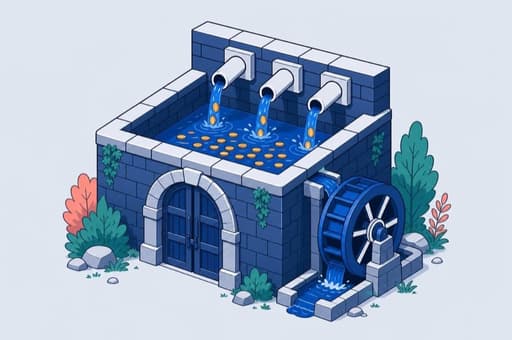
Insurance operations — GEICO, BH Primary and BHRG
GEICO covers drivers, BH Primary covers businesses, and BHRG takes on risks from people and other insurers. Together they held $176B of claim money at year-end, making careful pricing and interest rates crucial.
Competes with Progressive Direct auto (Progressive) · State Farm private-passenger auto (State Farm)
In plain English
People and businesses pay Berkshire now for help with accidents, damage and other costly surprises later. GEICO sells car coverage directly, BH Primary handles business risks, and BHRG also covers insurance companies when their own promises become too large.
The timing matters: premiums arrive before many claims are paid, leaving a large pool Berkshire can invest in the meantime. If premiums more than cover claims and expenses, that pool costs Berkshire nothing and the insurance operation earns a profit too. Bad pricing, disasters or lower interest rates can quickly make the bargain less attractive.
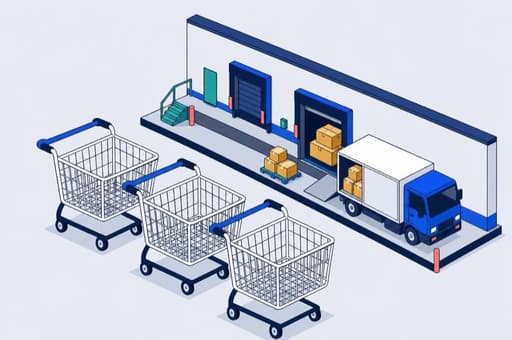
McLane Company
A huge wholesaler whose scale hides a thin spread. Walmart, 7-Eleven and Yum! Brands provide 43.8% of its sales, so keeping large contracts and controlling delivery costs matter most.
Competes with Core-Mark convenience distribution (Performance Food Group) · H.T. Hackney convenience distribution (H.T. Hackney)
In plain English
McLane is the middleman behind stocked shelves and restaurant kitchens. It buys groceries, drinks, tobacco and food-service supplies in bulk, stores them in warehouses, then sends mixed truckloads along regular delivery routes.
Customers pay a little more than McLane paid for the goods. That small difference must cover warehouses, drivers, fuel and labor, so an enormous sales total produces relatively little profit. The model works through repetition and density: fuller trucks and compact routes help, while losing a major chain leaves costly space in the network.
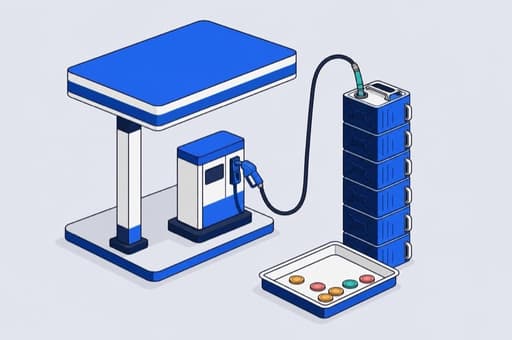
Pilot Travel Centers
Pilot is a nationwide stop for truck fuel, food and road services. FY2025 sales were $42.20B but profit before taxes was just $190M; fuel prices can swell sales without more gallons or much more profit.
Competes with Love's Travel Stops (Love's) · TA/Petro (TravelCenters of America)
In plain English
Think of Pilot as a highway pit stop built mainly for working trucks. Drivers and fleets buy diesel, while the travel centers also sell meals, everyday goods and services needed on long routes.
Most of the money passing through the register pays for the fuel itself, leaving only a narrow slice for Pilot. Gallons sold, the gap between buying and selling prices, and store purchases shape that slice. This is why a jump in pump prices can make revenue look much larger even when traffic is slightly lower and earnings barely move.
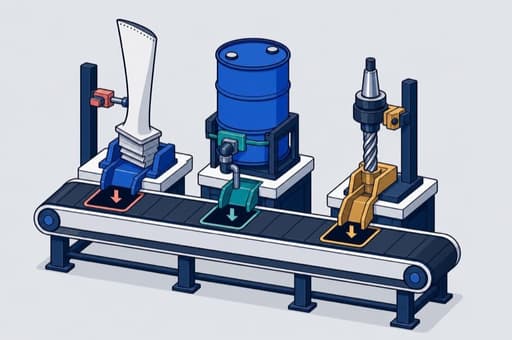
Industrial products
Aircraft parts, chemical additives and cutting tools generated $6.81B of profit before taxes in FY2025. OxyChem joined after year-end, so current growth includes a large new chemicals business as well as demand from existing factories.
Competes with Howmet aerospace components (Howmet Aerospace) · Sandvik Coromant tools (Sandvik)
In plain English
This is Berkshire's cabinet of hard-to-combine factory businesses. Precision Castparts makes pieces that aircraft makers cannot easily swap out, Lubrizol makes chemicals added to fuels and other materials, and IMC supplies tough cutting tools; Marmon spans further industrial products.
Customers pay for parts and materials that keep larger production lines working. Qualification and reliability can make repeat orders sticky, but each shelf in the cabinet follows a different cycle: aircraft construction, chemical prices or general factory activity. OxyChem, bought in early 2026, adds basic chemicals used in water treatment, healthcare, construction and industry.
Building products
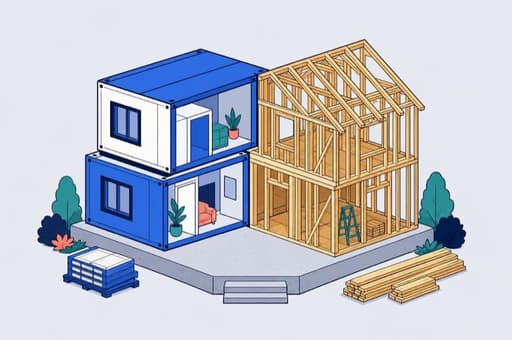
Clayton delivered 59,400 homes in FY2025 while sister companies sold flooring, insulation, roofing, paint and building systems. Taylor Morrison joined in July 2026, making the next comparison partly about acquisition and still about home affordability.
Competes with Champion Homes HUD-code homes (Champion Homes) · Cavco manufactured homes (Cavco Industries)
In plain English
A house touches several Berkshire businesses before anyone turns the key. Clayton builds homes in factories and on ordinary lots, then can help buyers finance them; Shaw, Johns Manville, Benjamin Moore and MiTek supply surfaces, insulation, roofing, coatings and structural systems.
The money comes from homebuyers, building dealers and contractors purchasing a home or the pieces inside it. Mortgage rates, land, labor and available used homes decide how many buyers can act. Taylor Morrison's site-built communities now sit beside Clayton, widening Berkshire's reach but making future growth less comparable with the year before the purchase.
Berkshire Hathaway Energy
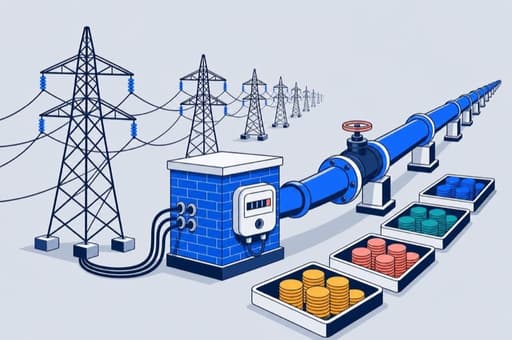
Utilities and energy networks earn from supplying power and gas over decades. Customers had committed $23.83B for future electricity and gas at June 2026, mostly beyond one year; regulators, grid connections and wildfire costs govern the payoff.
Competes with NextEra Energy Resources generation and storage (NextEra) · Dominion Energy regulated utilities (Dominion)
In plain English
The poles, wires, pipes and power plants are the expensive bones of everyday energy service. Berkshire Hathaway Energy owns regulated utilities, gas pipelines, renewable generators, networks in Britain and Canada, and a smaller real-estate arm.
Households and businesses pay monthly bills; other customers sign long agreements for power, gas transport or storage. Local regulators usually allow utilities to recover sensible costs and earn a return on approved investment, so Berkshire keeps spending heavily on the network. The bargain depends on that approval, reliable connections and control of hazards such as wildfires.
BNSF Railway
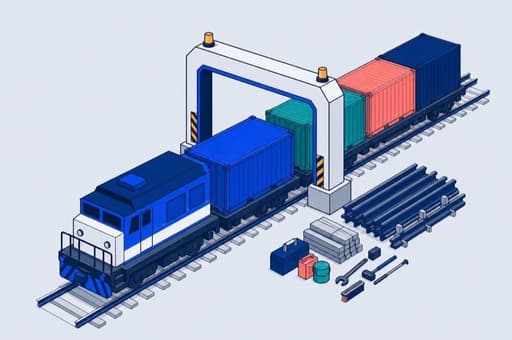
BNSF carries consumer goods, farm products, industrial loads, energy products and coal across the western rail network. It kept 34.5 cents of each sales dollar after railroad running costs in FY2025 despite flat sales, so smoother movement matters as much as volume.
Competes with Union Pacific railroad (Union Pacific) · CPKC network (Canadian Pacific Kansas City)
In plain English
BNSF is a long-distance conveyor belt laid across the western United States. Trains haul containers from ports, crops from farms and heavy products that would be costly to move by road.
Shippers pay for each car or container moved, with the price shaped by cargo and route. Once the tracks, yards and locomotives exist, better scheduling and fuller trains can spread their cost across more loads. Trade, harvests, energy demand, labor and safety rules all change traffic, but keeping cars moving rather than waiting is the lever BNSF controls most directly.
Service businesses — NetJets, FlightSafety, TTI and IPS
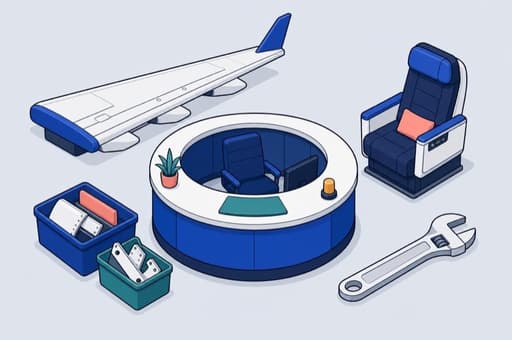
Private aviation, flight training, electronic-parts distribution and industrial repair brought in $22.98B in FY2025. All were growing, but aircraft, crews, component supplies and customer inventories impose different speed limits.
Competes with Flexjet fractional ownership (Flexjet) · Arrow Global Components (Arrow Electronics) · Avnet Electronic Components (Avnet)
In plain English
Four very different jobs share this shelf. NetJets sells access to private aircraft through ownership slices, management and flying time; FlightSafety trains pilots. TTI supplies electronic components to manufacturers, while IPS repairs and services industrial equipment.
Each earns when customers avoid building the capability themselves: an aircraft user buys dependable access, a pilot buys training, a factory buys the right part or gets a machine restored. Repeat service can make relationships durable, yet there is no single engine here. Available aircraft and crews limit aviation, while parts supply and factory ordering cycles govern the other businesses.
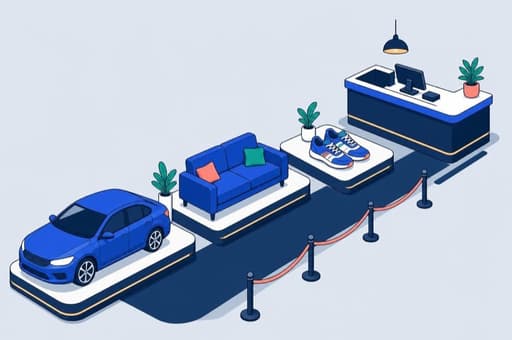
Retailing businesses
More than eighty car dealerships anchor a $19.67B retail group that also includes furniture chains and specialty shops. Vehicle sales rose in FY2025, but flat second-quarter sales in 2026 keep household spending and housing turnover in view.
Competes with AutoNation dealerships and finance (AutoNation) · Lithia & Driveway (Lithia Motors)
In plain English
This is the part of Berkshire most shoppers could walk into. Its dealerships sell new and used vehicles, repairs, parts, financing and service plans; the rest consists of furniture chains and specialty stores.
Money arrives one purchase or repair at a time from households and small businesses. Dealerships can keep earning after the car leaves through maintenance and financing, while furniture depends more on moves and home activity. Vehicle availability, borrowing costs, used-car values and consumer confidence decide how busy the counters become.


 Insurance operations — GEICO, BH Primary and BHRGGEICO covers drivers, BH Primary covers businesses, and BHRG takes on risks from people and other insurers. Together they held $176B of claim money at year-end, making careful pricing and interest rates crucial.
GEICO covers drivers, BH Primary covers businesses, and BHRG takes on risks from people and other insurers. Together they held $176B of claim money at year-end, making careful pricing and interest rates crucial.
In plain English
People and businesses pay Berkshire now for help with accidents, damage and other costly surprises later. GEICO sells car coverage directly, BH Primary handles business risks, and BHRG also covers insurance companies when their own promises become too large.
The timing matters: premiums arrive before many claims are paid, leaving a large pool Berkshire can invest in the meantime. If premiums more than cover claims and expenses, that pool costs Berkshire nothing and the insurance operation earns a profit too. Bad pricing, disasters or lower interest rates can quickly make the bargain less attractive.
Competes with Progressive Direct auto (Progressive) · State Farm private-passenger auto (State Farm)
 McLane CompanyA huge wholesaler whose scale hides a thin spread. Walmart, 7-Eleven and Yum! Brands provide 43.8% of its sales, so keeping large contracts and controlling delivery costs matter most.
A huge wholesaler whose scale hides a thin spread. Walmart, 7-Eleven and Yum! Brands provide 43.8% of its sales, so keeping large contracts and controlling delivery costs matter most.
In plain English
McLane is the middleman behind stocked shelves and restaurant kitchens. It buys groceries, drinks, tobacco and food-service supplies in bulk, stores them in warehouses, then sends mixed truckloads along regular delivery routes.
Customers pay a little more than McLane paid for the goods. That small difference must cover warehouses, drivers, fuel and labor, so an enormous sales total produces relatively little profit. The model works through repetition and density: fuller trucks and compact routes help, while losing a major chain leaves costly space in the network.
Competes with Core-Mark convenience distribution (Performance Food Group) · H.T. Hackney convenience distribution (H.T. Hackney)
 Pilot Travel CentersPilot is a nationwide stop for truck fuel, food and road services. FY2025 sales were $42.20B but profit before taxes was just $190M; fuel prices can swell sales without more gallons or much more profit.
Pilot is a nationwide stop for truck fuel, food and road services. FY2025 sales were $42.20B but profit before taxes was just $190M; fuel prices can swell sales without more gallons or much more profit.
In plain English
Think of Pilot as a highway pit stop built mainly for working trucks. Drivers and fleets buy diesel, while the travel centers also sell meals, everyday goods and services needed on long routes.
Most of the money passing through the register pays for the fuel itself, leaving only a narrow slice for Pilot. Gallons sold, the gap between buying and selling prices, and store purchases shape that slice. This is why a jump in pump prices can make revenue look much larger even when traffic is slightly lower and earnings barely move.
Competes with Love's Travel Stops (Love's) · TA/Petro (TravelCenters of America)
 Industrial productsAircraft parts, chemical additives and cutting tools generated $6.81B of profit before taxes in FY2025. OxyChem joined after year-end, so current growth includes a large new chemicals business as well as demand from existing factories.
Aircraft parts, chemical additives and cutting tools generated $6.81B of profit before taxes in FY2025. OxyChem joined after year-end, so current growth includes a large new chemicals business as well as demand from existing factories.
In plain English
This is Berkshire's cabinet of hard-to-combine factory businesses. Precision Castparts makes pieces that aircraft makers cannot easily swap out, Lubrizol makes chemicals added to fuels and other materials, and IMC supplies tough cutting tools; Marmon spans further industrial products.
Customers pay for parts and materials that keep larger production lines working. Qualification and reliability can make repeat orders sticky, but each shelf in the cabinet follows a different cycle: aircraft construction, chemical prices or general factory activity. OxyChem, bought in early 2026, adds basic chemicals used in water treatment, healthcare, construction and industry.
Competes with Howmet aerospace components (Howmet Aerospace) · Sandvik Coromant tools (Sandvik)
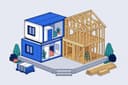 Building productsClayton delivered 59,400 homes in FY2025 while sister companies sold flooring, insulation, roofing, paint and building systems. Taylor Morrison joined in July 2026, making the next comparison partly about acquisition and still about home affordability.
Clayton delivered 59,400 homes in FY2025 while sister companies sold flooring, insulation, roofing, paint and building systems. Taylor Morrison joined in July 2026, making the next comparison partly about acquisition and still about home affordability.
In plain English
A house touches several Berkshire businesses before anyone turns the key. Clayton builds homes in factories and on ordinary lots, then can help buyers finance them; Shaw, Johns Manville, Benjamin Moore and MiTek supply surfaces, insulation, roofing, coatings and structural systems.
The money comes from homebuyers, building dealers and contractors purchasing a home or the pieces inside it. Mortgage rates, land, labor and available used homes decide how many buyers can act. Taylor Morrison's site-built communities now sit beside Clayton, widening Berkshire's reach but making future growth less comparable with the year before the purchase.
Competes with Champion Homes HUD-code homes (Champion Homes) · Cavco manufactured homes (Cavco Industries)
 Berkshire Hathaway EnergyUtilities and energy networks earn from supplying power and gas over decades. Customers had committed $23.83B for future electricity and gas at June 2026, mostly beyond one year; regulators, grid connections and wildfire costs govern the payoff.
Utilities and energy networks earn from supplying power and gas over decades. Customers had committed $23.83B for future electricity and gas at June 2026, mostly beyond one year; regulators, grid connections and wildfire costs govern the payoff.
In plain English
The poles, wires, pipes and power plants are the expensive bones of everyday energy service. Berkshire Hathaway Energy owns regulated utilities, gas pipelines, renewable generators, networks in Britain and Canada, and a smaller real-estate arm.
Households and businesses pay monthly bills; other customers sign long agreements for power, gas transport or storage. Local regulators usually allow utilities to recover sensible costs and earn a return on approved investment, so Berkshire keeps spending heavily on the network. The bargain depends on that approval, reliable connections and control of hazards such as wildfires.
Competes with NextEra Energy Resources generation and storage (NextEra) · Dominion Energy regulated utilities (Dominion)
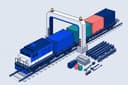 BNSF RailwayBNSF carries consumer goods, farm products, industrial loads, energy products and coal across the western rail network. It kept 34.5 cents of each sales dollar after railroad running costs in FY2025 despite flat sales, so smoother movement matters as much as volume.
BNSF carries consumer goods, farm products, industrial loads, energy products and coal across the western rail network. It kept 34.5 cents of each sales dollar after railroad running costs in FY2025 despite flat sales, so smoother movement matters as much as volume.
In plain English
BNSF is a long-distance conveyor belt laid across the western United States. Trains haul containers from ports, crops from farms and heavy products that would be costly to move by road.
Shippers pay for each car or container moved, with the price shaped by cargo and route. Once the tracks, yards and locomotives exist, better scheduling and fuller trains can spread their cost across more loads. Trade, harvests, energy demand, labor and safety rules all change traffic, but keeping cars moving rather than waiting is the lever BNSF controls most directly.
Competes with Union Pacific railroad (Union Pacific) · CPKC network (Canadian Pacific Kansas City)
 Service businesses — NetJets, FlightSafety, TTI and IPSPrivate aviation, flight training, electronic-parts distribution and industrial repair brought in $22.98B in FY2025. All were growing, but aircraft, crews, component supplies and customer inventories impose different speed limits.
Private aviation, flight training, electronic-parts distribution and industrial repair brought in $22.98B in FY2025. All were growing, but aircraft, crews, component supplies and customer inventories impose different speed limits.
In plain English
Four very different jobs share this shelf. NetJets sells access to private aircraft through ownership slices, management and flying time; FlightSafety trains pilots. TTI supplies electronic components to manufacturers, while IPS repairs and services industrial equipment.
Each earns when customers avoid building the capability themselves: an aircraft user buys dependable access, a pilot buys training, a factory buys the right part or gets a machine restored. Repeat service can make relationships durable, yet there is no single engine here. Available aircraft and crews limit aviation, while parts supply and factory ordering cycles govern the other businesses.
Competes with Flexjet fractional ownership (Flexjet) · Arrow Global Components (Arrow Electronics) · Avnet Electronic Components (Avnet)
 Retailing businessesMore than eighty car dealerships anchor a $19.67B retail group that also includes furniture chains and specialty shops. Vehicle sales rose in FY2025, but flat second-quarter sales in 2026 keep household spending and housing turnover in view.
More than eighty car dealerships anchor a $19.67B retail group that also includes furniture chains and specialty shops. Vehicle sales rose in FY2025, but flat second-quarter sales in 2026 keep household spending and housing turnover in view.
In plain English
This is the part of Berkshire most shoppers could walk into. Its dealerships sell new and used vehicles, repairs, parts, financing and service plans; the rest consists of furniture chains and specialty stores.
Money arrives one purchase or repair at a time from households and small businesses. Dealerships can keep earning after the car leaves through maintenance and financing, while furniture depends more on moves and home activity. Vehicle availability, borrowing costs, used-car values and consumer confidence decide how busy the counters become.
Competes with AutoNation dealerships and finance (AutoNation) · Lithia & Driveway (Lithia Motors)
Named in filings, launches and programs
- Consumer productsProduct lineForest River vehicles, Fruit of the Loom clothing, Duracell batteries, Jazwares toys and Brooks running products made 3.9% of FY2025 revenue.
- OxyChemBrandA basic-chemicals maker bought for about $9.4B in January 2026 and folded into Berkshire's industrial products group.
- Taylor MorrisonBrandA site-built homebuilder bought for $6.8B in July 2026 and paired with Clayton; it contributed no Berkshire sales before closing.
- Bell LaboratoriesBrandA rodent-control manufacturer acquired after a 2025 announcement; Berkshire did not disclose its purchase price or standalone sales.
- Pilot–General Motors EV charging networkCustomer program · RampingElectric-vehicle chargers had reached a few hundred Pilot locations, on the way toward as many as 500 sites.
- Insurance stock portfolioEcosystemA roughly $324B stock portfolio at June 2026, with two-thirds concentrated in five holdings; its dividends and price swings shape Berkshire's results.
- Alphabet private investmentEcosystemA reported $10B private purchase tied to Alphabet's infrastructure financing; this allocates capital rather than creating operating sales.
- Kraft Heinz and Occidental investmentsEcosystemBerkshire's share of their profits or losses sits outside operating sales; reductions in their recorded value hurt FY2025 net income.
- Other long-duration sales and service contractsCustomer programOutside the energy group, unnamed customers also committed to long-running sales and services, mostly extending beyond the following year.
Consumer productsProduct line
Forest River vehicles, Fruit of the Loom clothing, Duracell batteries, Jazwares toys and Brooks running products made 3.9% of FY2025 revenue.
OxyChemBrand
A basic-chemicals maker bought for about $9.4B in January 2026 and folded into Berkshire's industrial products group.
Taylor MorrisonBrand
A site-built homebuilder bought for $6.8B in July 2026 and paired with Clayton; it contributed no Berkshire sales before closing.
Bell LaboratoriesBrand
A rodent-control manufacturer acquired after a 2025 announcement; Berkshire did not disclose its purchase price or standalone sales.
Pilot–General Motors EV charging networkCustomer program · Ramping
Electric-vehicle chargers had reached a few hundred Pilot locations, on the way toward as many as 500 sites.
Insurance stock portfolioEcosystem
A roughly $324B stock portfolio at June 2026, with two-thirds concentrated in five holdings; its dividends and price swings shape Berkshire's results.
Alphabet private investmentEcosystem
A reported $10B private purchase tied to Alphabet's infrastructure financing; this allocates capital rather than creating operating sales.
Kraft Heinz and Occidental investmentsEcosystem
Berkshire's share of their profits or losses sits outside operating sales; reductions in their recorded value hurt FY2025 net income.
Other long-duration sales and service contractsCustomer program
Outside the energy group, unnamed customers also committed to long-running sales and services, mostly extending beyond the following year.