
Cerebras Systems (CBRS)
Builds wafer-scale AI systems and cloud compute for model training and low-latency inference.
Something off on this page? Send us feedback.
Cerebras builds unusually large AI computers and rents access to them as an online service. That service now brings in most of the money, while direct computer sales still matter. Its promised expansion is enormous, but it depends heavily on a few giant customers and on securing factories, equipment, and powered buildings ahead of demand.
Item facts: Q2 2026 · quarter ended Jun 30, 2026, from filings, earnings calls and company pages.
Judgment weights, not filed revenue
The band summarizes business focus and direction. ~ marks estimates.
7 in detail · 17 more below
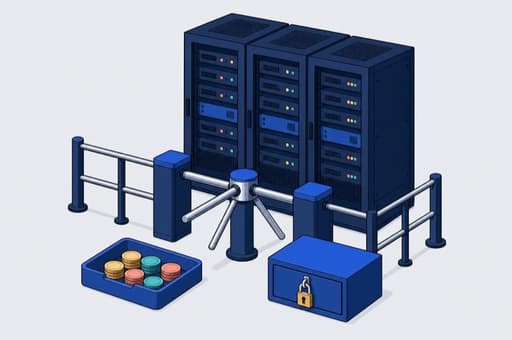
Cerebras Inference Cloud
Online access and related services are now the main business. Companywide contracted work stood at $25.4 billion; the watchpoint is turning those long promises into live, billable computing.
Competes with GroqCloud and GroqCore (Groq) · SambaNova Cloud and DataScale SN40L (SambaNova Systems) · CoreWeave AI Cloud (CoreWeave)
In plain English
Cerebras runs its computers in data centers and lets customers reach them over the internet. A developer sends an AI request; the machines produce an answer quickly, without the customer buying and installing a system.
Software companies such as OpenAI, Cognition, and Lovable either pay for the amount of text produced or reserve computing power and pay whether they fully use it or not. Customers also pay Cerebras to manage groups of machines and help adapt models. Revenue grows when more equipment comes online and customers send more requests, so powered buildings and delivered systems matter as much as demand.
OpenAI and Cerebras Strategic Partnership
OpenAI bought $56.8 million in the quarter, while MBZUAI, an Abu Dhabi university, supplied 34%—together nearly two-thirds of sales. OpenAI can drive growth, but one buyer carries unusual weight.
Competes with CoreWeave AI Cloud (CoreWeave) · GB300 NVL72 (NVIDIA)
In plain English
OpenAI uses Cerebras machines to produce answers for people using its AI products. It has reserved a very large amount of computing capacity, and production started only weeks after the agreement was signed.
Cerebras is paid for the capacity it supplies and can also arrange selected data-center costs for a small added fee. OpenAI has helped finance the build-out too. It resembles a restaurant's biggest diner helping fund a larger kitchen, then reserving many of the tables: expansion becomes possible sooner, but the restaurant is deeply tied to that diner's appetite and schedule.
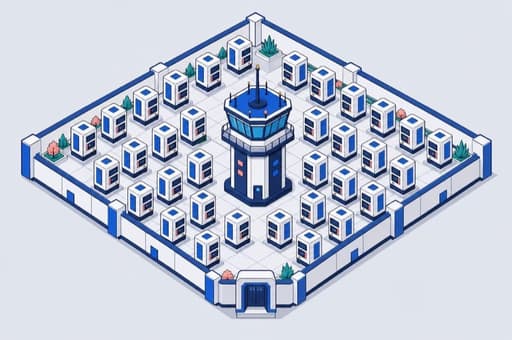
Condor Galaxy
G42's Condor Galaxy program assembles Cerebras computers into national-scale AI facilities; one installation holds 64 CS-3 systems. It is substantial current business, though OpenAI is beginning to dilute its dominance.
Competes with GB300 NVL72 clusters (NVIDIA) · DataScale SN40L (SambaNova Systems)
In plain English
A national-scale AI workshop, built one Cerebras cluster at a time. G42, an Abu Dhabi AI group, develops and operates Condor Galaxy, while MBZUAI, an Abu Dhabi university, and G42 buy the machines, computing access, and related help.
Cerebras earns when it delivers systems and as it provides capacity and services around them. The relationship can produce very large installations, but payment depends on sites being ready, systems being accepted, and contracts continuing. That makes Condor Galaxy both a showcase for how Cerebras computers scale together and a reminder of how much present business rests on closely related buyers.
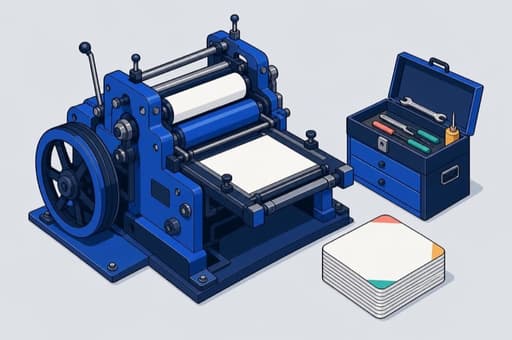
Cerebras CS-3
CS-3 is the computer Cerebras currently sells, leases, and installs in its own service. System sales produced $54.1 million in the quarter, but their share is shrinking as online access grows faster.
Competes with GB300 NVL72 (NVIDIA) · DataScale SN40L (SambaNova Systems) · Instinct MI455X and Helios (AMD)
In plain English
At the center of CS-3 is one unusually large processor, designed to keep a huge AI job together instead of dividing it among many conventional chips. Customers can place these computers at their own sites, group them into larger installations, or use the same machines through Cerebras's service.
A sale or lease brings in the main payment, and support agreements lasting one to five years add follow-on revenue. Think of selling a specialized printing press and then charging to keep it running. Manufacturing and site readiness can delay delivery, so an order does not become money until the system is built and accepted.
Cerebras CS-4
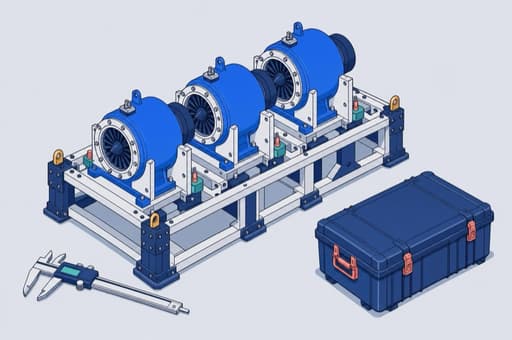
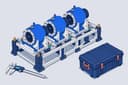
CS-4 joins three giant processors in one modular system for faster AI answers. It was unveiled after the quarter and shipments were planned for Q3; the test is whether plans become accepted customer systems.
Competes with GB300 NVL72 (NVIDIA) · DataScale SN40L (SambaNova Systems) · Instinct MI455X Helios (AMD)
In plain English
The next box carries three WSE-3T processors, each an extremely large piece of computing silicon, rather than the single processor at the heart of CS-3. Its Nexus design breaks power, connections, and controls into pieces that can be combined and serviced more easily.
Cerebras intends to sell CS-4 directly and place it inside its hosted service, using the same system-sale, lease, and support model as before. No customer or actual sale had been disclosed by the latest reported quarter. The near-term job is plain: build it, ship it, and have customers accept it.

AWS and Cerebras Disaggregated Inference on Amazon Bedrock
Amazon's service will split each AI answer between its own chips and Cerebras systems. The launch was scheduled for the first quarter of 2027; the lease and customer billing had not begun.
Competes with TPU7x Ironwood (Google Cloud) · CoreWeave GB200 NVL72 Cloud (CoreWeave) · SambaNova Cloud (SambaNova Systems)
In plain English
When an AI answers a question, one machine can read and organize the question while another writes the answer piece by piece. Amazon's Trainium chips are meant to handle the first job, and CS-3 systems the second, joined inside Bedrock, Amazon's managed AI service.
The agreements include a long-term equipment lease, software help, support, and future manufacturing commitments. That can put Cerebras behind a familiar Amazon doorway instead of requiring every customer to connect directly. Money starts only after the lease and service launch, so working integration and a ready supply of machines come first.
AMD and Cerebras Disaggregated Inference
AMD equipment will do the heavy first pass while Cerebras machines produce each final answer quickly. Availability was targeted for Q4 2026; Cerebras must make the combined service reliable without letting equipment costs swallow the revenue.
Competes with GB300 NVL72 (NVIDIA) · TPU7x Ironwood (Google Cloud) · DataScale SN40L (SambaNova Systems)
In plain English
Not every part of an AI answer needs the same machine. AMD's Helios computers are intended to process the large first pass, while Cerebras systems handle the rapid step-by-step writing that follows. Customers would reach the combined setup through Cerebras's online service.
Unlike the Amazon arrangement, Cerebras plans to buy and operate the AMD equipment itself, then keep what customers pay for using the service. That gives Cerebras control of billing but also puts the purchase and operating costs on its shoulders. There were no disclosed bookings or sales by the latest quarter, so demand and the cost of delivery remain unproven.


 Cerebras Inference CloudOnline access and related services are now the main business. Companywide contracted work stood at $25.4 billion; the watchpoint is turning those long promises into live, billable computing.
Online access and related services are now the main business. Companywide contracted work stood at $25.4 billion; the watchpoint is turning those long promises into live, billable computing.
In plain English
Cerebras runs its computers in data centers and lets customers reach them over the internet. A developer sends an AI request; the machines produce an answer quickly, without the customer buying and installing a system.
Software companies such as OpenAI, Cognition, and Lovable either pay for the amount of text produced or reserve computing power and pay whether they fully use it or not. Customers also pay Cerebras to manage groups of machines and help adapt models. Revenue grows when more equipment comes online and customers send more requests, so powered buildings and delivered systems matter as much as demand.
Competes with GroqCloud and GroqCore (Groq) · SambaNova Cloud and DataScale SN40L (SambaNova Systems) · CoreWeave AI Cloud (CoreWeave)
 OpenAI and Cerebras Strategic PartnershipOpenAI bought $56.8 million in the quarter, while MBZUAI, an Abu Dhabi university, supplied 34%—together nearly two-thirds of sales. OpenAI can drive growth, but one buyer carries unusual weight.
OpenAI bought $56.8 million in the quarter, while MBZUAI, an Abu Dhabi university, supplied 34%—together nearly two-thirds of sales. OpenAI can drive growth, but one buyer carries unusual weight.
In plain English
OpenAI uses Cerebras machines to produce answers for people using its AI products. It has reserved a very large amount of computing capacity, and production started only weeks after the agreement was signed.
Cerebras is paid for the capacity it supplies and can also arrange selected data-center costs for a small added fee. OpenAI has helped finance the build-out too. It resembles a restaurant's biggest diner helping fund a larger kitchen, then reserving many of the tables: expansion becomes possible sooner, but the restaurant is deeply tied to that diner's appetite and schedule.
Competes with CoreWeave AI Cloud (CoreWeave) · GB300 NVL72 (NVIDIA)
 Condor GalaxyG42's Condor Galaxy program assembles Cerebras computers into national-scale AI facilities; one installation holds 64 CS-3 systems. It is substantial current business, though OpenAI is beginning to dilute its dominance.
G42's Condor Galaxy program assembles Cerebras computers into national-scale AI facilities; one installation holds 64 CS-3 systems. It is substantial current business, though OpenAI is beginning to dilute its dominance.
In plain English
A national-scale AI workshop, built one Cerebras cluster at a time. G42, an Abu Dhabi AI group, develops and operates Condor Galaxy, while MBZUAI, an Abu Dhabi university, and G42 buy the machines, computing access, and related help.
Cerebras earns when it delivers systems and as it provides capacity and services around them. The relationship can produce very large installations, but payment depends on sites being ready, systems being accepted, and contracts continuing. That makes Condor Galaxy both a showcase for how Cerebras computers scale together and a reminder of how much present business rests on closely related buyers.
Competes with GB300 NVL72 clusters (NVIDIA) · DataScale SN40L (SambaNova Systems)
 Cerebras CS-3CS-3 is the computer Cerebras currently sells, leases, and installs in its own service. System sales produced $54.1 million in the quarter, but their share is shrinking as online access grows faster.
CS-3 is the computer Cerebras currently sells, leases, and installs in its own service. System sales produced $54.1 million in the quarter, but their share is shrinking as online access grows faster.
In plain English
At the center of CS-3 is one unusually large processor, designed to keep a huge AI job together instead of dividing it among many conventional chips. Customers can place these computers at their own sites, group them into larger installations, or use the same machines through Cerebras's service.
A sale or lease brings in the main payment, and support agreements lasting one to five years add follow-on revenue. Think of selling a specialized printing press and then charging to keep it running. Manufacturing and site readiness can delay delivery, so an order does not become money until the system is built and accepted.
Competes with GB300 NVL72 (NVIDIA) · DataScale SN40L (SambaNova Systems) · Instinct MI455X and Helios (AMD)
 Cerebras CS-4CS-4 joins three giant processors in one modular system for faster AI answers. It was unveiled after the quarter and shipments were planned for Q3; the test is whether plans become accepted customer systems.
CS-4 joins three giant processors in one modular system for faster AI answers. It was unveiled after the quarter and shipments were planned for Q3; the test is whether plans become accepted customer systems.
In plain English
The next box carries three WSE-3T processors, each an extremely large piece of computing silicon, rather than the single processor at the heart of CS-3. Its Nexus design breaks power, connections, and controls into pieces that can be combined and serviced more easily.
Cerebras intends to sell CS-4 directly and place it inside its hosted service, using the same system-sale, lease, and support model as before. No customer or actual sale had been disclosed by the latest reported quarter. The near-term job is plain: build it, ship it, and have customers accept it.
Competes with GB300 NVL72 (NVIDIA) · DataScale SN40L (SambaNova Systems) · Instinct MI455X Helios (AMD)
 AWS and Cerebras Disaggregated Inference on Amazon BedrockAmazon's service will split each AI answer between its own chips and Cerebras systems. The launch was scheduled for the first quarter of 2027; the lease and customer billing had not begun.
Amazon's service will split each AI answer between its own chips and Cerebras systems. The launch was scheduled for the first quarter of 2027; the lease and customer billing had not begun.
In plain English
When an AI answers a question, one machine can read and organize the question while another writes the answer piece by piece. Amazon's Trainium chips are meant to handle the first job, and CS-3 systems the second, joined inside Bedrock, Amazon's managed AI service.
The agreements include a long-term equipment lease, software help, support, and future manufacturing commitments. That can put Cerebras behind a familiar Amazon doorway instead of requiring every customer to connect directly. Money starts only after the lease and service launch, so working integration and a ready supply of machines come first.
Competes with TPU7x Ironwood (Google Cloud) · CoreWeave GB200 NVL72 Cloud (CoreWeave) · SambaNova Cloud (SambaNova Systems)
 AMD and Cerebras Disaggregated InferenceAMD equipment will do the heavy first pass while Cerebras machines produce each final answer quickly. Availability was targeted for Q4 2026; Cerebras must make the combined service reliable without letting equipment costs swallow the revenue.
AMD equipment will do the heavy first pass while Cerebras machines produce each final answer quickly. Availability was targeted for Q4 2026; Cerebras must make the combined service reliable without letting equipment costs swallow the revenue.
In plain English
Not every part of an AI answer needs the same machine. AMD's Helios computers are intended to process the large first pass, while Cerebras systems handle the rapid step-by-step writing that follows. Customers would reach the combined setup through Cerebras's online service.
Unlike the Amazon arrangement, Cerebras plans to buy and operate the AMD equipment itself, then keep what customers pay for using the service. That gives Cerebras control of billing but also puts the purchase and operating costs on its shoulders. There were no disclosed bookings or sales by the latest quarter, so demand and the cost of delivery remain unproven.
Competes with GB300 NVL72 (NVIDIA) · TPU7x Ironwood (Google Cloud) · DataScale SN40L (SambaNova Systems)
Named in filings, launches and programs
- Dedicated CapacityServiceCustomers reserve a fixed slice of hosted computing power and pay even if they do not use all of it.
- On-Demand APIServiceDevelopers send AI requests over the internet and pay for the amount of text produced, with prepaid bundles available.
- AI Model StudioServiceCustomers pay to teach their own AI models on hosted CS-3 groups run through Cirrascale.
- Cerebras Software Platform (CSoft)PlatformCore software that turns a customer's AI model into instructions the company's unusually large processors can execute.
- Cerebras SDK and CSLEcosystemProgramming tools and a dedicated language for developers who need lower-level control of Cerebras systems.
- Cerebras ML SoftwarePlatformTools that bring AI models built with popular systems such as PyTorch and XLA onto Cerebras machines.
- Cerebras Graph CompilerPlatformTranslates a model's map of calculations into instructions that Cerebras systems can run.
- WSE-3TProduct · RampingA four-trillion-transistor processor used three at a time inside CS-4, with no separately disclosed sales.
- Nexus Platform ArchitecturePlatform · RampingReusable power, connection, and control pieces introduced with CS-4 so larger systems can be assembled in modules.
- CS-5Product · AnnouncedThe next system generation, targeted by management for the second half of 2027.
- Callosum IntegrationEcosystem · AnnouncedConnects automated AI tools to Cerebras computing power through Callosum's online doorway.
- Lovable Dedicated CapacityCustomer programReserved Cerebras computing power for Lovable's AI software-creation product.
- Cognition Capacity ProgramCustomer programA named customer agreement for reserved online computing capacity signed during the second quarter.
- CrowdStrike Inline AI SecurityCustomer programCerebras answers AI requests inside CrowdStrike's live security service.
- AI Model ServicesServiceCustom help building models, running computer groups, and supporting customers, paid over time or when agreed work is completed.
- Unnamed Hyperscaler CollaborationCustomer program · AnnouncedAn unnamed giant cloud provider is expected to begin paying Cerebras in mid-2027 and expand in 2028.
- Q2 2026 Capacity AgreementsCustomer programSix customers each committed more than $30 million, including named agreements with Cognition and Lovable.
Dedicated CapacityService
Customers reserve a fixed slice of hosted computing power and pay even if they do not use all of it.
On-Demand APIService
Developers send AI requests over the internet and pay for the amount of text produced, with prepaid bundles available.
AI Model StudioService
Customers pay to teach their own AI models on hosted CS-3 groups run through Cirrascale.
Cerebras Software Platform (CSoft)Platform
Core software that turns a customer's AI model into instructions the company's unusually large processors can execute.
Cerebras SDK and CSLEcosystem
Programming tools and a dedicated language for developers who need lower-level control of Cerebras systems.
Cerebras ML SoftwarePlatform
Tools that bring AI models built with popular systems such as PyTorch and XLA onto Cerebras machines.
Cerebras Graph CompilerPlatform
Translates a model's map of calculations into instructions that Cerebras systems can run.
WSE-3TProduct · Ramping
A four-trillion-transistor processor used three at a time inside CS-4, with no separately disclosed sales.
Nexus Platform ArchitecturePlatform · Ramping
Reusable power, connection, and control pieces introduced with CS-4 so larger systems can be assembled in modules.
CS-5Product · Announced
The next system generation, targeted by management for the second half of 2027.
Callosum IntegrationEcosystem · Announced
Connects automated AI tools to Cerebras computing power through Callosum's online doorway.
Lovable Dedicated CapacityCustomer program
Reserved Cerebras computing power for Lovable's AI software-creation product.
Cognition Capacity ProgramCustomer program
A named customer agreement for reserved online computing capacity signed during the second quarter.
CrowdStrike Inline AI SecurityCustomer program
Cerebras answers AI requests inside CrowdStrike's live security service.
AI Model ServicesService
Custom help building models, running computer groups, and supporting customers, paid over time or when agreed work is completed.
Unnamed Hyperscaler CollaborationCustomer program · Announced
An unnamed giant cloud provider is expected to begin paying Cerebras in mid-2027 and expand in 2028.
Q2 2026 Capacity AgreementsCustomer program
Six customers each committed more than $30 million, including named agreements with Cognition and Lovable.