
Ciena (CIEN)
Builds coherent optical networks and high-speed interconnects for carriers and cloud providers.
Something off on this page? Send us feedback.
Ciena makes the equipment that pushes data down glass fiber — the machines at each end of a long cable, and the gear that lights the strand itself. For decades the customers were phone companies. Now the biggest buyers are two cloud companies stitching far-apart clusters of AI computers together, and what holds Ciena back is no longer orders but parts.
Item facts: 9M FY2026 · nine months ended Aug 1, 2026, from filings, earnings calls and company pages.
Judgment weights, not filed revenue
The band summarizes business focus and direction. ~ marks estimates.
8 in detail · 11 more below
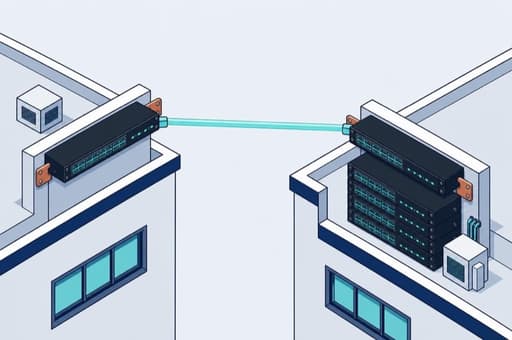
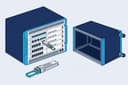
Waveserver
The stackable box that sits at each end of a cable running between two data centers. Sales grew more than 55% year over year in each of the last two quarters, on the back of cloud companies wiring sites together. Watch parts supply.
Competes with 1830 PSI-M compact platform (Nokia) · NCS 1014 coherent chassis (Cisco) · Coherent plugs that slot straight into a router (Marvell)
In plain English
Two data centers a hundred miles apart, and the job is to make them behave like one machine. Each end needs a box that packs an enormous amount of data onto a single beam of light and pulls it back off cleanly at the far side. Waveserver is that box, stacked in a rack like pizza boxes.
Cloud companies, and the carriers that build these links on their behalf, buy them when a new site opens and buy more as traffic grows. Each box carries Ciena's own high-capacity modem chips — designing those in-house is how Ciena keeps more of the price.
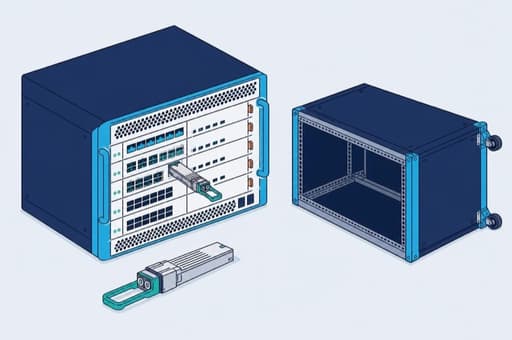
WaveLogic Nano coherent pluggables
A whole transmission shelf shrunk into a plug that slides into a router. Sales passed $168M in FY2025, more than double the year before, and Ciena has promised to more than double again. The catch: every plug sold is a shelf not sold.
Competes with Acacia pluggables (Cisco) · Coherent modules (Marvell) · Coherent pluggables (Nokia)
In plain English
A whole transmission shelf, shrunk into something the size of a chocolate bar that slots into the front of a router. No extra shelf, no extra rack space — and for a customer running thousands of links, that adds up fast.
Buyers are cloud companies and the switch and router makers who design Ciena's plugs into their own products. It cuts both ways: a plug inside somebody's router is a full Ciena shelf that nobody bought. The same group also sells bare components and chips, added by buying Nubis, an optical interconnect maker, in 2025.
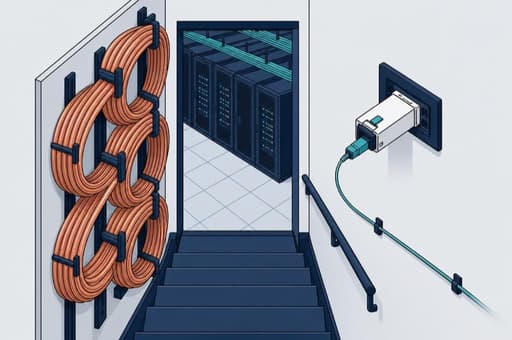
DCOM data-center out-of-band management
A fiber replacement for the copper cabling that lets staff reach a machine when its main connection dies. Built with Meta; the two of them say it frees up to 99% of the rack space the old setup ate. Watch whether a second and third cloud buyer standardize on it.
Competes with PON-based data-center solutions (Nokia) · Copper out-of-band switch stacks (Incumbent switch vendors)
In plain English
Behind the racks of computers sits a second, humbler network — the one technicians use to reach a machine when its main connection is down, like the service stairwell behind a hotel's guest elevators. Traditionally that means copper cable and stacks of small switches taking up space and power.
Ciena replaces it with the fiber technology built for neighbourhood broadband, repurposed for indoors. Meta helped design it and was the first buyer; a second cloud company has placed first orders and a third was testing it in a lab. The money comes from the fiber terminals and the packet boxes that drive them.
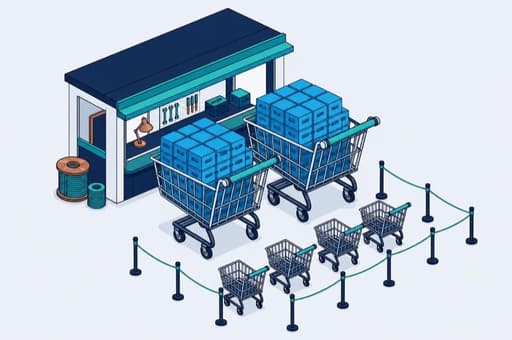
The two cloud providers
Two cloud companies Ciena does not name were 36.9% of nine-month sales — the bigger one 24.2% alone, roughly double a year earlier. They buy across the range. A spending pause at either takes out about a quarter of the business.
Competes with Optical Networks after buying Infinera (Nokia) · Optical transport line-up at the same buyers (Cisco)
In plain English
Somewhere behind these numbers are two very large cloud companies. Ciena will not say who; the filings call them Cloud Provider A and Cloud Provider B. Meta is a named customer elsewhere in the business, but nothing on record ties it to either.
They buy the whole range — the gear that lights the fiber, the boxes at each end, the plugs, the crews who install it, even a bare modem module for a platform one of them builds itself. Both have committed volume out to 2029, which is why Ciena could lock in its own parts suppliers for the same stretch. Upside and risk are one fact: if either slows down, so does a large slice of the year.
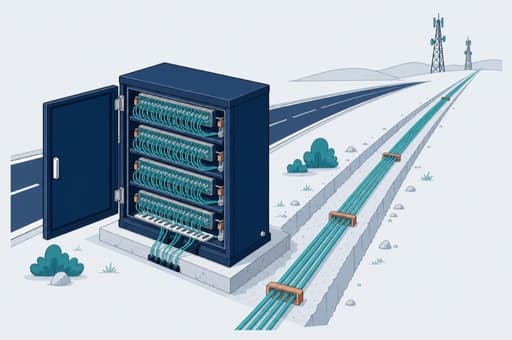
RLS and RLS Hyper-Rail
The gear that turns a dark strand of glass into a working route and steers traffic on and off it. Grew above 55% year over year in each of the last two quarters. The squeeze is pump lasers — the parts that boost the light along the way.
Competes with 1830 PSS/PSI-L line systems (Nokia) · Open Transport 3000 series (Cisco)
In plain English
Fiber on its own is just glass. For it to carry anything, light has to be generated, boosted every so often along the route, and peeled off at the right cities. That is what a line system does, and it is the layer everything else plugs into.
Hyper-Rail is the next version, designed together with cloud companies: many fiber pairs running side by side over hundreds of kilometres, with far more boosters packed into each rack — which matters when the customer is joining two sites full of AI computers. Ciena sells the shelves and the boosters, then sells more as capacity is added. Management claims roughly a 70% share of what is already installed for those cloud routes.
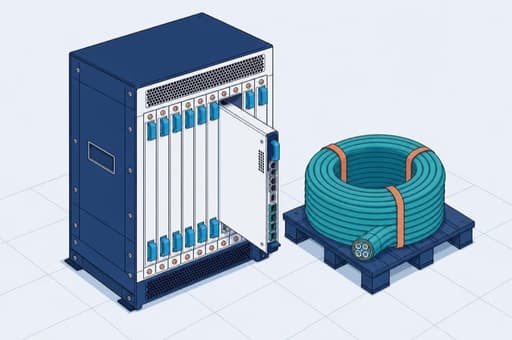
6500 Packet-Optical Platform
The workhorse cabinet phone companies have bought for years, for city, long-haul and undersea routes. It grows, but several times slower than the cloud lines. Watch Europe: sales there fell in dollars across the last three quarters while the company grew.
Competes with 1830 PSS packet-optical (Nokia) · NCS 2000 and NCS 1014 chassis (Cisco) · Optical transport platforms (Huawei)
In plain English
Think of a tall equipment cabinet in a telephone exchange with slots you fill with cards: one card for more capacity, another to shuffle traffic between routes, another to push a signal across an ocean. The 6500 is that cabinet, and it has been Ciena's bread and butter for years.
Carriers buy it when they rebuild a backbone, which happens on their schedule rather than AI's — so it grows while the cloud-facing lines grow several times faster. It also carries Ciena's fastest modem, which the company says is still the only one of its speed on sale eighteen months after launch. The bottleneck is the scarce chip that drives those modems.
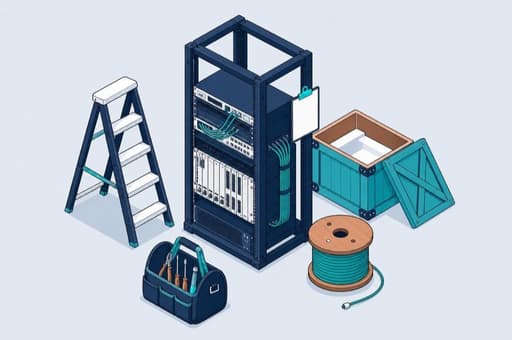
Global Services
The crews who install, tune and maintain everything Ciena ships, plus advisory work. Nine-month revenue rose to $537M from $437M, yet its share keeps slipping because hardware grows faster. The company's $8.5B pile of unshipped orders is what feeds it.
Competes with Install-and-maintain services for its own gear (Nokia) · Install-and-maintain services for its own gear (Cisco) · Deployment teams doing the work themselves (Carriers and network integrators)
In plain English
The unglamorous half of every sale. Someone has to physically rack the equipment, splice it into the fiber, tune it and fix it when a route goes dark. Ciena's own engineers do that work, and customers pay for it on top of the hardware.
Because the work follows the boxes out the door, this line is an echo of what shipped a few months earlier. It also buys something useful: the cloud companies are the biggest users of these services, so Ciena sees what they are deploying and when. The limit right now is how fast crews can get on site, not whether anyone wants the work.
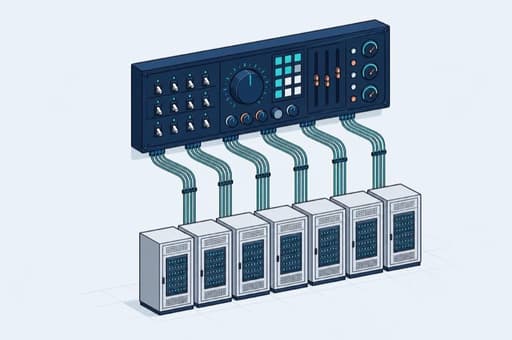
Navigator Network Control Suite
The control software sold alongside the hardware: one screen for a network built in many layers. With its attached services it was $286M over nine months, growing about 6% while the company grew 37% — the slowest piece Ciena still leans on.
Competes with Network domain controller (Nokia) · Network domain controller (Cisco) · Cloud-native network automation software (Amdocs)
In plain English
Once a carrier has thousands of pieces of Ciena equipment spread across its network, somebody has to see them all in one place: what is lit, what is carrying traffic, what just failed and how to steer around it. Navigator is that screen, and Ciena sells it attached to the boxes rather than on its own.
Customers pay for it up front and keep paying for support and upgrades, which makes it dependable money. Dependable is also the problem: it is creeping along at a fraction of the hardware's pace, so its slice of the company shrinks every quarter.


 WaveserverThe stackable box that sits at each end of a cable running between two data centers. Sales grew more than 55% year over year in each of the last two quarters, on the back of cloud companies wiring sites together. Watch parts supply.
The stackable box that sits at each end of a cable running between two data centers. Sales grew more than 55% year over year in each of the last two quarters, on the back of cloud companies wiring sites together. Watch parts supply.
In plain English
Two data centers a hundred miles apart, and the job is to make them behave like one machine. Each end needs a box that packs an enormous amount of data onto a single beam of light and pulls it back off cleanly at the far side. Waveserver is that box, stacked in a rack like pizza boxes.
Cloud companies, and the carriers that build these links on their behalf, buy them when a new site opens and buy more as traffic grows. Each box carries Ciena's own high-capacity modem chips — designing those in-house is how Ciena keeps more of the price.
Competes with 1830 PSI-M compact platform (Nokia) · NCS 1014 coherent chassis (Cisco) · Coherent plugs that slot straight into a router (Marvell)
 WaveLogic Nano coherent pluggablesA whole transmission shelf shrunk into a plug that slides into a router. Sales passed $168M in FY2025, more than double the year before, and Ciena has promised to more than double again. The catch: every plug sold is a shelf not sold.
A whole transmission shelf shrunk into a plug that slides into a router. Sales passed $168M in FY2025, more than double the year before, and Ciena has promised to more than double again. The catch: every plug sold is a shelf not sold.
In plain English
A whole transmission shelf, shrunk into something the size of a chocolate bar that slots into the front of a router. No extra shelf, no extra rack space — and for a customer running thousands of links, that adds up fast.
Buyers are cloud companies and the switch and router makers who design Ciena's plugs into their own products. It cuts both ways: a plug inside somebody's router is a full Ciena shelf that nobody bought. The same group also sells bare components and chips, added by buying Nubis, an optical interconnect maker, in 2025.
Competes with Acacia pluggables (Cisco) · Coherent modules (Marvell) · Coherent pluggables (Nokia)
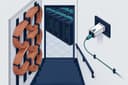 DCOM data-center out-of-band managementA fiber replacement for the copper cabling that lets staff reach a machine when its main connection dies. Built with Meta; the two of them say it frees up to 99% of the rack space the old setup ate. Watch whether a second and third cloud buyer standardize on it.
A fiber replacement for the copper cabling that lets staff reach a machine when its main connection dies. Built with Meta; the two of them say it frees up to 99% of the rack space the old setup ate. Watch whether a second and third cloud buyer standardize on it.
In plain English
Behind the racks of computers sits a second, humbler network — the one technicians use to reach a machine when its main connection is down, like the service stairwell behind a hotel's guest elevators. Traditionally that means copper cable and stacks of small switches taking up space and power.
Ciena replaces it with the fiber technology built for neighbourhood broadband, repurposed for indoors. Meta helped design it and was the first buyer; a second cloud company has placed first orders and a third was testing it in a lab. The money comes from the fiber terminals and the packet boxes that drive them.
Competes with PON-based data-center solutions (Nokia) · Copper out-of-band switch stacks (Incumbent switch vendors)
 The two cloud providersTwo cloud companies Ciena does not name were 36.9% of nine-month sales — the bigger one 24.2% alone, roughly double a year earlier. They buy across the range. A spending pause at either takes out about a quarter of the business.
Two cloud companies Ciena does not name were 36.9% of nine-month sales — the bigger one 24.2% alone, roughly double a year earlier. They buy across the range. A spending pause at either takes out about a quarter of the business.
In plain English
Somewhere behind these numbers are two very large cloud companies. Ciena will not say who; the filings call them Cloud Provider A and Cloud Provider B. Meta is a named customer elsewhere in the business, but nothing on record ties it to either.
They buy the whole range — the gear that lights the fiber, the boxes at each end, the plugs, the crews who install it, even a bare modem module for a platform one of them builds itself. Both have committed volume out to 2029, which is why Ciena could lock in its own parts suppliers for the same stretch. Upside and risk are one fact: if either slows down, so does a large slice of the year.
Competes with Optical Networks after buying Infinera (Nokia) · Optical transport line-up at the same buyers (Cisco)
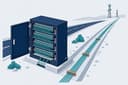 RLS and RLS Hyper-RailThe gear that turns a dark strand of glass into a working route and steers traffic on and off it. Grew above 55% year over year in each of the last two quarters. The squeeze is pump lasers — the parts that boost the light along the way.
The gear that turns a dark strand of glass into a working route and steers traffic on and off it. Grew above 55% year over year in each of the last two quarters. The squeeze is pump lasers — the parts that boost the light along the way.
In plain English
Fiber on its own is just glass. For it to carry anything, light has to be generated, boosted every so often along the route, and peeled off at the right cities. That is what a line system does, and it is the layer everything else plugs into.
Hyper-Rail is the next version, designed together with cloud companies: many fiber pairs running side by side over hundreds of kilometres, with far more boosters packed into each rack — which matters when the customer is joining two sites full of AI computers. Ciena sells the shelves and the boosters, then sells more as capacity is added. Management claims roughly a 70% share of what is already installed for those cloud routes.
Competes with 1830 PSS/PSI-L line systems (Nokia) · Open Transport 3000 series (Cisco)
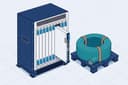 6500 Packet-Optical PlatformThe workhorse cabinet phone companies have bought for years, for city, long-haul and undersea routes. It grows, but several times slower than the cloud lines. Watch Europe: sales there fell in dollars across the last three quarters while the company grew.
The workhorse cabinet phone companies have bought for years, for city, long-haul and undersea routes. It grows, but several times slower than the cloud lines. Watch Europe: sales there fell in dollars across the last three quarters while the company grew.
In plain English
Think of a tall equipment cabinet in a telephone exchange with slots you fill with cards: one card for more capacity, another to shuffle traffic between routes, another to push a signal across an ocean. The 6500 is that cabinet, and it has been Ciena's bread and butter for years.
Carriers buy it when they rebuild a backbone, which happens on their schedule rather than AI's — so it grows while the cloud-facing lines grow several times faster. It also carries Ciena's fastest modem, which the company says is still the only one of its speed on sale eighteen months after launch. The bottleneck is the scarce chip that drives those modems.
Competes with 1830 PSS packet-optical (Nokia) · NCS 2000 and NCS 1014 chassis (Cisco) · Optical transport platforms (Huawei)
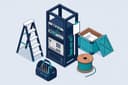 Global ServicesThe crews who install, tune and maintain everything Ciena ships, plus advisory work. Nine-month revenue rose to $537M from $437M, yet its share keeps slipping because hardware grows faster. The company's $8.5B pile of unshipped orders is what feeds it.
The crews who install, tune and maintain everything Ciena ships, plus advisory work. Nine-month revenue rose to $537M from $437M, yet its share keeps slipping because hardware grows faster. The company's $8.5B pile of unshipped orders is what feeds it.
In plain English
The unglamorous half of every sale. Someone has to physically rack the equipment, splice it into the fiber, tune it and fix it when a route goes dark. Ciena's own engineers do that work, and customers pay for it on top of the hardware.
Because the work follows the boxes out the door, this line is an echo of what shipped a few months earlier. It also buys something useful: the cloud companies are the biggest users of these services, so Ciena sees what they are deploying and when. The limit right now is how fast crews can get on site, not whether anyone wants the work.
Competes with Install-and-maintain services for its own gear (Nokia) · Install-and-maintain services for its own gear (Cisco) · Deployment teams doing the work themselves (Carriers and network integrators)
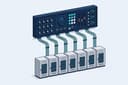 Navigator Network Control SuiteThe control software sold alongside the hardware: one screen for a network built in many layers. With its attached services it was $286M over nine months, growing about 6% while the company grew 37% — the slowest piece Ciena still leans on.
The control software sold alongside the hardware: one screen for a network built in many layers. With its attached services it was $286M over nine months, growing about 6% while the company grew 37% — the slowest piece Ciena still leans on.
In plain English
Once a carrier has thousands of pieces of Ciena equipment spread across its network, somebody has to see them all in one place: what is lit, what is carrying traffic, what just failed and how to steer around it. Navigator is that screen, and Ciena sells it attached to the boxes rather than on its own.
Customers pay for it up front and keep paying for support and upgrades, which makes it dependable money. Dependable is also the problem: it is creeping along at a fraction of the hardware's pace, so its slice of the company shrinks every quarter.
Competes with Network domain controller (Nokia) · Network domain controller (Cisco) · Cloud-native network automation software (Amdocs)
Named in filings, launches and programs
- Blue Planet Automation SoftwareSegmentSoftware that tracks and orchestrates a carrier's network. Hit a record $115M and a full-year profit in FY2025, then slid to $67.0M over nine months.
- MOFN — carrier-built fiber for cloud companiesCustomer program · RampingCarriers build and run fiber routes on a cloud company's behalf using Ciena gear — about 10% to 15% of Ciena's service-provider business.
- WaveLogic 6 Extreme coherent moduleProduct · RampingCiena's 1.6 terabit modem, now also sold as a bare module to a large cloud customer for a platform it builds itself — taken from a component rival.
- WaveLogic DSPs and TeraXion componentsProductThe in-house chips and optical parts inside Ciena's own boxes; keeping them internal is what sets the margin on a shipped system.
- Vesta 200 6.4T CPX optical engineProduct · Pre-revenueFirst product out of the Nubis deal, launched February 2026. Sample orders placed by an anchor customer; Ciena expects sales to begin in 2027.
- Nitro 2004 Linear RedriverProduct · Pre-revenueA chip for active copper cables inside a rack, claiming up to 80% less power than the usual alternative. Final silicon came back in mid-2026.
- Nubis CommunicationsBrandOptical and electrical interconnect maker bought for about $270M in October 2025; the source of Ciena's components-for-others push.
- Open CPX MSAEcosystemAn industry agreement Ciena co-founded with five others in 2026 to keep the next generation of pluggable optics interchangeable between vendors.
- 8100 Coherent Routing platformsProduct lineRouters with the long-distance optics built in, sold for city and edge networks; the smaller half of Ciena's routing and switching line.
- 3000 and 5000 packet familiesProduct lineCompact boxes that gather and hand off traffic; the 3000 family doubled in late FY2025 and is the routing half of the data-center management product.
- NeoscalersCustomer program · RampingRent-a-GPU, edge and colocation operators outside the big cloud names — several wins so far, mostly through carrier-built fiber deals.
Blue Planet Automation SoftwareSegment
Software that tracks and orchestrates a carrier's network. Hit a record $115M and a full-year profit in FY2025, then slid to $67.0M over nine months.
MOFN — carrier-built fiber for cloud companiesCustomer program · Ramping
Carriers build and run fiber routes on a cloud company's behalf using Ciena gear — about 10% to 15% of Ciena's service-provider business.
WaveLogic 6 Extreme coherent moduleProduct · Ramping
Ciena's 1.6 terabit modem, now also sold as a bare module to a large cloud customer for a platform it builds itself — taken from a component rival.
WaveLogic DSPs and TeraXion componentsProduct
The in-house chips and optical parts inside Ciena's own boxes; keeping them internal is what sets the margin on a shipped system.
Vesta 200 6.4T CPX optical engineProduct · Pre-revenue
First product out of the Nubis deal, launched February 2026. Sample orders placed by an anchor customer; Ciena expects sales to begin in 2027.
Nitro 2004 Linear RedriverProduct · Pre-revenue
A chip for active copper cables inside a rack, claiming up to 80% less power than the usual alternative. Final silicon came back in mid-2026.
Nubis CommunicationsBrand
Optical and electrical interconnect maker bought for about $270M in October 2025; the source of Ciena's components-for-others push.
Open CPX MSAEcosystem
An industry agreement Ciena co-founded with five others in 2026 to keep the next generation of pluggable optics interchangeable between vendors.
8100 Coherent Routing platformsProduct line
Routers with the long-distance optics built in, sold for city and edge networks; the smaller half of Ciena's routing and switching line.
3000 and 5000 packet familiesProduct line
Compact boxes that gather and hand off traffic; the 3000 family doubled in late FY2025 and is the routing half of the data-center management product.
NeoscalersCustomer program · Ramping
Rent-a-GPU, edge and colocation operators outside the big cloud names — several wins so far, mostly through carrier-built fiber deals.