
Cincinnati Financial (CINF)
Writes agency-distributed property, casualty, specialty, reinsurance and life coverage.
Something off on this page? Send us feedback.
Cincinnati Financial sells business, home and auto insurance the slow way — never direct, only through independent agencies it appoints and then grows with over years. Premiums come in and claims go out; the money waiting in between gets invested, with far more of it in company shares than insurers usually hold. That portfolio, not the insurance, produced most of last year's profit. Storm seasons and share prices both land straight in the results.
Item facts: FY2025 · year ended Dec 31, 2025, from filings, earnings calls and company pages.
Judgment weights, not filed revenue
The band summarizes business focus and direction. ~ marks estimates.
8 in detail · 16 more below

Commercial Lines Insurance
Packaged cover — buildings, vehicles, liability, injured staff — for mid-sized businesses, sold through local agents. $4.87B of revenue and $439M of profit before tax in 2025, a fourteenth straight profitable year. Watch liability claims: lawsuit costs added 4.2 points to them last year.
Competes with Business Insurance (Travelers) · Core Commercial (The Hanover) · Standard Commercial Lines (Selective)
In plain English
A machine shop needs cover for its building, its trucks, the crew it employs and the lawsuit it hopes never arrives. Cincinnati wraps all of that into one package and hands it to the local agent who already knows the owner.
Money comes in as premiums now and goes out as claims later; what is left over is the profit. Last year plenty was left. The pressure point is that the pieces are sold together, so as price increases on property cover shrink across the industry, vehicle and liability pricing gets dragged down with them.

Excess and Surplus Lines
Cover for business risks the standard market will not quote, written on Cincinnati's own terms and priced case by case. $702M of revenue, $85M of profit before tax, premiums up 13% for a second year — growth the softening market has not stopped.
Competes with E&S specialty (Markel) · Scottsdale E&S (Nationwide) · E&S binding authority units (W.R. Berkley)
In plain English
Some business risks the ordinary market simply won't quote: the hazard is too odd, or the claims history too ugly, to fit a standard form. Those get written outside the standard rulebook, which lets Cincinnati set its own wording and its own price.
Deliberately small tickets: the average policy costs about $10,000 a year, most payout limits sit at $1M or below, and everything comes up for renewal after twelve months. The same agents sell it, through an in-house brokerage, so nobody outside takes a cut. Many of these customers already hold an ordinary Cincinnati policy as well.

Personal Lines Insurance
Home, car and extra-liability cover for about 550,000 households, sold by the same agents. $3.20B of revenue but a $111M loss before tax in 2025, seven points of it January's California wildfires. Growth has stalled: spring premiums were barely ahead of a year earlier.
Competes with Personal auto (Progressive) · Homeowners (Allstate) · Personal Lines (The Hanover)
In plain English
Houses and cars for roughly half a million households, written by the same agents who handle the local businesses. About 1.3 million policies in all, averaging somewhere near $2,500 a year.
Families pay whether or not anything happens, and in a calm year most of that money stays put. Last year was not calm. January's California wildfires cost the company $942M across all its operations, its largest single event ever, and they added seven points to this book's claims for the year — enough to turn the whole household business to a loss. Growth has gone quiet too: spring-quarter premiums were barely ahead of a year earlier.

Cincinnati Private Client
The wealthy-household version — large homes, several cars, much higher liability limits — roughly 60% of household premiums, near $1.9B. Management talks it up far more than a year ago; its houses sit in fire and coastal country, where cover is hardest to arrange.
Competes with Masterpiece (Chubb) · Private Client Select (AIG) · Berkley One (W.R. Berkley)
In plain English
Same idea as the ordinary home policy, sized up: a large house, often a second one, several cars, a boat, and liability cover running to limits an everyday policy never reaches. Cincinnati markets it under its own name, and it is now about three-fifths of everything the household business writes.
Wealthier families buy more cover per household, which is why the extra-liability book has grown alongside it — management says these customers want bigger limits. The catch is geography: the biggest homes sit in fire country and along the coast, exactly where cover is hardest to arrange, so the cost of Cincinnati's own protection matters here more than anywhere.
Investments
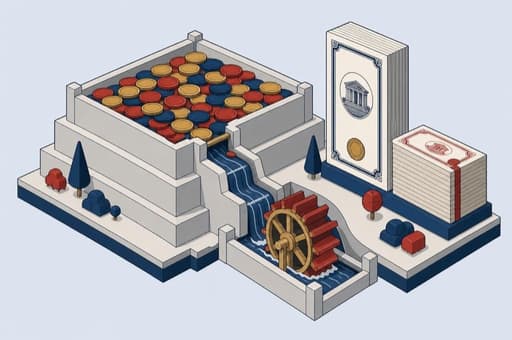
Roughly $32B of premiums waiting to become claims, about two-fifths held in company shares rather than bonds — far outside the industry habit. It made $2.61B of revenue and 83% of group profit before tax in 2025. Share prices move the quarter.
Competes with Insurance float portfolio (Berkshire Hathaway) · Investment portfolio (Markel Group) · Bond-heavy insurance portfolio (Travelers)
In plain English
Premiums arrive years before the claims they will pay for, so Cincinnati is permanently sitting on a large pool of other people's money — roughly $32B by mid-2026. Most insurers park that in bonds and leave it there. Cincinnati keeps about two-fifths of it in company shares instead.
The pool earns twice over. Interest and dividends are the dependable part, and they are rising: bonds bought today pay more than the ones falling due, so every replacement lifts the income. The shares are the wild part, because their price moves run straight through the earnings line. The insurance keeps the doors open; this is where the profit comes from.

Cincinnati Re
Takes on slices of other insurers' risk — about half liability cover, a third property. Profit on it shrank three years running, $118M to $86M to $24M, as reinsurance prices softened. Premiums turned up again in spring 2026.
Competes with Treaty reinsurance (Everest Group) · Property catastrophe reinsurance (RenaissanceRe)
In plain English
Insurers buy insurance of their own. When a storm hands a carrier more claims than it wants to keep, someone who agreed in advance takes an arranged slice of them — and charges a premium for standing there. Cincinnati Re is that someone, picking up pieces of other insurers' books: roughly half liability cover, a third property, the rest specialist lines.
The price of standing there moves on a cycle, and after several rich years it turned against this business. Profit on it fell from $118M in 2023 to $86M, then $24M last year. Premiums picked up again in spring 2026, and the business ran at a profit.

Cincinnati Global
Owns the London firm that runs Lloyd's Syndicate 318 and supplies part of its capital. $311M of premiums earned in 2025 and $64M of profit on the insurance itself — most of the profit in this corner on a third of the premium. It flipped to a loss in spring 2026.
Competes with Lloyd's syndicate (Beazley) · Lloyd's syndicate (Hiscox) · Syndicate 2478 (Talbot)
In plain English
Lloyd's of London is a marketplace where pools of money called syndicates write specialist insurance. Cincinnati owns the London firm that runs one of them, Syndicate 318, and supplies part of the capital behind it; outside backers, known as names, supply the rest.
It is a small book and, in 2025, a very good one: $311M of premiums earned and $64M of profit on the insurance itself, which is about a third of the premium in this corner of the company and most of the profit from it. The flip side of a small book is that one bad run moves it — by spring 2026 it was losing money.

Cincinnati Life
Term life, permanent policies and a small annuity book, sold as an add-on by the property agents — about 84% of them offer it. $336M of revenue and $65M of profit before tax, both up last year.
Competes with Term life (Legal & General America) · Term life (Pacific Life) · Term life (State Farm)
In plain English
Term life is the plain kind: pay a set premium each year, and if you die while the policy is running, your family collects a lump sum. Cincinnati Life sells that, plus some permanent policies and a small annuity book it is no longer pushing.
It exists to give the agent a second thing to sell to the same customer. About 84% of Cincinnati's property agencies also carry the life products, alongside roughly five hundred agencies that sell life alone. The result is small and steady — $336M of revenue, $65M of profit before tax — and it grew last year while the bigger books stumbled.


 Commercial Lines InsurancePackaged cover — buildings, vehicles, liability, injured staff — for mid-sized businesses, sold through local agents. $4.87B of revenue and $439M of profit before tax in 2025, a fourteenth straight profitable year. Watch liability claims: lawsuit costs added 4.2 points to them last year.
Packaged cover — buildings, vehicles, liability, injured staff — for mid-sized businesses, sold through local agents. $4.87B of revenue and $439M of profit before tax in 2025, a fourteenth straight profitable year. Watch liability claims: lawsuit costs added 4.2 points to them last year.
In plain English
A machine shop needs cover for its building, its trucks, the crew it employs and the lawsuit it hopes never arrives. Cincinnati wraps all of that into one package and hands it to the local agent who already knows the owner.
Money comes in as premiums now and goes out as claims later; what is left over is the profit. Last year plenty was left. The pressure point is that the pieces are sold together, so as price increases on property cover shrink across the industry, vehicle and liability pricing gets dragged down with them.
Competes with Business Insurance (Travelers) · Core Commercial (The Hanover) · Standard Commercial Lines (Selective)
 Excess and Surplus LinesCover for business risks the standard market will not quote, written on Cincinnati's own terms and priced case by case. $702M of revenue, $85M of profit before tax, premiums up 13% for a second year — growth the softening market has not stopped.
Cover for business risks the standard market will not quote, written on Cincinnati's own terms and priced case by case. $702M of revenue, $85M of profit before tax, premiums up 13% for a second year — growth the softening market has not stopped.
In plain English
Some business risks the ordinary market simply won't quote: the hazard is too odd, or the claims history too ugly, to fit a standard form. Those get written outside the standard rulebook, which lets Cincinnati set its own wording and its own price.
Deliberately small tickets: the average policy costs about $10,000 a year, most payout limits sit at $1M or below, and everything comes up for renewal after twelve months. The same agents sell it, through an in-house brokerage, so nobody outside takes a cut. Many of these customers already hold an ordinary Cincinnati policy as well.
Competes with E&S specialty (Markel) · Scottsdale E&S (Nationwide) · E&S binding authority units (W.R. Berkley)
 Personal Lines InsuranceHome, car and extra-liability cover for about 550,000 households, sold by the same agents. $3.20B of revenue but a $111M loss before tax in 2025, seven points of it January's California wildfires. Growth has stalled: spring premiums were barely ahead of a year earlier.
Home, car and extra-liability cover for about 550,000 households, sold by the same agents. $3.20B of revenue but a $111M loss before tax in 2025, seven points of it January's California wildfires. Growth has stalled: spring premiums were barely ahead of a year earlier.
In plain English
Houses and cars for roughly half a million households, written by the same agents who handle the local businesses. About 1.3 million policies in all, averaging somewhere near $2,500 a year.
Families pay whether or not anything happens, and in a calm year most of that money stays put. Last year was not calm. January's California wildfires cost the company $942M across all its operations, its largest single event ever, and they added seven points to this book's claims for the year — enough to turn the whole household business to a loss. Growth has gone quiet too: spring-quarter premiums were barely ahead of a year earlier.
Competes with Personal auto (Progressive) · Homeowners (Allstate) · Personal Lines (The Hanover)
 Cincinnati Private ClientThe wealthy-household version — large homes, several cars, much higher liability limits — roughly 60% of household premiums, near $1.9B. Management talks it up far more than a year ago; its houses sit in fire and coastal country, where cover is hardest to arrange.
The wealthy-household version — large homes, several cars, much higher liability limits — roughly 60% of household premiums, near $1.9B. Management talks it up far more than a year ago; its houses sit in fire and coastal country, where cover is hardest to arrange.
In plain English
Same idea as the ordinary home policy, sized up: a large house, often a second one, several cars, a boat, and liability cover running to limits an everyday policy never reaches. Cincinnati markets it under its own name, and it is now about three-fifths of everything the household business writes.
Wealthier families buy more cover per household, which is why the extra-liability book has grown alongside it — management says these customers want bigger limits. The catch is geography: the biggest homes sit in fire country and along the coast, exactly where cover is hardest to arrange, so the cost of Cincinnati's own protection matters here more than anywhere.
Competes with Masterpiece (Chubb) · Private Client Select (AIG) · Berkley One (W.R. Berkley)
 InvestmentsRoughly $32B of premiums waiting to become claims, about two-fifths held in company shares rather than bonds — far outside the industry habit. It made $2.61B of revenue and 83% of group profit before tax in 2025. Share prices move the quarter.
Roughly $32B of premiums waiting to become claims, about two-fifths held in company shares rather than bonds — far outside the industry habit. It made $2.61B of revenue and 83% of group profit before tax in 2025. Share prices move the quarter.
In plain English
Premiums arrive years before the claims they will pay for, so Cincinnati is permanently sitting on a large pool of other people's money — roughly $32B by mid-2026. Most insurers park that in bonds and leave it there. Cincinnati keeps about two-fifths of it in company shares instead.
The pool earns twice over. Interest and dividends are the dependable part, and they are rising: bonds bought today pay more than the ones falling due, so every replacement lifts the income. The shares are the wild part, because their price moves run straight through the earnings line. The insurance keeps the doors open; this is where the profit comes from.
Competes with Insurance float portfolio (Berkshire Hathaway) · Investment portfolio (Markel Group) · Bond-heavy insurance portfolio (Travelers)
 Cincinnati ReTakes on slices of other insurers' risk — about half liability cover, a third property. Profit on it shrank three years running, $118M to $86M to $24M, as reinsurance prices softened. Premiums turned up again in spring 2026.
Takes on slices of other insurers' risk — about half liability cover, a third property. Profit on it shrank three years running, $118M to $86M to $24M, as reinsurance prices softened. Premiums turned up again in spring 2026.
In plain English
Insurers buy insurance of their own. When a storm hands a carrier more claims than it wants to keep, someone who agreed in advance takes an arranged slice of them — and charges a premium for standing there. Cincinnati Re is that someone, picking up pieces of other insurers' books: roughly half liability cover, a third property, the rest specialist lines.
The price of standing there moves on a cycle, and after several rich years it turned against this business. Profit on it fell from $118M in 2023 to $86M, then $24M last year. Premiums picked up again in spring 2026, and the business ran at a profit.
Competes with Treaty reinsurance (Everest Group) · Property catastrophe reinsurance (RenaissanceRe)
 Cincinnati GlobalOwns the London firm that runs Lloyd's Syndicate 318 and supplies part of its capital. $311M of premiums earned in 2025 and $64M of profit on the insurance itself — most of the profit in this corner on a third of the premium. It flipped to a loss in spring 2026.
Owns the London firm that runs Lloyd's Syndicate 318 and supplies part of its capital. $311M of premiums earned in 2025 and $64M of profit on the insurance itself — most of the profit in this corner on a third of the premium. It flipped to a loss in spring 2026.
In plain English
Lloyd's of London is a marketplace where pools of money called syndicates write specialist insurance. Cincinnati owns the London firm that runs one of them, Syndicate 318, and supplies part of the capital behind it; outside backers, known as names, supply the rest.
It is a small book and, in 2025, a very good one: $311M of premiums earned and $64M of profit on the insurance itself, which is about a third of the premium in this corner of the company and most of the profit from it. The flip side of a small book is that one bad run moves it — by spring 2026 it was losing money.
Competes with Lloyd's syndicate (Beazley) · Lloyd's syndicate (Hiscox) · Syndicate 2478 (Talbot)
 Cincinnati LifeTerm life, permanent policies and a small annuity book, sold as an add-on by the property agents — about 84% of them offer it. $336M of revenue and $65M of profit before tax, both up last year.
Term life, permanent policies and a small annuity book, sold as an add-on by the property agents — about 84% of them offer it. $336M of revenue and $65M of profit before tax, both up last year.
In plain English
Term life is the plain kind: pay a set premium each year, and if you die while the policy is running, your family collects a lump sum. Cincinnati Life sells that, plus some permanent policies and a small annuity book it is no longer pushing.
It exists to give the agent a second thing to sell to the same customer. About 84% of Cincinnati's property agencies also carry the life products, alongside roughly five hundred agencies that sell life alone. The result is small and steady — $336M of revenue, $65M of profit before tax — and it grew last year while the bigger books stumbled.
Competes with Term life (Legal & General America) · Term life (Pacific Life) · Term life (State Farm)
Named in filings, launches and programs
- Independent agency networkEcosystemSells nothing direct: 2,407 agencies in 3,889 offices place every policy. Cincinnati holds 4.2% of their business on average, 7.4% past ten years.
- Commercial propertyProduct line$1.66B of premiums written; prices are softening fastest here, and because cover is sold in packages it pulls the rest down with it.
- Commercial casualtyProduct line$1.64B of premiums written; rising lawsuit costs added 4.2 points to its claims last year, making it the line management watches hardest.
- Commercial autoProduct line$1.04B of premiums written — the vans and trucks covered inside the business packages.
- Other commercialProduct line$424M of premiums written, covering management liability plus the bonds that guarantee a business will do what it promised.
- Workers' compensationProduct line$244M of premiums written — the one line where management does not expect 2026 price rises to keep up with claim costs.
- HomeownerProduct line$1.82B of premiums written, the company's largest single line, and the one that absorbs the storm and wildfire losses.
- Personal autoProduct line$1.21B of premiums written; the softest-priced personal line, and the reason the company expects slower household premium growth in 2026.
- Other personal linesProduct line$402M of premiums written — fire cover on extra dwellings, boats, and top-up liability, including an umbrella book an analyst sized above $200M.
- Term life insuranceProduct line$245M of premiums written, the core life product and the steadiest stream in that book.
- Whole life, universal life and annuitiesProduct line$54M and $61M of premiums written; the annuity side is being de-emphasised.
- The Cincinnati Casualty / The Cincinnati Indemnity CompanyBrandTwo further standard-market carriers inside the group; together $161M of Ohio business premiums written in 2025.
- CSU Producer ResourcesServiceIn-house brokerage letting Cincinnati's own agents place the hard-to-insure business without going out to an outside middleman.
- CFC Investment CompanyServiceLeases and lends to the agencies and their customers; $11M of interest and fees in 2025.
- Ceded reinsurance programServiceCincinnati's own cover: up to $2B for a single catastrophe in 2026, the first $523M kept in-house, at about $204M expected cost.
- AI center of excellenceProduct · AnnouncedDisclosed in early 2026: an in-house AI group and a chatbot for the people who write business cover. Barely mentioned on the two calls since.
Independent agency networkEcosystem
Sells nothing direct: 2,407 agencies in 3,889 offices place every policy. Cincinnati holds 4.2% of their business on average, 7.4% past ten years.
Commercial propertyProduct line
$1.66B of premiums written; prices are softening fastest here, and because cover is sold in packages it pulls the rest down with it.
Commercial casualtyProduct line
$1.64B of premiums written; rising lawsuit costs added 4.2 points to its claims last year, making it the line management watches hardest.
Commercial autoProduct line
$1.04B of premiums written — the vans and trucks covered inside the business packages.
Other commercialProduct line
$424M of premiums written, covering management liability plus the bonds that guarantee a business will do what it promised.
Workers' compensationProduct line
$244M of premiums written — the one line where management does not expect 2026 price rises to keep up with claim costs.
HomeownerProduct line
$1.82B of premiums written, the company's largest single line, and the one that absorbs the storm and wildfire losses.
Personal autoProduct line
$1.21B of premiums written; the softest-priced personal line, and the reason the company expects slower household premium growth in 2026.
Other personal linesProduct line
$402M of premiums written — fire cover on extra dwellings, boats, and top-up liability, including an umbrella book an analyst sized above $200M.
Term life insuranceProduct line
$245M of premiums written, the core life product and the steadiest stream in that book.
Whole life, universal life and annuitiesProduct line
$54M and $61M of premiums written; the annuity side is being de-emphasised.
The Cincinnati Casualty / The Cincinnati Indemnity CompanyBrand
Two further standard-market carriers inside the group; together $161M of Ohio business premiums written in 2025.
CSU Producer ResourcesService
In-house brokerage letting Cincinnati's own agents place the hard-to-insure business without going out to an outside middleman.
CFC Investment CompanyService
Leases and lends to the agencies and their customers; $11M of interest and fees in 2025.
Ceded reinsurance programService
Cincinnati's own cover: up to $2B for a single catastrophe in 2026, the first $523M kept in-house, at about $204M expected cost.
AI center of excellenceProduct · Announced
Disclosed in early 2026: an in-house AI group and a chatbot for the people who write business cover. Barely mentioned on the two calls since.