
Credo Technology Group (CRDO)
Designs copper, optical, and memory connectivity for AI and cloud data centers.
Something off on this page? Send us feedback.
Credo makes the wiring that holds AI computers together: cables with chips hidden inside their plugs, plus the small chips other companies build into their own network gear. Nearly all of the money still comes from that one cable line, sold to a short list of cloud giants. The company is now buying and building its way into links made of light.
Item facts: FY2026 · year ended May 2, 2026, from filings, earnings calls and company pages.
Judgment weights, not filed revenue
The band summarizes business focus and direction. ~ marks estimates.
8 in detail · 14 more below
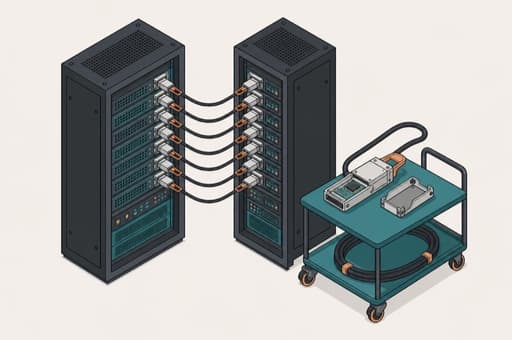
ZeroFlap Active Electrical Cables
Copper cables with Credo's own chips built into the plugs, bought by the rackload for AI machines — roughly three of every four revenue dollars. The catch is physical: past about seven metres, copper quits and the link has to go optical.
Competes with Taurus Smart Cable Modules (Astera Labs) · AEC assemblies (Amphenol) · AEC assemblies (Molex)
In plain English
Picture the cable behind a television, except each plug has a tiny computer in it that cleans up the signal so the connection never stutters. That is an active electrical cable, and Credo created the category.
Inside an AI datacenter thousands of chips have to behave like one machine, and a single dropped link stalls the whole job. Cloud companies buy these cables by the rack for that reliability and for the power they save, not for raw speed. Credo owns the silicon, the firmware and the testing, so a piece of copper earns chip-sized margins.

Hyperscaler & neocloud programs
The customer list is very short: two direct buyers were 43% and 28% of revenue in the quarter ended August 2026, and Credo does not name them. Management has named Microsoft as its first big cloud customer and Amazon as its second.
Competes with Taurus Smart Cable Modules (Astera Labs) · AEC assemblies (TE Connectivity) · AEC assemblies (Volex)
In plain English
Credo sells to nobody you would recognise as a shop — it sells to the handful of companies building AI datacenters. Some orders arrive through middlemen who assemble the racks, so the name on the purchase order is not always the name on the building.
That is the whole business in one sentence: when a cloud giant's build-out schedule moves, Credo's quarter moves with it. The concentration has been easing — five cloud giants now, plus a newer class of AI-only datacenter operators, xAI among them — but losing one buyer would still hurt badly.
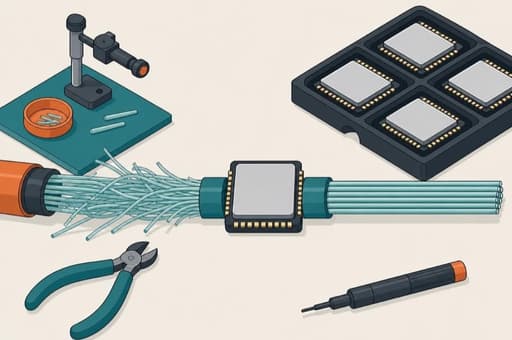
Optical DSPs (Dove, Robin, Cardinal)
Chips that clean up signals travelling as light, sold to the firms that build optical plugs. A record quarter in the three months to August 2026 and more than $100 million guided for this year — off a small base, against two far bigger rivals.
Competes with Ara 1.6T DSP (Marvell) · Sian3 DSP (Broadcom)
In plain English
Data goes down a glass fibre as flashes of light, and by the time it arrives the flashes are smeared into each other. This chip is the translator at each end: it reads the smear back into clean ones and zeros, and turns outgoing data into flashes a laser can send.
Credo sells the chip to the companies that assemble the little plug-in optical units datacenters use by the million. Marvell and Broadcom have had most of that business; Credo is the third source. Awkwardly, Credo now sells finished optical plugs too, so some chip customers are also rivals.
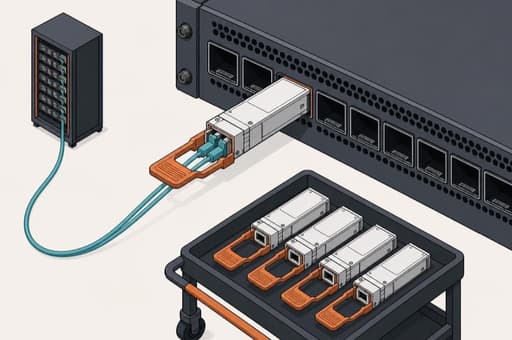
ZeroFlap Optical Transceivers
Finished plug-in optical units with Credo's own chips inside, sold whole instead of as parts. Management expects the optical lines together to top $600 million this year, this one above $100 million of it. Tiny today, and the swing factor.
Competes with 800G/1.6T pluggable transceivers (Innolight) · 800G/1.6T pluggable transceivers (Eoptolink) · Integrated optics kit (Broadcom)
In plain English
The thing itself is a small metal module that slides into the front of a network switch, turns electricity into light, and fires it down a glass fibre to the next rack over. Datacenters buy them by the million.
Credo used to sell only the chip inside someone else's module. Now it builds the whole module, which means far more money per socket — and a straight fight with the module makers it used to supply. Its selling point is the software that watches each link and flags trouble before the connection drops, which is what ZeroFlap means.
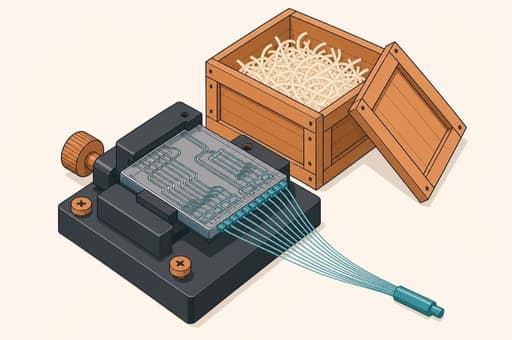
Silicon Photonics PICs (Kfir200, Carmel4)
Chips that steer light rather than electricity, acquired with DustPhotonics in May 2026. They earned nothing last year and booked their first revenue in the quarter to August 2026; management targets more than $100 million this year, on one quarter of history.
Competes with In-house optical components (Broadcom) · Optical engines for module makers (Coherent)
In plain English
An ordinary chip pushes electricity around. This one pushes light: channels etched into silicon that split, steer and combine laser beams on a sliver about the size of a fingernail. It is the part that actually puts data onto a glass fibre.
Credo bought this rather than growing it, paying $750 million in cash plus shares for DustPhotonics in May 2026. Owning both the light chip and the signal chip lets it tune the pair together inside its own optical modules, and it can sell the light chips on their own to other module builders.
Retimers & MACsec (Screaming Eagle, Blue Heron, Toucan)
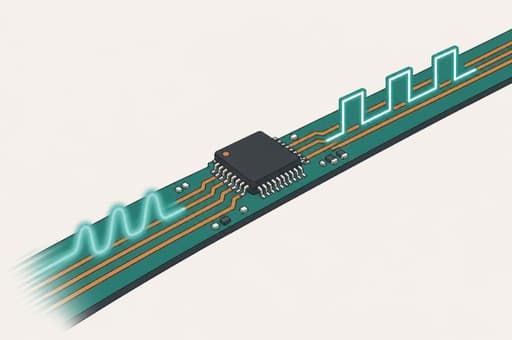
Signal-repeating chips sold on their own into switches, network cards and accelerator boards; the line set a revenue record in the quarter to August 2026. The threat is architectural — NVIDIA's own in-house links leave no slot for a chip like this.
Competes with Aries PCIe/CXL Smart DSP Retimers (Astera Labs) · Taurus Smart Signal Conditioners (Astera Labs) · NVLink scale-up fabric (NVIDIA)
In plain English
Push a very fast signal more than a short distance across a circuit board and it arrives as mush. A retimer sits partway along, reads the mush and sends out a clean copy — a relay runner handing the data on.
Credo sells these as plain chips to whoever is building the box: switch makers, network-card makers, the firms assembling racks of AI accelerators. Its bet is neutrality — the parts work with whichever wiring standard a customer picks, so Credo has a place at the table whoever wins. One family also scrambles the traffic on the way through.
ZeroFlap MicroLED Active LED Cables
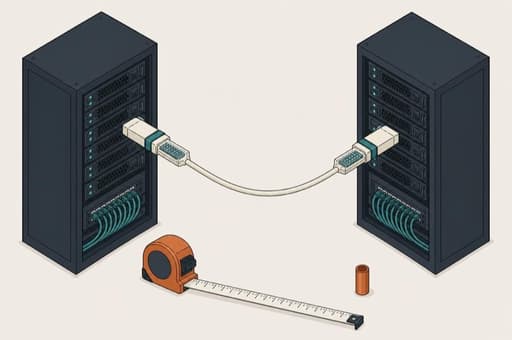
A cable that carries data on microscopic light emitters, reaching about thirty metres where copper stops near seven. The technology came with Hyperlume for $92 million in 2025; samples go out this year, first revenue is targeted for fiscal 2028.
Competes with Active optical cables (Innolight) · Active optical cables (Coherent)
In plain English
Between one rack and another across the aisle sits an awkward gap: too far for copper, while a full plug-in optical link is a heavy answer for such a short hop. This cable aims straight at that gap, using rows of microscopic light emitters instead of lasers.
Nothing has sold. Credo bought the technology in late 2025, plans to hand samples to lead customers during this fiscal year and expects first orders the year after. Management believes the eventual market is more than double its cable business today — that is Credo's own estimate, not an outside one.
OmniConnect (Weaver)
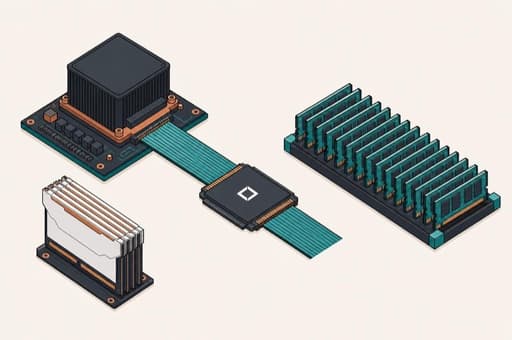
A way to hang cheap ordinary memory off an AI chip instead of the pricey stacked kind. One customer is designing a part around it and management talks of thousands of dollars of Credo content per chip. Nothing is booked.
Competes with HBM memory stacks (SK hynix) · HBM memory stacks (Micron) · Leo Smart Memory Controllers (Astera Labs)
In plain English
AI chips that answer questions rather than learn are starved for memory, and the fast memory stacked beside them is scarce and dear. Credo's idea is a very quick pipe running from the chip out to banks of the everyday memory you would find in any server.
The first part, Weaver, does the translating at the far end of that pipe; Credo claims up to thirty times the memory capacity. One unnamed customer is designing a chip with two terabytes of memory around it. Credo has handed the design to an industry group so anyone can build to it — that is how it hopes the idea spreads.


 ZeroFlap Active Electrical CablesCopper cables with Credo's own chips built into the plugs, bought by the rackload for AI machines — roughly three of every four revenue dollars. The catch is physical: past about seven metres, copper quits and the link has to go optical.
Copper cables with Credo's own chips built into the plugs, bought by the rackload for AI machines — roughly three of every four revenue dollars. The catch is physical: past about seven metres, copper quits and the link has to go optical.
In plain English
Picture the cable behind a television, except each plug has a tiny computer in it that cleans up the signal so the connection never stutters. That is an active electrical cable, and Credo created the category.
Inside an AI datacenter thousands of chips have to behave like one machine, and a single dropped link stalls the whole job. Cloud companies buy these cables by the rack for that reliability and for the power they save, not for raw speed. Credo owns the silicon, the firmware and the testing, so a piece of copper earns chip-sized margins.
Competes with Taurus Smart Cable Modules (Astera Labs) · AEC assemblies (Amphenol) · AEC assemblies (Molex)
 Hyperscaler & neocloud programsThe customer list is very short: two direct buyers were 43% and 28% of revenue in the quarter ended August 2026, and Credo does not name them. Management has named Microsoft as its first big cloud customer and Amazon as its second.
The customer list is very short: two direct buyers were 43% and 28% of revenue in the quarter ended August 2026, and Credo does not name them. Management has named Microsoft as its first big cloud customer and Amazon as its second.
In plain English
Credo sells to nobody you would recognise as a shop — it sells to the handful of companies building AI datacenters. Some orders arrive through middlemen who assemble the racks, so the name on the purchase order is not always the name on the building.
That is the whole business in one sentence: when a cloud giant's build-out schedule moves, Credo's quarter moves with it. The concentration has been easing — five cloud giants now, plus a newer class of AI-only datacenter operators, xAI among them — but losing one buyer would still hurt badly.
Competes with Taurus Smart Cable Modules (Astera Labs) · AEC assemblies (TE Connectivity) · AEC assemblies (Volex)
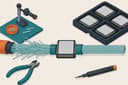 Optical DSPs (Dove, Robin, Cardinal)Chips that clean up signals travelling as light, sold to the firms that build optical plugs. A record quarter in the three months to August 2026 and more than $100 million guided for this year — off a small base, against two far bigger rivals.
Chips that clean up signals travelling as light, sold to the firms that build optical plugs. A record quarter in the three months to August 2026 and more than $100 million guided for this year — off a small base, against two far bigger rivals.
In plain English
Data goes down a glass fibre as flashes of light, and by the time it arrives the flashes are smeared into each other. This chip is the translator at each end: it reads the smear back into clean ones and zeros, and turns outgoing data into flashes a laser can send.
Credo sells the chip to the companies that assemble the little plug-in optical units datacenters use by the million. Marvell and Broadcom have had most of that business; Credo is the third source. Awkwardly, Credo now sells finished optical plugs too, so some chip customers are also rivals.
Competes with Ara 1.6T DSP (Marvell) · Sian3 DSP (Broadcom)
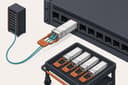 ZeroFlap Optical TransceiversFinished plug-in optical units with Credo's own chips inside, sold whole instead of as parts. Management expects the optical lines together to top $600 million this year, this one above $100 million of it. Tiny today, and the swing factor.
Finished plug-in optical units with Credo's own chips inside, sold whole instead of as parts. Management expects the optical lines together to top $600 million this year, this one above $100 million of it. Tiny today, and the swing factor.
In plain English
The thing itself is a small metal module that slides into the front of a network switch, turns electricity into light, and fires it down a glass fibre to the next rack over. Datacenters buy them by the million.
Credo used to sell only the chip inside someone else's module. Now it builds the whole module, which means far more money per socket — and a straight fight with the module makers it used to supply. Its selling point is the software that watches each link and flags trouble before the connection drops, which is what ZeroFlap means.
Competes with 800G/1.6T pluggable transceivers (Innolight) · 800G/1.6T pluggable transceivers (Eoptolink) · Integrated optics kit (Broadcom)
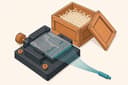 Silicon Photonics PICs (Kfir200, Carmel4)Chips that steer light rather than electricity, acquired with DustPhotonics in May 2026. They earned nothing last year and booked their first revenue in the quarter to August 2026; management targets more than $100 million this year, on one quarter of history.
Chips that steer light rather than electricity, acquired with DustPhotonics in May 2026. They earned nothing last year and booked their first revenue in the quarter to August 2026; management targets more than $100 million this year, on one quarter of history.
In plain English
An ordinary chip pushes electricity around. This one pushes light: channels etched into silicon that split, steer and combine laser beams on a sliver about the size of a fingernail. It is the part that actually puts data onto a glass fibre.
Credo bought this rather than growing it, paying $750 million in cash plus shares for DustPhotonics in May 2026. Owning both the light chip and the signal chip lets it tune the pair together inside its own optical modules, and it can sell the light chips on their own to other module builders.
Competes with In-house optical components (Broadcom) · Optical engines for module makers (Coherent)
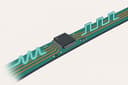 Retimers & MACsec (Screaming Eagle, Blue Heron, Toucan)Signal-repeating chips sold on their own into switches, network cards and accelerator boards; the line set a revenue record in the quarter to August 2026. The threat is architectural — NVIDIA's own in-house links leave no slot for a chip like this.
Signal-repeating chips sold on their own into switches, network cards and accelerator boards; the line set a revenue record in the quarter to August 2026. The threat is architectural — NVIDIA's own in-house links leave no slot for a chip like this.
In plain English
Push a very fast signal more than a short distance across a circuit board and it arrives as mush. A retimer sits partway along, reads the mush and sends out a clean copy — a relay runner handing the data on.
Credo sells these as plain chips to whoever is building the box: switch makers, network-card makers, the firms assembling racks of AI accelerators. Its bet is neutrality — the parts work with whichever wiring standard a customer picks, so Credo has a place at the table whoever wins. One family also scrambles the traffic on the way through.
Competes with Aries PCIe/CXL Smart DSP Retimers (Astera Labs) · Taurus Smart Signal Conditioners (Astera Labs) · NVLink scale-up fabric (NVIDIA)
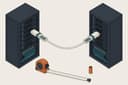 ZeroFlap MicroLED Active LED CablesA cable that carries data on microscopic light emitters, reaching about thirty metres where copper stops near seven. The technology came with Hyperlume for $92 million in 2025; samples go out this year, first revenue is targeted for fiscal 2028.
A cable that carries data on microscopic light emitters, reaching about thirty metres where copper stops near seven. The technology came with Hyperlume for $92 million in 2025; samples go out this year, first revenue is targeted for fiscal 2028.
In plain English
Between one rack and another across the aisle sits an awkward gap: too far for copper, while a full plug-in optical link is a heavy answer for such a short hop. This cable aims straight at that gap, using rows of microscopic light emitters instead of lasers.
Nothing has sold. Credo bought the technology in late 2025, plans to hand samples to lead customers during this fiscal year and expects first orders the year after. Management believes the eventual market is more than double its cable business today — that is Credo's own estimate, not an outside one.
Competes with Active optical cables (Innolight) · Active optical cables (Coherent)
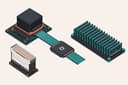 OmniConnect (Weaver)A way to hang cheap ordinary memory off an AI chip instead of the pricey stacked kind. One customer is designing a part around it and management talks of thousands of dollars of Credo content per chip. Nothing is booked.
A way to hang cheap ordinary memory off an AI chip instead of the pricey stacked kind. One customer is designing a part around it and management talks of thousands of dollars of Credo content per chip. Nothing is booked.
In plain English
AI chips that answer questions rather than learn are starved for memory, and the fast memory stacked beside them is scarce and dear. Credo's idea is a very quick pipe running from the chip out to banks of the everyday memory you would find in any server.
The first part, Weaver, does the translating at the far end of that pipe; Credo claims up to thirty times the memory capacity. One unnamed customer is designing a chip with two terabytes of memory around it. Credo has handed the design to an industry group so anyone can build to it — that is how it hopes the idea spreads.
Competes with HBM memory stacks (SK hynix) · HBM memory stacks (Micron) · Leo Smart Memory Controllers (Astera Labs)
Named in filings, launches and programs
- PILOTPlatformMonitoring and debug software that ships with the cables, transceivers and chips. Never sold on its own — it is a reason to buy the hardware.
- SerDes IP & chipletsProductLicensing Credo's own high-speed circuit designs to other chipmakers. Was 16% of revenue in FY2023, about 2.5% by late 2025 as product sales swamped it.
- ToucanProductA retimer for the PCIe wiring inside servers; passed the industry's Gen6 compliance test in August 2026.
- Blue HeronProduct · RampingA 200G-per-lane retimer aimed at tightly linked accelerator clusters; UpScale AI is the first named customer.
- Screaming EagleProductThe 100G-per-lane retimer that carries much of the standalone chip line today.
- RobinProduct · RampingAn 800G optical DSP family introduced in March 2026, built around 100G-per-lane links.
- CardinalProduct · RampingThe 200G-per-lane optical DSP, the step up toward the 1.6T links Credo expects to sell later this fiscal year.
- DoveProductCredo's 850-platform optical DSP, the family aimed at 800G links.
- Kfir200Product · RampingThe 224G-per-lane light chip sitting inside Credo's new 1.6T optical modules, and sold to others as a part.
- Carmel4Product · RampingA 400G light-chip engine running at 100G per lane, the second photonic part from the DustPhotonics deal.
- PCIe active cablesProductA version of the copper cable line that carries PCIe Gen6 traffic beyond the boundaries of a single motherboard.
- Near-package optics / Open CPXProduct · AnnouncedOptics moved right next to the chip rather than the switch front panel. Credo joined the Open CPX group in August 2026; wins are expected to ramp in fiscal 2028.
- CoMira SolutionsBrandBought in March 2026 for undisclosed terms, bringing link-layer, error-correction and security designs into the chip families.
- HyperlumeBrandThe microLED developer acquired for $92 million in September 2025; its technology became the Active LED Cable line.
PILOTPlatform
Monitoring and debug software that ships with the cables, transceivers and chips. Never sold on its own — it is a reason to buy the hardware.
SerDes IP & chipletsProduct
Licensing Credo's own high-speed circuit designs to other chipmakers. Was 16% of revenue in FY2023, about 2.5% by late 2025 as product sales swamped it.
ToucanProduct
A retimer for the PCIe wiring inside servers; passed the industry's Gen6 compliance test in August 2026.
Blue HeronProduct · Ramping
A 200G-per-lane retimer aimed at tightly linked accelerator clusters; UpScale AI is the first named customer.
Screaming EagleProduct
The 100G-per-lane retimer that carries much of the standalone chip line today.
RobinProduct · Ramping
An 800G optical DSP family introduced in March 2026, built around 100G-per-lane links.
CardinalProduct · Ramping
The 200G-per-lane optical DSP, the step up toward the 1.6T links Credo expects to sell later this fiscal year.
DoveProduct
Credo's 850-platform optical DSP, the family aimed at 800G links.
Kfir200Product · Ramping
The 224G-per-lane light chip sitting inside Credo's new 1.6T optical modules, and sold to others as a part.
Carmel4Product · Ramping
A 400G light-chip engine running at 100G per lane, the second photonic part from the DustPhotonics deal.
PCIe active cablesProduct
A version of the copper cable line that carries PCIe Gen6 traffic beyond the boundaries of a single motherboard.
Near-package optics / Open CPXProduct · Announced
Optics moved right next to the chip rather than the switch front panel. Credo joined the Open CPX group in August 2026; wins are expected to ramp in fiscal 2028.
CoMira SolutionsBrand
Bought in March 2026 for undisclosed terms, bringing link-layer, error-correction and security designs into the chip families.
HyperlumeBrand
The microLED developer acquired for $92 million in September 2025; its technology became the Active LED Cable line.