
Cognizant Technology Solutions (CTSH)
Builds and operates enterprise technology across software, cloud, AI, infrastructure, and business processes.
Something off on this page? Send us feedback.
Cognizant rents out skilled people. Banks, health insurers, factories and phone companies hire it to build software, replace ageing systems and run back-office work — mostly from India, mostly for American customers. Almost every dollar is billed time. Now it is trying to sell the finished result instead of the hours, letting AI do more of the typing, so adding people is no longer how it grows.
Item facts: FY2025 · year ended Dec 31, 2025, from filings, earnings calls and company pages.
Judgment weights, not filed revenue
The band summarizes business focus and direction. ~ marks estimates.
9 in detail · 16 more below
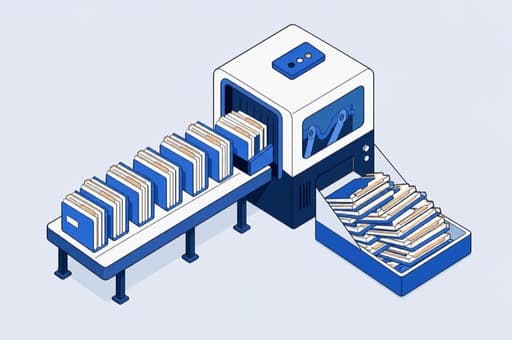
Health Sciences
The machinery behind health insurance, hospitals and drug research — claims operations, old systems rebuilt, IT kept running. Biggest slice of revenue at 30.1%, and the flattest: quarterly sales have edged down since late 2025.
Competes with Health & Public Service (Accenture) · Health plan back-office services (Optum)
In plain English
Every time someone sees a doctor, a bill has to be judged, paid and filed. Health insurers, hospitals and drug companies hand a great deal of that grind — plus the software underneath it — to outside firms, and Cognizant is one of them.
Payment is for staffed time under contracts that run for years: teams that operate claims departments, replace systems written decades ago, and support research work. The money is dependable, because none of this can simply be switched off. It is also slow money right now. Buyers here are cutting costs, pressing several suppliers into one, and asking any new project to prove its savings before it starts.
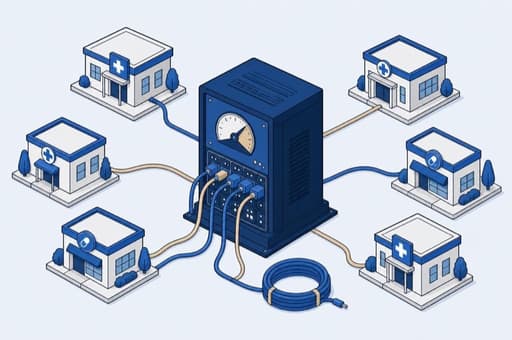
TriZetto healthcare software and operations
The software American health plans run claims on — Facets and QNXT — plus the option to have Cognizant operate it for you. More than $1.1B a year, growing faster and earning better than the staffing work around it.
Competes with HealthRules Payer (HealthEdge) · Tapestry (Epic Systems)
In plain English
Picture the engine room of a health insurer: the system that takes in a claim, checks the policy, decides what is owed and releases the money. TriZetto is that engine, sold to health plans in the United States, and Cognizant has owned it since 2014.
Plans pay to use it, and increasingly pay Cognizant to run the whole department as well — the software plus the people working it, which the company calls its hottest offering. Around 200 million people's coverage sits on it. Ripping it out takes years, so once a plan is on, it tends to stay on.
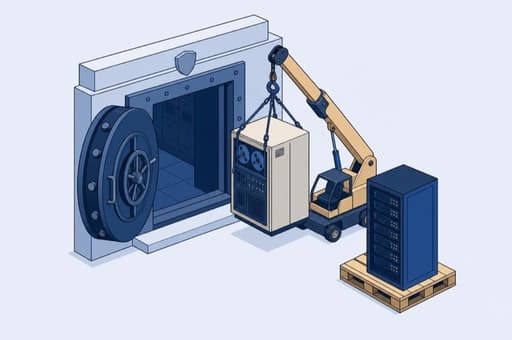
Financial Services
Banks, insurers and payment firms paying to modernise systems built decades ago. 29.2% of revenue and the fastest mover — over 10% growth in early 2026 — though much of this spending is optional and can be stopped.
Competes with Financial Services (Accenture) · Banking and insurance services (TCS)
In plain English
Banks run on software written long before anyone banked on a phone. Replacing it is like rewiring a house while the family still lives there: the lights cannot go off, so the work goes room by room, for years.
That is the job here. Cognizant engineers, largely in India, work on core banking systems, risk and compliance reporting, and payment plumbing, billed by the hour under long agreements. Clients are spending because keeping the old code alive has become expensive — the industry calls that technology debt. It has made this the company's strongest corner, the largest of its four customer groups for two quarters running.
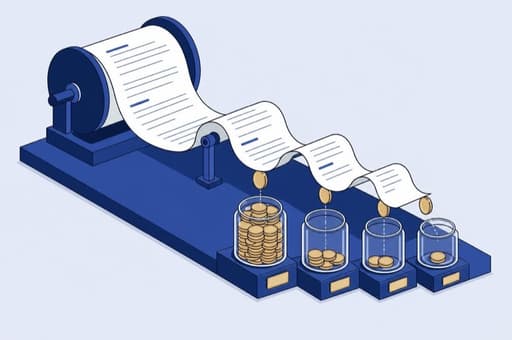
Large-deal and mega-deal book
Signed multi-year work waiting to be done — comfortably more than a year's revenue, and where growth comes from. The warning light: new signings fell 6% against the year before in the second quarter of 2026.
Competes with New deal signings (TCS) · Large-deal signings (Infosys) · Managed services signings (Accenture)
In plain English
A contract here is not a sale you deliver next month. A company hands over a slice of its technology or back-office work for three to seven years, and the fee arrives in instalments as the work gets done. The pile of unworked promises is the order book.
Most of these deals are about spending less: the client folds several suppliers into one and expects the bill to shrink, and Cognizant wins by doing the work cheaper than the client could itself. Twenty-eight of 2025's deals were worth at least $100M each. Press reports tie the two largest to Centene, a health insurer, and Novartis, a drugmaker; neither is confirmed by the company, and no single client appears to come close to a tenth of revenue.
Products and Resources
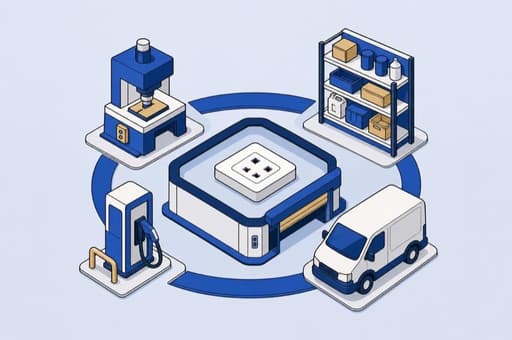
Technology work for carmakers, factories, shops, travel firms and power companies — a quarter of revenue, steady rather than growing. Management flags it as the place AI could unlock the most savings.
Competes with Industry X (Accenture) · Manufacturing and retail services (Infosys) · Manufacturing services (HCLTech)
In plain English
The unglamorous half of the customer list. What these clients buy is plainer than it sounds: ageing systems rebuilt, back-office work taken off their hands, and the big business software from firms like SAP and ServiceNow installed and then kept alive.
Cognizant charges for the people who do that. Because these industries live on thin profits, they push hardest on price, which is precisely why the company expects AI-assisted work to land here first and calls it a place to invest. Tariffs and unsettled supply chains have meanwhile kept retail, consumer goods and travel clients slow to start anything new.
Belcan and Belcan Government Solutions
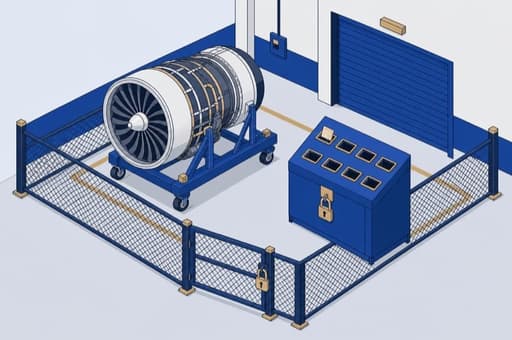
Bought in 2024 for about $1.29B: engineers who design and test aircraft, defence and vehicle parts, roughly $1B of revenue a year. Its government arm holds a seat at missile-defence work it must still win job by job.
Competes with Federal IT and engineering services (Leidos) · Defence technology and engineering work (Booz Allen) · Engineering design services (L&T Technology Services)
In plain English
Most of Cognizant sells software people. Belcan sells the other kind — engineers who design, draw and test physical things — aircraft, spacecraft, defence systems, vehicles and industrial kit — working alongside the manufacturers' own staff.
The money works the same way, hourly work under contract, but the customers are aerospace and defence firms and, more and more, the American government. Belcan's government arm holds a place on a missile-defence programme whose spending ceiling is shared among many approved bidders — permission to compete for individual jobs rather than money in hand. The wider government push it anchors has since won state technology work in Iowa and veterans' health projects.
Astreya
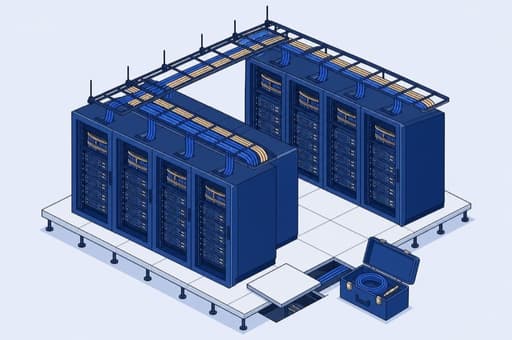
Bought in 2026 for roughly $600M in cash, borrowed against a credit line: hands-on crews for data centres, office networks and employee computers, Google among the customers they keep serving.
Competes with Infrastructure managed services (Kyndryl) · Managed IT operations (DXC)
In plain English
Somebody has to stand inside a data centre and do the physical part — sliding servers into racks, pulling cable, swapping dead drives — and somebody has to keep an office's network and its employees' computers working. That is Astreya, a San Jose firm Cognizant bought in 2026 for about six hundred million dollars in cash, borrowed on a credit line.
It is paid to run those operations under rolling contracts, and it carries on its work for Google. The appeal to Cognizant is arithmetic: its telecom, media and technology clients have barely raised their spending in three years, so growth in this corner has to be bought rather than won.
3Cloud
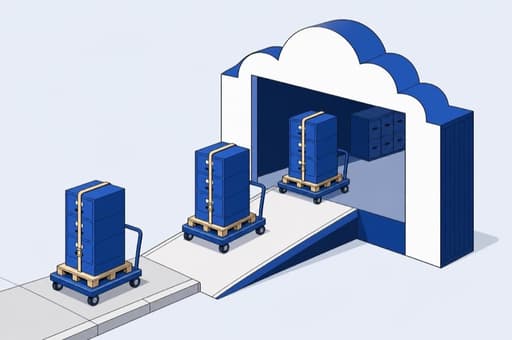
An independent Microsoft Azure specialist folded in during early 2026, bringing more than 1,200 engineers. It lands in the customer group where Cognizant has had the hardest time winning new work.
Competes with IBM Consulting (IBM) · Cloud and infrastructure services (Kyndryl)
In plain English
Companies that once kept their computers in a back room now rent space on somebody else's — most often Microsoft's, which sells that space under the name Azure. Shifting across is fiddly, disruptive work, and specialist firms do it for a fee.
3Cloud was one of those specialists, working only on Microsoft's cloud, and Cognizant closed the purchase early in 2026. More than twelve hundred of its engineers came along. They sit with the part of Cognizant that serves technology and telecom companies, a group whose own revenue has moved very little for three years.

Neuro AI platform and the Frontier workforce
Cognizant's own AI tools plus the staff retrained around them: over 8,000 live client AI projects and more than 40% of its software writing now AI-assisted. It is never billed on its own, so rivals can report AI revenue and Cognizant cannot.
Competes with watsonx and AI services (IBM) · Advanced AI portfolio (HCLTech) · AI services (TCS)
In plain English
Two things bundled together. First, a kit of in-house software — ready-made helpers that draft code, answer customer questions or check claims, several hundred of them reused from one client to the next. Second, a retrained workforce: engineers who wire those helpers into a client's daily routine, and staff who supervise the mix of people and machines.
None of it carries a price tag of its own. It surfaces instead as a change in how hours are billed — price lists that slide from fully human work to largely automatic, and contracts that pay for a delivered result rather than a timesheet. If the machines do more, revenue has to grow without more bodies.


 Health SciencesThe machinery behind health insurance, hospitals and drug research — claims operations, old systems rebuilt, IT kept running. Biggest slice of revenue at 30.1%, and the flattest: quarterly sales have edged down since late 2025.
The machinery behind health insurance, hospitals and drug research — claims operations, old systems rebuilt, IT kept running. Biggest slice of revenue at 30.1%, and the flattest: quarterly sales have edged down since late 2025.
In plain English
Every time someone sees a doctor, a bill has to be judged, paid and filed. Health insurers, hospitals and drug companies hand a great deal of that grind — plus the software underneath it — to outside firms, and Cognizant is one of them.
Payment is for staffed time under contracts that run for years: teams that operate claims departments, replace systems written decades ago, and support research work. The money is dependable, because none of this can simply be switched off. It is also slow money right now. Buyers here are cutting costs, pressing several suppliers into one, and asking any new project to prove its savings before it starts.
Competes with Health & Public Service (Accenture) · Health plan back-office services (Optum)
 TriZetto healthcare software and operationsThe software American health plans run claims on — Facets and QNXT — plus the option to have Cognizant operate it for you. More than $1.1B a year, growing faster and earning better than the staffing work around it.
The software American health plans run claims on — Facets and QNXT — plus the option to have Cognizant operate it for you. More than $1.1B a year, growing faster and earning better than the staffing work around it.
In plain English
Picture the engine room of a health insurer: the system that takes in a claim, checks the policy, decides what is owed and releases the money. TriZetto is that engine, sold to health plans in the United States, and Cognizant has owned it since 2014.
Plans pay to use it, and increasingly pay Cognizant to run the whole department as well — the software plus the people working it, which the company calls its hottest offering. Around 200 million people's coverage sits on it. Ripping it out takes years, so once a plan is on, it tends to stay on.
Competes with HealthRules Payer (HealthEdge) · Tapestry (Epic Systems)
 Financial ServicesBanks, insurers and payment firms paying to modernise systems built decades ago. 29.2% of revenue and the fastest mover — over 10% growth in early 2026 — though much of this spending is optional and can be stopped.
Banks, insurers and payment firms paying to modernise systems built decades ago. 29.2% of revenue and the fastest mover — over 10% growth in early 2026 — though much of this spending is optional and can be stopped.
In plain English
Banks run on software written long before anyone banked on a phone. Replacing it is like rewiring a house while the family still lives there: the lights cannot go off, so the work goes room by room, for years.
That is the job here. Cognizant engineers, largely in India, work on core banking systems, risk and compliance reporting, and payment plumbing, billed by the hour under long agreements. Clients are spending because keeping the old code alive has become expensive — the industry calls that technology debt. It has made this the company's strongest corner, the largest of its four customer groups for two quarters running.
Competes with Financial Services (Accenture) · Banking and insurance services (TCS)
 Large-deal and mega-deal bookSigned multi-year work waiting to be done — comfortably more than a year's revenue, and where growth comes from. The warning light: new signings fell 6% against the year before in the second quarter of 2026.
Signed multi-year work waiting to be done — comfortably more than a year's revenue, and where growth comes from. The warning light: new signings fell 6% against the year before in the second quarter of 2026.
In plain English
A contract here is not a sale you deliver next month. A company hands over a slice of its technology or back-office work for three to seven years, and the fee arrives in instalments as the work gets done. The pile of unworked promises is the order book.
Most of these deals are about spending less: the client folds several suppliers into one and expects the bill to shrink, and Cognizant wins by doing the work cheaper than the client could itself. Twenty-eight of 2025's deals were worth at least $100M each. Press reports tie the two largest to Centene, a health insurer, and Novartis, a drugmaker; neither is confirmed by the company, and no single client appears to come close to a tenth of revenue.
Competes with New deal signings (TCS) · Large-deal signings (Infosys) · Managed services signings (Accenture)
 Products and ResourcesTechnology work for carmakers, factories, shops, travel firms and power companies — a quarter of revenue, steady rather than growing. Management flags it as the place AI could unlock the most savings.
Technology work for carmakers, factories, shops, travel firms and power companies — a quarter of revenue, steady rather than growing. Management flags it as the place AI could unlock the most savings.
In plain English
The unglamorous half of the customer list. What these clients buy is plainer than it sounds: ageing systems rebuilt, back-office work taken off their hands, and the big business software from firms like SAP and ServiceNow installed and then kept alive.
Cognizant charges for the people who do that. Because these industries live on thin profits, they push hardest on price, which is precisely why the company expects AI-assisted work to land here first and calls it a place to invest. Tariffs and unsettled supply chains have meanwhile kept retail, consumer goods and travel clients slow to start anything new.
Competes with Industry X (Accenture) · Manufacturing and retail services (Infosys) · Manufacturing services (HCLTech)
 Belcan and Belcan Government SolutionsBought in 2024 for about $1.29B: engineers who design and test aircraft, defence and vehicle parts, roughly $1B of revenue a year. Its government arm holds a seat at missile-defence work it must still win job by job.
Bought in 2024 for about $1.29B: engineers who design and test aircraft, defence and vehicle parts, roughly $1B of revenue a year. Its government arm holds a seat at missile-defence work it must still win job by job.
In plain English
Most of Cognizant sells software people. Belcan sells the other kind — engineers who design, draw and test physical things — aircraft, spacecraft, defence systems, vehicles and industrial kit — working alongside the manufacturers' own staff.
The money works the same way, hourly work under contract, but the customers are aerospace and defence firms and, more and more, the American government. Belcan's government arm holds a place on a missile-defence programme whose spending ceiling is shared among many approved bidders — permission to compete for individual jobs rather than money in hand. The wider government push it anchors has since won state technology work in Iowa and veterans' health projects.
Competes with Federal IT and engineering services (Leidos) · Defence technology and engineering work (Booz Allen) · Engineering design services (L&T Technology Services)
 AstreyaBought in 2026 for roughly $600M in cash, borrowed against a credit line: hands-on crews for data centres, office networks and employee computers, Google among the customers they keep serving.
Bought in 2026 for roughly $600M in cash, borrowed against a credit line: hands-on crews for data centres, office networks and employee computers, Google among the customers they keep serving.
In plain English
Somebody has to stand inside a data centre and do the physical part — sliding servers into racks, pulling cable, swapping dead drives — and somebody has to keep an office's network and its employees' computers working. That is Astreya, a San Jose firm Cognizant bought in 2026 for about six hundred million dollars in cash, borrowed on a credit line.
It is paid to run those operations under rolling contracts, and it carries on its work for Google. The appeal to Cognizant is arithmetic: its telecom, media and technology clients have barely raised their spending in three years, so growth in this corner has to be bought rather than won.
Competes with Infrastructure managed services (Kyndryl) · Managed IT operations (DXC)
 3CloudAn independent Microsoft Azure specialist folded in during early 2026, bringing more than 1,200 engineers. It lands in the customer group where Cognizant has had the hardest time winning new work.
An independent Microsoft Azure specialist folded in during early 2026, bringing more than 1,200 engineers. It lands in the customer group where Cognizant has had the hardest time winning new work.
In plain English
Companies that once kept their computers in a back room now rent space on somebody else's — most often Microsoft's, which sells that space under the name Azure. Shifting across is fiddly, disruptive work, and specialist firms do it for a fee.
3Cloud was one of those specialists, working only on Microsoft's cloud, and Cognizant closed the purchase early in 2026. More than twelve hundred of its engineers came along. They sit with the part of Cognizant that serves technology and telecom companies, a group whose own revenue has moved very little for three years.
Competes with IBM Consulting (IBM) · Cloud and infrastructure services (Kyndryl)
 Neuro AI platform and the Frontier workforceCognizant's own AI tools plus the staff retrained around them: over 8,000 live client AI projects and more than 40% of its software writing now AI-assisted. It is never billed on its own, so rivals can report AI revenue and Cognizant cannot.
Cognizant's own AI tools plus the staff retrained around them: over 8,000 live client AI projects and more than 40% of its software writing now AI-assisted. It is never billed on its own, so rivals can report AI revenue and Cognizant cannot.
In plain English
Two things bundled together. First, a kit of in-house software — ready-made helpers that draft code, answer customer questions or check claims, several hundred of them reused from one client to the next. Second, a retrained workforce: engineers who wire those helpers into a client's daily routine, and staff who supervise the mix of people and machines.
None of it carries a price tag of its own. It surfaces instead as a change in how hours are billed — price lists that slide from fully human work to largely automatic, and contracts that pay for a delivered result rather than a timesheet. If the machines do more, revenue has to grow without more bodies.
Competes with watsonx and AI services (IBM) · Advanced AI portfolio (HCLTech) · AI services (TCS)
Named in filings, launches and programs
- Communications, Media and TechnologySegmentThe telecom, media and technology customer group: smallest and slowest of the four, with revenue barely above where it stood three years ago.
- Intuitive Operations and AutomationServiceThe back-office running business — claims, finance and customer operations handled for clients. It led company growth in the second quarter of 2026.
- Security practiceServiceAround 5,000 people defending client systems, working with CrowdStrike, Palo Alto Networks, Zscaler and Red Hat.
- ThirderaBrandA ServiceNow specialist bought in 2024; its people install the workflow software many industrial and retail clients run on.
- Other delivery practicesServiceFive more in-house practices the company names — Core Technologies and Insights, Enterprise Platform Services, Industry Solutions, Software and Platform Engineering, Cognizant Moment — none sized separately.
- Centene programCustomer program · RampingPress reports put a Centene deal for TriZetto software and AI above $500M, possibly $1B, over several years; the company has not confirmed it.
- Novartis programCustomer programA roughly $1B contract with the drugmaker, reported in the press in late 2025 and never confirmed by Cognizant.
- Undisclosed mega dealsCustomer programFive 2025 contracts worth at least $500M each, one above $1B, plus another in mid-2026; the customers were never named.
- State of Iowa IT modernisationCustomer program · RampingWon in 2026: rebuilding a US state government's technology, part of the wider push into government work.
- MDA SHIELD positionCustomer programA place won in January 2026 on a US missile-defence programme — permission to bid for individual jobs, not revenue.
- Axis Bank AMS 2.0Customer programAnnounced September 2026: looking after Axis Bank's applications, the maintenance work that keeps banking software running.
- Bupa Hong Kong claims modernisationCustomer programAn AI project to rebuild how the insurer Bupa Hong Kong handles claims.
- Domyn partnershipEcosystemA tie-up to sell AI kept under local control to clients across Europe, the Middle East and Africa.
- Cognizant SynapseEcosystemA skills-training programme for young people entering a job market being reshaped by AI.
- EMEA AI UnitService · AnnouncedLaunched in July 2026 to help clients in Europe, the Middle East and Africa put AI helpers to work.
- AI and security partnershipsEcosystemAgreements signed through 2026 with Anthropic, OpenAI, Google Cloud and CrowdStrike to build their AI and security tools into Cognizant's own.
Communications, Media and TechnologySegment
The telecom, media and technology customer group: smallest and slowest of the four, with revenue barely above where it stood three years ago.
Intuitive Operations and AutomationService
The back-office running business — claims, finance and customer operations handled for clients. It led company growth in the second quarter of 2026.
Security practiceService
Around 5,000 people defending client systems, working with CrowdStrike, Palo Alto Networks, Zscaler and Red Hat.
ThirderaBrand
A ServiceNow specialist bought in 2024; its people install the workflow software many industrial and retail clients run on.
Other delivery practicesService
Five more in-house practices the company names — Core Technologies and Insights, Enterprise Platform Services, Industry Solutions, Software and Platform Engineering, Cognizant Moment — none sized separately.
Centene programCustomer program · Ramping
Press reports put a Centene deal for TriZetto software and AI above $500M, possibly $1B, over several years; the company has not confirmed it.
Novartis programCustomer program
A roughly $1B contract with the drugmaker, reported in the press in late 2025 and never confirmed by Cognizant.
Undisclosed mega dealsCustomer program
Five 2025 contracts worth at least $500M each, one above $1B, plus another in mid-2026; the customers were never named.
State of Iowa IT modernisationCustomer program · Ramping
Won in 2026: rebuilding a US state government's technology, part of the wider push into government work.
MDA SHIELD positionCustomer program
A place won in January 2026 on a US missile-defence programme — permission to bid for individual jobs, not revenue.
Axis Bank AMS 2.0Customer program
Announced September 2026: looking after Axis Bank's applications, the maintenance work that keeps banking software running.
Bupa Hong Kong claims modernisationCustomer program
An AI project to rebuild how the insurer Bupa Hong Kong handles claims.
Domyn partnershipEcosystem
A tie-up to sell AI kept under local control to clients across Europe, the Middle East and Africa.
Cognizant SynapseEcosystem
A skills-training programme for young people entering a job market being reshaped by AI.
EMEA AI UnitService · Announced
Launched in July 2026 to help clients in Europe, the Middle East and Africa put AI helpers to work.
AI and security partnershipsEcosystem
Agreements signed through 2026 with Anthropic, OpenAI, Google Cloud and CrowdStrike to build their AI and security tools into Cognizant's own.