
CVS Health (CVS)
Combines health insurance, pharmacy benefits, retail pharmacies, and care delivery across the United States.
Something off on this page? Send us feedback.
CVS Health is mostly a machine for paying for and filling prescriptions, with Aetna insurance and a vast drugstore network attached. Enormous sums pass through it, but little stays as profit. Its immediate job is to repair the insurance business; its smaller bet is that clinics, home visits and one digital front door can make the pieces work better together.
Item facts: FY2025 · year ended Dec 31, 2025, from filings, earnings calls and company pages.
Judgment weights, not filed revenue
The band summarizes business focus and direction. ~ marks estimates.
8 in detail · 7 more below
CVS Caremark
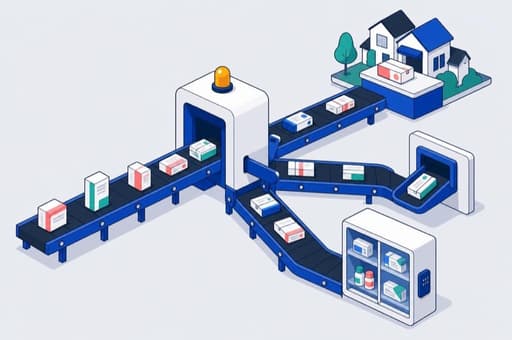
The behind-the-scenes service that runs prescription benefits and arranges where medicines are filled. It handled 1.901 billion insurer payment requests, each adjusted to a thirty-day medicine supply, in 2025; keeping large clients matters as rules and renewals squeeze the economics.
Competes with Express Scripts (The Cigna Group) · Optum Rx (UnitedHealth Group)
In plain English
When someone presents an insurance card at a pharmacy, Caremark is often the machinery behind the counter. It checks whether the medicine is covered, calculates what each party owes and routes the order to a neighborhood, mail-order or specialty pharmacy.
Employers, health plans and government programs pay CVS administration fees and reimburse the medicines. CVS also earns when its own pharmacies fill an order and negotiates discounts from drugmakers in exchange for access to many patients. The model runs on extraordinary volume, but a lost client can move a great deal of business at once.
Government (Aetna)
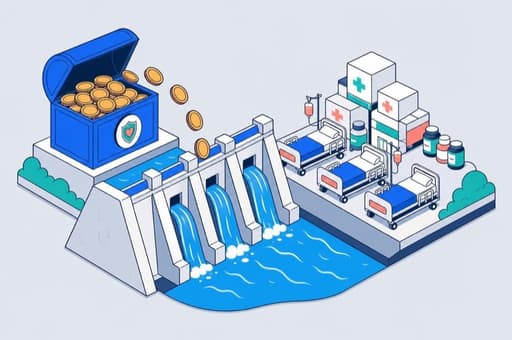
Health coverage for seniors and lower-income members. Medicare contracts tied to CMS, the federal Medicare agency, account for roughly 15.8% of all CVS revenue; public rates and members' medical bills determine what remains.
Competes with UnitedHealthcare Medicare Advantage (UnitedHealth Group) · Humana Medicare Advantage (Humana)
In plain English
Think of this as a household health budget run for public programs. Aetna offers private Medicare plans for seniors, extra Medicare coverage, prescription-only plans and Medicaid coverage for people who qualify by income or circumstance.
Federal and state agencies send regular payments for each member, and Aetna pays doctors, hospitals and pharmacies when care is used. What is left after those bills and running costs is CVS's earnings. That makes pricing unusually dependent on government decisions—and on whether members need more care than the payments assumed.
CVS Pharmacy
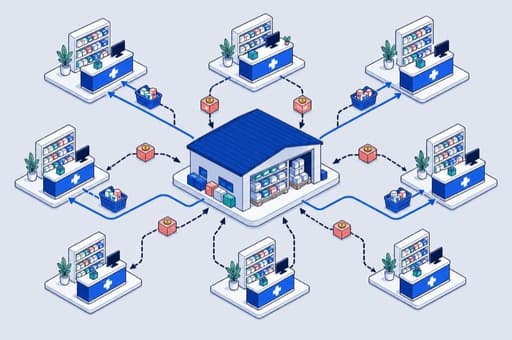
The prescription counters in CVS stores, online channels and Target locations. They fill 28.5% of U.S. retail prescriptions; the watchpoint is whether growing prescription volume produces enough revenue after insurer payments and drug costs.
Competes with Walgreens Pharmacy (Walgreens Boots Alliance) · Walmart Pharmacy (Walmart) · Amazon Pharmacy (Amazon)
In plain English
This is the CVS most people can picture: hand over a prescription, then collect the medicine at a counter or have it delivered. The network also gives vaccinations and other simple clinical services.
An insurer usually pays most of the medicine's price, while the patient pays the rest; cash customers pay directly. CVS keeps the difference after buying the drug and covering pharmacists, stores and delivery. Its huge footprint brings repeat traffic, but the amount insurers agree to pay, staffing capacity and medicine availability decide whether more prescriptions actually mean more earnings.
CVS Pharmacy front store
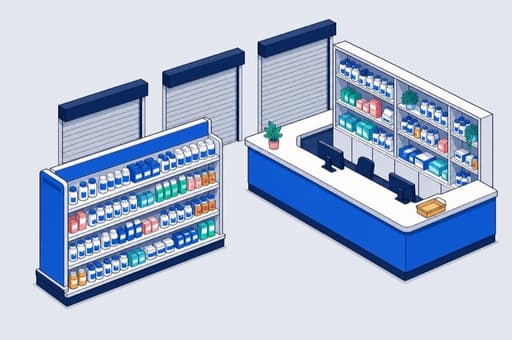
The health, beauty and convenience aisles outside the prescription counter brought in $21.459 billion in 2025. This is a mature business: slow store sales and a shrinking footprint matter more than expansion.
Competes with Walgreens front store (Walgreens Boots Alliance) · Walmart health and personal care (Walmart) · Amazon health and household retail (Amazon)
In plain English
The unglamorous shopping trip attached to picking up medicine. Customers add toothpaste, shampoo, snacks and other everyday goods to the basket, either in a store or through digital ordering.
CVS buys the goods from suppliers and keeps the retail markup; its own store-brand products provide one-fifth of this line's sales. Pharmacy visits provide ready-made foot traffic, while rewards encourage another trip. The catch is physical retail's familiar bill: rent, labor and stolen or damaged goods keep running even when shoppers buy little, and CVS closed far more stores than it opened in 2025.
Commercial (Aetna)
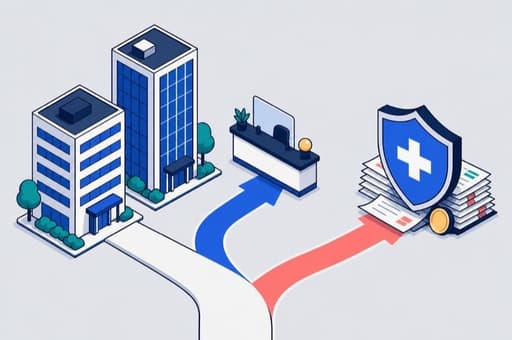
Employer health coverage and plan administration. Most members work for employers that pay their own medical bills, leaving Aetna to earn a fee; after its 2026 exchange exit, employer accounts are the core.
Competes with UnitedHealthcare Employer & Individual (UnitedHealth Group) · Anthem National Accounts (Elevance Health)
In plain English
Here, the customer is usually an employer choosing how to cover workers. Some hand Aetna the whole job: collect regular payments, take the risk and pay medical bills. Far more keep the risk themselves and hire Aetna only to manage the network, process those bills and answer members' questions.
The first arrangement can earn more but can also be hurt when care costs jump. The second behaves more like a steady service contract, because the employer pays the medical bills. Brokers and workplace advisers help choose the plan, so pricing and keeping large accounts are central.
Health Care Delivery
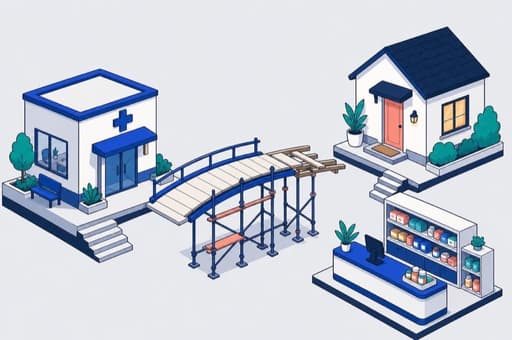
Clinics for older adults, walk-in care and home health evaluations. After losing $5.725 billion of expected value in 2025, CVS slowed clinic expansion and made breaking even the priority.
Competes with CenterWell and Conviva primary care (Humana) · Dedicated Senior Medical Center (ChenMed) · Optum Health clinics (UnitedHealth Group)
In plain English
Instead of only paying for care or handing over medicine, CVS also wants to provide some of the care itself. Oak Street runs primary-care centers for older adults, MinuteClinic handles simpler visits, and Signify sends clinicians into homes for health evaluations.
Health plans pay for visits and assessments; some also pay a set amount per patient, leaving the care team responsible for keeping that person well within the budget. Owning the doorway to care can connect insurance, prescriptions and treatment, but doctors and clinics are costly. CVS now needs this smaller collection to cover its own bills before it can justify renewed expansion.
CVS Weight Management
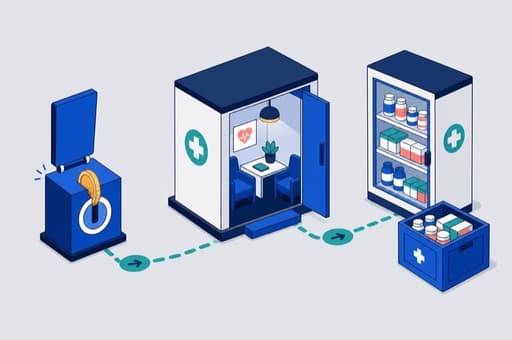
A $29 digital consultation that can lead to clinical support and pharmacy fulfillment of newer weight-loss medicines. Demand is large, but eligibility, coverage, affordability and steady medicine supply narrow who becomes a paying patient.
Competes with WeightWatchers Clinic (WW International) · Ro Body (Ro)
In plain English
A low-priced online visit is the front door. An adult seeking weight treatment pays CVS for a digital consultation; when medically appropriate, the clinician can prescribe medicine and CVS may earn again by filling it at a pharmacy.
There is no repeating program fee. That makes the consultation less like a membership and more like a feeder into CVS's existing clinic and pharmacy businesses. Lilly, a drugmaker, is helping connect its Zepbound medicine and the Found app to the program. Whether patients qualify, can afford treatment and stay supplied decides how much of the interest becomes revenue.
Health100
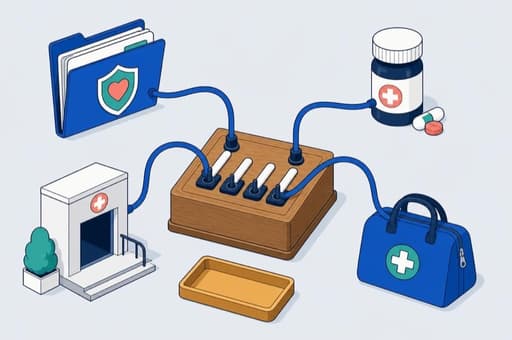
A planned single interface for appointments, prescriptions, insurance questions and outside care partners. It had no disclosed price or revenue model; the test is whether a broad rollout creates real use rather than another unused health app.
Competes with UnitedHealthcare app (UnitedHealth Group) · One Medical app (Amazon)
In plain English
Health care often feels like four errands: find a doctor, check insurance, manage a prescription and arrange a visit. Health100 is CVS's attempt to put those errands behind one digital doorway, including a software helper developed with Google.
CVS can feed the service with its Aetna members, Caremark users, pharmacy customers and care locations, while outside providers can also connect. The immediate payoff would be steering people to the right CVS or partner service and making them more likely to return. But CVS has not said who would pay or how; broader access was only planned for later in 2026.


 CVS CaremarkThe behind-the-scenes service that runs prescription benefits and arranges where medicines are filled. It handled 1.901 billion insurer payment requests, each adjusted to a thirty-day medicine supply, in 2025; keeping large clients matters as rules and renewals squeeze the economics.
The behind-the-scenes service that runs prescription benefits and arranges where medicines are filled. It handled 1.901 billion insurer payment requests, each adjusted to a thirty-day medicine supply, in 2025; keeping large clients matters as rules and renewals squeeze the economics.
In plain English
When someone presents an insurance card at a pharmacy, Caremark is often the machinery behind the counter. It checks whether the medicine is covered, calculates what each party owes and routes the order to a neighborhood, mail-order or specialty pharmacy.
Employers, health plans and government programs pay CVS administration fees and reimburse the medicines. CVS also earns when its own pharmacies fill an order and negotiates discounts from drugmakers in exchange for access to many patients. The model runs on extraordinary volume, but a lost client can move a great deal of business at once.
Competes with Express Scripts (The Cigna Group) · Optum Rx (UnitedHealth Group)
 Government (Aetna)Health coverage for seniors and lower-income members. Medicare contracts tied to CMS, the federal Medicare agency, account for roughly 15.8% of all CVS revenue; public rates and members' medical bills determine what remains.
Health coverage for seniors and lower-income members. Medicare contracts tied to CMS, the federal Medicare agency, account for roughly 15.8% of all CVS revenue; public rates and members' medical bills determine what remains.
In plain English
Think of this as a household health budget run for public programs. Aetna offers private Medicare plans for seniors, extra Medicare coverage, prescription-only plans and Medicaid coverage for people who qualify by income or circumstance.
Federal and state agencies send regular payments for each member, and Aetna pays doctors, hospitals and pharmacies when care is used. What is left after those bills and running costs is CVS's earnings. That makes pricing unusually dependent on government decisions—and on whether members need more care than the payments assumed.
Competes with UnitedHealthcare Medicare Advantage (UnitedHealth Group) · Humana Medicare Advantage (Humana)
 CVS PharmacyThe prescription counters in CVS stores, online channels and Target locations. They fill 28.5% of U.S. retail prescriptions; the watchpoint is whether growing prescription volume produces enough revenue after insurer payments and drug costs.
The prescription counters in CVS stores, online channels and Target locations. They fill 28.5% of U.S. retail prescriptions; the watchpoint is whether growing prescription volume produces enough revenue after insurer payments and drug costs.
In plain English
This is the CVS most people can picture: hand over a prescription, then collect the medicine at a counter or have it delivered. The network also gives vaccinations and other simple clinical services.
An insurer usually pays most of the medicine's price, while the patient pays the rest; cash customers pay directly. CVS keeps the difference after buying the drug and covering pharmacists, stores and delivery. Its huge footprint brings repeat traffic, but the amount insurers agree to pay, staffing capacity and medicine availability decide whether more prescriptions actually mean more earnings.
Competes with Walgreens Pharmacy (Walgreens Boots Alliance) · Walmart Pharmacy (Walmart) · Amazon Pharmacy (Amazon)
 CVS Pharmacy front storeThe health, beauty and convenience aisles outside the prescription counter brought in $21.459 billion in 2025. This is a mature business: slow store sales and a shrinking footprint matter more than expansion.
The health, beauty and convenience aisles outside the prescription counter brought in $21.459 billion in 2025. This is a mature business: slow store sales and a shrinking footprint matter more than expansion.
In plain English
The unglamorous shopping trip attached to picking up medicine. Customers add toothpaste, shampoo, snacks and other everyday goods to the basket, either in a store or through digital ordering.
CVS buys the goods from suppliers and keeps the retail markup; its own store-brand products provide one-fifth of this line's sales. Pharmacy visits provide ready-made foot traffic, while rewards encourage another trip. The catch is physical retail's familiar bill: rent, labor and stolen or damaged goods keep running even when shoppers buy little, and CVS closed far more stores than it opened in 2025.
Competes with Walgreens front store (Walgreens Boots Alliance) · Walmart health and personal care (Walmart) · Amazon health and household retail (Amazon)
 Commercial (Aetna)Employer health coverage and plan administration. Most members work for employers that pay their own medical bills, leaving Aetna to earn a fee; after its 2026 exchange exit, employer accounts are the core.
Employer health coverage and plan administration. Most members work for employers that pay their own medical bills, leaving Aetna to earn a fee; after its 2026 exchange exit, employer accounts are the core.
In plain English
Here, the customer is usually an employer choosing how to cover workers. Some hand Aetna the whole job: collect regular payments, take the risk and pay medical bills. Far more keep the risk themselves and hire Aetna only to manage the network, process those bills and answer members' questions.
The first arrangement can earn more but can also be hurt when care costs jump. The second behaves more like a steady service contract, because the employer pays the medical bills. Brokers and workplace advisers help choose the plan, so pricing and keeping large accounts are central.
Competes with UnitedHealthcare Employer & Individual (UnitedHealth Group) · Anthem National Accounts (Elevance Health)
 Health Care DeliveryClinics for older adults, walk-in care and home health evaluations. After losing $5.725 billion of expected value in 2025, CVS slowed clinic expansion and made breaking even the priority.
Clinics for older adults, walk-in care and home health evaluations. After losing $5.725 billion of expected value in 2025, CVS slowed clinic expansion and made breaking even the priority.
In plain English
Instead of only paying for care or handing over medicine, CVS also wants to provide some of the care itself. Oak Street runs primary-care centers for older adults, MinuteClinic handles simpler visits, and Signify sends clinicians into homes for health evaluations.
Health plans pay for visits and assessments; some also pay a set amount per patient, leaving the care team responsible for keeping that person well within the budget. Owning the doorway to care can connect insurance, prescriptions and treatment, but doctors and clinics are costly. CVS now needs this smaller collection to cover its own bills before it can justify renewed expansion.
Competes with CenterWell and Conviva primary care (Humana) · Dedicated Senior Medical Center (ChenMed) · Optum Health clinics (UnitedHealth Group)
 CVS Weight ManagementA $29 digital consultation that can lead to clinical support and pharmacy fulfillment of newer weight-loss medicines. Demand is large, but eligibility, coverage, affordability and steady medicine supply narrow who becomes a paying patient.
A $29 digital consultation that can lead to clinical support and pharmacy fulfillment of newer weight-loss medicines. Demand is large, but eligibility, coverage, affordability and steady medicine supply narrow who becomes a paying patient.
In plain English
A low-priced online visit is the front door. An adult seeking weight treatment pays CVS for a digital consultation; when medically appropriate, the clinician can prescribe medicine and CVS may earn again by filling it at a pharmacy.
There is no repeating program fee. That makes the consultation less like a membership and more like a feeder into CVS's existing clinic and pharmacy businesses. Lilly, a drugmaker, is helping connect its Zepbound medicine and the Found app to the program. Whether patients qualify, can afford treatment and stay supplied decides how much of the interest becomes revenue.
Competes with WeightWatchers Clinic (WW International) · Ro Body (Ro)
 Health100A planned single interface for appointments, prescriptions, insurance questions and outside care partners. It had no disclosed price or revenue model; the test is whether a broad rollout creates real use rather than another unused health app.
A planned single interface for appointments, prescriptions, insurance questions and outside care partners. It had no disclosed price or revenue model; the test is whether a broad rollout creates real use rather than another unused health app.
In plain English
Health care often feels like four errands: find a doctor, check insurance, manage a prescription and arrange a visit. Health100 is CVS's attempt to put those errands behind one digital doorway, including a software helper developed with Google.
CVS can feed the service with its Aetna members, Caremark users, pharmacy customers and care locations, while outside providers can also connect. The immediate payoff would be steering people to the right CVS or partner service and making them more likely to return. But CVS has not said who would pay or how; broader access was only planned for later in 2026.
Competes with UnitedHealthcare app (UnitedHealth Group) · One Medical app (Amazon)
Named in filings, launches and programs
- CalPERS pharmacy-benefits programCustomer programA five-year Caremark contract covering about 587,000 California public employees and dependents, with $250 million at risk if performance promises are missed.
- CVS SpecialtyServiceFills complex, high-cost medicines and supports patients; these drugs are few in number but consume more than half of client medicine spending.
- CordavisBrandWorks with manufacturers to bring lower-list-price, highly similar versions of complex brand-name medicines to market.
- CVS CostVantagePlatformPays CVS pharmacies from the medicine's cost, a markup and a service fee instead of older payment formulas.
- TrueCostServiceA Caremark pricing choice that shows clients the medicine's net cost and the administration charge more directly.
- Red Oak SourcingEcosystemA jointly owned operation with Cardinal Health that negotiates purchases of lower-cost generic medicines for both companies.
- ExtraCare / ExtraBucks RewardsCustomer programThe store loyalty program uses offers and rewards to bring shoppers back to CVS retail aisles and digital ordering.
CalPERS pharmacy-benefits programCustomer program
A five-year Caremark contract covering about 587,000 California public employees and dependents, with $250 million at risk if performance promises are missed.
CVS SpecialtyService
Fills complex, high-cost medicines and supports patients; these drugs are few in number but consume more than half of client medicine spending.
CordavisBrand
Works with manufacturers to bring lower-list-price, highly similar versions of complex brand-name medicines to market.
CVS CostVantagePlatform
Pays CVS pharmacies from the medicine's cost, a markup and a service fee instead of older payment formulas.
TrueCostService
A Caremark pricing choice that shows clients the medicine's net cost and the administration charge more directly.
Red Oak SourcingEcosystem
A jointly owned operation with Cardinal Health that negotiates purchases of lower-cost generic medicines for both companies.
ExtraCare / ExtraBucks RewardsCustomer program
The store loyalty program uses offers and rewards to bring shoppers back to CVS retail aisles and digital ordering.