
Curtiss-Wright (CW)
Supplies engineered controls, defense electronics, naval equipment and nuclear systems.
Something off on this page? Send us feedback.
Curtiss-Wright makes the hardware that lives inside other people's machines — the pumps in a submarine's propulsion plant, the computers inside a fighter jet, the drives that swing an armored vehicle's turret. It almost never sells a finished platform, and never sells to you. Win a place inside a ship class or a reactor design once, and it earns for decades. The newest chapter is nuclear power plant building.
Item facts: FY2025 · year ended Dec 31, 2025, from filings, earnings calls and company pages.
Judgment weights, not filed revenue
The band summarizes business focus and direction. ~ marks estimates.
8 in detail · 14 more below
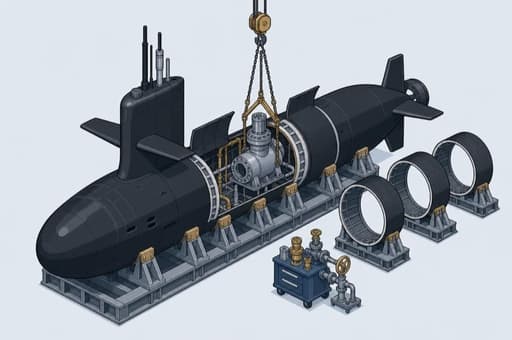
Naval Propulsion & Ship Systems
Pumps, motors, generators and valves inside U.S. Navy nuclear submarines and carriers. The whole company's order book reached $4.1 billion at the end of 2025, up 18%; the limit on growth is how fast the shipyards can actually build.
Competes with Submarine valves (Fairbanks Morse Defense) · Naval Power Systems motors and generators (Leonardo DRS)
In plain English
Inside every nuclear-powered submarine and aircraft carrier sits a propulsion plant: a reactor, plus the machinery that turns its heat into movement. Curtiss-Wright builds that machinery — coolant pumps, compact motors, generators, steam turbines, valves — and also the spinning rotor that stores the energy a carrier's catapult uses to throw a jet off the deck.
The Navy buys none of it directly. The shipbuilders do: General Dynamics Electric Boat, HII Newport News and Bechtel Plant Machinery. Roughly half of everything Curtiss-Wright sells ends up with the U.S. government this way, directly or through its big contractors — though no single customer accounts for as much as a tenth of sales.
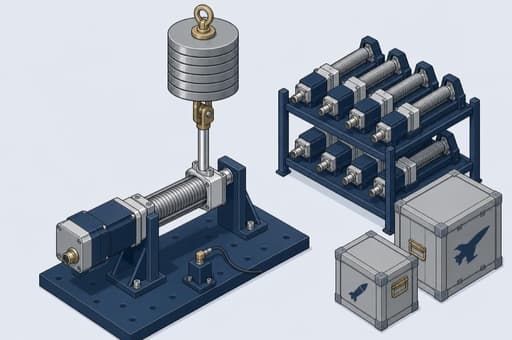
Electro-Mechanical Actuation & Sensors
Electric muscles: actuators that push, lift and rotate on command, sold under the Exlar name among others. Roughly $40 million of Leidos orders in August 2026 put them, alongside mission computers, on the Army's mobile air-defense launchers. Watch rare-earth supply.
Competes with Electric actuation (Parker Hannifin) · Electric actuation (Emerson) · Turret and missile control actuation (Moog)
In plain English
Anything that has to move something heavy, precisely, needs a muscle — a jet's control surface, a reactor's control rod, a submarine's ballast system, a factory press. Curtiss-Wright's muscles are electric: a motor turning a threaded rod, rated to push with up to eighty thousand pounds of force, plus the electronics that tell it exactly how far to travel.
The money comes from being designed in. A fighter or launcher program picks the actuator early, then buys one for every unit built and spares for every unit flying. Small parts, long programs. The wobble to watch is upstream: the rare-earth materials it depends on came under supply pressure in 2026.
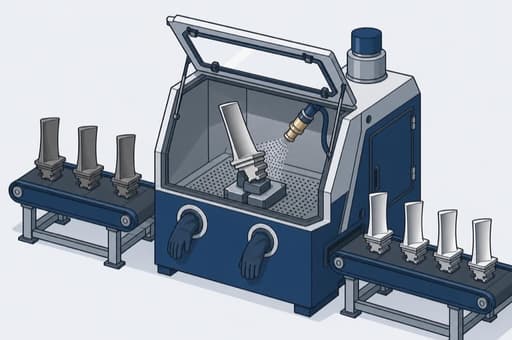
Curtiss-Wright Surface Technologies
Over 60 shops in 16 countries that blast, laser-treat and coat metal parts so they survive longer. Customers pay per part, so sales follow how many aircraft get built — the most cyclical line in the portfolio.
Competes with Laser peening services (LSP Technologies) · Aerospace metal finishing (Valence Surface Technologies)
In plain English
Metal parts that flex millions of times eventually crack. Pounding the surface with tiny steel beads, or pulsing it with a laser, toughens the outer skin so the part shrugs off fatigue, corrosion and wear for far longer; an engineered coating does a related job.
Run it like a laundry service for metal. Factories and repair shops ship parts in, the shop treats them, the parts go back, and the bill is per treatment. No program awards, no decade-long contracts. When the Airbus and Boeing supply chains build more, and when engines come in for overhaul, volume rises; the rest of it moves with the world economy.
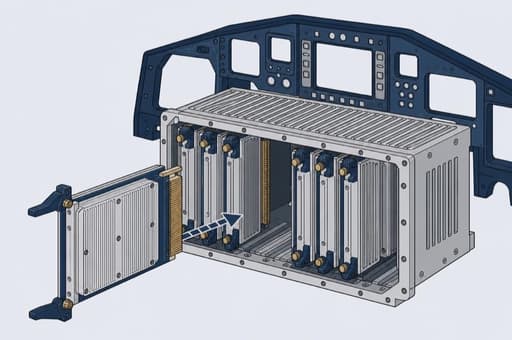
COTS Embedded Computing
Rugged computer cards for aircraft, uncrewed aircraft and armored vehicles, built to shared military standards so anyone's card fits anyone's slot. The company's largest electronics line, in a fragmented market of roughly $7 billion won one slot at a time.
Competes with OpenVPX processing subsystems (Mercury Systems) · CMOSS Mounted Form Factor (General Dynamics Mission Systems) · CMOSS vehicle computing (Pacific Defense)
In plain English
Take an ordinary computer, strip out everything that melts or rattles loose, and rebuild it as a finned metal card that slides into a slot. Stack enough of those cards and you have the brains of a fighter's mission system, a display console, or an uncrewed aircraft.
These cards follow common open standards, so cards from different makers fit the same slots. Good for the buyer, brutal for the seller: thirty-plus makers chase the same sockets, and each win is one slot on one program. Curtiss-Wright sells to the prime contractors that assemble the aircraft and vehicles, and the graphics chips it buys in ride along inside the card.
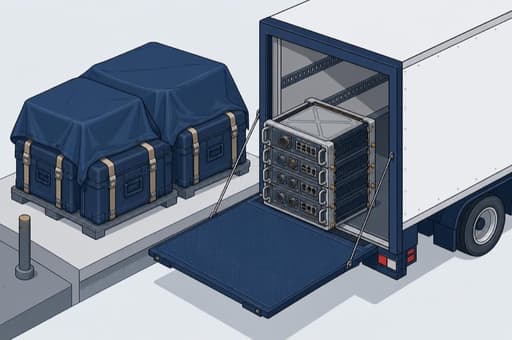
Tactical Communications (PacStar / TCG)
Stackable toughened network boxes that units carry into the field, plus software that lets aircraft and ships trade targeting data. Sales slipped on order timing rather than lost position, and the full-year guide was held despite a strong order book.
Competes with Tactical network and mission systems (General Dynamics Mission Systems) · Tactical communications systems (L3Harris)
In plain English
Picture the equipment closet that makes an office network exist — switches, routers, radios — rebuilt as small toughened modules that stack, bolt into a shipping case and fly to wherever the unit is going. That is PacStar, bought in 2020; the router and switch modules are built around Cisco parts. TCG, the software half, handles military data links, the agreed formats that let a fighter, a ship and a ground station look at the same picture.
Army, Marine Corps and Air Force units buy in batches whenever budgets clear, which makes the revenue lumpy. This line is the reason ground-defense sales have fallen two quarters running.
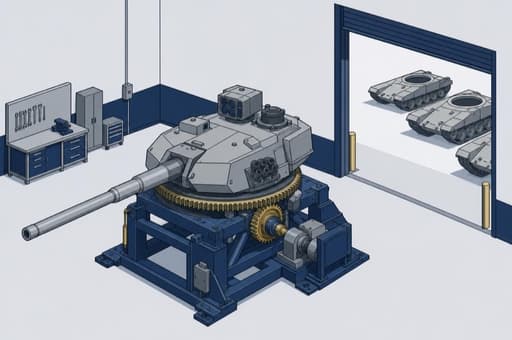
Turret Drive Stabilization Systems
The motorised system that swings an armored vehicle's turret and holds the gun steady as the hull bounces. A small line climbing fast off a small base, and most of the disclosed wins arrive through one partner, Rheinmetall.
Competes with Turret Stabilization & Fire Control (Moog) · Weapon stations and turrets (Elbit Systems)
In plain English
Firing accurately while moving is a control problem: the hull pitches, and something has to keep the gun pointed anyway. That something is a set of electric drives, aiming gear and stabilisation controls built into the turret ring — a job Curtiss-Wright has done for over thirty years for more than thirty military organisations.
It is a subsystem, so the money arrives through the vehicle builder rather than the army. Rheinmetall, an armored-vehicle maker riding Europe's rearmament, chose it for the KF51 Panther, the Boxer heavy weapon carrier and Hungary's Lynx, and its American arm for U.S. Army XM30 prototypes. Prototype work is modest money that becomes volume only if those programs continue.
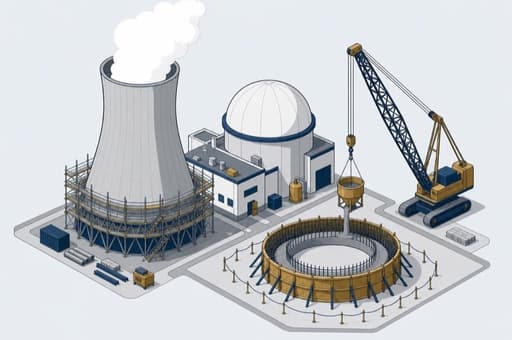
Commercial Nuclear Products & Services
Pumps, control systems, instruments and outage services for nuclear power stations. The money today comes from reactors already running; the stated plan is to roughly double this business by 2028 as new ones get built. Watch for the first AP1000 pump order.
Competes with Reactor protection and radiation monitoring (Mirion) · HIPS reactor protection (Paragon Energy Solutions) · Nuclear instrumentation and services (Framatome)
In plain English
Two businesses share one name here. The first looks after reactors already running: refuelling and outage work, spare parts, shock absorbers and seals, storage for used fuel, and the instruments and simulated control rooms that tell operators what is happening inside. Unglamorous, and it pays now.
The second is new construction. Every Westinghouse AP1000 reactor needs four reactor coolant pumps — the machines that circulate water through it — and Curtiss-Wright makes them. It is also building prototype hardware for smaller next-generation reactors with X-energy and Rolls-Royce. That early development work carries thinner margins than the production that would follow it.
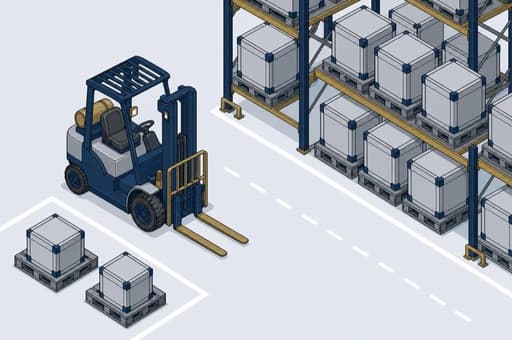
Industrial & Specialty Vehicle Products
The electronics that make forklifts and off-highway machines go: shifters, joysticks, throttle controls, power management and traction inverters. Sales have sat flat for six straight quarters, though orders have now risen three quarters running.
Competes with Off-highway electronic controls (Danfoss Power Solutions) · Throttle control and shift-by-wire (Orscheln Products)
In plain English
Start with the controls a forklift driver actually touches — the shifter, the joystick, the pedal — then add the box behind the panel that decides what the wheels do about it. Curtiss-Wright makes those, and on battery-powered machines it also makes the traction inverter, the part that turns stored electricity into turning wheels.
It sells to the companies that build the vehicles, so its sales are their build schedules, and those have been poor: customers spent 2024 working down piles of unsold stock and the line has been flat since. Management keeps saying growth returns as 2027 approaches. Machines going electric is what could raise the content per vehicle.


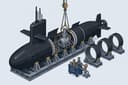 Naval Propulsion & Ship SystemsPumps, motors, generators and valves inside U.S. Navy nuclear submarines and carriers. The whole company's order book reached $4.1 billion at the end of 2025, up 18%; the limit on growth is how fast the shipyards can actually build.
Pumps, motors, generators and valves inside U.S. Navy nuclear submarines and carriers. The whole company's order book reached $4.1 billion at the end of 2025, up 18%; the limit on growth is how fast the shipyards can actually build.
In plain English
Inside every nuclear-powered submarine and aircraft carrier sits a propulsion plant: a reactor, plus the machinery that turns its heat into movement. Curtiss-Wright builds that machinery — coolant pumps, compact motors, generators, steam turbines, valves — and also the spinning rotor that stores the energy a carrier's catapult uses to throw a jet off the deck.
The Navy buys none of it directly. The shipbuilders do: General Dynamics Electric Boat, HII Newport News and Bechtel Plant Machinery. Roughly half of everything Curtiss-Wright sells ends up with the U.S. government this way, directly or through its big contractors — though no single customer accounts for as much as a tenth of sales.
Competes with Submarine valves (Fairbanks Morse Defense) · Naval Power Systems motors and generators (Leonardo DRS)
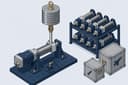 Electro-Mechanical Actuation & SensorsElectric muscles: actuators that push, lift and rotate on command, sold under the Exlar name among others. Roughly $40 million of Leidos orders in August 2026 put them, alongside mission computers, on the Army's mobile air-defense launchers. Watch rare-earth supply.
Electric muscles: actuators that push, lift and rotate on command, sold under the Exlar name among others. Roughly $40 million of Leidos orders in August 2026 put them, alongside mission computers, on the Army's mobile air-defense launchers. Watch rare-earth supply.
In plain English
Anything that has to move something heavy, precisely, needs a muscle — a jet's control surface, a reactor's control rod, a submarine's ballast system, a factory press. Curtiss-Wright's muscles are electric: a motor turning a threaded rod, rated to push with up to eighty thousand pounds of force, plus the electronics that tell it exactly how far to travel.
The money comes from being designed in. A fighter or launcher program picks the actuator early, then buys one for every unit built and spares for every unit flying. Small parts, long programs. The wobble to watch is upstream: the rare-earth materials it depends on came under supply pressure in 2026.
Competes with Electric actuation (Parker Hannifin) · Electric actuation (Emerson) · Turret and missile control actuation (Moog)
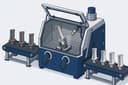 Curtiss-Wright Surface TechnologiesOver 60 shops in 16 countries that blast, laser-treat and coat metal parts so they survive longer. Customers pay per part, so sales follow how many aircraft get built — the most cyclical line in the portfolio.
Over 60 shops in 16 countries that blast, laser-treat and coat metal parts so they survive longer. Customers pay per part, so sales follow how many aircraft get built — the most cyclical line in the portfolio.
In plain English
Metal parts that flex millions of times eventually crack. Pounding the surface with tiny steel beads, or pulsing it with a laser, toughens the outer skin so the part shrugs off fatigue, corrosion and wear for far longer; an engineered coating does a related job.
Run it like a laundry service for metal. Factories and repair shops ship parts in, the shop treats them, the parts go back, and the bill is per treatment. No program awards, no decade-long contracts. When the Airbus and Boeing supply chains build more, and when engines come in for overhaul, volume rises; the rest of it moves with the world economy.
Competes with Laser peening services (LSP Technologies) · Aerospace metal finishing (Valence Surface Technologies)
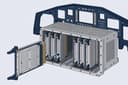 COTS Embedded ComputingRugged computer cards for aircraft, uncrewed aircraft and armored vehicles, built to shared military standards so anyone's card fits anyone's slot. The company's largest electronics line, in a fragmented market of roughly $7 billion won one slot at a time.
Rugged computer cards for aircraft, uncrewed aircraft and armored vehicles, built to shared military standards so anyone's card fits anyone's slot. The company's largest electronics line, in a fragmented market of roughly $7 billion won one slot at a time.
In plain English
Take an ordinary computer, strip out everything that melts or rattles loose, and rebuild it as a finned metal card that slides into a slot. Stack enough of those cards and you have the brains of a fighter's mission system, a display console, or an uncrewed aircraft.
These cards follow common open standards, so cards from different makers fit the same slots. Good for the buyer, brutal for the seller: thirty-plus makers chase the same sockets, and each win is one slot on one program. Curtiss-Wright sells to the prime contractors that assemble the aircraft and vehicles, and the graphics chips it buys in ride along inside the card.
Competes with OpenVPX processing subsystems (Mercury Systems) · CMOSS Mounted Form Factor (General Dynamics Mission Systems) · CMOSS vehicle computing (Pacific Defense)
 Tactical Communications (PacStar / TCG)Stackable toughened network boxes that units carry into the field, plus software that lets aircraft and ships trade targeting data. Sales slipped on order timing rather than lost position, and the full-year guide was held despite a strong order book.
Stackable toughened network boxes that units carry into the field, plus software that lets aircraft and ships trade targeting data. Sales slipped on order timing rather than lost position, and the full-year guide was held despite a strong order book.
In plain English
Picture the equipment closet that makes an office network exist — switches, routers, radios — rebuilt as small toughened modules that stack, bolt into a shipping case and fly to wherever the unit is going. That is PacStar, bought in 2020; the router and switch modules are built around Cisco parts. TCG, the software half, handles military data links, the agreed formats that let a fighter, a ship and a ground station look at the same picture.
Army, Marine Corps and Air Force units buy in batches whenever budgets clear, which makes the revenue lumpy. This line is the reason ground-defense sales have fallen two quarters running.
Competes with Tactical network and mission systems (General Dynamics Mission Systems) · Tactical communications systems (L3Harris)
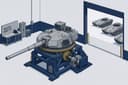 Turret Drive Stabilization SystemsThe motorised system that swings an armored vehicle's turret and holds the gun steady as the hull bounces. A small line climbing fast off a small base, and most of the disclosed wins arrive through one partner, Rheinmetall.
The motorised system that swings an armored vehicle's turret and holds the gun steady as the hull bounces. A small line climbing fast off a small base, and most of the disclosed wins arrive through one partner, Rheinmetall.
In plain English
Firing accurately while moving is a control problem: the hull pitches, and something has to keep the gun pointed anyway. That something is a set of electric drives, aiming gear and stabilisation controls built into the turret ring — a job Curtiss-Wright has done for over thirty years for more than thirty military organisations.
It is a subsystem, so the money arrives through the vehicle builder rather than the army. Rheinmetall, an armored-vehicle maker riding Europe's rearmament, chose it for the KF51 Panther, the Boxer heavy weapon carrier and Hungary's Lynx, and its American arm for U.S. Army XM30 prototypes. Prototype work is modest money that becomes volume only if those programs continue.
Competes with Turret Stabilization & Fire Control (Moog) · Weapon stations and turrets (Elbit Systems)
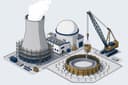 Commercial Nuclear Products & ServicesPumps, control systems, instruments and outage services for nuclear power stations. The money today comes from reactors already running; the stated plan is to roughly double this business by 2028 as new ones get built. Watch for the first AP1000 pump order.
Pumps, control systems, instruments and outage services for nuclear power stations. The money today comes from reactors already running; the stated plan is to roughly double this business by 2028 as new ones get built. Watch for the first AP1000 pump order.
In plain English
Two businesses share one name here. The first looks after reactors already running: refuelling and outage work, spare parts, shock absorbers and seals, storage for used fuel, and the instruments and simulated control rooms that tell operators what is happening inside. Unglamorous, and it pays now.
The second is new construction. Every Westinghouse AP1000 reactor needs four reactor coolant pumps — the machines that circulate water through it — and Curtiss-Wright makes them. It is also building prototype hardware for smaller next-generation reactors with X-energy and Rolls-Royce. That early development work carries thinner margins than the production that would follow it.
Competes with Reactor protection and radiation monitoring (Mirion) · HIPS reactor protection (Paragon Energy Solutions) · Nuclear instrumentation and services (Framatome)
 Industrial & Specialty Vehicle ProductsThe electronics that make forklifts and off-highway machines go: shifters, joysticks, throttle controls, power management and traction inverters. Sales have sat flat for six straight quarters, though orders have now risen three quarters running.
The electronics that make forklifts and off-highway machines go: shifters, joysticks, throttle controls, power management and traction inverters. Sales have sat flat for six straight quarters, though orders have now risen three quarters running.
In plain English
Start with the controls a forklift driver actually touches — the shifter, the joystick, the pedal — then add the box behind the panel that decides what the wheels do about it. Curtiss-Wright makes those, and on battery-powered machines it also makes the traction inverter, the part that turns stored electricity into turning wheels.
It sells to the companies that build the vehicles, so its sales are their build schedules, and those have been poor: customers spent 2024 working down piles of unsold stock and the line has been flat since. Management keeps saying growth returns as 2027 approaches. Machines going electric is what could raise the content per vehicle.
Competes with Off-highway electronic controls (Danfoss Power Solutions) · Throttle control and shift-by-wire (Orscheln Products)
Named in filings, launches and programs
- Process & Industrial Valves — Farris, EST GroupProduct linePressure-relief and leak-tight valves, plus heat-exchanger repair and isolation kit for process and industrial plants; roughly a twentieth of sales.
- Flight Test Instrumentation & Aircraft Data RecordersProduct lineEquipment that records what an aircraft is doing — flight-test data gathering, flight data recorders, helicopter avionics; roughly a twentieth of sales.
- Honeywell 25-hour cockpit voice recorder programCustomer program · RampingDeveloped jointly with Honeywell to meet the longer cockpit-voice-recording rule; named as the main reason commercial-aerospace guidance went up in 2025.
- Aircraft Arresting SystemsProduct lineEnergy absorbers, hook cable, nets and mobile rigs that stop a landing jet fast; consolidated by buying Safran's arresting business for $240 million in 2022.
- I&C SolutionsBrandReactor protection, radiation and flux monitoring and sensors — the former Ultra Energy, bought at the end of 2024 and renamed.
- WSCBrandControl-room simulation for power plants, acquired late 2024 and folded in alongside the nuclear instrument business.
- Nuclear services brands — Scientech, NETCO, AP Services, NovaBrandOutage and fuel management, shock-absorber testing, sealing and pipe supports for reactors already in operation.
- Government nuclear / DOE laboratory workServiceWork for U.S. Department of Energy laboratories — a small share, named as a growth contributor in mid-2026.
- X-energy advanced reactor contentCustomer program · RampingA helium circulator and the reactivity control and shutdown systems for X-energy's advanced reactor, moved from design into prototype building during 2026.
- Rolls-Royce SMR reactor protectionCustomer program · RampingSafety systems for Rolls-Royce's small modular reactor, announced in 2025 on the UK footprint that came with Ultra Energy; prototype revenue expected in 2026.
- AP1000 Reactor Coolant PumpsCustomer program · AnnouncedFour pumps per Westinghouse AP1000. A first order was still expected during 2026 as of August, and is deliberately excluded from guidance.
- CVN-81 / CVN-75 carrier contentCustomer programNew-build content for the carrier CVN-81 and refuelling-overhaul work on CVN-75; both named as 2026 growth drivers.
- Golden DomeCustomer program · RampingA U.S. defense initiative management first raised in 2025; initial orders arrived by mid-2026 across computing, actuation and radar-adjacent hardware. Values undisclosed.
- IFPC Increment 2 (Leidos)Customer program · RampingActuation and mission computing for the Army's mobile air-defense launchers, ordered through Leidos and announced in August 2026.
Process & Industrial Valves — Farris, EST GroupProduct line
Pressure-relief and leak-tight valves, plus heat-exchanger repair and isolation kit for process and industrial plants; roughly a twentieth of sales.
Flight Test Instrumentation & Aircraft Data RecordersProduct line
Equipment that records what an aircraft is doing — flight-test data gathering, flight data recorders, helicopter avionics; roughly a twentieth of sales.
Honeywell 25-hour cockpit voice recorder programCustomer program · Ramping
Developed jointly with Honeywell to meet the longer cockpit-voice-recording rule; named as the main reason commercial-aerospace guidance went up in 2025.
Aircraft Arresting SystemsProduct line
Energy absorbers, hook cable, nets and mobile rigs that stop a landing jet fast; consolidated by buying Safran's arresting business for $240 million in 2022.
I&C SolutionsBrand
Reactor protection, radiation and flux monitoring and sensors — the former Ultra Energy, bought at the end of 2024 and renamed.
WSCBrand
Control-room simulation for power plants, acquired late 2024 and folded in alongside the nuclear instrument business.
Nuclear services brands — Scientech, NETCO, AP Services, NovaBrand
Outage and fuel management, shock-absorber testing, sealing and pipe supports for reactors already in operation.
Government nuclear / DOE laboratory workService
Work for U.S. Department of Energy laboratories — a small share, named as a growth contributor in mid-2026.
X-energy advanced reactor contentCustomer program · Ramping
A helium circulator and the reactivity control and shutdown systems for X-energy's advanced reactor, moved from design into prototype building during 2026.
Rolls-Royce SMR reactor protectionCustomer program · Ramping
Safety systems for Rolls-Royce's small modular reactor, announced in 2025 on the UK footprint that came with Ultra Energy; prototype revenue expected in 2026.
AP1000 Reactor Coolant PumpsCustomer program · Announced
Four pumps per Westinghouse AP1000. A first order was still expected during 2026 as of August, and is deliberately excluded from guidance.
CVN-81 / CVN-75 carrier contentCustomer program
New-build content for the carrier CVN-81 and refuelling-overhaul work on CVN-75; both named as 2026 growth drivers.
Golden DomeCustomer program · Ramping
A U.S. defense initiative management first raised in 2025; initial orders arrived by mid-2026 across computing, actuation and radar-adjacent hardware. Values undisclosed.
IFPC Increment 2 (Leidos)Customer program · Ramping
Actuation and mission computing for the Army's mobile air-defense launchers, ordered through Leidos and announced in August 2026.