
Dominion Energy (D)
Regulated electric utility serving Virginia and the Carolinas, with contracted nuclear generation.
Something off on this page? Send us feedback.
Dominion Energy has narrowed itself into a power-and-gas company whose customer prices are set by state overseers, with Virginia doing most of the work. Its next chapter rests on supplying Virginia’s rush of giant computing sites, finishing a huge offshore wind farm, and funding the grid around both. An agreed merger with NextEra could put the whole business under a new owner.
Item facts: FY2025 · year ended Dec 31, 2025, from filings, earnings calls and company pages.
Judgment weights, not filed revenue
The band summarizes business focus and direction. ~ marks estimates.
5 in detail · 12 more below
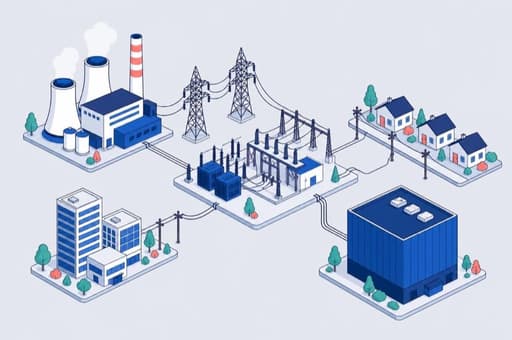
Dominion Energy Virginia
The main engine sells electricity across Virginia and northeastern North Carolina. It produced $11.843 billion of fiscal 2025 revenue; watch whether surging demand from giant computing sites turns approved construction into customer bills on schedule.
Competes with Appalachian Power electric service (American Electric Power) · Old Dominion Power service (Kentucky Utilities/PPL)
In plain English
Start with the monthly power bill. Dominion Energy Virginia runs power plants, high-voltage lines and local wires, then sells the electricity that reaches homes, offices and unusually power-hungry customers across its territory. State regulators decide what it may charge.
The business works like a toll road with a supervised toll: Dominion builds or upgrades the system, asks regulators to approve the cost, and recovers that cost plus an allowed profit through future bills. Customers keep paying because electricity is essential and the local network is the route that reaches them.
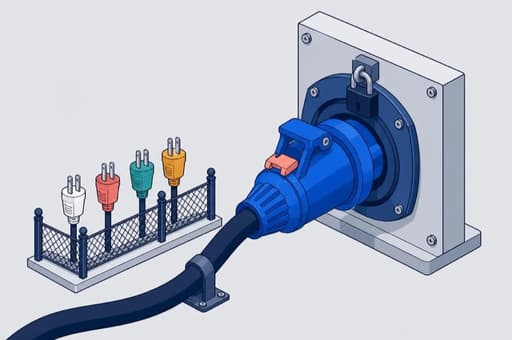
Rate Schedule GS-5
A special billing plan protects existing customers when enormous new electricity users arrive. By May 2026, power requests topped 50 gigawatts, or 50 billion watts, including 10.4 gigawatts covered by signed deals to connect; requests still are not sales.
Competes with Data Center Tariff (AEP Ohio) · Large Load Customer Protections (Georgia Power)
In plain English
A data center — a warehouse full of computers — can consume as much electricity as a town. GS-5 is the set of billing rules for qualifying new giants that want Dominion Energy Virginia to build the wires and power supply needed to connect them.
For contracts beginning in 2027, customers generally promise to stay for fourteen years, pay for at least eighty-five percent of reserved delivery capacity and post financial security that can reach sixty percent. That resembles reserving an entire banquet hall: the bill still comes if half the seats stay empty. Dominion earns through the wider Virginia utility, not from an upfront deposit.
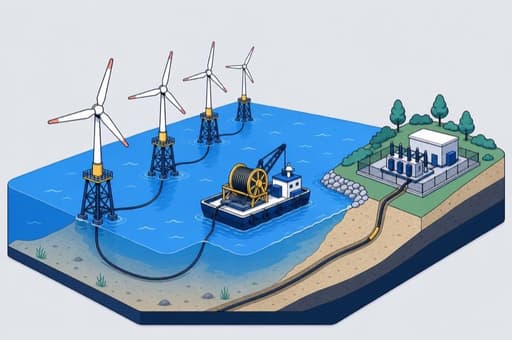
Coastal Virginia Offshore Wind Commercial Project
A huge offshore wind farm that Virginia customers fund through a dedicated bill charge. First power arrived in March 2026, but work to bring every turbine online now runs through 2027; the watchpoint is delay-driven cost pressure.
Competes with Vineyard Wind 1 (Avangrid/CIP) · Revolution Wind (Ørsted/Skyborn)
In plain English
Far off Virginia Beach, Dominion is planting rows of wind turbines in the ocean and linking them back to the land with underwater cables. The full commercial project is meant to become part of the Virginia electric system rather than sell power freely to the highest bidder.
Virginia customers pay approved project costs and Dominion’s allowed profit through a separate charge on their bills. Stonepeak, an infrastructure investor, has half the financial stake and funds half of construction, while Dominion operates the project. That sharing eases Dominion’s funding burden, but court orders, permits, weather and installation timing can still make the build costlier.
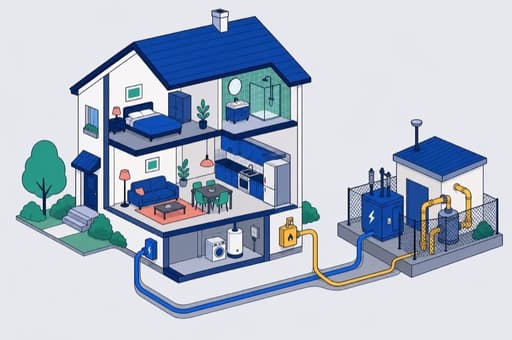
Dominion Energy South Carolina
The quieter second engine supplies both electricity and gas in South Carolina. It produced $3.568 billion of fiscal 2025 revenue; steady customer bills matter more here than the faster expansion centered in Virginia.
Competes with Duke Energy Carolinas electric service (Duke Energy) · Duke Energy Progress electric service (Duke Energy)
In plain English
South Carolina is the quieter second engine. This business keeps lights on and sends gas through local pipes for roughly eight hundred thousand electric accounts and half a million gas accounts. Some customers buy both, so those counts are not the same as unique households.
Money arrives through regular usage bills. Regulators approve prices designed to cover fuel, power plants, wires, gas pipelines, daily operations and a permitted profit on the infrastructure. Think of it as two essential delivery systems under one roof: demand changes with weather and growth, while storms, fuel prices and plant outages can change what service costs before bills catch up.
Contracted Energy
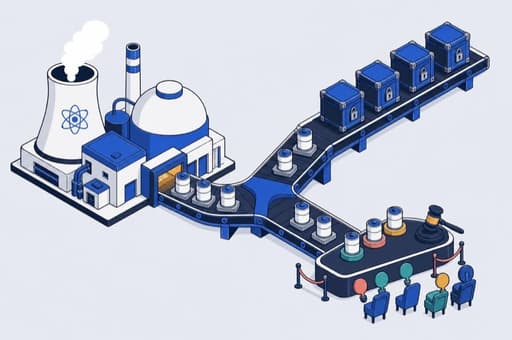
A small, less predictable group led by the Millstone nuclear plant, plus contracted solar, renewable gas and an offshore-wind vessel. About 55% of Millstone’s output is fixed through late 2029; the rest moves with New England power prices.
Competes with Seabrook Station (NextEra Energy Resources) · CPV Towantic Energy Center (Competitive Power Ventures)
In plain English
Not every unit of Dominion electricity is sold through a local utility bill. Contracted Energy owns power-producing assets outside that protected model, led by most of Connecticut’s Millstone nuclear station, and sells their output through contracts or the regional market.
Its cash resembles a farm selling part of its harvest ahead of time and taking the day’s price for the rest. Connecticut customers buy a fixed block of Millstone power, giving Dominion some visibility, while the remaining output depends more directly on market prices. Plant availability, contract renewals and production from the smaller renewable-gas and solar holdings decide how dependable that income is.


 Dominion Energy VirginiaThe main engine sells electricity across Virginia and northeastern North Carolina. It produced $11.843 billion of fiscal 2025 revenue; watch whether surging demand from giant computing sites turns approved construction into customer bills on schedule.
The main engine sells electricity across Virginia and northeastern North Carolina. It produced $11.843 billion of fiscal 2025 revenue; watch whether surging demand from giant computing sites turns approved construction into customer bills on schedule.
In plain English
Start with the monthly power bill. Dominion Energy Virginia runs power plants, high-voltage lines and local wires, then sells the electricity that reaches homes, offices and unusually power-hungry customers across its territory. State regulators decide what it may charge.
The business works like a toll road with a supervised toll: Dominion builds or upgrades the system, asks regulators to approve the cost, and recovers that cost plus an allowed profit through future bills. Customers keep paying because electricity is essential and the local network is the route that reaches them.
Competes with Appalachian Power electric service (American Electric Power) · Old Dominion Power service (Kentucky Utilities/PPL)
 Rate Schedule GS-5A special billing plan protects existing customers when enormous new electricity users arrive. By May 2026, power requests topped 50 gigawatts, or 50 billion watts, including 10.4 gigawatts covered by signed deals to connect; requests still are not sales.
A special billing plan protects existing customers when enormous new electricity users arrive. By May 2026, power requests topped 50 gigawatts, or 50 billion watts, including 10.4 gigawatts covered by signed deals to connect; requests still are not sales.
In plain English
A data center — a warehouse full of computers — can consume as much electricity as a town. GS-5 is the set of billing rules for qualifying new giants that want Dominion Energy Virginia to build the wires and power supply needed to connect them.
For contracts beginning in 2027, customers generally promise to stay for fourteen years, pay for at least eighty-five percent of reserved delivery capacity and post financial security that can reach sixty percent. That resembles reserving an entire banquet hall: the bill still comes if half the seats stay empty. Dominion earns through the wider Virginia utility, not from an upfront deposit.
Competes with Data Center Tariff (AEP Ohio) · Large Load Customer Protections (Georgia Power)
 Coastal Virginia Offshore Wind Commercial ProjectA huge offshore wind farm that Virginia customers fund through a dedicated bill charge. First power arrived in March 2026, but work to bring every turbine online now runs through 2027; the watchpoint is delay-driven cost pressure.
A huge offshore wind farm that Virginia customers fund through a dedicated bill charge. First power arrived in March 2026, but work to bring every turbine online now runs through 2027; the watchpoint is delay-driven cost pressure.
In plain English
Far off Virginia Beach, Dominion is planting rows of wind turbines in the ocean and linking them back to the land with underwater cables. The full commercial project is meant to become part of the Virginia electric system rather than sell power freely to the highest bidder.
Virginia customers pay approved project costs and Dominion’s allowed profit through a separate charge on their bills. Stonepeak, an infrastructure investor, has half the financial stake and funds half of construction, while Dominion operates the project. That sharing eases Dominion’s funding burden, but court orders, permits, weather and installation timing can still make the build costlier.
Competes with Vineyard Wind 1 (Avangrid/CIP) · Revolution Wind (Ørsted/Skyborn)
 Dominion Energy South CarolinaThe quieter second engine supplies both electricity and gas in South Carolina. It produced $3.568 billion of fiscal 2025 revenue; steady customer bills matter more here than the faster expansion centered in Virginia.
The quieter second engine supplies both electricity and gas in South Carolina. It produced $3.568 billion of fiscal 2025 revenue; steady customer bills matter more here than the faster expansion centered in Virginia.
In plain English
South Carolina is the quieter second engine. This business keeps lights on and sends gas through local pipes for roughly eight hundred thousand electric accounts and half a million gas accounts. Some customers buy both, so those counts are not the same as unique households.
Money arrives through regular usage bills. Regulators approve prices designed to cover fuel, power plants, wires, gas pipelines, daily operations and a permitted profit on the infrastructure. Think of it as two essential delivery systems under one roof: demand changes with weather and growth, while storms, fuel prices and plant outages can change what service costs before bills catch up.
Competes with Duke Energy Carolinas electric service (Duke Energy) · Duke Energy Progress electric service (Duke Energy)
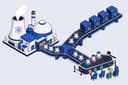 Contracted EnergyA small, less predictable group led by the Millstone nuclear plant, plus contracted solar, renewable gas and an offshore-wind vessel. About 55% of Millstone’s output is fixed through late 2029; the rest moves with New England power prices.
A small, less predictable group led by the Millstone nuclear plant, plus contracted solar, renewable gas and an offshore-wind vessel. About 55% of Millstone’s output is fixed through late 2029; the rest moves with New England power prices.
In plain English
Not every unit of Dominion electricity is sold through a local utility bill. Contracted Energy owns power-producing assets outside that protected model, led by most of Connecticut’s Millstone nuclear station, and sells their output through contracts or the regional market.
Its cash resembles a farm selling part of its harvest ahead of time and taking the day’s price for the rest. Connecticut customers buy a fixed block of Millstone power, giving Dominion some visibility, while the remaining output depends more directly on market prices. Plant availability, contract renewals and production from the smaller renewable-gas and solar holdings decide how dependable that income is.
Competes with Seabrook Station (NextEra Energy Resources) · CPV Towantic Energy Center (Competitive Power Ventures)
Named in filings, launches and programs
- Dominion Energy North CarolinaBrandThe northeastern North Carolina portion of Virginia Power’s electric service, included within the Virginia utility.
- Electric TransmissionServiceVirginia’s high-voltage network and a major destination for spending driven by new data-center demand.
- Surry and North Anna Nuclear License ExtensionsEcosystemWork to keep Virginia’s regulated nuclear units operating longer, with approved costs recovered through customer bills.
- North Anna SMR Feasibility ProgramProduct · Pre-revenueDominion and Amazon are exploring a smaller nuclear-reactor project; the agreement studies commercial and funding options, not a construction commitment.
- Solar Generation FleetProduct lineOperating across five states, with a larger set of possible additions spanning the regulated and contracted businesses.
- Battery Storage PortfolioProduct line · RampingA small operating base with much larger expansion possibilities and roughly $2 billion in the latest capital plan.
- Renewable Natural GasProduct lineContracted Energy assets that suffered an $820 million write-down after lower production and weaker assumptions.
- CharybdisService · RampingAn offshore-wind installation vessel working first on the coastal Virginia wind farm, then intended for outside customers; lower expected daily rental prices hurt its outlook.
- Long-Term Contracted SolarProduct lineSolar facilities selling power under contracts; some sites took a $78 million write-down in the second quarter of 2026.
- Chesterfield Energy Reliability CenterEcosystem · AnnouncedA proposed Virginia gas power plant that still needs approvals.
- Urquhart Replacement Combustion TurbineEcosystem · AnnouncedA roughly $395 million South Carolina generation project targeted for service by the end of 2028.
- CVOW Pilot ProjectEcosystemTwo offshore turbines operating since 2021, separate from the much larger commercial wind project.
Dominion Energy North CarolinaBrand
The northeastern North Carolina portion of Virginia Power’s electric service, included within the Virginia utility.
Electric TransmissionService
Virginia’s high-voltage network and a major destination for spending driven by new data-center demand.
Surry and North Anna Nuclear License ExtensionsEcosystem
Work to keep Virginia’s regulated nuclear units operating longer, with approved costs recovered through customer bills.
North Anna SMR Feasibility ProgramProduct · Pre-revenue
Dominion and Amazon are exploring a smaller nuclear-reactor project; the agreement studies commercial and funding options, not a construction commitment.
Solar Generation FleetProduct line
Operating across five states, with a larger set of possible additions spanning the regulated and contracted businesses.
Battery Storage PortfolioProduct line · Ramping
A small operating base with much larger expansion possibilities and roughly $2 billion in the latest capital plan.
Renewable Natural GasProduct line
Contracted Energy assets that suffered an $820 million write-down after lower production and weaker assumptions.
CharybdisService · Ramping
An offshore-wind installation vessel working first on the coastal Virginia wind farm, then intended for outside customers; lower expected daily rental prices hurt its outlook.
Long-Term Contracted SolarProduct line
Solar facilities selling power under contracts; some sites took a $78 million write-down in the second quarter of 2026.
Chesterfield Energy Reliability CenterEcosystem · Announced
A proposed Virginia gas power plant that still needs approvals.
Urquhart Replacement Combustion TurbineEcosystem · Announced
A roughly $395 million South Carolina generation project targeted for service by the end of 2028.
CVOW Pilot ProjectEcosystem
Two offshore turbines operating since 2021, separate from the much larger commercial wind project.