
Quest Diagnostics (DGX)
Provides clinical testing, pathology, and laboratory services through a North American network.
Something off on this page? Send us feedback.
Quest Diagnostics is the plumbing behind blood tests. Doctors, hospitals and dialysis clinics send it samples; it runs the tests at scale and bills an insurer, a government program or the patient directly. Almost all the money is that same one-test-at-a-time work, priced by someone else. So the company buys and contracts its way to more volume, while pushing pricier tests to lift what each sample earns.
Item facts: FY2025 · year ended Dec 31, 2025, from filings, earnings calls and company pages.
Judgment weights, not filed revenue
The band summarizes business focus and direction. ~ marks estimates.
7 in detail · 13 more below
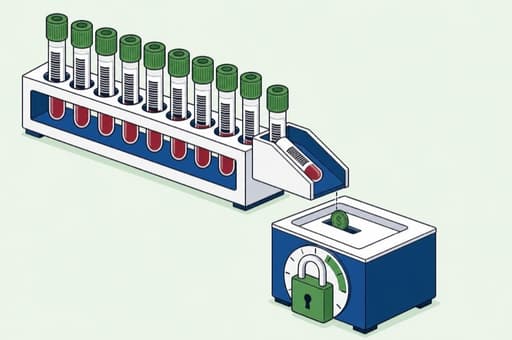
Testing for doctors' offices
The historic core: blood and urine work ordered by office-based physicians, roughly 60 cents of every revenue dollar. Growth depends on being inside insurers' networks — and on Medicare, which is scheduled to cut lab payment rates by up to 15% from January 2027.
Competes with Diagnostics Laboratories (Labcorp) · In-house and outreach hospital labs (U.S. hospital systems)
In plain English
Your doctor ticks a few boxes on an order form, you roll up a sleeve at a walk-in draw site or in the office itself, and the sample is routed to a Quest lab that runs it alongside thousands of others.
Quest then bills whoever is responsible — an insurance company, Medicare, the doctor's practice, or you. It cannot set the price: rates come down from government schedules and network contracts. So the game is volume. Fill the machines, keep the cost per sample down, and get invited into more insurers' networks, because a health plan that leaves Quest out sends its members somewhere else.
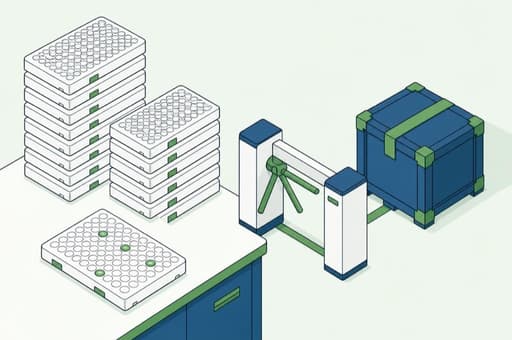
AD-Detect and Haystack MRD
Two newer tests sold through the doctor channel: a blood check for the protein signs of Alzheimer's, and one for cancer traces left after surgery. AD-Detect more than doubled in a year off a small base; Medicare broadly pays for neither yet.
Competes with pTau-217/Beta Amyloid 42 Ratio (Labcorp) · PrecivityAD2 (C2N Diagnostics) · Signatera (Natera)
In plain English
A tube of blood, read for protein signals linked to Alzheimer's disease — that is AD-Detect. Quest layers on test kits cleared by regulators from Fujirebio and Roche, two makers of laboratory chemicals, and runs them across its own network.
Haystack MRD works the other way round. After a tumour is cut out, it hunts in the blood for stray fragments of that particular tumour's DNA, so a doctor learns early whether the cancer is coming back. New York cleared it in June 2026, which opened all fifty states. Each test earns a fee once somebody pays for it — and that is the catch, because insurers mostly have not agreed to.
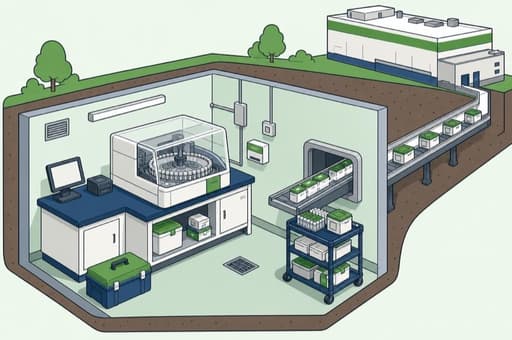
Hospital reference testing and Co-Lab Solutions
Two things sold to the same buyer: hard tests a hospital cannot run itself, and running the hospital's own lab for it. Roughly a sixth of revenue, growing through the second route while the price it can charge per specialist test stays competitive and slightly soft.
Competes with Health system lab management and outreach deals (Labcorp) · In-house hospital labs (U.S. hospital systems)
In plain English
Every hospital has a lab somewhere in the building, and many of them strain: pathology staff are hard to hire, and the unusual tests turn up too rarely to justify owning the machine. Quest sells into both problems.
The simple half is piecework — the hospital sends over the odd specimen and pays per test. The bigger half, branded Co-Lab, is closer to hiring a contractor to run your kitchen: Quest manages the hospital's laboratories, supplies the rare testing and the analytics, and handles purchasing and blood supply. The hospital keeps its labs. Quest keeps the volume, without paying to buy anything.
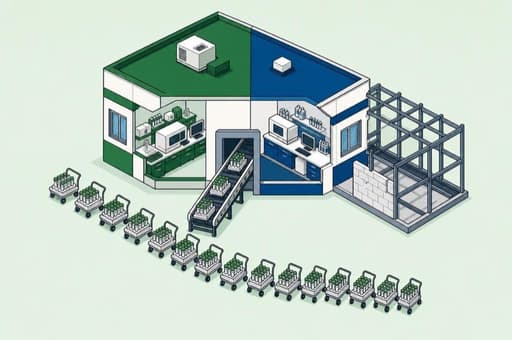
Diagnostic Lab of Michigan
Quest's largest lab-management deal: a jointly owned company with Michigan's Corewell Health, completed January 2026, putting Quest in charge of all 21 of its hospital labs. Worth roughly $250 million of added revenue in 2026, at thin margins to start.
Competes with Hospital lab management agreements (Labcorp) · In-house lab operation (Corewell Health)
In plain English
Corewell Health runs 21 hospitals in Michigan. Rather than keep operating its own laboratories, it folded them into a company owned jointly with Quest — Quest holds fifty-one percent and runs the day-to-day, Corewell holds the rest.
What Quest gains is hospital work it did not have before: testing, analytics, purchasing and blood supply across those hospitals, plus outpatient draws around the region. Margins start low and are meant to climb toward what Quest's other lab-management arrangements earn. A bigger Michigan lab is planned for 2027, and a California health system has since signed a similar agreement.
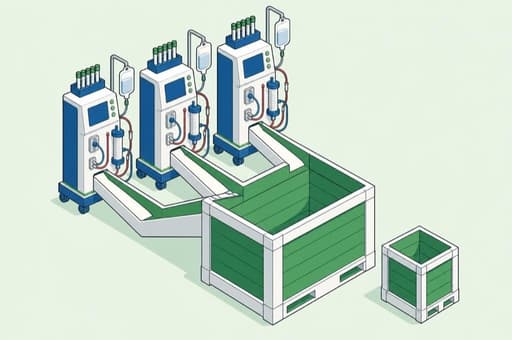
Fresenius renal testing program
Quest bought Fresenius's kidney-testing lab and agreed to test for its U.S. dialysis centres — about 200,000 patients on regular panels, worth roughly two percent of revenue in 2026. Fresenius and Corewell are the largest single customers at about two percent each; no customer reaches ten percent.
Competes with DaVita Labs (DaVita) · Dialysis clinic lab contracts (Labcorp)
In plain English
People on dialysis have their blood checked on a schedule, month after month. Predictable work, and a lot of it. Fresenius, a dialysis-centre operator, used to run that testing in a laboratory it owned; in 2025 it sold those testing assets to Quest and signed Quest up to do the work instead.
Each test is priced low. But the clinics do their own blood draws, and the samples pour into machines Quest pays for either way, which is why management still calls the work profitable. Quest has since sold the same service to independent dialysis clinics — one contract taught it a new kind of customer.
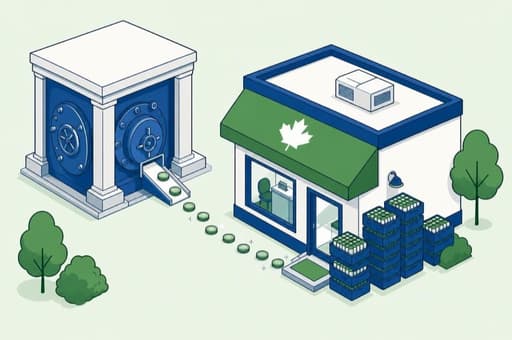
LifeLabs
Canada's largest community lab network, bought in 2024 and still trading under its own name in Ontario, British Columbia and Saskatchewan. About six percent of revenue and over a hundred million tests a year, mostly paid by provincial health plans.
Competes with Dynacare (Labcorp) · Provincial public lab networks (Alberta Precision Laboratories)
In plain English
Think of a chain of neighbourhood collection centres where Canadians go to give a blood or urine sample, with the laboratories sitting behind them. That is LifeLabs, bought in 2024 and then left largely alone — same brand, same Canadian management, about 5,700 staff.
The bill mostly goes to a provincial government rather than a private insurer. Volumes are huge and the price per test sits well below what the same work earns in the United States, so buying it pulled Quest's average revenue per sample down even while the American business was pushing its own up. How fast it grows is set by public budgets.
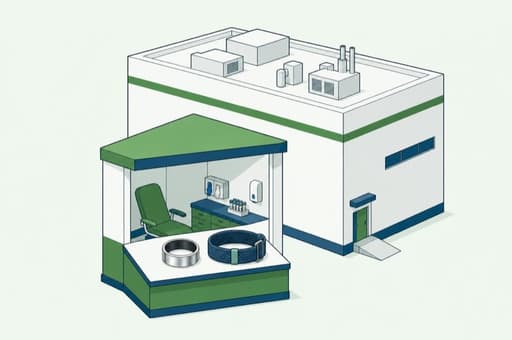
questhealth.com and wearable partners
Tests people buy for themselves, no doctor in the loop — nearly $250 million in 2025, growing above the twenty-percent pace management had set out. The bigger idea is being the lab behind other brands: WHOOP, Oura, Humanity, Apple's Health app and Function Health all order through Quest.
Competes with Labcorp OnDemand (Labcorp) · Function Health membership (Function Health)
In plain English
No doctor, no referral: you pick a test on a website, pay with a card, walk into one of Quest's roughly 2,400 draw sites, and get the result yourself. More than 150 tests sit on that menu.
The interesting part is who else sells them. Makers of fitness wearables — WHOOP's wrist band, the Oura ring — and health-membership services such as Function Health put bloodwork in front of their own users, and let Quest do the drawing and the testing underneath. They own the customer; Quest owns the needle and the machine, and is paid per test either way.


 Testing for doctors' officesThe historic core: blood and urine work ordered by office-based physicians, roughly 60 cents of every revenue dollar. Growth depends on being inside insurers' networks — and on Medicare, which is scheduled to cut lab payment rates by up to 15% from January 2027.
The historic core: blood and urine work ordered by office-based physicians, roughly 60 cents of every revenue dollar. Growth depends on being inside insurers' networks — and on Medicare, which is scheduled to cut lab payment rates by up to 15% from January 2027.
In plain English
Your doctor ticks a few boxes on an order form, you roll up a sleeve at a walk-in draw site or in the office itself, and the sample is routed to a Quest lab that runs it alongside thousands of others.
Quest then bills whoever is responsible — an insurance company, Medicare, the doctor's practice, or you. It cannot set the price: rates come down from government schedules and network contracts. So the game is volume. Fill the machines, keep the cost per sample down, and get invited into more insurers' networks, because a health plan that leaves Quest out sends its members somewhere else.
Competes with Diagnostics Laboratories (Labcorp) · In-house and outreach hospital labs (U.S. hospital systems)
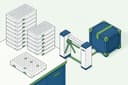 AD-Detect and Haystack MRDTwo newer tests sold through the doctor channel: a blood check for the protein signs of Alzheimer's, and one for cancer traces left after surgery. AD-Detect more than doubled in a year off a small base; Medicare broadly pays for neither yet.
Two newer tests sold through the doctor channel: a blood check for the protein signs of Alzheimer's, and one for cancer traces left after surgery. AD-Detect more than doubled in a year off a small base; Medicare broadly pays for neither yet.
In plain English
A tube of blood, read for protein signals linked to Alzheimer's disease — that is AD-Detect. Quest layers on test kits cleared by regulators from Fujirebio and Roche, two makers of laboratory chemicals, and runs them across its own network.
Haystack MRD works the other way round. After a tumour is cut out, it hunts in the blood for stray fragments of that particular tumour's DNA, so a doctor learns early whether the cancer is coming back. New York cleared it in June 2026, which opened all fifty states. Each test earns a fee once somebody pays for it — and that is the catch, because insurers mostly have not agreed to.
Competes with pTau-217/Beta Amyloid 42 Ratio (Labcorp) · PrecivityAD2 (C2N Diagnostics) · Signatera (Natera)
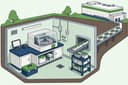 Hospital reference testing and Co-Lab SolutionsTwo things sold to the same buyer: hard tests a hospital cannot run itself, and running the hospital's own lab for it. Roughly a sixth of revenue, growing through the second route while the price it can charge per specialist test stays competitive and slightly soft.
Two things sold to the same buyer: hard tests a hospital cannot run itself, and running the hospital's own lab for it. Roughly a sixth of revenue, growing through the second route while the price it can charge per specialist test stays competitive and slightly soft.
In plain English
Every hospital has a lab somewhere in the building, and many of them strain: pathology staff are hard to hire, and the unusual tests turn up too rarely to justify owning the machine. Quest sells into both problems.
The simple half is piecework — the hospital sends over the odd specimen and pays per test. The bigger half, branded Co-Lab, is closer to hiring a contractor to run your kitchen: Quest manages the hospital's laboratories, supplies the rare testing and the analytics, and handles purchasing and blood supply. The hospital keeps its labs. Quest keeps the volume, without paying to buy anything.
Competes with Health system lab management and outreach deals (Labcorp) · In-house hospital labs (U.S. hospital systems)
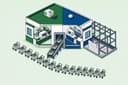 Diagnostic Lab of MichiganQuest's largest lab-management deal: a jointly owned company with Michigan's Corewell Health, completed January 2026, putting Quest in charge of all 21 of its hospital labs. Worth roughly $250 million of added revenue in 2026, at thin margins to start.
Quest's largest lab-management deal: a jointly owned company with Michigan's Corewell Health, completed January 2026, putting Quest in charge of all 21 of its hospital labs. Worth roughly $250 million of added revenue in 2026, at thin margins to start.
In plain English
Corewell Health runs 21 hospitals in Michigan. Rather than keep operating its own laboratories, it folded them into a company owned jointly with Quest — Quest holds fifty-one percent and runs the day-to-day, Corewell holds the rest.
What Quest gains is hospital work it did not have before: testing, analytics, purchasing and blood supply across those hospitals, plus outpatient draws around the region. Margins start low and are meant to climb toward what Quest's other lab-management arrangements earn. A bigger Michigan lab is planned for 2027, and a California health system has since signed a similar agreement.
Competes with Hospital lab management agreements (Labcorp) · In-house lab operation (Corewell Health)
 Fresenius renal testing programQuest bought Fresenius's kidney-testing lab and agreed to test for its U.S. dialysis centres — about 200,000 patients on regular panels, worth roughly two percent of revenue in 2026. Fresenius and Corewell are the largest single customers at about two percent each; no customer reaches ten percent.
Quest bought Fresenius's kidney-testing lab and agreed to test for its U.S. dialysis centres — about 200,000 patients on regular panels, worth roughly two percent of revenue in 2026. Fresenius and Corewell are the largest single customers at about two percent each; no customer reaches ten percent.
In plain English
People on dialysis have their blood checked on a schedule, month after month. Predictable work, and a lot of it. Fresenius, a dialysis-centre operator, used to run that testing in a laboratory it owned; in 2025 it sold those testing assets to Quest and signed Quest up to do the work instead.
Each test is priced low. But the clinics do their own blood draws, and the samples pour into machines Quest pays for either way, which is why management still calls the work profitable. Quest has since sold the same service to independent dialysis clinics — one contract taught it a new kind of customer.
Competes with DaVita Labs (DaVita) · Dialysis clinic lab contracts (Labcorp)
 LifeLabsCanada's largest community lab network, bought in 2024 and still trading under its own name in Ontario, British Columbia and Saskatchewan. About six percent of revenue and over a hundred million tests a year, mostly paid by provincial health plans.
Canada's largest community lab network, bought in 2024 and still trading under its own name in Ontario, British Columbia and Saskatchewan. About six percent of revenue and over a hundred million tests a year, mostly paid by provincial health plans.
In plain English
Think of a chain of neighbourhood collection centres where Canadians go to give a blood or urine sample, with the laboratories sitting behind them. That is LifeLabs, bought in 2024 and then left largely alone — same brand, same Canadian management, about 5,700 staff.
The bill mostly goes to a provincial government rather than a private insurer. Volumes are huge and the price per test sits well below what the same work earns in the United States, so buying it pulled Quest's average revenue per sample down even while the American business was pushing its own up. How fast it grows is set by public budgets.
Competes with Dynacare (Labcorp) · Provincial public lab networks (Alberta Precision Laboratories)
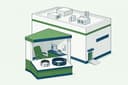 questhealth.com and wearable partnersTests people buy for themselves, no doctor in the loop — nearly $250 million in 2025, growing above the twenty-percent pace management had set out. The bigger idea is being the lab behind other brands: WHOOP, Oura, Humanity, Apple's Health app and Function Health all order through Quest.
Tests people buy for themselves, no doctor in the loop — nearly $250 million in 2025, growing above the twenty-percent pace management had set out. The bigger idea is being the lab behind other brands: WHOOP, Oura, Humanity, Apple's Health app and Function Health all order through Quest.
In plain English
No doctor, no referral: you pick a test on a website, pay with a card, walk into one of Quest's roughly 2,400 draw sites, and get the result yourself. More than 150 tests sit on that menu.
The interesting part is who else sells them. Makers of fitness wearables — WHOOP's wrist band, the Oura ring — and health-membership services such as Function Health put bloodwork in front of their own users, and let Quest do the drawing and the testing underneath. They own the customer; Quest owns the needle and the machine, and is paid per test either way.
Competes with Labcorp OnDemand (Labcorp) · Function Health membership (Function Health)
Named in filings, launches and programs
- Advanced Diagnostics (five key clinical areas)Product line · RampingThe pricier specialist layer — brain health, cancer, autoimmune, hormones, women's health — roughly a sixth of testing revenue and the main lever on price per sample.
- Cardiometabolic, Endocrine and WellnessProduct lineHeart, cholesterol, diabetes and hormone panels — everyday specialist testing Quest markets as a growth area.
- Women's and Reproductive HealthProduct linePregnancy, fertility and women's health testing; one of the growth areas management points to on every quarterly call.
- Infectious Diseases and ImmunologyProduct lineTesting for infections and immune-system disorders, one of the six clinical test families Quest names.
- Drug Monitoring and ToxicologyProduct lineWorkplace and court-ordered drug testing, plus checking that patients are taking prescribed medicines correctly.
- AmeriPathBrandThe name Quest uses for examining tissue taken in surgery and biopsies.
- Dermpath DiagnosticsBrandSkin-sample pathology, sold to dermatologists under its own name.
- ExamOneBrandMedical exams and testing for life-insurance applications; Quest calls it the largest such provider in North America.
- Quanum Enterprise Content SolutionsPlatformSoftware for handling healthcare records and documents; with ExamOne it makes up the roughly two percent of revenue that is not lab testing.
- Health-plan network accessCustomer programBeing in-network decides who may send work: Elevance renewed from 2025, plus Sentara and UnitedHealthcare's preferred lab network.
- Hospital outreach lab acquisitions, 2024ServiceOutpatient lab books bought from hospital systems in 2024 — Allina Health, OhioHealth, University Hospitals — plus three New York physician-group labs.
- Life sciences and data analyticsService · RampingSelling testing services and data to drug developers and researchers; named as a growth area, with no revenue figure given.
- Project NovaProduct · AnnouncedA rebuild of how orders come in and bills go out, with Epic as technology partner — a cost on 2026 margins before any payoff.
Advanced Diagnostics (five key clinical areas)Product line · Ramping
The pricier specialist layer — brain health, cancer, autoimmune, hormones, women's health — roughly a sixth of testing revenue and the main lever on price per sample.
Cardiometabolic, Endocrine and WellnessProduct line
Heart, cholesterol, diabetes and hormone panels — everyday specialist testing Quest markets as a growth area.
Women's and Reproductive HealthProduct line
Pregnancy, fertility and women's health testing; one of the growth areas management points to on every quarterly call.
Infectious Diseases and ImmunologyProduct line
Testing for infections and immune-system disorders, one of the six clinical test families Quest names.
Drug Monitoring and ToxicologyProduct line
Workplace and court-ordered drug testing, plus checking that patients are taking prescribed medicines correctly.
AmeriPathBrand
The name Quest uses for examining tissue taken in surgery and biopsies.
Dermpath DiagnosticsBrand
Skin-sample pathology, sold to dermatologists under its own name.
ExamOneBrand
Medical exams and testing for life-insurance applications; Quest calls it the largest such provider in North America.
Quanum Enterprise Content SolutionsPlatform
Software for handling healthcare records and documents; with ExamOne it makes up the roughly two percent of revenue that is not lab testing.
Health-plan network accessCustomer program
Being in-network decides who may send work: Elevance renewed from 2025, plus Sentara and UnitedHealthcare's preferred lab network.
Hospital outreach lab acquisitions, 2024Service
Outpatient lab books bought from hospital systems in 2024 — Allina Health, OhioHealth, University Hospitals — plus three New York physician-group labs.
Life sciences and data analyticsService · Ramping
Selling testing services and data to drug developers and researchers; named as a growth area, with no revenue figure given.
Project NovaProduct · Announced
A rebuild of how orders come in and bills go out, with Epic as technology partner — a cost on 2026 margins before any payoff.