
D.R. Horton (DHI)
Builds US homes while developing lots, rental communities, and buyer financing services.
Something off on this page? Send us feedback.
D.R. Horton builds houses before anyone has bought them, aimed at families stepping onto the first rung, and sells them one closing at a time. That single trade is almost the whole company. Around it sit a lot developer, an in-house lender and an arm that builds rental communities for landlords. With borrowing costs high, it is paying more and more to get buyers over the line, and margins keep thinning.
Item facts: FY2025 · year ended Sept 30, 2025, from filings, earnings calls and company pages.
Judgment weights, not filed revenue
The band summarizes business focus and direction. ~ marks estimates.
6 in detail · 9 more below
Homebuilding
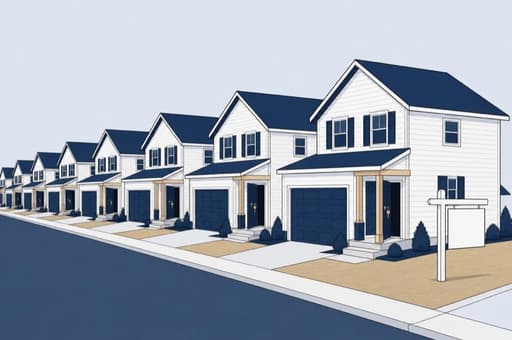
The house machine: 84,863 homes closed in FY2025 at an average price of $370,400, across 126 markets in 36 states. Watch what it costs to win each buyer — lately around a tenth of revenue, mostly payments to hold mortgage rates down.
Competes with Homebuilding (Lennar) · Homebuilding (PulteGroup) · Ryan Homes (NVR)
In plain English
Most builders wait for a signed contract before they pour a foundation. D.R. Horton works the other way round: it puts houses up first and finds owners after, so a family can walk into one that already exists instead of waiting for one to be built.
Money arrives one closing at a time — house price in, land and lumber and labour out. Nearly all of the company's revenue comes from that single trade, repeated tens of thousands of times a year, at prices well below what the average new American home costs. The margin on it has narrowed three years running, because winning the buyer now takes a bigger cash sweetener.
Express Series
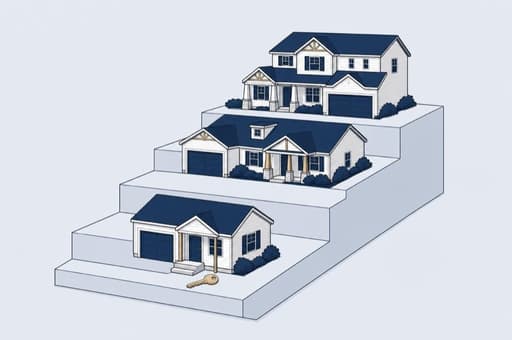
The entry-level line for first-time buyers — the affordability the whole company rests on. About two-thirds of the buyers its lender financed were buying a first home. Watch cancellations: failing to qualify for a loan is the top reason deals fall apart.
Competes with Centex (PulteGroup) · Entry-level spec homes (Meritage Homes)
In plain English
The cheapest houses on the lot, priced where someone buying their first home can still reach them. It is the reason the company's average house sells for far less than the average new home in America.
For these buyers the sticker price is not really the question — the monthly payment is. So the sale usually comes with help: the in-house lender writes the loan, and money is spent to hold the interest rate below what the market charges. Across the company, nine in ten buyers who used that lender took such a rate cut. It is a subsidy, and it is what turns a Saturday visit into a closing.
DHI Mortgage
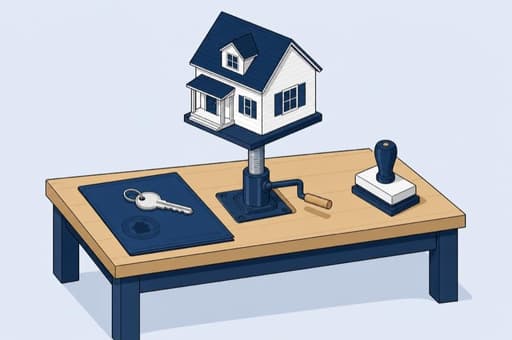
The in-house lender and title offices that close the sale. With the title work it is about a dollar in forty of revenue, yet roughly four in five buyers use it. Its real job is manufacturing affordable monthly payments.
Competes with Lennar Mortgage (Lennar) · Financial Services (PulteGroup)
In plain English
Buy a house from D.R. Horton and the same company would like to write your loan and handle the paperwork that proves the house is legally yours. That is this business: a lender and a set of title offices sitting at the same table as the sales agent.
It rarely keeps the loans. Most are sold on soon after closing, largely to Fannie Mae, Freddie Mac and Ginnie Mae — the government-backed buyers of American mortgages — and the fee is earned there. The quieter service it performs is arranging the rate cuts that make the payment work, and that cost is carried by the housebuilding side, not by this one.
Forestar Group
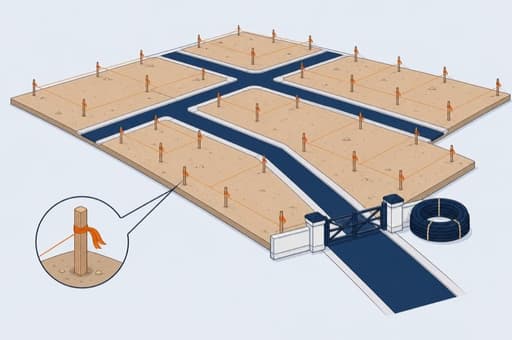
The separately listed lot developer D.R. Horton controls: raw land in, build-ready plots out. It sold 14,240 lots in FY2025, 83% of them to its own parent — a supplier with essentially one customer.
Competes with HOPP'R homesite option platform (Millrose Properties) · Local finished-lot development (Private land developers)
In plain English
Before a house can be built, somebody has to turn a field into a street: get the permissions, lay the water pipes, pave the roads and cut the ground into numbered plots. Forestar does that unglamorous groundwork. D.R. Horton owns most of it while leaving it listed on the stock exchange under its own name.
It sells those finished plots, overwhelmingly to its parent — sales the group strips out so the same dollar is counted once. The appeal for D.R. Horton is control of the pipeline without paying for all the ground up front: most of the plots it can build on are held with contracts to buy later rather than owned outright.
Single-Family Rental
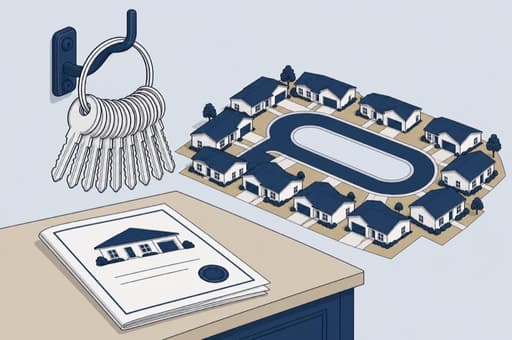
Clusters of houses built to be rented rather than owned, sold in bulk to landlords. It closed 3,460 of them in FY2025, and the model just changed: buyers now take the houses at completion and find the tenants themselves.
Competes with Build-to-rent pipeline (Taylor Morrison) · Build-to-rent pipeline (Empire Group)
In plain English
Same houses, different buyer. Instead of selling one house to one family, the company builds a cluster of them and sells the whole cluster to an investment firm that will rent them out — closer to a bakery selling trays to a café than buns over the counter.
It used to hand over communities already full of tenants; now it delivers the houses as they are finished and lets the buyer do the renting. Revenue on the rental side has dropped sharply this year. A new federal housing law bars big landlords from buying more existing houses while specifically allowing newly built rentals — buyers have started looking again, but little has actually moved yet.
Multi-Family Rental
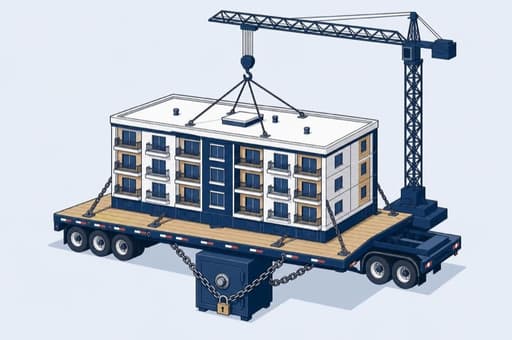
Apartment communities built to be sold whole to big investors. It finished 2,947 units in FY2025, but the cash is slow: roughly $2.7B of apartments sit unsold, and management wants that stock held where it is rather than grown.
Competes with Development platform (Greystar) · Development platform (Alliance Residential) · Multifamily segment (Lennar)
In plain English
An apartment building is a long bet: years of digging, pouring and fitting out before a single rent payment arrives. This arm does all of that, then sells the finished building to an institutional owner in one piece.
Because payday comes only when a building changes hands, revenue lurches about — one three-month stretch brought in over $800M, the next barely a seventh of that. Meanwhile the unsold buildings are the most cash-hungry thing the company owns, and the rental side earns a thinner profit on its sales than the plain house business does.


 HomebuildingThe house machine: 84,863 homes closed in FY2025 at an average price of $370,400, across 126 markets in 36 states. Watch what it costs to win each buyer — lately around a tenth of revenue, mostly payments to hold mortgage rates down.
The house machine: 84,863 homes closed in FY2025 at an average price of $370,400, across 126 markets in 36 states. Watch what it costs to win each buyer — lately around a tenth of revenue, mostly payments to hold mortgage rates down.
In plain English
Most builders wait for a signed contract before they pour a foundation. D.R. Horton works the other way round: it puts houses up first and finds owners after, so a family can walk into one that already exists instead of waiting for one to be built.
Money arrives one closing at a time — house price in, land and lumber and labour out. Nearly all of the company's revenue comes from that single trade, repeated tens of thousands of times a year, at prices well below what the average new American home costs. The margin on it has narrowed three years running, because winning the buyer now takes a bigger cash sweetener.
Competes with Homebuilding (Lennar) · Homebuilding (PulteGroup) · Ryan Homes (NVR)
 Express SeriesThe entry-level line for first-time buyers — the affordability the whole company rests on. About two-thirds of the buyers its lender financed were buying a first home. Watch cancellations: failing to qualify for a loan is the top reason deals fall apart.
The entry-level line for first-time buyers — the affordability the whole company rests on. About two-thirds of the buyers its lender financed were buying a first home. Watch cancellations: failing to qualify for a loan is the top reason deals fall apart.
In plain English
The cheapest houses on the lot, priced where someone buying their first home can still reach them. It is the reason the company's average house sells for far less than the average new home in America.
For these buyers the sticker price is not really the question — the monthly payment is. So the sale usually comes with help: the in-house lender writes the loan, and money is spent to hold the interest rate below what the market charges. Across the company, nine in ten buyers who used that lender took such a rate cut. It is a subsidy, and it is what turns a Saturday visit into a closing.
Competes with Centex (PulteGroup) · Entry-level spec homes (Meritage Homes)
 DHI MortgageThe in-house lender and title offices that close the sale. With the title work it is about a dollar in forty of revenue, yet roughly four in five buyers use it. Its real job is manufacturing affordable monthly payments.
The in-house lender and title offices that close the sale. With the title work it is about a dollar in forty of revenue, yet roughly four in five buyers use it. Its real job is manufacturing affordable monthly payments.
In plain English
Buy a house from D.R. Horton and the same company would like to write your loan and handle the paperwork that proves the house is legally yours. That is this business: a lender and a set of title offices sitting at the same table as the sales agent.
It rarely keeps the loans. Most are sold on soon after closing, largely to Fannie Mae, Freddie Mac and Ginnie Mae — the government-backed buyers of American mortgages — and the fee is earned there. The quieter service it performs is arranging the rate cuts that make the payment work, and that cost is carried by the housebuilding side, not by this one.
Competes with Lennar Mortgage (Lennar) · Financial Services (PulteGroup)
 Forestar GroupThe separately listed lot developer D.R. Horton controls: raw land in, build-ready plots out. It sold 14,240 lots in FY2025, 83% of them to its own parent — a supplier with essentially one customer.
The separately listed lot developer D.R. Horton controls: raw land in, build-ready plots out. It sold 14,240 lots in FY2025, 83% of them to its own parent — a supplier with essentially one customer.
In plain English
Before a house can be built, somebody has to turn a field into a street: get the permissions, lay the water pipes, pave the roads and cut the ground into numbered plots. Forestar does that unglamorous groundwork. D.R. Horton owns most of it while leaving it listed on the stock exchange under its own name.
It sells those finished plots, overwhelmingly to its parent — sales the group strips out so the same dollar is counted once. The appeal for D.R. Horton is control of the pipeline without paying for all the ground up front: most of the plots it can build on are held with contracts to buy later rather than owned outright.
Competes with HOPP'R homesite option platform (Millrose Properties) · Local finished-lot development (Private land developers)
 Single-Family RentalClusters of houses built to be rented rather than owned, sold in bulk to landlords. It closed 3,460 of them in FY2025, and the model just changed: buyers now take the houses at completion and find the tenants themselves.
Clusters of houses built to be rented rather than owned, sold in bulk to landlords. It closed 3,460 of them in FY2025, and the model just changed: buyers now take the houses at completion and find the tenants themselves.
In plain English
Same houses, different buyer. Instead of selling one house to one family, the company builds a cluster of them and sells the whole cluster to an investment firm that will rent them out — closer to a bakery selling trays to a café than buns over the counter.
It used to hand over communities already full of tenants; now it delivers the houses as they are finished and lets the buyer do the renting. Revenue on the rental side has dropped sharply this year. A new federal housing law bars big landlords from buying more existing houses while specifically allowing newly built rentals — buyers have started looking again, but little has actually moved yet.
Competes with Build-to-rent pipeline (Taylor Morrison) · Build-to-rent pipeline (Empire Group)
 Multi-Family RentalApartment communities built to be sold whole to big investors. It finished 2,947 units in FY2025, but the cash is slow: roughly $2.7B of apartments sit unsold, and management wants that stock held where it is rather than grown.
Apartment communities built to be sold whole to big investors. It finished 2,947 units in FY2025, but the cash is slow: roughly $2.7B of apartments sit unsold, and management wants that stock held where it is rather than grown.
In plain English
An apartment building is a long bet: years of digging, pouring and fitting out before a single rent payment arrives. This arm does all of that, then sells the finished building to an institutional owner in one piece.
Because payday comes only when a building changes hands, revenue lurches about — one three-month stretch brought in over $800M, the next barely a seventh of that. Meanwhile the unsold buildings are the most cash-hungry thing the company owns, and the rental side earns a thinner profit on its sales than the plain house business does.
Competes with Development platform (Greystar) · Development platform (Alliance Residential) · Multifamily segment (Lennar)
Named in filings, launches and programs
- Tradition SeriesBrandThe original core line, sold on value and trust, sitting at the middle price points between the starter houses and the fancier ones.
- Emerald SeriesBrandThe top of the range: elevated floor plans and design options for move-up and luxury buyers, reaching above $1,000,000.
- Freedom SeriesBrandLow-maintenance, active-lifestyle communities. Its named rival, Del Webb, earns about four points more margin on that kind of buyer than on entry-level homes.
- Title agency subsidiariesServiceWholly owned title companies that handle the ownership paperwork on each sale, bundled into every closing beside the loan.
- Insurance agency operationsServiceA small insurance agency the company calls immaterial; it is reported outside the lending and title arm's numbers.
- DRH RentalBrandThe funding entity behind the rental communities: a $1.05B borrowing line extended to 2030, with room to expand to $2.0B.
- Forestar third-party lot salesCustomer programPlots sold to builders other than D.R. Horton — 289 in the latest quarter against 530 a year earlier, so outside custom is thinning.
- East regionSegment$6.14B of FY2025 sales and still growing: up about 18% to $1.97B in the latest quarter, overtaking the Southeast.
- Southeast regionSegmentLong the largest region, its revenue fell from $8.88B in FY2024 to $6.97B in FY2025.
Tradition SeriesBrand
The original core line, sold on value and trust, sitting at the middle price points between the starter houses and the fancier ones.
Emerald SeriesBrand
The top of the range: elevated floor plans and design options for move-up and luxury buyers, reaching above $1,000,000.
Freedom SeriesBrand
Low-maintenance, active-lifestyle communities. Its named rival, Del Webb, earns about four points more margin on that kind of buyer than on entry-level homes.
Title agency subsidiariesService
Wholly owned title companies that handle the ownership paperwork on each sale, bundled into every closing beside the loan.
Insurance agency operationsService
A small insurance agency the company calls immaterial; it is reported outside the lending and title arm's numbers.
DRH RentalBrand
The funding entity behind the rental communities: a $1.05B borrowing line extended to 2030, with room to expand to $2.0B.
Forestar third-party lot salesCustomer program
Plots sold to builders other than D.R. Horton — 289 in the latest quarter against 530 a year earlier, so outside custom is thinning.
East regionSegment
$6.14B of FY2025 sales and still growing: up about 18% to $1.97B in the latest quarter, overtaking the Southeast.
Southeast regionSegment
Long the largest region, its revenue fell from $8.88B in FY2024 to $6.97B in FY2025.