
Dow (DOW)
Makes polyethylene, polyurethane materials, industrial intermediates, silicones and coating ingredients.
Something off on this page? Send us feedback.
Dow turns gas and oil into the plastic, foam, silicone and paint chemicals that other factories shape into everyday things. It sells tonnes at whatever the market pays, so the same plants swing from profit to loss. Two losing years brought a dividend cut and plant closures; then a supply shock far away lifted prices. The bet now is cheaper plants, a new Canadian one, and chemistry for cleaning and cooling.
Item facts: FY2025 · year ended Dec 31, 2025, from filings, earnings calls and company pages.
Judgment weights, not filed revenue
The band summarizes business focus and direction. ~ marks estimates.
9 in detail · 15 more below
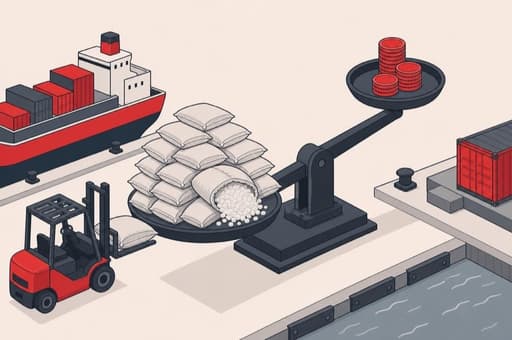
Packaging & Specialty Plastics
Dow's polyethylene arm and its profit engine: pellets that become food wrap, bottles, hygiene products and cable coating. Prices ran more than 40% above a year earlier in the June 2026 quarter after Middle East supply was disrupted — and June's North American price settlement pulls them back.
Competes with Polyethylene resins (LyondellBasell) · Polyethylene (ExxonMobil) · Polyethylene (INEOS)
In plain English
Polyethylene is the most ordinary plastic there is — the stretchy film round a pallet, the milk jug, the coating that keeps a power cable dry. Dow makes it as small pellets and sells them by the truckload to converters, the factories that melt pellets into film, bottles and wire jackets.
No single buyer is big enough to swing Dow's year, so earnings hinge on one gap: what the gas going in costs versus what a tonne of pellets fetches that month. Volume barely moves in a downturn — people still buy food and shampoo. Price moves violently.
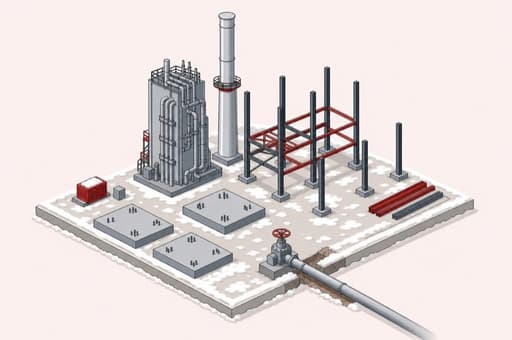
Path2Zero — Fort Saskatchewan, Alberta
Dow's one big project: an ethylene-and-plastics complex in Alberta, delayed two years to a late-2029 first start-up. About 60% of the money is spent, and Dow now guides its returns to the low end.
Competes with Ras Laffan Petrochemical Complex (Chevron Phillips Chemical) · Gulf Coast ethane crackers (ExxonMobil) · Gulf Coast ethane crackers (SABIC)
In plain English
Think of a brand-new factory town in Alberta that takes ethane — a gas that comes up with natural gas — and turns it into the plastic pellets Dow's packaging business sells, while its own operations and the power it uses add no net carbon dioxide.
It earns nothing until it runs, and Dow pushed the first phase out to late 2029 so it starts as older plants around the world are closing, ahead of the next upswing. The ethane comes under a long-term deal with Pembina, a pipeline company. Dow says the finished site will sit among the cheapest in the world to run, while it exits its costliest ones.
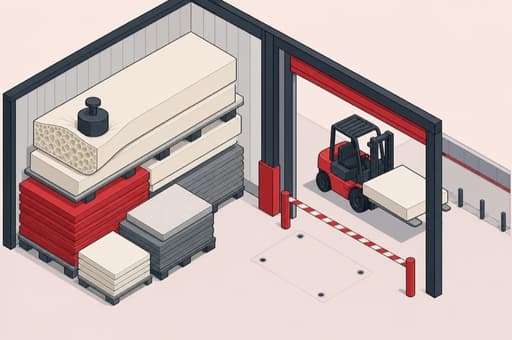
Polyurethanes & Construction Chemicals
Foam and chlorine chemistry: mattress cushion, insulation, car seats, aircraft de-icer, plus chlorine and caustic soda made mostly for Dow's own plants. Dow's weak spot — the division holding it ran a $561M operating loss in 2025, and this is where units are being shut.
Competes with MDI and polyols (Covestro) · Polyurethanes (Huntsman) · MDI and polyols (Wanhua Chemical)
In plain English
Squeeze a mattress and you are squeezing this business. Polyurethane is the chemistry behind foam — bedding, fridge and wall insulation, car seating — and Dow sells the liquid ingredients to the firms that pour and mould it. Beside it sit chlorine and caustic soda, made largely to feed Dow's own plants, and the powders and emulsions that go into building materials.
Demand follows houses, cars and appliances, and building demand has stayed soft while Chinese producers added a wave of competing capacity. So Dow is shrinking the business on purpose: the upstream propylene oxide unit at Freeport closed at the end of 2025, and a chlorine and vinyl unit at Böhlen follows in 2027.
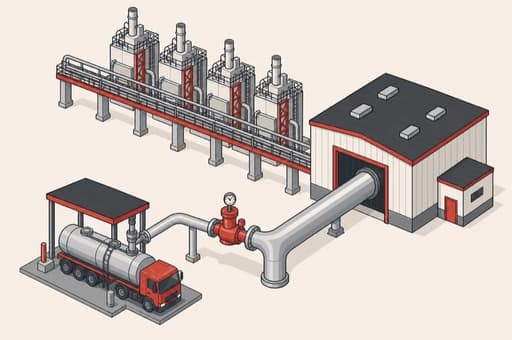
Hydrocarbons & Energy
The furnaces that crack gas into ethylene and propylene, plus the power and steam Dow's sites run on. Most of it moves to Dow's own plants at market prices; what is sold outside is the swing in headline sales. Plants ran at 84% in the June 2026 quarter on planned maintenance.
Competes with Ethylene and olefins (Chevron Phillips Chemical) · Olefins (LyondellBasell) · Olefins (Shell)
In plain English
Before there is plastic there is heat. Dow buys cheap gas liquids — ethane, propane, butane — plus naphtha from oil refining, and cooks them in giant furnaces until the molecules break into ethylene and propylene, the building blocks Dow's other plants start from.
Most of it never leaves the company; it moves internally at the going market price. What is left over — spare ethylene, by-products such as benzene and butadiene, and electricity and steam — is sold outside, which is why this line lurches with energy prices. The advantage it lives on is plain: the gas route into these molecules has been cheaper than the oil-and-naphtha route rivals run on.
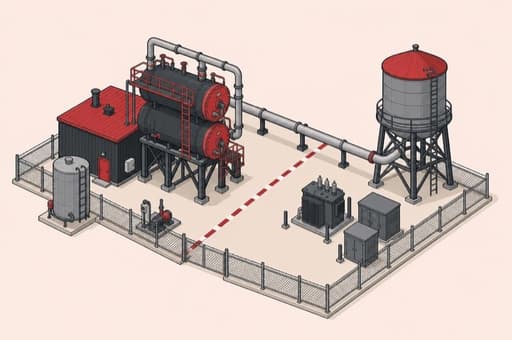
Diamond Infrastructure Solutions
The power, steam, utilities and site services beneath Dow's Texas and Louisiana complexes, carved into a company of its own. Macquarie, an infrastructure investor, took 49% for about $3.0B — cash that plugged a year when Dow spent more than it earned.
Competes with On-site utilities supply (Air Liquide) · On-site utilities supply (Linde) · Infrastructure funds (Brookfield)
In plain English
A big chemical complex needs what a small city needs: electricity, steam, the utilities that feed every building and the crews who keep the pipes working. Dow bundled all of that at its Gulf Coast sites into a separate company, kept control and the job of running it, and sold just under half to Macquarie, an infrastructure investor, for around three billion dollars.
The cash mattered — in 2025 Dow's own operations did not cover its spending. The business itself earns by keeping the lights and the steam on, and it can sell the same services to outside tenants who build next door, like the waste-carbon-dioxide plant at Texas City.
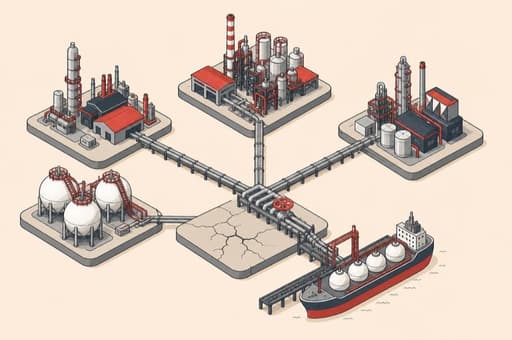
Joint-venture plants — EQUATE, Sadara, SCGC-Dow
Part-owned plants near cheap feedstock in Kuwait, Saudi Arabia and Thailand. They land in profits rather than sales and swing hard: Dow stopped adding Sadara's losses to its books once its share reached $1.4B.
Competes with Olefins and polyethylene (SABIC) · Olefins (Sinopec)
In plain English
Some plants Dow does not own outright — it holds a slice and shares whatever they make with a partner. EQUATE and two sister ventures in Kuwait, Sadara in Saudi Arabia with the oil producer Saudi Aramco, four companies in Thailand with the chemicals group SCGC: all sit close to cheap gas or oil and aim their output at Asia.
None of it counts as Dow's sales. Dow's share of the profit or loss drops straight into earnings, which makes quarters lumpy — a Kuwaiti maintenance shutdown plus weaker licensing income was about a $75M knock in one quarter. Sadara is the sore one, and Aramco is reviewing what to do with it.
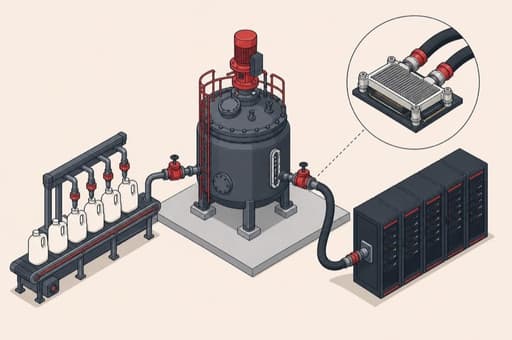
Industrial Solutions
The chemistry behind detergents, aircraft de-icer, carbon-capture fluids and data-centre coolant. Dow's clearest growth line: capacity for cleaning-product ingredients is 70% above 2020, aimed at end-markets Dow says grow 10–15% a year.
Competes with Surfactants and alkoxylates (BASF) · Surfactants and alkoxylates (Sasol) · Glycol ethers and solvents (Eastman)
In plain English
Soap is the easy way in. When a cleaner lifts grease off a plate, the molecule doing the work grabs the grease at one end and the water at the other — and that molecule is what Dow sells here, by the tanker, to the brands that bottle detergents and shampoos.
The same family of chemistry becomes the fluid that de-ices aircraft, the liquid that strips carbon dioxide out of a gas stream, and the coolant that carries heat away from computer chips. That last one is fresh money: Dow is working with the companies building data centres on a coolant made to run right against the chip.
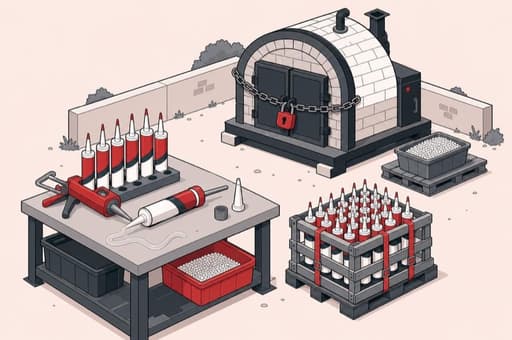
Consumer Solutions
Dow's silicones: sealants, rubbery elastomers, non-stick coatings and pastes that pull heat off electronics, sold into personal care, cars and devices. Dow shut the raw-siloxane plant at Barry in the UK — roughly a quarter of Europe's capacity for that material — to keep the profitable end.
Competes with Silicones (Wacker Chemie) · Silicones (Shin-Etsu Chemical) · Silicones (Momentive)
In plain English
Silicone is the rubbery, heat-proof stuff in a bathroom sealant tube, a baking mat, a car gasket. Dow makes the silicon metal it starts from, turns that into the raw silicone material, then formulates it into finished products: sealants, stretchy elastomers, slippery coatings that let a label peel off its backing, pastes that move heat off chips.
The raw material is where the money bled out — its price fell right through 2025. So Dow closed the plant at Barry in the UK that made it, about a quarter of Europe's capacity, while keeping enough upstream supply to feed its own formulating lines. The goal is to sell the finished products, where Dow targets returns above twenty percent.
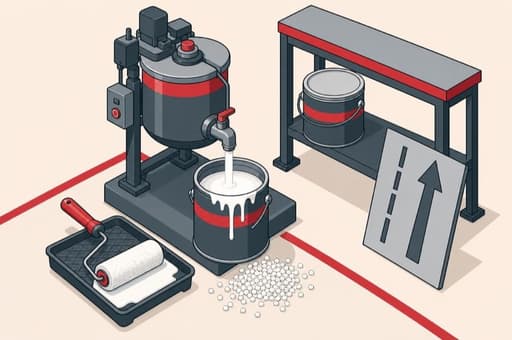
Coatings & Performance Monomers
The binder that makes paint stick, plus the acrylic chemicals it is built from, sold to paint and adhesive makers. Housing keeps a lid on volume; both price and volume rose in the June 2026 quarter. Growth comes from newer formulations, not more tins.
Competes with Acrylic monomers and binders (Arkema) · Acrylic emulsions (BASF) · Acrylics and derivatives (Celanese)
In plain English
Open a tin of wall paint and most of what is inside is not colour — it is a milky glue that dries hard and holds the pigment to the wall. Dow makes that glue and the acrylic chemicals it is built from, selling both to paint companies and to makers of adhesives, textiles and personal-care goods.
Sales rise and fall with housing: people repaint when they move or renovate, and US buyers are squeezed on affordability. So the growth, such as it is, comes from selling newer versions — lower-solvent binders, resins for road markings, coatings that let a paper wrapper still be recycled — rather than from shifting more tins.


 Packaging & Specialty PlasticsDow's polyethylene arm and its profit engine: pellets that become food wrap, bottles, hygiene products and cable coating. Prices ran more than 40% above a year earlier in the June 2026 quarter after Middle East supply was disrupted — and June's North American price settlement pulls them back.
Dow's polyethylene arm and its profit engine: pellets that become food wrap, bottles, hygiene products and cable coating. Prices ran more than 40% above a year earlier in the June 2026 quarter after Middle East supply was disrupted — and June's North American price settlement pulls them back.
In plain English
Polyethylene is the most ordinary plastic there is — the stretchy film round a pallet, the milk jug, the coating that keeps a power cable dry. Dow makes it as small pellets and sells them by the truckload to converters, the factories that melt pellets into film, bottles and wire jackets.
No single buyer is big enough to swing Dow's year, so earnings hinge on one gap: what the gas going in costs versus what a tonne of pellets fetches that month. Volume barely moves in a downturn — people still buy food and shampoo. Price moves violently.
Competes with Polyethylene resins (LyondellBasell) · Polyethylene (ExxonMobil) · Polyethylene (INEOS)
 Path2Zero — Fort Saskatchewan, AlbertaDow's one big project: an ethylene-and-plastics complex in Alberta, delayed two years to a late-2029 first start-up. About 60% of the money is spent, and Dow now guides its returns to the low end.
Dow's one big project: an ethylene-and-plastics complex in Alberta, delayed two years to a late-2029 first start-up. About 60% of the money is spent, and Dow now guides its returns to the low end.
In plain English
Think of a brand-new factory town in Alberta that takes ethane — a gas that comes up with natural gas — and turns it into the plastic pellets Dow's packaging business sells, while its own operations and the power it uses add no net carbon dioxide.
It earns nothing until it runs, and Dow pushed the first phase out to late 2029 so it starts as older plants around the world are closing, ahead of the next upswing. The ethane comes under a long-term deal with Pembina, a pipeline company. Dow says the finished site will sit among the cheapest in the world to run, while it exits its costliest ones.
Competes with Ras Laffan Petrochemical Complex (Chevron Phillips Chemical) · Gulf Coast ethane crackers (ExxonMobil) · Gulf Coast ethane crackers (SABIC)
 Polyurethanes & Construction ChemicalsFoam and chlorine chemistry: mattress cushion, insulation, car seats, aircraft de-icer, plus chlorine and caustic soda made mostly for Dow's own plants. Dow's weak spot — the division holding it ran a $561M operating loss in 2025, and this is where units are being shut.
Foam and chlorine chemistry: mattress cushion, insulation, car seats, aircraft de-icer, plus chlorine and caustic soda made mostly for Dow's own plants. Dow's weak spot — the division holding it ran a $561M operating loss in 2025, and this is where units are being shut.
In plain English
Squeeze a mattress and you are squeezing this business. Polyurethane is the chemistry behind foam — bedding, fridge and wall insulation, car seating — and Dow sells the liquid ingredients to the firms that pour and mould it. Beside it sit chlorine and caustic soda, made largely to feed Dow's own plants, and the powders and emulsions that go into building materials.
Demand follows houses, cars and appliances, and building demand has stayed soft while Chinese producers added a wave of competing capacity. So Dow is shrinking the business on purpose: the upstream propylene oxide unit at Freeport closed at the end of 2025, and a chlorine and vinyl unit at Böhlen follows in 2027.
Competes with MDI and polyols (Covestro) · Polyurethanes (Huntsman) · MDI and polyols (Wanhua Chemical)
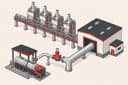 Hydrocarbons & EnergyThe furnaces that crack gas into ethylene and propylene, plus the power and steam Dow's sites run on. Most of it moves to Dow's own plants at market prices; what is sold outside is the swing in headline sales. Plants ran at 84% in the June 2026 quarter on planned maintenance.
The furnaces that crack gas into ethylene and propylene, plus the power and steam Dow's sites run on. Most of it moves to Dow's own plants at market prices; what is sold outside is the swing in headline sales. Plants ran at 84% in the June 2026 quarter on planned maintenance.
In plain English
Before there is plastic there is heat. Dow buys cheap gas liquids — ethane, propane, butane — plus naphtha from oil refining, and cooks them in giant furnaces until the molecules break into ethylene and propylene, the building blocks Dow's other plants start from.
Most of it never leaves the company; it moves internally at the going market price. What is left over — spare ethylene, by-products such as benzene and butadiene, and electricity and steam — is sold outside, which is why this line lurches with energy prices. The advantage it lives on is plain: the gas route into these molecules has been cheaper than the oil-and-naphtha route rivals run on.
Competes with Ethylene and olefins (Chevron Phillips Chemical) · Olefins (LyondellBasell) · Olefins (Shell)
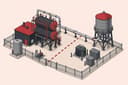 Diamond Infrastructure SolutionsThe power, steam, utilities and site services beneath Dow's Texas and Louisiana complexes, carved into a company of its own. Macquarie, an infrastructure investor, took 49% for about $3.0B — cash that plugged a year when Dow spent more than it earned.
The power, steam, utilities and site services beneath Dow's Texas and Louisiana complexes, carved into a company of its own. Macquarie, an infrastructure investor, took 49% for about $3.0B — cash that plugged a year when Dow spent more than it earned.
In plain English
A big chemical complex needs what a small city needs: electricity, steam, the utilities that feed every building and the crews who keep the pipes working. Dow bundled all of that at its Gulf Coast sites into a separate company, kept control and the job of running it, and sold just under half to Macquarie, an infrastructure investor, for around three billion dollars.
The cash mattered — in 2025 Dow's own operations did not cover its spending. The business itself earns by keeping the lights and the steam on, and it can sell the same services to outside tenants who build next door, like the waste-carbon-dioxide plant at Texas City.
Competes with On-site utilities supply (Air Liquide) · On-site utilities supply (Linde) · Infrastructure funds (Brookfield)
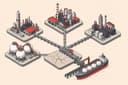 Joint-venture plants — EQUATE, Sadara, SCGC-DowPart-owned plants near cheap feedstock in Kuwait, Saudi Arabia and Thailand. They land in profits rather than sales and swing hard: Dow stopped adding Sadara's losses to its books once its share reached $1.4B.
Part-owned plants near cheap feedstock in Kuwait, Saudi Arabia and Thailand. They land in profits rather than sales and swing hard: Dow stopped adding Sadara's losses to its books once its share reached $1.4B.
In plain English
Some plants Dow does not own outright — it holds a slice and shares whatever they make with a partner. EQUATE and two sister ventures in Kuwait, Sadara in Saudi Arabia with the oil producer Saudi Aramco, four companies in Thailand with the chemicals group SCGC: all sit close to cheap gas or oil and aim their output at Asia.
None of it counts as Dow's sales. Dow's share of the profit or loss drops straight into earnings, which makes quarters lumpy — a Kuwaiti maintenance shutdown plus weaker licensing income was about a $75M knock in one quarter. Sadara is the sore one, and Aramco is reviewing what to do with it.
Competes with Olefins and polyethylene (SABIC) · Olefins (Sinopec)
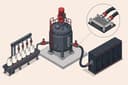 Industrial SolutionsThe chemistry behind detergents, aircraft de-icer, carbon-capture fluids and data-centre coolant. Dow's clearest growth line: capacity for cleaning-product ingredients is 70% above 2020, aimed at end-markets Dow says grow 10–15% a year.
The chemistry behind detergents, aircraft de-icer, carbon-capture fluids and data-centre coolant. Dow's clearest growth line: capacity for cleaning-product ingredients is 70% above 2020, aimed at end-markets Dow says grow 10–15% a year.
In plain English
Soap is the easy way in. When a cleaner lifts grease off a plate, the molecule doing the work grabs the grease at one end and the water at the other — and that molecule is what Dow sells here, by the tanker, to the brands that bottle detergents and shampoos.
The same family of chemistry becomes the fluid that de-ices aircraft, the liquid that strips carbon dioxide out of a gas stream, and the coolant that carries heat away from computer chips. That last one is fresh money: Dow is working with the companies building data centres on a coolant made to run right against the chip.
Competes with Surfactants and alkoxylates (BASF) · Surfactants and alkoxylates (Sasol) · Glycol ethers and solvents (Eastman)
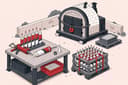 Consumer SolutionsDow's silicones: sealants, rubbery elastomers, non-stick coatings and pastes that pull heat off electronics, sold into personal care, cars and devices. Dow shut the raw-siloxane plant at Barry in the UK — roughly a quarter of Europe's capacity for that material — to keep the profitable end.
Dow's silicones: sealants, rubbery elastomers, non-stick coatings and pastes that pull heat off electronics, sold into personal care, cars and devices. Dow shut the raw-siloxane plant at Barry in the UK — roughly a quarter of Europe's capacity for that material — to keep the profitable end.
In plain English
Silicone is the rubbery, heat-proof stuff in a bathroom sealant tube, a baking mat, a car gasket. Dow makes the silicon metal it starts from, turns that into the raw silicone material, then formulates it into finished products: sealants, stretchy elastomers, slippery coatings that let a label peel off its backing, pastes that move heat off chips.
The raw material is where the money bled out — its price fell right through 2025. So Dow closed the plant at Barry in the UK that made it, about a quarter of Europe's capacity, while keeping enough upstream supply to feed its own formulating lines. The goal is to sell the finished products, where Dow targets returns above twenty percent.
Competes with Silicones (Wacker Chemie) · Silicones (Shin-Etsu Chemical) · Silicones (Momentive)
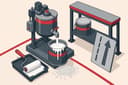 Coatings & Performance MonomersThe binder that makes paint stick, plus the acrylic chemicals it is built from, sold to paint and adhesive makers. Housing keeps a lid on volume; both price and volume rose in the June 2026 quarter. Growth comes from newer formulations, not more tins.
The binder that makes paint stick, plus the acrylic chemicals it is built from, sold to paint and adhesive makers. Housing keeps a lid on volume; both price and volume rose in the June 2026 quarter. Growth comes from newer formulations, not more tins.
In plain English
Open a tin of wall paint and most of what is inside is not colour — it is a milky glue that dries hard and holds the pigment to the wall. Dow makes that glue and the acrylic chemicals it is built from, selling both to paint companies and to makers of adhesives, textiles and personal-care goods.
Sales rise and fall with housing: people repaint when they move or renovate, and US buyers are squeezed on affordability. So the growth, such as it is, comes from selling newer versions — lower-solvent binders, resins for road markings, coatings that let a paper wrapper still be recycled — rather than from shifting more tins.
Competes with Acrylic monomers and binders (Arkema) · Acrylic emulsions (BASF) · Acrylics and derivatives (Celanese)
Named in filings, launches and programs
- Transform to OutperformProductThe cost programme announced in January 2026: a $2B-plus earnings target for $1.1–1.5B of one-time cost; about 55% of the role cuts were done by July 2026.
- Dow Coolant Care NetworkService · RampingLaunched in early 2026: Dow looks after the coolant in data-centre cooling loops, alongside selling the fluid itself.
- DECARBIABrandLower-carbon versions of Dow's propylene glycol and chlorine-and-vinyl grades, sold with a certificate stating the carbon footprint of each product.
- Procter & Gamble supply agreementCustomer programA long-term low-carbon supply deal with the consumer-goods maker, framed as several million tonnes of greenhouse-gas reduction over a decade.
- Univar Solutions distributionCustomer programThe chemicals distributor carries Dow's DECARBIA range worldwide from June 2026, extended in September to homecare and industrial cleaning in North America.
- REVOLOOP recycled resins / CirculusBrandRecycled plastic resins fed by Circulus, bought in 2024: two US plants with about 50,000 tonnes of capacity.
- Mura TechnologyCustomer program · RampingA UK plant commissioned in late 2024 recycles 20,000 tonnes of plastic a year by an advanced route, with Dow the main recipient of the output.
- Freepoint Eco-SystemsCustomer program · RampingFrom 2026, a first phase sends 65,000 tonnes a year of oil made from waste plastic to Dow exclusively.
- Ambipar, SCG Chemicals and Reciclar agreementsCustomer program · AnnouncedPreliminary recycling deals: 60,000 tonnes a year in Brazil and 200,000 tonnes a year across Asia Pacific by 2030.
- RENUVA mattress recyclingBrandDow's mattress-recycling programme for polyurethane foam, run with industry partners and selected customers.
- X-energy small reactor at SeadriftProduct · AnnouncedA small nuclear reactor proposed for Dow's Seadrift, Texas site; permit application filed, half funded by the US Department of Energy, run by a NextEra subsidiary.
- Carbonate solvents plantProduct · AnnouncedA planned plant for carbonate solvents, backed by the US Department of Energy.
- Hanseatic Energy Hub, StadeBrand · AnnouncedAn energy project at Stade where Dow is a minority stakeholder and provides the land; the partners committed to build it in March 2024.
- Technology licensing and catalystsServiceDow licenses its process know-how and sells catalysts to other producers — small, recurring, and enough to swing a quarter either way.
- CorporateSegmentThe leftover line: $701M of 2025 sales covering enterprise activities, insurance and environmental operations, and ventures outside the three main divisions.
Transform to OutperformProduct
The cost programme announced in January 2026: a $2B-plus earnings target for $1.1–1.5B of one-time cost; about 55% of the role cuts were done by July 2026.
Dow Coolant Care NetworkService · Ramping
Launched in early 2026: Dow looks after the coolant in data-centre cooling loops, alongside selling the fluid itself.
DECARBIABrand
Lower-carbon versions of Dow's propylene glycol and chlorine-and-vinyl grades, sold with a certificate stating the carbon footprint of each product.
Procter & Gamble supply agreementCustomer program
A long-term low-carbon supply deal with the consumer-goods maker, framed as several million tonnes of greenhouse-gas reduction over a decade.
Univar Solutions distributionCustomer program
The chemicals distributor carries Dow's DECARBIA range worldwide from June 2026, extended in September to homecare and industrial cleaning in North America.
REVOLOOP recycled resins / CirculusBrand
Recycled plastic resins fed by Circulus, bought in 2024: two US plants with about 50,000 tonnes of capacity.
Mura TechnologyCustomer program · Ramping
A UK plant commissioned in late 2024 recycles 20,000 tonnes of plastic a year by an advanced route, with Dow the main recipient of the output.
Freepoint Eco-SystemsCustomer program · Ramping
From 2026, a first phase sends 65,000 tonnes a year of oil made from waste plastic to Dow exclusively.
Ambipar, SCG Chemicals and Reciclar agreementsCustomer program · Announced
Preliminary recycling deals: 60,000 tonnes a year in Brazil and 200,000 tonnes a year across Asia Pacific by 2030.
RENUVA mattress recyclingBrand
Dow's mattress-recycling programme for polyurethane foam, run with industry partners and selected customers.
X-energy small reactor at SeadriftProduct · Announced
A small nuclear reactor proposed for Dow's Seadrift, Texas site; permit application filed, half funded by the US Department of Energy, run by a NextEra subsidiary.
Carbonate solvents plantProduct · Announced
A planned plant for carbonate solvents, backed by the US Department of Energy.
Hanseatic Energy Hub, StadeBrand · Announced
An energy project at Stade where Dow is a minority stakeholder and provides the land; the partners committed to build it in March 2024.
Technology licensing and catalystsService
Dow licenses its process know-how and sells catalysts to other producers — small, recurring, and enough to swing a quarter either way.
CorporateSegment
The leftover line: $701M of 2025 sales covering enterprise activities, insurance and environmental operations, and ventures outside the three main divisions.