
Consolidated Edison (ED)
Runs New York City-centered electric, gas, and steam utility networks.
Something off on this page? Send us feedback.
Con Edison owns the wires, gas pipes and steam mains that carry energy into New York City and the suburbs just north and west of it. It makes no money on the energy itself; state regulators let it earn a set return on the equipment it builds, so growth means building. And the mix is shifting: most new city buildings must go without gas, pushing heat and cars onto its wires.
Item facts: FY2025 · year ended December 31, 2025, from filings, earnings calls and company pages.
Judgment weights, not filed revenue
The band summarizes business focus and direction. ~ marks estimates.
6 in detail · 8 more below
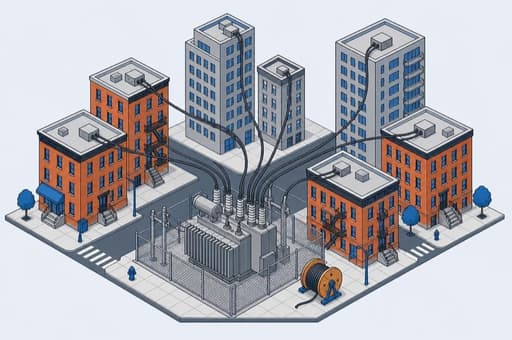
CECONY Electric Delivery
The poles, cables and substations of New York City and Westchester: about seven of every ten dollars of sales. Con Edison plans roughly $37.7 billion of building over five years, much of it here — watch whether regulators keep letting that spending into bills.
Competes with PSEG Long Island delivery wires (PSEG and LIPA) · National Grid New York electric delivery (National Grid) · State-owned transmission build (New York Power Authority)
In plain English
Think of Con Edison as the plumbing rather than the well. Someone else generates the electricity — a power plant, or a supplier the customer picked — but it reaches apartments, shops and offices over Con Edison's cables and substations, and the delivery part of the bill is what the company keeps.
How big that delivery charge can be is set by state regulators every few years. They add up what has been sunk into cables, poles and substations and allow a profit rate on it — 9.40% on the equity half, under the plan running through 2028. So earning more means building more, and hotter summers plus electric heat and cars keep giving reasons to build.
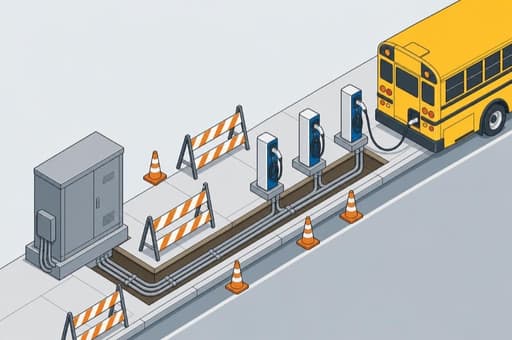
PowerReady and the electrification programs
Con Edison pays to bring power to charging sites for cars, trucks and school buses. Not a sales line: it adds to the equipment the company earns a return on, plus $55 million of performance bonuses group-wide last year. Watch whether the program is renewed.
Competes with Utility-funded charger hookups (National Grid) · Fast-charging network (EVgo) · Supercharger network (Tesla)
In plain English
Someone wants chargers in a parking garage or a bus depot. The wire and gear needed to bring enough power to that spot can cost more than the chargers themselves, so Con Edison pays for much of it — up to 90% of the cost at truck and bus depots.
That is not a sale, it is spending, and spending is how this company grows: the new equipment joins the pile of gear the state lets it earn a profit on, while hitting state targets for charging and energy saving pays bonuses on top. Roughly 44% of new business demand on the wires is electric heat or vehicle charging, which is why the programs exist.
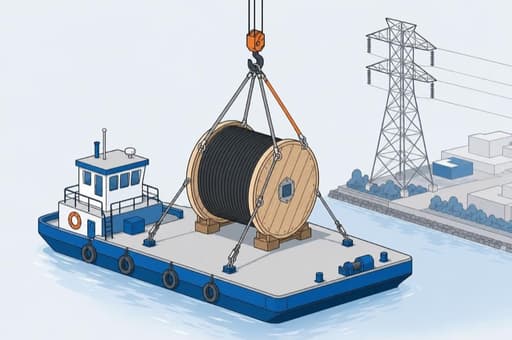
Con Edison Transmission
A part-owner of new high-voltage lines rather than a utility with customers. Almost nothing flows through the sales line, and it trimmed a cent from the latest quarterly earnings comparison — the one piece that can grow without asking the state for a bill increase.
Competes with Transmission development bids (LS Power) · Transmission projects in grid solicitations (NextEra Energy) · Self-built state transmission lines (New York Power Authority)
In plain English
Not a utility — a shareholder. Con Edison Transmission holds 45.7% of New York Transco, a venture with three other utility owners that builds the long high-voltage lines the state wants, and takes a share of the venture's profit instead of billing anybody.
Its flagship is Propel NY Energy, a new high-voltage link from Long Island into the city and Westchester, co-owned with the state's public power authority and aimed at service in 2030. The money involved is small next to the delivery businesses, and demand for it comes from New York's own reliability and clean-power commitments rather than from customers shopping around.
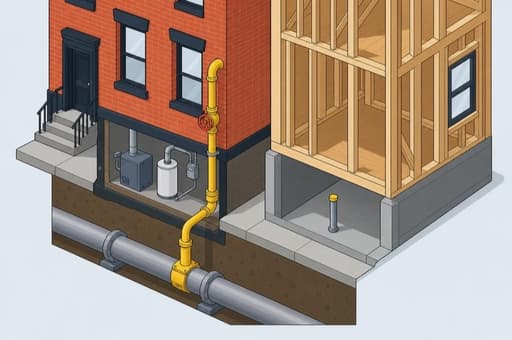
CECONY Gas Delivery
Pipes to about 1.1 million homes and buildings for heat, hot water and cooking — roughly a fifth of sales, and winter-heavy. New York is phasing gas out of new construction, so the question is how much more capital regulators allow here.
Competes with KEDNY and KEDLI gas delivery in Brooklyn and Queens (National Grid) · Electric heat pumps on its own wires (Con Edison)
In plain English
Pipes in the street, a meter in the basement, a stove or a boiler at the far end. Con Edison delivers gas to about 1.1 million customers in Manhattan, the Bronx and parts of Queens and Westchester; what the gas itself costs is passed along, and the company earns on the delivery.
The catch is written into law. New York is closing gas out of new construction — the rules hit smaller buildings in 2024 and reach taller ones from 2027, and courts upheld them this year — so new buildings are not a growth path. For now revenue still rises with approved rate increases and with the price of gas.
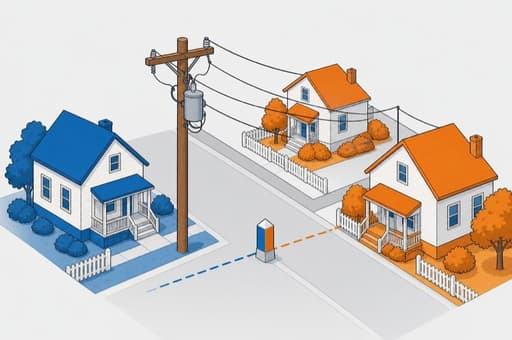
Orange and Rockland Utilities
The smaller utility: electric and gas delivery in the suburbs north and west of the city, 7.5% of sales against the city utility's roughly nine-tenths. It grew faster than the group last year, off a small base.
Competes with Central Hudson electric and gas delivery (Fortis) · Jersey Central Power & Light delivery (FirstEnergy)
In plain English
One-twelfth of a Con Edison, out in the suburbs. Orange and Rockland delivers electricity to about 0.3 million customers and gas to over 0.1 million across 1,300 square miles of southeastern New York and northern New Jersey, with its own approved price plans and the same build-it-and-earn-on-it arrangement.
Two governments have a say here, because the New Jersey part answers to that state's regulator rather than New York's. Growth comes from the same switch to electric heat and cars, not from data centers, and its sales rose faster in percentage terms last year than the group's did — on a much smaller base.
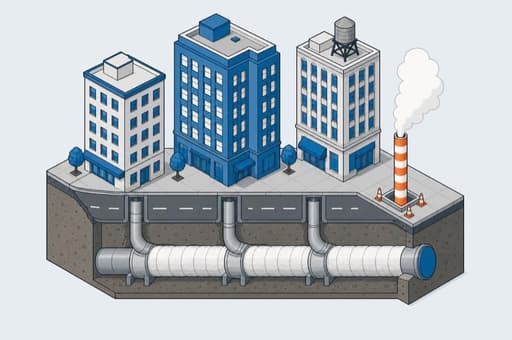
CECONY Steam
Underground steam sold to roughly 1,500 large Manhattan buildings for heat, hot water and cooling — $703 million, the smallest line and lately the fastest-rising in percentage terms. A new three-year rate plan awaits state approval.
Competes with Gas and oil boilers in the basement (On-site building plants) · Electric heat pumps and chillers (Con Edison)
In plain English
A shared boiler room for Manhattan, built under the streets. Rather than run its own furnace, a big building taps a pipe of Con Edison steam for heating, hot water and even cooling, and pays rates the state approves.
There are only about 1,500 such buildings, and the map of pipes under the pavement fixes the customer list — so this business grows by investing in the system and getting increases approved, not by signing anyone new. A proposal filed in September would lift base rates in three annual steps from late 2026 and allow a 9.5% return, if regulators bless it.


 CECONY Electric DeliveryThe poles, cables and substations of New York City and Westchester: about seven of every ten dollars of sales. Con Edison plans roughly $37.7 billion of building over five years, much of it here — watch whether regulators keep letting that spending into bills.
The poles, cables and substations of New York City and Westchester: about seven of every ten dollars of sales. Con Edison plans roughly $37.7 billion of building over five years, much of it here — watch whether regulators keep letting that spending into bills.
In plain English
Think of Con Edison as the plumbing rather than the well. Someone else generates the electricity — a power plant, or a supplier the customer picked — but it reaches apartments, shops and offices over Con Edison's cables and substations, and the delivery part of the bill is what the company keeps.
How big that delivery charge can be is set by state regulators every few years. They add up what has been sunk into cables, poles and substations and allow a profit rate on it — 9.40% on the equity half, under the plan running through 2028. So earning more means building more, and hotter summers plus electric heat and cars keep giving reasons to build.
Competes with PSEG Long Island delivery wires (PSEG and LIPA) · National Grid New York electric delivery (National Grid) · State-owned transmission build (New York Power Authority)
 PowerReady and the electrification programsCon Edison pays to bring power to charging sites for cars, trucks and school buses. Not a sales line: it adds to the equipment the company earns a return on, plus $55 million of performance bonuses group-wide last year. Watch whether the program is renewed.
Con Edison pays to bring power to charging sites for cars, trucks and school buses. Not a sales line: it adds to the equipment the company earns a return on, plus $55 million of performance bonuses group-wide last year. Watch whether the program is renewed.
In plain English
Someone wants chargers in a parking garage or a bus depot. The wire and gear needed to bring enough power to that spot can cost more than the chargers themselves, so Con Edison pays for much of it — up to 90% of the cost at truck and bus depots.
That is not a sale, it is spending, and spending is how this company grows: the new equipment joins the pile of gear the state lets it earn a profit on, while hitting state targets for charging and energy saving pays bonuses on top. Roughly 44% of new business demand on the wires is electric heat or vehicle charging, which is why the programs exist.
Competes with Utility-funded charger hookups (National Grid) · Fast-charging network (EVgo) · Supercharger network (Tesla)
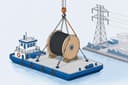 Con Edison TransmissionA part-owner of new high-voltage lines rather than a utility with customers. Almost nothing flows through the sales line, and it trimmed a cent from the latest quarterly earnings comparison — the one piece that can grow without asking the state for a bill increase.
A part-owner of new high-voltage lines rather than a utility with customers. Almost nothing flows through the sales line, and it trimmed a cent from the latest quarterly earnings comparison — the one piece that can grow without asking the state for a bill increase.
In plain English
Not a utility — a shareholder. Con Edison Transmission holds 45.7% of New York Transco, a venture with three other utility owners that builds the long high-voltage lines the state wants, and takes a share of the venture's profit instead of billing anybody.
Its flagship is Propel NY Energy, a new high-voltage link from Long Island into the city and Westchester, co-owned with the state's public power authority and aimed at service in 2030. The money involved is small next to the delivery businesses, and demand for it comes from New York's own reliability and clean-power commitments rather than from customers shopping around.
Competes with Transmission development bids (LS Power) · Transmission projects in grid solicitations (NextEra Energy) · Self-built state transmission lines (New York Power Authority)
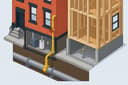 CECONY Gas DeliveryPipes to about 1.1 million homes and buildings for heat, hot water and cooking — roughly a fifth of sales, and winter-heavy. New York is phasing gas out of new construction, so the question is how much more capital regulators allow here.
Pipes to about 1.1 million homes and buildings for heat, hot water and cooking — roughly a fifth of sales, and winter-heavy. New York is phasing gas out of new construction, so the question is how much more capital regulators allow here.
In plain English
Pipes in the street, a meter in the basement, a stove or a boiler at the far end. Con Edison delivers gas to about 1.1 million customers in Manhattan, the Bronx and parts of Queens and Westchester; what the gas itself costs is passed along, and the company earns on the delivery.
The catch is written into law. New York is closing gas out of new construction — the rules hit smaller buildings in 2024 and reach taller ones from 2027, and courts upheld them this year — so new buildings are not a growth path. For now revenue still rises with approved rate increases and with the price of gas.
Competes with KEDNY and KEDLI gas delivery in Brooklyn and Queens (National Grid) · Electric heat pumps on its own wires (Con Edison)
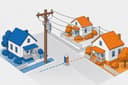 Orange and Rockland UtilitiesThe smaller utility: electric and gas delivery in the suburbs north and west of the city, 7.5% of sales against the city utility's roughly nine-tenths. It grew faster than the group last year, off a small base.
The smaller utility: electric and gas delivery in the suburbs north and west of the city, 7.5% of sales against the city utility's roughly nine-tenths. It grew faster than the group last year, off a small base.
In plain English
One-twelfth of a Con Edison, out in the suburbs. Orange and Rockland delivers electricity to about 0.3 million customers and gas to over 0.1 million across 1,300 square miles of southeastern New York and northern New Jersey, with its own approved price plans and the same build-it-and-earn-on-it arrangement.
Two governments have a say here, because the New Jersey part answers to that state's regulator rather than New York's. Growth comes from the same switch to electric heat and cars, not from data centers, and its sales rose faster in percentage terms last year than the group's did — on a much smaller base.
Competes with Central Hudson electric and gas delivery (Fortis) · Jersey Central Power & Light delivery (FirstEnergy)
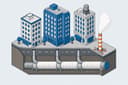 CECONY SteamUnderground steam sold to roughly 1,500 large Manhattan buildings for heat, hot water and cooling — $703 million, the smallest line and lately the fastest-rising in percentage terms. A new three-year rate plan awaits state approval.
Underground steam sold to roughly 1,500 large Manhattan buildings for heat, hot water and cooling — $703 million, the smallest line and lately the fastest-rising in percentage terms. A new three-year rate plan awaits state approval.
In plain English
A shared boiler room for Manhattan, built under the streets. Rather than run its own furnace, a big building taps a pipe of Con Edison steam for heating, hot water and even cooling, and pays rates the state approves.
There are only about 1,500 such buildings, and the map of pipes under the pavement fixes the customer list — so this business grows by investing in the system and getting increases approved, not by signing anyone new. A proposal filed in September would lift base rates in three annual steps from late 2026 and allow a 9.5% return, if regulators bless it.
Competes with Gas and oil boilers in the basement (On-site building plants) · Electric heat pumps and chillers (Con Edison)
Named in filings, launches and programs
- Rockland Electric Company (RECO)BrandOrange and Rockland's New Jersey electric arm, answering to that state's regulator — about a fifth of O&R's sales, near 1.5% of the group.
- Performance bonuses for energy savingCustomer programExtra payments for hitting state energy-efficiency and vehicle-charging targets — small money, and a reason many of these programs get built at all.
- First Student school-bus chargingCustomer programFirst phase of depot charging in Brooklyn and Queens finished in September 2026, with 40 more buses planned for the city's school system.
- Medium- and Heavy-Duty make-ready pilotCustomer programThe truck-and-depot version of PowerReady, still a pilot, aimed at fleets rather than at car parks and apartment garages.
- Propel NY EnergyCustomer program · AnnouncedAbout 90 miles of buried and underwater cable, roughly $3.26 billion, to link Long Island with the city and Westchester by 2030.
- New York City reliability planCustomer program · AnnouncedState regulators told Con Edison in December 2025 to plan for a city power shortfall from 2030 and to seek non-polluting fixes first.
- East River Energy Storage ProjectCustomer programAbout 100 megawatts of batteries on state-owned land, built by 174 Power Global under contract with Con Edison.
- SmartCharge and Smart Usage RewardsCustomer programCash incentives paying drivers to charge and buildings to shift their usage away from the busiest hours on the wires.
Rockland Electric Company (RECO)Brand
Orange and Rockland's New Jersey electric arm, answering to that state's regulator — about a fifth of O&R's sales, near 1.5% of the group.
Performance bonuses for energy savingCustomer program
Extra payments for hitting state energy-efficiency and vehicle-charging targets — small money, and a reason many of these programs get built at all.
First Student school-bus chargingCustomer program
First phase of depot charging in Brooklyn and Queens finished in September 2026, with 40 more buses planned for the city's school system.
Medium- and Heavy-Duty make-ready pilotCustomer program
The truck-and-depot version of PowerReady, still a pilot, aimed at fleets rather than at car parks and apartment garages.
Propel NY EnergyCustomer program · Announced
About 90 miles of buried and underwater cable, roughly $3.26 billion, to link Long Island with the city and Westchester by 2030.
New York City reliability planCustomer program · Announced
State regulators told Con Edison in December 2025 to plan for a city power shortfall from 2030 and to seek non-polluting fixes first.
East River Energy Storage ProjectCustomer program
About 100 megawatts of batteries on state-owned land, built by 174 Power Global under contract with Con Edison.
SmartCharge and Smart Usage RewardsCustomer program
Cash incentives paying drivers to charge and buildings to shift their usage away from the busiest hours on the wires.