
EMCOR Group (EME)
Installs and services electrical and mechanical systems across complex U.S. facilities.
Something off on this page? Send us feedback.
EMCOR is roughly a hundred local contracting firms under one roof, installing and repairing the electrical, heating-and-cooling and fire-sprinkler systems inside other people's buildings across the United States. It sells no product, only skilled crews and the planning that keeps them busy. The quiet part is maintenance work that keeps paying whatever the economy does; the part pulling everything forward now is the rush to build data centers for artificial intelligence.
Item facts: H1 FY2026 · six months ended Jun 30, 2026, from filings, earnings calls and company pages.
Judgment weights, not filed revenue
The band summarizes business focus and direction. ~ marks estimates.
8 in detail · 13 more below
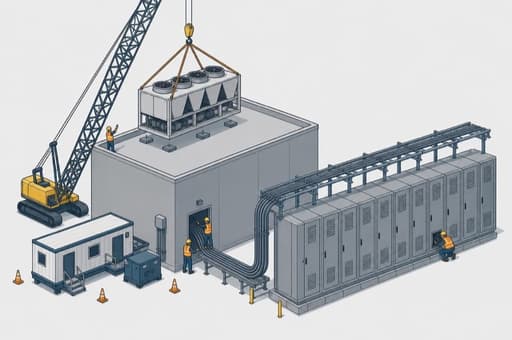
Network & Communications (data centers)
Wiring and cooling the windowless buildings that run artificial intelligence — about a third of sales and the fastest-growing part of the company. Work booked but not yet built hit $17.1B by mid-2026, up 44% in a year, and data centers were its biggest piece at the end of 2025.
Competes with Technology & data-center vertical (Comfort Systems USA) · Cupertino Electric (Quanta Services) · Mission Critical division (IES Holdings)
In plain English
A data center is a windowless building filled with computers, and the ones running artificial intelligence draw enormous amounts of electricity and throw off enormous heat. EMCOR owns none of them. Its crews install what makes them work: the switchgear, backup generators and battery-backed power supplies that feed current in, and the chillers, piping and — increasingly — the liquid cooling that carries heat away from the racks.
The buyers are the big cloud companies and the landlords who rent them space, hiring EMCOR directly or through a general contractor. EMCOR bills as the work gets done, month by month. No single customer accounts for even a tenth of sales.
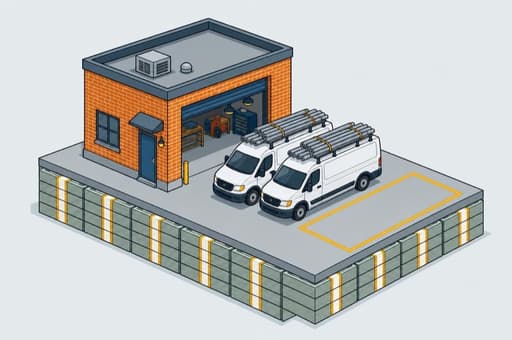
Miller Electric Company
The largest purchase EMCOR has ever made: a Jacksonville electrical contractor bought from its employee-ownership trust for $865M cash in February 2025. Its revenue sits inside the sector lines above. Watch whether a second one of this size turns up.
Competes with Valley Electric and Comet Electric (MYR Group) · Employee-owned electrical contracting (Rosendin) · Cupertino Electric (Quanta Services)
In plain English
Most American electrical and heating-and-cooling contractors are small firms owned by a family or by their own staff. EMCOR buys them, pays cash, and leaves the name, the crews and the local bosses exactly where they were — a grocer buying the good corner shop and changing nothing but the books.
Miller is the biggest one it has ever bought: a Jacksonville, Florida electrical contractor whose crews wire data centers, hospitals and commercial buildings across the Southeast. In the year it arrived, EMCOR's electrical business grew by half. Management has said it wants another purchase of that size, and the Miller team has since gone out and bought a contractor of its own.
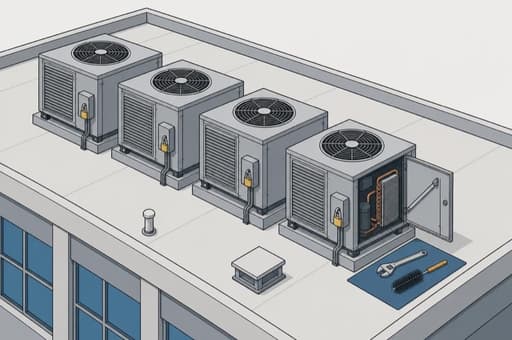
Mechanical Services
Keeping heating, cooling and control systems running under standing contracts — about an eighth of sales, growing around 5% a year. Its job is to keep crews and cash flowing between construction peaks, with margin rather than growth the story.
Competes with Service & maintenance business (Comfort Systems USA) · Owner-direct service business (Limbach Holdings) · Facility engineering solutions (ABM Industries)
In plain English
Every large building has a machine room: boilers, chillers, air handlers and the controls that decide when they run. Somebody has to service that kit, swap it out when it dies, and tune it so the building burns less energy. Often that somebody is EMCOR, under a contract that pays every month whether or not anything breaks — the way a lift in an office block has a service plan.
Customers are offices, hospitals, campuses and other building owners, and the work shows up because equipment ages and energy rules tighten, not because anyone is putting up something new. That is why it holds steady when construction does not.
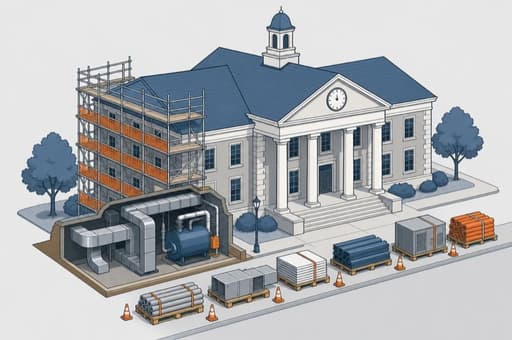
Institutional Construction
Electrical and heating-and-cooling work on college campuses, schools and public facilities — under 6% of sales. Booked work rose about 40% during 2025 on education demand: the quickest growth outside data centers, off a small base.
Competes with Institutional mechanical work (Comfort Systems USA) · Public mechanical & civil contracting (Southland Holdings) · Incumbent campus MEP contracts (Regional design-build contractors)
In plain English
Colleges, school districts and public agencies build out of bonds and endowments, on plans laid years in advance — laboratories, student housing, older buildings due a refit. When one of those goes ahead, someone has to install the wiring, the heating and cooling and the sprinklers inside it. That is the job EMCOR bids for.
The work usually comes through a construction manager who hires the trades, and EMCOR is paid as its crews put hours in. The appeal is timing: campus budgets run on their own slow clock, largely deaf to what is happening in artificial intelligence or in industry.
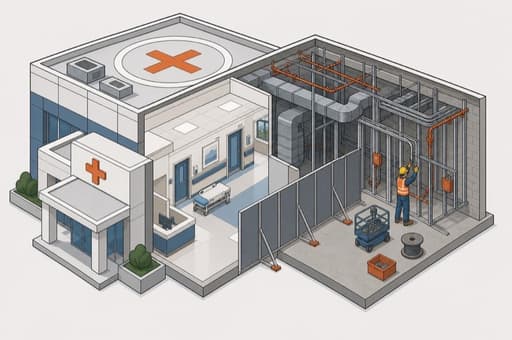
Healthcare Construction
The electrical and mechanical systems inside hospitals, about 6% of sales. Miller brought roughly $240M of hospital work already signed when it joined in 2025; since then the line has been steady and rarely discussed on quarterly calls.
Competes with Hospital mechanical systems (Comfort Systems USA) · Healthcare electrical work (IES Holdings)
In plain English
Hospitals need what every building needs — power, heating and cooling, piping, fire sprinklers — only more of it, and EMCOR's local subsidiaries are the ones who put it in. Payment works the way it does on any building job: bill as the work gets done, on projects that can run for years.
This line has grown as much by purchase as by bidding. The Miller deal in early 2025 arrived carrying roughly $240 million of hospital work already signed and waiting to be built. What followed was quiet: a real slice of sales that barely comes up when management talks through the year ahead.
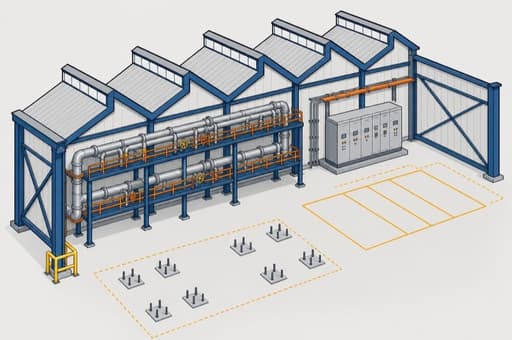
Manufacturing & Industrial Construction
Wiring and piping factories — food plants, battery and electric-vehicle plants, renewable projects — at about 7.5% of sales. It grew on companies building in the United States again, but this is a cycle that turns, and executives mention it far less than they did.
Competes with Industrial mechanical work (Comfort Systems USA) · Commercial & industrial segment (MYR Group) · Commercial & industrial segment (IES Holdings)
In plain English
Factories need more than four walls. Before a plant can run, someone has to bring heavy power to the machines, run the process piping and ventilation, and wire up the controls that operate it all. EMCOR's crews do that for food-processing plants, battery and electric-vehicle plants, and renewable-energy projects.
Who pays: manufacturers deciding to build or expand a plant on American soil. That decision rides on the industrial cycle and on government support for making things domestically, which makes this the least predictable work on the map. For scale, solar, battery and EV plants together come to under a twentieth of everything EMCOR sells.
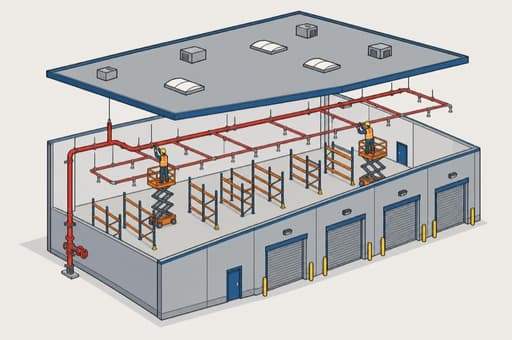
Commercial Construction
Warehouses, distribution centres and other commercial buildings, about 7.5% of sales. Work inside the mechanical business grew 26% in the June 2026 quarter as warehouse demand returned, much of it fire-sprinkler work.
Competes with Commercial mechanical work (Comfort Systems USA) · Sprinkler & life-safety systems (APi Group)
In plain English
A distribution warehouse is mostly empty air with racking in it, and the expensive part hangs overhead: a grid of pipes and sprinkler heads covering every square foot, with heating, ventilation and power below. EMCOR installs that grid — fire protection is one of the three things its construction arm says it does best.
Paying for it are the developers and companies putting up the sheds that goods pass through. They settle up as the building rises, so the flow of work tracks how much warehouse space the country thinks it needs — which had gone quiet and has picked up again.
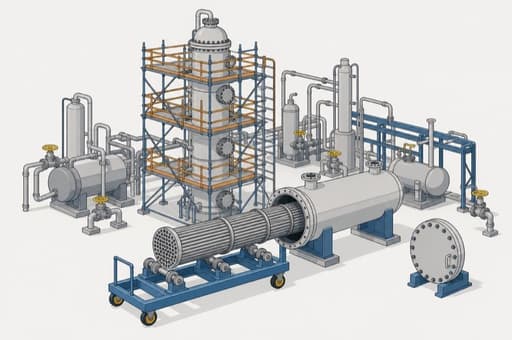
United States Industrial Services
Refinery and petrochemical maintenance plus heat-exchanger workshops. Flat at $1.29B in 2025 — the only part of EMCOR that did not grow — and the thinnest margin on the map at about 2.7% last quarter against roughly 13% in construction.
Competes with Turnaround and plant services (Matrix Service Company) · Turnaround services (MISTRAS Group) · Turnarounds and project solutions (Team, Inc.)
In plain English
Refineries and chemical plants cannot be repaired while they run. Every so often a unit is shut down for a scheduled overhaul — a turnaround — and crews move in to replace what has worn out before the plant starts up again. EMCOR sells those crews.
It also runs workshops that build and repair heat exchangers, the bundles of tubes that shift heat around a plant. Customers pay per shutdown, so the money arrives lumpily, on refinery calendars rather than EMCOR's. Margins are a fraction of what construction earns; what the segment buys the company is depth of skilled labour and customers whose spending has nothing to do with data centers.


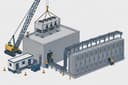 Network & Communications (data centers)Wiring and cooling the windowless buildings that run artificial intelligence — about a third of sales and the fastest-growing part of the company. Work booked but not yet built hit $17.1B by mid-2026, up 44% in a year, and data centers were its biggest piece at the end of 2025.
Wiring and cooling the windowless buildings that run artificial intelligence — about a third of sales and the fastest-growing part of the company. Work booked but not yet built hit $17.1B by mid-2026, up 44% in a year, and data centers were its biggest piece at the end of 2025.
In plain English
A data center is a windowless building filled with computers, and the ones running artificial intelligence draw enormous amounts of electricity and throw off enormous heat. EMCOR owns none of them. Its crews install what makes them work: the switchgear, backup generators and battery-backed power supplies that feed current in, and the chillers, piping and — increasingly — the liquid cooling that carries heat away from the racks.
The buyers are the big cloud companies and the landlords who rent them space, hiring EMCOR directly or through a general contractor. EMCOR bills as the work gets done, month by month. No single customer accounts for even a tenth of sales.
Competes with Technology & data-center vertical (Comfort Systems USA) · Cupertino Electric (Quanta Services) · Mission Critical division (IES Holdings)
 Miller Electric CompanyThe largest purchase EMCOR has ever made: a Jacksonville electrical contractor bought from its employee-ownership trust for $865M cash in February 2025. Its revenue sits inside the sector lines above. Watch whether a second one of this size turns up.
The largest purchase EMCOR has ever made: a Jacksonville electrical contractor bought from its employee-ownership trust for $865M cash in February 2025. Its revenue sits inside the sector lines above. Watch whether a second one of this size turns up.
In plain English
Most American electrical and heating-and-cooling contractors are small firms owned by a family or by their own staff. EMCOR buys them, pays cash, and leaves the name, the crews and the local bosses exactly where they were — a grocer buying the good corner shop and changing nothing but the books.
Miller is the biggest one it has ever bought: a Jacksonville, Florida electrical contractor whose crews wire data centers, hospitals and commercial buildings across the Southeast. In the year it arrived, EMCOR's electrical business grew by half. Management has said it wants another purchase of that size, and the Miller team has since gone out and bought a contractor of its own.
Competes with Valley Electric and Comet Electric (MYR Group) · Employee-owned electrical contracting (Rosendin) · Cupertino Electric (Quanta Services)
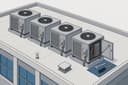 Mechanical ServicesKeeping heating, cooling and control systems running under standing contracts — about an eighth of sales, growing around 5% a year. Its job is to keep crews and cash flowing between construction peaks, with margin rather than growth the story.
Keeping heating, cooling and control systems running under standing contracts — about an eighth of sales, growing around 5% a year. Its job is to keep crews and cash flowing between construction peaks, with margin rather than growth the story.
In plain English
Every large building has a machine room: boilers, chillers, air handlers and the controls that decide when they run. Somebody has to service that kit, swap it out when it dies, and tune it so the building burns less energy. Often that somebody is EMCOR, under a contract that pays every month whether or not anything breaks — the way a lift in an office block has a service plan.
Customers are offices, hospitals, campuses and other building owners, and the work shows up because equipment ages and energy rules tighten, not because anyone is putting up something new. That is why it holds steady when construction does not.
Competes with Service & maintenance business (Comfort Systems USA) · Owner-direct service business (Limbach Holdings) · Facility engineering solutions (ABM Industries)
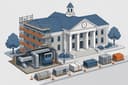 Institutional ConstructionElectrical and heating-and-cooling work on college campuses, schools and public facilities — under 6% of sales. Booked work rose about 40% during 2025 on education demand: the quickest growth outside data centers, off a small base.
Electrical and heating-and-cooling work on college campuses, schools and public facilities — under 6% of sales. Booked work rose about 40% during 2025 on education demand: the quickest growth outside data centers, off a small base.
In plain English
Colleges, school districts and public agencies build out of bonds and endowments, on plans laid years in advance — laboratories, student housing, older buildings due a refit. When one of those goes ahead, someone has to install the wiring, the heating and cooling and the sprinklers inside it. That is the job EMCOR bids for.
The work usually comes through a construction manager who hires the trades, and EMCOR is paid as its crews put hours in. The appeal is timing: campus budgets run on their own slow clock, largely deaf to what is happening in artificial intelligence or in industry.
Competes with Institutional mechanical work (Comfort Systems USA) · Public mechanical & civil contracting (Southland Holdings) · Incumbent campus MEP contracts (Regional design-build contractors)
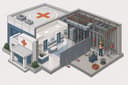 Healthcare ConstructionThe electrical and mechanical systems inside hospitals, about 6% of sales. Miller brought roughly $240M of hospital work already signed when it joined in 2025; since then the line has been steady and rarely discussed on quarterly calls.
The electrical and mechanical systems inside hospitals, about 6% of sales. Miller brought roughly $240M of hospital work already signed when it joined in 2025; since then the line has been steady and rarely discussed on quarterly calls.
In plain English
Hospitals need what every building needs — power, heating and cooling, piping, fire sprinklers — only more of it, and EMCOR's local subsidiaries are the ones who put it in. Payment works the way it does on any building job: bill as the work gets done, on projects that can run for years.
This line has grown as much by purchase as by bidding. The Miller deal in early 2025 arrived carrying roughly $240 million of hospital work already signed and waiting to be built. What followed was quiet: a real slice of sales that barely comes up when management talks through the year ahead.
Competes with Hospital mechanical systems (Comfort Systems USA) · Healthcare electrical work (IES Holdings)
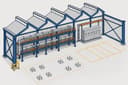 Manufacturing & Industrial ConstructionWiring and piping factories — food plants, battery and electric-vehicle plants, renewable projects — at about 7.5% of sales. It grew on companies building in the United States again, but this is a cycle that turns, and executives mention it far less than they did.
Wiring and piping factories — food plants, battery and electric-vehicle plants, renewable projects — at about 7.5% of sales. It grew on companies building in the United States again, but this is a cycle that turns, and executives mention it far less than they did.
In plain English
Factories need more than four walls. Before a plant can run, someone has to bring heavy power to the machines, run the process piping and ventilation, and wire up the controls that operate it all. EMCOR's crews do that for food-processing plants, battery and electric-vehicle plants, and renewable-energy projects.
Who pays: manufacturers deciding to build or expand a plant on American soil. That decision rides on the industrial cycle and on government support for making things domestically, which makes this the least predictable work on the map. For scale, solar, battery and EV plants together come to under a twentieth of everything EMCOR sells.
Competes with Industrial mechanical work (Comfort Systems USA) · Commercial & industrial segment (MYR Group) · Commercial & industrial segment (IES Holdings)
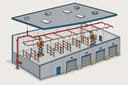 Commercial ConstructionWarehouses, distribution centres and other commercial buildings, about 7.5% of sales. Work inside the mechanical business grew 26% in the June 2026 quarter as warehouse demand returned, much of it fire-sprinkler work.
Warehouses, distribution centres and other commercial buildings, about 7.5% of sales. Work inside the mechanical business grew 26% in the June 2026 quarter as warehouse demand returned, much of it fire-sprinkler work.
In plain English
A distribution warehouse is mostly empty air with racking in it, and the expensive part hangs overhead: a grid of pipes and sprinkler heads covering every square foot, with heating, ventilation and power below. EMCOR installs that grid — fire protection is one of the three things its construction arm says it does best.
Paying for it are the developers and companies putting up the sheds that goods pass through. They settle up as the building rises, so the flow of work tracks how much warehouse space the country thinks it needs — which had gone quiet and has picked up again.
Competes with Commercial mechanical work (Comfort Systems USA) · Sprinkler & life-safety systems (APi Group)
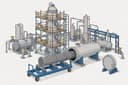 United States Industrial ServicesRefinery and petrochemical maintenance plus heat-exchanger workshops. Flat at $1.29B in 2025 — the only part of EMCOR that did not grow — and the thinnest margin on the map at about 2.7% last quarter against roughly 13% in construction.
Refinery and petrochemical maintenance plus heat-exchanger workshops. Flat at $1.29B in 2025 — the only part of EMCOR that did not grow — and the thinnest margin on the map at about 2.7% last quarter against roughly 13% in construction.
In plain English
Refineries and chemical plants cannot be repaired while they run. Every so often a unit is shut down for a scheduled overhaul — a turnaround — and crews move in to replace what has worn out before the plant starts up again. EMCOR sells those crews.
It also runs workshops that build and repair heat exchangers, the bundles of tubes that shift heat around a plant. Customers pay per shutdown, so the money arrives lumpily, on refinery calendars rather than EMCOR's. Margins are a fraction of what construction earns; what the segment buys the company is depth of skilled labour and customers whose spending has nothing to do with data centers.
Competes with Turnaround and plant services (Matrix Service Company) · Turnaround services (MISTRAS Group) · Turnarounds and project solutions (Team, Inc.)
Named in filings, launches and programs
- Service work and short-duration projectsServiceSmall jobs and quick repairs run through both construction arms — about 8% of sales, and the work that keeps crews paid when a big project winds down.
- High-tech manufacturing constructionProduct lineChip plants and other advanced factories: about 5% of sales, and a line management now mentions barely at all.
- Commercial site-based servicesServiceMaintenance crews stationed full-time inside customers' buildings: about 3% of sales, reorganised during 2025 and back to roughly 11% growth by mid-2026.
- Water and wastewater constructionProduct line · RampingTreatment plants and water systems, mostly in Florida: under 2% of sales, booked work up about 60% in 2025, and slow to turn into revenue.
- Hospitality and entertainment constructionProduct lineHotels and entertainment venues, about 1.6% of sales, with booked work more than doubling during 2025.
- Transportation constructionProduct lineAirports and transit facilities, roughly 1% of sales.
- Government site-based servicesServiceThe same stationed-crew maintenance, done for federal and state facilities: under 1% of sales.
- Shop servicesServiceWorkshops that build and repair heat exchangers, $66M in the first half of 2026 — counted inside the refinery-maintenance segment, not added to it.
- John W. Danforth CompanyBrand · AnnouncedBuffalo mechanical contractor with Upstate New York and Ohio operations, roughly $350–400M of revenue; agreement signed October 2025.
- 2026 electrical acquisition cohortBrand · RampingFive electrical contractors bought in 2026 — B&B, Sidney, Giles, Schmidt, Connelly — with $625M of revenue between them over the prior year.
- DynalectricBrandEMCOR's multi-state electrical brand, named by outside trade lists among the top US data-center electrical contractors.
- Batchelor & KimballBrandMechanical contractor management cites, alongside Miller, as the kind of business it wants more of.
- Prefabrication and VDCPlatformShop-built assemblies and full digital models of a building drawn before crews arrive — credited for revenue growing about twice as fast as headcount.
Service work and short-duration projectsService
Small jobs and quick repairs run through both construction arms — about 8% of sales, and the work that keeps crews paid when a big project winds down.
High-tech manufacturing constructionProduct line
Chip plants and other advanced factories: about 5% of sales, and a line management now mentions barely at all.
Commercial site-based servicesService
Maintenance crews stationed full-time inside customers' buildings: about 3% of sales, reorganised during 2025 and back to roughly 11% growth by mid-2026.
Water and wastewater constructionProduct line · Ramping
Treatment plants and water systems, mostly in Florida: under 2% of sales, booked work up about 60% in 2025, and slow to turn into revenue.
Hospitality and entertainment constructionProduct line
Hotels and entertainment venues, about 1.6% of sales, with booked work more than doubling during 2025.
Transportation constructionProduct line
Airports and transit facilities, roughly 1% of sales.
Government site-based servicesService
The same stationed-crew maintenance, done for federal and state facilities: under 1% of sales.
Shop servicesService
Workshops that build and repair heat exchangers, $66M in the first half of 2026 — counted inside the refinery-maintenance segment, not added to it.
John W. Danforth CompanyBrand · Announced
Buffalo mechanical contractor with Upstate New York and Ohio operations, roughly $350–400M of revenue; agreement signed October 2025.
2026 electrical acquisition cohortBrand · Ramping
Five electrical contractors bought in 2026 — B&B, Sidney, Giles, Schmidt, Connelly — with $625M of revenue between them over the prior year.
DynalectricBrand
EMCOR's multi-state electrical brand, named by outside trade lists among the top US data-center electrical contractors.
Batchelor & KimballBrand
Mechanical contractor management cites, alongside Miller, as the kind of business it wants more of.
Prefabrication and VDCPlatform
Shop-built assemblies and full digital models of a building drawn before crews arrive — credited for revenue growing about twice as fast as headcount.