
Eversource Energy (ES)
Operator of New England electric, gas, and high-voltage transmission networks.
Something off on this page? Send us feedback.
Eversource owns the poles, wires and gas pipes across Connecticut, Massachusetts and New Hampshire. It makes no profit on the energy itself — it buys power and gas and passes them along at cost, then earns a regulator-approved return on the equipment it builds. Having sold its offshore wind stakes and its water utility, it is now purely a delivery business betting on construction.
Item facts: FY2025 · year ended Dec 31, 2025, from filings, earnings calls and company pages.
Judgment weights, not filed revenue
The band summarizes business focus and direction. ~ marks estimates.
6 in detail · 17 more below
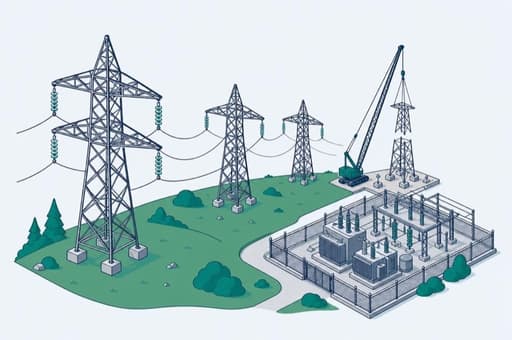
Electric Transmission
The high-voltage backbone across three states, and the biggest earner in the company on its smallest slice of revenue. Over $7B of the five-year construction budget lands here. Watch the federal ruling on allowed profit, expected by November 30, 2026.
Competes with New England Power Company transmission (National Grid) · Central Maine Power transmission (Avangrid)
In plain English
Think of the steel towers marching across open country — the fat lines that move power between states long before it reaches anyone's street. Eversource owns that backbone in Connecticut, Massachusetts and New Hampshire.
The money works differently here than in the rest of the company. A federal agency sets a formula: Eversource spends on towers and substations, and the formula pays that spending back plus an approved rate of profit, correcting itself every year so there is no long wait for a hearing to catch up. Build more, earn more — which is why over seven billion dollars of the five-year budget points at these lines. That approved rate was cut in March 2026, and Eversource is fighting it.

Transmission Initiative Down East (TIDE)
A new high-voltage link between Maine and New Hampshire, picked in September 2026 as the region's preferred fix. Total cost $2.2B, Eversource's share about $700M, power flowing in 2032 — with state siting approvals still ahead.
Competes with The five losing bids in the same contest (Bidders not disclosed) · Merchant transmission proposals into New England (Independent developers)
In plain English
New England's grid operator — the body that decides how power moves around the region — ran a contest for a fix to a northern bottleneck, and in September 2026 it made the joint bid from Eversource and Avangrid, a neighbouring utility, its preferred answer out of six.
The plan is a new eighteen-mile high-voltage line plus a rebuild of an existing one, enough to let up to 1,200 megawatts of future northern wind farms reach customers. Eversource would put in about $700M of the $2.2B, start building in 2029, and then be paid for the line through charges spread across the region's bills. Nothing is earned until then.
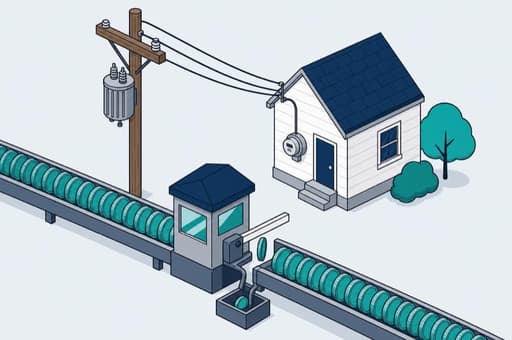
Electric Distribution
Local poles, wires and meters for roughly 3.5 million homes and businesses. It bills about two thirds of the company's revenue and earns $667.1M, because the electricity is handed on at cost. Over $11B of the five-year build sits here; quarterly revenue is nearly flat.
Competes with Massachusetts Electric / Nantucket Electric (National Grid) · United Illuminating (Avangrid)
In plain English
Every pole on the street, the wire to the house, the meter on the wall — Eversource owns that last stretch in Connecticut, eastern and western Massachusetts and New Hampshire, and no rival is allowed to string a competing wire.
Here is what a bill hides: most of what a customer pays is the electricity itself, which Eversource buys and passes on without adding a cent. It profits only on the delivery, at a price a state commission sets in a hearing — and between hearings costs climb while the price stays put. Connecticut's had not been reset since 2017, which is why a rate review landed there in July 2026 over the state attorney general's objection.
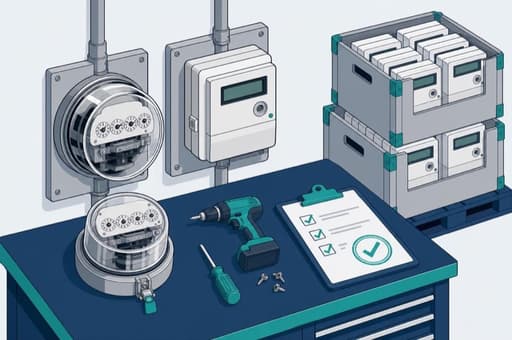
Smart Meters (AMI)
Swapping old meters for ones that report themselves. Massachusetts is close to finished with over $300M left to spend; Connecticut's version — nearly $1B of meters plus $300M of running costs — waits on a state decision requested for this autumn.
Competes with Massachusetts smart-meter programme (National Grid) · United Illuminating metering plans (Avangrid)
In plain English
The meter on the side of a house used to need a person walking up to read it. The new ones send their own readings over the air, so the utility can spot an outage without being phoned about it, skip a truck trip, and charge different prices at different hours.
Eversource does not sell meters; it buys and installs them. Once a regulator agrees the spending was sensible, that cost joins the pile of equipment customers pay a return on — so a meter rollout is really a way to grow the earning base. Connecticut's plan reuses the prices Massachusetts vendors agreed to, which is why the company asked for a quick decision before those prices lapse.
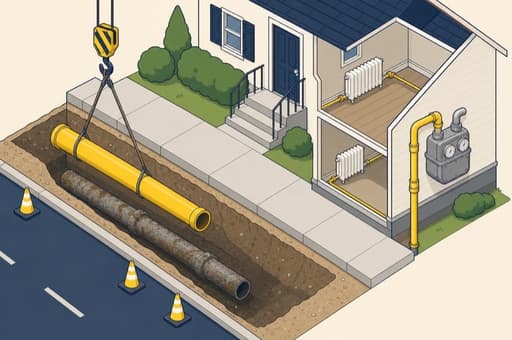
Natural Gas Distribution
Three gas utilities piping heat to about 897,000 homes and businesses. It is the fastest-growing revenue line of the three businesses, yet the customer count slipped last year, and nearly $7B of planned spending here is about replacing old pipe rather than winning customers.
Competes with Boston Gas / Colonial Gas (National Grid) · Southern Connecticut Gas (Avangrid)
In plain English
Under the street runs a second network: mains carrying gas to boilers, stoves and water heaters in Connecticut and Massachusetts.
Winter is the whole business — revenue swings from a fat first quarter to a thin summer one, because people are really buying heat. The gas itself is passed along at cost, as the electricity is, so the earnings come from the pipe. Much of the digging is compulsory: ageing mains must be replaced on a safety schedule, and regulators let Eversource charge for that replacement, which is roughly a quarter of the growth here. Electric heating is the slow question, and Eversource is piloting a ground-heat version of it itself.
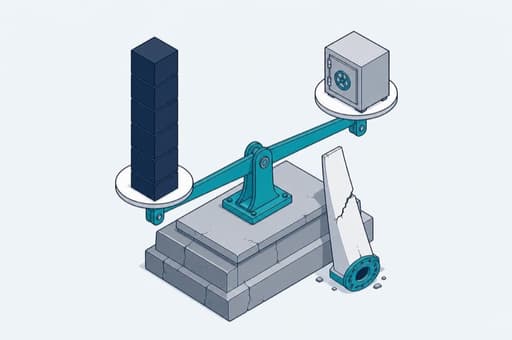
Eversource Parent and Other
The corporate centre: borrowing costs, shared back-office services and the leftovers of the offshore-wind exit, including a $164.0M charge in mid-2026. It took $155.9M out of 2025 earnings, and its job is to fund a $26.5B construction plan running to 2030.
Competes with Utility holding-company financing (National Grid) · Utility holding-company financing (Avangrid)
In plain English
Strip out the wires and the pipes and this is what remains: the centre that borrows the money, runs the shared services the utilities buy from it, and carries the leftovers of businesses Eversource has walked away from.
It is a cost, not a business. About $30B of debt sits against $16B of shareholder money, and construction has outrun the cash coming in every year since 2020, so the gap is filled with fresh borrowing, the $1.7B raised by selling the water utility, and a modest amount of new shares. The offshore wind chapter still sends bills: a $164.0M charge in mid-2026 under the terms of that sale.


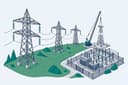 Electric TransmissionThe high-voltage backbone across three states, and the biggest earner in the company on its smallest slice of revenue. Over $7B of the five-year construction budget lands here. Watch the federal ruling on allowed profit, expected by November 30, 2026.
The high-voltage backbone across three states, and the biggest earner in the company on its smallest slice of revenue. Over $7B of the five-year construction budget lands here. Watch the federal ruling on allowed profit, expected by November 30, 2026.
In plain English
Think of the steel towers marching across open country — the fat lines that move power between states long before it reaches anyone's street. Eversource owns that backbone in Connecticut, Massachusetts and New Hampshire.
The money works differently here than in the rest of the company. A federal agency sets a formula: Eversource spends on towers and substations, and the formula pays that spending back plus an approved rate of profit, correcting itself every year so there is no long wait for a hearing to catch up. Build more, earn more — which is why over seven billion dollars of the five-year budget points at these lines. That approved rate was cut in March 2026, and Eversource is fighting it.
Competes with New England Power Company transmission (National Grid) · Central Maine Power transmission (Avangrid)
 Transmission Initiative Down East (TIDE)A new high-voltage link between Maine and New Hampshire, picked in September 2026 as the region's preferred fix. Total cost $2.2B, Eversource's share about $700M, power flowing in 2032 — with state siting approvals still ahead.
A new high-voltage link between Maine and New Hampshire, picked in September 2026 as the region's preferred fix. Total cost $2.2B, Eversource's share about $700M, power flowing in 2032 — with state siting approvals still ahead.
In plain English
New England's grid operator — the body that decides how power moves around the region — ran a contest for a fix to a northern bottleneck, and in September 2026 it made the joint bid from Eversource and Avangrid, a neighbouring utility, its preferred answer out of six.
The plan is a new eighteen-mile high-voltage line plus a rebuild of an existing one, enough to let up to 1,200 megawatts of future northern wind farms reach customers. Eversource would put in about $700M of the $2.2B, start building in 2029, and then be paid for the line through charges spread across the region's bills. Nothing is earned until then.
Competes with The five losing bids in the same contest (Bidders not disclosed) · Merchant transmission proposals into New England (Independent developers)
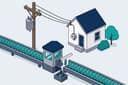 Electric DistributionLocal poles, wires and meters for roughly 3.5 million homes and businesses. It bills about two thirds of the company's revenue and earns $667.1M, because the electricity is handed on at cost. Over $11B of the five-year build sits here; quarterly revenue is nearly flat.
Local poles, wires and meters for roughly 3.5 million homes and businesses. It bills about two thirds of the company's revenue and earns $667.1M, because the electricity is handed on at cost. Over $11B of the five-year build sits here; quarterly revenue is nearly flat.
In plain English
Every pole on the street, the wire to the house, the meter on the wall — Eversource owns that last stretch in Connecticut, eastern and western Massachusetts and New Hampshire, and no rival is allowed to string a competing wire.
Here is what a bill hides: most of what a customer pays is the electricity itself, which Eversource buys and passes on without adding a cent. It profits only on the delivery, at a price a state commission sets in a hearing — and between hearings costs climb while the price stays put. Connecticut's had not been reset since 2017, which is why a rate review landed there in July 2026 over the state attorney general's objection.
Competes with Massachusetts Electric / Nantucket Electric (National Grid) · United Illuminating (Avangrid)
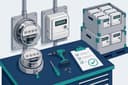 Smart Meters (AMI)Swapping old meters for ones that report themselves. Massachusetts is close to finished with over $300M left to spend; Connecticut's version — nearly $1B of meters plus $300M of running costs — waits on a state decision requested for this autumn.
Swapping old meters for ones that report themselves. Massachusetts is close to finished with over $300M left to spend; Connecticut's version — nearly $1B of meters plus $300M of running costs — waits on a state decision requested for this autumn.
In plain English
The meter on the side of a house used to need a person walking up to read it. The new ones send their own readings over the air, so the utility can spot an outage without being phoned about it, skip a truck trip, and charge different prices at different hours.
Eversource does not sell meters; it buys and installs them. Once a regulator agrees the spending was sensible, that cost joins the pile of equipment customers pay a return on — so a meter rollout is really a way to grow the earning base. Connecticut's plan reuses the prices Massachusetts vendors agreed to, which is why the company asked for a quick decision before those prices lapse.
Competes with Massachusetts smart-meter programme (National Grid) · United Illuminating metering plans (Avangrid)
 Natural Gas DistributionThree gas utilities piping heat to about 897,000 homes and businesses. It is the fastest-growing revenue line of the three businesses, yet the customer count slipped last year, and nearly $7B of planned spending here is about replacing old pipe rather than winning customers.
Three gas utilities piping heat to about 897,000 homes and businesses. It is the fastest-growing revenue line of the three businesses, yet the customer count slipped last year, and nearly $7B of planned spending here is about replacing old pipe rather than winning customers.
In plain English
Under the street runs a second network: mains carrying gas to boilers, stoves and water heaters in Connecticut and Massachusetts.
Winter is the whole business — revenue swings from a fat first quarter to a thin summer one, because people are really buying heat. The gas itself is passed along at cost, as the electricity is, so the earnings come from the pipe. Much of the digging is compulsory: ageing mains must be replaced on a safety schedule, and regulators let Eversource charge for that replacement, which is roughly a quarter of the growth here. Electric heating is the slow question, and Eversource is piloting a ground-heat version of it itself.
Competes with Boston Gas / Colonial Gas (National Grid) · Southern Connecticut Gas (Avangrid)
 Eversource Parent and OtherThe corporate centre: borrowing costs, shared back-office services and the leftovers of the offshore-wind exit, including a $164.0M charge in mid-2026. It took $155.9M out of 2025 earnings, and its job is to fund a $26.5B construction plan running to 2030.
The corporate centre: borrowing costs, shared back-office services and the leftovers of the offshore-wind exit, including a $164.0M charge in mid-2026. It took $155.9M out of 2025 earnings, and its job is to fund a $26.5B construction plan running to 2030.
In plain English
Strip out the wires and the pipes and this is what remains: the centre that borrows the money, runs the shared services the utilities buy from it, and carries the leftovers of businesses Eversource has walked away from.
It is a cost, not a business. About $30B of debt sits against $16B of shareholder money, and construction has outrun the cash coming in every year since 2020, so the gap is filled with fresh borrowing, the $1.7B raised by selling the water utility, and a modest amount of new shares. The offshore wind chapter still sends bills: a $164.0M charge in mid-2026 under the terms of that sale.
Competes with Utility holding-company financing (National Grid) · Utility holding-company financing (Avangrid)
Named in filings, launches and programs
- The Connecticut Light and Power Company (CL&P)BrandConnecticut's electric utility, 1.3 million customers in 157 towns; asked in July 2026 for a $451M increase, its first rate review since 2017.
- NSTAR Electric CompanyBrandEastern and western Massachusetts electric utility; holds the group's largest high-voltage base, headed for nearly $8B by 2030 in the state whose regulators have been most supportive.
- Public Service Company of New Hampshire (PSNH)BrandNew Hampshire's largest electric utility, serving about 523,000 customers.
- Yankee Gas Services CompanyBrandConnecticut's largest gas utility, about 246,000 customers across 73 towns.
- NSTAR Gas CompanyBrandMassachusetts gas utility, about 303,000 customers; a December 2025 settlement gave it a $45M rate increase and $12.2M credited back to customers.
- Eversource Gas Company of Massachusetts (EGMA)BrandMassachusetts gas utility bought in 2020; its settlement resets what it earns on periodically, without a full hearing each time.
- Harbor Electric Energy CompanyBrandA small NSTAR Electric unit that serves exactly one customer.
- Hopkinton LNG Corp.BrandKeeps chilled, liquefied gas on hand for the coldest days and feeds the two Massachusetts gas utilities when demand peaks.
- Energy supply and basic serviceServiceEversource buys the power and gas customers burn and bills it on at cost — a huge slice of revenue that adds nothing to profit.
- Cambridge underground substationCustomer program · RampingUnderground substation begun in January 2025 for rising local demand, with Boston Properties as site partner; the estimate has risen from $1.5–1.6B to $1.8B.
- Massachusetts Electric Sector Modernization PlanCustomer programThe Massachusetts grid plan approved by regulators in August 2024; it frames the distribution and substation building in that state.
- Storm-cost financing, CT and NHCustomer program · RampingUp to $1.8B of past storm costs raised as cash now and repaid through bills later — about $700M in Connecticut around mid-2027, $450M in New Hampshire, the rest contested.
- Boston 2028 solution study projectCustomer programEversource's first competitively awarded transmission project, delivered ahead of schedule.
- Cape Cod Solutions transmission projectCustomer programA transmission project on Cape Cod, named in Eversource's 2025 sustainability publication.
- Networked geothermal pilotProduct · Pre-revenueA Massachusetts pilot built in 2024 that heats buildings from the ground instead of gas — the substitute Eversource is testing on itself.
- Mystic site, Everett MABrandA site bought in 2024 as a place where several energy connections can come together.
- Massachusetts vehicle-to-grid pilotCustomer program · AnnouncedAnnounced July 2026 with EnergyHub, Sunrun and The Mobility House: home electric cars feeding power back, for Eversource and National Grid customers.
The Connecticut Light and Power Company (CL&P)Brand
Connecticut's electric utility, 1.3 million customers in 157 towns; asked in July 2026 for a $451M increase, its first rate review since 2017.
NSTAR Electric CompanyBrand
Eastern and western Massachusetts electric utility; holds the group's largest high-voltage base, headed for nearly $8B by 2030 in the state whose regulators have been most supportive.
Public Service Company of New Hampshire (PSNH)Brand
New Hampshire's largest electric utility, serving about 523,000 customers.
Yankee Gas Services CompanyBrand
Connecticut's largest gas utility, about 246,000 customers across 73 towns.
NSTAR Gas CompanyBrand
Massachusetts gas utility, about 303,000 customers; a December 2025 settlement gave it a $45M rate increase and $12.2M credited back to customers.
Eversource Gas Company of Massachusetts (EGMA)Brand
Massachusetts gas utility bought in 2020; its settlement resets what it earns on periodically, without a full hearing each time.
Harbor Electric Energy CompanyBrand
A small NSTAR Electric unit that serves exactly one customer.
Hopkinton LNG Corp.Brand
Keeps chilled, liquefied gas on hand for the coldest days and feeds the two Massachusetts gas utilities when demand peaks.
Energy supply and basic serviceService
Eversource buys the power and gas customers burn and bills it on at cost — a huge slice of revenue that adds nothing to profit.
Cambridge underground substationCustomer program · Ramping
Underground substation begun in January 2025 for rising local demand, with Boston Properties as site partner; the estimate has risen from $1.5–1.6B to $1.8B.
Massachusetts Electric Sector Modernization PlanCustomer program
The Massachusetts grid plan approved by regulators in August 2024; it frames the distribution and substation building in that state.
Storm-cost financing, CT and NHCustomer program · Ramping
Up to $1.8B of past storm costs raised as cash now and repaid through bills later — about $700M in Connecticut around mid-2027, $450M in New Hampshire, the rest contested.
Boston 2028 solution study projectCustomer program
Eversource's first competitively awarded transmission project, delivered ahead of schedule.
Cape Cod Solutions transmission projectCustomer program
A transmission project on Cape Cod, named in Eversource's 2025 sustainability publication.
Networked geothermal pilotProduct · Pre-revenue
A Massachusetts pilot built in 2024 that heats buildings from the ground instead of gas — the substitute Eversource is testing on itself.
Mystic site, Everett MABrand
A site bought in 2024 as a place where several energy connections can come together.
Massachusetts vehicle-to-grid pilotCustomer program · Announced
Announced July 2026 with EnergyHub, Sunrun and The Mobility House: home electric cars feeding power back, for Eversource and National Grid customers.