
Entergy (ETR)
Regulated Gulf South utility integrating electricity generation, transmission, and distribution.
Something off on this page? Send us feedback.
Entergy sells electricity to homes, shops and factories across Arkansas, Louisiana, Mississippi and Texas, and regulators, not the market, set what it can charge. It makes money by building things — poles, wires, power plants — and earning an approved return on them, so growth means construction. The construction has never been bigger, because data centers are arriving. The catch is that customers' bills pay for it.
Item facts: FY2025 · year ended December 31, 2025, from filings, earnings calls and company pages.
Judgment weights, not filed revenue
The band summarizes business focus and direction. ~ marks estimates.
7 in detail · 13 more below
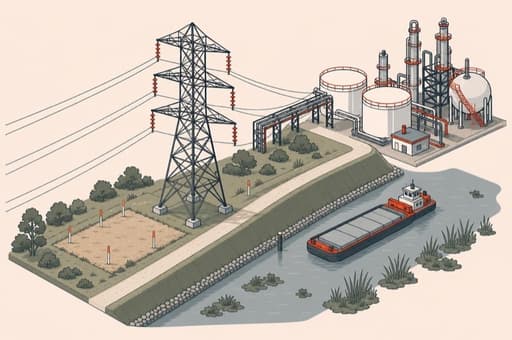
Entergy Louisiana
The largest of the five state utilities: 1,115,000 customers along the Mississippi River chemical corridor, and the home of the Meta deal. Nearly two-thirds of the five-year construction budget is being spent here, and every piece of it needs a regulator's yes.
Competes with Cleco Power's central Louisiana territory (Cleco) · SWEPCO's northwest Louisiana service (AEP) · Georgia Power's data center hosting (Southern Company)
In plain English
Picture one company owning the power plants, the tall lines and the poles down your street across much of Louisiana, with nobody else allowed to sell you power instead. That is this business.
It earns by spending. Regulators add approved equipment to the pile the company may take a profit on, then set rates that collect that profit; fuel is passed through at cost, so gas prices move the bill without moving the margin. A new chemical plant or a Meta campus is therefore not just a customer, it is permission to build. When regulators balk, the spending stops — a plan to buy a Texas gas plant was dropped in August 2026 over what it would cost customers.
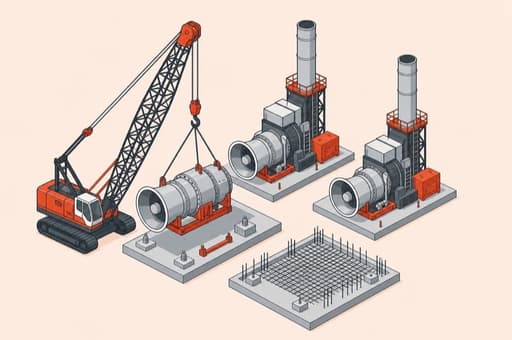
New gas power plants
The single biggest use of Entergy's money: about 8 gigawatts of gas-burning capacity approved and under construction through 2029, plus seven more units filed for Meta's Louisiana load. Every unit needs its own permission before a spade goes in.
Competes with New gas fleet for data center load (Southern Company) · Capacity sold into the open market (Vistra) · Merchant power plant capacity (NRG Energy)
In plain English
A combined-cycle gas plant burns gas to spin one turbine, then catches the leftover heat to spin a second — two helpings of electricity from one meal of fuel. Entergy has a stack of them approved or already rising: Delta Blues, Vicksburg and Traceview in Mississippi, Legend and Lone Star in Texas, Franklin Farms and Waterford 5 in Louisiana.
These plants do not sell anything the way a factory sells goods. They join the pile of equipment regulators allow a return on, and customers' rates carry both the cost and the profit — which is exactly why a commission can stop one cold.
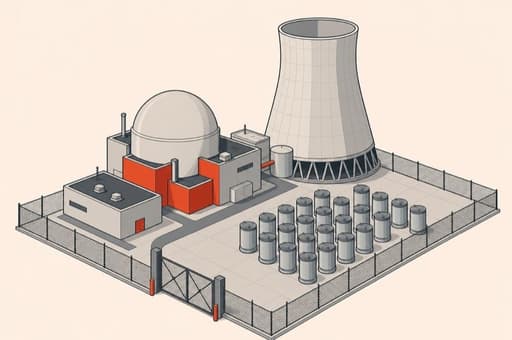
Nuclear fleet and Grand Gulf
Five reactors at four sites, roughly a third of the electricity Entergy sells, and carbon-free power that runs around the clock — the scarcest thing it has to offer data-center buyers. Licences run from 2034 to 2045; anything beyond today's fleet is study, not budget.
Competes with Nuclear power sold direct to data centers (Constellation Energy) · Merchant nuclear output (Vistra) · Merchant nuclear output (Talen Energy)
In plain English
Arkansas Nuclear One's two units, River Bend, Waterford 3 and Grand Gulf — five reactors that run day and night, year round, and together cover about a third of the power Entergy sells.
Grand Gulf is held through a separate company, System Energy Resources, with one job: hand everything the plant makes to the Entergy utilities in Arkansas, Mississippi and New Orleans at a price federal regulators reset monthly to cover costs plus an agreed profit. None of it goes to the open market, so nobody here wins or loses on what power happens to fetch on a hot afternoon.
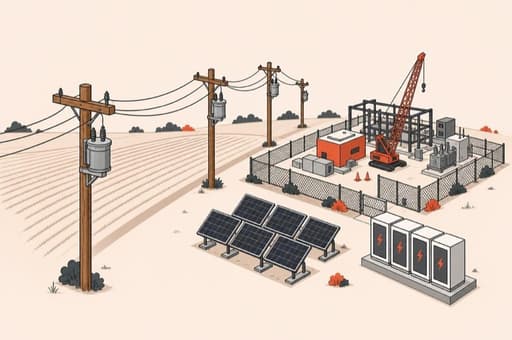
Entergy Arkansas
Second-biggest of the five, and unusual for how much equipment sits behind each customer — the two Arkansas Nuclear One reactors explain most of that. Google's West Memphis site is the new anchor, with a solar farm and battery bank being built for it.
Competes with Public power supply to the Memphis metro (Tennessee Valley Authority) · SWEPCO's Arkansas territory (AEP)
In plain English
Three-quarters of a million homes and businesses, poles and wires strung across the state, and rates that sit below what the rest of the system charges.
What stands out is the $11.4 billion of equipment behind those customers — two nuclear reactors are expensive things to own, and every dollar of them earns a return. Regulators here trim rates up or down once a year against a formula rather than staging a long hearing, and a state jobs law lets the company collect cash while it is still building for a new employer, instead of waiting for the switch to be flipped.
Entergy Texas
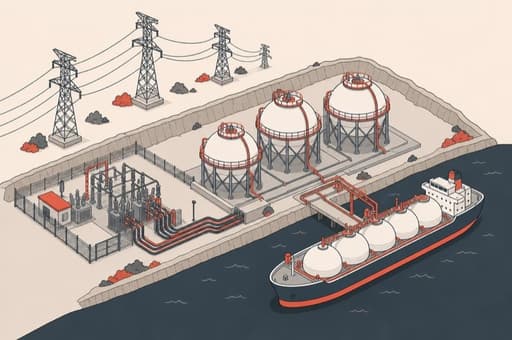
The Texas utility that still owns its power plants and sits outside the famous Texas grid. Gas export terminals on the coast drive the load; a 1,215-megawatt plant began firing in early 2026. Rate increases arrive in lumpy cases, not yearly.
Competes with Oncor's wires service (Oncor) · Houston Electric wires service (CenterPoint Energy) · AEP Texas wires service (AEP)
In plain English
Oncor and CenterPoint, the wires companies elsewhere in the state, move other people's electricity. This one still makes the electricity, in plants it owns, and sells it to 538,000 customers in the state's southeast corner — and it belongs to a different regional power market from the rest of Texas.
Getting paid works differently here too. There is no yearly formula: Entergy Texas argues a full case with regulators every few years and collects smaller top-ups in between, so recovery of what it spends comes in lumps. In 2026 it won its first charge covering the cost of keeping spare capacity on hand, something its sister utilities already had.
Data center power agreements (Fair Share Plus)
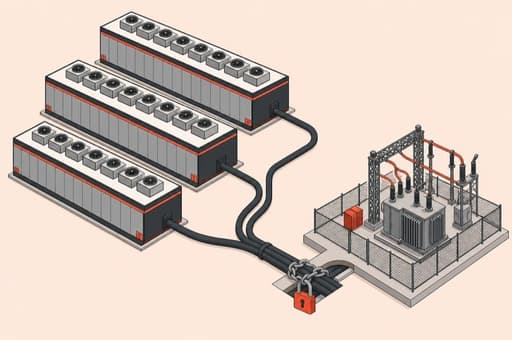
Amazon in Mississippi, Meta in Louisiana, Google in Arkansas, each signed for fifteen to twenty years with a floor under the bill. Big industrial users together paid 27.8% of 2025 revenue; Meta's Louisiana load is contracted to become the largest single customer.
Competes with Virginia large-load data center service (Dominion Energy) · Mississippi Power large-load service (Southern Company) · Nuclear power sold direct to data centers (Constellation Energy)
In plain English
The buildings are windowless warehouses full of computers, and computers run on electricity. The ones Entergy is talking to but has not signed would want 7 to 12 gigawatts between them, against roughly 25 gigawatts of generating capacity the company owns today.
Three buyers have signed: Amazon's cloud arm in Mississippi, Meta in Louisiana, Google in Arkansas. Each commits for fifteen to twenty years, accepts a floor on its bill, pays a fee for leaving early and puts cash toward the lines and plants built for it. Entergy says those terms are already easing other people's bills — Mississippi households avoided a roughly $5 monthly increase in 2026.
Entergy Mississippi
Fewer customers than the Louisiana, Arkansas and Texas utilities, but the most favourable rules in the system: an 11.25% allowed profit rate at the midpoint and a formula that lets new spending reach bills before a full hearing.
Competes with Mississippi Power's in-state service (Southern Company) · New Caledonia turbine supply (Tennessee Valley Authority) · Member-owned power supply (Cooperative Energy)
In plain English
The small sibling with the best terms. Same business as the others — own the wires and the plants, sell power under a franchise nobody else can bid for — except that state regulators allow a higher profit rate here, 11.25% at the midpoint, and let fresh investment start earning sooner.
The system's first big data-center customer landed here: Amazon's two campuses north of Jackson have been taking power since 2024. Three gas plants of 754 megawatts each are going up to serve the growing load, and the utility took on a slice of the Grand Gulf nuclear plant from its Louisiana sibling.


 Entergy LouisianaThe largest of the five state utilities: 1,115,000 customers along the Mississippi River chemical corridor, and the home of the Meta deal. Nearly two-thirds of the five-year construction budget is being spent here, and every piece of it needs a regulator's yes.
The largest of the five state utilities: 1,115,000 customers along the Mississippi River chemical corridor, and the home of the Meta deal. Nearly two-thirds of the five-year construction budget is being spent here, and every piece of it needs a regulator's yes.
In plain English
Picture one company owning the power plants, the tall lines and the poles down your street across much of Louisiana, with nobody else allowed to sell you power instead. That is this business.
It earns by spending. Regulators add approved equipment to the pile the company may take a profit on, then set rates that collect that profit; fuel is passed through at cost, so gas prices move the bill without moving the margin. A new chemical plant or a Meta campus is therefore not just a customer, it is permission to build. When regulators balk, the spending stops — a plan to buy a Texas gas plant was dropped in August 2026 over what it would cost customers.
Competes with Cleco Power's central Louisiana territory (Cleco) · SWEPCO's northwest Louisiana service (AEP) · Georgia Power's data center hosting (Southern Company)
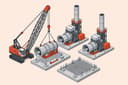 New gas power plantsThe single biggest use of Entergy's money: about 8 gigawatts of gas-burning capacity approved and under construction through 2029, plus seven more units filed for Meta's Louisiana load. Every unit needs its own permission before a spade goes in.
The single biggest use of Entergy's money: about 8 gigawatts of gas-burning capacity approved and under construction through 2029, plus seven more units filed for Meta's Louisiana load. Every unit needs its own permission before a spade goes in.
In plain English
A combined-cycle gas plant burns gas to spin one turbine, then catches the leftover heat to spin a second — two helpings of electricity from one meal of fuel. Entergy has a stack of them approved or already rising: Delta Blues, Vicksburg and Traceview in Mississippi, Legend and Lone Star in Texas, Franklin Farms and Waterford 5 in Louisiana.
These plants do not sell anything the way a factory sells goods. They join the pile of equipment regulators allow a return on, and customers' rates carry both the cost and the profit — which is exactly why a commission can stop one cold.
Competes with New gas fleet for data center load (Southern Company) · Capacity sold into the open market (Vistra) · Merchant power plant capacity (NRG Energy)
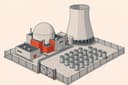 Nuclear fleet and Grand GulfFive reactors at four sites, roughly a third of the electricity Entergy sells, and carbon-free power that runs around the clock — the scarcest thing it has to offer data-center buyers. Licences run from 2034 to 2045; anything beyond today's fleet is study, not budget.
Five reactors at four sites, roughly a third of the electricity Entergy sells, and carbon-free power that runs around the clock — the scarcest thing it has to offer data-center buyers. Licences run from 2034 to 2045; anything beyond today's fleet is study, not budget.
In plain English
Arkansas Nuclear One's two units, River Bend, Waterford 3 and Grand Gulf — five reactors that run day and night, year round, and together cover about a third of the power Entergy sells.
Grand Gulf is held through a separate company, System Energy Resources, with one job: hand everything the plant makes to the Entergy utilities in Arkansas, Mississippi and New Orleans at a price federal regulators reset monthly to cover costs plus an agreed profit. None of it goes to the open market, so nobody here wins or loses on what power happens to fetch on a hot afternoon.
Competes with Nuclear power sold direct to data centers (Constellation Energy) · Merchant nuclear output (Vistra) · Merchant nuclear output (Talen Energy)
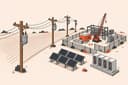 Entergy ArkansasSecond-biggest of the five, and unusual for how much equipment sits behind each customer — the two Arkansas Nuclear One reactors explain most of that. Google's West Memphis site is the new anchor, with a solar farm and battery bank being built for it.
Second-biggest of the five, and unusual for how much equipment sits behind each customer — the two Arkansas Nuclear One reactors explain most of that. Google's West Memphis site is the new anchor, with a solar farm and battery bank being built for it.
In plain English
Three-quarters of a million homes and businesses, poles and wires strung across the state, and rates that sit below what the rest of the system charges.
What stands out is the $11.4 billion of equipment behind those customers — two nuclear reactors are expensive things to own, and every dollar of them earns a return. Regulators here trim rates up or down once a year against a formula rather than staging a long hearing, and a state jobs law lets the company collect cash while it is still building for a new employer, instead of waiting for the switch to be flipped.
Competes with Public power supply to the Memphis metro (Tennessee Valley Authority) · SWEPCO's Arkansas territory (AEP)
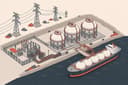 Entergy TexasThe Texas utility that still owns its power plants and sits outside the famous Texas grid. Gas export terminals on the coast drive the load; a 1,215-megawatt plant began firing in early 2026. Rate increases arrive in lumpy cases, not yearly.
The Texas utility that still owns its power plants and sits outside the famous Texas grid. Gas export terminals on the coast drive the load; a 1,215-megawatt plant began firing in early 2026. Rate increases arrive in lumpy cases, not yearly.
In plain English
Oncor and CenterPoint, the wires companies elsewhere in the state, move other people's electricity. This one still makes the electricity, in plants it owns, and sells it to 538,000 customers in the state's southeast corner — and it belongs to a different regional power market from the rest of Texas.
Getting paid works differently here too. There is no yearly formula: Entergy Texas argues a full case with regulators every few years and collects smaller top-ups in between, so recovery of what it spends comes in lumps. In 2026 it won its first charge covering the cost of keeping spare capacity on hand, something its sister utilities already had.
Competes with Oncor's wires service (Oncor) · Houston Electric wires service (CenterPoint Energy) · AEP Texas wires service (AEP)
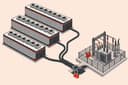 Data center power agreements (Fair Share Plus)Amazon in Mississippi, Meta in Louisiana, Google in Arkansas, each signed for fifteen to twenty years with a floor under the bill. Big industrial users together paid 27.8% of 2025 revenue; Meta's Louisiana load is contracted to become the largest single customer.
Amazon in Mississippi, Meta in Louisiana, Google in Arkansas, each signed for fifteen to twenty years with a floor under the bill. Big industrial users together paid 27.8% of 2025 revenue; Meta's Louisiana load is contracted to become the largest single customer.
In plain English
The buildings are windowless warehouses full of computers, and computers run on electricity. The ones Entergy is talking to but has not signed would want 7 to 12 gigawatts between them, against roughly 25 gigawatts of generating capacity the company owns today.
Three buyers have signed: Amazon's cloud arm in Mississippi, Meta in Louisiana, Google in Arkansas. Each commits for fifteen to twenty years, accepts a floor on its bill, pays a fee for leaving early and puts cash toward the lines and plants built for it. Entergy says those terms are already easing other people's bills — Mississippi households avoided a roughly $5 monthly increase in 2026.
Competes with Virginia large-load data center service (Dominion Energy) · Mississippi Power large-load service (Southern Company) · Nuclear power sold direct to data centers (Constellation Energy)
 Entergy MississippiFewer customers than the Louisiana, Arkansas and Texas utilities, but the most favourable rules in the system: an 11.25% allowed profit rate at the midpoint and a formula that lets new spending reach bills before a full hearing.
Fewer customers than the Louisiana, Arkansas and Texas utilities, but the most favourable rules in the system: an 11.25% allowed profit rate at the midpoint and a formula that lets new spending reach bills before a full hearing.
In plain English
The small sibling with the best terms. Same business as the others — own the wires and the plants, sell power under a franchise nobody else can bid for — except that state regulators allow a higher profit rate here, 11.25% at the midpoint, and let fresh investment start earning sooner.
The system's first big data-center customer landed here: Amazon's two campuses north of Jackson have been taking power since 2024. Three gas plants of 754 megawatts each are going up to serve the growing load, and the utility took on a slice of the Grand Gulf nuclear plant from its Louisiana sibling.
Competes with Mississippi Power's in-state service (Southern Company) · New Caledonia turbine supply (Tennessee Valley Authority) · Member-owned power supply (Cooperative Energy)
Named in filings, launches and programs
- Entergy New OrleansBrandThe only one answering to a city council instead of a state commission — 209,000 customers and the smallest building budget of the five.
- Renewables and storage portfolioProduct line · Ramping$7 billion of the plan goes to solar farms and battery banks; Cypress Solar with 350 MW of batteries is approved, more await decisions.
- Orange County Advanced Power StationProduct · RampingEntergy Texas's 1,215-megawatt gas plant: first fire in early 2026, expected fully online by late summer.
- Richland Parish and Pointe Coupee unitsProduct · AnnouncedSeven gas units totalling 5,278 megawatts filed for Meta's Louisiana load, due 2030–31 and still awaiting a decision.
- Legend and Lone Star unitsProduct · AnnouncedA 754-megawatt gas plant and a 453-megawatt turbine for Texas, approved by state regulators in September 2025 and due in 2028.
- Accelerated resilience programsServiceStorm-hardening work: poles rebuilt for 150 mph winds in Saint Bernard, a $337 million Texas plan, and a smaller Louisiana phase filed to hold bills down.
- Self-healing network programEcosystemMore than 400 self-healing networks built since 2021, serving over 500,000 customers and heading off 700,000-plus interruptions.
- Energy efficiency portfolioServicePrograms that help homes, businesses and factories use less power; Entergy Louisiana awarded ICF a $35 million contract to run them in August 2026.
- Green and nuclear clean tariffsProduct lineClean-power products for large industrial customers that want carbon-free electricity written into their bill.
- Sales for ResaleProduct linePower sold wholesale to other utilities and cooperatives: $434.4 million in 2025, 3.4% of revenue.
- Other electric and governmental revenueProduct lineOdds and ends plus city and state accounts: $518.7 million and $276.1 million in 2025; the first line swings hard by season.
- Entergy ServicesBrandThe in-house shared-services arm for the five utilities — $265 million of planned spending, none of it earning a regulated return.
- Holtec small modular reactor agreementProduct · Pre-revenueA signed memorandum with Holtec on small reactors, plus a studied 275–300 megawatts of extra output from today's units — none of it funded.
Entergy New OrleansBrand
The only one answering to a city council instead of a state commission — 209,000 customers and the smallest building budget of the five.
Renewables and storage portfolioProduct line · Ramping
$7 billion of the plan goes to solar farms and battery banks; Cypress Solar with 350 MW of batteries is approved, more await decisions.
Orange County Advanced Power StationProduct · Ramping
Entergy Texas's 1,215-megawatt gas plant: first fire in early 2026, expected fully online by late summer.
Richland Parish and Pointe Coupee unitsProduct · Announced
Seven gas units totalling 5,278 megawatts filed for Meta's Louisiana load, due 2030–31 and still awaiting a decision.
Legend and Lone Star unitsProduct · Announced
A 754-megawatt gas plant and a 453-megawatt turbine for Texas, approved by state regulators in September 2025 and due in 2028.
Accelerated resilience programsService
Storm-hardening work: poles rebuilt for 150 mph winds in Saint Bernard, a $337 million Texas plan, and a smaller Louisiana phase filed to hold bills down.
Self-healing network programEcosystem
More than 400 self-healing networks built since 2021, serving over 500,000 customers and heading off 700,000-plus interruptions.
Energy efficiency portfolioService
Programs that help homes, businesses and factories use less power; Entergy Louisiana awarded ICF a $35 million contract to run them in August 2026.
Green and nuclear clean tariffsProduct line
Clean-power products for large industrial customers that want carbon-free electricity written into their bill.
Sales for ResaleProduct line
Power sold wholesale to other utilities and cooperatives: $434.4 million in 2025, 3.4% of revenue.
Other electric and governmental revenueProduct line
Odds and ends plus city and state accounts: $518.7 million and $276.1 million in 2025; the first line swings hard by season.
Entergy ServicesBrand
The in-house shared-services arm for the five utilities — $265 million of planned spending, none of it earning a regulated return.
Holtec small modular reactor agreementProduct · Pre-revenue
A signed memorandum with Holtec on small reactors, plus a studied 275–300 megawatts of extra output from today's units — none of it funded.