
Expand Energy (EXE)
Produces natural gas, oil and NGLs across Haynesville and Appalachian shale basins.
Something off on this page? Send us feedback.
Expand Energy pulls natural gas out of the ground in Louisiana, Texas, Pennsylvania, West Virginia and Ohio, and produces more of it than anyone else in North America. Formed by a merger two years ago, it is now trying to stop being only a driller: it buys, stores, moves and resells other people's gas too, and has started signing decades-long supply deals with export plants and factories.
Item facts: FY2025 · year ended Dec 31, 2025, from filings, earnings calls and company pages.
Judgment weights, not filed revenue
The band summarizes business focus and direction. ~ marks estimates.
8 in detail · 9 more below
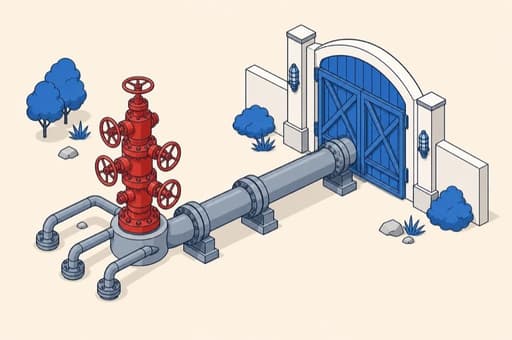
Haynesville
The Louisiana and East Texas gas fields, the company's largest single piece at nearly 30% of revenue. Its biggest customers are the Gulf Coast plants that chill gas into liquid for export, taking about 2 billion cubic feet a day.
Competes with Haynesville/Bossier drilling program (Comstock Resources) · Haynesville position (Aethon Energy)
In plain English
Deep under Louisiana and East Texas sits rock full of natural gas. Expand drills wells into it, and the gas travels away through pipeline space the company pays to reserve in advance.
Who pays for it? Mostly the enormous plants on the Gulf Coast that chill gas until it turns to liquid, so tankers can carry it overseas. Those plants are Expand's biggest customers here, and geography is the whole advantage: this is the closest big field of near-pure gas to them. Expand does not set the price — the market does — so the same gas can be worth a lot one winter and very little the next.
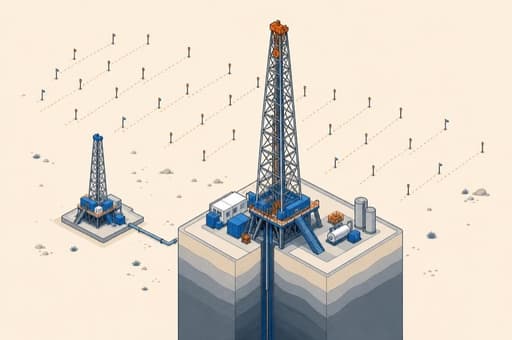
Western Haynesville appraisal program
A deeper, hotter, higher-pressure extension of the same rock, picked up acre by acre and tested well by well. About $75 million of a roughly $2.9 billion budget — future drilling inventory, not production for next year.
Competes with Western Haynesville program (Comstock Resources) · Western Haynesville and East Texas position (Aethon Energy)
In plain English
Picture a shale field as having a well-known middle and edges nobody has proved yet. Expand bought over 75,000 acres out on one edge, in East Texas, where the same gas-bearing rock runs deeper, hotter and under more pressure — harder to drill, and unproven.
On its own it earns nothing yet; whatever it produces is counted with the rest of the Haynesville. What the spending buys is time. Each cheap acre and each test well either adds years of future drilling spots or does not — and management says it picked up over a hundred spots deeper still, for under half a million dollars each. The first far-western test well came in at 27.5 million cubic feet a day.
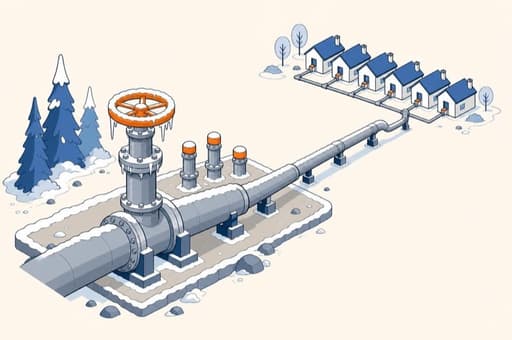
Northeast Appalachia
The Pennsylvania fields, where the gas comes up with almost no liquids in it. About a quarter of revenue and the most seasonal line here: money from it fell 64% between the first and second quarters of 2026. Growth waits on new pipes out of the region.
Competes with Appalachian Marcellus and Utica production (EQT Corporation) · Appalachian dry gas (CNX Resources)
In plain English
Same rock-and-pipe business as the Gulf Coast fields, with a very different customer. The buyers here are northeastern utilities and the firms that keep homes, offices and factories supplied, and they want the most gas when it is coldest.
So winter is the payday and summer is thin. The other catch is plumbing: only so many pipes leave the region, so gas Expand could produce sometimes has nowhere to go. Management's hope is that new demand gets built right there — power plants, data centers — and takes the gas locally instead. No such contract has been signed in Appalachia yet.
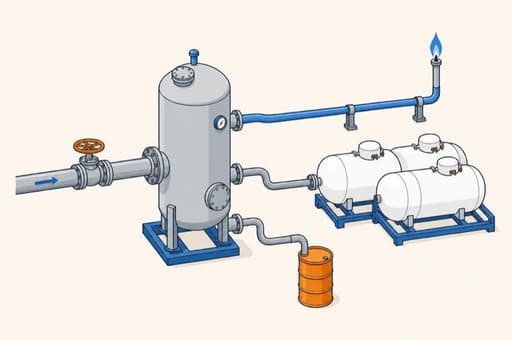
Southwest Appalachia
The West Virginia and Ohio position, where gas comes up mixed with liquids. It carries nearly all of the company's $724M of liquids and $319M of oil revenue, which makes it the steadiest area quarter to quarter.
Competes with Liquids-rich Marcellus and Utica wells (Antero Resources) · Southwest Pennsylvania wet gas (Range Resources)
In plain English
Not all underground gas is the same. What comes up here is a cocktail: mostly natural gas, plus heavier parts that turn to liquid — the propane in a barbecue tank, the ethane that plastics are made from — and a little crude oil.
Those liquids are separated out and sold to different buyers at different prices, tied to world propane and ethane markets rather than the US gas price. That is why this is the calmest of the three areas: when gas sags in summer, the liquids keep paying. It is also where Expand competes hardest for space at the plants that split the mix apart.
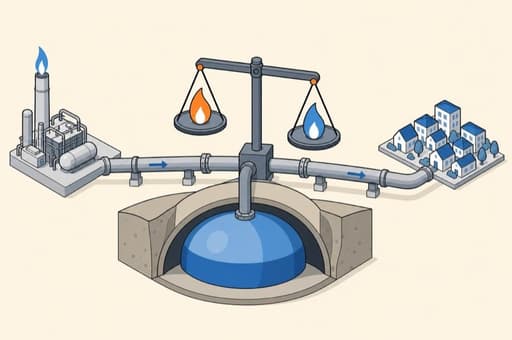
Marketing (buying and reselling gas)
Buying other people's gas and reselling it: $3.16 billion of 2025 revenue at barely any mark-up, so it matters far less to profit than that number looks. Management's goal is $750 million a year of extra cash from this work, Twin Eagle included.
Competes with Tenaska Marketing Ventures (Tenaska) · BP Energy Company (BP) · Sequent Energy Management (Williams)
In plain English
The unglamorous middle of the gas business. Pipeline space and storage caverns have to be booked in advance like airline seats, and Expand books plenty of both — so it also buys gas from other producers and sells it on.
The money is in moving it, not owning it: buy where gas is cheap, sell where it is dear, or push it underground in summer and pull it out in a winter cold snap. Because the whole sale price flows through revenue while the gain is only the slice in between, this looks like a quarter of the company and earns much less than that. Choppy prices are the friend here; a calm year is a poor one.
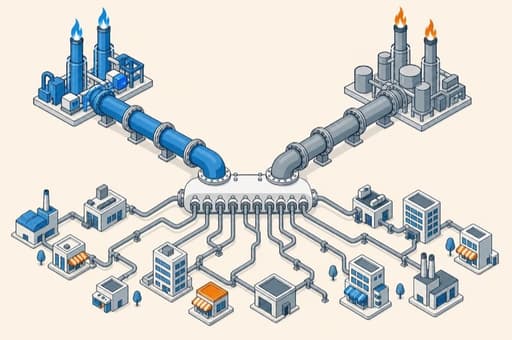
Twin Eagle
A gas trading business bought for $1.25 billion and folded in this September. It sells over 5 billion cubic feet a day and serves more than a thousand customers. Management expects over $200 million a year of cash profit at first, heading toward $350 million.
Competes with Sequent Energy Management (Williams) · Macquarie Energy (Macquarie) · Tenaska Marketing Ventures (Tenaska)
In plain English
Expand had the gas and the pipeline space; Twin Eagle had the customer list. Founded in 2010 and bought from an infrastructure investor, it sells gas to about a thousand buyers — factories, utilities, large commercial users — across the United States and Canada, and holds about 44 billion cubic feet of storage.
Put together, the two market about 14 billion cubic feet a day, roughly twice what Expand produces itself. The point is not to gamble on the gas price: management describes the business as winning customers and squeezing value out of pipes and storage rather than betting on direction. Its own chief executive stays on to run it.
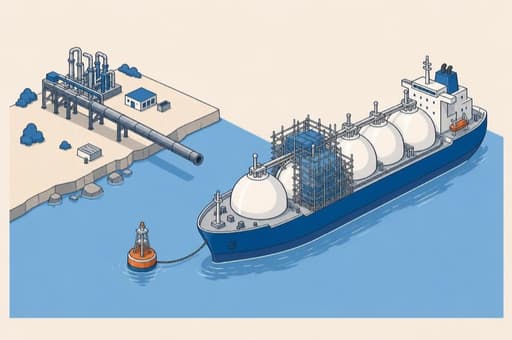
Delfin FLNG 1 LNG purchase agreement
A 20-year deal signed in April 2026 to buy about 1.15 million tonnes a year of gas chilled to liquid from a floating export vessel and sell it abroad — roughly 2% of production. Nothing happens unless the vessel gets funded and built.
Competes with Commonwealth LNG purchase agreement (EQT Corporation) · Port Arthur Phase 2 LNG purchase (ConocoPhillips)
In plain English
Gas is worth different amounts in different places: cheap in Louisiana, dearer in Asia or Europe. The only way to move it there is to chill it into liquid and ship it, and Expand owns no plant that does that.
So it signed up as a customer of one instead. For twenty years it will buy liquid gas from a vessel Delfin plans to moor offshore, paying a price tied to the US benchmark and selling at whatever overseas buyers pay. The gap between the two is the prize. The catch: the vessel is not built and the owners have not committed the money, so this is a claim on a price gap, not a shipment next year.
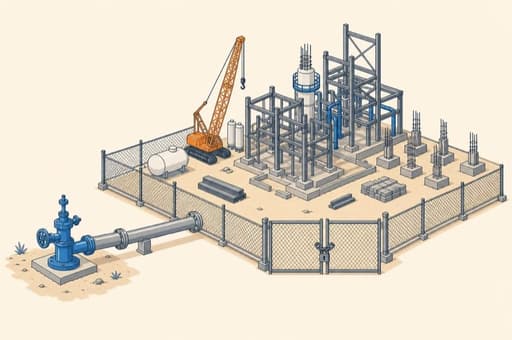
Lake Charles Methanol gas supply agreement
Expand would be the only gas supplier to a methanol plant that is still on the drawing board, for 15 years at a price above the national benchmark. The owners have not committed the money yet; management treats the deal as a template to repeat.
Competes with CPV Shay Energy Center supply deal (EQT Corporation) · Gas supplied straight to data centers (Coterra Energy)
In plain English
Here is the other way to be paid more: find a buyer who has nowhere else to go. A company wants to build a plant that turns natural gas into methanol, a basic industrial chemical, and it needs one dependable supplier for decades. Expand signed up to be that supplier for fifteen years, at a price above the usual national benchmark.
Why pay extra? Because the plant's own output is already spoken for by strong buyers, so the gas contract underwrites itself. It was also the first sale of Expand's gas certified as lower-carbon. No plant, no money — the project has not been given the go-ahead.


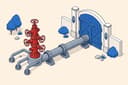 HaynesvilleThe Louisiana and East Texas gas fields, the company's largest single piece at nearly 30% of revenue. Its biggest customers are the Gulf Coast plants that chill gas into liquid for export, taking about 2 billion cubic feet a day.
The Louisiana and East Texas gas fields, the company's largest single piece at nearly 30% of revenue. Its biggest customers are the Gulf Coast plants that chill gas into liquid for export, taking about 2 billion cubic feet a day.
In plain English
Deep under Louisiana and East Texas sits rock full of natural gas. Expand drills wells into it, and the gas travels away through pipeline space the company pays to reserve in advance.
Who pays for it? Mostly the enormous plants on the Gulf Coast that chill gas until it turns to liquid, so tankers can carry it overseas. Those plants are Expand's biggest customers here, and geography is the whole advantage: this is the closest big field of near-pure gas to them. Expand does not set the price — the market does — so the same gas can be worth a lot one winter and very little the next.
Competes with Haynesville/Bossier drilling program (Comstock Resources) · Haynesville position (Aethon Energy)
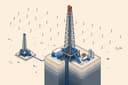 Western Haynesville appraisal programA deeper, hotter, higher-pressure extension of the same rock, picked up acre by acre and tested well by well. About $75 million of a roughly $2.9 billion budget — future drilling inventory, not production for next year.
A deeper, hotter, higher-pressure extension of the same rock, picked up acre by acre and tested well by well. About $75 million of a roughly $2.9 billion budget — future drilling inventory, not production for next year.
In plain English
Picture a shale field as having a well-known middle and edges nobody has proved yet. Expand bought over 75,000 acres out on one edge, in East Texas, where the same gas-bearing rock runs deeper, hotter and under more pressure — harder to drill, and unproven.
On its own it earns nothing yet; whatever it produces is counted with the rest of the Haynesville. What the spending buys is time. Each cheap acre and each test well either adds years of future drilling spots or does not — and management says it picked up over a hundred spots deeper still, for under half a million dollars each. The first far-western test well came in at 27.5 million cubic feet a day.
Competes with Western Haynesville program (Comstock Resources) · Western Haynesville and East Texas position (Aethon Energy)
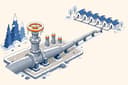 Northeast AppalachiaThe Pennsylvania fields, where the gas comes up with almost no liquids in it. About a quarter of revenue and the most seasonal line here: money from it fell 64% between the first and second quarters of 2026. Growth waits on new pipes out of the region.
The Pennsylvania fields, where the gas comes up with almost no liquids in it. About a quarter of revenue and the most seasonal line here: money from it fell 64% between the first and second quarters of 2026. Growth waits on new pipes out of the region.
In plain English
Same rock-and-pipe business as the Gulf Coast fields, with a very different customer. The buyers here are northeastern utilities and the firms that keep homes, offices and factories supplied, and they want the most gas when it is coldest.
So winter is the payday and summer is thin. The other catch is plumbing: only so many pipes leave the region, so gas Expand could produce sometimes has nowhere to go. Management's hope is that new demand gets built right there — power plants, data centers — and takes the gas locally instead. No such contract has been signed in Appalachia yet.
Competes with Appalachian Marcellus and Utica production (EQT Corporation) · Appalachian dry gas (CNX Resources)
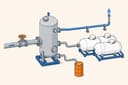 Southwest AppalachiaThe West Virginia and Ohio position, where gas comes up mixed with liquids. It carries nearly all of the company's $724M of liquids and $319M of oil revenue, which makes it the steadiest area quarter to quarter.
The West Virginia and Ohio position, where gas comes up mixed with liquids. It carries nearly all of the company's $724M of liquids and $319M of oil revenue, which makes it the steadiest area quarter to quarter.
In plain English
Not all underground gas is the same. What comes up here is a cocktail: mostly natural gas, plus heavier parts that turn to liquid — the propane in a barbecue tank, the ethane that plastics are made from — and a little crude oil.
Those liquids are separated out and sold to different buyers at different prices, tied to world propane and ethane markets rather than the US gas price. That is why this is the calmest of the three areas: when gas sags in summer, the liquids keep paying. It is also where Expand competes hardest for space at the plants that split the mix apart.
Competes with Liquids-rich Marcellus and Utica wells (Antero Resources) · Southwest Pennsylvania wet gas (Range Resources)
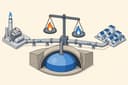 Marketing (buying and reselling gas)Buying other people's gas and reselling it: $3.16 billion of 2025 revenue at barely any mark-up, so it matters far less to profit than that number looks. Management's goal is $750 million a year of extra cash from this work, Twin Eagle included.
Buying other people's gas and reselling it: $3.16 billion of 2025 revenue at barely any mark-up, so it matters far less to profit than that number looks. Management's goal is $750 million a year of extra cash from this work, Twin Eagle included.
In plain English
The unglamorous middle of the gas business. Pipeline space and storage caverns have to be booked in advance like airline seats, and Expand books plenty of both — so it also buys gas from other producers and sells it on.
The money is in moving it, not owning it: buy where gas is cheap, sell where it is dear, or push it underground in summer and pull it out in a winter cold snap. Because the whole sale price flows through revenue while the gain is only the slice in between, this looks like a quarter of the company and earns much less than that. Choppy prices are the friend here; a calm year is a poor one.
Competes with Tenaska Marketing Ventures (Tenaska) · BP Energy Company (BP) · Sequent Energy Management (Williams)
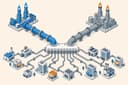 Twin EagleA gas trading business bought for $1.25 billion and folded in this September. It sells over 5 billion cubic feet a day and serves more than a thousand customers. Management expects over $200 million a year of cash profit at first, heading toward $350 million.
A gas trading business bought for $1.25 billion and folded in this September. It sells over 5 billion cubic feet a day and serves more than a thousand customers. Management expects over $200 million a year of cash profit at first, heading toward $350 million.
In plain English
Expand had the gas and the pipeline space; Twin Eagle had the customer list. Founded in 2010 and bought from an infrastructure investor, it sells gas to about a thousand buyers — factories, utilities, large commercial users — across the United States and Canada, and holds about 44 billion cubic feet of storage.
Put together, the two market about 14 billion cubic feet a day, roughly twice what Expand produces itself. The point is not to gamble on the gas price: management describes the business as winning customers and squeezing value out of pipes and storage rather than betting on direction. Its own chief executive stays on to run it.
Competes with Sequent Energy Management (Williams) · Macquarie Energy (Macquarie) · Tenaska Marketing Ventures (Tenaska)
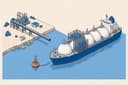 Delfin FLNG 1 LNG purchase agreementA 20-year deal signed in April 2026 to buy about 1.15 million tonnes a year of gas chilled to liquid from a floating export vessel and sell it abroad — roughly 2% of production. Nothing happens unless the vessel gets funded and built.
A 20-year deal signed in April 2026 to buy about 1.15 million tonnes a year of gas chilled to liquid from a floating export vessel and sell it abroad — roughly 2% of production. Nothing happens unless the vessel gets funded and built.
In plain English
Gas is worth different amounts in different places: cheap in Louisiana, dearer in Asia or Europe. The only way to move it there is to chill it into liquid and ship it, and Expand owns no plant that does that.
So it signed up as a customer of one instead. For twenty years it will buy liquid gas from a vessel Delfin plans to moor offshore, paying a price tied to the US benchmark and selling at whatever overseas buyers pay. The gap between the two is the prize. The catch: the vessel is not built and the owners have not committed the money, so this is a claim on a price gap, not a shipment next year.
Competes with Commonwealth LNG purchase agreement (EQT Corporation) · Port Arthur Phase 2 LNG purchase (ConocoPhillips)
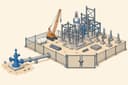 Lake Charles Methanol gas supply agreementExpand would be the only gas supplier to a methanol plant that is still on the drawing board, for 15 years at a price above the national benchmark. The owners have not committed the money yet; management treats the deal as a template to repeat.
Expand would be the only gas supplier to a methanol plant that is still on the drawing board, for 15 years at a price above the national benchmark. The owners have not committed the money yet; management treats the deal as a template to repeat.
In plain English
Here is the other way to be paid more: find a buyer who has nowhere else to go. A company wants to build a plant that turns natural gas into methanol, a basic industrial chemical, and it needs one dependable supplier for decades. Expand signed up to be that supplier for fifteen years, at a price above the usual national benchmark.
Why pay extra? Because the plant's own output is already spoken for by strong buyers, so the gas contract underwrites itself. It was also the first sale of Expand's gas certified as lower-carbon. No plant, no money — the project has not been given the go-ahead.
Competes with CPV Shay Energy Center supply deal (EQT Corporation) · Gas supplied straight to data centers (Coterra Energy)
Named in filings, launches and programs
- Firm transportation portfolio (LEAP, NG3)EcosystemReserved space on pipelines, about 9 billion cubic feet a day once Twin Eagle is counted, including the lines feeding the Gulf Coast export corridor.
- Natural gas storage portfolioEcosystemRoughly 49 billion cubic feet of storage after the Twin Eagle deal — 5 owned outright, the rest inherited. The one piece of plumbing Expand chose to own.
- Hedge-to-wedge programServiceLocks in prices two years ahead on a rolling basis; about 47% of 2026 was covered, mostly by deals setting both a floor and a cap on the price.
- Certified lower-carbon gasBrandGas tracked and certified as lower-carbon; first sold on that basis into the Lake Charles methanol agreement.
- Utica development, Southwest AppalachiaProduct lineOhio and West Virginia drilling targets in a second rock formation within the same acreage — the least-discussed part of the portfolio on earnings calls.
- Bradford County acreageProduct lineAbout 3,000 acres added in Pennsylvania in mid-2026, bolted onto the core of the northeastern position.
- Merger savings programServiceCombining Chesapeake and Southwestern is targeted to strip roughly $600 million of annual cost by 2026; headcount has fallen since the deal closed.
- Largest undisclosed purchaserCustomer programOne buyer accounted for 11% of 2025 revenue. The company has not said who it is.
- Dividend and buyback programService$0.575 a share each quarter plus repurchases — $765 million of dividends and $100 million of buybacks in 2025, paid out of the cash the fields throw off.
Firm transportation portfolio (LEAP, NG3)Ecosystem
Reserved space on pipelines, about 9 billion cubic feet a day once Twin Eagle is counted, including the lines feeding the Gulf Coast export corridor.
Natural gas storage portfolioEcosystem
Roughly 49 billion cubic feet of storage after the Twin Eagle deal — 5 owned outright, the rest inherited. The one piece of plumbing Expand chose to own.
Hedge-to-wedge programService
Locks in prices two years ahead on a rolling basis; about 47% of 2026 was covered, mostly by deals setting both a floor and a cap on the price.
Certified lower-carbon gasBrand
Gas tracked and certified as lower-carbon; first sold on that basis into the Lake Charles methanol agreement.
Utica development, Southwest AppalachiaProduct line
Ohio and West Virginia drilling targets in a second rock formation within the same acreage — the least-discussed part of the portfolio on earnings calls.
Bradford County acreageProduct line
About 3,000 acres added in Pennsylvania in mid-2026, bolted onto the core of the northeastern position.
Merger savings programService
Combining Chesapeake and Southwestern is targeted to strip roughly $600 million of annual cost by 2026; headcount has fallen since the deal closed.
Largest undisclosed purchaserCustomer program
One buyer accounted for 11% of 2025 revenue. The company has not said who it is.
Dividend and buyback programService
$0.575 a share each quarter plus repurchases — $765 million of dividends and $100 million of buybacks in 2025, paid out of the cash the fields throw off.