
FIS (FIS)
Runs core banking, card-issuing, and capital-markets technology for financial institutions.
Something off on this page? Send us feedback.
FIS builds and runs the software banks sit on: the ledgers behind your account, the machinery that moves money, the tools trading desks and company treasurers work in. It does not lend or hold deposits itself. Early this year it swapped its leftover stake in a card-acceptance business for a card-processing one. The slow, steady core pays the bills; payments, digital and cards are where it is pushing for growth.
Item facts: FY2026 · H1 filed through June 30, 2026, from filings, earnings calls and company pages.
Judgment weights, not filed revenue
The band summarizes business focus and direction. ~ marks estimates.
8 in detail · 12 more below
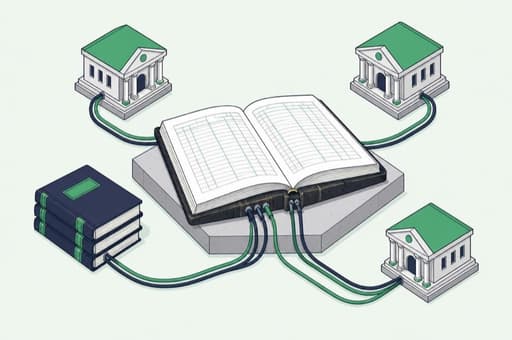
Core Processing and Ancillary Applications
The account ledgers banks run deposits and loans on — the biggest single block of FIS and its slowest grower. Roughly 30 million accounts were moved onto its systems in the year to mid-2026. Watch whether new bank charters and mergers keep it above its usual low-single-digit pace.
Competes with Premier, Signature and Finxact cores (Fiserv) · SilverLake core (Jack Henry) · Temenos Transact (Temenos)
In plain English
Every bank keeps one giant list: who has how much, what came in, what went out. FIS writes and runs that list for banks and credit unions, either selling them the program to run themselves or running it on its own machines and charging by the account.
Once a bank's ledger lives here, moving it out takes months of careful work, so banks renew rather than switch — which is why this is both the stickiest part of FIS and the slowest-growing large one. It is also the doorway: sell the ledger first, then sell the payment and digital pieces that plug into it.
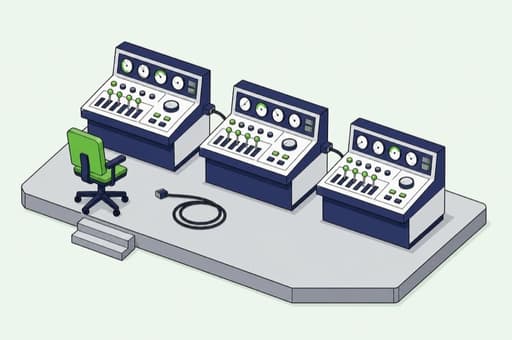
Capital Market Solutions
Software for trading desks, loan teams and corporate treasurers — the most profitable slice of FIS and the one that just disappointed. In August management cut its 2026 growth expectation to 3.0–3.5% from 5.5–6.5% and put some products under review.
Competes with Fidessa and cleared-derivatives suite (ION Group) · Calypso and AxiomSL (Nasdaq) · MX.3 trading and risk platform (Murex) · Loan IQ (Finastra)
In plain English
The part that sells to Wall Street rather than Main Street. Trading desks, loan departments and corporate finance teams run their day inside specialised programs: booking trades, tracking what is pledged against what, administering loans shared between several banks, watching where the company's cash sits across dozens of accounts.
FIS licenses and hosts that software on long contracts, so about three-quarters of the money here arrives as repeating fees. It carries the fattest profit margin in the company — and this year it is also where the stumble happened: growth expectations cut in August, and a review opened on some of the products.
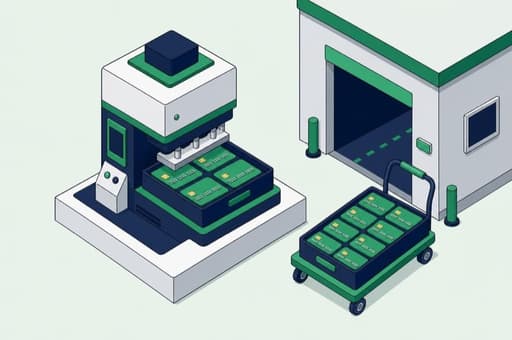
FIS Total Issuing Solutions
The former TSYS card-processing business, bought from Global Payments for $13.5 billion in January and rebranded. About 72% of its contracts now run through 2029 or beyond. Rival Fiserv says its own issuing book is nearly twice the size.
Competes with Issuer processing (Fiserv) · Pismo and DPS card issuing (Visa) · Marqeta card-issuing platform (Marqeta)
In plain English
When someone taps a credit or debit card, a machine somewhere has to check the account, approve it, put it on the statement and keep the record. A bank can do that itself or hand the job to a specialist. FIS became one of the big specialists in January, when it bought the business that does this — long known as TSYS — from Global Payments.
The bank pays a fee for each card account and each transaction; FIS takes no slice of what the cardholder spends. The appeal is predictability: these contracts run for years, and most of this book is already locked in to 2029 and past it.
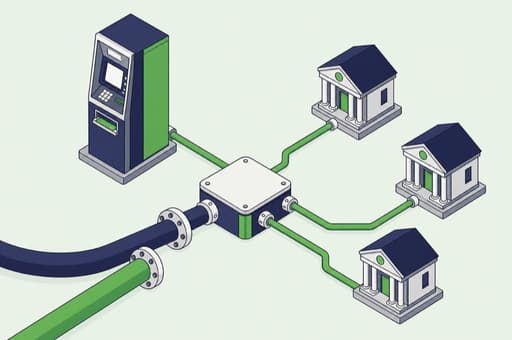
Card and Retail Payments, EFT and Network
The debit network, loyalty redemption and one-plug payment connections sold onto banks already running FIS ledgers. New payments contract value rose 70% in 2025. Watch whether it keeps growing while renting the newest instant-payment connections rather than owning them.
Competes with STAR and Accel debit networks (Fiserv) · Pulse debit network (Capital One) · Bank payment hubs (Jack Henry)
In plain English
Money leaving one bank and landing in another has to travel some road. FIS owns one of those roads — NYCE, a network that carries debit-card and cash-machine transactions — and it also sells banks a single connection point, Money Movement Hub, that reaches the new instant-transfer services as well as older ones like direct debit and wire.
Banks pay per connection and per transaction. The catch is ownership: the fastest new services belong to others, and FIS resells access rather than owning the track. Signings have been the quickest-moving thing on the bank side, the hub passing a hundred client banks inside its first year.
Lyriq and Project Keystone
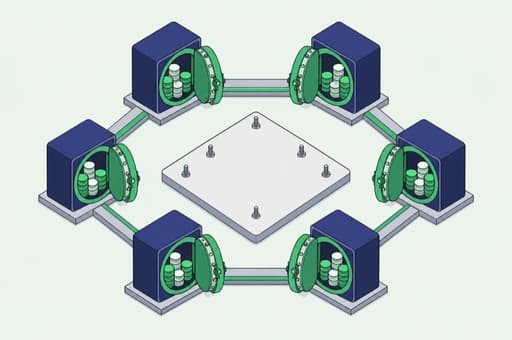
FIS software for banks that want deposits they can send and settle as digital tokens, plus the bank-owned network six US banks are building on it. No revenue, no pricing announced; regulators decide whether it becomes a business.
Competes with Kinexys deposit tokens (JPMorgan) · USDC digital dollar (Circle) · Fnality settlement network (Fnality)
In plain English
Banks are trying out a different way to hold your deposit: as a digital token that can be sent and settled in moments, with the rule-checking built into the base software instead of added afterwards. Lyriq is the FIS program for doing that, and it entered limited use in April 2026.
Project Keystone is the network six US banks — Citizens, Fifth Third, Huntington, KeyBank and M&T among them — are building on top of it. Nothing is being charged for yet. FIS has said it will not issue a digital currency of its own or compete with the banks using it: the deposits stay with them, FIS supplies the machinery.
Digital
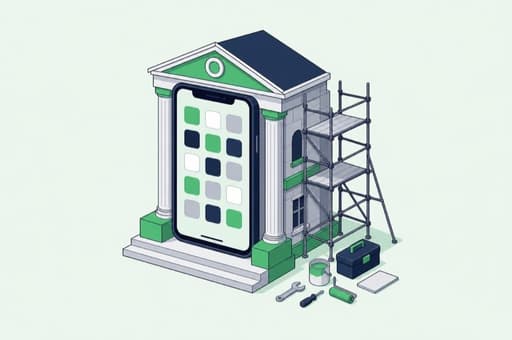
The apps and websites banks put in front of their customers, sold mostly to banks already on an FIS core. New digital contracts more than doubled in value during 2025; the revenue trails by however long installation takes.
Competes with Cloud Banking Platform (nCino) · Digital Banking Platform (Candescent) · Digital banking platform (Q2)
In plain English
The screens customers actually see. Digital One is the app-and-website layer FIS sells to banks so people can check balances, pay bills and open accounts; Dragonfly, bought in 2025, handles the heavier needs of business customers; Amount, also bought in 2025, uses AI to speed up account opening.
Banks pay a subscription, usually on top of the account systems they already rent from FIS. This is the fastest-climbing sales line the company reports — new digital contracts more than doubled in value in 2025 — but each one takes months of installation before a single dollar is billed, so orders run well ahead of revenue.
Fraud, Risk Management and Compliance
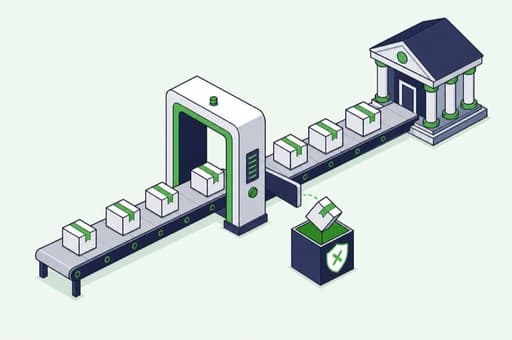
The systems that judge in an instant whether a payment looks wrong, plus the reporting that keeps regulators satisfied. A few percent of revenue — but it is where the company's new AI products are landing first.
Competes with Falcon fraud platform (FICO) · Actimize financial crime suite (NICE) · Financial Crime and Compliance (Oracle)
In plain English
A split-second judgment, made over and over all day: does this card tap match the way this customer normally behaves, or should it be stopped? FIS sells banks the software that makes that call, together with the record-keeping that supervisors expect to see.
It is a small slice of the revenue and an unglamorous one. Its value is position: it sits on the same account and payment data FIS already handles for its clients, which is why the company's new AI work is showing up here before anywhere else. Banks pay for it as a subscription attached to the accounts and cards FIS already runs.

FIS Data and AI Platform
Account, payment and trading data pooled so AI products can act on it — sold as features inside things banks already buy, not as its own line. Ten products out, roughly two hundred customers using them. Anthropic supplies the models.
Competes with General-purpose AI data platforms (Google Cloud) · Azure AI platform (Microsoft)
In plain English
Start with the raw material: FIS already handles the account records, payments and trades of a great many banks. This platform pools that information so software can act on it — spotting money laundering, chasing fraud, doing checking work people used to grind through by hand. Some of the thinking comes from Anthropic, the AI company FIS partnered with in April 2026 and signed up again in July; FIS says it owns the financial-crime software the two built together.
There is no price list and no separate revenue line. Ten products are out, roughly two hundred customers are using them, and the pitch is aimed at banks too small to hire an AI lab of their own.


 Core Processing and Ancillary ApplicationsThe account ledgers banks run deposits and loans on — the biggest single block of FIS and its slowest grower. Roughly 30 million accounts were moved onto its systems in the year to mid-2026. Watch whether new bank charters and mergers keep it above its usual low-single-digit pace.
The account ledgers banks run deposits and loans on — the biggest single block of FIS and its slowest grower. Roughly 30 million accounts were moved onto its systems in the year to mid-2026. Watch whether new bank charters and mergers keep it above its usual low-single-digit pace.
In plain English
Every bank keeps one giant list: who has how much, what came in, what went out. FIS writes and runs that list for banks and credit unions, either selling them the program to run themselves or running it on its own machines and charging by the account.
Once a bank's ledger lives here, moving it out takes months of careful work, so banks renew rather than switch — which is why this is both the stickiest part of FIS and the slowest-growing large one. It is also the doorway: sell the ledger first, then sell the payment and digital pieces that plug into it.
Competes with Premier, Signature and Finxact cores (Fiserv) · SilverLake core (Jack Henry) · Temenos Transact (Temenos)
 Capital Market SolutionsSoftware for trading desks, loan teams and corporate treasurers — the most profitable slice of FIS and the one that just disappointed. In August management cut its 2026 growth expectation to 3.0–3.5% from 5.5–6.5% and put some products under review.
Software for trading desks, loan teams and corporate treasurers — the most profitable slice of FIS and the one that just disappointed. In August management cut its 2026 growth expectation to 3.0–3.5% from 5.5–6.5% and put some products under review.
In plain English
The part that sells to Wall Street rather than Main Street. Trading desks, loan departments and corporate finance teams run their day inside specialised programs: booking trades, tracking what is pledged against what, administering loans shared between several banks, watching where the company's cash sits across dozens of accounts.
FIS licenses and hosts that software on long contracts, so about three-quarters of the money here arrives as repeating fees. It carries the fattest profit margin in the company — and this year it is also where the stumble happened: growth expectations cut in August, and a review opened on some of the products.
Competes with Fidessa and cleared-derivatives suite (ION Group) · Calypso and AxiomSL (Nasdaq) · MX.3 trading and risk platform (Murex) · Loan IQ (Finastra)
 FIS Total Issuing SolutionsThe former TSYS card-processing business, bought from Global Payments for $13.5 billion in January and rebranded. About 72% of its contracts now run through 2029 or beyond. Rival Fiserv says its own issuing book is nearly twice the size.
The former TSYS card-processing business, bought from Global Payments for $13.5 billion in January and rebranded. About 72% of its contracts now run through 2029 or beyond. Rival Fiserv says its own issuing book is nearly twice the size.
In plain English
When someone taps a credit or debit card, a machine somewhere has to check the account, approve it, put it on the statement and keep the record. A bank can do that itself or hand the job to a specialist. FIS became one of the big specialists in January, when it bought the business that does this — long known as TSYS — from Global Payments.
The bank pays a fee for each card account and each transaction; FIS takes no slice of what the cardholder spends. The appeal is predictability: these contracts run for years, and most of this book is already locked in to 2029 and past it.
Competes with Issuer processing (Fiserv) · Pismo and DPS card issuing (Visa) · Marqeta card-issuing platform (Marqeta)
 Card and Retail Payments, EFT and NetworkThe debit network, loyalty redemption and one-plug payment connections sold onto banks already running FIS ledgers. New payments contract value rose 70% in 2025. Watch whether it keeps growing while renting the newest instant-payment connections rather than owning them.
The debit network, loyalty redemption and one-plug payment connections sold onto banks already running FIS ledgers. New payments contract value rose 70% in 2025. Watch whether it keeps growing while renting the newest instant-payment connections rather than owning them.
In plain English
Money leaving one bank and landing in another has to travel some road. FIS owns one of those roads — NYCE, a network that carries debit-card and cash-machine transactions — and it also sells banks a single connection point, Money Movement Hub, that reaches the new instant-transfer services as well as older ones like direct debit and wire.
Banks pay per connection and per transaction. The catch is ownership: the fastest new services belong to others, and FIS resells access rather than owning the track. Signings have been the quickest-moving thing on the bank side, the hub passing a hundred client banks inside its first year.
Competes with STAR and Accel debit networks (Fiserv) · Pulse debit network (Capital One) · Bank payment hubs (Jack Henry)
 Lyriq and Project KeystoneFIS software for banks that want deposits they can send and settle as digital tokens, plus the bank-owned network six US banks are building on it. No revenue, no pricing announced; regulators decide whether it becomes a business.
FIS software for banks that want deposits they can send and settle as digital tokens, plus the bank-owned network six US banks are building on it. No revenue, no pricing announced; regulators decide whether it becomes a business.
In plain English
Banks are trying out a different way to hold your deposit: as a digital token that can be sent and settled in moments, with the rule-checking built into the base software instead of added afterwards. Lyriq is the FIS program for doing that, and it entered limited use in April 2026.
Project Keystone is the network six US banks — Citizens, Fifth Third, Huntington, KeyBank and M&T among them — are building on top of it. Nothing is being charged for yet. FIS has said it will not issue a digital currency of its own or compete with the banks using it: the deposits stay with them, FIS supplies the machinery.
Competes with Kinexys deposit tokens (JPMorgan) · USDC digital dollar (Circle) · Fnality settlement network (Fnality)
 DigitalThe apps and websites banks put in front of their customers, sold mostly to banks already on an FIS core. New digital contracts more than doubled in value during 2025; the revenue trails by however long installation takes.
The apps and websites banks put in front of their customers, sold mostly to banks already on an FIS core. New digital contracts more than doubled in value during 2025; the revenue trails by however long installation takes.
In plain English
The screens customers actually see. Digital One is the app-and-website layer FIS sells to banks so people can check balances, pay bills and open accounts; Dragonfly, bought in 2025, handles the heavier needs of business customers; Amount, also bought in 2025, uses AI to speed up account opening.
Banks pay a subscription, usually on top of the account systems they already rent from FIS. This is the fastest-climbing sales line the company reports — new digital contracts more than doubled in value in 2025 — but each one takes months of installation before a single dollar is billed, so orders run well ahead of revenue.
Competes with Cloud Banking Platform (nCino) · Digital Banking Platform (Candescent) · Digital banking platform (Q2)
 Fraud, Risk Management and ComplianceThe systems that judge in an instant whether a payment looks wrong, plus the reporting that keeps regulators satisfied. A few percent of revenue — but it is where the company's new AI products are landing first.
The systems that judge in an instant whether a payment looks wrong, plus the reporting that keeps regulators satisfied. A few percent of revenue — but it is where the company's new AI products are landing first.
In plain English
A split-second judgment, made over and over all day: does this card tap match the way this customer normally behaves, or should it be stopped? FIS sells banks the software that makes that call, together with the record-keeping that supervisors expect to see.
It is a small slice of the revenue and an unglamorous one. Its value is position: it sits on the same account and payment data FIS already handles for its clients, which is why the company's new AI work is showing up here before anywhere else. Banks pay for it as a subscription attached to the accounts and cards FIS already runs.
Competes with Falcon fraud platform (FICO) · Actimize financial crime suite (NICE) · Financial Crime and Compliance (Oracle)
 FIS Data and AI PlatformAccount, payment and trading data pooled so AI products can act on it — sold as features inside things banks already buy, not as its own line. Ten products out, roughly two hundred customers using them. Anthropic supplies the models.
Account, payment and trading data pooled so AI products can act on it — sold as features inside things banks already buy, not as its own line. Ten products out, roughly two hundred customers using them. Anthropic supplies the models.
In plain English
Start with the raw material: FIS already handles the account records, payments and trades of a great many banks. This platform pools that information so software can act on it — spotting money laundering, chasing fraud, doing checking work people used to grind through by hand. Some of the thinking comes from Anthropic, the AI company FIS partnered with in April 2026 and signed up again in July; FIS says it owns the financial-crime software the two built together.
There is no price list and no separate revenue line. Ten products are out, roughly two hundred customers are using them, and the pitch is aimed at banks too small to hire an AI lab of their own.
Competes with General-purpose AI data platforms (Google Cloud) · Azure AI platform (Microsoft)
Named in filings, launches and programs
- Item Processing and Output SolutionsProduct lineCheque processing and printed statements — a declining legacy line worth a couple of percent of revenue, still paying its way.
- Wealth and RetirementProduct lineRecord-keeping and platforms for wealth managers and retirement plans; a small, steady one-to-two percent of revenue.
- Code ConnectPlatformAn open doorway into the FIS account systems that lets outside fintech firms plug their products in; BankSouth signed on through it.
- FIS Embedded Banking PlatformProduct · AnnouncedLaunched September 2026: lets banks deliver accounts and payments inside their business customers' own software. No revenue yet; first go-lives expected late 2026.
- Dragonfly Financial TechnologiesBrandCommercial digital banking software bought in 2025; where it is installed, FIS says its win rates rose thirteen points.
- AmountBrandBought in 2025; uses AI to speed up opening a bank account online. Twenty-two deals signed by early 2026.
- EverlinkBrandCanadian payments company bought in 2025, extending the FIS money-movement connection into Canada.
- DroitBrandBought March 2026: software that checks a trade against the rulebook before it is placed. Folded into the capital-markets business.
- DemicaProduct lineSupply-chain finance software sitting inside the capital-markets lending line.
- SmartBasketProductAI tool for improving checkout, launched around the end of 2025.
- Worldpay commercial relationshipCustomer programThe card-acceptance business FIS separated from is now a paying customer, using its loyalty redemption and debit routing; the residual stake was sold in January 2026.
- Corporate and OtherSegmentThe leftover drawer — odds and ends belonging to neither main business, roughly $200 million of revenue in 2025.
Item Processing and Output SolutionsProduct line
Cheque processing and printed statements — a declining legacy line worth a couple of percent of revenue, still paying its way.
Wealth and RetirementProduct line
Record-keeping and platforms for wealth managers and retirement plans; a small, steady one-to-two percent of revenue.
Code ConnectPlatform
An open doorway into the FIS account systems that lets outside fintech firms plug their products in; BankSouth signed on through it.
FIS Embedded Banking PlatformProduct · Announced
Launched September 2026: lets banks deliver accounts and payments inside their business customers' own software. No revenue yet; first go-lives expected late 2026.
Dragonfly Financial TechnologiesBrand
Commercial digital banking software bought in 2025; where it is installed, FIS says its win rates rose thirteen points.
AmountBrand
Bought in 2025; uses AI to speed up opening a bank account online. Twenty-two deals signed by early 2026.
EverlinkBrand
Canadian payments company bought in 2025, extending the FIS money-movement connection into Canada.
DroitBrand
Bought March 2026: software that checks a trade against the rulebook before it is placed. Folded into the capital-markets business.
DemicaProduct line
Supply-chain finance software sitting inside the capital-markets lending line.
SmartBasketProduct
AI tool for improving checkout, launched around the end of 2025.
Worldpay commercial relationshipCustomer program
The card-acceptance business FIS separated from is now a paying customer, using its loyalty redemption and debit routing; the residual stake was sold in January 2026.
Corporate and OtherSegment
The leftover drawer — odds and ends belonging to neither main business, roughly $200 million of revenue in 2025.