
Formula One Group Series C (FWONK)
Owns Formula 1 and MotoGP commercial rights across global motorsport calendars.
Something off on this page? Send us feedback.
Liberty Media owns no race team, no track and no television channel. What it owns is the right to sell two racing world championships — Formula One and MotoGP — to broadcasters, to the cities that want a race, and to sponsors. Formula One is most of the business; MotoGP, bought last year, is the bet that the same playbook runs twice. The racing teams take their fixed slice of the profits first.
Item facts: FY2025 · year ended Dec 31, 2025, from filings, earnings calls and company pages.
Judgment weights, not filed revenue
The band summarizes business focus and direction. ~ marks estimates.
6 in detail · 11 more below
Formula 1 media rights
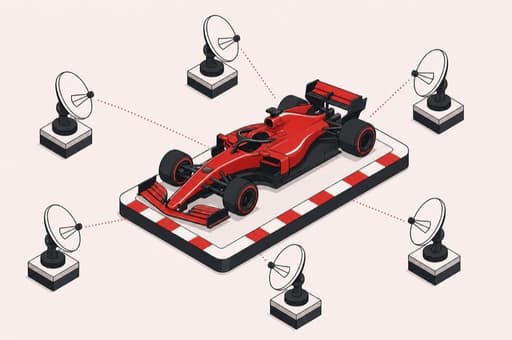
Country-by-country licences to show the races, roughly $1.2 billion in 2025. The biggest single stream at 31.3% of Formula 1's revenue; Apple takes the United States from the 2026 season and Sky is signed in the UK and Ireland to 2034.
Competes with NASCAR US media rights (NASCAR) · Premier League match packages (Premier League) · Champions League packages (UEFA)
In plain English
One race, sold over and over again. Formula 1 hands a broadcaster or a streaming service the right to show the season in a single country, on a deal that typically runs three to ten years, then does the same thing again in the next country. Like a band that plays one concert and sells the recording to a different radio station in every city.
Apple takes the American rights from 2026, replacing ESPN. Sky is signed in the UK and Ireland out to 2034 and Italy to 2032, and is thought to be the largest single payer — even so, it is under a tenth of Formula 1's money.
Formula 1 race promotion
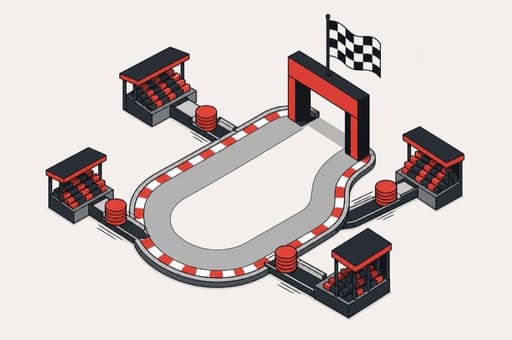
Cities and circuits pay for the right to stage a Grand Prix — 24 events in 21 countries in 2025. The calendar is already spoken for through 2028, so new money comes mostly from renewals rather than new dates.
Competes with NASCAR race sanctioning (NASCAR) · Olympic Games hosting (International Olympic Committee) · World Cup hosting (FIFA)
In plain English
A Grand Prix is the biggest weekend of the year for the place that holds it, and the place pays for the privilege. Circuit owners, governments and tourism boards hand Formula 1 a hosting fee, usually locked in for five to ten years, and in return they get the race, the crowds and their country on the calendar.
Published estimates put Qatar and Saudi Arabia near $55 million a year each and Monaco nearer $20 million; the company does not confirm them. With every slot filled through 2028 and more destinations asking, Formula 1 negotiates from the better side of the table: Austin is signed to 2034, Monaco to 2035, Austria to 2041.
Las Vegas Grand Prix and Grand Prix Plaza
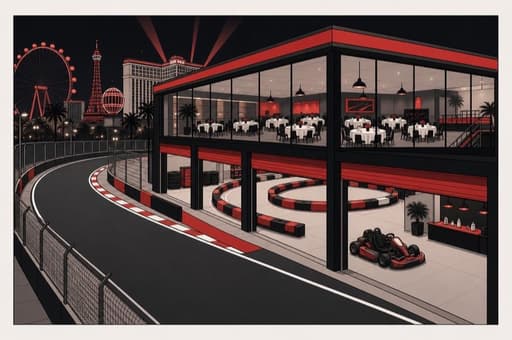
The one race Formula 1 stages itself, so it keeps the takings and wears the risk. More than 300,000 came in 2025 and the Las Vegas deal now runs to 2037. The building on the site rented out for about $33 million in 2025.
Competes with Miami and Austin Grands Prix (third-party US promoters) · US destination races (NASCAR)
In plain English
Elsewhere on the calendar, the local circuit pays Formula 1 a fee and then takes its own chances on ticket sales. Las Vegas is the exception. Here Formula 1 is the promoter, so a thin crowd lands straight on its revenue and a full one lands straight in its pocket.
It also keeps a building on the site. Between race weekends the paddock turns into a venue — private events, watch parties, and a karting track that gave 90,000 rides in 2025. A building that would otherwise stand dark most of the year, made to earn its keep.
Formula 1 sponsorship
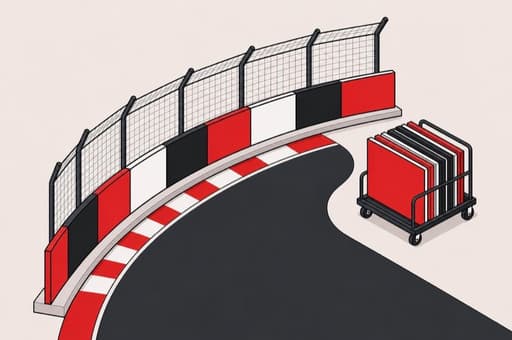
Brands paying to be attached to the championship itself, about $840 million in 2025. It has grown by adding new categories — PepsiCo, MSC Cruises, Standard Chartered — rather than charging existing partners more. The limit is how many slots exist.
Competes with World Cup partner program (FIFA) · Champions League partner program (UEFA) · Series and race entitlements (NASCAR)
In plain English
Two different shops sell space at the same race. Each team sells the logos on its own car. Formula 1 sells the championship — the boards beside the track, the official titles, the right to call yourself a partner of the whole series.
The money arrives on multi-year global deals: PepsiCo and MSC Cruises through 2030, Standard Chartered in banking, Pirelli as tyre supplier to 2028, Fever running ticketing on the Formula 1 website from 2027. No single sponsor is large enough to matter on its own. Growth has come from inventing new slots rather than raising prices, because there are only so many places to stand.
Paddock Club, licensing and support series
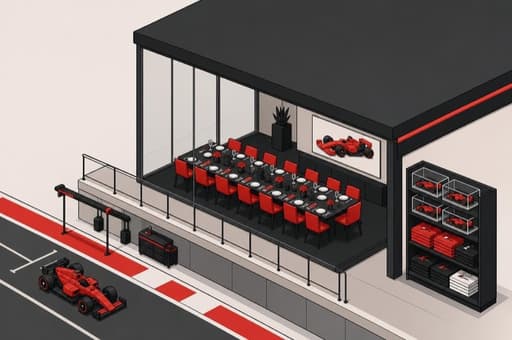
Formula 1's catch-all line and its fastest-growing one: $787 million in 2025, up 20%. Trackside hospitality is the heart of it — 65,000 guests, and sold out for the rest of 2026 — alongside toy and clothing licensing and the junior championships.
Competes with Quint hospitality packages (Liberty Live Holdings) · Promoter-run Paddock Clubs (race promoters) · Consumer products licensing (NASCAR)
In plain English
Everything that is not television, hosting fees or sponsors lands in one line, and it has been growing faster than any of them.
The biggest piece is the Paddock Club, the premium way to watch a race in person: 65,000 guests came through in 2025, and the money taken per race grew about twice as fast as the head count. The rest is a grab bag — freight charges for hauling the show from country to country, the junior championships that carry drivers up toward Formula 1, and the Formula 1 name rented out to LEGO, Disney, Hasbro and Uniqlo for toys and clothes.
MotoGP
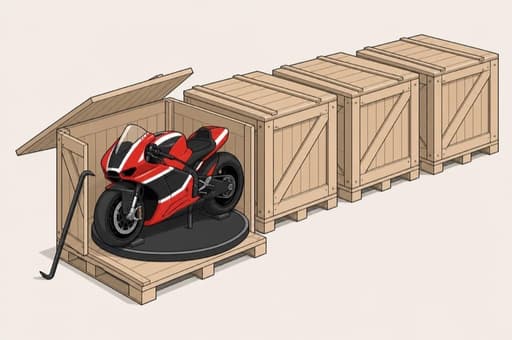
Liberty bought about 84% of motorcycle racing's world championship in July 2025 for roughly €4.2 billion, so 2025 counts only half a year of it — $573 million across a full year. Sponsors are 12.7% of its revenue against Formula 1's 21.7%, and closing that gap is the plan.
Competes with Formula 1 commercial rights (Liberty Media) · La Liga match rights (La Liga) · NASCAR rights packages (NASCAR)
In plain English
MotoGP is to motorbikes what Formula 1 is to cars: a world championship that tours the planet, with one company holding the exclusive right to sell it. Liberty bought most of that company in 2025 and now runs both series side by side.
It earns the same three ways — broadcasters, host circuits, sponsors — but the mix leans hard toward television, which is 41.2% of its money while sponsors are only 12.7%. Liberty has brought in CAA, a sponsorship agency, to sell that space. For now it is a smaller business growing steadily, not a second Formula 1.


 Formula 1 media rightsCountry-by-country licences to show the races, roughly $1.2 billion in 2025. The biggest single stream at 31.3% of Formula 1's revenue; Apple takes the United States from the 2026 season and Sky is signed in the UK and Ireland to 2034.
Country-by-country licences to show the races, roughly $1.2 billion in 2025. The biggest single stream at 31.3% of Formula 1's revenue; Apple takes the United States from the 2026 season and Sky is signed in the UK and Ireland to 2034.
In plain English
One race, sold over and over again. Formula 1 hands a broadcaster or a streaming service the right to show the season in a single country, on a deal that typically runs three to ten years, then does the same thing again in the next country. Like a band that plays one concert and sells the recording to a different radio station in every city.
Apple takes the American rights from 2026, replacing ESPN. Sky is signed in the UK and Ireland out to 2034 and Italy to 2032, and is thought to be the largest single payer — even so, it is under a tenth of Formula 1's money.
Competes with NASCAR US media rights (NASCAR) · Premier League match packages (Premier League) · Champions League packages (UEFA)
 Formula 1 race promotionCities and circuits pay for the right to stage a Grand Prix — 24 events in 21 countries in 2025. The calendar is already spoken for through 2028, so new money comes mostly from renewals rather than new dates.
Cities and circuits pay for the right to stage a Grand Prix — 24 events in 21 countries in 2025. The calendar is already spoken for through 2028, so new money comes mostly from renewals rather than new dates.
In plain English
A Grand Prix is the biggest weekend of the year for the place that holds it, and the place pays for the privilege. Circuit owners, governments and tourism boards hand Formula 1 a hosting fee, usually locked in for five to ten years, and in return they get the race, the crowds and their country on the calendar.
Published estimates put Qatar and Saudi Arabia near $55 million a year each and Monaco nearer $20 million; the company does not confirm them. With every slot filled through 2028 and more destinations asking, Formula 1 negotiates from the better side of the table: Austin is signed to 2034, Monaco to 2035, Austria to 2041.
Competes with NASCAR race sanctioning (NASCAR) · Olympic Games hosting (International Olympic Committee) · World Cup hosting (FIFA)
 Las Vegas Grand Prix and Grand Prix PlazaThe one race Formula 1 stages itself, so it keeps the takings and wears the risk. More than 300,000 came in 2025 and the Las Vegas deal now runs to 2037. The building on the site rented out for about $33 million in 2025.
The one race Formula 1 stages itself, so it keeps the takings and wears the risk. More than 300,000 came in 2025 and the Las Vegas deal now runs to 2037. The building on the site rented out for about $33 million in 2025.
In plain English
Elsewhere on the calendar, the local circuit pays Formula 1 a fee and then takes its own chances on ticket sales. Las Vegas is the exception. Here Formula 1 is the promoter, so a thin crowd lands straight on its revenue and a full one lands straight in its pocket.
It also keeps a building on the site. Between race weekends the paddock turns into a venue — private events, watch parties, and a karting track that gave 90,000 rides in 2025. A building that would otherwise stand dark most of the year, made to earn its keep.
Competes with Miami and Austin Grands Prix (third-party US promoters) · US destination races (NASCAR)
 Formula 1 sponsorshipBrands paying to be attached to the championship itself, about $840 million in 2025. It has grown by adding new categories — PepsiCo, MSC Cruises, Standard Chartered — rather than charging existing partners more. The limit is how many slots exist.
Brands paying to be attached to the championship itself, about $840 million in 2025. It has grown by adding new categories — PepsiCo, MSC Cruises, Standard Chartered — rather than charging existing partners more. The limit is how many slots exist.
In plain English
Two different shops sell space at the same race. Each team sells the logos on its own car. Formula 1 sells the championship — the boards beside the track, the official titles, the right to call yourself a partner of the whole series.
The money arrives on multi-year global deals: PepsiCo and MSC Cruises through 2030, Standard Chartered in banking, Pirelli as tyre supplier to 2028, Fever running ticketing on the Formula 1 website from 2027. No single sponsor is large enough to matter on its own. Growth has come from inventing new slots rather than raising prices, because there are only so many places to stand.
Competes with World Cup partner program (FIFA) · Champions League partner program (UEFA) · Series and race entitlements (NASCAR)
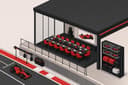 Paddock Club, licensing and support seriesFormula 1's catch-all line and its fastest-growing one: $787 million in 2025, up 20%. Trackside hospitality is the heart of it — 65,000 guests, and sold out for the rest of 2026 — alongside toy and clothing licensing and the junior championships.
Formula 1's catch-all line and its fastest-growing one: $787 million in 2025, up 20%. Trackside hospitality is the heart of it — 65,000 guests, and sold out for the rest of 2026 — alongside toy and clothing licensing and the junior championships.
In plain English
Everything that is not television, hosting fees or sponsors lands in one line, and it has been growing faster than any of them.
The biggest piece is the Paddock Club, the premium way to watch a race in person: 65,000 guests came through in 2025, and the money taken per race grew about twice as fast as the head count. The rest is a grab bag — freight charges for hauling the show from country to country, the junior championships that carry drivers up toward Formula 1, and the Formula 1 name rented out to LEGO, Disney, Hasbro and Uniqlo for toys and clothes.
Competes with Quint hospitality packages (Liberty Live Holdings) · Promoter-run Paddock Clubs (race promoters) · Consumer products licensing (NASCAR)
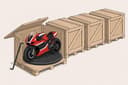 MotoGPLiberty bought about 84% of motorcycle racing's world championship in July 2025 for roughly €4.2 billion, so 2025 counts only half a year of it — $573 million across a full year. Sponsors are 12.7% of its revenue against Formula 1's 21.7%, and closing that gap is the plan.
Liberty bought about 84% of motorcycle racing's world championship in July 2025 for roughly €4.2 billion, so 2025 counts only half a year of it — $573 million across a full year. Sponsors are 12.7% of its revenue against Formula 1's 21.7%, and closing that gap is the plan.
In plain English
MotoGP is to motorbikes what Formula 1 is to cars: a world championship that tours the planet, with one company holding the exclusive right to sell it. Liberty bought most of that company in 2025 and now runs both series side by side.
It earns the same three ways — broadcasters, host circuits, sponsors — but the mix leans hard toward television, which is 41.2% of its money while sponsors are only 12.7%. Liberty has brought in CAA, a sponsorship agency, to sell that space. For now it is a smaller business growing steadily, not a second Formula 1.
Competes with Formula 1 commercial rights (Liberty Media) · La Liga match rights (La Liga) · NASCAR rights packages (NASCAR)
Named in filings, launches and programs
- F1 TVProductFormula 1's own subscription service for people who want every session; revenue outside the United States grew 18% in the first half of 2026.
- Formula 2 / Formula 3Product lineThe feeder championships that carry drivers up toward Formula 1; Formula 3's revenue dipped in early 2026 on the cycle of selling cars.
- F1 AcademyProduct lineThe all-female driver development series.
- House 44Brand · RampingHospitality venture with Lewis Hamilton and Soho House; nine locations in 2026 and thirteen planned for 2027.
- The Out LapProduct · RampingA premium experience built with LVMH, launched at the 2026 Belgian Grand Prix.
- F1 Arcade / F1 ExhibitionEcosystemLicensed racing-simulator venues — Atlanta opened in 2025 — and a touring exhibition that has sold 1.3 million tickets so far.
- F1 Drive / F1 Hub retailProductKarting tracks and pop-up shops carrying the Formula 1 name in five cities.
- Drive to Survive / Passenger PrincessProductThe Netflix series now in its eighth season, plus Formula 1's own shows, whose first season drew roughly 300 million views.
- MotoGP VideoPassProductMotoGP's direct subscription for fans; subscriber numbers grew 5% in 2025.
- WorldSBK / WorldWCRProduct lineTwo further motorcycle championships that came with the MotoGP purchase.
- MotoEProduct lineThe electric motorcycle support championship; its fee revenue fell in 2025.
F1 TVProduct
Formula 1's own subscription service for people who want every session; revenue outside the United States grew 18% in the first half of 2026.
Formula 2 / Formula 3Product line
The feeder championships that carry drivers up toward Formula 1; Formula 3's revenue dipped in early 2026 on the cycle of selling cars.
F1 AcademyProduct line
The all-female driver development series.
House 44Brand · Ramping
Hospitality venture with Lewis Hamilton and Soho House; nine locations in 2026 and thirteen planned for 2027.
The Out LapProduct · Ramping
A premium experience built with LVMH, launched at the 2026 Belgian Grand Prix.
F1 Arcade / F1 ExhibitionEcosystem
Licensed racing-simulator venues — Atlanta opened in 2025 — and a touring exhibition that has sold 1.3 million tickets so far.
F1 Drive / F1 Hub retailProduct
Karting tracks and pop-up shops carrying the Formula 1 name in five cities.
Drive to Survive / Passenger PrincessProduct
The Netflix series now in its eighth season, plus Formula 1's own shows, whose first season drew roughly 300 million views.
MotoGP VideoPassProduct
MotoGP's direct subscription for fans; subscriber numbers grew 5% in 2025.
WorldSBK / WorldWCRProduct line
Two further motorcycle championships that came with the MotoGP purchase.
MotoEProduct line
The electric motorcycle support championship; its fee revenue fell in 2025.