
Guardant Health (GH)
Blood and tissue cancer tests spanning screening, monitoring, and treatment selection.
Something off on this page? Send us feedback.
Guardant Health runs a laboratory that reads a cancer's genes out of a tube of blood. Most of its money still comes from tests that tell an oncologist which drug to reach for in a patient who already has advanced cancer. The bet is on the opposite customer — healthy people screened before anything is wrong — and that bet is swallowing the cash the older business earns.
Item facts: FY2025 · year ended December 31, 2025, from filings, earnings calls and company pages.
Judgment weights, not filed revenue
The band summarizes business focus and direction. ~ marks estimates.
7 in detail · 12 more below
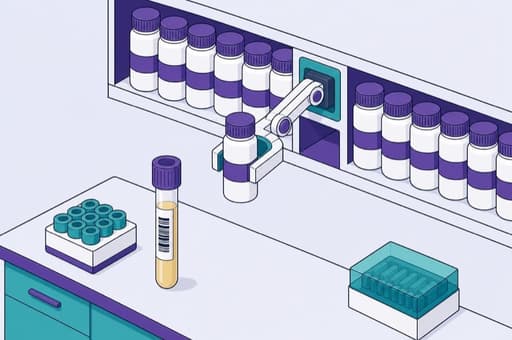
Guardant360 Liquid / Liquid CDx
Draw blood, read the cancer's genes, tell the oncologist which drug to reach for. Volume grew over thirty percent in the June quarter. Guardant collects only about sixty percent of Medicare's listed price — and a court has ordered a running royalty on tests like this one, now under appeal.
Competes with FoundationOne Liquid CDx (Roche) · xF / xF+ liquid profiling (Tempus AI) · Caris Assure (Caris Life Sciences)
In plain English
Tumours shed scraps of their own DNA into the bloodstream. Guardant's lab catches those scraps in an ordinary blood draw and reads 741 genes out of them, so an oncologist can see what is driving the cancer and pick the drug aimed at it — instead of surgically taking a piece of the tumour to find out.
A doctor orders it, the lab runs it, an insurer pays a set rate per test. There are no contracts and no subscriptions; the money arrives one patient at a time, and Medicare — more than a tenth of everything Guardant collects, every year since 2023 — largely decides what a test is worth.
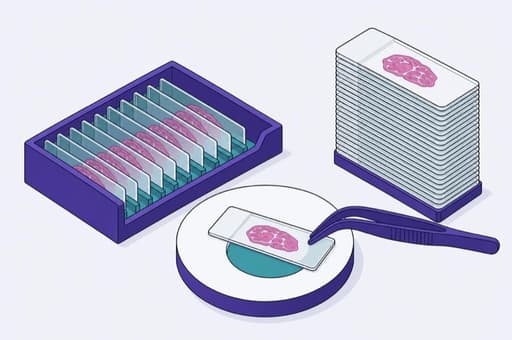
Guardant360 Tissue
The same gene reading done on a sliver of tumour rather than blood — the catch for patients whose blood result comes back empty. It needs far less tissue than rival tests, and it reached the per-test price it was aiming for in 2028 three years early.
Competes with FoundationOne CDx (Roche) · xT tissue profiling (Tempus AI) · MI Profile (Caris Life Sciences)
In plain English
When a surgeon takes a biopsy, the tumour reaches the lab as wafer-thin slices on glass slides. Guardant reads the same cancer genes off those slices that it reads out of blood, and needs far less material to do it than competing tests — which matters, because advanced-cancer biopsies are often tiny.
Pathology departments and oncologists route the specimen, and Medicare or a commercial plan pays per test. Its real job is catching the patients whose blood result came back uninformative, so that order stays inside Guardant instead of walking to a rival.
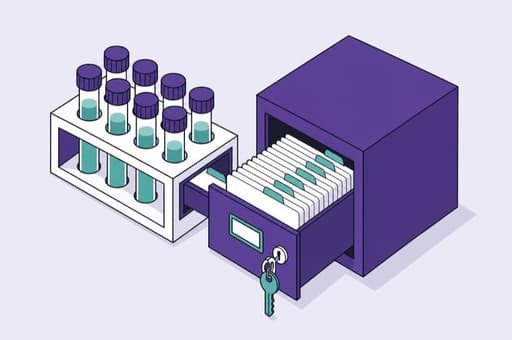
Biopharma & Data
Testing and data sold to drug makers rather than to doctors, across more than two hundred partner companies. It hit a record in the June quarter after three declining ones, yet its slice of the company keeps shrinking as screening grows.
Competes with Foundation Medicine biopharma partnerships (Roche) · Genomic data licensing (Tempus AI) · Data-as-a-Service (ConcertAI)
In plain English
A drug company testing a new cancer medicine has to know which patients carry the mutation its drug goes after. Guardant runs the blood samples from those trials, helps build the matching test that ships with the approved drug, and rents out its library of genetic and clinical records so researchers can hunt for patterns without running a study first.
More than two hundred drug makers buy some version of this, and no single one is big enough to matter on its own — the top five together were about eleven percent of last year's revenue. When research budgets tighten, this is the line that feels it first.
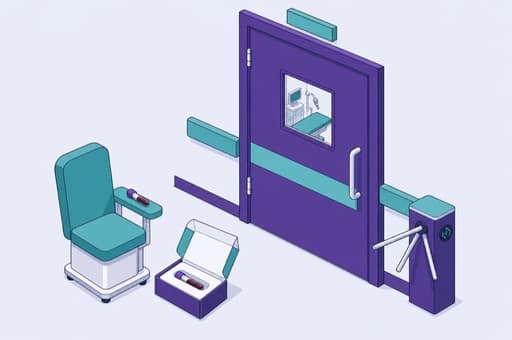
Shield
A blood draw that checks healthy adults for colon cancer instead of a colonoscopy. It ran at about sixteen percent of revenue in the June quarter, up from under three percent early last year — and it is where the cash burn comes from.
Competes with SimpleScreen CRC (Freenome) · Cologuard (Abbott) · ColoSense mt-sRNA (Geneoscopy)
In plain English
Colon cancer screening usually means a colonoscopy or mailing a stool sample to a lab, and plenty of people simply never get around to it. Shield is the easier alternative: a vial of blood drawn at an ordinary doctor's visit, read for the traces a tumour leaves behind.
Medicare lists the test at $1,495, but Guardant has lately been collecting around $800, because most takers are on Medicare plans that pay less, and each test still costs about $410 to run. UnitedHealth became the first big commercial insurer to cover it in August; management now puts covered lives near seventy million. Coverage and doctor-network reach are the whole game.
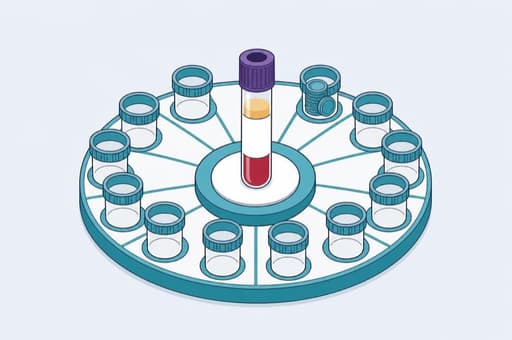
Shield Multi-Cancer Detection
One blood draw checked for many cancers at once, not just colon. In America people opt into a data-collection programme rather than buy it, and no insurer route exists there yet; the paying launch so far runs through an insurance group in Asia.
Competes with Galleri (GRAIL) · Cancerguard (Abbott)
In plain English
Instead of hunting one cancer, this version of the Shield blood test looks across many of them at once — the idea being a single yearly draw that can flag trouble anywhere in the body.
It is not really a product yet. In a study of about nine thousand people it almost never raised a false alarm on someone healthy, but fewer than half the alarms it did raise turned out to be cancer. No American insurer has a route to pay for it, so US volume comes from people opting into a data-collection programme, while the paying version is sold for cash through Manulife, an insurance group in Asia.
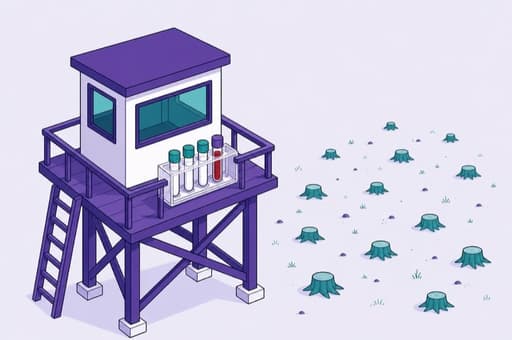
Guardant Reveal
A blood test for people already treated for cancer, checking whether any is still hiding. The fastest-growing of Guardant's cancer-treatment tests, and cost per test fell from over a thousand dollars to under five hundred. Medicare coverage decisions are the gate.
Competes with Signatera (Natera) · Haystack MRD (Quest Diagnostics) · Oncodetect (Abbott)
In plain English
The question after surgery or chemotherapy is whether the cancer is really gone. Reveal looks for stray tumour DNA in a blood sample and gives the oncologist an early read — and it does that without needing a piece of the original tumour to compare against.
Running one used to cost over a thousand dollars while collecting six or seven hundred, so every sample lost money. Guardant pushed the cost under five hundred, and the line now roughly washes its face. What it needs next is Medicare agreeing to pay for uses beyond colon cancer follow-up — breast cancer and treatment monitoring are both still waiting.
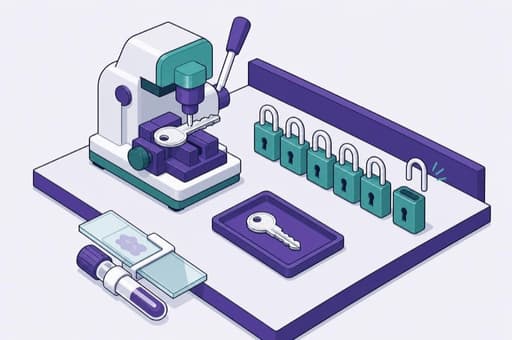
Reveal Ultra
A second version of Reveal that starts from the patient's own tumour sample — aimed squarely at the part of the market Natera's Signatera holds. Management says it launches later this year, and it was deliberately left out of this year's revenue plan.
Competes with Signatera (Natera) · Oncodetect (Abbott)
In plain English
Reveal works from blood alone. Ultra starts somewhere else: the lab first reads the patient's removed tumour, builds a fingerprint of that particular cancer, then hunts for exactly that fingerprint in later blood draws. More setup, sharper detection.
That extra step is how Natera's Signatera works, and Signatera is the test with the widest insurance coverage in this corner of oncology — so this is Guardant answering on the rival's own terms. Nothing has sold yet, and Guardant deliberately left it out of what it promised investors for this year, which says the money is a next-year story.


 Guardant360 Liquid / Liquid CDxDraw blood, read the cancer's genes, tell the oncologist which drug to reach for. Volume grew over thirty percent in the June quarter. Guardant collects only about sixty percent of Medicare's listed price — and a court has ordered a running royalty on tests like this one, now under appeal.
Draw blood, read the cancer's genes, tell the oncologist which drug to reach for. Volume grew over thirty percent in the June quarter. Guardant collects only about sixty percent of Medicare's listed price — and a court has ordered a running royalty on tests like this one, now under appeal.
In plain English
Tumours shed scraps of their own DNA into the bloodstream. Guardant's lab catches those scraps in an ordinary blood draw and reads 741 genes out of them, so an oncologist can see what is driving the cancer and pick the drug aimed at it — instead of surgically taking a piece of the tumour to find out.
A doctor orders it, the lab runs it, an insurer pays a set rate per test. There are no contracts and no subscriptions; the money arrives one patient at a time, and Medicare — more than a tenth of everything Guardant collects, every year since 2023 — largely decides what a test is worth.
Competes with FoundationOne Liquid CDx (Roche) · xF / xF+ liquid profiling (Tempus AI) · Caris Assure (Caris Life Sciences)
 Guardant360 TissueThe same gene reading done on a sliver of tumour rather than blood — the catch for patients whose blood result comes back empty. It needs far less tissue than rival tests, and it reached the per-test price it was aiming for in 2028 three years early.
The same gene reading done on a sliver of tumour rather than blood — the catch for patients whose blood result comes back empty. It needs far less tissue than rival tests, and it reached the per-test price it was aiming for in 2028 three years early.
In plain English
When a surgeon takes a biopsy, the tumour reaches the lab as wafer-thin slices on glass slides. Guardant reads the same cancer genes off those slices that it reads out of blood, and needs far less material to do it than competing tests — which matters, because advanced-cancer biopsies are often tiny.
Pathology departments and oncologists route the specimen, and Medicare or a commercial plan pays per test. Its real job is catching the patients whose blood result came back uninformative, so that order stays inside Guardant instead of walking to a rival.
Competes with FoundationOne CDx (Roche) · xT tissue profiling (Tempus AI) · MI Profile (Caris Life Sciences)
 Biopharma & DataTesting and data sold to drug makers rather than to doctors, across more than two hundred partner companies. It hit a record in the June quarter after three declining ones, yet its slice of the company keeps shrinking as screening grows.
Testing and data sold to drug makers rather than to doctors, across more than two hundred partner companies. It hit a record in the June quarter after three declining ones, yet its slice of the company keeps shrinking as screening grows.
In plain English
A drug company testing a new cancer medicine has to know which patients carry the mutation its drug goes after. Guardant runs the blood samples from those trials, helps build the matching test that ships with the approved drug, and rents out its library of genetic and clinical records so researchers can hunt for patterns without running a study first.
More than two hundred drug makers buy some version of this, and no single one is big enough to matter on its own — the top five together were about eleven percent of last year's revenue. When research budgets tighten, this is the line that feels it first.
Competes with Foundation Medicine biopharma partnerships (Roche) · Genomic data licensing (Tempus AI) · Data-as-a-Service (ConcertAI)
 ShieldA blood draw that checks healthy adults for colon cancer instead of a colonoscopy. It ran at about sixteen percent of revenue in the June quarter, up from under three percent early last year — and it is where the cash burn comes from.
A blood draw that checks healthy adults for colon cancer instead of a colonoscopy. It ran at about sixteen percent of revenue in the June quarter, up from under three percent early last year — and it is where the cash burn comes from.
In plain English
Colon cancer screening usually means a colonoscopy or mailing a stool sample to a lab, and plenty of people simply never get around to it. Shield is the easier alternative: a vial of blood drawn at an ordinary doctor's visit, read for the traces a tumour leaves behind.
Medicare lists the test at $1,495, but Guardant has lately been collecting around $800, because most takers are on Medicare plans that pay less, and each test still costs about $410 to run. UnitedHealth became the first big commercial insurer to cover it in August; management now puts covered lives near seventy million. Coverage and doctor-network reach are the whole game.
Competes with SimpleScreen CRC (Freenome) · Cologuard (Abbott) · ColoSense mt-sRNA (Geneoscopy)
 Shield Multi-Cancer DetectionOne blood draw checked for many cancers at once, not just colon. In America people opt into a data-collection programme rather than buy it, and no insurer route exists there yet; the paying launch so far runs through an insurance group in Asia.
One blood draw checked for many cancers at once, not just colon. In America people opt into a data-collection programme rather than buy it, and no insurer route exists there yet; the paying launch so far runs through an insurance group in Asia.
In plain English
Instead of hunting one cancer, this version of the Shield blood test looks across many of them at once — the idea being a single yearly draw that can flag trouble anywhere in the body.
It is not really a product yet. In a study of about nine thousand people it almost never raised a false alarm on someone healthy, but fewer than half the alarms it did raise turned out to be cancer. No American insurer has a route to pay for it, so US volume comes from people opting into a data-collection programme, while the paying version is sold for cash through Manulife, an insurance group in Asia.
Competes with Galleri (GRAIL) · Cancerguard (Abbott)
 Guardant RevealA blood test for people already treated for cancer, checking whether any is still hiding. The fastest-growing of Guardant's cancer-treatment tests, and cost per test fell from over a thousand dollars to under five hundred. Medicare coverage decisions are the gate.
A blood test for people already treated for cancer, checking whether any is still hiding. The fastest-growing of Guardant's cancer-treatment tests, and cost per test fell from over a thousand dollars to under five hundred. Medicare coverage decisions are the gate.
In plain English
The question after surgery or chemotherapy is whether the cancer is really gone. Reveal looks for stray tumour DNA in a blood sample and gives the oncologist an early read — and it does that without needing a piece of the original tumour to compare against.
Running one used to cost over a thousand dollars while collecting six or seven hundred, so every sample lost money. Guardant pushed the cost under five hundred, and the line now roughly washes its face. What it needs next is Medicare agreeing to pay for uses beyond colon cancer follow-up — breast cancer and treatment monitoring are both still waiting.
Competes with Signatera (Natera) · Haystack MRD (Quest Diagnostics) · Oncodetect (Abbott)
 Reveal UltraA second version of Reveal that starts from the patient's own tumour sample — aimed squarely at the part of the market Natera's Signatera holds. Management says it launches later this year, and it was deliberately left out of this year's revenue plan.
A second version of Reveal that starts from the patient's own tumour sample — aimed squarely at the part of the market Natera's Signatera holds. Management says it launches later this year, and it was deliberately left out of this year's revenue plan.
In plain English
Reveal works from blood alone. Ultra starts somewhere else: the lab first reads the patient's removed tumour, builds a fingerprint of that particular cancer, then hunts for exactly that fingerprint in later blood draws. More setup, sharper detection.
That extra step is how Natera's Signatera works, and Signatera is the test with the widest insurance coverage in this corner of oncology — so this is Guardant answering on the rival's own terms. Nothing has sold yet, and Guardant deliberately left it out of what it promised investors for this year, which says the money is a next-year story.
Competes with Signatera (Natera) · Oncodetect (Abbott)
Named in filings, launches and programs
- Quest Diagnostics collaborationCustomer programPuts Shield inside Quest's national ordering network, live nationwide since early this year — and Quest also owns Haystack MRD, which competes with Reveal.
- PathGroup collaborationCustomer programA second ordering channel for Shield, live since late last year across more than 250 health systems in 25 states.
- Manulife Asia partnershipCustomer programSells the multi-cancer Shield test for cash to customers of Manulife, an Asian insurance group serving more than thirteen million people.
- InfinityAIPlatformThe pattern-finding engine trained on Guardant's own results; it powers the fifteen Smart apps inside Guardant360 and is sold to drug makers.
- Guardant InfinityPlatformThe underlying blood-test platform reading genes and their chemical switches together; it sits beneath both the drug-maker offering and the clinical Smart apps.
- Guardant360 CDxProductThe older FDA-approved liquid test carrying specific drug labels, including AstraZeneca's camizestrant; it is being folded into the newer Guardant360 Liquid CDx.
- MetaSight DiagnosticsBrandBought in December 2025 for $59 million cash plus up to $90 million more if it hits targets; positioned for detection beyond one disease.
- ConcertAI collaborationCustomer programPairs hospital records with Guardant's genetic profiling and sells the combination to researchers — ConcertAI is a partner and a rival at once.
- Guardant INFORMServiceA real-world-data offering for drug makers, named on FY2025 calls alongside the Bayer and ConcertAI collaborations.
- Reveal therapy response monitoringProduct · RampingUses Reveal to check whether a treatment is working; Medicare decisions covering immunotherapy and chemotherapy monitoring were still pending in July.
- ESR1 monitoring testProduct · AnnouncedA Guardant360 application for breast cancer, waiting on the AstraZeneca drug it pairs with — which was approved in September 2026.
- Licensing & OtherProduct lineRoughly two million dollars a quarter from licensing and odds and ends — under one percent of revenue, and flat.
Quest Diagnostics collaborationCustomer program
Puts Shield inside Quest's national ordering network, live nationwide since early this year — and Quest also owns Haystack MRD, which competes with Reveal.
PathGroup collaborationCustomer program
A second ordering channel for Shield, live since late last year across more than 250 health systems in 25 states.
Manulife Asia partnershipCustomer program
Sells the multi-cancer Shield test for cash to customers of Manulife, an Asian insurance group serving more than thirteen million people.
InfinityAIPlatform
The pattern-finding engine trained on Guardant's own results; it powers the fifteen Smart apps inside Guardant360 and is sold to drug makers.
Guardant InfinityPlatform
The underlying blood-test platform reading genes and their chemical switches together; it sits beneath both the drug-maker offering and the clinical Smart apps.
Guardant360 CDxProduct
The older FDA-approved liquid test carrying specific drug labels, including AstraZeneca's camizestrant; it is being folded into the newer Guardant360 Liquid CDx.
MetaSight DiagnosticsBrand
Bought in December 2025 for $59 million cash plus up to $90 million more if it hits targets; positioned for detection beyond one disease.
ConcertAI collaborationCustomer program
Pairs hospital records with Guardant's genetic profiling and sells the combination to researchers — ConcertAI is a partner and a rival at once.
Guardant INFORMService
A real-world-data offering for drug makers, named on FY2025 calls alongside the Bayer and ConcertAI collaborations.
Reveal therapy response monitoringProduct · Ramping
Uses Reveal to check whether a treatment is working; Medicare decisions covering immunotherapy and chemotherapy monitoring were still pending in July.
ESR1 monitoring testProduct · Announced
A Guardant360 application for breast cancer, waiting on the AstraZeneca drug it pairs with — which was approved in September 2026.
Licensing & OtherProduct line
Roughly two million dollars a quarter from licensing and odds and ends — under one percent of revenue, and flat.