
General Mills (GIS)
Makes branded cereal, snacks, meals, baking products, pet food, and ice cream.
Something off on this page? Send us feedback.
General Mills makes the branded food that fills American pantries — breakfast cereal, granola bars, refrigerated biscuit dough, frozen pizza snacks, soup — and, since buying Blue Buffalo, pet food. Almost all of it reaches shoppers through a short list of very large retailers. The company is selling off its slower parts, yogurt and its Brazilian brands among them, and putting the money behind pet food and a few brands it can sell worldwide.
Item facts: FY2026 · year ended May 31, 2026, from filings, earnings calls and company pages.
Judgment weights, not filed revenue
The band summarizes business focus and direction. ~ marks estimates.
9 in detail · 12 more below
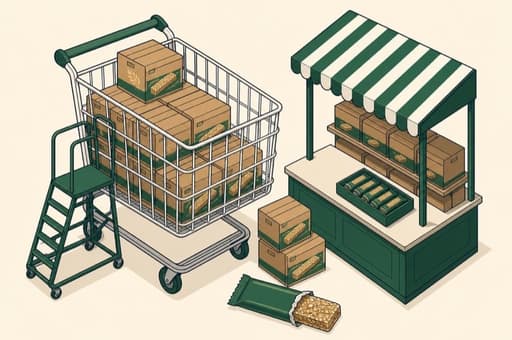
Snacks — Nature Valley, Chex Mix, fruit snacks
The biggest single family of products at $4.14B — grain and nutrition bars, fruit snacks and savoury mixes. The U.S. bar aisle grew about 7% last year while most established brands lost ground to protein newcomers.
Competes with Quaker Chewy bars (PepsiCo) · KIND bars (Mars) · Welch's Fruit Snacks (PIM Brands)
In plain English
Granola bars, chewy fruit snacks, bags of savoury snack mix — the food people eat standing up, between meals.
The money arrives by the truckload rather than the box: cases go to supermarkets and clubs, and Walmart alone takes about a fifth of everything General Mills ships. Shoppers keep paying a little more for a name they recognise than for the store's own version, and that gap is the whole business. The bar aisle is growing — but the growth has been going to newer, protein-heavy brands rather than the incumbents.
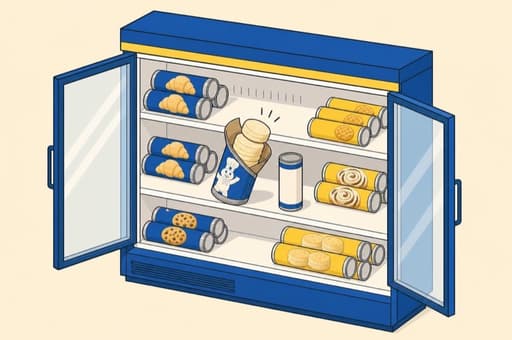
Refrigerated and frozen dough — Pillsbury
Pillsbury biscuits, crescents and cookie dough, plus frozen dough for bakeries: $2.40B, roughly flat. Store brands sit in the same chilled case, which is why management picked this line first for closing price gaps.
Competes with Store-brand refrigerated dough (Supermarket private label) · Rhodes Bake-N-Serv frozen dough (Rhodes International) · Frozen dough for bakeries (Rich Products)
In plain English
Think of the cardboard tube in the fridge door that pops open when you twist it: biscuits, crescent rolls and cookie dough already made, so the shopper only does the baking. The same dough, frozen in bulk, goes to bakeries and pizza shops.
It sells because the alternative is flour, butter and a floured countertop. Supermarkets hand it prime cold-case space, households buy it in bursts — the line swelled through the holiday-baking quarter — and the supermarket's own cheaper tube sits right beside it, which keeps a lid on price.
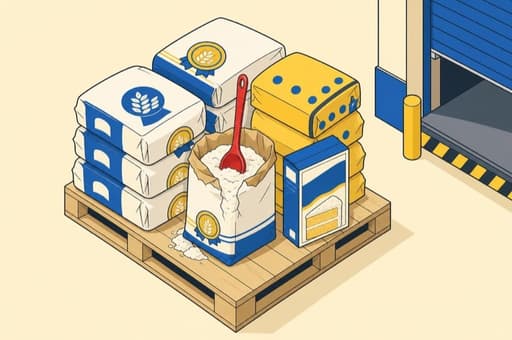
Baking mixes and ingredients — Betty Crocker, Gold Medal, Bisquick
Cake mixes, frostings, Bisquick and Gold Medal flour: $1.93B and flat, the line most exposed to cheaper unbranded copies. The wheat market moves the retail sacks and the bakery sacks together.
Competes with Duncan Hines baking mixes (Conagra) · King Arthur flour (King Arthur Baking) · Store-brand flour and mixes (Supermarket private label)
In plain English
A box of cake mix is mostly flour and sugar with the guesswork taken out — add an egg, bake, done. Next to the boxes sits plain flour in paper sacks, the same flour sold by the sackful to bakeries and school kitchens.
This is the quiet corner that pays its way without growing. Every supermarket stocks a store-brand version of exactly this, so the brand has to earn its extra dollar on trust and on the occasional draw, like the Harry Potter treats it launched in July 2026. Flour prices track the grain market, so revenue moves with wheat.
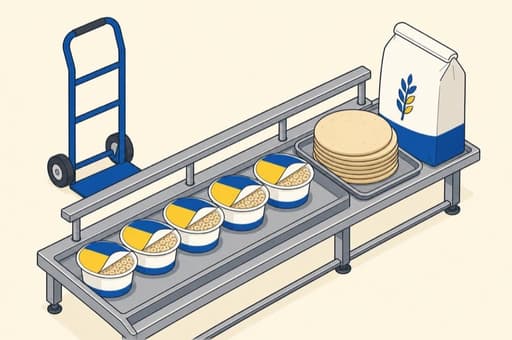
North America Foodservice
The away-from-home arm: $2.17B, down 6%, on $333.0M of operating profit. The decline came from bakery flour priced off the wheat market rather than from lost accounts. These same brands also show up in the snack, cereal and dough lines.
Competes with Away From Home cereal and bars (Kellanova) · Branded bakery flour (King Arthur Baking) · Foodservice dough and crust (Rich Products)
In plain English
Schools, hospitals, campus canteens, pizzerias and bakeries want the same food in different packaging — cereal in sealed single bowls, bars by the case, flour in sacks, dough and pizza crusts in bulk.
The buyers are institutions working off contracts, reached through big delivery firms such as Sysco and US Foods, and they switch suppliers slowly in either direction. One quirk: part of what this arm sells is bakery flour priced off the wheat market, so when grain gets cheaper the sales figure falls even when every customer stays.
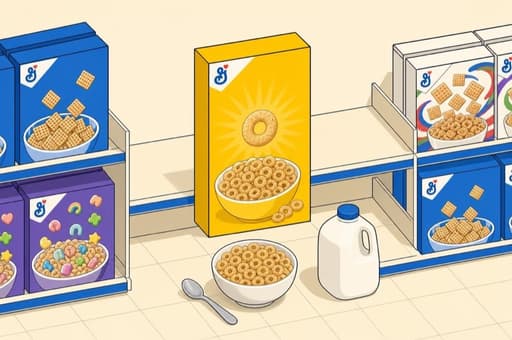
Big G cereal — Cheerios, Cinnamon Toast Crunch, Lucky Charms, Chex
$3.09B and flat in a category that keeps shrinking — the one product family that did not fall. Watch the new protein cereal and the artificial dyes taken out of the U.S. boxes in August 2026.
Competes with Frosted Flakes and Special K (WK Kellogg Co) · Honey Bunches of Oats and Malt-O-Meal (Post Consumer Brands) · Store-brand bagged cereal (Supermarket private label)
In plain English
Boxed breakfast cereal: oats, corn and wheat puffed, shaped and sweetened, poured into a bowl in about ten seconds.
Fewer people eat cereal each year, yet this line held its sales while the category slipped — the only product family here that did not shrink. Holding price is how it happened: parents pay a premium over the bagged store-brand equivalent because a child asks for the box by name. Two things to follow: a protein version management already calls a $100 million business, priced to cover its own development cost, and the artificial dyes now removed from the U.S. cereals.
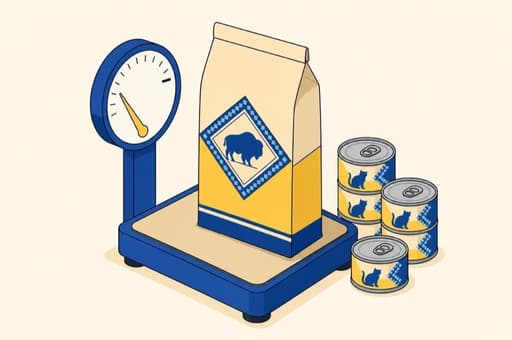
North America Pet — Blue Buffalo
Blue Buffalo pet food: $2.61B, up 6%, with $498.8M of profit — yet $1.75B was written off its value this year. Cats sold well; Wilderness dog food dragged, and underlying fourth-quarter sales fell 3%.
Competes with Purina Pro Plan and Beyond (Nestlé) · Hill's Science Diet (Colgate-Palmolive)
In plain English
Blue Buffalo is pet food sold on its ingredient list — dry kibble, wet cans and treats for dogs and cats, bought in pet chains, supermarkets and online.
Owners who will pay up are most of this market: roughly two-thirds of the money Americans spend on pet food goes to premium food, and that is the shelf Blue Buffalo sits on. General Mills paid heavily for the position in 2018 — which is why this year's write-down lands hard. Sales grew and cat food sold briskly, but the company knocked more than a billion and a half off what it thinks the business is worth, saying the old purchase value no longer squares with the cash it expects.
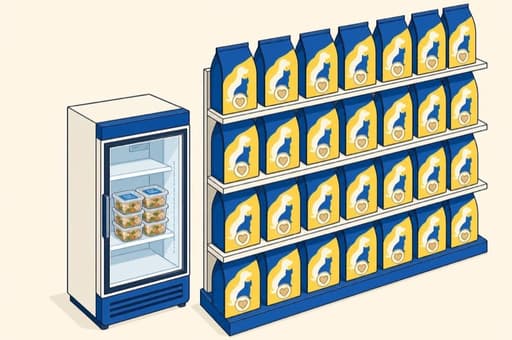
BLUE Love Made Fresh
Chilled, freshly cooked pet food rolled out nationally in FY2026 and up roughly 80% in a quarter — off a base small enough that it barely moves the pet numbers yet. It is the answer to Freshpet.
Competes with Freshpet fresh pet food (Freshpet) · Purina Pro Plan and Beyond (Nestlé)
In plain English
Pet food that lives in a refrigerator: meat and vegetables cooked and chilled rather than dried into kibble, sold in tubs from a glass-door cabinet in the pet aisle. Owners treat it as the nearest thing to cooking for the dog themselves.
It went nationwide in FY2026 and is growing fast from very little — about a 5% share at the retailers that stocked it first. Freshpet built this chilled shelf and General Mills is arriving after it, betting that a name owners already know on the dry-food bags will carry across the aisle.
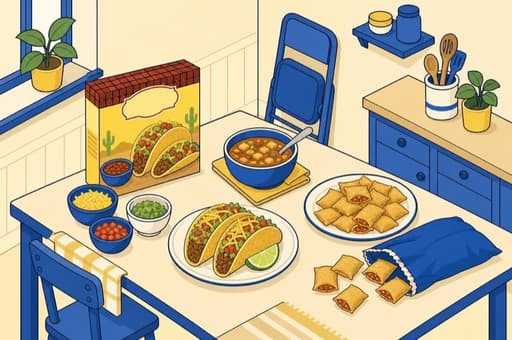
Convenient meals — Old El Paso, Progresso, Totino's, Helper
Taco kits, soup, pizza rolls and boxed sides: $2.87B, up a little. Demand holds when people eat at home. Totino's was the year's self-inflicted miss and new flavours are the FY2027 fix.
Competes with DiGiorno and Hot Pockets (Nestlé) · Condensed and ready-to-serve soup (Campbell's) · Ortega Mexican meal kits (B&G Foods)
In plain English
Dinner with the work taken out: taco kits, canned soup, frozen pizza rolls, boxed pasta sides. Some of it goes in the oven, some comes out of a can, all of it aimed at the weeknight when nobody wants to cook.
This is the part that does better when money is tight and meals shift back indoors — roughly 86% of eating occasions are at home, a share that barely budges. The weak spot was frozen pizza snacks: the chief executive called Totino's a problem the company simply did not execute on, and new flavours are the answer for FY2027.
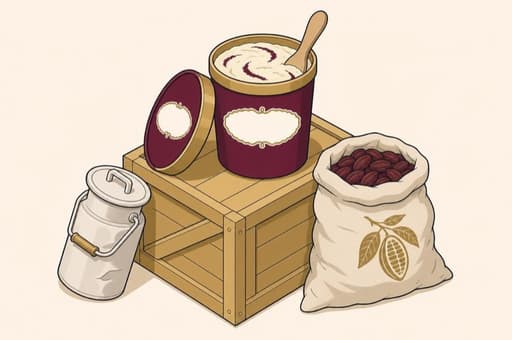
Häagen-Dazs
Super-premium ice cream, $782.7M and growing, sold as pints and bars in shops and through away-from-home kitchens. One of the handful of brands the business outside North America is built around; cream and cocoa costs land straight in it.
Competes with Magnum bars (The Magnum Ice Cream Company) · Ben & Jerry's pints (The Magnum Ice Cream Company) · Talenti gelato (The Magnum Ice Cream Company)
In plain English
Super-premium ice cream — the small tubs and chocolate-coated bars people buy as a treat rather than as groceries, priced to feel like an indulgence rather than a staple.
Being the expensive tub in the freezer is the point, and it travels: this is one of four product families General Mills is building its business outside North America around. The catch is the ingredient bill. Cream and cocoa costs feed straight through, so when those markets jump the cost shows up almost immediately and the only shelter is the shelf price.


 Snacks — Nature Valley, Chex Mix, fruit snacksThe biggest single family of products at $4.14B — grain and nutrition bars, fruit snacks and savoury mixes. The U.S. bar aisle grew about 7% last year while most established brands lost ground to protein newcomers.
The biggest single family of products at $4.14B — grain and nutrition bars, fruit snacks and savoury mixes. The U.S. bar aisle grew about 7% last year while most established brands lost ground to protein newcomers.
In plain English
Granola bars, chewy fruit snacks, bags of savoury snack mix — the food people eat standing up, between meals.
The money arrives by the truckload rather than the box: cases go to supermarkets and clubs, and Walmart alone takes about a fifth of everything General Mills ships. Shoppers keep paying a little more for a name they recognise than for the store's own version, and that gap is the whole business. The bar aisle is growing — but the growth has been going to newer, protein-heavy brands rather than the incumbents.
Competes with Quaker Chewy bars (PepsiCo) · KIND bars (Mars) · Welch's Fruit Snacks (PIM Brands)
 Refrigerated and frozen dough — PillsburyPillsbury biscuits, crescents and cookie dough, plus frozen dough for bakeries: $2.40B, roughly flat. Store brands sit in the same chilled case, which is why management picked this line first for closing price gaps.
Pillsbury biscuits, crescents and cookie dough, plus frozen dough for bakeries: $2.40B, roughly flat. Store brands sit in the same chilled case, which is why management picked this line first for closing price gaps.
In plain English
Think of the cardboard tube in the fridge door that pops open when you twist it: biscuits, crescent rolls and cookie dough already made, so the shopper only does the baking. The same dough, frozen in bulk, goes to bakeries and pizza shops.
It sells because the alternative is flour, butter and a floured countertop. Supermarkets hand it prime cold-case space, households buy it in bursts — the line swelled through the holiday-baking quarter — and the supermarket's own cheaper tube sits right beside it, which keeps a lid on price.
Competes with Store-brand refrigerated dough (Supermarket private label) · Rhodes Bake-N-Serv frozen dough (Rhodes International) · Frozen dough for bakeries (Rich Products)
 Baking mixes and ingredients — Betty Crocker, Gold Medal, BisquickCake mixes, frostings, Bisquick and Gold Medal flour: $1.93B and flat, the line most exposed to cheaper unbranded copies. The wheat market moves the retail sacks and the bakery sacks together.
Cake mixes, frostings, Bisquick and Gold Medal flour: $1.93B and flat, the line most exposed to cheaper unbranded copies. The wheat market moves the retail sacks and the bakery sacks together.
In plain English
A box of cake mix is mostly flour and sugar with the guesswork taken out — add an egg, bake, done. Next to the boxes sits plain flour in paper sacks, the same flour sold by the sackful to bakeries and school kitchens.
This is the quiet corner that pays its way without growing. Every supermarket stocks a store-brand version of exactly this, so the brand has to earn its extra dollar on trust and on the occasional draw, like the Harry Potter treats it launched in July 2026. Flour prices track the grain market, so revenue moves with wheat.
Competes with Duncan Hines baking mixes (Conagra) · King Arthur flour (King Arthur Baking) · Store-brand flour and mixes (Supermarket private label)
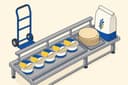 North America FoodserviceThe away-from-home arm: $2.17B, down 6%, on $333.0M of operating profit. The decline came from bakery flour priced off the wheat market rather than from lost accounts. These same brands also show up in the snack, cereal and dough lines.
The away-from-home arm: $2.17B, down 6%, on $333.0M of operating profit. The decline came from bakery flour priced off the wheat market rather than from lost accounts. These same brands also show up in the snack, cereal and dough lines.
In plain English
Schools, hospitals, campus canteens, pizzerias and bakeries want the same food in different packaging — cereal in sealed single bowls, bars by the case, flour in sacks, dough and pizza crusts in bulk.
The buyers are institutions working off contracts, reached through big delivery firms such as Sysco and US Foods, and they switch suppliers slowly in either direction. One quirk: part of what this arm sells is bakery flour priced off the wheat market, so when grain gets cheaper the sales figure falls even when every customer stays.
Competes with Away From Home cereal and bars (Kellanova) · Branded bakery flour (King Arthur Baking) · Foodservice dough and crust (Rich Products)
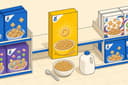 Big G cereal — Cheerios, Cinnamon Toast Crunch, Lucky Charms, Chex$3.09B and flat in a category that keeps shrinking — the one product family that did not fall. Watch the new protein cereal and the artificial dyes taken out of the U.S. boxes in August 2026.
$3.09B and flat in a category that keeps shrinking — the one product family that did not fall. Watch the new protein cereal and the artificial dyes taken out of the U.S. boxes in August 2026.
In plain English
Boxed breakfast cereal: oats, corn and wheat puffed, shaped and sweetened, poured into a bowl in about ten seconds.
Fewer people eat cereal each year, yet this line held its sales while the category slipped — the only product family here that did not shrink. Holding price is how it happened: parents pay a premium over the bagged store-brand equivalent because a child asks for the box by name. Two things to follow: a protein version management already calls a $100 million business, priced to cover its own development cost, and the artificial dyes now removed from the U.S. cereals.
Competes with Frosted Flakes and Special K (WK Kellogg Co) · Honey Bunches of Oats and Malt-O-Meal (Post Consumer Brands) · Store-brand bagged cereal (Supermarket private label)
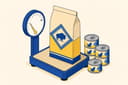 North America Pet — Blue BuffaloBlue Buffalo pet food: $2.61B, up 6%, with $498.8M of profit — yet $1.75B was written off its value this year. Cats sold well; Wilderness dog food dragged, and underlying fourth-quarter sales fell 3%.
Blue Buffalo pet food: $2.61B, up 6%, with $498.8M of profit — yet $1.75B was written off its value this year. Cats sold well; Wilderness dog food dragged, and underlying fourth-quarter sales fell 3%.
In plain English
Blue Buffalo is pet food sold on its ingredient list — dry kibble, wet cans and treats for dogs and cats, bought in pet chains, supermarkets and online.
Owners who will pay up are most of this market: roughly two-thirds of the money Americans spend on pet food goes to premium food, and that is the shelf Blue Buffalo sits on. General Mills paid heavily for the position in 2018 — which is why this year's write-down lands hard. Sales grew and cat food sold briskly, but the company knocked more than a billion and a half off what it thinks the business is worth, saying the old purchase value no longer squares with the cash it expects.
Competes with Purina Pro Plan and Beyond (Nestlé) · Hill's Science Diet (Colgate-Palmolive)
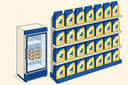 BLUE Love Made FreshChilled, freshly cooked pet food rolled out nationally in FY2026 and up roughly 80% in a quarter — off a base small enough that it barely moves the pet numbers yet. It is the answer to Freshpet.
Chilled, freshly cooked pet food rolled out nationally in FY2026 and up roughly 80% in a quarter — off a base small enough that it barely moves the pet numbers yet. It is the answer to Freshpet.
In plain English
Pet food that lives in a refrigerator: meat and vegetables cooked and chilled rather than dried into kibble, sold in tubs from a glass-door cabinet in the pet aisle. Owners treat it as the nearest thing to cooking for the dog themselves.
It went nationwide in FY2026 and is growing fast from very little — about a 5% share at the retailers that stocked it first. Freshpet built this chilled shelf and General Mills is arriving after it, betting that a name owners already know on the dry-food bags will carry across the aisle.
Competes with Freshpet fresh pet food (Freshpet) · Purina Pro Plan and Beyond (Nestlé)
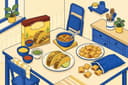 Convenient meals — Old El Paso, Progresso, Totino's, HelperTaco kits, soup, pizza rolls and boxed sides: $2.87B, up a little. Demand holds when people eat at home. Totino's was the year's self-inflicted miss and new flavours are the FY2027 fix.
Taco kits, soup, pizza rolls and boxed sides: $2.87B, up a little. Demand holds when people eat at home. Totino's was the year's self-inflicted miss and new flavours are the FY2027 fix.
In plain English
Dinner with the work taken out: taco kits, canned soup, frozen pizza rolls, boxed pasta sides. Some of it goes in the oven, some comes out of a can, all of it aimed at the weeknight when nobody wants to cook.
This is the part that does better when money is tight and meals shift back indoors — roughly 86% of eating occasions are at home, a share that barely budges. The weak spot was frozen pizza snacks: the chief executive called Totino's a problem the company simply did not execute on, and new flavours are the answer for FY2027.
Competes with DiGiorno and Hot Pockets (Nestlé) · Condensed and ready-to-serve soup (Campbell's) · Ortega Mexican meal kits (B&G Foods)
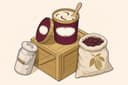 Häagen-DazsSuper-premium ice cream, $782.7M and growing, sold as pints and bars in shops and through away-from-home kitchens. One of the handful of brands the business outside North America is built around; cream and cocoa costs land straight in it.
Super-premium ice cream, $782.7M and growing, sold as pints and bars in shops and through away-from-home kitchens. One of the handful of brands the business outside North America is built around; cream and cocoa costs land straight in it.
In plain English
Super-premium ice cream — the small tubs and chocolate-coated bars people buy as a treat rather than as groceries, priced to feel like an indulgence rather than a staple.
Being the expensive tub in the freezer is the point, and it travels: this is one of four product families General Mills is building its business outside North America around. The catch is the ingredient bill. Cream and cocoa costs feed straight through, so when those markets jump the cost shows up almost immediately and the only shelter is the shelf price.
Competes with Magnum bars (The Magnum Ice Cream Company) · Ben & Jerry's pints (The Magnum Ice Cream Company) · Talenti gelato (The Magnum Ice Cream Company)
Named in filings, launches and programs
- International segmentSegmentEverything sold outside North America: $3.04B, up 9%, now narrowed to premium ice cream, Mexican food, snack bars and pet food.
- Honey Nut Cheerios ProteinProduct · RampingLaunched in June 2026 and called a $100 million business weeks later, priced so the extra protein pays for its own cost.
- Old El PasoBrandMexican meal kits — one of four product families the business outside North America is now built around.
- ProgressoBrandCanned soup, up against Campbell's; it sells better when households eat at home rather than going out.
- Annie'sBrandOrganic snacks and meals, sold in supermarkets and packed for school kitchens too.
- Tiki Cat / Tiki Dog / Cloud StarBrandPremium cat feeding and treat brands bought with Whitebridge; Tiki Cat's store sales rose double digits.
- Nudges / True ChewsBrandPet treat brands still selling, though $250M of the value assigned to them was written off in FY2026.
- Cereal Partners WorldwideBrandA 50/50 partnership with Nestlé selling Cheerios and Chex outside North America; its sales stay out of General Mills' own.
- Häagen-Dazs JapanBrandA half-owned Japanese ice cream business; the half-owned partnerships together sold about $1B in FY2026, outside General Mills' reported sales.
- TNT Crust / BONICIProduct linePizza crusts made for pizzerias and other away-from-home kitchens.
- Wanchai FerryBrandChinese frozen foods; management said in July 2026 the brand is coming over into North American frozen snacks.
- Global transformation initiativeProduct · AnnouncedA rebuild of how the company runs itself, aimed with its productivity programme at $3B of savings through 2030 — $750M of it in FY2027.
International segmentSegment
Everything sold outside North America: $3.04B, up 9%, now narrowed to premium ice cream, Mexican food, snack bars and pet food.
Honey Nut Cheerios ProteinProduct · Ramping
Launched in June 2026 and called a $100 million business weeks later, priced so the extra protein pays for its own cost.
Old El PasoBrand
Mexican meal kits — one of four product families the business outside North America is now built around.
ProgressoBrand
Canned soup, up against Campbell's; it sells better when households eat at home rather than going out.
Annie'sBrand
Organic snacks and meals, sold in supermarkets and packed for school kitchens too.
Tiki Cat / Tiki Dog / Cloud StarBrand
Premium cat feeding and treat brands bought with Whitebridge; Tiki Cat's store sales rose double digits.
Nudges / True ChewsBrand
Pet treat brands still selling, though $250M of the value assigned to them was written off in FY2026.
Cereal Partners WorldwideBrand
A 50/50 partnership with Nestlé selling Cheerios and Chex outside North America; its sales stay out of General Mills' own.
Häagen-Dazs JapanBrand
A half-owned Japanese ice cream business; the half-owned partnerships together sold about $1B in FY2026, outside General Mills' reported sales.
TNT Crust / BONICIProduct line
Pizza crusts made for pizzerias and other away-from-home kitchens.
Wanchai FerryBrand
Chinese frozen foods; management said in July 2026 the brand is coming over into North American frozen snacks.
Global transformation initiativeProduct · Announced
A rebuild of how the company runs itself, aimed with its productivity programme at $3B of savings through 2030 — $750M of it in FY2027.