
Hubbell (HUBB)
Makes grid hardware, smart metering systems, and electrical products for buildings and industry.
Something off on this page? Send us feedback.
Hubbell makes the small metal and plastic parts that hold the electrical grid together — the insulators, connectors, anchors and switches out on the power lines, plus the wiring gear inside factories and warehouses. Most of the money comes from American power companies rebuilding and extending their networks. The newer story is data centers, which need the same hookups in a hurry, and a run of acquisitions bolting on more parts to sell.
Item facts: FY2025 · year ended Dec 31, 2025, from filings, earnings calls and company pages.
Judgment weights, not filed revenue
The band summarizes business focus and direction. ~ marks estimates.
8 in detail · 13 more below
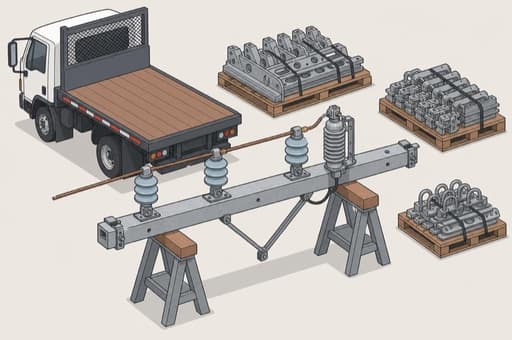
Grid Infrastructure
Insulators, arresters, connectors, anchors and switches sold to power companies — the biggest single engine in the company at roughly two-fifths of sales. Growth ran 12% early in 2026, so watch how hard utilities keep spending on their lines.
Competes with Pole line hardware, insulators, arresters (MacLean Power Systems) · Dead-ends, splices and conductor hardware (Preformed Line Products) · Grid and high-voltage equipment (ABB)
In plain English
Look up at a power line: almost everything holding it there is this kind of part. The grey discs that keep the live wire from touching the pole, the clamps that join one wire to the next, the screw anchors that keep the pole standing. Hubbell makes those.
Power companies buy them by the pallet, through distributors or straight from the plant, whenever they rebuild an old line or run a new one. Each piece is cheap against the cost of the job, and the job stops without it — so buyers choose on quality and on whether the part is on the shelf today. No one customer is critical; the ten largest together are about two-fifths of company sales.
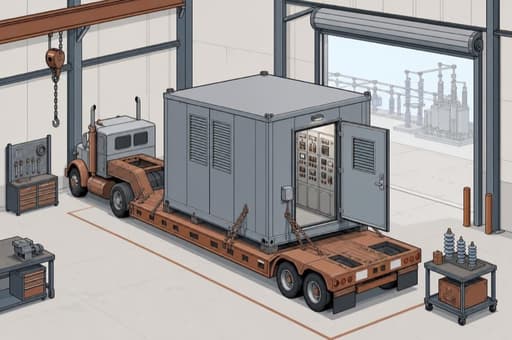
Systems Control
Factory-built control rooms and relay panels for substations, at roughly six percent of sales. One of the few Hubbell units that sells planned projects months ahead, which makes its order flow an early read on what utilities will build next.
Competes with Integrated Package Solutions control buildings (Powell Industries) · Control and relay panels (Anord Control Systems)
In plain English
A substation needs a small building full of switching and protective gear that tells the grid what to do when something goes wrong. Traditionally crews assembled all of that out on site, piece by piece. Systems Control builds the whole room in a factory instead, wires it, tests it, and trucks it out finished.
Utilities pay for the completed package rather than a box of parts. Because these are scheduled jobs and not shelf orders, the work is agreed well in advance — which is why this corner of Hubbell sees the next wave of substation and transmission spending before the catalogue businesses feel it.
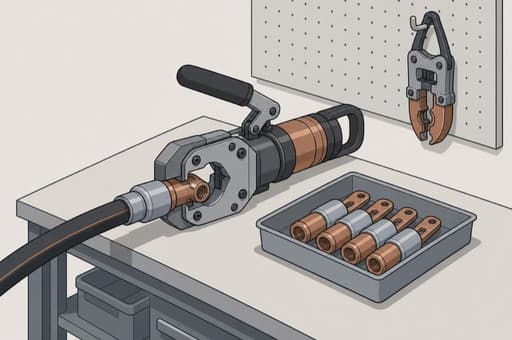
DMC Power
High-voltage connectors installed with a patented tool that squeezes the metal around the cable in one press — the pitch is speed, safety and fewer crew hours. Bought for about $827 million in October 2025. Growth depends on line crews taking up the tool.
Competes with Compression and automatic connectors (MacLean Power Systems) · ERICO compression connectors (nVent Electric)
In plain English
Joining two thick high-voltage cables is slow, fiddly work, and trained line crews are in short supply. DMC's answer is a connector that a special tool presses onto the cable all the way around in one go, and the joint is done.
Hubbell bought the business from a private-equity owner in October 2025. It sells into transmission, substation and industrial jobs, alongside Hubbell's existing connector range. The tooling has to be in crews' hands before the parts sell, which makes the installed tools both the lock on the business and the thing that limits how fast it spreads.
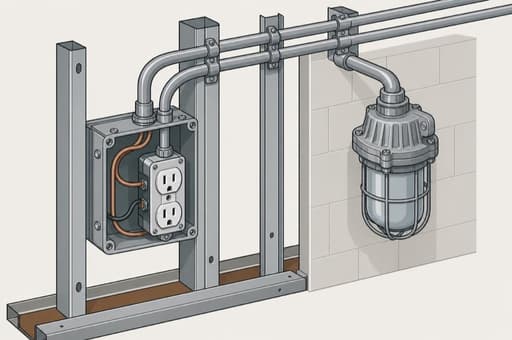
Wiring devices, enclosures & controls
The buildings side: outlets, boxes, cord grips, metal housings and controls for factories, warehouses, solar sites and rough places like refineries. Close to a third of sales, and the quiet part — growing slower than the data-center work sitting beside it.
Competes with Wiring devices (Leviton) · Pass & Seymour wiring devices (Legrand) · Enclosures and thermal management (nVent Electric)
In plain English
Behind every wall plate in a warehouse, a refinery or a solar site there is a box, a connector and a length of ground wire — and in rough places the whole assembly has to be built so a spark can never escape it. That is this shelf of the catalogue.
An electrical contractor pulls the parts from a distributor's counter, or an engineer writes a Hubbell part number into a building's drawings and the contractor buys what was specified. The money follows construction and plant upgrades. Hubbell has been folding its old separate product teams into a single sales organisation so one rep can sell the whole shelf.
NSI Industries
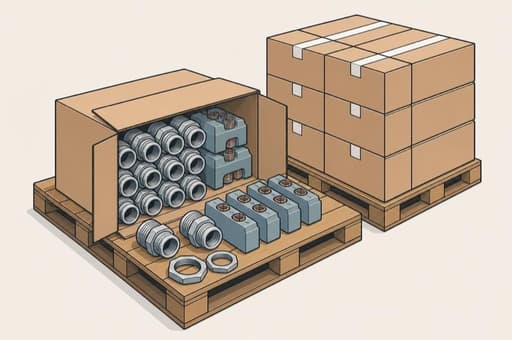
Fittings, connectors, wire management and timers under the Bridgeport, Polaris and Tork names. Three billion dollars in cash, closed June 2026 — Hubbell's biggest move in years. It brings 15,000-plus part numbers and its own distributor list; the debt is the price.
Competes with Conduit fittings and cable management (Atkore) · Installation Products fittings and connectors (ABB) · Fittings and connectors (nVent Electric)
In plain English
Think of the humble bits that finish an electrical job: the fitting that clamps a metal conduit into a box, the insulated block that splices heavy wires, the timer that switches lights on and off on a schedule. NSI sells fifteen thousand-odd such parts to more than two thousand distributors across North America.
Hubbell paid three billion dollars in cash for it in June 2026, funded largely with borrowed money it now plans to pay down over the next couple of years. The appeal is plain enough: parts Hubbell did not carry, sold at counters Hubbell was not already on.
Aclara smart meters
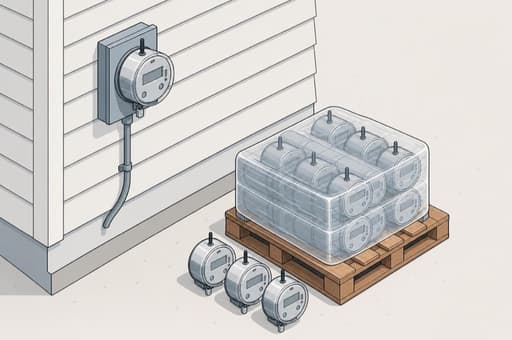
Electricity, gas and water meters that report themselves, plus the networks that carry the readings, sold as multi-year utility rollouts. Around eight percent of sales — and the line that fell, down 18% in one 2025 quarter before turning back up in mid-2026.
Competes with Smart meters and networks (Itron) · Smart meters (Landis+Gyr) · Sensus smart metering (Xylem)
In plain English
The meter on the side of a house used to need a person to walk up and read it. The version Aclara sells reads itself and sends the number back over a communications network the utility runs.
A power company decides to replace every meter in its territory, picks a supplier, and the work runs for years — then it ends. That is exactly what bit here: big rollouts finished in 2025 with nothing of the same size behind them, and sales fell for several quarters straight. It is also the thinner-margin end of Hubbell, and both Itron and Landis+Gyr sit on more of the North American installed base.
Grid protection, switching & controls
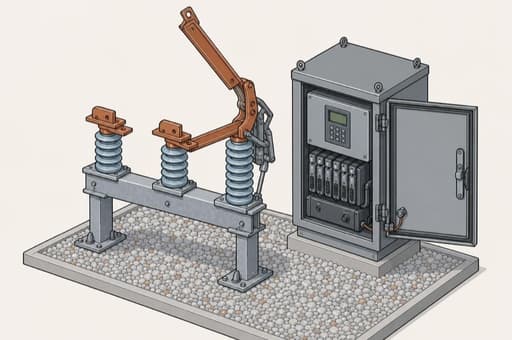
Switches, fuses and the protective devices that cut a faulty line before the damage spreads, sold into the same substations as the pole hardware. Roughly eight percent of sales and the faster half of the automation unit; substation switching led its 2026 recovery.
Competes with Substation protection relays and controls (Schweitzer Engineering Laboratories) · Utility switching and fusing (S&C Electric) · Distribution switchgear (Eaton)
In plain English
When something goes wrong on a line — a fallen branch, a short — something has to notice within a fraction of a second and cut the power before the fault travels further. These are the devices that do it: switches, fuses, and the units that watch the current and decide.
Utilities buy them on the same programmes that buy the poles and insulators, so Hubbell sells them into the same accounts. Management says this half of the automation business has been growing at the top end of the portfolio while the meter line shrank, and that half its sales now come from products added or built since the meter business was bought.
Data center portfolio (Burndy & PCX)
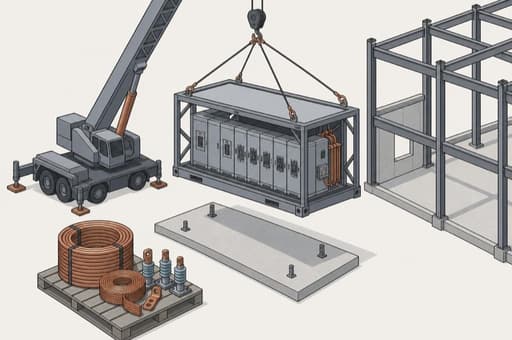
Grounding, connectors and factory-built electrical rooms sold into data centers. About seven percent of sales in 2025, but the fastest mover in the company — up roughly 65% in one 2026 quarter, against about 50% guided for the year off a modest base.
Competes with Starline busway power distribution (Legrand) · Modular power skids (Vertiv) · ERICO grounding and bonding hardware (nVent Electric)
In plain English
Copper, and a great deal of it, is what a data center hall runs on: bars and cables carrying current to the racks, connectors joining them, and braided strap tying the whole building to earth so nothing sits at a dangerous voltage. Hubbell's Burndy line supplies that hardware. A sister business, PCX, builds finished electrical rooms on steel bases in a factory and trucks them to the site.
Operators racing to open halls buy from whoever has stock and can handle the higher currents they now want, so this is won on availability and product range rather than long negotiations. It rises and falls with how much the AI build-out spends.


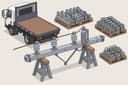 Grid InfrastructureInsulators, arresters, connectors, anchors and switches sold to power companies — the biggest single engine in the company at roughly two-fifths of sales. Growth ran 12% early in 2026, so watch how hard utilities keep spending on their lines.
Insulators, arresters, connectors, anchors and switches sold to power companies — the biggest single engine in the company at roughly two-fifths of sales. Growth ran 12% early in 2026, so watch how hard utilities keep spending on their lines.
In plain English
Look up at a power line: almost everything holding it there is this kind of part. The grey discs that keep the live wire from touching the pole, the clamps that join one wire to the next, the screw anchors that keep the pole standing. Hubbell makes those.
Power companies buy them by the pallet, through distributors or straight from the plant, whenever they rebuild an old line or run a new one. Each piece is cheap against the cost of the job, and the job stops without it — so buyers choose on quality and on whether the part is on the shelf today. No one customer is critical; the ten largest together are about two-fifths of company sales.
Competes with Pole line hardware, insulators, arresters (MacLean Power Systems) · Dead-ends, splices and conductor hardware (Preformed Line Products) · Grid and high-voltage equipment (ABB)
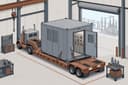 Systems ControlFactory-built control rooms and relay panels for substations, at roughly six percent of sales. One of the few Hubbell units that sells planned projects months ahead, which makes its order flow an early read on what utilities will build next.
Factory-built control rooms and relay panels for substations, at roughly six percent of sales. One of the few Hubbell units that sells planned projects months ahead, which makes its order flow an early read on what utilities will build next.
In plain English
A substation needs a small building full of switching and protective gear that tells the grid what to do when something goes wrong. Traditionally crews assembled all of that out on site, piece by piece. Systems Control builds the whole room in a factory instead, wires it, tests it, and trucks it out finished.
Utilities pay for the completed package rather than a box of parts. Because these are scheduled jobs and not shelf orders, the work is agreed well in advance — which is why this corner of Hubbell sees the next wave of substation and transmission spending before the catalogue businesses feel it.
Competes with Integrated Package Solutions control buildings (Powell Industries) · Control and relay panels (Anord Control Systems)
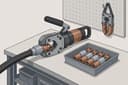 DMC PowerHigh-voltage connectors installed with a patented tool that squeezes the metal around the cable in one press — the pitch is speed, safety and fewer crew hours. Bought for about $827 million in October 2025. Growth depends on line crews taking up the tool.
High-voltage connectors installed with a patented tool that squeezes the metal around the cable in one press — the pitch is speed, safety and fewer crew hours. Bought for about $827 million in October 2025. Growth depends on line crews taking up the tool.
In plain English
Joining two thick high-voltage cables is slow, fiddly work, and trained line crews are in short supply. DMC's answer is a connector that a special tool presses onto the cable all the way around in one go, and the joint is done.
Hubbell bought the business from a private-equity owner in October 2025. It sells into transmission, substation and industrial jobs, alongside Hubbell's existing connector range. The tooling has to be in crews' hands before the parts sell, which makes the installed tools both the lock on the business and the thing that limits how fast it spreads.
Competes with Compression and automatic connectors (MacLean Power Systems) · ERICO compression connectors (nVent Electric)
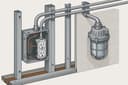 Wiring devices, enclosures & controlsThe buildings side: outlets, boxes, cord grips, metal housings and controls for factories, warehouses, solar sites and rough places like refineries. Close to a third of sales, and the quiet part — growing slower than the data-center work sitting beside it.
The buildings side: outlets, boxes, cord grips, metal housings and controls for factories, warehouses, solar sites and rough places like refineries. Close to a third of sales, and the quiet part — growing slower than the data-center work sitting beside it.
In plain English
Behind every wall plate in a warehouse, a refinery or a solar site there is a box, a connector and a length of ground wire — and in rough places the whole assembly has to be built so a spark can never escape it. That is this shelf of the catalogue.
An electrical contractor pulls the parts from a distributor's counter, or an engineer writes a Hubbell part number into a building's drawings and the contractor buys what was specified. The money follows construction and plant upgrades. Hubbell has been folding its old separate product teams into a single sales organisation so one rep can sell the whole shelf.
Competes with Wiring devices (Leviton) · Pass & Seymour wiring devices (Legrand) · Enclosures and thermal management (nVent Electric)
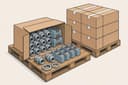 NSI IndustriesFittings, connectors, wire management and timers under the Bridgeport, Polaris and Tork names. Three billion dollars in cash, closed June 2026 — Hubbell's biggest move in years. It brings 15,000-plus part numbers and its own distributor list; the debt is the price.
Fittings, connectors, wire management and timers under the Bridgeport, Polaris and Tork names. Three billion dollars in cash, closed June 2026 — Hubbell's biggest move in years. It brings 15,000-plus part numbers and its own distributor list; the debt is the price.
In plain English
Think of the humble bits that finish an electrical job: the fitting that clamps a metal conduit into a box, the insulated block that splices heavy wires, the timer that switches lights on and off on a schedule. NSI sells fifteen thousand-odd such parts to more than two thousand distributors across North America.
Hubbell paid three billion dollars in cash for it in June 2026, funded largely with borrowed money it now plans to pay down over the next couple of years. The appeal is plain enough: parts Hubbell did not carry, sold at counters Hubbell was not already on.
Competes with Conduit fittings and cable management (Atkore) · Installation Products fittings and connectors (ABB) · Fittings and connectors (nVent Electric)
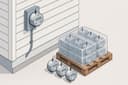 Aclara smart metersElectricity, gas and water meters that report themselves, plus the networks that carry the readings, sold as multi-year utility rollouts. Around eight percent of sales — and the line that fell, down 18% in one 2025 quarter before turning back up in mid-2026.
Electricity, gas and water meters that report themselves, plus the networks that carry the readings, sold as multi-year utility rollouts. Around eight percent of sales — and the line that fell, down 18% in one 2025 quarter before turning back up in mid-2026.
In plain English
The meter on the side of a house used to need a person to walk up and read it. The version Aclara sells reads itself and sends the number back over a communications network the utility runs.
A power company decides to replace every meter in its territory, picks a supplier, and the work runs for years — then it ends. That is exactly what bit here: big rollouts finished in 2025 with nothing of the same size behind them, and sales fell for several quarters straight. It is also the thinner-margin end of Hubbell, and both Itron and Landis+Gyr sit on more of the North American installed base.
Competes with Smart meters and networks (Itron) · Smart meters (Landis+Gyr) · Sensus smart metering (Xylem)
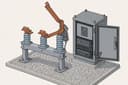 Grid protection, switching & controlsSwitches, fuses and the protective devices that cut a faulty line before the damage spreads, sold into the same substations as the pole hardware. Roughly eight percent of sales and the faster half of the automation unit; substation switching led its 2026 recovery.
Switches, fuses and the protective devices that cut a faulty line before the damage spreads, sold into the same substations as the pole hardware. Roughly eight percent of sales and the faster half of the automation unit; substation switching led its 2026 recovery.
In plain English
When something goes wrong on a line — a fallen branch, a short — something has to notice within a fraction of a second and cut the power before the fault travels further. These are the devices that do it: switches, fuses, and the units that watch the current and decide.
Utilities buy them on the same programmes that buy the poles and insulators, so Hubbell sells them into the same accounts. Management says this half of the automation business has been growing at the top end of the portfolio while the meter line shrank, and that half its sales now come from products added or built since the meter business was bought.
Competes with Substation protection relays and controls (Schweitzer Engineering Laboratories) · Utility switching and fusing (S&C Electric) · Distribution switchgear (Eaton)
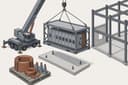 Data center portfolio (Burndy & PCX)Grounding, connectors and factory-built electrical rooms sold into data centers. About seven percent of sales in 2025, but the fastest mover in the company — up roughly 65% in one 2026 quarter, against about 50% guided for the year off a modest base.
Grounding, connectors and factory-built electrical rooms sold into data centers. About seven percent of sales in 2025, but the fastest mover in the company — up roughly 65% in one 2026 quarter, against about 50% guided for the year off a modest base.
In plain English
Copper, and a great deal of it, is what a data center hall runs on: bars and cables carrying current to the racks, connectors joining them, and braided strap tying the whole building to earth so nothing sits at a dangerous voltage. Hubbell's Burndy line supplies that hardware. A sister business, PCX, builds finished electrical rooms on steel bases in a factory and trucks them to the site.
Operators racing to open halls buy from whoever has stock and can handle the higher currents they now want, so this is won on availability and product range rather than long negotiations. It rises and falls with how much the AI build-out spends.
Competes with Starline busway power distribution (Legrand) · Modular power skids (Vertiv) · ERICO grounding and bonding hardware (nVent Electric)
Named in filings, launches and programs
- BurndyBrandThe connector and grounding name behind the data-center push; Hubbell has been adding capacity and automation at its plant.
- PCXBrandBuilds the modular electrical rooms that ship to data centers — one of the few Hubbell units with work booked ahead.
- VentevBrandBought in February 2025 for about $73 million; power, protection and connection gear for wireless networks, folded into the buildings side.
- NicorBrandA roughly $56 million tuck-in in 2025 on the utility side, making meter-reading devices and metering endpoints.
- Beckwith ElectricBrandUtility grid protection and control devices, sold inside the grid automation unit.
- Chance / Anderson / FargoBrandLong-standing line-hardware names — screw anchors, connectors and the fittings that hold overhead wire where it belongs.
- Ohio BrassBrandInsulators and surge arresters; Hubbell has owned the name since 1978.
- Quazite / Polycast / PenCell / GreenjacketBrandPolymer and composite enclosures, wildlife guards and capacitor switching — a cluster of smaller utility brands under one roof.
- WiegmannBrandElectrical enclosures — the metal boxes that keep switching gear and wiring protected.
- Killark / GAI-Tronics / Hipotronics / ACME ElectricBrandGear for hazardous locations, industrial communications, high-voltage testing and transformers — the specialised corners of the buildings and industrial range.
- Bryant / Kellems / Bell / RacoBrandWiring devices, cord grips and rough-in boxes: the everyday parts an electrician pulls off a distributor's shelf.
- AccelTex SolutionsBrandWireless-network accessories, a small brand on the buildings side.
- 765 kV transmission programmeProduct · AnnouncedDevelopment and plant investment with large utility customers on extra-high-voltage lines; management sizes it at about $1.5 billion of opportunity over ten years.
BurndyBrand
The connector and grounding name behind the data-center push; Hubbell has been adding capacity and automation at its plant.
PCXBrand
Builds the modular electrical rooms that ship to data centers — one of the few Hubbell units with work booked ahead.
VentevBrand
Bought in February 2025 for about $73 million; power, protection and connection gear for wireless networks, folded into the buildings side.
NicorBrand
A roughly $56 million tuck-in in 2025 on the utility side, making meter-reading devices and metering endpoints.
Beckwith ElectricBrand
Utility grid protection and control devices, sold inside the grid automation unit.
Chance / Anderson / FargoBrand
Long-standing line-hardware names — screw anchors, connectors and the fittings that hold overhead wire where it belongs.
Ohio BrassBrand
Insulators and surge arresters; Hubbell has owned the name since 1978.
Quazite / Polycast / PenCell / GreenjacketBrand
Polymer and composite enclosures, wildlife guards and capacitor switching — a cluster of smaller utility brands under one roof.
WiegmannBrand
Electrical enclosures — the metal boxes that keep switching gear and wiring protected.
Killark / GAI-Tronics / Hipotronics / ACME ElectricBrand
Gear for hazardous locations, industrial communications, high-voltage testing and transformers — the specialised corners of the buildings and industrial range.
Bryant / Kellems / Bell / RacoBrand
Wiring devices, cord grips and rough-in boxes: the everyday parts an electrician pulls off a distributor's shelf.
AccelTex SolutionsBrand
Wireless-network accessories, a small brand on the buildings side.
765 kV transmission programmeProduct · Announced
Development and plant investment with large utility customers on extra-high-voltage lines; management sizes it at about $1.5 billion of opportunity over ten years.