
Jabil (JBL)
Engineers and manufactures electronics, infrastructure, and regulated products for global brands.
Something off on this page? Send us feedback.
Jabil builds other companies' products. Brands bring a design — a drug injector, a car module, a rack of AI servers — and Jabil buys the parts, builds it, tests it and ships it, earning a thin slice on every unit. The old mix of consumer gadgets has been sold or pruned; what replaced it is the hardware inside AI data centers, ordered by a handful of very large buyers.
Item facts: FY2026 · year ended Aug 31, 2026 (guided), from filings, earnings calls and company pages.
Judgment weights, not filed revenue
The band summarizes business focus and direction. ~ marks estimates.
9 in detail · 15 more below
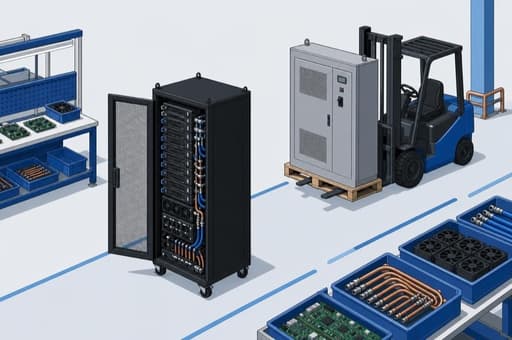
Cloud and Data Center Infrastructure
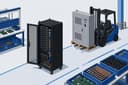
Jabil bolts finished AI computers together — racks of servers and storage, liquid cooling, and the heavy electrical gear that feeds them — guided to roughly $10.4 billion of a ~$35 billion year. Watch cloud spending and whether parts arrive on time.
Competes with Connectivity & Cloud Solutions (Celestica) · ZT Systems rack builds (Sanmina) · Data Center business (Flex)
In plain English
An AI data center starts life as a room full of empty floor. Somebody has to take thousands of loose parts — boards, drives, fans, coolant pipes, the metal cabinet itself — and turn them into a tested, working machine on wheels. That is this business.
The cloud giants design the machine and buy the expensive chips themselves. Jabil assembles it, tests it, ships it, and builds the electrical cabinets that carry power from the building's supply into the rack. The pay comes from labour, engineering and having approved factory space ready in the right country — not from the chips passing through.
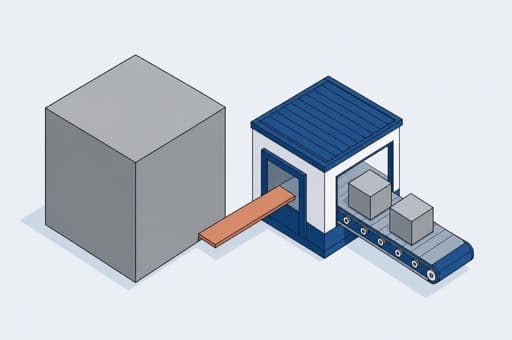
Hyperscale Customer Programs
Three giant cloud operators sit behind most of the AI work, and Jabil does not name them. One alone was 16% of revenue in fiscal 2025; the five biggest customers together were about 36%. The third barely ships before 2028.
Competes with Hyperscaler rack and switching programs (Celestica) · AMD/ZT Systems preferred-partner work (Sanmina) · Cloud and AI server programs (Foxconn)
In plain English
Not a product — a short list of customers. Three of the world's largest cloud operators hand Jabil their designs: the largest has it build custom racks of graphics chips, the second is ramping storage racks in Mexico worth roughly a billion dollars, the third was won only this past spring.
Nothing here is locked in. Jabil reports no order book to fall back on, and each hardware generation is put out to tender again, so one lost design can take a large slice of revenue with it. That is the price of serving buyers this big — and Jabil does not say publicly who they are.
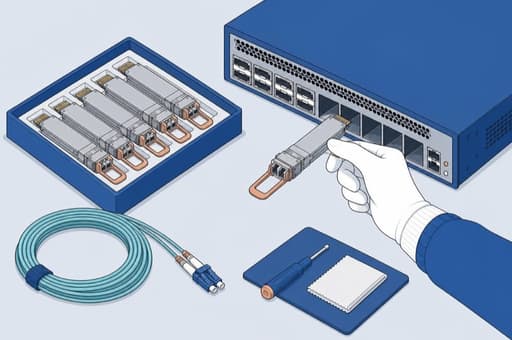
Networking and Communications
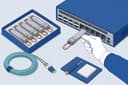
The plugs that let AI machines talk to each other as light, plus switches and liquid-cooled network boxes — about $3.1 billion this year, much of it built in India. Watch how fast buyers move to the faster new modules.
Competes with 800G/1.6T optical modules (InnoLight) · 800G/1.6T optical modules (Eoptolink) · Optical module contract manufacturing (Fabrinet)
In plain English
Servers stopped talking over copper wire a while ago; they talk in flashes of light down glass fibre. The small plug at each end that turns electricity into light and back is an optical module, and Jabil makes them by the crate.
The know-how came from buying Intel's optical-module business in 2023 — engineers, clean rooms and equipment rather than sales. Cloud operators and networking brands buy the modules, the switch boxes they plug into, and cooled networking platforms. Each generation runs at about double the speed of the one before, so orders follow the changeover; Jabil put out a module at the newest speed in 2025.
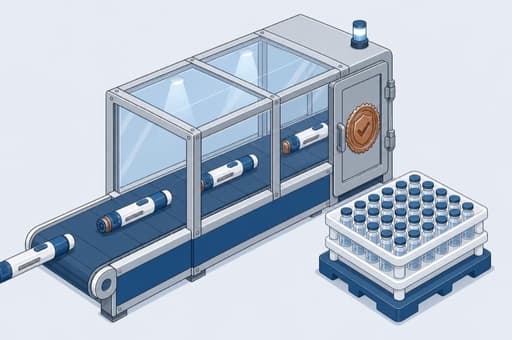
Healthcare and Packaging
Injector pens, blood-sugar sensors, diagnostics and the packaging around them — roughly $5 billion, though Jabil does not break it out. Management's "Steady Eddie": slow to win, slow to lose, and the main lever on profit margin.
Competes with Cardiovascular and neuromodulation contract manufacturing (Integer Holdings) · Phillips-Medisize drug-delivery devices (Molex) · Health Solutions (Flex)
In plain English
Picture the pen a patient clicks against their thigh, or the coin-sized sensor stuck to an arm that reads blood sugar. Drug companies and device brands design those; Jabil builds them by the million, under the inspection rules that come with anything touching a patient.
Since buying a US drug-making firm in 2025, Jabil also fills and freeze-dries the medicine itself, not just the device around it. Winning this work takes years, because it has to clear regulatory approval before the first unit ships — and that same paperwork is why the work, once won, tends to stay put.
Digital Commerce
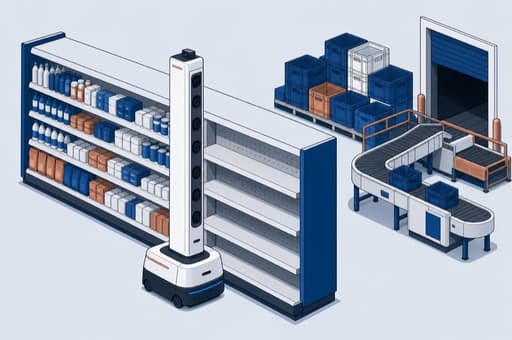
Machines for shops and warehouses: shelf-scanning robots, checkout hardware, sorting and automation gear — around $2.7 billion, nudged up again in June. Higher-margin than the consumer side, and the growing half of its segment.
Competes with Tally shelf-scanning robot (Simbe Robotics) · Industrial and automation manufacturing (Flex)
In plain English
The robot trundling down a supermarket aisle at night, checking which shelves have gone empty — Jabil's Badger Technologies division makes that, and Jabil builds the rest of the store-and-warehouse kit too: tills, scanners, sorting machinery.
Retailers and warehouse operators buy the machines outright, and buy more as more of the floor gets automated. It is a fraction of the size of the AI rack business, but management calls it the better-margin work and names robotics as the driver — and it is growing while the consumer-gadget half of the same segment shrinks.
Connected Living
Consumer devices, smart-home gear, appliances and packaging — the old engine, roughly $2.7 billion. Jabil has handed back thin-margin programs for six straight quarters and the segment's margin rose; it is shrinking on purpose.
Competes with Consumer device assembly (Foxconn) · Consumer device assembly (Luxshare) · Lifestyle manufacturing (Flex)
In plain English
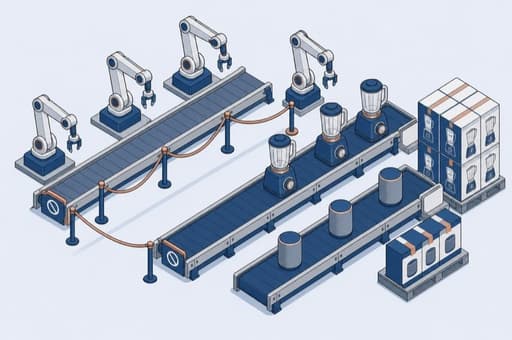
Blenders, smart speakers, thermostats, the printed boxes they ship in. This is work Jabil has done for decades, and the part of the company being made deliberately smaller.
Brands pay per unit built and the units are cheap, so the profit lives or dies on volume and factory discipline. Jabil's answer has been to let the worst-paying contracts go, six quarters running — sales shrink, what remains earns more, and segment margin moved up sharply. One big single-customer consumer program left with the business Jabil sold in 2024; this is the steadier remainder, kept for its earnings rather than pushed to grow.
Automotive and Transportation
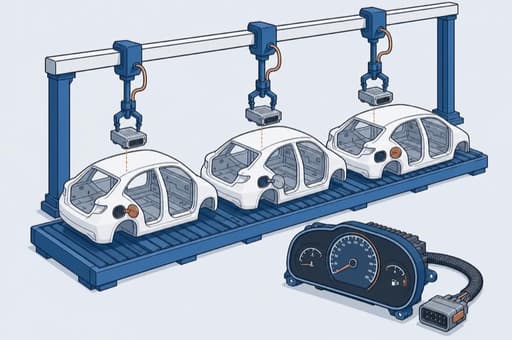
Electronics that go inside vehicles, built for petrol, hybrid and battery models alike — about $4.4 billion, nudged up mid-year on Chinese export demand. Last year's problem child; management says it has bottomed.
Competes with Flex Automotive (Flex) · Automotive and EV contract manufacturing (Foxconn) · In-house tier-1 vehicle electronics (Continental)
In plain English
A modern car is a computer with wheels — screens, sensors, control boxes. Carmakers and their big parts suppliers hand those designs to Jabil instead of running their own electronics plants.
The deliberate choice here is to take no side on how cars are powered. Jabil builds for petrol, battery and hybrid platforms alike, so a swing in which type sells well moves the mix rather than the total. It also builds in the region where the vehicles are sold, which keeps parts from crossing borders and collecting tariffs. Growth follows how much electronics goes into each vehicle, not how many vehicles get made.
Renewables and Energy Infrastructure
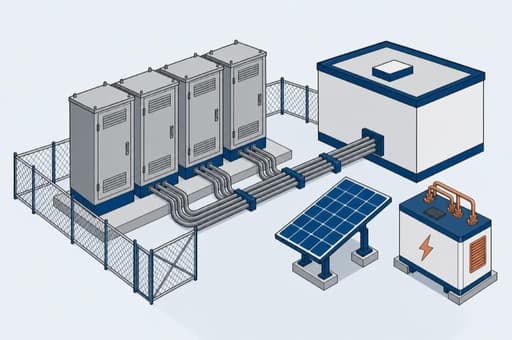
Gear that moves and stores electricity: solar inverters, battery storage, and the grid and power equipment that is now the larger part — roughly $3 billion. Data-center power demand turned a headwind into a tailwind.
Competes with Data-center power portfolio (Vertiv) · Power distribution and switchgear (Schneider Electric) · Data-center power business (Flex)
In plain English
Electricity has to be stepped down, split up and switched safely before it reaches anything that computes. Jabil builds the metal cabinets that do that job, plus solar inverters — the box that turns a panel's output into current a building can actually use — and enclosures for large batteries.
Utilities, solar developers and data-center builders buy the hardware; since buying Hanley Energy at the start of 2026, Jabil also installs and maintains it, work that used to go to someone else. Solar proper is now the smaller share. Management points to data centers driving a steep rise in electricity demand for decades ahead.
Capital Equipment
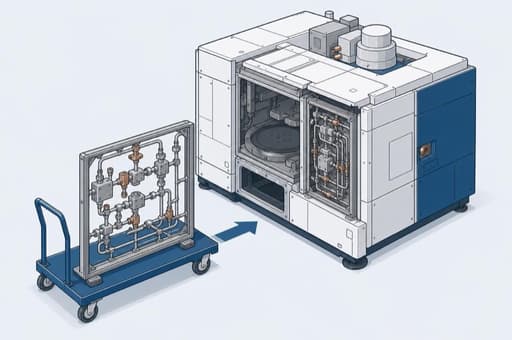
Big pieces — sometimes whole systems — for the firms that build chipmaking and chip-testing machines. About $3 billion, raised in March on strong test demand. Rides the chip-factory spending cycle, which trailed AI by a year.
Competes with Critical wafer-fab subsystems (Ultra Clean Holdings) · Critical subsystems (Ichor Holdings) · Capital Equipment segment (Celestica)
In plain English
Chips are made inside room-sized machines, then checked by another set of machines before they ship. Jabil does not sell either one. It builds large parts of them — subassemblies of tubing, valves and vacuum hardware, occasionally the finished system — for the companies whose name goes on the front.
That work is handed out rather than kept in-house, and Jabil is one of a small group that takes it, so allocations get split between rivals. Pay comes per module shipped. Demand swings with how many chip factories are going up, and with testing: management says custom AI chips need far more of it.


 Cloud and Data Center InfrastructureJabil bolts finished AI computers together — racks of servers and storage, liquid cooling, and the heavy electrical gear that feeds them — guided to roughly $10.4 billion of a ~$35 billion year. Watch cloud spending and whether parts arrive on time.
Jabil bolts finished AI computers together — racks of servers and storage, liquid cooling, and the heavy electrical gear that feeds them — guided to roughly $10.4 billion of a ~$35 billion year. Watch cloud spending and whether parts arrive on time.
In plain English
An AI data center starts life as a room full of empty floor. Somebody has to take thousands of loose parts — boards, drives, fans, coolant pipes, the metal cabinet itself — and turn them into a tested, working machine on wheels. That is this business.
The cloud giants design the machine and buy the expensive chips themselves. Jabil assembles it, tests it, ships it, and builds the electrical cabinets that carry power from the building's supply into the rack. The pay comes from labour, engineering and having approved factory space ready in the right country — not from the chips passing through.
Competes with Connectivity & Cloud Solutions (Celestica) · ZT Systems rack builds (Sanmina) · Data Center business (Flex)
 Hyperscale Customer ProgramsThree giant cloud operators sit behind most of the AI work, and Jabil does not name them. One alone was 16% of revenue in fiscal 2025; the five biggest customers together were about 36%. The third barely ships before 2028.
Three giant cloud operators sit behind most of the AI work, and Jabil does not name them. One alone was 16% of revenue in fiscal 2025; the five biggest customers together were about 36%. The third barely ships before 2028.
In plain English
Not a product — a short list of customers. Three of the world's largest cloud operators hand Jabil their designs: the largest has it build custom racks of graphics chips, the second is ramping storage racks in Mexico worth roughly a billion dollars, the third was won only this past spring.
Nothing here is locked in. Jabil reports no order book to fall back on, and each hardware generation is put out to tender again, so one lost design can take a large slice of revenue with it. That is the price of serving buyers this big — and Jabil does not say publicly who they are.
Competes with Hyperscaler rack and switching programs (Celestica) · AMD/ZT Systems preferred-partner work (Sanmina) · Cloud and AI server programs (Foxconn)
 Networking and CommunicationsThe plugs that let AI machines talk to each other as light, plus switches and liquid-cooled network boxes — about $3.1 billion this year, much of it built in India. Watch how fast buyers move to the faster new modules.
The plugs that let AI machines talk to each other as light, plus switches and liquid-cooled network boxes — about $3.1 billion this year, much of it built in India. Watch how fast buyers move to the faster new modules.
In plain English
Servers stopped talking over copper wire a while ago; they talk in flashes of light down glass fibre. The small plug at each end that turns electricity into light and back is an optical module, and Jabil makes them by the crate.
The know-how came from buying Intel's optical-module business in 2023 — engineers, clean rooms and equipment rather than sales. Cloud operators and networking brands buy the modules, the switch boxes they plug into, and cooled networking platforms. Each generation runs at about double the speed of the one before, so orders follow the changeover; Jabil put out a module at the newest speed in 2025.
Competes with 800G/1.6T optical modules (InnoLight) · 800G/1.6T optical modules (Eoptolink) · Optical module contract manufacturing (Fabrinet)
 Healthcare and PackagingInjector pens, blood-sugar sensors, diagnostics and the packaging around them — roughly $5 billion, though Jabil does not break it out. Management's "Steady Eddie": slow to win, slow to lose, and the main lever on profit margin.
Injector pens, blood-sugar sensors, diagnostics and the packaging around them — roughly $5 billion, though Jabil does not break it out. Management's "Steady Eddie": slow to win, slow to lose, and the main lever on profit margin.
In plain English
Picture the pen a patient clicks against their thigh, or the coin-sized sensor stuck to an arm that reads blood sugar. Drug companies and device brands design those; Jabil builds them by the million, under the inspection rules that come with anything touching a patient.
Since buying a US drug-making firm in 2025, Jabil also fills and freeze-dries the medicine itself, not just the device around it. Winning this work takes years, because it has to clear regulatory approval before the first unit ships — and that same paperwork is why the work, once won, tends to stay put.
Competes with Cardiovascular and neuromodulation contract manufacturing (Integer Holdings) · Phillips-Medisize drug-delivery devices (Molex) · Health Solutions (Flex)
 Digital CommerceMachines for shops and warehouses: shelf-scanning robots, checkout hardware, sorting and automation gear — around $2.7 billion, nudged up again in June. Higher-margin than the consumer side, and the growing half of its segment.
Machines for shops and warehouses: shelf-scanning robots, checkout hardware, sorting and automation gear — around $2.7 billion, nudged up again in June. Higher-margin than the consumer side, and the growing half of its segment.
In plain English
The robot trundling down a supermarket aisle at night, checking which shelves have gone empty — Jabil's Badger Technologies division makes that, and Jabil builds the rest of the store-and-warehouse kit too: tills, scanners, sorting machinery.
Retailers and warehouse operators buy the machines outright, and buy more as more of the floor gets automated. It is a fraction of the size of the AI rack business, but management calls it the better-margin work and names robotics as the driver — and it is growing while the consumer-gadget half of the same segment shrinks.
Competes with Tally shelf-scanning robot (Simbe Robotics) · Industrial and automation manufacturing (Flex)
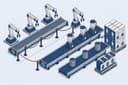 Connected LivingConsumer devices, smart-home gear, appliances and packaging — the old engine, roughly $2.7 billion. Jabil has handed back thin-margin programs for six straight quarters and the segment's margin rose; it is shrinking on purpose.
Consumer devices, smart-home gear, appliances and packaging — the old engine, roughly $2.7 billion. Jabil has handed back thin-margin programs for six straight quarters and the segment's margin rose; it is shrinking on purpose.
In plain English
Blenders, smart speakers, thermostats, the printed boxes they ship in. This is work Jabil has done for decades, and the part of the company being made deliberately smaller.
Brands pay per unit built and the units are cheap, so the profit lives or dies on volume and factory discipline. Jabil's answer has been to let the worst-paying contracts go, six quarters running — sales shrink, what remains earns more, and segment margin moved up sharply. One big single-customer consumer program left with the business Jabil sold in 2024; this is the steadier remainder, kept for its earnings rather than pushed to grow.
Competes with Consumer device assembly (Foxconn) · Consumer device assembly (Luxshare) · Lifestyle manufacturing (Flex)
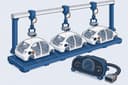 Automotive and TransportationElectronics that go inside vehicles, built for petrol, hybrid and battery models alike — about $4.4 billion, nudged up mid-year on Chinese export demand. Last year's problem child; management says it has bottomed.
Electronics that go inside vehicles, built for petrol, hybrid and battery models alike — about $4.4 billion, nudged up mid-year on Chinese export demand. Last year's problem child; management says it has bottomed.
In plain English
A modern car is a computer with wheels — screens, sensors, control boxes. Carmakers and their big parts suppliers hand those designs to Jabil instead of running their own electronics plants.
The deliberate choice here is to take no side on how cars are powered. Jabil builds for petrol, battery and hybrid platforms alike, so a swing in which type sells well moves the mix rather than the total. It also builds in the region where the vehicles are sold, which keeps parts from crossing borders and collecting tariffs. Growth follows how much electronics goes into each vehicle, not how many vehicles get made.
Competes with Flex Automotive (Flex) · Automotive and EV contract manufacturing (Foxconn) · In-house tier-1 vehicle electronics (Continental)
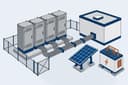 Renewables and Energy InfrastructureGear that moves and stores electricity: solar inverters, battery storage, and the grid and power equipment that is now the larger part — roughly $3 billion. Data-center power demand turned a headwind into a tailwind.
Gear that moves and stores electricity: solar inverters, battery storage, and the grid and power equipment that is now the larger part — roughly $3 billion. Data-center power demand turned a headwind into a tailwind.
In plain English
Electricity has to be stepped down, split up and switched safely before it reaches anything that computes. Jabil builds the metal cabinets that do that job, plus solar inverters — the box that turns a panel's output into current a building can actually use — and enclosures for large batteries.
Utilities, solar developers and data-center builders buy the hardware; since buying Hanley Energy at the start of 2026, Jabil also installs and maintains it, work that used to go to someone else. Solar proper is now the smaller share. Management points to data centers driving a steep rise in electricity demand for decades ahead.
Competes with Data-center power portfolio (Vertiv) · Power distribution and switchgear (Schneider Electric) · Data-center power business (Flex)
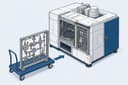 Capital EquipmentBig pieces — sometimes whole systems — for the firms that build chipmaking and chip-testing machines. About $3 billion, raised in March on strong test demand. Rides the chip-factory spending cycle, which trailed AI by a year.
Big pieces — sometimes whole systems — for the firms that build chipmaking and chip-testing machines. About $3 billion, raised in March on strong test demand. Rides the chip-factory spending cycle, which trailed AI by a year.
In plain English
Chips are made inside room-sized machines, then checked by another set of machines before they ship. Jabil does not sell either one. It builds large parts of them — subassemblies of tubing, valves and vacuum hardware, occasionally the finished system — for the companies whose name goes on the front.
That work is handed out rather than kept in-house, and Jabil is one of a small group that takes it, so allocations get split between rivals. Pay comes per module shipped. Demand swings with how many chip factories are going up, and with testing: management says custom AI chips need far more of it.
Competes with Critical wafer-fab subsystems (Ultra Clean Holdings) · Critical subsystems (Ichor Holdings) · Capital Equipment segment (Celestica)
Named in filings, launches and programs
- Jabil PhotonicsProduct lineJabil's in-house line of high-speed optical plugs, built on the Intel unit bought in 2023 rather than on any revenue that came with it.
- Mikros TechnologiesBrandCold-plate design team bought in October 2024 — the flat metal blocks that press against hot chips and carry the heat away in liquid.
- Hanley Energy GroupBrandData-center power installation and maintenance, bought January 2026 for about $725 million; it services the electrical gear Jabil builds.
- Pharmaceutics International (Pii)BrandDrug-making arm bought February 2025: fills, freeze-dries and forms medicines, so Jabil can sell the drug as well as the device around it.
- Badger TechnologiesBrandJabil's retail-robot division, over a thousand machines deployed by its own count; it named a new chief executive in June 2026.
- J422-G server platformProductA Jabil-branded AI server launched October 2025 — unusual for a company that normally builds under other people's names.
- Siemens power distribution programCustomer program · AnnouncedA Prince George County, Virginia plant announced May 2026 to build power distribution equipment for Siemens, with 352 jobs.
- Adani Enterprises AI allianceCustomer program · AnnouncedA non-binding plan with India's Adani Enterprises to build AI data-center racks at large scale; documents were still pending in June 2026.
- Apptronik Apollo humanoid robotsCustomer program · AnnouncedJabil agreed in February 2025 to help produce Apptronik's Apollo humanoid robots.
- IDA Global / V-CommandPlatformJabil's own supply-chain software, part of it a joint venture with Cyferd, used to track parts across its factory network.
- EHT SemiProduct · AnnouncedA minority stake taken January 2026 for radio-frequency and pulsed-power know-how feeding the chip-equipment work.
- Inno battery-enclosure ventureBrand · AnnouncedA joint venture announced November 2025 to build enclosures for grid batteries in Thailand.
- North Carolina AI siteEcosystem · RampingNew southeastern US plant from a $500 million investment announced June 2025, due online in summer 2026.
- Memphis power and cooling campusEcosystem · RampingBuilds the heavy electrical cabinets and in-row cooling units for data centers; its 1.5-million-square-foot expansion was on track in March 2026.
- Other capacity additionsEcosystemOver $119 million and about 2,200 jobs in Mississippi, 1.2 million square feet in India, and a Penang logistics hub opened July 2026.
Jabil PhotonicsProduct line
Jabil's in-house line of high-speed optical plugs, built on the Intel unit bought in 2023 rather than on any revenue that came with it.
Mikros TechnologiesBrand
Cold-plate design team bought in October 2024 — the flat metal blocks that press against hot chips and carry the heat away in liquid.
Hanley Energy GroupBrand
Data-center power installation and maintenance, bought January 2026 for about $725 million; it services the electrical gear Jabil builds.
Pharmaceutics International (Pii)Brand
Drug-making arm bought February 2025: fills, freeze-dries and forms medicines, so Jabil can sell the drug as well as the device around it.
Badger TechnologiesBrand
Jabil's retail-robot division, over a thousand machines deployed by its own count; it named a new chief executive in June 2026.
J422-G server platformProduct
A Jabil-branded AI server launched October 2025 — unusual for a company that normally builds under other people's names.
Siemens power distribution programCustomer program · Announced
A Prince George County, Virginia plant announced May 2026 to build power distribution equipment for Siemens, with 352 jobs.
Adani Enterprises AI allianceCustomer program · Announced
A non-binding plan with India's Adani Enterprises to build AI data-center racks at large scale; documents were still pending in June 2026.
Apptronik Apollo humanoid robotsCustomer program · Announced
Jabil agreed in February 2025 to help produce Apptronik's Apollo humanoid robots.
IDA Global / V-CommandPlatform
Jabil's own supply-chain software, part of it a joint venture with Cyferd, used to track parts across its factory network.
EHT SemiProduct · Announced
A minority stake taken January 2026 for radio-frequency and pulsed-power know-how feeding the chip-equipment work.
Inno battery-enclosure ventureBrand · Announced
A joint venture announced November 2025 to build enclosures for grid batteries in Thailand.
North Carolina AI siteEcosystem · Ramping
New southeastern US plant from a $500 million investment announced June 2025, due online in summer 2026.
Memphis power and cooling campusEcosystem · Ramping
Builds the heavy electrical cabinets and in-row cooling units for data centers; its 1.5-million-square-foot expansion was on track in March 2026.
Other capacity additionsEcosystem
Over $119 million and about 2,200 jobs in Mississippi, 1.2 million square feet in India, and a Penang logistics hub opened July 2026.