
Johnson & Johnson (JNJ)
Develops prescription medicines and cardiovascular, surgical, orthopaedic and vision technologies.
Something off on this page? Send us feedback.
Johnson & Johnson sells prescription medicines and the tools doctors use in operating rooms and clinics. Cancer and immune medicines carry much of the business, newer treatments are replacing a fading big seller, and the device side is adding surgical robots and heart tools even as the bone-and-joint unit heads toward separation.
Item facts: FY2025 · year ended Dec 28, 2025, from filings, earnings calls and company pages.
Judgment weights, not filed revenue
The band summarizes business focus and direction. ~ marks estimates.
8 in detail · 7 more below
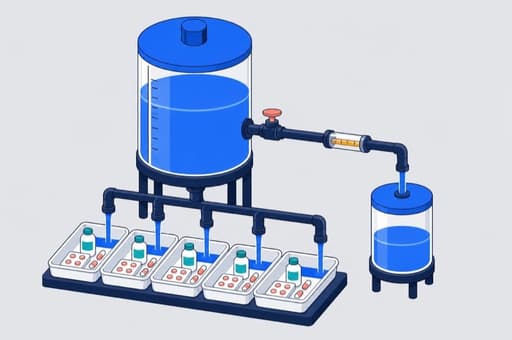
DARZALEX
J&J's largest single product brought in $14.35B in FY2025. It keeps expanding in cancer care, but payments to Genmab and U.S. patent protection currently listed through 2029 shape what stays with J&J.
Competes with SARCLISA (Sanofi) · ELREXFIO (Pfizer)
In plain English
DARZALEX treats multiple myeloma, one of the blood cancers in this portfolio. Hospitals give it through a vein or under the skin, usually as part of a combination of medicines.
Cancer centers order each dose, and health plans ultimately cover much of the bill. Every treatment adds sales, but J&J shares part with Genmab, the company that licensed the medicine: its royalty runs from 12% to 20% of net sales. The big watch is how long new uses and treatment combinations can keep growth going before copycat competition arrives when patent protection ends.
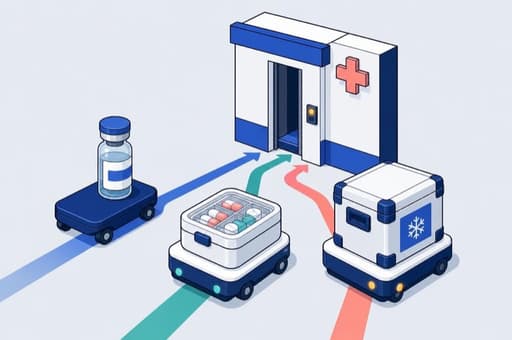
Oncology
The cancer portfolio outside DARZALEX made $11.03B in FY2025, spread across prostate, lung, bladder and blood cancers. Newer treatments are moving earlier in care, while growth still depends on specialist treatment slots, convincing trial results and added approvals.
Competes with ABECMA (Bristol Myers Squibb / 2seventy bio) · ELREXFIO (Pfizer) · TAGRISSO (AstraZeneca)
In plain English
Not every cancer is treated the same way. J&J sells several medicines, including treatments built around specially prepared immune cells, covering blood cancers as well as prostate, lung and bladder cancers. Some need a specialist center and a manufacturing slot.
Each approved use opens another set of eligible patients, and hospitals or cancer centers are paid for the treatment by health plans. That makes earlier use especially valuable. The practical catch is simple: a promising medicine cannot earn from a patient if production, referral or clinic capacity is unavailable.
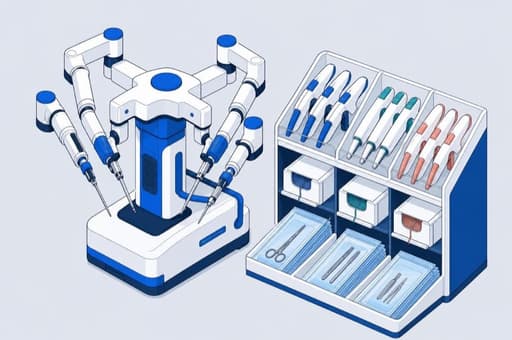
Surgery
Surgery produced $10.14B in FY2025 from staplers, tissue-sealing tools, stitches and wound-closure products. A robot cleared in July 2026 can seed more compatible instrument sales; watch whether hospitals buy it and surgeons use it often enough.
Competes with da Vinci 5 with SureForm (Intuitive Surgical) · Signia with Tri-Staple (Medtronic)
In plain English
The operating-room toolbox. J&J sells the devices that seal, staple and close tissue, plus the single-use pieces consumed in each operation. Hospitals pay for reusable machines and keep reordering instruments as procedures happen.
OTTAVA extends that model into robotic surgery: placing the machine is only the front door; regular operations bring compatible tools through it. This business grows when surgical volume and hospital budgets rise, and slows when rivals win preferred spots in the operating room.
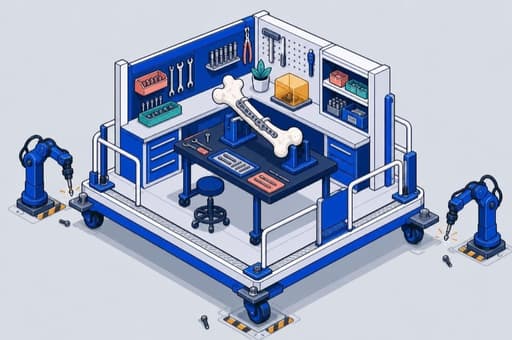
Orthopaedics
The $9.26B FY2025 bone-and-joint business sells trauma, spine, hip and knee systems. It remains active, but its planned mid-2027 separation makes a clean handoff without losing hospital and surgeon demand the central watch.
Competes with Mako Total Knee with Triathlon (Stryker) · ROSA Knee with Persona (Zimmer Biomet)
In plain English
A broken hip or worn knee needs more than a replacement part. Surgeons also rely on matching tools and guided systems such as VELYS alongside the implant. J&J earns when hospitals buy those implants and instruments for each procedure.
Choice tends to stick: once a surgeon and hospital train around one set, switching takes effort. Even so, bulk purchasing in China can squeeze prices, and the whole unit is being prepared to stand apart from J&J in mid-2027.

Cardiovascular
Heart-care devices generated $8.93B in FY2025 from tools that map and treat irregular rhythms, support heart recovery and treat hardened vessels. New rhythm-treatment launches are growing, while weaker use of Abiomed's heart-support devices needs recovery.
Competes with FARAPULSE with OPAL HDx (Boston Scientific) · PulseSelect with Affera (Medtronic)
In plain English
Picture a heart lab with a map, a repair tool and backup support. CARTO shows doctors where an irregular rhythm starts; VARIPULSE and Dual Energy treat the spot; Impella supports heart recovery; Shockwave treats vessels hardened by calcium.
Hospitals buy the main equipment, then purchase procedure-specific devices as patients are treated. Training and a familiar setup can keep a lab within one family of tools. Revenue therefore follows procedure counts, hospital budgets and whether new rhythm systems can win space from Boston Scientific and Medtronic.
Immunology
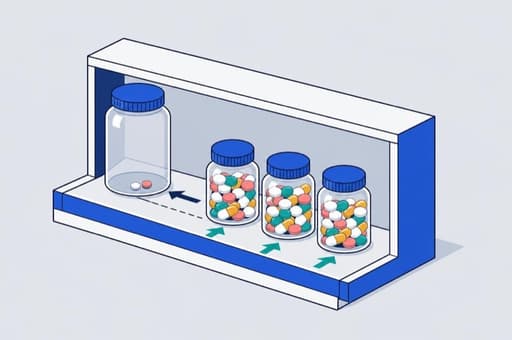
Immunology made $15.73B in FY2025. STELARA is falling fast after copycat medicines arrived, so TREMFYA, ICOTYDE and IMAAVY must replace that lost stream; by 2026's second quarter, TREMFYA had already overtaken STELARA.
Competes with SKYRIZI (AbbVie) · BIMZELX (UCB)
In plain English
Here the immune system is the problem: it attacks or inflames healthy tissue. J&J's medicines calm selected parts of that defense system for skin, bowel, joint and autoimmune conditions. Specialists prescribe them, while health plans decide whether to cover them and at what patient cost.
For years STELARA was a major seller, but rival copies are taking its place after its protection weakened. The replacement job falls to TREMFYA and newer launches. J&J makes money from each dose; lasting growth depends on winning coverage and proving the medicines help in more diseases.
Neuroscience
Mental-health medicines made $7.84B in FY2025. Growth is shifting toward SPRAVATO and newly acquired CAPLYTA; watch whether enough patients can get coverage and, for SPRAVATO, reach one of the clinics allowed to administer it.
Competes with VRAYLAR (AbbVie / Gedeon Richter) · AUVELITY (Axsome Therapeutics)
In plain English
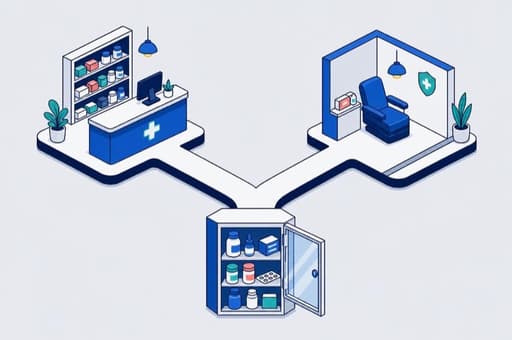
One route leads to a pharmacy, another to a supervised clinic. Prescribed medicines such as CAPLYTA and INVEGA use the pharmacy route, while SPRAVATO is given at a certified site for depression. That difference changes how quickly patients can start and stay on treatment.
J&J is paid per prescription or clinic-administered dose, with psychiatrists and health plans controlling access. CAPLYTA added a new growth leg through acquisition, and SPRAVATO has been expanding quickly. The practical limits are diagnosis, insurance approval and enough supervised clinics.
Vision
Vision brought in $5.47B in FY2025, mostly from contact lenses, plus lenses and equipment for cataract surgery. A factory expansion supports supply; watch whether steady replacement demand and aging-related procedures can outpace price and manufacturing pressure.
Competes with DAILIES TOTAL1 / PRECISION1 and PanOptix / Vivity (Alcon) · MyDay and Biofinity (CooperVision)
In plain English
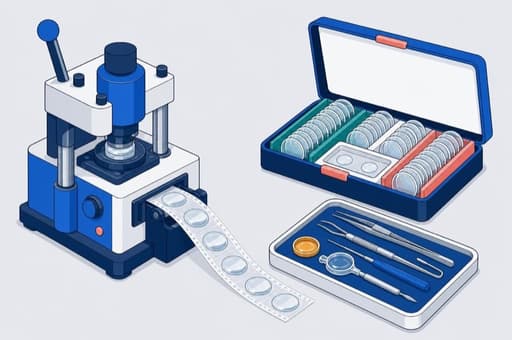
Most of this business is easy to picture: ACUVUE contact lenses are replaced again and again. The other side sells TECNIS replacement lenses and equipment used by cataract practices, where each procedure creates another sale.
Eye-care professionals influence what patients use, so recommendations and clinical results matter as much as shelf space. J&J gets paid when consumers replace contacts and when clinics perform cataract procedures. It is spending more than $1B to expand its Jacksonville lens factory by 2028, a bet that dependable high-volume production remains central.


 DARZALEXJ&J's largest single product brought in $14.35B in FY2025. It keeps expanding in cancer care, but payments to Genmab and U.S. patent protection currently listed through 2029 shape what stays with J&J.
J&J's largest single product brought in $14.35B in FY2025. It keeps expanding in cancer care, but payments to Genmab and U.S. patent protection currently listed through 2029 shape what stays with J&J.
In plain English
DARZALEX treats multiple myeloma, one of the blood cancers in this portfolio. Hospitals give it through a vein or under the skin, usually as part of a combination of medicines.
Cancer centers order each dose, and health plans ultimately cover much of the bill. Every treatment adds sales, but J&J shares part with Genmab, the company that licensed the medicine: its royalty runs from 12% to 20% of net sales. The big watch is how long new uses and treatment combinations can keep growth going before copycat competition arrives when patent protection ends.
Competes with SARCLISA (Sanofi) · ELREXFIO (Pfizer)
 OncologyThe cancer portfolio outside DARZALEX made $11.03B in FY2025, spread across prostate, lung, bladder and blood cancers. Newer treatments are moving earlier in care, while growth still depends on specialist treatment slots, convincing trial results and added approvals.
The cancer portfolio outside DARZALEX made $11.03B in FY2025, spread across prostate, lung, bladder and blood cancers. Newer treatments are moving earlier in care, while growth still depends on specialist treatment slots, convincing trial results and added approvals.
In plain English
Not every cancer is treated the same way. J&J sells several medicines, including treatments built around specially prepared immune cells, covering blood cancers as well as prostate, lung and bladder cancers. Some need a specialist center and a manufacturing slot.
Each approved use opens another set of eligible patients, and hospitals or cancer centers are paid for the treatment by health plans. That makes earlier use especially valuable. The practical catch is simple: a promising medicine cannot earn from a patient if production, referral or clinic capacity is unavailable.
Competes with ABECMA (Bristol Myers Squibb / 2seventy bio) · ELREXFIO (Pfizer) · TAGRISSO (AstraZeneca)
 SurgerySurgery produced $10.14B in FY2025 from staplers, tissue-sealing tools, stitches and wound-closure products. A robot cleared in July 2026 can seed more compatible instrument sales; watch whether hospitals buy it and surgeons use it often enough.
Surgery produced $10.14B in FY2025 from staplers, tissue-sealing tools, stitches and wound-closure products. A robot cleared in July 2026 can seed more compatible instrument sales; watch whether hospitals buy it and surgeons use it often enough.
In plain English
The operating-room toolbox. J&J sells the devices that seal, staple and close tissue, plus the single-use pieces consumed in each operation. Hospitals pay for reusable machines and keep reordering instruments as procedures happen.
OTTAVA extends that model into robotic surgery: placing the machine is only the front door; regular operations bring compatible tools through it. This business grows when surgical volume and hospital budgets rise, and slows when rivals win preferred spots in the operating room.
Competes with da Vinci 5 with SureForm (Intuitive Surgical) · Signia with Tri-Staple (Medtronic)
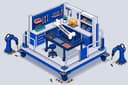 OrthopaedicsThe $9.26B FY2025 bone-and-joint business sells trauma, spine, hip and knee systems. It remains active, but its planned mid-2027 separation makes a clean handoff without losing hospital and surgeon demand the central watch.
The $9.26B FY2025 bone-and-joint business sells trauma, spine, hip and knee systems. It remains active, but its planned mid-2027 separation makes a clean handoff without losing hospital and surgeon demand the central watch.
In plain English
A broken hip or worn knee needs more than a replacement part. Surgeons also rely on matching tools and guided systems such as VELYS alongside the implant. J&J earns when hospitals buy those implants and instruments for each procedure.
Choice tends to stick: once a surgeon and hospital train around one set, switching takes effort. Even so, bulk purchasing in China can squeeze prices, and the whole unit is being prepared to stand apart from J&J in mid-2027.
Competes with Mako Total Knee with Triathlon (Stryker) · ROSA Knee with Persona (Zimmer Biomet)
 CardiovascularHeart-care devices generated $8.93B in FY2025 from tools that map and treat irregular rhythms, support heart recovery and treat hardened vessels. New rhythm-treatment launches are growing, while weaker use of Abiomed's heart-support devices needs recovery.
Heart-care devices generated $8.93B in FY2025 from tools that map and treat irregular rhythms, support heart recovery and treat hardened vessels. New rhythm-treatment launches are growing, while weaker use of Abiomed's heart-support devices needs recovery.
In plain English
Picture a heart lab with a map, a repair tool and backup support. CARTO shows doctors where an irregular rhythm starts; VARIPULSE and Dual Energy treat the spot; Impella supports heart recovery; Shockwave treats vessels hardened by calcium.
Hospitals buy the main equipment, then purchase procedure-specific devices as patients are treated. Training and a familiar setup can keep a lab within one family of tools. Revenue therefore follows procedure counts, hospital budgets and whether new rhythm systems can win space from Boston Scientific and Medtronic.
Competes with FARAPULSE with OPAL HDx (Boston Scientific) · PulseSelect with Affera (Medtronic)
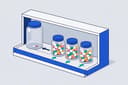 ImmunologyImmunology made $15.73B in FY2025. STELARA is falling fast after copycat medicines arrived, so TREMFYA, ICOTYDE and IMAAVY must replace that lost stream; by 2026's second quarter, TREMFYA had already overtaken STELARA.
Immunology made $15.73B in FY2025. STELARA is falling fast after copycat medicines arrived, so TREMFYA, ICOTYDE and IMAAVY must replace that lost stream; by 2026's second quarter, TREMFYA had already overtaken STELARA.
In plain English
Here the immune system is the problem: it attacks or inflames healthy tissue. J&J's medicines calm selected parts of that defense system for skin, bowel, joint and autoimmune conditions. Specialists prescribe them, while health plans decide whether to cover them and at what patient cost.
For years STELARA was a major seller, but rival copies are taking its place after its protection weakened. The replacement job falls to TREMFYA and newer launches. J&J makes money from each dose; lasting growth depends on winning coverage and proving the medicines help in more diseases.
Competes with SKYRIZI (AbbVie) · BIMZELX (UCB)
 NeuroscienceMental-health medicines made $7.84B in FY2025. Growth is shifting toward SPRAVATO and newly acquired CAPLYTA; watch whether enough patients can get coverage and, for SPRAVATO, reach one of the clinics allowed to administer it.
Mental-health medicines made $7.84B in FY2025. Growth is shifting toward SPRAVATO and newly acquired CAPLYTA; watch whether enough patients can get coverage and, for SPRAVATO, reach one of the clinics allowed to administer it.
In plain English
One route leads to a pharmacy, another to a supervised clinic. Prescribed medicines such as CAPLYTA and INVEGA use the pharmacy route, while SPRAVATO is given at a certified site for depression. That difference changes how quickly patients can start and stay on treatment.
J&J is paid per prescription or clinic-administered dose, with psychiatrists and health plans controlling access. CAPLYTA added a new growth leg through acquisition, and SPRAVATO has been expanding quickly. The practical limits are diagnosis, insurance approval and enough supervised clinics.
Competes with VRAYLAR (AbbVie / Gedeon Richter) · AUVELITY (Axsome Therapeutics)
 VisionVision brought in $5.47B in FY2025, mostly from contact lenses, plus lenses and equipment for cataract surgery. A factory expansion supports supply; watch whether steady replacement demand and aging-related procedures can outpace price and manufacturing pressure.
Vision brought in $5.47B in FY2025, mostly from contact lenses, plus lenses and equipment for cataract surgery. A factory expansion supports supply; watch whether steady replacement demand and aging-related procedures can outpace price and manufacturing pressure.
In plain English
Most of this business is easy to picture: ACUVUE contact lenses are replaced again and again. The other side sells TECNIS replacement lenses and equipment used by cataract practices, where each procedure creates another sale.
Eye-care professionals influence what patients use, so recommendations and clinical results matter as much as shelf space. J&J gets paid when consumers replace contacts and when clinics perform cataract procedures. It is spending more than $1B to expand its Jacksonville lens factory by 2028, a bet that dependable high-volume production remains central.
Competes with DAILIES TOTAL1 / PRECISION1 and PanOptix / Vivity (Alcon) · MyDay and Biofinity (CooperVision)
Named in filings, launches and programs
- Pulmonary HypertensionProduct lineOPSUMIT/OPSYNVI and UPTRAVI brought in $4.44B in FY2025 by treating high blood pressure in the lungs.
- Cardiovascular, Metabolism and OtherProduct lineLed by XARELTO, this group produced $3.78B in FY2025 from medicines separate from J&J's heart-device business.
- Infectious DiseasesProduct lineHIV and other infection medicines contributed $3.24B in FY2025, a smaller mature part of the prescription-drug portfolio.
- Firelink platform / Firefly BioProduct · Pre-revenueAn early-stage cancer-treatment approach acquired for $1.0B in cash in July 2026; it has no product sales yet.
- Sail in-vivo CAR-T collaborationProduct · Pre-revenueA pre-revenue effort with Sail to reprogram immune cells inside the body; the agreements included $785M of initial payments.
- TrumpRx.gov U.S. access agreementCustomer program · AnnouncedA planned route for Americans to buy selected medicines directly at discounts; J&J did not disclose the commercial terms.
- U.S. medicine distributionEcosystemThree unnamed wholesalers handled 48.4% of FY2025 sales before rebates, discounts and returns. Authorized distributors include Cencora's AmerisourceBergen unit, Cardinal Health and McKesson; J&J does not match them.
Pulmonary HypertensionProduct line
OPSUMIT/OPSYNVI and UPTRAVI brought in $4.44B in FY2025 by treating high blood pressure in the lungs.
Cardiovascular, Metabolism and OtherProduct line
Led by XARELTO, this group produced $3.78B in FY2025 from medicines separate from J&J's heart-device business.
Infectious DiseasesProduct line
HIV and other infection medicines contributed $3.24B in FY2025, a smaller mature part of the prescription-drug portfolio.
Firelink platform / Firefly BioProduct · Pre-revenue
An early-stage cancer-treatment approach acquired for $1.0B in cash in July 2026; it has no product sales yet.
Sail in-vivo CAR-T collaborationProduct · Pre-revenue
A pre-revenue effort with Sail to reprogram immune cells inside the body; the agreements included $785M of initial payments.
TrumpRx.gov U.S. access agreementCustomer program · Announced
A planned route for Americans to buy selected medicines directly at discounts; J&J did not disclose the commercial terms.
U.S. medicine distributionEcosystem
Three unnamed wholesalers handled 48.4% of FY2025 sales before rebates, discounts and returns. Authorized distributors include Cencora's AmerisourceBergen unit, Cardinal Health and McKesson; J&J does not match them.