Keurig Dr Pepper (KDP)
Combines North American refreshment brands with Keurig and a global coffee portfolio.
Something off on this page? Send us feedback.
Keurig Dr Pepper sells the sodas that fill American coolers and the coffee people brew at home. It has just bought a global coffee company, borrowing heavily to do it, and now means to break itself into two listed companies — one for coffee everywhere, one for North American drinks. Until then it is one company with a large debt to work down.
Item facts: FY2026 guidance basis · FY2025 + H1 2026 filings, from filings, earnings calls and company pages.
Judgment weights, not filed revenue
The band summarizes business focus and direction. ~ marks estimates.
8 in detail · 12 more below
JDE Peet's
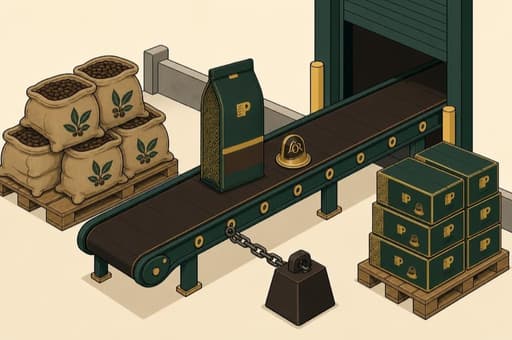
The global coffee business KDP bought in April for about $17.9 billion — Peet's, L'OR, Jacobs, Douwe Egberts, sold in roughly 100 countries. About a third of this year's sales, from nine months of ownership.
Competes with Nescafé instant coffee (Nestlé) · Lavazza capsules (Lavazza) · Folgers ground coffee (J.M. Smucker)
In plain English
Walk into a grocery store in Europe, Asia or Brazil and part of the coffee shelf — bags, jars, capsules — belongs to one company. That company is JDE Peet's, and KDP bought it in April: Peet's, L'OR, Jacobs, Douwe Egberts and a long list of local favourites.
The money part is plain. Buy green beans, roast and pack them, sell cases to grocers, offices and cafés. The catch is the price paid — about $17.9 billion, most of it borrowed — so a large interest bill now sits between the coffee profits and the owners. Management called the spring quarter's $414 million of coffee profit the likely high point for the year.
K-Cup pods
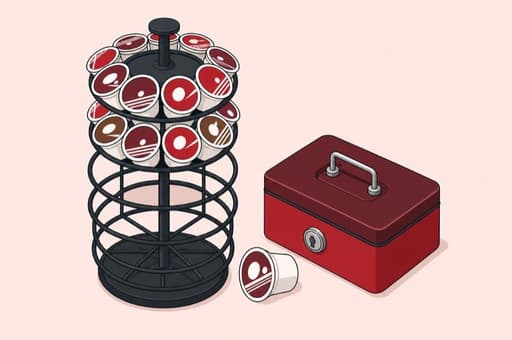
The little foil-topped cups that fit a Keurig — KDP's own brands plus Starbucks, Dunkin' and Folgers pods it makes under licence. $3.78 billion in 2025, on a company half today's size, and spring shipments fell 11.6% as prices rose.
Competes with Nespresso Vertuo capsules (Nestlé) · Folgers K-Cup pods (J.M. Smucker)
In plain English
Buy the machine once, buy the coffee forever — that is the trade. A pod is one serving of ground coffee sealed in a plastic cup with a foil lid; drop it in, press a button, and the machine punches through it.
Every pod is a small sale repeated every morning, which is why they matter far more than the machines. Some carry KDP's own labels — Green Mountain, Original Donut Shop — and others carry Starbucks or Dunkin', who pay KDP to make and sell pods of their coffee. The worry is volume: expensive beans pushed prices up, and shoppers answered by buying fewer pods.
Keurig brewers
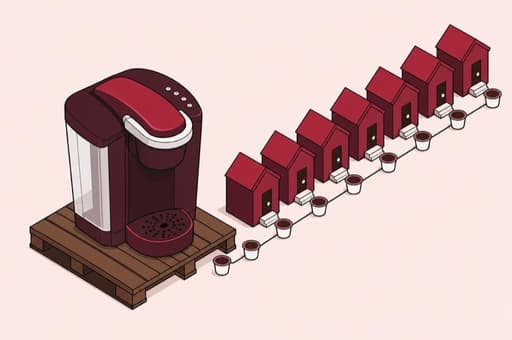
The machines that create the pod habit: $646 million of sales in 2025, down 16%, run to put brewers on counters rather than to earn a margin. Shipments grew 2.1% in the spring quarter after two down years.
Competes with Nespresso machines (Nestlé) · Single-serve coffee makers (SharkNinja)
In plain English
Sell the machine cheaply, earn it back on the coffee: this is the machine half. Keurig builds countertop brewers — the small K-Mini, the larger K-Supreme — and sells them through big retailers, distributors and its own website.
Each one sold is a kitchen committed to buying pods for years, so the hardware behaves more like an advertising cost than a product line, and the number that counts is how many kitchens have one: about 47 million. Sales slid two years running before ticking up this spring, as retailers stopped working down the stock they were already holding.
Keurig Alta and AltaRounds
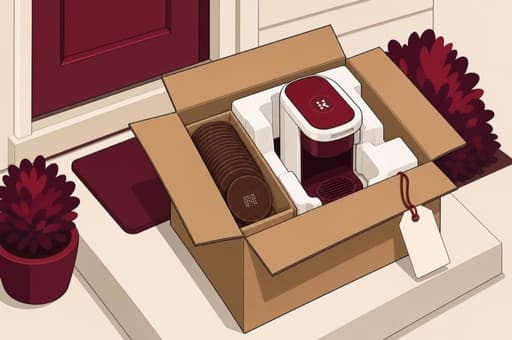
A new brewer that takes pressed discs of coffee instead of plastic cups, each carrying a code the machine reads to set the brew. Testing is finished and KDP has aimed at a launch late this year. No price announced.
Competes with CoffeeB coffee balls (Migros) · Nespresso Vertuo (Nestlé)
In plain English
Imagine a coffee pod with the cup taken away: a firm disc of pressed grounds, no plastic and no aluminium, with a code printed on it that tells the machine how hard to push the water through.
That is Alta, a second Keurig system, due to go on sale first through Keurig's own website with Keurig and Peet's rounds available at launch. Nothing is sold yet, so it earns nothing. It is a bet on two kinds of buyer: people who want fussier coffee than the old line-up offered, and people uneasy about throwing a plastic cup away every morning.
Dr Pepper, Canada Dry, 7UP, A&W
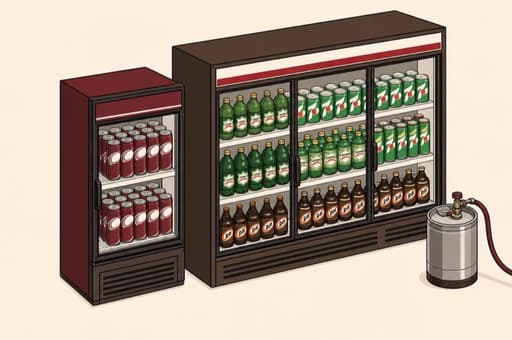
The flavoured sodas, and the single biggest piece of the company. Dr Pepper alone rings up more than $5 billion at the till and has passed Pepsi for second place in U.S. soda; its zero-sugar version grew nearly 30% at retail this spring.
Competes with Coca-Cola and Diet Coke (Coca-Cola) · Pepsi and Mtn Dew (PepsiCo) · Sprite and Fanta (Coca-Cola)
In plain English
Flavoured fizzy drinks — the ones you reach for when you do not want a cola. Dr Pepper leads, then Canada Dry ginger ale, 7UP, A&W root beer, Sunkist, Crush, Squirt and a long tail of regional names like Vernors and Big Red.
The money arrives two ways. Where KDP's own trucks deliver, it sells finished cans and bottles to shops; Walmart alone took about a sixth of everything the company sold last year. Elsewhere Coca-Cola's and Pepsi's bottlers make and deliver Dr Pepper, and KDP earns only on the syrup it ships them. Either way, the fight is for cooler space its rivals largely control.
Energy drinks and partner brands
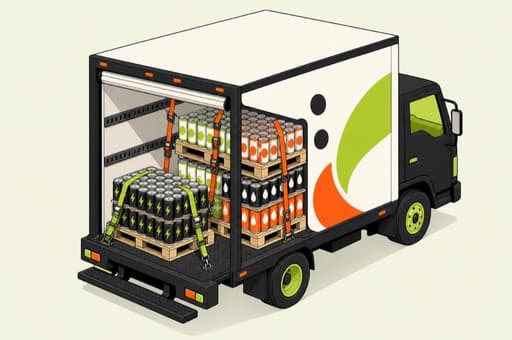
GHOST, which KDP controls, C4 and Bloom, where it owns 36%, plus drinks it only delivers — Electrolit, evian, Black Rifle Energy. The group crossed 9% of U.S. energy this spring, against a double-digit goal.
Competes with Monster and Reign (Monster Beverage) · Celsius and Alani Nu (Celsius Holdings) · Red Bull (Red Bull GmbH)
In plain English
KDP runs one of the few nationwide truck networks that restock American coolers store by store. Empty shelf space on those trucks is wasted money, so it fills the space with other people's drinks.
Three arrangements, loosest to tightest. It simply delivers brands like Electrolit and evian and earns a cut. It owns 36% of the company behind C4 and Bloom energy drinks, with board seats, so it shares the brand's profit too. And it bought a controlling stake in GHOST. The looser deals are contracts, not ownership, and contracts end — but they buy KDP a place in the fastest-growing big drinks category in America.
KDP International
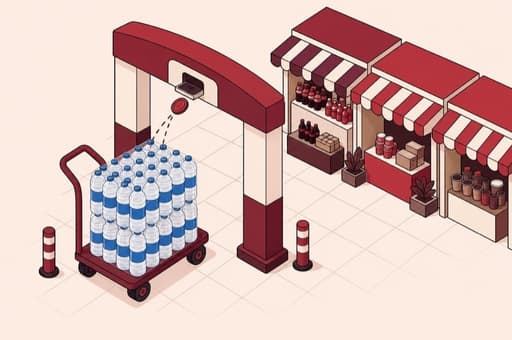
Mexico and Canada: Peñafiel water, Clamato and Squirt south of the border, sodas, teas and Keurig north of it. $2.2 billion of sales in 2025, growing 12.4% this spring — with a new Mexican drinks tax eating the gain.
Competes with Ciel bottled water (Coca-Cola FEMSA) · Pepsi and Mtn Dew in Mexico (PepsiCo) · Tim Hortons pods in Canada (Restaurant Brands)
In plain English
Two countries, two rather different businesses under one heading. In Mexico, KDP sells bottled water under the Peñafiel name, plus Clamato, Squirt and 'Ades, and runs its own trucks to reach the small independent shops that still do much of the selling there. In Canada it sells sodas, iced tea, energy drinks and Keurig coffee.
It has been growing at double digits, and it is the most exposed to things nobody here controls: exchange rates, the price of coffee beans, and a new Mexican tax on drinks that knocked profit down in the first quarter before easing.
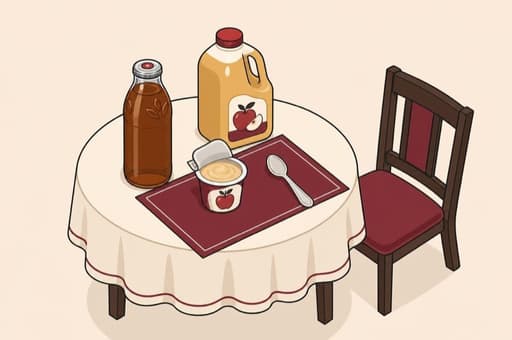
Snapple, Mott's and the still drinks
The shelf that does not fizz: Snapple iced tea, Mott's juice and applesauce, Core and Bai waters, Hawaiian Punch, Yoo-hoo, plus bar mixers. Old labels, steady sales, riding trucks that are going to the shop anyway.
Competes with Pure Leaf iced tea (PepsiCo) · Gold Peak iced tea (Coca-Cola)
In plain English
Everything in the cooler that does not bubble. Snapple in its wide glass bottle, Mott's apple juice with the applesauce cups beside it, Core and Bai waters, Hawaiian Punch, Nantucket Nectars, Yoo-hoo, and the small bottles a bartender reaches for — ReaLemon, Rose's, Mr & Mrs T.
None of this is a growth story and none of it needs to be. These are familiar labels that sell at a steady clip to the same shops KDP's trucks already visit, and their job is to keep the cash coming steadily while the company works its borrowings down. A zero-sugar Mott's is in this year's new-product slate.


 JDE Peet'sThe global coffee business KDP bought in April for about $17.9 billion — Peet's, L'OR, Jacobs, Douwe Egberts, sold in roughly 100 countries. About a third of this year's sales, from nine months of ownership.
The global coffee business KDP bought in April for about $17.9 billion — Peet's, L'OR, Jacobs, Douwe Egberts, sold in roughly 100 countries. About a third of this year's sales, from nine months of ownership.
In plain English
Walk into a grocery store in Europe, Asia or Brazil and part of the coffee shelf — bags, jars, capsules — belongs to one company. That company is JDE Peet's, and KDP bought it in April: Peet's, L'OR, Jacobs, Douwe Egberts and a long list of local favourites.
The money part is plain. Buy green beans, roast and pack them, sell cases to grocers, offices and cafés. The catch is the price paid — about $17.9 billion, most of it borrowed — so a large interest bill now sits between the coffee profits and the owners. Management called the spring quarter's $414 million of coffee profit the likely high point for the year.
Competes with Nescafé instant coffee (Nestlé) · Lavazza capsules (Lavazza) · Folgers ground coffee (J.M. Smucker)
 K-Cup podsThe little foil-topped cups that fit a Keurig — KDP's own brands plus Starbucks, Dunkin' and Folgers pods it makes under licence. $3.78 billion in 2025, on a company half today's size, and spring shipments fell 11.6% as prices rose.
The little foil-topped cups that fit a Keurig — KDP's own brands plus Starbucks, Dunkin' and Folgers pods it makes under licence. $3.78 billion in 2025, on a company half today's size, and spring shipments fell 11.6% as prices rose.
In plain English
Buy the machine once, buy the coffee forever — that is the trade. A pod is one serving of ground coffee sealed in a plastic cup with a foil lid; drop it in, press a button, and the machine punches through it.
Every pod is a small sale repeated every morning, which is why they matter far more than the machines. Some carry KDP's own labels — Green Mountain, Original Donut Shop — and others carry Starbucks or Dunkin', who pay KDP to make and sell pods of their coffee. The worry is volume: expensive beans pushed prices up, and shoppers answered by buying fewer pods.
Competes with Nespresso Vertuo capsules (Nestlé) · Folgers K-Cup pods (J.M. Smucker)
 Keurig brewersThe machines that create the pod habit: $646 million of sales in 2025, down 16%, run to put brewers on counters rather than to earn a margin. Shipments grew 2.1% in the spring quarter after two down years.
The machines that create the pod habit: $646 million of sales in 2025, down 16%, run to put brewers on counters rather than to earn a margin. Shipments grew 2.1% in the spring quarter after two down years.
In plain English
Sell the machine cheaply, earn it back on the coffee: this is the machine half. Keurig builds countertop brewers — the small K-Mini, the larger K-Supreme — and sells them through big retailers, distributors and its own website.
Each one sold is a kitchen committed to buying pods for years, so the hardware behaves more like an advertising cost than a product line, and the number that counts is how many kitchens have one: about 47 million. Sales slid two years running before ticking up this spring, as retailers stopped working down the stock they were already holding.
Competes with Nespresso machines (Nestlé) · Single-serve coffee makers (SharkNinja)
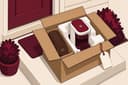 Keurig Alta and AltaRoundsA new brewer that takes pressed discs of coffee instead of plastic cups, each carrying a code the machine reads to set the brew. Testing is finished and KDP has aimed at a launch late this year. No price announced.
A new brewer that takes pressed discs of coffee instead of plastic cups, each carrying a code the machine reads to set the brew. Testing is finished and KDP has aimed at a launch late this year. No price announced.
In plain English
Imagine a coffee pod with the cup taken away: a firm disc of pressed grounds, no plastic and no aluminium, with a code printed on it that tells the machine how hard to push the water through.
That is Alta, a second Keurig system, due to go on sale first through Keurig's own website with Keurig and Peet's rounds available at launch. Nothing is sold yet, so it earns nothing. It is a bet on two kinds of buyer: people who want fussier coffee than the old line-up offered, and people uneasy about throwing a plastic cup away every morning.
Competes with CoffeeB coffee balls (Migros) · Nespresso Vertuo (Nestlé)
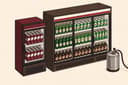 Dr Pepper, Canada Dry, 7UP, A&WThe flavoured sodas, and the single biggest piece of the company. Dr Pepper alone rings up more than $5 billion at the till and has passed Pepsi for second place in U.S. soda; its zero-sugar version grew nearly 30% at retail this spring.
The flavoured sodas, and the single biggest piece of the company. Dr Pepper alone rings up more than $5 billion at the till and has passed Pepsi for second place in U.S. soda; its zero-sugar version grew nearly 30% at retail this spring.
In plain English
Flavoured fizzy drinks — the ones you reach for when you do not want a cola. Dr Pepper leads, then Canada Dry ginger ale, 7UP, A&W root beer, Sunkist, Crush, Squirt and a long tail of regional names like Vernors and Big Red.
The money arrives two ways. Where KDP's own trucks deliver, it sells finished cans and bottles to shops; Walmart alone took about a sixth of everything the company sold last year. Elsewhere Coca-Cola's and Pepsi's bottlers make and deliver Dr Pepper, and KDP earns only on the syrup it ships them. Either way, the fight is for cooler space its rivals largely control.
Competes with Coca-Cola and Diet Coke (Coca-Cola) · Pepsi and Mtn Dew (PepsiCo) · Sprite and Fanta (Coca-Cola)
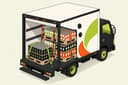 Energy drinks and partner brandsGHOST, which KDP controls, C4 and Bloom, where it owns 36%, plus drinks it only delivers — Electrolit, evian, Black Rifle Energy. The group crossed 9% of U.S. energy this spring, against a double-digit goal.
GHOST, which KDP controls, C4 and Bloom, where it owns 36%, plus drinks it only delivers — Electrolit, evian, Black Rifle Energy. The group crossed 9% of U.S. energy this spring, against a double-digit goal.
In plain English
KDP runs one of the few nationwide truck networks that restock American coolers store by store. Empty shelf space on those trucks is wasted money, so it fills the space with other people's drinks.
Three arrangements, loosest to tightest. It simply delivers brands like Electrolit and evian and earns a cut. It owns 36% of the company behind C4 and Bloom energy drinks, with board seats, so it shares the brand's profit too. And it bought a controlling stake in GHOST. The looser deals are contracts, not ownership, and contracts end — but they buy KDP a place in the fastest-growing big drinks category in America.
Competes with Monster and Reign (Monster Beverage) · Celsius and Alani Nu (Celsius Holdings) · Red Bull (Red Bull GmbH)
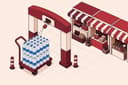 KDP InternationalMexico and Canada: Peñafiel water, Clamato and Squirt south of the border, sodas, teas and Keurig north of it. $2.2 billion of sales in 2025, growing 12.4% this spring — with a new Mexican drinks tax eating the gain.
Mexico and Canada: Peñafiel water, Clamato and Squirt south of the border, sodas, teas and Keurig north of it. $2.2 billion of sales in 2025, growing 12.4% this spring — with a new Mexican drinks tax eating the gain.
In plain English
Two countries, two rather different businesses under one heading. In Mexico, KDP sells bottled water under the Peñafiel name, plus Clamato, Squirt and 'Ades, and runs its own trucks to reach the small independent shops that still do much of the selling there. In Canada it sells sodas, iced tea, energy drinks and Keurig coffee.
It has been growing at double digits, and it is the most exposed to things nobody here controls: exchange rates, the price of coffee beans, and a new Mexican tax on drinks that knocked profit down in the first quarter before easing.
Competes with Ciel bottled water (Coca-Cola FEMSA) · Pepsi and Mtn Dew in Mexico (PepsiCo) · Tim Hortons pods in Canada (Restaurant Brands)
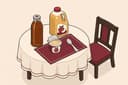 Snapple, Mott's and the still drinksThe shelf that does not fizz: Snapple iced tea, Mott's juice and applesauce, Core and Bai waters, Hawaiian Punch, Yoo-hoo, plus bar mixers. Old labels, steady sales, riding trucks that are going to the shop anyway.
The shelf that does not fizz: Snapple iced tea, Mott's juice and applesauce, Core and Bai waters, Hawaiian Punch, Yoo-hoo, plus bar mixers. Old labels, steady sales, riding trucks that are going to the shop anyway.
In plain English
Everything in the cooler that does not bubble. Snapple in its wide glass bottle, Mott's apple juice with the applesauce cups beside it, Core and Bai waters, Hawaiian Punch, Nantucket Nectars, Yoo-hoo, and the small bottles a bartender reaches for — ReaLemon, Rose's, Mr & Mrs T.
None of this is a growth story and none of it needs to be. These are familiar labels that sell at a steady clip to the same shops KDP's trucks already visit, and their job is to keep the cash coming steadily while the company works its borrowings down. A zero-sugar Mott's is in this year's new-product slate.
Competes with Pure Leaf iced tea (PepsiCo) · Gold Peak iced tea (Coca-Cola)
Named in filings, launches and programs
- GHOSTBrandEnergy and supplement brand KDP took majority control of — about a $0.5 billion portfolio, and roughly four points of 2025 sales growth.
- Nutrabolt (C4 and Bloom)BrandKDP holds 36% and board seats in the company behind C4 Energy and Bloom, so it earns on the brands as well as on delivering them.
- ElectrolitBrandSports hydration drink made by Grupo PiSA; KDP delivers it and takes a cut without owning the brand.
- La ColombeBrandReady-to-drink lattes carried on KDP's trucks and licensed into K-Cups; retail sales up more than half this spring.
- Vita CocoBrandCoconut water KDP still delivers after selling its stake in the brand in early 2025.
- Peet's CoffeeBrandPremium American coffee brand that arrived with JDE Peet's — sold in bags and Keurig pods, and one of the two brands slated for Alta rounds.
- Licensed pod brandsEcosystemStarbucks, Dunkin', Folgers, McCafé, Lavazza and illy pay KDP to pack their coffee into Keurig pods — rivals in the same cup.
- Senseo and TassimoProduct lineJDE Peet's own pod machines and capsules — two more single-serve systems now sitting inside the same company as Keurig.
- Keurig Coffee CollectiveProduct line · RampingThe first premium coffee brand to carry the Keurig name itself rather than a licensed or bought-in label.
- keurig.comPlatformKDP's own shop: the fourth-largest channel for brewers by volume, and more than 1.5 million direct customer relationships.
- Pod Manufacturing JVServiceThe U.S. and Canadian pod factories, now a separate venture: investors led by Apollo and KKR paid about $4 billion for 49% of it.
- Beverage Co. and Global Coffee Co.Segment · AnnouncedThe two companies KDP means to split into in early 2027 — North American drinks above $11 billion of sales, coffee near $16 billion.
GHOSTBrand
Energy and supplement brand KDP took majority control of — about a $0.5 billion portfolio, and roughly four points of 2025 sales growth.
Nutrabolt (C4 and Bloom)Brand
KDP holds 36% and board seats in the company behind C4 Energy and Bloom, so it earns on the brands as well as on delivering them.
ElectrolitBrand
Sports hydration drink made by Grupo PiSA; KDP delivers it and takes a cut without owning the brand.
La ColombeBrand
Ready-to-drink lattes carried on KDP's trucks and licensed into K-Cups; retail sales up more than half this spring.
Vita CocoBrand
Coconut water KDP still delivers after selling its stake in the brand in early 2025.
Peet's CoffeeBrand
Premium American coffee brand that arrived with JDE Peet's — sold in bags and Keurig pods, and one of the two brands slated for Alta rounds.
Licensed pod brandsEcosystem
Starbucks, Dunkin', Folgers, McCafé, Lavazza and illy pay KDP to pack their coffee into Keurig pods — rivals in the same cup.
Senseo and TassimoProduct line
JDE Peet's own pod machines and capsules — two more single-serve systems now sitting inside the same company as Keurig.
Keurig Coffee CollectiveProduct line · Ramping
The first premium coffee brand to carry the Keurig name itself rather than a licensed or bought-in label.
keurig.comPlatform
KDP's own shop: the fourth-largest channel for brewers by volume, and more than 1.5 million direct customer relationships.
Pod Manufacturing JVService
The U.S. and Canadian pod factories, now a separate venture: investors led by Apollo and KKR paid about $4 billion for 49% of it.
Beverage Co. and Global Coffee Co.Segment · Announced
The two companies KDP means to split into in early 2027 — North American drinks above $11 billion of sales, coffee near $16 billion.