
Kimberly-Clark (KMB)
Maker of Huggies diapers, Kleenex tissues, Kotex feminine care, and Depend incontinence products.
Something off on this page? Send us feedback.
Kimberly-Clark makes the disposable paper things households buy without thinking — diapers, tissues, bathroom rolls, pads and protective underwear — and ships them by the case to giant retailers. Diapers are the biggest piece. It is a slow-growing business, squeezed between store brands and one large rival, so the company is reshaping itself: it has handed its overseas tissue business to a partner and agreed to buy the company behind the medicine-cabinet brands.
Item facts: FY2025 · year ended Dec 31, 2025, from filings, earnings calls and company pages.
Judgment weights, not filed revenue
The band summarizes business focus and direction. ~ marks estimates.
8 in detail · 8 more below
Baby & Child Care
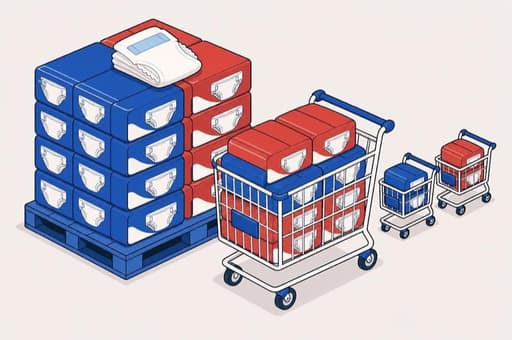
Huggies, Pull-Ups and GoodNites — roughly four of every ten sales dollars, and the piece everything else is measured against. Flat this year after lost club shelf space and a China scare over false quality claims. It lives on birth rates.
Competes with Pampers (P&G) · MamyPoko / Moony (Unicharm)
In plain English
Diapers, toddler training pants and baby wipes, much of it under the Huggies name — the stuff a new parent buys every week for three years and then never buys again.
The money arrives by the truckload: cases go out to big retailers who mark them up on the shelf. That leaves the line leaning on a few buyers — Walmart alone is about a sixth of company sales — and on how many babies are being born. Nothing is locked in by contract, so when a club chain's store-brand diapers moved to another manufacturer, and a big club customer later cut back on stocking the brands exclusively, the sales left with them.

Family Care — North American tissue
Kleenex, Scott, Cottonelle and Viva in the home — about a quarter of sales. The category barely grows, so gains come from price and mix, and the cost of wood pulp decides the margin. North America only since mid-2026.
Competes with Charmin and Bounty (P&G) · Angel Soft / Quilted Northern (Georgia-Pacific) · Store-brand bath tissue (Retailers' own labels)
In plain English
Kleenex, Scott, Cottonelle, Viva: the box on the nightstand and the rolls in the kitchen and the bathroom.
Nobody buys more of this than they need, so the volumes barely move. The earnings come from persuading shoppers that the branded roll is worth paying up for against the plain store-brand pack sitting right next to it, and from making rolls cheaply enough that the gap stays profit. The big raw material is wood pulp, and its price swings; that swing lands straight on the margin. Since the middle of 2026 Kimberly-Clark sells these names itself only in North America — elsewhere a part-owned partner uses them under licence.
Kimberly-Clark Professional
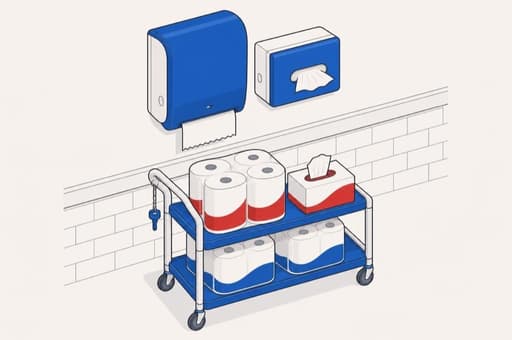
Washroom paper, wiping cloths and cleanroom supplies sold through distributors into workplaces — about a tenth of sales, and the piece most tied to the business cycle. Up roughly 2% year over year in the June 2026 quarter.
Competes with Tork dispensing systems (Essity) · enMotion and Compact dispensers (Georgia-Pacific)
In plain English
The paper towels and toilet paper in the washroom at work, plus the heavy wiping cloths and cleanroom supplies that factories get through by the box.
These never reach a shopper. Janitorial and industrial suppliers buy them and deliver to plants, offices, hotels and restaurants, where the dispenser bolted to the wall takes refills of one particular size — so once the dispenser is up, the refill orders tend to keep coming. It also makes this the part of Kimberly-Clark most tied to whether people are actually at work or travelling, and management has called the US market for it highly competitive.
Arbex
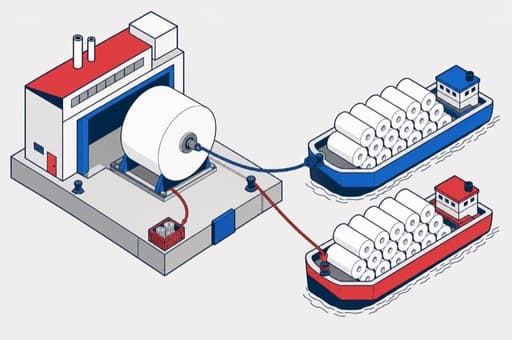
The international tissue and workplace-paper business, now 49% owned alongside Suzano: about $3.3 billion of sales and 22 sites, none of it counted as Kimberly-Clark revenue. Its profit share is expected to rise about 30% this year.
Competes with Consumer tissue and Tork (Essity) · Own-label tissue rolls (Sofidel) · Own-label tissue rolls (WEPA)
In plain English
In July 2026 Kimberly-Clark put its tissue and workplace-paper business outside North America into a new company called Arbex and sold control of it. Suzano — a large producer of the wood pulp that tissue is made from — took 51% for about $1.7 billion.
What is left is a 49% stake in something with roughly $3.3 billion of annual sales, 22 sites and about 9,000 people. Those sales no longer show up in Kimberly-Clark's own revenue; only its share of Arbex's profit does. The stated reason for letting go: tissue made overseas swung the results around too much.

Alternative Natural Fiber program
A desert plant, hesperaloe, picked from more than seventy candidates as a home-grown substitute for wood pulp, with a pilot facility in Yuma, Arizona. No sales and no scale-up date; the point is steadier paper costs.
Competes with Wheat-straw tissue (Essity) · Eucalyptus market pulp (Suzano)
In plain English
Paper comes from trees, and tree pulp has a habit of getting expensive without warning. So Kimberly-Clark went looking for a different plant to make tissue from: it screened more than seventy candidates, settled on hesperaloe — a desert plant — patented a way of turning it into fiber, and put a small trial factory in Yuma, Arizona.
It sells nothing today. Thousands of acres have been acquired and no date has been given for making paper this way at full scale. The pay-off, if it comes, is a raw material grown to order rather than bought at whatever the pulp market charges that year.
Adult Care
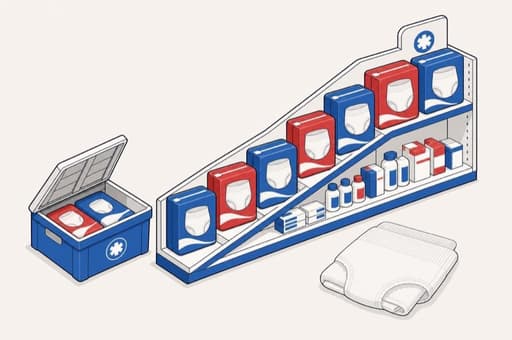
Depend, Poise and Plenitud — about an eighth of sales, sitting in the fastest-growing of the five categories, estimated near 7% a year. Sales were flat in mid-2026 as one sales channel worked down stock it was holding.
Competes with TENA (Essity) · Always Discreet (P&G)
In plain English
Pads, pull-on underwear and briefs for adults who leak a little — Depend and Poise in North America, Plenitud across Latin America.
Shoppers pick these up quietly at the drugstore, the supermarket or online, and once something works they tend to keep buying it. The tailwind here is arithmetic: populations keep getting older, and the category has grown less embarrassing to buy. Of Kimberly-Clark's five categories, this is the one whose market is estimated to grow fastest, near seven percent a year. Even so, sales sat flat through the middle of 2026 because one sales channel ran down the stock it was already holding.
Feminine Care
Kotex, U by Kotex, Intimus and Thinx — around a tenth of sales. The big American shelves belong to Always and Tampax; the gains are in India, Southeast Asia, Indonesia and Australia.
Competes with Always and Tampax (P&G) · Libresse / Bodyform (Essity) · Playtex and Stayfree (Edgewell)
In plain English
Tampons, liners, pads and washable period underwear: Kotex and U by Kotex in most countries, Intimus in Brazil, Thinx in the reusable corner.
In the United States this is a hard fight — Always and Tampax hold the big shelves, and Kimberly-Clark's slice of the world market is a fraction of what it holds in diapers. The growth sits elsewhere: in India, Southeast Asia, Indonesia and Australia, where more women are buying these products for the first time rather than swapping brands. Management treats the category as its test bed — build something in one market, then carry it out through the rest.

Kenvue acquisition
The agreed purchase of Tylenol, Band-Aid, Neutrogena and Listerine — nothing until it closes, and it would roughly double the company's sales. Shareholders on both sides said yes; competition clearance is the last gate.
Competes with Self-care brand portfolio (Haleon) · Household health brands (Reckitt) · Health Care division (P&G)
In plain English
Kenvue is the business Johnson & Johnson cut loose to hold its household health brands — Tylenol, Band-Aid, Neutrogena, Listerine. Kimberly-Clark agreed in November 2025 to buy it for $48.7 billion including debt.
Most of that is paid in newly issued Kimberly-Clark shares, plus about $6.7 billion of cash raised from borrowing, money on hand and the proceeds of the tissue deal. If it closes, today's Kimberly-Clark owners keep about 54% of a company with roughly twice the sales — one selling medicine and bandages beside diapers and tissue. Both shareholder bases have voted yes; the competition regulators have not finished.


 Baby & Child CareHuggies, Pull-Ups and GoodNites — roughly four of every ten sales dollars, and the piece everything else is measured against. Flat this year after lost club shelf space and a China scare over false quality claims. It lives on birth rates.
Huggies, Pull-Ups and GoodNites — roughly four of every ten sales dollars, and the piece everything else is measured against. Flat this year after lost club shelf space and a China scare over false quality claims. It lives on birth rates.
In plain English
Diapers, toddler training pants and baby wipes, much of it under the Huggies name — the stuff a new parent buys every week for three years and then never buys again.
The money arrives by the truckload: cases go out to big retailers who mark them up on the shelf. That leaves the line leaning on a few buyers — Walmart alone is about a sixth of company sales — and on how many babies are being born. Nothing is locked in by contract, so when a club chain's store-brand diapers moved to another manufacturer, and a big club customer later cut back on stocking the brands exclusively, the sales left with them.
Competes with Pampers (P&G) · MamyPoko / Moony (Unicharm)
 Family Care — North American tissueKleenex, Scott, Cottonelle and Viva in the home — about a quarter of sales. The category barely grows, so gains come from price and mix, and the cost of wood pulp decides the margin. North America only since mid-2026.
Kleenex, Scott, Cottonelle and Viva in the home — about a quarter of sales. The category barely grows, so gains come from price and mix, and the cost of wood pulp decides the margin. North America only since mid-2026.
In plain English
Kleenex, Scott, Cottonelle, Viva: the box on the nightstand and the rolls in the kitchen and the bathroom.
Nobody buys more of this than they need, so the volumes barely move. The earnings come from persuading shoppers that the branded roll is worth paying up for against the plain store-brand pack sitting right next to it, and from making rolls cheaply enough that the gap stays profit. The big raw material is wood pulp, and its price swings; that swing lands straight on the margin. Since the middle of 2026 Kimberly-Clark sells these names itself only in North America — elsewhere a part-owned partner uses them under licence.
Competes with Charmin and Bounty (P&G) · Angel Soft / Quilted Northern (Georgia-Pacific) · Store-brand bath tissue (Retailers' own labels)
 Kimberly-Clark ProfessionalWashroom paper, wiping cloths and cleanroom supplies sold through distributors into workplaces — about a tenth of sales, and the piece most tied to the business cycle. Up roughly 2% year over year in the June 2026 quarter.
Washroom paper, wiping cloths and cleanroom supplies sold through distributors into workplaces — about a tenth of sales, and the piece most tied to the business cycle. Up roughly 2% year over year in the June 2026 quarter.
In plain English
The paper towels and toilet paper in the washroom at work, plus the heavy wiping cloths and cleanroom supplies that factories get through by the box.
These never reach a shopper. Janitorial and industrial suppliers buy them and deliver to plants, offices, hotels and restaurants, where the dispenser bolted to the wall takes refills of one particular size — so once the dispenser is up, the refill orders tend to keep coming. It also makes this the part of Kimberly-Clark most tied to whether people are actually at work or travelling, and management has called the US market for it highly competitive.
Competes with Tork dispensing systems (Essity) · enMotion and Compact dispensers (Georgia-Pacific)
 ArbexThe international tissue and workplace-paper business, now 49% owned alongside Suzano: about $3.3 billion of sales and 22 sites, none of it counted as Kimberly-Clark revenue. Its profit share is expected to rise about 30% this year.
The international tissue and workplace-paper business, now 49% owned alongside Suzano: about $3.3 billion of sales and 22 sites, none of it counted as Kimberly-Clark revenue. Its profit share is expected to rise about 30% this year.
In plain English
In July 2026 Kimberly-Clark put its tissue and workplace-paper business outside North America into a new company called Arbex and sold control of it. Suzano — a large producer of the wood pulp that tissue is made from — took 51% for about $1.7 billion.
What is left is a 49% stake in something with roughly $3.3 billion of annual sales, 22 sites and about 9,000 people. Those sales no longer show up in Kimberly-Clark's own revenue; only its share of Arbex's profit does. The stated reason for letting go: tissue made overseas swung the results around too much.
Competes with Consumer tissue and Tork (Essity) · Own-label tissue rolls (Sofidel) · Own-label tissue rolls (WEPA)
 Alternative Natural Fiber programA desert plant, hesperaloe, picked from more than seventy candidates as a home-grown substitute for wood pulp, with a pilot facility in Yuma, Arizona. No sales and no scale-up date; the point is steadier paper costs.
A desert plant, hesperaloe, picked from more than seventy candidates as a home-grown substitute for wood pulp, with a pilot facility in Yuma, Arizona. No sales and no scale-up date; the point is steadier paper costs.
In plain English
Paper comes from trees, and tree pulp has a habit of getting expensive without warning. So Kimberly-Clark went looking for a different plant to make tissue from: it screened more than seventy candidates, settled on hesperaloe — a desert plant — patented a way of turning it into fiber, and put a small trial factory in Yuma, Arizona.
It sells nothing today. Thousands of acres have been acquired and no date has been given for making paper this way at full scale. The pay-off, if it comes, is a raw material grown to order rather than bought at whatever the pulp market charges that year.
Competes with Wheat-straw tissue (Essity) · Eucalyptus market pulp (Suzano)
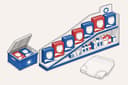 Adult CareDepend, Poise and Plenitud — about an eighth of sales, sitting in the fastest-growing of the five categories, estimated near 7% a year. Sales were flat in mid-2026 as one sales channel worked down stock it was holding.
Depend, Poise and Plenitud — about an eighth of sales, sitting in the fastest-growing of the five categories, estimated near 7% a year. Sales were flat in mid-2026 as one sales channel worked down stock it was holding.
In plain English
Pads, pull-on underwear and briefs for adults who leak a little — Depend and Poise in North America, Plenitud across Latin America.
Shoppers pick these up quietly at the drugstore, the supermarket or online, and once something works they tend to keep buying it. The tailwind here is arithmetic: populations keep getting older, and the category has grown less embarrassing to buy. Of Kimberly-Clark's five categories, this is the one whose market is estimated to grow fastest, near seven percent a year. Even so, sales sat flat through the middle of 2026 because one sales channel ran down the stock it was already holding.
Competes with TENA (Essity) · Always Discreet (P&G)
 Feminine CareKotex, U by Kotex, Intimus and Thinx — around a tenth of sales. The big American shelves belong to Always and Tampax; the gains are in India, Southeast Asia, Indonesia and Australia.
Kotex, U by Kotex, Intimus and Thinx — around a tenth of sales. The big American shelves belong to Always and Tampax; the gains are in India, Southeast Asia, Indonesia and Australia.
In plain English
Tampons, liners, pads and washable period underwear: Kotex and U by Kotex in most countries, Intimus in Brazil, Thinx in the reusable corner.
In the United States this is a hard fight — Always and Tampax hold the big shelves, and Kimberly-Clark's slice of the world market is a fraction of what it holds in diapers. The growth sits elsewhere: in India, Southeast Asia, Indonesia and Australia, where more women are buying these products for the first time rather than swapping brands. Management treats the category as its test bed — build something in one market, then carry it out through the rest.
Competes with Always and Tampax (P&G) · Libresse / Bodyform (Essity) · Playtex and Stayfree (Edgewell)
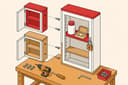 Kenvue acquisitionThe agreed purchase of Tylenol, Band-Aid, Neutrogena and Listerine — nothing until it closes, and it would roughly double the company's sales. Shareholders on both sides said yes; competition clearance is the last gate.
The agreed purchase of Tylenol, Band-Aid, Neutrogena and Listerine — nothing until it closes, and it would roughly double the company's sales. Shareholders on both sides said yes; competition clearance is the last gate.
In plain English
Kenvue is the business Johnson & Johnson cut loose to hold its household health brands — Tylenol, Band-Aid, Neutrogena, Listerine. Kimberly-Clark agreed in November 2025 to buy it for $48.7 billion including debt.
Most of that is paid in newly issued Kimberly-Clark shares, plus about $6.7 billion of cash raised from borrowing, money on hand and the proceeds of the tissue deal. If it closes, today's Kimberly-Clark owners keep about 54% of a company with roughly twice the sales — one selling medicine and bandages beside diapers and tissue. Both shareholder bases have voted yes; the competition regulators have not finished.
Competes with Self-care brand portfolio (Haleon) · Household health brands (Reckitt) · Health Care division (P&G)
Named in filings, launches and programs
- Walmart and the club channelCustomer programSales run through a few giant retailers. A club chain's store-brand diapers went to another maker, and a club customer ended branded exclusivity — both trimmed 2026 growth.
- Powering CareEcosystemThe in-house name for how the company works: build an idea in one market, then carry the winner into the others. Named on every earnings call since 2024.
- North America supply-chain rebuildProductA $2 billion rebuild of the North American factory and supply network, running into 2027 and 2028 — the reason factory spending jumped to $1.1 billion in 2025.
- ThinxBrandWashable period and bladder-leak underwear, bought outright by 2023 — a small reusable corner inside a business built on things you throw away.
- Intimus and PlenitudBrandIntimus carries period care in Brazil and Plenitud carries bladder-leak care across Latin America — the same categories under names local shoppers already know.
- Sweety, Softex, KleenBebé, GreenFingerBrandRegional baby-care names carried alongside Huggies in the international personal-care markets, from Sweety and Softex to KleenBebé and GreenFinger.
- Andrex, Scottex, Page, NeveBrandInternational tissue names run by Arbex under licence since July 2026, together with Kleenex, Scott, Cottonelle and Viva outside North America.
- Tylenol, Band-Aid, Neutrogena, ListerineBrand · AnnouncedThey arrive only when the Kenvue purchase closes; Australia's regulator will allow it only if the Carefree and Stayfree period brands are sold.
Walmart and the club channelCustomer program
Sales run through a few giant retailers. A club chain's store-brand diapers went to another maker, and a club customer ended branded exclusivity — both trimmed 2026 growth.
Powering CareEcosystem
The in-house name for how the company works: build an idea in one market, then carry the winner into the others. Named on every earnings call since 2024.
North America supply-chain rebuildProduct
A $2 billion rebuild of the North American factory and supply network, running into 2027 and 2028 — the reason factory spending jumped to $1.1 billion in 2025.
ThinxBrand
Washable period and bladder-leak underwear, bought outright by 2023 — a small reusable corner inside a business built on things you throw away.
Intimus and PlenitudBrand
Intimus carries period care in Brazil and Plenitud carries bladder-leak care across Latin America — the same categories under names local shoppers already know.
Sweety, Softex, KleenBebé, GreenFingerBrand
Regional baby-care names carried alongside Huggies in the international personal-care markets, from Sweety and Softex to KleenBebé and GreenFinger.
Andrex, Scottex, Page, NeveBrand
International tissue names run by Arbex under licence since July 2026, together with Kleenex, Scott, Cottonelle and Viva outside North America.
Tylenol, Band-Aid, Neutrogena, ListerineBrand · Announced
They arrive only when the Kenvue purchase closes; Australia's regulator will allow it only if the Carefree and Stayfree period brands are sold.