
Labcorp (LH)
Provides clinical diagnostics and global laboratory support for biopharma research.
Something off on this page? Send us feedback.
Labcorp runs laboratories for a living. Most of its money comes from everyday medical tests that doctors order, handled by one large network of collection sites, couriers and machines across the United States and Canada. The rest comes from renting that same laboratory muscle to companies developing new medicines. From here the plan is to buy up hospitals' testing work and push deeper into tests for cancer, the brain and the immune system.
Item facts: FY2025 · year ended Dec 31, 2025, from filings, earnings calls and company pages.
Judgment weights, not filed revenue
The band summarizes business focus and direction. ~ marks estimates.
7 in detail · 13 more below
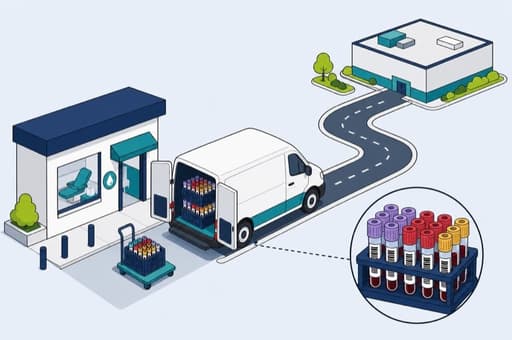
Diagnostics Laboratories — core testing network
The high-volume half: common tests doctors order, collected at 2,200-plus walk-in draw stations and run on one shared network — over 750 million tests in 2025. Health insurers together pay for 37% of all Labcorp revenue, and Medicare's price list is the standing worry.
Competes with Diagnostic Information Services (Quest Diagnostics) · Hospital in-house laboratories (Health systems)
In plain English
Think of the last time a doctor said the sample would go to the lab. This is the lab. Someone draws blood at a storefront collection site, a courier van carries it to a regional building full of analyzers, and the result lands on the doctor's screen.
Insurers, hospitals, government health programs and patients themselves pay per test. The vans, the storefronts and the machines cost about the same whether they run full or half-empty, so each extra sample routed onto an existing round earns far more than it costs — which is why Labcorp keeps buying other people's testing work. The wobble underneath: Medicare sets the price for much of it, and Congress has put off the next round of cuts every year since 2021.

Health system and government lab partnerships
The repeatable move: buy a hospital's outside-patient testing book, sometimes run its inpatient lab too, and route the samples onto Labcorp's network. Three years of these deals added more than $1 billion of growth, at roughly company-average margin.
Competes with Health-system and acquisition program (Quest Diagnostics) · Regional lab roll-ups (Private-equity buyers)
In plain English
Hospitals run labs of their own, and some of what those labs handle comes from people who were never admitted — the doctor down the street simply sends a sample over. That outside work is a sideline for a hospital and the main event for Labcorp.
So Labcorp buys it. It pays for the hospital's book of outside testing, often takes over running the inpatient lab as well, and moves the samples onto routes and machines it already owns. The stated rule is that a deal must add to earnings in its first year and earn back the cost of the money within two. Hospitals under financial strain keep the queue of sellers full.
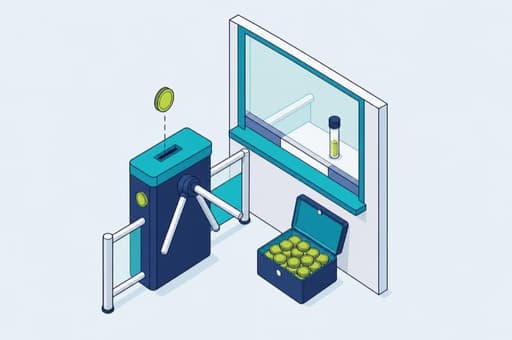
Labcorp OnDemand and Marker by Labcorp
Tests people buy for themselves without a doctor's order, then get drawn at a Labcorp site — 200-plus markers on OnDemand, plus a 163-gene hereditary panel launched in July 2026. Size undisclosed; the appeal is that customers pay before the needle.
Competes with QuestHealth.com (Quest Diagnostics) · Screening franchise (Exact Sciences)
In plain English
Want a cancer screen, or to know whether a hereditary risk runs in your family, without booking an appointment first? Pick the test on Labcorp's site, pay by card, and walk into one of the same draw stations a doctor would have sent you to.
For Labcorp the attraction is the cash. Billing an insurer means waiting and writing off some of what never arrives; a consumer pays before the sample is taken. The orders are filled through collection sites and machines that are already standing there, so serving one more curious person costs little. It rides inside the money patients pay directly — $410.4 million in the June 2026 quarter, the fastest-growing of the four ways Labcorp gets paid.
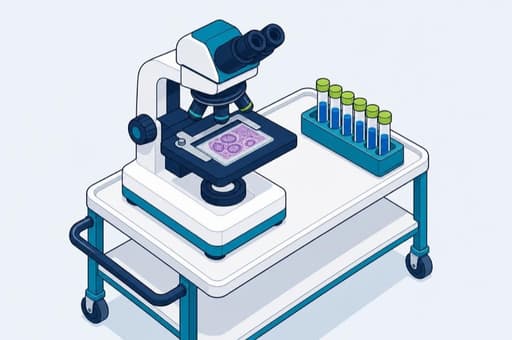
Specialty testing
Harder tests for cancer, brain disease, immune conditions and women's health — the growth end of the lab. Management says this work grows two to three times faster than the broader diagnostics market. Much of the capability was bought rather than built.
Competes with Precision Oncology (Exact Sciences) · Signatera (Natera) · AD-Detect (Quest Diagnostics)
In plain English
Not every test is a cholesterol check. Some read the genetics of a tumour, hunt for traces of cancer left in the blood after surgery, or weigh whether a memory problem has a physical cause. They need specialist chemistry, specialist machines, and people who can read what comes out.
Specialists order them one patient at a time, and the money follows twice over: the hard test itself, then the rest of that patient's ordinary blood work, which tends to go to whoever ran the hard one. Labcorp largely bought its way in — OmniSeq in 2021, Personal Genome Diagnostics in 2022, Invitae's assets in 2024.
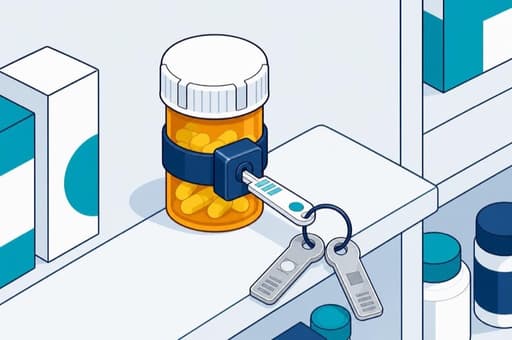
Companion diagnostics and FDA-approved assays
Tests that decide whether a particular drug suits a particular patient. Three arrived in 2026: a melanoma panel Labcorp owns outright, a prostate-cancer tissue test, and a blood test for Alzheimer's. Insurance coverage is what turns a clearance into volume.
Competes with Elecsys pTau-217 testing service (Quest Diagnostics) · Lumipulse G pTau217 ratio (Fujirebio)
In plain English
A medicine that only works for some patients needs a way to tell which ones. That is the job here — check a tumour sample or a vial of blood for the single feature that makes a particular drug worth prescribing.
Drug makers want that test ready on the day their medicine launches, and Labcorp can help develop it and then run it nationwide. One of 2026's three came from Labcorp's own 2022 purchase of Personal Genome Diagnostics. The other two are Roche tests that Labcorp performs, and on those Labcorp earns a fee for doing the work rather than a margin on the test itself.
Central Laboratory Services
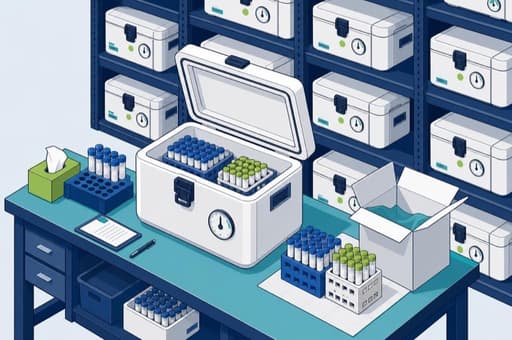
The lab inside other people's drug trials — Labcorp tests the samples that show whether a new medicine is safe and works. Work for drug developers is booked years ahead: an $8.73 billion order book at June 2026, roughly $2.75 billion of it due within twelve months.
Competes with IQVIA Laboratories (IQVIA) · Eurofins Central Laboratory (Eurofins) · Central laboratory services (Thermo Fisher)
In plain English
Before a new medicine reaches a pharmacy, volunteers give blood and other samples at hospitals and clinics in many countries. Someone has to gather all of it, move it, test it the same way everywhere, and hand back data clean enough to judge whether the drug is safe and does what it claims.
A drug company signs up years ahead and pays as its trial runs, which makes this the steadier of Labcorp's two halves — most of a year's revenue is already sitting in signed contracts before the year starts. Labcorp bought MLM Medical Labs in September 2026 to extend its own network of these labs across four continents.
Early Development Research Labs
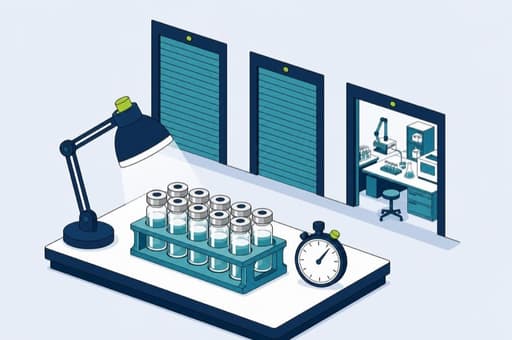
Labs for the earliest stage of drug research, before any human takes a dose: safety work, chemistry, analysis. It shrank through 2025 — one quarter fell 13.5% — and Labcorp sold or folded in about $50 million of it. By mid-2026 it was growing again.
Competes with Discovery and Safety Assessment (Charles River Laboratories) · Preclinical research services (Inotiv) · Preclinical research services (Frontage)
In plain English
The stage before a drug is ever given to a person. A small company with a promising molecule needs to know what dose is safe, how a body handles it, and whether the chemistry can be made the same way twice — so it hires labs like these to find out.
The studies are short, which cuts both ways: the money arrives quickly, but there is little booked work to cushion a quiet stretch. When trial starts slipped, orders thinned and the line shrank; Labcorp closed or sold sites in response. That tidying up is largely done, and it helped lift the profitability of the wider drug-services business.


 Diagnostics Laboratories — core testing networkThe high-volume half: common tests doctors order, collected at 2,200-plus walk-in draw stations and run on one shared network — over 750 million tests in 2025. Health insurers together pay for 37% of all Labcorp revenue, and Medicare's price list is the standing worry.
The high-volume half: common tests doctors order, collected at 2,200-plus walk-in draw stations and run on one shared network — over 750 million tests in 2025. Health insurers together pay for 37% of all Labcorp revenue, and Medicare's price list is the standing worry.
In plain English
Think of the last time a doctor said the sample would go to the lab. This is the lab. Someone draws blood at a storefront collection site, a courier van carries it to a regional building full of analyzers, and the result lands on the doctor's screen.
Insurers, hospitals, government health programs and patients themselves pay per test. The vans, the storefronts and the machines cost about the same whether they run full or half-empty, so each extra sample routed onto an existing round earns far more than it costs — which is why Labcorp keeps buying other people's testing work. The wobble underneath: Medicare sets the price for much of it, and Congress has put off the next round of cuts every year since 2021.
Competes with Diagnostic Information Services (Quest Diagnostics) · Hospital in-house laboratories (Health systems)
 Health system and government lab partnershipsThe repeatable move: buy a hospital's outside-patient testing book, sometimes run its inpatient lab too, and route the samples onto Labcorp's network. Three years of these deals added more than $1 billion of growth, at roughly company-average margin.
The repeatable move: buy a hospital's outside-patient testing book, sometimes run its inpatient lab too, and route the samples onto Labcorp's network. Three years of these deals added more than $1 billion of growth, at roughly company-average margin.
In plain English
Hospitals run labs of their own, and some of what those labs handle comes from people who were never admitted — the doctor down the street simply sends a sample over. That outside work is a sideline for a hospital and the main event for Labcorp.
So Labcorp buys it. It pays for the hospital's book of outside testing, often takes over running the inpatient lab as well, and moves the samples onto routes and machines it already owns. The stated rule is that a deal must add to earnings in its first year and earn back the cost of the money within two. Hospitals under financial strain keep the queue of sellers full.
Competes with Health-system and acquisition program (Quest Diagnostics) · Regional lab roll-ups (Private-equity buyers)
 Labcorp OnDemand and Marker by LabcorpTests people buy for themselves without a doctor's order, then get drawn at a Labcorp site — 200-plus markers on OnDemand, plus a 163-gene hereditary panel launched in July 2026. Size undisclosed; the appeal is that customers pay before the needle.
Tests people buy for themselves without a doctor's order, then get drawn at a Labcorp site — 200-plus markers on OnDemand, plus a 163-gene hereditary panel launched in July 2026. Size undisclosed; the appeal is that customers pay before the needle.
In plain English
Want a cancer screen, or to know whether a hereditary risk runs in your family, without booking an appointment first? Pick the test on Labcorp's site, pay by card, and walk into one of the same draw stations a doctor would have sent you to.
For Labcorp the attraction is the cash. Billing an insurer means waiting and writing off some of what never arrives; a consumer pays before the sample is taken. The orders are filled through collection sites and machines that are already standing there, so serving one more curious person costs little. It rides inside the money patients pay directly — $410.4 million in the June 2026 quarter, the fastest-growing of the four ways Labcorp gets paid.
Competes with QuestHealth.com (Quest Diagnostics) · Screening franchise (Exact Sciences)
 Specialty testingHarder tests for cancer, brain disease, immune conditions and women's health — the growth end of the lab. Management says this work grows two to three times faster than the broader diagnostics market. Much of the capability was bought rather than built.
Harder tests for cancer, brain disease, immune conditions and women's health — the growth end of the lab. Management says this work grows two to three times faster than the broader diagnostics market. Much of the capability was bought rather than built.
In plain English
Not every test is a cholesterol check. Some read the genetics of a tumour, hunt for traces of cancer left in the blood after surgery, or weigh whether a memory problem has a physical cause. They need specialist chemistry, specialist machines, and people who can read what comes out.
Specialists order them one patient at a time, and the money follows twice over: the hard test itself, then the rest of that patient's ordinary blood work, which tends to go to whoever ran the hard one. Labcorp largely bought its way in — OmniSeq in 2021, Personal Genome Diagnostics in 2022, Invitae's assets in 2024.
Competes with Precision Oncology (Exact Sciences) · Signatera (Natera) · AD-Detect (Quest Diagnostics)
 Companion diagnostics and FDA-approved assaysTests that decide whether a particular drug suits a particular patient. Three arrived in 2026: a melanoma panel Labcorp owns outright, a prostate-cancer tissue test, and a blood test for Alzheimer's. Insurance coverage is what turns a clearance into volume.
Tests that decide whether a particular drug suits a particular patient. Three arrived in 2026: a melanoma panel Labcorp owns outright, a prostate-cancer tissue test, and a blood test for Alzheimer's. Insurance coverage is what turns a clearance into volume.
In plain English
A medicine that only works for some patients needs a way to tell which ones. That is the job here — check a tumour sample or a vial of blood for the single feature that makes a particular drug worth prescribing.
Drug makers want that test ready on the day their medicine launches, and Labcorp can help develop it and then run it nationwide. One of 2026's three came from Labcorp's own 2022 purchase of Personal Genome Diagnostics. The other two are Roche tests that Labcorp performs, and on those Labcorp earns a fee for doing the work rather than a margin on the test itself.
Competes with Elecsys pTau-217 testing service (Quest Diagnostics) · Lumipulse G pTau217 ratio (Fujirebio)
 Central Laboratory ServicesThe lab inside other people's drug trials — Labcorp tests the samples that show whether a new medicine is safe and works. Work for drug developers is booked years ahead: an $8.73 billion order book at June 2026, roughly $2.75 billion of it due within twelve months.
The lab inside other people's drug trials — Labcorp tests the samples that show whether a new medicine is safe and works. Work for drug developers is booked years ahead: an $8.73 billion order book at June 2026, roughly $2.75 billion of it due within twelve months.
In plain English
Before a new medicine reaches a pharmacy, volunteers give blood and other samples at hospitals and clinics in many countries. Someone has to gather all of it, move it, test it the same way everywhere, and hand back data clean enough to judge whether the drug is safe and does what it claims.
A drug company signs up years ahead and pays as its trial runs, which makes this the steadier of Labcorp's two halves — most of a year's revenue is already sitting in signed contracts before the year starts. Labcorp bought MLM Medical Labs in September 2026 to extend its own network of these labs across four continents.
Competes with IQVIA Laboratories (IQVIA) · Eurofins Central Laboratory (Eurofins) · Central laboratory services (Thermo Fisher)
 Early Development Research LabsLabs for the earliest stage of drug research, before any human takes a dose: safety work, chemistry, analysis. It shrank through 2025 — one quarter fell 13.5% — and Labcorp sold or folded in about $50 million of it. By mid-2026 it was growing again.
Labs for the earliest stage of drug research, before any human takes a dose: safety work, chemistry, analysis. It shrank through 2025 — one quarter fell 13.5% — and Labcorp sold or folded in about $50 million of it. By mid-2026 it was growing again.
In plain English
The stage before a drug is ever given to a person. A small company with a promising molecule needs to know what dose is safe, how a body handles it, and whether the chemistry can be made the same way twice — so it hires labs like these to find out.
The studies are short, which cuts both ways: the money arrives quickly, but there is little booked work to cushion a quiet stretch. When trial starts slipped, orders thinned and the line shrank; Labcorp closed or sold sites in response. That tidying up is largely done, and it helped lift the profitability of the wider drug-services business.
Competes with Discovery and Safety Assessment (Charles River Laboratories) · Preclinical research services (Inotiv) · Preclinical research services (Frontage)
Named in filings, launches and programs
- Defense Health Agency agreementCustomer programTen-year deal signed August 2026 making Labcorp the reference lab for military treatment facilities worldwide; value not disclosed.
- Epic Aura collaborationEcosystemSince May 2026, Labcorp's full test menu can be ordered from inside Epic's hospital software, where doctors already work.
- ColoSenseProduct · RampingAt-home colorectal cancer screening test, available nationwide from June 2026 through a screening partnership, with Medicare and widening commercial coverage.
- Plasma DetectProduct line · RampingBlood tests that look for cancer left behind after treatment in colorectal, breast and lung cancer; studied with Fox Chase Cancer Center.
- Invitae genetic testingProduct lineInherited-risk genetic testing from assets bought in late 2024; around 10% growth expected for 2025, and orderable through Epic Aura.
- NASHnextProductBlood test scoring the risk of fatty liver disease; Medicare agreed to pay for it from mid-August 2026, which is what opens up volume.
- Marker by LabcorpProduct · RampingConsumer hereditary-risk panel launched July 2026: 163 genes, over 100 conditions people can act on, with counselling included in the price.
- MLM Medical LabsBrandTrial-testing labs in the U.S., Germany and South Africa, bought September 2026; terms undisclosed.
- Labcorp Global Trial ConnectPlatformThe software and services drug sponsors and trial sites use to run studies with Labcorp; a rebuilt version launched August 2026.
- SOMOS IPA partnershipCustomer programMulti-year agreement effective February 2026 making Labcorp the preferred lab for a doctors' group, widening patient access.
- Labcorp Employer ServicesServiceWorkplace drug testing and employee wellness checks sold to employers, collected at designated Labcorp centers.
- Labcorp Patient and Diagnostic AssistantPlatformPatient-facing and clinician-facing digital tools named in the annual report; no revenue is broken out for them.
- LaunchPadProductThe in-house efficiency program, targeting $100–125 million of savings a year and increasingly built around AI, robots and computing.
Defense Health Agency agreementCustomer program
Ten-year deal signed August 2026 making Labcorp the reference lab for military treatment facilities worldwide; value not disclosed.
Epic Aura collaborationEcosystem
Since May 2026, Labcorp's full test menu can be ordered from inside Epic's hospital software, where doctors already work.
ColoSenseProduct · Ramping
At-home colorectal cancer screening test, available nationwide from June 2026 through a screening partnership, with Medicare and widening commercial coverage.
Plasma DetectProduct line · Ramping
Blood tests that look for cancer left behind after treatment in colorectal, breast and lung cancer; studied with Fox Chase Cancer Center.
Invitae genetic testingProduct line
Inherited-risk genetic testing from assets bought in late 2024; around 10% growth expected for 2025, and orderable through Epic Aura.
NASHnextProduct
Blood test scoring the risk of fatty liver disease; Medicare agreed to pay for it from mid-August 2026, which is what opens up volume.
Marker by LabcorpProduct · Ramping
Consumer hereditary-risk panel launched July 2026: 163 genes, over 100 conditions people can act on, with counselling included in the price.
MLM Medical LabsBrand
Trial-testing labs in the U.S., Germany and South Africa, bought September 2026; terms undisclosed.
Labcorp Global Trial ConnectPlatform
The software and services drug sponsors and trial sites use to run studies with Labcorp; a rebuilt version launched August 2026.
SOMOS IPA partnershipCustomer program
Multi-year agreement effective February 2026 making Labcorp the preferred lab for a doctors' group, widening patient access.
Labcorp Employer ServicesService
Workplace drug testing and employee wellness checks sold to employers, collected at designated Labcorp centers.
Labcorp Patient and Diagnostic AssistantPlatform
Patient-facing and clinician-facing digital tools named in the annual report; no revenue is broken out for them.
LaunchPadProduct
The in-house efficiency program, targeting $100–125 million of savings a year and increasingly built around AI, robots and computing.