
Eli Lilly (LLY)
Develops cardiometabolic, cancer, immunology, and neuroscience medicines led by tirzepatide.
Something off on this page? Send us feedback.
Eli Lilly sells medicines for several major diseases, but diabetes and weight loss have become the center of gravity. Two closely related medicines now drive most of the growth, while older drugs keep contributing as Lilly builds factories and a pipeline meant to widen the story again.
Item facts: FY2025 · year ended Dec 31, 2025, from filings, earnings calls and company pages.
Judgment weights, not filed revenue
The band summarizes business focus and direction. ~ marks estimates.
8 in detail · 17 more below
Mounjaro & Zepbound
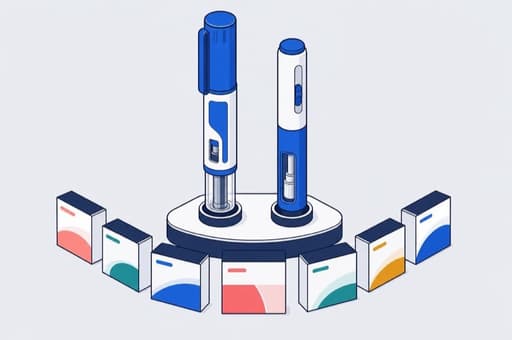
One weekly medicine sold under two names is Lilly's growth engine. Mounjaro treats diabetes; Zepbound treats chronic weight management and sleep apnea. Factory output, health-plan coverage and patent defense determine how far the pair can run.
Competes with Ozempic (Novo Nordisk) · Wegovy injection and pill (Novo Nordisk) · VK2735 (Viking Therapeutics)
In plain English
Mounjaro and Zepbound are two labels on the same once-a-week medicine. Doctors prescribe Mounjaro for type two diabetes and Zepbound for chronic weight management or obstructive sleep apnea, a condition in which breathing repeatedly stops during sleep.
Patients and health plans pay for repeat prescriptions, with Medicare and self-pay routes also available for weight management. Large wholesalers move the medicine into the market, and LillyDirect, Lilly's own ordering service, routes some Zepbound orders. Demand becomes revenue only when doctors prescribe it, coverage makes it affordable and Lilly's factories can supply the doses.
Trulicity
This older weekly diabetes shot still brought in $4.28B in FY2025, but sales fell as patients moved toward Mounjaro. Its job is to keep contributing while Lilly manages an approaching U.S. patent expiry.
Competes with Ozempic (Novo Nordisk) · Rybelsus (Novo Nordisk)
In plain English
The older weekly shot in Lilly's diabetes cabinet. Trulicity is prescribed again and again for people with type two diabetes, so each continuing patient brings repeat refills paid by patients and their health plans.
Those payments are declining as newer options, especially Mounjaro, take its place. The medicine still matters because billions of dollars do not disappear overnight, but its U.S. patent protection is due to expire in 2027. Lilly must manage a product that still pays today while expecting less from it tomorrow.
Jardiance
A daily pill used across diabetes, heart failure and kidney disease contributed $3.43B to Lilly in FY2025. The watchpoints are government-set pricing, patent life and how its partnership with Boehringer Ingelheim splits the money.
Competes with Farxiga/Forxiga (AstraZeneca) · Kerendia (Bayer)
In plain English
A partnership rather than a solo act. Jardiance is a daily pill prescribed for three connected health problems: diabetes, heart failure and kidney disease. Its usefulness across those conditions gives several kinds of doctors reasons to prescribe it.
Drugmaker Boehringer Ingelheim sells the medicine through an alliance with Lilly, and Lilly receives its agreed share plus occasional payments when agreed targets are reached. Lilly's income therefore depends on the partner's sales and the deal's terms as well as prescriptions, coverage and price rules.
Foundayo
The new once-daily weight-management pill made $98M in 2026 Q2, its first reported quarter. That is a small starting point beside Lilly's shots; the test is whether convenience, coverage and tablet supply turn it into a larger route.
Competes with Wegovy pill (Novo Nordisk) · Aleniglipron (Structure Therapeutics)
In plain English
The newest route is a daily pill. Foundayo treats chronic weight management without an injection and without rules about when to eat or drink, giving Lilly a different way to reach people who may not want a weekly shot.
Patients can obtain it through ordinary pharmacies or LillyDirect, with payment coming from insurance, Medicare or their own pocket. Lilly earns when tablets are dispensed and refilled, while Chugai receives royalties. The launch therefore depends on affordable access and enough tablets, not simply on how many people might want treatment.
Retatrutide
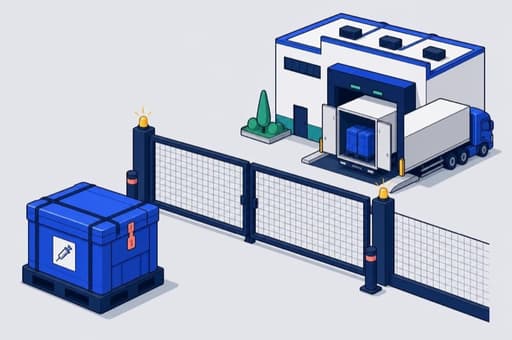
A next-generation weekly weight-management shot with three successful late-stage trials, but no approval or sales. Lilly plans a U.S. submission in the first quarter of 2027; review, factory readiness, price and coverage still stand between promise and revenue.
Competes with Wegovy injection (Novo Nordisk) · VK2735 (Viking Therapeutics)
In plain English
Nothing is for sale yet. Retatrutide is Lilly's experimental once-a-week shot for obesity, designed to work through three chemical message systems in the body rather than the two used by Mounjaro and Zepbound. Late-stage testing has produced positive results, and Lilly is preparing to ask U.S. regulators for approval.
Until approval, no patient or health plan can buy it from Lilly. Trial sites and planned ingredient-making capacity are the staging area. Only after regulators agree, factories are ready and health plans decide to cover it can scientific results turn into paid prescriptions.
Verzenio
Lilly's leading cancer pill generated $5.72B in FY2025. Recent sales were essentially flat after U.S. use in earlier-stage breast cancer stopped expanding, so holding patients against Kisqali and Ibrance matters more than market growth alone.
Competes with Kisqali (Novartis) · Ibrance (Pfizer)
In plain English
Verzenio is a pill for a form of breast cancer identified by two test results on the tumor. It blocks machinery cancer cells use to divide, helping slow their growth. Patients take it over time rather than as a one-off procedure.
Cancer practices choose the treatment using diagnosis, test results and medical guidance; patients and health plans pay for the course. Lilly earns as tablets are supplied for as long as treatment continues. U.S. use in earlier disease has stopped expanding, so future sales depend increasingly on standing out from competing pills and keeping patients on therapy.
Taltz
An injected treatment for psoriasis and forms of arthritis, with $3.56B of FY2025 sales. Growth has nearly stopped; watch whether Taltz can hold patients against larger Cosentyx and fast-growing Bimzelx.
Competes with Cosentyx (Novartis) · Bimzelx (UCB)
In plain English
Skin and joint disease can require repeated treatment. Taltz is an injection that quiets one part of an overactive immune system, easing plaque psoriasis and certain forms of arthritis. The recurring dose makes each patient relationship valuable.
Dermatology and arthritis specialists decide when to start or switch treatment, while health plans influence which option is affordable. Lilly is paid as patients continue receiving injections. The difficulty is not finding a need; it is staying on the lists of medicines that health plans readily cover and persuading doctors and patients to stay while competing medicines expand.
Kisunla
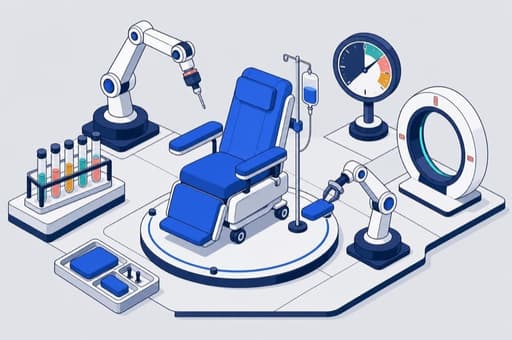
A monthly Alzheimer's treatment still near the starting line, with $291M in the first half of 2026. Growth depends on finding eligible early-stage patients and expanding the scans, monitoring and infusion capacity needed to treat them.
Competes with Leqembi (Eisai/Biogen) · Trontinemab (Roche)
In plain English
Kisunla is given every four weeks by dripping medicine into a vein. It targets protein deposits in the brains of people with early Alzheimer's, but only patients whose disease stage and tests fit the label are eligible.
This is a chain with several gates: a memory clinic must diagnose the person, testing must confirm the deposits, a scan must check safety, and an infusion center must deliver treatment. Patients and health plans pay for the medicine as those visits occur. Lilly can grow sales only as that care network makes room for more suitable patients.


 Mounjaro & ZepboundOne weekly medicine sold under two names is Lilly's growth engine. Mounjaro treats diabetes; Zepbound treats chronic weight management and sleep apnea. Factory output, health-plan coverage and patent defense determine how far the pair can run.
One weekly medicine sold under two names is Lilly's growth engine. Mounjaro treats diabetes; Zepbound treats chronic weight management and sleep apnea. Factory output, health-plan coverage and patent defense determine how far the pair can run.
In plain English
Mounjaro and Zepbound are two labels on the same once-a-week medicine. Doctors prescribe Mounjaro for type two diabetes and Zepbound for chronic weight management or obstructive sleep apnea, a condition in which breathing repeatedly stops during sleep.
Patients and health plans pay for repeat prescriptions, with Medicare and self-pay routes also available for weight management. Large wholesalers move the medicine into the market, and LillyDirect, Lilly's own ordering service, routes some Zepbound orders. Demand becomes revenue only when doctors prescribe it, coverage makes it affordable and Lilly's factories can supply the doses.
Competes with Ozempic (Novo Nordisk) · Wegovy injection and pill (Novo Nordisk) · VK2735 (Viking Therapeutics)
 TrulicityThis older weekly diabetes shot still brought in $4.28B in FY2025, but sales fell as patients moved toward Mounjaro. Its job is to keep contributing while Lilly manages an approaching U.S. patent expiry.
This older weekly diabetes shot still brought in $4.28B in FY2025, but sales fell as patients moved toward Mounjaro. Its job is to keep contributing while Lilly manages an approaching U.S. patent expiry.
In plain English
The older weekly shot in Lilly's diabetes cabinet. Trulicity is prescribed again and again for people with type two diabetes, so each continuing patient brings repeat refills paid by patients and their health plans.
Those payments are declining as newer options, especially Mounjaro, take its place. The medicine still matters because billions of dollars do not disappear overnight, but its U.S. patent protection is due to expire in 2027. Lilly must manage a product that still pays today while expecting less from it tomorrow.
Competes with Ozempic (Novo Nordisk) · Rybelsus (Novo Nordisk)
 JardianceA daily pill used across diabetes, heart failure and kidney disease contributed $3.43B to Lilly in FY2025. The watchpoints are government-set pricing, patent life and how its partnership with Boehringer Ingelheim splits the money.
A daily pill used across diabetes, heart failure and kidney disease contributed $3.43B to Lilly in FY2025. The watchpoints are government-set pricing, patent life and how its partnership with Boehringer Ingelheim splits the money.
In plain English
A partnership rather than a solo act. Jardiance is a daily pill prescribed for three connected health problems: diabetes, heart failure and kidney disease. Its usefulness across those conditions gives several kinds of doctors reasons to prescribe it.
Drugmaker Boehringer Ingelheim sells the medicine through an alliance with Lilly, and Lilly receives its agreed share plus occasional payments when agreed targets are reached. Lilly's income therefore depends on the partner's sales and the deal's terms as well as prescriptions, coverage and price rules.
Competes with Farxiga/Forxiga (AstraZeneca) · Kerendia (Bayer)
 FoundayoThe new once-daily weight-management pill made $98M in 2026 Q2, its first reported quarter. That is a small starting point beside Lilly's shots; the test is whether convenience, coverage and tablet supply turn it into a larger route.
The new once-daily weight-management pill made $98M in 2026 Q2, its first reported quarter. That is a small starting point beside Lilly's shots; the test is whether convenience, coverage and tablet supply turn it into a larger route.
In plain English
The newest route is a daily pill. Foundayo treats chronic weight management without an injection and without rules about when to eat or drink, giving Lilly a different way to reach people who may not want a weekly shot.
Patients can obtain it through ordinary pharmacies or LillyDirect, with payment coming from insurance, Medicare or their own pocket. Lilly earns when tablets are dispensed and refilled, while Chugai receives royalties. The launch therefore depends on affordable access and enough tablets, not simply on how many people might want treatment.
Competes with Wegovy pill (Novo Nordisk) · Aleniglipron (Structure Therapeutics)
 RetatrutideA next-generation weekly weight-management shot with three successful late-stage trials, but no approval or sales. Lilly plans a U.S. submission in the first quarter of 2027; review, factory readiness, price and coverage still stand between promise and revenue.
A next-generation weekly weight-management shot with three successful late-stage trials, but no approval or sales. Lilly plans a U.S. submission in the first quarter of 2027; review, factory readiness, price and coverage still stand between promise and revenue.
In plain English
Nothing is for sale yet. Retatrutide is Lilly's experimental once-a-week shot for obesity, designed to work through three chemical message systems in the body rather than the two used by Mounjaro and Zepbound. Late-stage testing has produced positive results, and Lilly is preparing to ask U.S. regulators for approval.
Until approval, no patient or health plan can buy it from Lilly. Trial sites and planned ingredient-making capacity are the staging area. Only after regulators agree, factories are ready and health plans decide to cover it can scientific results turn into paid prescriptions.
Competes with Wegovy injection (Novo Nordisk) · VK2735 (Viking Therapeutics)
 VerzenioLilly's leading cancer pill generated $5.72B in FY2025. Recent sales were essentially flat after U.S. use in earlier-stage breast cancer stopped expanding, so holding patients against Kisqali and Ibrance matters more than market growth alone.
Lilly's leading cancer pill generated $5.72B in FY2025. Recent sales were essentially flat after U.S. use in earlier-stage breast cancer stopped expanding, so holding patients against Kisqali and Ibrance matters more than market growth alone.
In plain English
Verzenio is a pill for a form of breast cancer identified by two test results on the tumor. It blocks machinery cancer cells use to divide, helping slow their growth. Patients take it over time rather than as a one-off procedure.
Cancer practices choose the treatment using diagnosis, test results and medical guidance; patients and health plans pay for the course. Lilly earns as tablets are supplied for as long as treatment continues. U.S. use in earlier disease has stopped expanding, so future sales depend increasingly on standing out from competing pills and keeping patients on therapy.
Competes with Kisqali (Novartis) · Ibrance (Pfizer)
 TaltzAn injected treatment for psoriasis and forms of arthritis, with $3.56B of FY2025 sales. Growth has nearly stopped; watch whether Taltz can hold patients against larger Cosentyx and fast-growing Bimzelx.
An injected treatment for psoriasis and forms of arthritis, with $3.56B of FY2025 sales. Growth has nearly stopped; watch whether Taltz can hold patients against larger Cosentyx and fast-growing Bimzelx.
In plain English
Skin and joint disease can require repeated treatment. Taltz is an injection that quiets one part of an overactive immune system, easing plaque psoriasis and certain forms of arthritis. The recurring dose makes each patient relationship valuable.
Dermatology and arthritis specialists decide when to start or switch treatment, while health plans influence which option is affordable. Lilly is paid as patients continue receiving injections. The difficulty is not finding a need; it is staying on the lists of medicines that health plans readily cover and persuading doctors and patients to stay while competing medicines expand.
Competes with Cosentyx (Novartis) · Bimzelx (UCB)
 KisunlaA monthly Alzheimer's treatment still near the starting line, with $291M in the first half of 2026. Growth depends on finding eligible early-stage patients and expanding the scans, monitoring and infusion capacity needed to treat them.
A monthly Alzheimer's treatment still near the starting line, with $291M in the first half of 2026. Growth depends on finding eligible early-stage patients and expanding the scans, monitoring and infusion capacity needed to treat them.
In plain English
Kisunla is given every four weeks by dripping medicine into a vein. It targets protein deposits in the brains of people with early Alzheimer's, but only patients whose disease stage and tests fit the label are eligible.
This is a chain with several gates: a memory clinic must diagnose the person, testing must confirm the deposits, a scan must check safety, and an infusion center must deliver treatment. Patients and health plans pay for the medicine as those visits occur. Lilly can grow sales only as that care network makes room for more suitable patients.
Competes with Leqembi (Eisai/Biogen) · Trontinemab (Roche)
Named in filings, launches and programs
- BasaglarProductA long-acting insulin that remains part of Lilly's diabetes range.
- Humalog familyProduct lineRapid-acting insulin products used around meals, part of Lilly's older diabetes base.
- Humulin familyProduct lineHuman insulin products that round out the company's established diabetes range.
- CyramzaProductAn antibody cancer medicine whose main U.S. and Japanese patent protection was listed through 2026.
- ErbituxProductAn antibody cancer medicine that Lilly sells under rights licensed from another owner.
- InluriyoProduct · RampingA newer breast-cancer pill that reached $75M of sales in 2026 Q2.
- JaypircaProduct · RampingA newer blood-cancer pill that produced $192M of sales in 2026 Q2.
- RetevmoProductA cancer medicine aimed at tumors driven by a particular gene change.
- TyvytProductA China-centered cancer medicine sold through a collaboration.
- EbglyssProduct · RampingAn injected treatment for atopic dermatitis, a persistent itchy skin disease; 2026 Q2 sales were $201M.
- OlumiantProductA pill that quiets part of the immune system to treat inflammatory disease.
- OmvohProduct · RampingA newer treatment for inflammatory bowel disease, with $102M of sales in 2026 Q2.
- EmgalityProductAn antibody medicine used to prevent migraines.
- LillyDirect access programsCustomer programLilly's direct ordering route, including self-pay and Medicare paths; medicine sales still belong to the individual products.
- Wholesale distributionEcosystemMcKesson, Cencora and Cardinal Health each handled 16%–24% of FY2025 revenue; the company does not say which wholesaler had which share.
- Insulin efsitora alfaProduct · Pre-revenueA once-weekly insulin submitted for approval in the U.S., Europe and Japan.
- Acquired and pending R&D portfolioProduct · Pre-revenueRecently bought and pending research programs that have not yet become named revenue lines.
BasaglarProduct
A long-acting insulin that remains part of Lilly's diabetes range.
Humalog familyProduct line
Rapid-acting insulin products used around meals, part of Lilly's older diabetes base.
Humulin familyProduct line
Human insulin products that round out the company's established diabetes range.
CyramzaProduct
An antibody cancer medicine whose main U.S. and Japanese patent protection was listed through 2026.
ErbituxProduct
An antibody cancer medicine that Lilly sells under rights licensed from another owner.
InluriyoProduct · Ramping
A newer breast-cancer pill that reached $75M of sales in 2026 Q2.
JaypircaProduct · Ramping
A newer blood-cancer pill that produced $192M of sales in 2026 Q2.
RetevmoProduct
A cancer medicine aimed at tumors driven by a particular gene change.
TyvytProduct
A China-centered cancer medicine sold through a collaboration.
EbglyssProduct · Ramping
An injected treatment for atopic dermatitis, a persistent itchy skin disease; 2026 Q2 sales were $201M.
OlumiantProduct
A pill that quiets part of the immune system to treat inflammatory disease.
OmvohProduct · Ramping
A newer treatment for inflammatory bowel disease, with $102M of sales in 2026 Q2.
EmgalityProduct
An antibody medicine used to prevent migraines.
LillyDirect access programsCustomer program
Lilly's direct ordering route, including self-pay and Medicare paths; medicine sales still belong to the individual products.
Wholesale distributionEcosystem
McKesson, Cencora and Cardinal Health each handled 16%–24% of FY2025 revenue; the company does not say which wholesaler had which share.
Insulin efsitora alfaProduct · Pre-revenue
A once-weekly insulin submitted for approval in the U.S., Europe and Japan.
Acquired and pending R&D portfolioProduct · Pre-revenue
Recently bought and pending research programs that have not yet become named revenue lines.