
LyondellBasell (LYB)
Produces polyolefins, intermediate chemicals and engineered compounds while licensing process technologies.
Something off on this page? Send us feedback.
LyondellBasell turns gas and oil leftovers into the plastic pellets and chemicals other factories mould into packaging, car parts and foam. It sells by the tonne at prices it does not set, so profit is the gap between feedstock cost and product price — a gap that shrank for four straight years. It has been selling plants and cutting staff to ride out the slump; the latest profit jump came from a supply shock abroad.
Item facts: FY2025 · year ended Dec 31, 2025, from filings, earnings calls and company pages.
Judgment weights, not filed revenue
The band summarizes business focus and direction. ~ marks estimates.
9 in detail · 10 more below
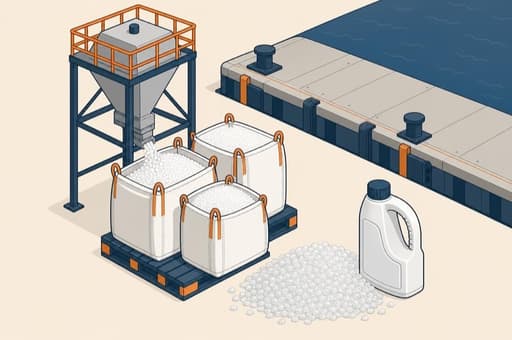
Polyethylene
Resin pellets for film, bottles and pipe, sold as Alathon, Lupolen and Petrothene. The biggest single line, and the one riding the 2026 price spike. Watch whether the damaged Middle East supply stays offline into 2027.
Competes with Polyethylene resins (Dow) · Marlex polyethylene (Chevron Phillips Chemical) · Polyolefins (Borouge Group International)
In plain English
Polyethylene is the plastic of ordinary life: the stretchy film around a pallet, the bottle, the water pipe in a trench. LYB heats cheap American ethane gas until it breaks into a building block, links those blocks into long chains, and ships the result as small pellets — sold as Alathon, Lupolen and Petrothene, with Purell for healthcare and food-contact grades.
Thousands of small moulders and film makers buy the pellets by the truckload; none of them is big enough to count as a major customer. What LYB earns per pellet is whatever polyethylene happens to trade at that week, which is how a damaged plant on the far side of the world can remake a year.
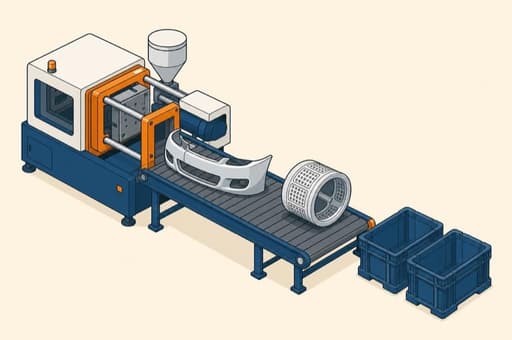
Polypropylene
The world's number-two polypropylene business, sold as Moplen and Pro-fax. The one big line still going backwards: first-half 2026 sales came in below a year earlier while everything else rebounded.
Competes with Polypropylene (Braskem) · Polypropylene (Borouge Group International)
In plain English
The stiffer cousin. Polypropylene turns up as bumpers and dashboards, appliance housings, packaging and fibre, sold under names like Moplen, Pro-fax, Adstif, Adflex and Softell. LYB says only one producer in the world makes more of it.
The buyers are the parts makers who mould it for carmakers and appliance brands, so orders follow how many cars and washing machines get built — not how much packaging the world uses. That is why this line sat out the 2026 rebound that lifted polyethylene. Some of the decline is LYB's own doing: European plants have been sold and an Italian site is closing, so there is simply less to sell.
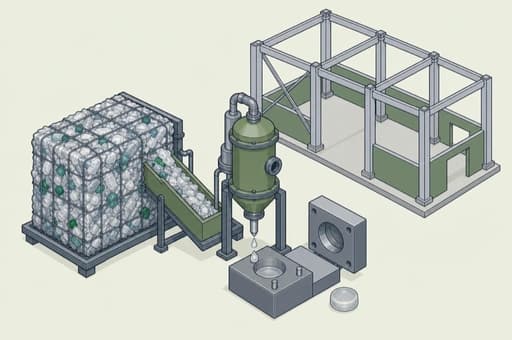
Circulen and MoReTec-1
Recycled and plant-based plastics sold under the Circulen name. The first full-scale chemical recycling plant is now due end-2027, two years later than first planned, and management barely mentions it any more.
Competes with Methanolysis recycled polymers (Eastman) · Pyrolysis recycling (Plastic Energy) · ReOil pyrolysis (OMV)
In plain English
Plastic waste, turned back into new plastic. Circulen is LYB's family of recycled and renewable-feedstock polymers: one grade made from shredded waste, one from waste broken chemically back into a liquid, one from plant-based feedstock. The showpiece is MoReTec-1 at Wesseling in Germany, a 50,000-tonne-a-year chemical recycling plant helped along by a €40 million EU grant.
The customers are consumer brands that want recycled content on the wrapper — Mondelez now packs Marabou chocolate in film built on Circulen material. But the plant's start-up has slid from end-2025 to end-2027, a second unit has been deferred, and the subject has faded from LYB's quarterly calls. Stated next chapter, currently on a slow burner.
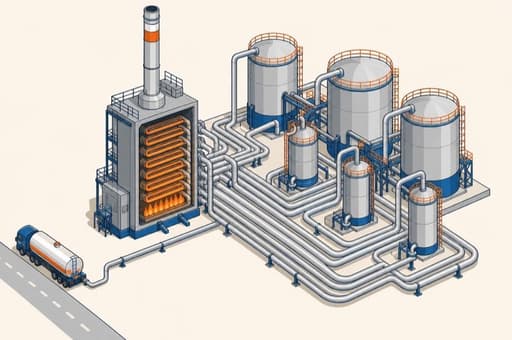
Olefins and Co-Products
Cracker output — ethylene, propylene, butadiene, benzene — most of it consumed by LYB's own plastics plants. What it sells to outsiders was 13.9% of FY2025 revenue and grew about 29% in the first half of 2026.
Competes with Ethylene and co-products (Dow) · Ethylene (Chevron Phillips Chemical)
In plain English
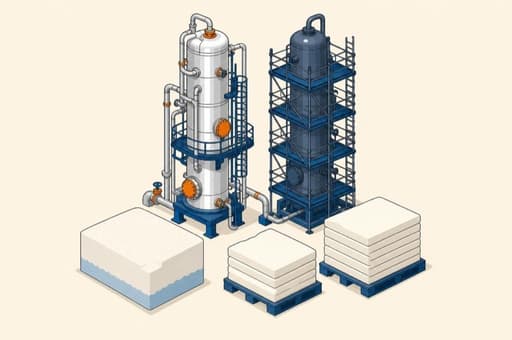
Before there is plastic, there is ethylene and propylene: the small molecules everything downstream is built from. Furnaces called crackers heat ethane, propane or naphtha until the molecules snap apart, and out come ethylene, propylene, butadiene and benzene.
Most of that output never leaves the company — it goes straight across the fence into LYB's own polyethylene and polypropylene plants, and only the surplus is sold to other manufacturers. So this is less a business than the engine room under the other two, and it is where the American advantage shows up first: when cheap US ethane is the feed and rivals are burning pricier oil-based feedstock, the margin is made here. It grew fastest of any line in the 2026 recovery.
Propylene Oxide and Derivatives
The ingredient behind cushion foam and insulation, made at four plants including the largest of its kind anywhere. One plant's outage cost roughly $250M of quarterly profit in 2026 — reliability is the whole story here.
Competes with Propylene oxide (Dow) · Propylene oxide via the HPPO route (SABIC)
In plain English
Propylene oxide is the ingredient behind soft and squishy things — the foam in a sofa cushion or a mattress, the insulation in a fridge wall — plus a family of related liquid chemicals. LYB feeds propylene from its own crackers into four plants to make it, and the Channelview, Texas unit is the largest of its kind anywhere.
The buyers are the foam and polyurethane makers who mix it into finished materials, so demand tracks construction and furniture, the slowest corners of the economy to wake up. The sharper risk sits inside the fence: when the Bayport plant went down in mid-2026 it cost about a quarter of a billion dollars of profit in one quarter. Huge single units mean huge single outages.
Intermediate chemicals
Acetic acid, vinyl acetate, methanol and styrene sold on to other manufacturers. Sales have shrunk from $2.7B in 2024 to $1.9B in 2025, and swing on whether LYB's own units are running.
Competes with Acetic acid and VAM (Celanese) · Methanol (Methanex) · Styrene (INEOS Styrolution)
In plain English
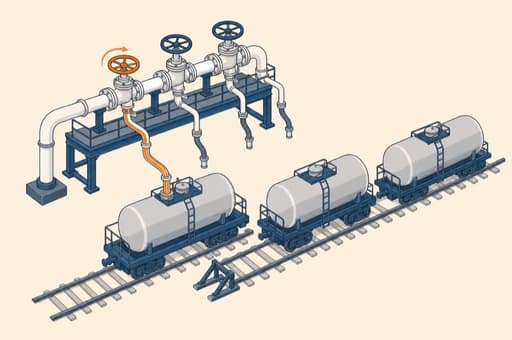
A handful of workaday chemicals — acetic acid and vinyl acetate, methanol, styrene — that no shopper has ever heard of. They leave by the tanker load and are bought by other plants as raw material for their own products.
What makes this line odd is that its sales track LYB's own machinery more than the market. Revenue jumped roughly three-quarters between the first and second quarters of 2026, from $348M to $619M, for a single reason: the Bayport plant came back from an outage and the chemicals started flowing again. Over the longer run the line has been shrinking, from $2.7B of sales in 2024 to $1.9B in 2025.
Oxyfuels and Related Products
Octane ingredients blended into gasoline, made from butane and methanol rather than crude. 16.0% of FY2025 revenue, and exceptionally profitable in mid-2026 on near-record gasoline margins. Watch what happens when those margins normalise.
Competes with MTBE made inside oil refineries (Refinery-integrated producers) · Ethanol as a blending octane source (Fuel ethanol producers)
In plain English
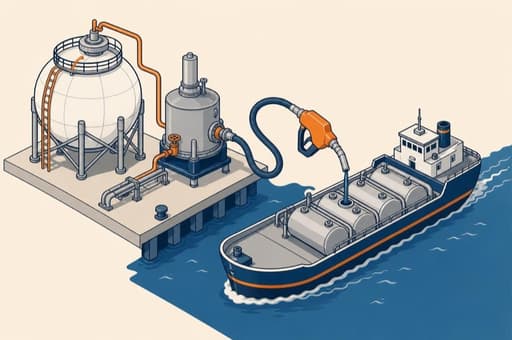
Gasoline has to burn smoothly, and blenders hit that quality mark by mixing in high-octane ingredients. LYB makes two of them, MTBE and ETBE, out of butane and methanol instead of out of crude oil — and that is the whole trick, because its input cost does not rise and fall with the barrel its product is priced against.
About three-quarters is made in the United States and shipped to fuel blenders abroad, where rules on gasoline quality keep the demand steady. Earnings swing hard with the fuel market: each dollar on a barrel of crude is worth roughly twenty million dollars a year to this line. Through mid-2026 that swing ran strongly in LYB's favour.
Advanced Polymer Solutions
Custom plastic blends, masterbatches and colours, sold mainly to the car industry. 11.5% of FY2025 revenue on the thinnest margin here: about $1.0B of quarterly sales produced roughly $78M of profit in spring 2026.
Competes with Engineered Materials (Celanese) · Specialty compounds and masterbatches (Avient)
In plain English
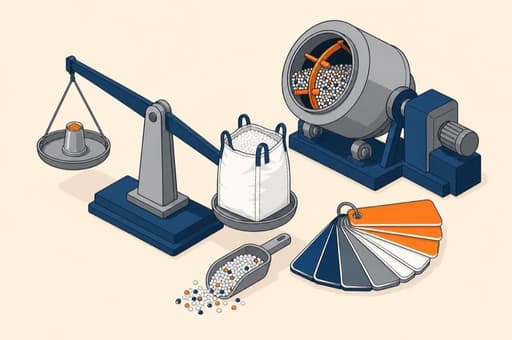
Raw resin rarely goes straight into a car part. First it gets a recipe — stiffeners, impact modifiers, pigment for exact colour — melted together into a custom blend and pelletised again. That mixing-and-colouring work is Advanced Polymer Solutions, and it feeds mostly the suppliers who mould parts for carmakers.
The resin it starts with usually comes from LYB's own plants, so the company is partly selling to itself. The catch is how little the recipe adds on top: roughly a billion dollars of sales in one 2026 quarter produced only about $78M of profit before financing, tax and equipment wear, and the final quarter of 2025 managed $38M. Blends that earn too little are being pruned away.
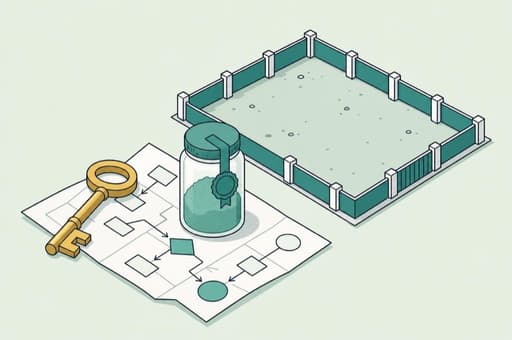
Technology
Renting out plant designs and selling the catalysts that go with them. Small and lumpy — quarterly profit has bounced between roughly $15M and $80M — and management now calls new licensing almost nonexistent.
Competes with UNIPOL PE licensing (Univation Technologies) · Borstar process licensing (Borealis)
In plain English
Having built plastics plants for decades, LYB rents out the instructions. A company planning a new plant licenses one of its processes — Spheripol and Spherizone for polypropylene, Hostalen ACP for the tougher grades of polyethylene — and then keeps buying the matching catalysts, the powders that make the reaction happen at all.
The fees arrive in lumps as construction milestones are met, so quarterly profit has bounced between roughly $15M and $80M. The problem is what comes next. New plants were overwhelmingly being built in China and Southeast Asia, and in mid-2026 management described licensing as almost nonexistent, with global plastics capacity growth slowing towards the end of the decade.


 PolyethyleneResin pellets for film, bottles and pipe, sold as Alathon, Lupolen and Petrothene. The biggest single line, and the one riding the 2026 price spike. Watch whether the damaged Middle East supply stays offline into 2027.
Resin pellets for film, bottles and pipe, sold as Alathon, Lupolen and Petrothene. The biggest single line, and the one riding the 2026 price spike. Watch whether the damaged Middle East supply stays offline into 2027.
In plain English
Polyethylene is the plastic of ordinary life: the stretchy film around a pallet, the bottle, the water pipe in a trench. LYB heats cheap American ethane gas until it breaks into a building block, links those blocks into long chains, and ships the result as small pellets — sold as Alathon, Lupolen and Petrothene, with Purell for healthcare and food-contact grades.
Thousands of small moulders and film makers buy the pellets by the truckload; none of them is big enough to count as a major customer. What LYB earns per pellet is whatever polyethylene happens to trade at that week, which is how a damaged plant on the far side of the world can remake a year.
Competes with Polyethylene resins (Dow) · Marlex polyethylene (Chevron Phillips Chemical) · Polyolefins (Borouge Group International)
 PolypropyleneThe world's number-two polypropylene business, sold as Moplen and Pro-fax. The one big line still going backwards: first-half 2026 sales came in below a year earlier while everything else rebounded.
The world's number-two polypropylene business, sold as Moplen and Pro-fax. The one big line still going backwards: first-half 2026 sales came in below a year earlier while everything else rebounded.
In plain English
The stiffer cousin. Polypropylene turns up as bumpers and dashboards, appliance housings, packaging and fibre, sold under names like Moplen, Pro-fax, Adstif, Adflex and Softell. LYB says only one producer in the world makes more of it.
The buyers are the parts makers who mould it for carmakers and appliance brands, so orders follow how many cars and washing machines get built — not how much packaging the world uses. That is why this line sat out the 2026 rebound that lifted polyethylene. Some of the decline is LYB's own doing: European plants have been sold and an Italian site is closing, so there is simply less to sell.
Competes with Polypropylene (Braskem) · Polypropylene (Borouge Group International)
 Circulen and MoReTec-1Recycled and plant-based plastics sold under the Circulen name. The first full-scale chemical recycling plant is now due end-2027, two years later than first planned, and management barely mentions it any more.
Recycled and plant-based plastics sold under the Circulen name. The first full-scale chemical recycling plant is now due end-2027, two years later than first planned, and management barely mentions it any more.
In plain English
Plastic waste, turned back into new plastic. Circulen is LYB's family of recycled and renewable-feedstock polymers: one grade made from shredded waste, one from waste broken chemically back into a liquid, one from plant-based feedstock. The showpiece is MoReTec-1 at Wesseling in Germany, a 50,000-tonne-a-year chemical recycling plant helped along by a €40 million EU grant.
The customers are consumer brands that want recycled content on the wrapper — Mondelez now packs Marabou chocolate in film built on Circulen material. But the plant's start-up has slid from end-2025 to end-2027, a second unit has been deferred, and the subject has faded from LYB's quarterly calls. Stated next chapter, currently on a slow burner.
Competes with Methanolysis recycled polymers (Eastman) · Pyrolysis recycling (Plastic Energy) · ReOil pyrolysis (OMV)
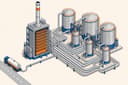 Olefins and Co-ProductsCracker output — ethylene, propylene, butadiene, benzene — most of it consumed by LYB's own plastics plants. What it sells to outsiders was 13.9% of FY2025 revenue and grew about 29% in the first half of 2026.
Cracker output — ethylene, propylene, butadiene, benzene — most of it consumed by LYB's own plastics plants. What it sells to outsiders was 13.9% of FY2025 revenue and grew about 29% in the first half of 2026.
In plain English
Before there is plastic, there is ethylene and propylene: the small molecules everything downstream is built from. Furnaces called crackers heat ethane, propane or naphtha until the molecules snap apart, and out come ethylene, propylene, butadiene and benzene.
Most of that output never leaves the company — it goes straight across the fence into LYB's own polyethylene and polypropylene plants, and only the surplus is sold to other manufacturers. So this is less a business than the engine room under the other two, and it is where the American advantage shows up first: when cheap US ethane is the feed and rivals are burning pricier oil-based feedstock, the margin is made here. It grew fastest of any line in the 2026 recovery.
Competes with Ethylene and co-products (Dow) · Ethylene (Chevron Phillips Chemical)
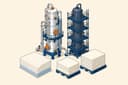 Propylene Oxide and DerivativesThe ingredient behind cushion foam and insulation, made at four plants including the largest of its kind anywhere. One plant's outage cost roughly $250M of quarterly profit in 2026 — reliability is the whole story here.
The ingredient behind cushion foam and insulation, made at four plants including the largest of its kind anywhere. One plant's outage cost roughly $250M of quarterly profit in 2026 — reliability is the whole story here.
In plain English
Propylene oxide is the ingredient behind soft and squishy things — the foam in a sofa cushion or a mattress, the insulation in a fridge wall — plus a family of related liquid chemicals. LYB feeds propylene from its own crackers into four plants to make it, and the Channelview, Texas unit is the largest of its kind anywhere.
The buyers are the foam and polyurethane makers who mix it into finished materials, so demand tracks construction and furniture, the slowest corners of the economy to wake up. The sharper risk sits inside the fence: when the Bayport plant went down in mid-2026 it cost about a quarter of a billion dollars of profit in one quarter. Huge single units mean huge single outages.
Competes with Propylene oxide (Dow) · Propylene oxide via the HPPO route (SABIC)
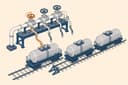 Intermediate chemicalsAcetic acid, vinyl acetate, methanol and styrene sold on to other manufacturers. Sales have shrunk from $2.7B in 2024 to $1.9B in 2025, and swing on whether LYB's own units are running.
Acetic acid, vinyl acetate, methanol and styrene sold on to other manufacturers. Sales have shrunk from $2.7B in 2024 to $1.9B in 2025, and swing on whether LYB's own units are running.
In plain English
A handful of workaday chemicals — acetic acid and vinyl acetate, methanol, styrene — that no shopper has ever heard of. They leave by the tanker load and are bought by other plants as raw material for their own products.
What makes this line odd is that its sales track LYB's own machinery more than the market. Revenue jumped roughly three-quarters between the first and second quarters of 2026, from $348M to $619M, for a single reason: the Bayport plant came back from an outage and the chemicals started flowing again. Over the longer run the line has been shrinking, from $2.7B of sales in 2024 to $1.9B in 2025.
Competes with Acetic acid and VAM (Celanese) · Methanol (Methanex) · Styrene (INEOS Styrolution)
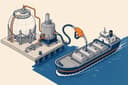 Oxyfuels and Related ProductsOctane ingredients blended into gasoline, made from butane and methanol rather than crude. 16.0% of FY2025 revenue, and exceptionally profitable in mid-2026 on near-record gasoline margins. Watch what happens when those margins normalise.
Octane ingredients blended into gasoline, made from butane and methanol rather than crude. 16.0% of FY2025 revenue, and exceptionally profitable in mid-2026 on near-record gasoline margins. Watch what happens when those margins normalise.
In plain English
Gasoline has to burn smoothly, and blenders hit that quality mark by mixing in high-octane ingredients. LYB makes two of them, MTBE and ETBE, out of butane and methanol instead of out of crude oil — and that is the whole trick, because its input cost does not rise and fall with the barrel its product is priced against.
About three-quarters is made in the United States and shipped to fuel blenders abroad, where rules on gasoline quality keep the demand steady. Earnings swing hard with the fuel market: each dollar on a barrel of crude is worth roughly twenty million dollars a year to this line. Through mid-2026 that swing ran strongly in LYB's favour.
Competes with MTBE made inside oil refineries (Refinery-integrated producers) · Ethanol as a blending octane source (Fuel ethanol producers)
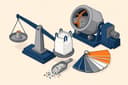 Advanced Polymer SolutionsCustom plastic blends, masterbatches and colours, sold mainly to the car industry. 11.5% of FY2025 revenue on the thinnest margin here: about $1.0B of quarterly sales produced roughly $78M of profit in spring 2026.
Custom plastic blends, masterbatches and colours, sold mainly to the car industry. 11.5% of FY2025 revenue on the thinnest margin here: about $1.0B of quarterly sales produced roughly $78M of profit in spring 2026.
In plain English
Raw resin rarely goes straight into a car part. First it gets a recipe — stiffeners, impact modifiers, pigment for exact colour — melted together into a custom blend and pelletised again. That mixing-and-colouring work is Advanced Polymer Solutions, and it feeds mostly the suppliers who mould parts for carmakers.
The resin it starts with usually comes from LYB's own plants, so the company is partly selling to itself. The catch is how little the recipe adds on top: roughly a billion dollars of sales in one 2026 quarter produced only about $78M of profit before financing, tax and equipment wear, and the final quarter of 2025 managed $38M. Blends that earn too little are being pruned away.
Competes with Engineered Materials (Celanese) · Specialty compounds and masterbatches (Avient)
 TechnologyRenting out plant designs and selling the catalysts that go with them. Small and lumpy — quarterly profit has bounced between roughly $15M and $80M — and management now calls new licensing almost nonexistent.
Renting out plant designs and selling the catalysts that go with them. Small and lumpy — quarterly profit has bounced between roughly $15M and $80M — and management now calls new licensing almost nonexistent.
In plain English
Having built plastics plants for decades, LYB rents out the instructions. A company planning a new plant licenses one of its processes — Spheripol and Spherizone for polypropylene, Hostalen ACP for the tougher grades of polyethylene — and then keeps buying the matching catalysts, the powders that make the reaction happen at all.
The fees arrive in lumps as construction milestones are met, so quarterly profit has bounced between roughly $15M and $80M. The problem is what comes next. New plants were overwhelmingly being built in China and Southeast Asia, and in mid-2026 management described licensing as almost nonexistent, with global plastics capacity growth slowing towards the end of the decade.
Competes with UNIPOL PE licensing (Univation Technologies) · Borstar process licensing (Borealis)
Named in filings, launches and programs
- Hyperzone HDPE plant, La PorteProduct · RampingTexas plant making the denser grades of polyethylene, carrying a $170M-a-year improvement target as reliability work continues.
- Channelview PO/TBA unitProductThe largest unit of its kind anywhere: 470,000 tonnes a year of propylene oxide plus about a million tonnes of the octane feedstock behind the oxyfuels line.
- Bayport PO/TBA, HoustonProductIts mid-2026 outage cost roughly $250M of quarterly profit and dragged the whole chemicals segment's running rate down; back at full rates from June 2026.
- PurellBrandHigh-purity polyethylene and polypropylene grades made for healthcare and food-contact uses.
- Catalloy and Polybutene-1Product lineRubbery reactor-made polypropylene grades and polybutene-1 — the small, higher-value tail of the polypropylene range.
- NATPETBrand35%-owned Saudi propylene and polypropylene venture at Yanbu, bought for about $500M in 2024; runs on LYB's own process and adds Middle East volume.
- SpheripolPlatformThe licensed polypropylene process behind more than 35 million tonnes of plant capacity worldwide; recent awards clustered in China and Vietnam.
- Mondelez / Marabou packagingCustomer programFrom July 2026, Marabou chocolate wrappers use film with 75% recycled content built on LYB's chemically recycled polymers; Taghleef makes the film, Amcor converts it.
- Value Enhancement ProgramPlatformThe standing cost-and-margin improvement drive: $1.1B of recurring yearly profit improvement delivered by 2025, with a $1.5B target for 2028.
- Flex-2 and MoReTec-2Product · AnnouncedA project to let crackers switch feedstock more freely and a second US recycling unit — both pushed back until conditions improve.
Hyperzone HDPE plant, La PorteProduct · Ramping
Texas plant making the denser grades of polyethylene, carrying a $170M-a-year improvement target as reliability work continues.
Channelview PO/TBA unitProduct
The largest unit of its kind anywhere: 470,000 tonnes a year of propylene oxide plus about a million tonnes of the octane feedstock behind the oxyfuels line.
Bayport PO/TBA, HoustonProduct
Its mid-2026 outage cost roughly $250M of quarterly profit and dragged the whole chemicals segment's running rate down; back at full rates from June 2026.
PurellBrand
High-purity polyethylene and polypropylene grades made for healthcare and food-contact uses.
Catalloy and Polybutene-1Product line
Rubbery reactor-made polypropylene grades and polybutene-1 — the small, higher-value tail of the polypropylene range.
NATPETBrand
35%-owned Saudi propylene and polypropylene venture at Yanbu, bought for about $500M in 2024; runs on LYB's own process and adds Middle East volume.
SpheripolPlatform
The licensed polypropylene process behind more than 35 million tonnes of plant capacity worldwide; recent awards clustered in China and Vietnam.
Mondelez / Marabou packagingCustomer program
From July 2026, Marabou chocolate wrappers use film with 75% recycled content built on LYB's chemically recycled polymers; Taghleef makes the film, Amcor converts it.
Value Enhancement ProgramPlatform
The standing cost-and-margin improvement drive: $1.1B of recurring yearly profit improvement delivered by 2025, with a $1.5B target for 2028.
Flex-2 and MoReTec-2Product · Announced
A project to let crackers switch feedstock more freely and a second US recycling unit — both pushed back until conditions improve.