
Medtronic (MDT)
Builds medical devices for cardiac, neurological, surgical, and patient-monitoring care.
Something off on this page? Send us feedback.
Medtronic is a sprawling maker of implants, surgical tools, hospital equipment, monitors, and the supplies that must be replaced as patients are treated. Heart devices are gaining weight, led by fast-growing tools that correct irregular heartbeats, while the diabetes business is moving toward separation. Much of the model still depends on procedures turning installed equipment into repeat purchases.
Item facts: FY2026 · year ended Apr 24, 2026, from filings, earnings calls and company pages.
Judgment weights, not filed revenue
The band summarizes business focus and direction. ~ marks estimates.
9 in detail · 7 more below

Cardiac Rhythm Management
Pacemakers, implanted shock devices, and monitors form the steady core of the heart business. Growth reached about 15% in FY2027's first quarter, but reliable replacements and uninterrupted access to carefully approved parts matter more than one quarter's jump.
Competes with Aveir pacemakers and Gallant implanted shock devices (Abbott) · ACCOLADE and RESONATE pacemakers, EMBLEM implanted shock device, and LATITUDE remote monitoring (Boston Scientific)
In plain English
This is the equipment that watches a heartbeat and steps in when it becomes too slow or dangerous. Medtronic sells pacemakers, implanted devices that can deliver a corrective shock, tiny heart monitors, connecting wires, and systems that let clinics check patients from afar.
Hospitals and heart-rhythm specialists buy the implants for new patients and replacements for people already treated. Each device must keep working for years, so proven reliability, clinician training, insurance coverage, and a steady supply of batteries and other carefully approved parts keep this business moving.
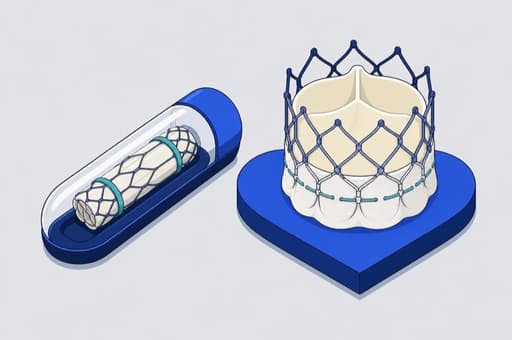
Structural Heart & Aortic
Replacement heart valves, artery-supporting tubes, and their delivery tools produced $3.82 billion in FY2026. Growth depends on strong patient results, broader permission to use the devices, insurance coverage, and enough trained hospital teams.
Competes with SAPIEN 3 Ultra RESILIA valve (Edwards Lifesciences) · Navitor catheter-delivered heart valve (Abbott)
In plain English
A damaged heart valve is a worn door that no longer controls the flow. Medtronic makes replacement valves that doctors can guide through a blood vessel, along with valves for open surgery and fabric-like tubes that reinforce a weakened main artery.
Hospital heart teams choose the implant after examining a patient, then buy the matching delivery equipment for the procedure. More patients can be treated as evidence improves and permission expands, but hospitals also need trained cardiologists, surgeons, and imaging staff—and someone must agree to pay for the procedure.
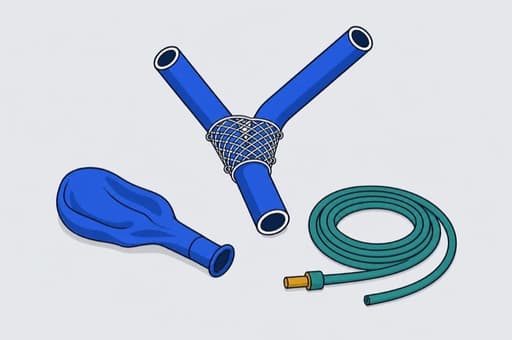
Coronary & Peripheral Vascular
Stents, balloons, thin tubes, and other tools for blocked or narrowed blood vessels produced $2.66 billion in FY2026. Mature heart-vessel products pay the bills while newer kidney-nerve treatment must win acceptance.
Competes with XIENCE, Esprit, and Supera vascular implants (Abbott) · SYNERGY, AGENT, Eluvia, and Ranger vascular devices (Boston Scientific) · Paradise kidney-nerve treatment system (Recor Medical)
In plain English
Picture a clogged pipe reached from the inside. A doctor threads in a catheter—a thin, flexible tube—then opens the narrowed blood vessel with a tiny balloon or leaves behind a mesh support called a stent. Medtronic sells these tools for vessels around the heart and elsewhere in the body.
Each diagnosed case can create a procedure and a device sale. The line also includes Symplicity, which uses energy delivered through a catheter to quiet nerves near the kidneys and lower blood pressure. That newer treatment needs convincing results, insurance coverage, and wider doctor adoption.
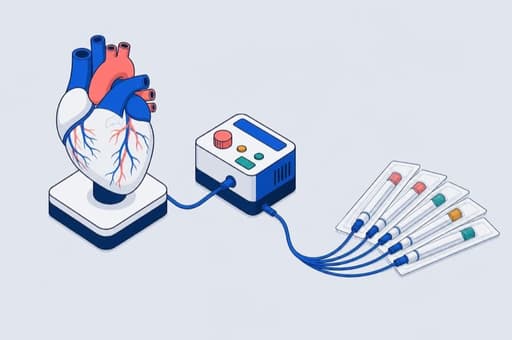
Cardiac Ablation Solutions
Systems map faulty heart signals, then thin treatment tubes disable the tiny areas causing them. FY2027 first-quarter growth reached 88%—an extraordinary rate from a much smaller base—so continued procedure use and reliable component supply are the watchpoints.
Competes with FARAPULSE and OPAL heart-rhythm treatment and mapping systems (Boston Scientific) · Volt and EnSite heart-rhythm treatment and mapping systems (Abbott)
In plain English
An irregular heartbeat can start with a tiny patch of heart tissue sending the wrong signal. Medtronic's equipment maps those signals, then a catheter—a thin tube guided through a blood vessel—uses energy to disable the trouble spot. Its newer systems use short electrical pulses as well as older freezing methods.
A hospital first adopts the mapping and control equipment; every procedure then needs another catheter. That makes the setup resemble a coffee machine whose pods drive repeat sales. Growth depends on doctors choosing the system, hospitals using it often, and Medtronic keeping specialized components available.
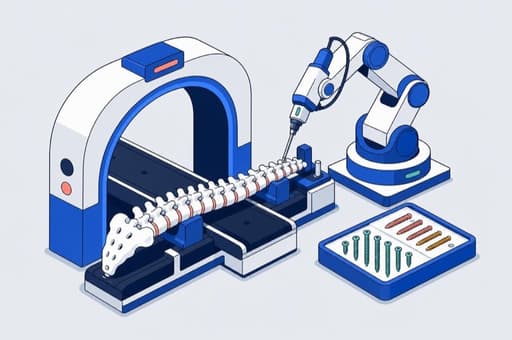
Cranial & Spinal Technologies
Spine implants sit beside imaging, navigation, planning, and robotic equipment that helps surgeons place them. The line grew 12.9% in FY2027's first quarter; the test is whether installed systems keep producing more procedures and implant sales.
Competes with ExcelsiusGPS and Excelsius3D spine systems (Globus Medical) · Q Guidance System (Stryker)
In plain English
Surgeons working around the spine and skull need both a clear view and parts that fit. Medtronic sells screws, rods, bone-growing materials, drills, scanners, navigation equipment, planning software, and robotic guidance that helps place an implant where it belongs.
Hospitals make the larger purchase when they install imaging or guidance equipment. Once a surgical team builds its routine around that setup, each operation can pull through Medtronic implants and tools—much like a workshop that keeps buying fittings sized for its machinery. The model works only when installations turn into regular procedures.
Specialty Therapies
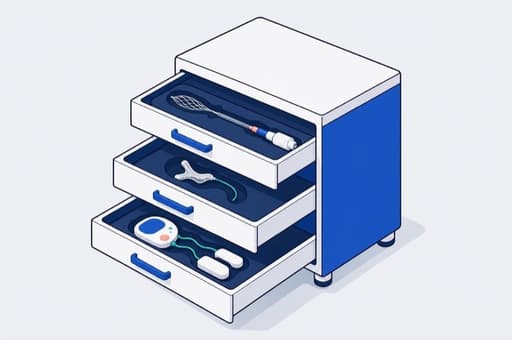
This mixed line supplies stroke treatment, ear-and-nose procedures, and bladder and bowel control. It grew 7.4% in FY2027's first quarter, with faster pelvic-health sales offsetting slower stroke products; referrals and procedure paths vary by specialty.
Competes with RED, JET, and ACE clot-removal tubes (Penumbra) · Axonics bladder-and-bowel stimulation system (Boston Scientific)
In plain English
Three specialist businesses share this shelf. One gives stroke teams thin tubes and retrieval tools to remove clots from brain vessels. Another supplies instruments and small implants for ear, nose, and sinus care. The third uses implanted stimulation to help control bladder and bowel problems.
The common engine is a specialist procedure: a referral brings the patient, and the hospital or clinic buys an implant or a sterile tool used once. Because an emergency stroke pathway, a scheduled sinus visit, and pelvic care work differently, no single demand cycle tells the whole story.
Neuromodulation
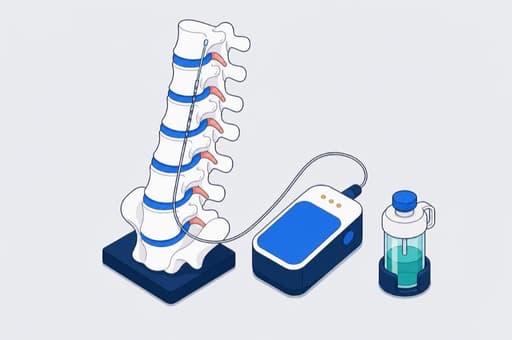
Implanted stimulators, medicine pumps, and pain-treatment tools serve chronic pain and movement disorders. Growth was 3.3% in FY2027's first quarter as spinal stimulation and replacements lagged, even while selected less-invasive pain procedures grew quickly.
Competes with Proclaim and Eterna spinal-cord stimulators; Infinity and Liberta deep-brain stimulators (Abbott) · WaveWriter spinal-cord stimulators, Vercise deep-brain stimulators, and Intracept vertebral-nerve treatment (Boston Scientific)
In plain English
Instead of giving only another pill, these products act on the body's wiring. Medtronic sells implanted stimulators that send controlled electrical signals near the spinal cord or deep in the brain, pumps that deliver medicine, and tools for procedures that reduce certain sources of pain.
Pain and movement-disorder specialists choose patients and hospitals buy the implant or procedure tool. Money also returns when implanted equipment is replaced or adjusted. The harder part is proving that relief lasts: insurance coverage, physician training, and patients coming back for replacements all depend on durable results.
Surgical & Endoscopy
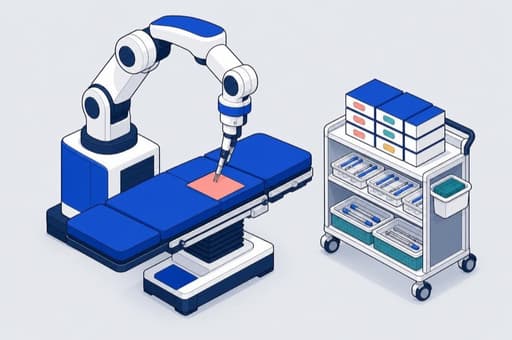
Medtronic's largest operating line combines staplers, tissue-cutting and sealing tools, hernia repair, digestive-system viewing, and surgery robots. It grew 9.0% in FY2027's first quarter; placements matter only when trained teams use them and reorder procedure supplies.
Competes with ETHICON 4000 and ECHELON surgical staplers (Johnson & Johnson) · da Vinci surgical systems and instruments (Intuitive Surgical)
In plain English
The unglamorous machinery of an operating room: Medtronic supplies staplers, tools that cut and seal tissue, hernia-repair materials, cameras and instruments for looking inside the digestive system, and the Hugo surgery robot. Hospitals and surgery centers buy both durable equipment and items used during each operation.
A robot placement is only the opening move. Surgeons must be trained, schedules must fill, and every completed procedure must pull through fresh instruments or stapler reloads. That repeat use is the economic engine, while hospital spending limits, insurance coverage, and permission to sell in each market control how quickly it turns.
MiniMed
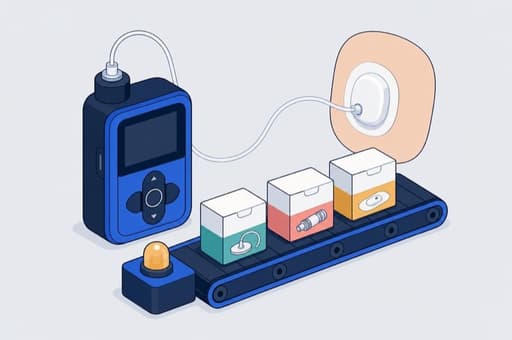
MiniMed pairs insulin pumps with body-worn glucose sensors and recurring supplies. FY2027 first-quarter growth was 14.9%, but the bigger change is ownership: it is publicly listed yet still controlled by Medtronic while moving toward full separation.
Competes with Omnipod 5 automated insulin-delivery system (Insulet) · t:slim X2 and Mobi with Control-IQ (Tandem Diabetes Care)
In plain English
For someone with diabetes, the job never stops: measure blood sugar, decide how much insulin is needed, and deliver it safely. MiniMed connects a body-worn sensor to a pump so much of that loop can happen automatically, then keeps the system running with skin-mounted delivery sets and reservoirs that need regular replacement.
Patients and clinics adopt the equipment, while pharmacies, distributors, insurers, and other payers determine whether it is affordable and available. Device sales start the relationship; sensors and pump supplies make it recurring. Medtronic still controls MiniMed after selling a small public stake, but intends to separate the business.


 Cardiac Rhythm ManagementPacemakers, implanted shock devices, and monitors form the steady core of the heart business. Growth reached about 15% in FY2027's first quarter, but reliable replacements and uninterrupted access to carefully approved parts matter more than one quarter's jump.
Pacemakers, implanted shock devices, and monitors form the steady core of the heart business. Growth reached about 15% in FY2027's first quarter, but reliable replacements and uninterrupted access to carefully approved parts matter more than one quarter's jump.
In plain English
This is the equipment that watches a heartbeat and steps in when it becomes too slow or dangerous. Medtronic sells pacemakers, implanted devices that can deliver a corrective shock, tiny heart monitors, connecting wires, and systems that let clinics check patients from afar.
Hospitals and heart-rhythm specialists buy the implants for new patients and replacements for people already treated. Each device must keep working for years, so proven reliability, clinician training, insurance coverage, and a steady supply of batteries and other carefully approved parts keep this business moving.
Competes with Aveir pacemakers and Gallant implanted shock devices (Abbott) · ACCOLADE and RESONATE pacemakers, EMBLEM implanted shock device, and LATITUDE remote monitoring (Boston Scientific)
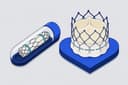 Structural Heart & AorticReplacement heart valves, artery-supporting tubes, and their delivery tools produced $3.82 billion in FY2026. Growth depends on strong patient results, broader permission to use the devices, insurance coverage, and enough trained hospital teams.
Replacement heart valves, artery-supporting tubes, and their delivery tools produced $3.82 billion in FY2026. Growth depends on strong patient results, broader permission to use the devices, insurance coverage, and enough trained hospital teams.
In plain English
A damaged heart valve is a worn door that no longer controls the flow. Medtronic makes replacement valves that doctors can guide through a blood vessel, along with valves for open surgery and fabric-like tubes that reinforce a weakened main artery.
Hospital heart teams choose the implant after examining a patient, then buy the matching delivery equipment for the procedure. More patients can be treated as evidence improves and permission expands, but hospitals also need trained cardiologists, surgeons, and imaging staff—and someone must agree to pay for the procedure.
Competes with SAPIEN 3 Ultra RESILIA valve (Edwards Lifesciences) · Navitor catheter-delivered heart valve (Abbott)
 Coronary & Peripheral VascularStents, balloons, thin tubes, and other tools for blocked or narrowed blood vessels produced $2.66 billion in FY2026. Mature heart-vessel products pay the bills while newer kidney-nerve treatment must win acceptance.
Stents, balloons, thin tubes, and other tools for blocked or narrowed blood vessels produced $2.66 billion in FY2026. Mature heart-vessel products pay the bills while newer kidney-nerve treatment must win acceptance.
In plain English
Picture a clogged pipe reached from the inside. A doctor threads in a catheter—a thin, flexible tube—then opens the narrowed blood vessel with a tiny balloon or leaves behind a mesh support called a stent. Medtronic sells these tools for vessels around the heart and elsewhere in the body.
Each diagnosed case can create a procedure and a device sale. The line also includes Symplicity, which uses energy delivered through a catheter to quiet nerves near the kidneys and lower blood pressure. That newer treatment needs convincing results, insurance coverage, and wider doctor adoption.
Competes with XIENCE, Esprit, and Supera vascular implants (Abbott) · SYNERGY, AGENT, Eluvia, and Ranger vascular devices (Boston Scientific) · Paradise kidney-nerve treatment system (Recor Medical)
 Cardiac Ablation SolutionsSystems map faulty heart signals, then thin treatment tubes disable the tiny areas causing them. FY2027 first-quarter growth reached 88%—an extraordinary rate from a much smaller base—so continued procedure use and reliable component supply are the watchpoints.
Systems map faulty heart signals, then thin treatment tubes disable the tiny areas causing them. FY2027 first-quarter growth reached 88%—an extraordinary rate from a much smaller base—so continued procedure use and reliable component supply are the watchpoints.
In plain English
An irregular heartbeat can start with a tiny patch of heart tissue sending the wrong signal. Medtronic's equipment maps those signals, then a catheter—a thin tube guided through a blood vessel—uses energy to disable the trouble spot. Its newer systems use short electrical pulses as well as older freezing methods.
A hospital first adopts the mapping and control equipment; every procedure then needs another catheter. That makes the setup resemble a coffee machine whose pods drive repeat sales. Growth depends on doctors choosing the system, hospitals using it often, and Medtronic keeping specialized components available.
Competes with FARAPULSE and OPAL heart-rhythm treatment and mapping systems (Boston Scientific) · Volt and EnSite heart-rhythm treatment and mapping systems (Abbott)
 Cranial & Spinal TechnologiesSpine implants sit beside imaging, navigation, planning, and robotic equipment that helps surgeons place them. The line grew 12.9% in FY2027's first quarter; the test is whether installed systems keep producing more procedures and implant sales.
Spine implants sit beside imaging, navigation, planning, and robotic equipment that helps surgeons place them. The line grew 12.9% in FY2027's first quarter; the test is whether installed systems keep producing more procedures and implant sales.
In plain English
Surgeons working around the spine and skull need both a clear view and parts that fit. Medtronic sells screws, rods, bone-growing materials, drills, scanners, navigation equipment, planning software, and robotic guidance that helps place an implant where it belongs.
Hospitals make the larger purchase when they install imaging or guidance equipment. Once a surgical team builds its routine around that setup, each operation can pull through Medtronic implants and tools—much like a workshop that keeps buying fittings sized for its machinery. The model works only when installations turn into regular procedures.
Competes with ExcelsiusGPS and Excelsius3D spine systems (Globus Medical) · Q Guidance System (Stryker)
 Specialty TherapiesThis mixed line supplies stroke treatment, ear-and-nose procedures, and bladder and bowel control. It grew 7.4% in FY2027's first quarter, with faster pelvic-health sales offsetting slower stroke products; referrals and procedure paths vary by specialty.
This mixed line supplies stroke treatment, ear-and-nose procedures, and bladder and bowel control. It grew 7.4% in FY2027's first quarter, with faster pelvic-health sales offsetting slower stroke products; referrals and procedure paths vary by specialty.
In plain English
Three specialist businesses share this shelf. One gives stroke teams thin tubes and retrieval tools to remove clots from brain vessels. Another supplies instruments and small implants for ear, nose, and sinus care. The third uses implanted stimulation to help control bladder and bowel problems.
The common engine is a specialist procedure: a referral brings the patient, and the hospital or clinic buys an implant or a sterile tool used once. Because an emergency stroke pathway, a scheduled sinus visit, and pelvic care work differently, no single demand cycle tells the whole story.
Competes with RED, JET, and ACE clot-removal tubes (Penumbra) · Axonics bladder-and-bowel stimulation system (Boston Scientific)
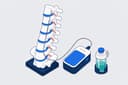 NeuromodulationImplanted stimulators, medicine pumps, and pain-treatment tools serve chronic pain and movement disorders. Growth was 3.3% in FY2027's first quarter as spinal stimulation and replacements lagged, even while selected less-invasive pain procedures grew quickly.
Implanted stimulators, medicine pumps, and pain-treatment tools serve chronic pain and movement disorders. Growth was 3.3% in FY2027's first quarter as spinal stimulation and replacements lagged, even while selected less-invasive pain procedures grew quickly.
In plain English
Instead of giving only another pill, these products act on the body's wiring. Medtronic sells implanted stimulators that send controlled electrical signals near the spinal cord or deep in the brain, pumps that deliver medicine, and tools for procedures that reduce certain sources of pain.
Pain and movement-disorder specialists choose patients and hospitals buy the implant or procedure tool. Money also returns when implanted equipment is replaced or adjusted. The harder part is proving that relief lasts: insurance coverage, physician training, and patients coming back for replacements all depend on durable results.
Competes with Proclaim and Eterna spinal-cord stimulators; Infinity and Liberta deep-brain stimulators (Abbott) · WaveWriter spinal-cord stimulators, Vercise deep-brain stimulators, and Intracept vertebral-nerve treatment (Boston Scientific)
 Surgical & EndoscopyMedtronic's largest operating line combines staplers, tissue-cutting and sealing tools, hernia repair, digestive-system viewing, and surgery robots. It grew 9.0% in FY2027's first quarter; placements matter only when trained teams use them and reorder procedure supplies.
Medtronic's largest operating line combines staplers, tissue-cutting and sealing tools, hernia repair, digestive-system viewing, and surgery robots. It grew 9.0% in FY2027's first quarter; placements matter only when trained teams use them and reorder procedure supplies.
In plain English
The unglamorous machinery of an operating room: Medtronic supplies staplers, tools that cut and seal tissue, hernia-repair materials, cameras and instruments for looking inside the digestive system, and the Hugo surgery robot. Hospitals and surgery centers buy both durable equipment and items used during each operation.
A robot placement is only the opening move. Surgeons must be trained, schedules must fill, and every completed procedure must pull through fresh instruments or stapler reloads. That repeat use is the economic engine, while hospital spending limits, insurance coverage, and permission to sell in each market control how quickly it turns.
Competes with ETHICON 4000 and ECHELON surgical staplers (Johnson & Johnson) · da Vinci surgical systems and instruments (Intuitive Surgical)
 MiniMedMiniMed pairs insulin pumps with body-worn glucose sensors and recurring supplies. FY2027 first-quarter growth was 14.9%, but the bigger change is ownership: it is publicly listed yet still controlled by Medtronic while moving toward full separation.
MiniMed pairs insulin pumps with body-worn glucose sensors and recurring supplies. FY2027 first-quarter growth was 14.9%, but the bigger change is ownership: it is publicly listed yet still controlled by Medtronic while moving toward full separation.
In plain English
For someone with diabetes, the job never stops: measure blood sugar, decide how much insulin is needed, and deliver it safely. MiniMed connects a body-worn sensor to a pump so much of that loop can happen automatically, then keeps the system running with skin-mounted delivery sets and reservoirs that need regular replacement.
Patients and clinics adopt the equipment, while pharmacies, distributors, insurers, and other payers determine whether it is affordable and available. Device sales start the relationship; sensors and pump supplies make it recurring. Medtronic still controls MiniMed after selling a small public stake, but intends to separate the business.
Competes with Omnipod 5 automated insulin-delivery system (Insulet) · t:slim X2 and Mobi with Control-IQ (Tandem Diabetes Care)
Named in filings, launches and programs
- Acute Care & MonitoringProduct line$2.05 billion of monitors, breathing tubes, airway tools, and recurring hospital supplies in FY2026.
- Cornerstone Robotics / SentireEcosystem · Announced$700 million investment plus selected distribution rights outside the United States; minimal financial contribution is expected in FY2027, starting in FY2028.
- CathWorks / FFRangioBrandSoftware that helps doctors judge narrowed heart vessels, fully owned after a $525 million purchase in April 2026.
- Scientia VascularBrandMaker of thin tubes for brain blood vessels, acquired in June 2026 for about $550 million upfront, with up to $375 million more possible.
- SPR Therapeutics / SPRINT PNSBrandTemporary peripheral-nerve stimulation for pain, acquired in July 2026 to extend Medtronic's less-invasive pain treatments.
- Pi-Cardia / ShortCutEcosystem · AnnouncedAn investment in a tool allowed for sale in the United States that modifies heart-valve flaps before complex replacement procedures; terms were not disclosed.
- Mozarc MedicalBrandKidney-care venture owned equally with DaVita; it is not presented as a separate Medtronic revenue line.
Acute Care & MonitoringProduct line
$2.05 billion of monitors, breathing tubes, airway tools, and recurring hospital supplies in FY2026.
Cornerstone Robotics / SentireEcosystem · Announced
$700 million investment plus selected distribution rights outside the United States; minimal financial contribution is expected in FY2027, starting in FY2028.
CathWorks / FFRangioBrand
Software that helps doctors judge narrowed heart vessels, fully owned after a $525 million purchase in April 2026.
Scientia VascularBrand
Maker of thin tubes for brain blood vessels, acquired in June 2026 for about $550 million upfront, with up to $375 million more possible.
SPR Therapeutics / SPRINT PNSBrand
Temporary peripheral-nerve stimulation for pain, acquired in July 2026 to extend Medtronic's less-invasive pain treatments.
Pi-Cardia / ShortCutEcosystem · Announced
An investment in a tool allowed for sale in the United States that modifies heart-valve flaps before complex replacement procedures; terms were not disclosed.
Mozarc MedicalBrand
Kidney-care venture owned equally with DaVita; it is not presented as a separate Medtronic revenue line.