
Martin Marietta (MLM)
Supplies aggregates, asphalt, concrete and specialty minerals for construction and industrial markets.
Something off on this page? Send us feedback.
Martin Marietta mines rock. Crushed stone is cheap and heavy, so hauling it far eats the profit — each quarry sells into the towns within a short drive, against whoever else holds a permit nearby. Over the past few years the company has sold most of its cement and concrete plants and bought more quarries, and it has just added a large lime business alongside the rock.
Item facts: FY2025 · year ended Dec 31, 2025, from filings, earnings calls and company pages.
Judgment weights, not filed revenue
The band summarizes business focus and direction. ~ marks estimates.
7 in detail · 7 more below
Aggregates
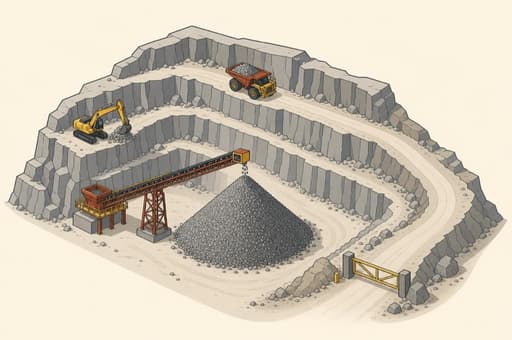
Crushed stone, sand and gravel from roughly 400 quarries, mines and yards — $5.0B last year on prices up 6.9%, with about a third of that left after the cost of digging it out. Shipments still sit below 2022, so price is doing the work.
Competes with Aggregates segment (Vulcan Materials) · Americas Materials aggregates (CRH) · Aggregates (Heidelberg Materials)
In plain English
Rock, sold by the ton. Break up a hillside of stone, crush it to sizes, sort it into piles: that is the whole product. It ends up under roads, inside concrete, behind retaining walls.
The catch is weight. Stone is cheap to buy and expensive to move, so a load stops being worth hauling after a few dozen miles, and customers simply buy from the nearest pit that holds a permit. Permits are slow and hard to get, which is why owning about four hundred holes in the ground — with decades of rock still in them — lets the company lean on raising prices rather than digging more. Roughly a third of last year's tons went into highways and other public work.
Quikrete Asset-Exchange Quarries
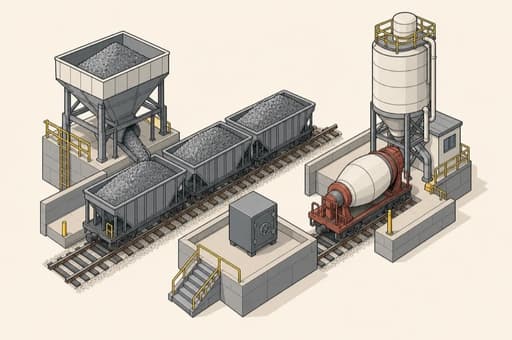
Quarries in Virginia, Missouri, Kansas and Vancouver, traded in February 2026 for the cement plant and the North Texas concrete business plus $450M of cash. The acquired rock sells below Martin Marietta's own prices; closing that gap is the 2027 story.
Competes with Aggregates (Summit Materials) · Aggregates (Vulcan Materials) · Aggregates (CRH)
In plain English
A swap between two neighbours, each handing over the shop that suited the other better. Quikrete took the cement plant, its terminals and the North Texas concrete operations; Martin Marietta took quarries in Virginia, Missouri, Kansas and Vancouver, and $450 million in cash on top.
Those pits arrived with customers already buying — about twenty million tons of stone a year, the largest aggregates deal the company has done. They also arrived charging less per ton than Martin Marietta charges at its own quarries, which is why the reported average price per ton dipped after the deal closed. Management expects that drag to grow before it fades, then to lift those prices the way it says it has after earlier deals.
Lhoist North America
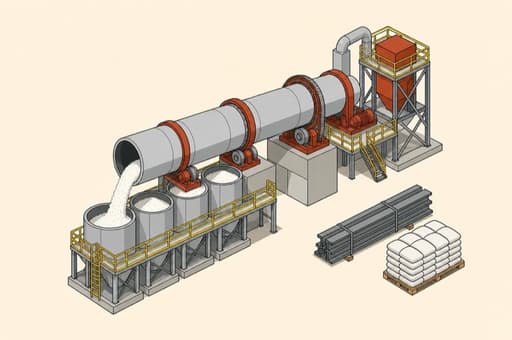
Lime, bought for $13.5B and closed in August 2026: $1.8B of yearly sales at roughly a 44% margin on cash earnings, fatter than crushed stone. It also lifts borrowings to about 3.7 times yearly earnings, with a promise to get back under 2.5 within two years.
Competes with Lime operations (Graymont) · Lime operations (Carmeuse) · Quicklime and hydrated lime (Mississippi Lime)
In plain English
Lime is limestone roasted in a kiln until its chemistry changes — a white powder whose biggest American buyers are steel mills, with construction, environmental and farming customers behind them. Lhoist brought twenty quarries and plants, plus forty-five depots to ship from.
Martin Marietta already owned the limestone; Lhoist owned the kilns and the customer list. Paying $13.5 billion — about half borrowed cash, half in its own shares — turns roughly two hundred of the company's existing limestone quarries into feedstock for a product that earns a much better margin than gravel and sells into steel mills and farms rather than housing tracts.
Magnesia Specialties
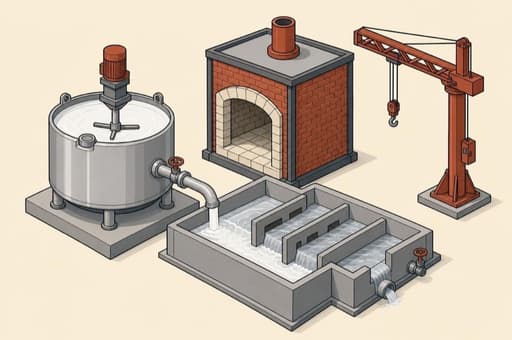
Two heritage plants in Michigan and Ohio making magnesium chemicals and very pure dolomitic lime, for water treatment, flame-resistant plastics and furnace linings. Steadiness is the selling point: in the financial crisis Woodville's volumes fell 7% while US aggregates production dropped 37%.
Competes with Magnesium hydroxide slurry and powder (Ube Materials) · Magnesium oxide and hydroxide grades (Kyowa Chemical) · Dolomitic lime (Graymont)
In plain English
Rock again, but cooked and refined rather than crushed. The plants at Manistee, Michigan and Woodville, Ohio work minerals into magnesium hydroxide — a milky white slurry the company says it makes more of, in the purest grades, than anyone else in North America — plus magnesium oxide and an unusually pure lime.
Who pays? Water-treatment operators at cities and factories, which must clean what they discharge. Plastics makers who blend it in so the product resists burning. Furnace owners who line the inside with it. Those orders come because rules and machinery require them, not because anyone is breaking ground, and that is exactly why management points at this small business when it explains the lime deal.
Premier Magnesia
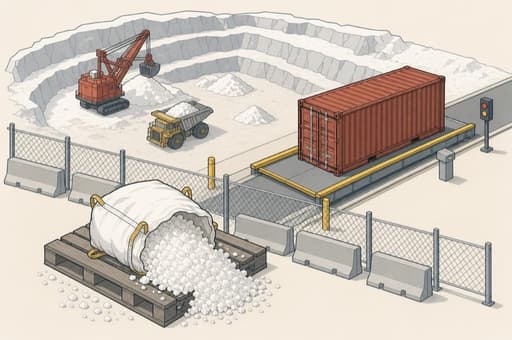
The purchase that turned a magnesia sideline into a specialties business. Helped by higher prices, it took that line from $320M in 2024 to a record $441M in 2025, and FY2026 carries seven months more of it than FY2025 did.
Competes with Imported natural magnesite (Chinese suppliers) · Magnesium oxide and hydroxide grades (Ube Materials) · Specialty magnesia chemistries (Kyowa Chemical)
In plain English
Epsom salt is the familiar part — the white crystals people tip into a bath. Premier digs the mineral behind it out of its own deposit at Gabbs, Nevada and works it up at plants in North Carolina, Indiana and Pennsylvania.
Buyers are farms feeding magnesium to soil, personal-care brands and industrial users. The alternative supply is magnesia shipped in from China, so what American customers will pay is capped by the price of those imports. Premier is the largest domestic producer of the natural mineral and of Epsom salt, which is worth more when import prices and tariffs run high than when they do not.
Asphalt and Paving
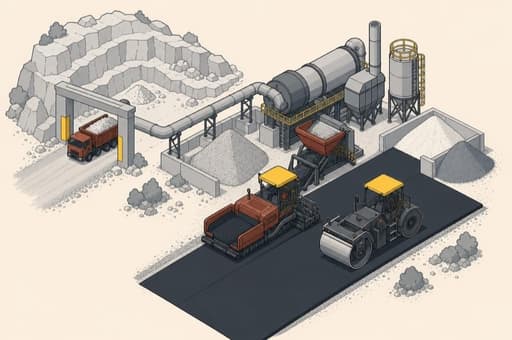
Hot asphalt mix and road crews in Colorado and Minnesota, running about five million tons of mix a year for state and city road departments. Thin money on its own; it earns its place by eating the company's stone.
Competes with Asphalt paving mix and services (Summit Materials) · Aggregates and asphalt contracting (Knife River) · Americas Materials paving (CRH)
In plain English
Hot, black, and laid by the truckload. Asphalt is crushed stone glued together with the thick black liquid that oil refineries sell, spread while it still steams. Martin Marietta runs both the plants that mix it and the crews that lay it, in Colorado and Minnesota.
Most of the bill comes from state and city road departments, which hand work out by competitive bid — so the margin is slim, and the glue, lately over $500 a tonne, can eat it. The quiet payoff sits upstream: every ton of mix swallows stone from the company's own quarries. Roughly half the money from the last federal highway bill was still unspent this spring.
Arizona Ready-Mixed Concrete
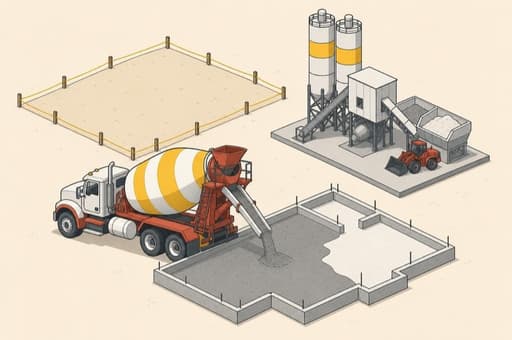
Concrete mixed to order and driven to Phoenix and Tucson sites before it sets — what survives two Texas exits. The most cycle-exposed line in the company, and management calls downstream ready-mix a difficult business these days.
Competes with Ready-mix concrete (Cemex USA) · Ready-mix concrete (Summit Materials) · Ready-mix concrete (Vulcan Materials)
In plain English
Wet concrete has a clock running on it. Once cement, stone, sand and water go into the drum, the truck has to reach the pour and empty out before the load hardens, so the plant has to sit close to the job. That is a delivery radius, not really a market.
Phoenix and Tucson builders pay by the load. When houses stop going up, trucks idle and prices sag — which is what has been happening. And since Martin Marietta sold its cement plants, it now buys the binder from somebody else instead of making the stuff itself.


 AggregatesCrushed stone, sand and gravel from roughly 400 quarries, mines and yards — $5.0B last year on prices up 6.9%, with about a third of that left after the cost of digging it out. Shipments still sit below 2022, so price is doing the work.
Crushed stone, sand and gravel from roughly 400 quarries, mines and yards — $5.0B last year on prices up 6.9%, with about a third of that left after the cost of digging it out. Shipments still sit below 2022, so price is doing the work.
In plain English
Rock, sold by the ton. Break up a hillside of stone, crush it to sizes, sort it into piles: that is the whole product. It ends up under roads, inside concrete, behind retaining walls.
The catch is weight. Stone is cheap to buy and expensive to move, so a load stops being worth hauling after a few dozen miles, and customers simply buy from the nearest pit that holds a permit. Permits are slow and hard to get, which is why owning about four hundred holes in the ground — with decades of rock still in them — lets the company lean on raising prices rather than digging more. Roughly a third of last year's tons went into highways and other public work.
Competes with Aggregates segment (Vulcan Materials) · Americas Materials aggregates (CRH) · Aggregates (Heidelberg Materials)
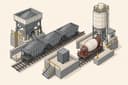 Quikrete Asset-Exchange QuarriesQuarries in Virginia, Missouri, Kansas and Vancouver, traded in February 2026 for the cement plant and the North Texas concrete business plus $450M of cash. The acquired rock sells below Martin Marietta's own prices; closing that gap is the 2027 story.
Quarries in Virginia, Missouri, Kansas and Vancouver, traded in February 2026 for the cement plant and the North Texas concrete business plus $450M of cash. The acquired rock sells below Martin Marietta's own prices; closing that gap is the 2027 story.
In plain English
A swap between two neighbours, each handing over the shop that suited the other better. Quikrete took the cement plant, its terminals and the North Texas concrete operations; Martin Marietta took quarries in Virginia, Missouri, Kansas and Vancouver, and $450 million in cash on top.
Those pits arrived with customers already buying — about twenty million tons of stone a year, the largest aggregates deal the company has done. They also arrived charging less per ton than Martin Marietta charges at its own quarries, which is why the reported average price per ton dipped after the deal closed. Management expects that drag to grow before it fades, then to lift those prices the way it says it has after earlier deals.
Competes with Aggregates (Summit Materials) · Aggregates (Vulcan Materials) · Aggregates (CRH)
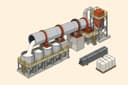 Lhoist North AmericaLime, bought for $13.5B and closed in August 2026: $1.8B of yearly sales at roughly a 44% margin on cash earnings, fatter than crushed stone. It also lifts borrowings to about 3.7 times yearly earnings, with a promise to get back under 2.5 within two years.
Lime, bought for $13.5B and closed in August 2026: $1.8B of yearly sales at roughly a 44% margin on cash earnings, fatter than crushed stone. It also lifts borrowings to about 3.7 times yearly earnings, with a promise to get back under 2.5 within two years.
In plain English
Lime is limestone roasted in a kiln until its chemistry changes — a white powder whose biggest American buyers are steel mills, with construction, environmental and farming customers behind them. Lhoist brought twenty quarries and plants, plus forty-five depots to ship from.
Martin Marietta already owned the limestone; Lhoist owned the kilns and the customer list. Paying $13.5 billion — about half borrowed cash, half in its own shares — turns roughly two hundred of the company's existing limestone quarries into feedstock for a product that earns a much better margin than gravel and sells into steel mills and farms rather than housing tracts.
Competes with Lime operations (Graymont) · Lime operations (Carmeuse) · Quicklime and hydrated lime (Mississippi Lime)
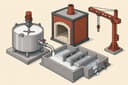 Magnesia SpecialtiesTwo heritage plants in Michigan and Ohio making magnesium chemicals and very pure dolomitic lime, for water treatment, flame-resistant plastics and furnace linings. Steadiness is the selling point: in the financial crisis Woodville's volumes fell 7% while US aggregates production dropped 37%.
Two heritage plants in Michigan and Ohio making magnesium chemicals and very pure dolomitic lime, for water treatment, flame-resistant plastics and furnace linings. Steadiness is the selling point: in the financial crisis Woodville's volumes fell 7% while US aggregates production dropped 37%.
In plain English
Rock again, but cooked and refined rather than crushed. The plants at Manistee, Michigan and Woodville, Ohio work minerals into magnesium hydroxide — a milky white slurry the company says it makes more of, in the purest grades, than anyone else in North America — plus magnesium oxide and an unusually pure lime.
Who pays? Water-treatment operators at cities and factories, which must clean what they discharge. Plastics makers who blend it in so the product resists burning. Furnace owners who line the inside with it. Those orders come because rules and machinery require them, not because anyone is breaking ground, and that is exactly why management points at this small business when it explains the lime deal.
Competes with Magnesium hydroxide slurry and powder (Ube Materials) · Magnesium oxide and hydroxide grades (Kyowa Chemical) · Dolomitic lime (Graymont)
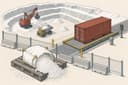 Premier MagnesiaThe purchase that turned a magnesia sideline into a specialties business. Helped by higher prices, it took that line from $320M in 2024 to a record $441M in 2025, and FY2026 carries seven months more of it than FY2025 did.
The purchase that turned a magnesia sideline into a specialties business. Helped by higher prices, it took that line from $320M in 2024 to a record $441M in 2025, and FY2026 carries seven months more of it than FY2025 did.
In plain English
Epsom salt is the familiar part — the white crystals people tip into a bath. Premier digs the mineral behind it out of its own deposit at Gabbs, Nevada and works it up at plants in North Carolina, Indiana and Pennsylvania.
Buyers are farms feeding magnesium to soil, personal-care brands and industrial users. The alternative supply is magnesia shipped in from China, so what American customers will pay is capped by the price of those imports. Premier is the largest domestic producer of the natural mineral and of Epsom salt, which is worth more when import prices and tariffs run high than when they do not.
Competes with Imported natural magnesite (Chinese suppliers) · Magnesium oxide and hydroxide grades (Ube Materials) · Specialty magnesia chemistries (Kyowa Chemical)
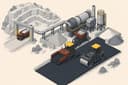 Asphalt and PavingHot asphalt mix and road crews in Colorado and Minnesota, running about five million tons of mix a year for state and city road departments. Thin money on its own; it earns its place by eating the company's stone.
Hot asphalt mix and road crews in Colorado and Minnesota, running about five million tons of mix a year for state and city road departments. Thin money on its own; it earns its place by eating the company's stone.
In plain English
Hot, black, and laid by the truckload. Asphalt is crushed stone glued together with the thick black liquid that oil refineries sell, spread while it still steams. Martin Marietta runs both the plants that mix it and the crews that lay it, in Colorado and Minnesota.
Most of the bill comes from state and city road departments, which hand work out by competitive bid — so the margin is slim, and the glue, lately over $500 a tonne, can eat it. The quiet payoff sits upstream: every ton of mix swallows stone from the company's own quarries. Roughly half the money from the last federal highway bill was still unspent this spring.
Competes with Asphalt paving mix and services (Summit Materials) · Aggregates and asphalt contracting (Knife River) · Americas Materials paving (CRH)
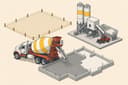 Arizona Ready-Mixed ConcreteConcrete mixed to order and driven to Phoenix and Tucson sites before it sets — what survives two Texas exits. The most cycle-exposed line in the company, and management calls downstream ready-mix a difficult business these days.
Concrete mixed to order and driven to Phoenix and Tucson sites before it sets — what survives two Texas exits. The most cycle-exposed line in the company, and management calls downstream ready-mix a difficult business these days.
In plain English
Wet concrete has a clock running on it. Once cement, stone, sand and water go into the drum, the truck has to reach the pour and empty out before the load hardens, so the plant has to sit close to the job. That is a delivery radius, not really a market.
Phoenix and Tucson builders pay by the load. When houses stop going up, trucks idle and prices sag — which is what has been happening. And since Martin Marietta sold its cement plants, it now buys the binder from somebody else instead of making the stuff itself.
Competes with Ready-mix concrete (Cemex USA) · Ready-mix concrete (Summit Materials) · Ready-mix concrete (Vulcan Materials)
Named in filings, launches and programs
- New Frontier MaterialsBrandMissouri quarries along the I-70 corridor, over eight million tons a year, bought in May 2026 and folded into the Central Division.
- Blue Water IndustriesBrandA Southeast quarry business bought in 2024 — one of the run of small aggregates deals the company keeps stringing together.
- Aggregates distribution networkEcosystemEighty-nine yards plus rail and barge terminals — how stone reaches buyers further away than a truck can profitably carry it.
- FloMagBrandThe brand on the magnesium hydroxide slurry and powder made at the Michigan and Ohio plants.
- SOAR 2030ProductThe five-year plan launched in February 2026. Its predecessor finished with about $16B of portfolio deals and $3.2B put into plants.
- $350M efficiency programProduct · AnnouncedA cost and cash push piloted in Denver, worth about $350M a year before tax once fully running, aimed at exiting 2027.
- Canada and Bahamas operationsSegmentThe non-US corner — Bahamian and Canadian quarries, now including the Vancouver ones from the Quikrete swap; foreign revenue was $49M in 2024.
New Frontier MaterialsBrand
Missouri quarries along the I-70 corridor, over eight million tons a year, bought in May 2026 and folded into the Central Division.
Blue Water IndustriesBrand
A Southeast quarry business bought in 2024 — one of the run of small aggregates deals the company keeps stringing together.
Aggregates distribution networkEcosystem
Eighty-nine yards plus rail and barge terminals — how stone reaches buyers further away than a truck can profitably carry it.
FloMagBrand
The brand on the magnesium hydroxide slurry and powder made at the Michigan and Ohio plants.
SOAR 2030Product
The five-year plan launched in February 2026. Its predecessor finished with about $16B of portfolio deals and $3.2B put into plants.
$350M efficiency programProduct · Announced
A cost and cash push piloted in Denver, worth about $350M a year before tax once fully running, aimed at exiting 2027.
Canada and Bahamas operationsSegment
The non-US corner — Bahamian and Canadian quarries, now including the Vancouver ones from the Quikrete swap; foreign revenue was $49M in 2024.