
Marathon Petroleum (MPC)
Refiner and fuel marketer with MPLX midstream infrastructure and renewable diesel operations.
Something off on this page? Send us feedback.
Marathon Petroleum is overwhelmingly a maker and seller of gasoline, diesel and other fuels, so what it earns rises and falls with the gap between crude costs and finished-fuel prices. Its pipeline and processing arm provides steadier fee income, while renewable diesel is growing but has yet to make money.
Item facts: FY2025 · year ended Dec 31, 2025, from filings, earnings calls and company pages.
Judgment weights, not filed revenue
The band summarizes business focus and direction. ~ marks estimates.
9 in detail · 11 more below
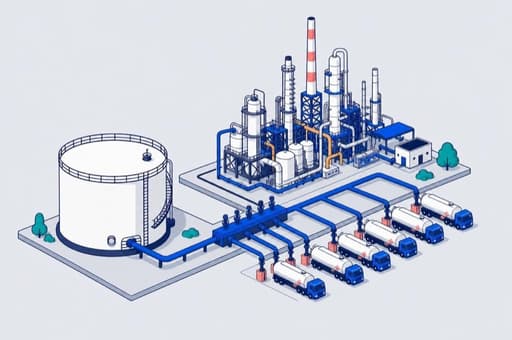
Gasoline
MPC's largest fuel family sold about 1.98 million barrels a day in 2025. Demand is expected to edge down as cars become more efficient, so refinery uptime and the margin on each gallon matter more than market growth.
Competes with Valero gasoline (Valero Energy) · Phillips 66 gasoline and branded fuels (Phillips 66)
In plain English
Most drivers never buy from Marathon Petroleum itself. The company turns crude oil into gasoline, then sells it in bulk to independent station operators, fuel resellers, traders and overseas buyers; it also buys finished fuel when that helps meet demand.
This is the biggest part of the sales line. MPC makes money when the selling price of gasoline stays comfortably above the combined cost of crude, refinery work and delivery. That gap can widen or collapse quickly, which is why a busy refinery does not automatically mean a profitable one.
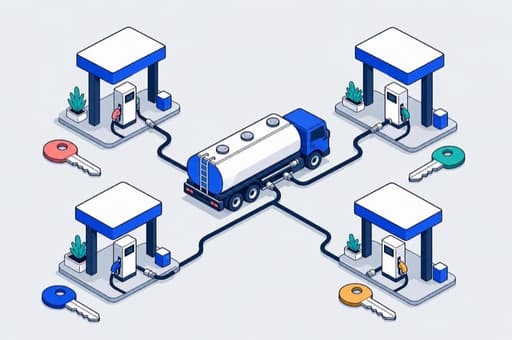
Marathon® and ARCO® Branded Marketing
A roughly 9,000-site network puts MPC fuel in front of drivers without MPC running the stations. The watchpoint is whether independent operators find the supply deal, brand standards and loyalty program worth keeping.
Competes with Valero-branded network (Valero Energy) · Phillips 66, Conoco and 76 marketing (Phillips 66)
In plain English
The familiar signs are mostly over someone else's forecourt. Independent businesses run Marathon locations, while direct dealers run the mainly Southern California ARCO network; MPC supplies fuel and the name above the pumps.
Those sites are shelves for the company's gasoline and diesel, not a separate pile of sales. Station operators keep buying under supply agreements, and MPC gains repeat outlets for refinery output. The arrangement works only while dealers can make money and customers keep returning, so fuel availability, dealer economics and a useful rewards program all matter.

Distillates
Diesel, jet fuel, heating oil and related fuels sold about 1.24 million barrels a day in 2025. Freight, flying and industry keep demand broad; new jet-fuel capacity matters only if selling margins justify the extra output.
Competes with Valero diesel and jet fuel (Valero Energy) · Phillips 66 diesel and jet fuel (Phillips 66)
In plain English
This is the family of heavier fuels that powers trucks, aircraft, factories and some heating systems. MPC separates these liquids from crude in its refineries and can adjust the mix toward diesel or jet fuel as buyers' needs change.
Fleets, airlines, distributors, industrial users, the military and overseas customers pay for the finished fuel. Their activity creates demand, but the earnings come from the price left after crude, refinery work and delivery are paid. Recent refinery projects let MPC produce more jet fuel; the payoff still depends on demand and market prices.
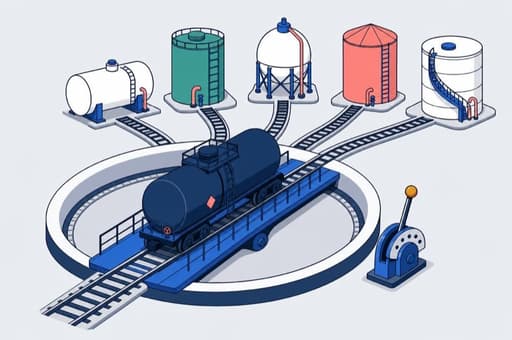
Crude Oil
MPC resold $5.82 billion of crude oil in 2025. It is a large sales line but a thin-margin routing business; the key is matching the right grade, place and timing without being caught by price moves.
Competes with Crude supply and optimization (Phillips 66) · Crude supply and wholesale (Valero Energy)
In plain English
Sometimes the best destination for a barrel is not one of MPC's own refineries. The company buys and resells crude to balance the types of oil its plants can handle, the transport space it has committed to and the needs of other refiners or wholesalers.
Picture a switchboard for barrels: MPC earns by directing each grade to a buyer who values it more in that place and moment. The sales total looks large because the full value of the oil passes through the books, but the amount kept after buying and moving it is much smaller.
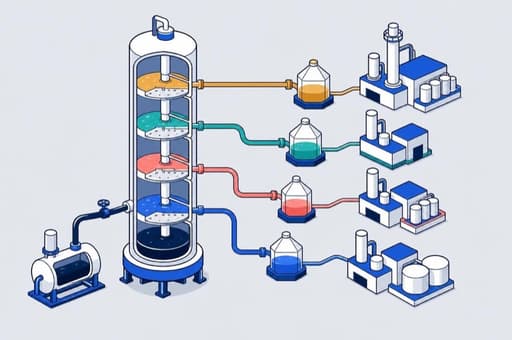
NGLs and Petrochemicals
Refining also produced 232,000 barrels a day of chemical ingredients and light hydrocarbons in 2025. These useful side streams add value, but prices rise and fall with chemical-plant demand, exports and product quality.
Competes with Refinery NGL and petrochemicals (Phillips 66) · Refinery specialty products (Valero Energy)
In plain English
A barrel does not become only gasoline and diesel. Refining also separates out light hydrocarbons and chemical ingredients such as propylene, xylene and benzene—the starting materials used by fuel blenders and chemical plants.
MPC sold these products alongside its main fuels, turning more of each barrel into something a customer can use. Buyers pay according to the exact material and quality they need, while storage and transport links help reach Gulf Coast and overseas markets. The business does best when chemical plants are busy and export outlets remain open.
Crude Oil and Products Logistics
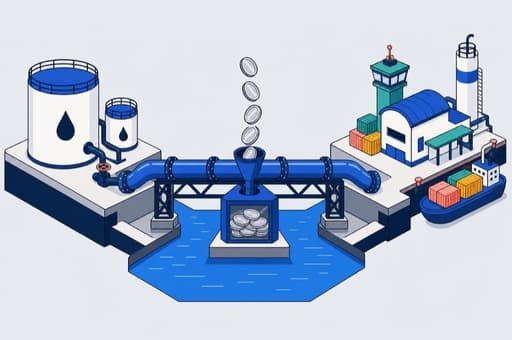
MPLX moves and stores crude and finished fuels for MPC and outside customers. The outside-customer share looks small because MPC's payments disappear when the group is combined; steady use and regulated fees make this a stabilizer.
Competes with Crude and products logistics (Enterprise Products Partners) · Midstream logistics (Phillips 66)
In plain English
Think of the physical network beneath the fuel business as a toll road. MPLX's pipes, storage tanks, terminals, rail links and docks move crude into refineries and carry finished products toward buyers. MPC is the built-in shipper, while other companies also pay to use parts of the system.
The service earns fees each time barrels move or sit in storage. Payments made by MPC stay inside the wider company, so they do not add to total sales, but they still show why these assets matter: busy refineries keep the network occupied. Outside traffic adds another source of fee income.
Natural Gas and NGL Services
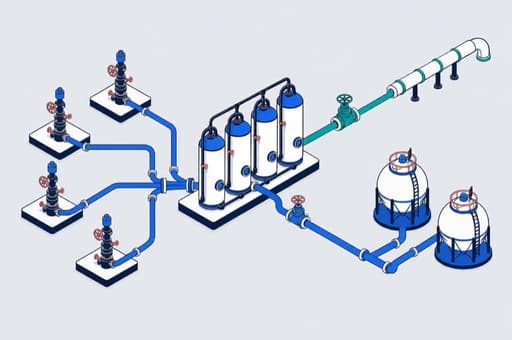
MPLX gathers, cleans, separates and stores natural gas and its liquid parts. More than nine-tenths of its 2026 growth spending targets this chain, so new plants and export links must fill with producer volumes.
Competes with Permian NGL value chain (Enterprise Products Partners) · Grand Prix, Mont Belvieu and Galena Park chain (Targa Resources)
In plain English
Before natural gas reaches a customer, it often needs collecting from many wells, cleaning and separating into dry gas and valuable liquids such as propane. MPLX owns facilities that do that work, then stores or moves the outputs toward other plants and Gulf Coast export routes.
Producers pay for access because the chain gives their gas somewhere to go. Long-term commitments can steady the fees, but drilling and production still determine how full the equipment stays. Recent purchases and expansions deepen the route from producing areas to coastal buyers, making this the main home for new midstream spending.
E1 LPG Offtake Agreement
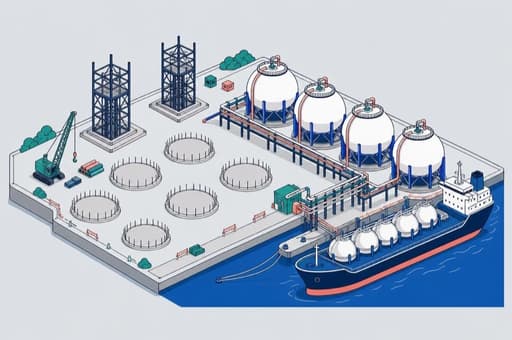
A long-term deal with E1 gives the planned Gulf Coast export build-out an anchor buyer before it opens. Construction, permits and connections come first; the initial plant and jointly owned terminal are due in 2028.
Competes with Enterprise fractionation and export terminals (Enterprise Products Partners) · Grand Prix-to-Galena Park chain (Targa Resources)
In plain English
The customer comes before the new machinery. E1, the named buyer, has promised to take a large share of MPC's output from two planned plants that separate mixed fuel liquids into products such as propane.
That promise helps support construction of the plants and a Gulf Coast export terminal co-owned with ONEOK. Once operating, the system would earn from processing and moving those liquids onto ships. Until then it produces no sales: permits, building work, pipe connections and enough supply from producers all have to arrive on schedule.
Renewable Diesel
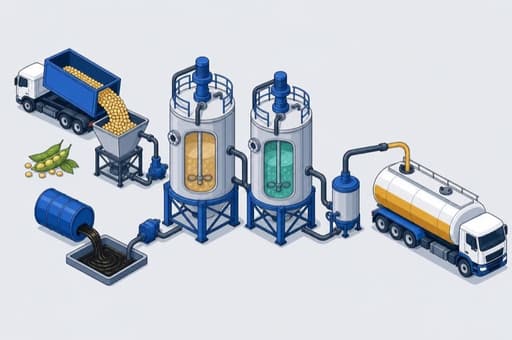
Two plants generated $2.81 billion of 2025 sales but lost $110 million. Output rebounded after maintenance; the harder test is whether feedstock costs, selling prices and government clean-fuel rewards can produce a durable profit.
Competes with Diamond Green Diesel (Valero Energy and Darling Ingredients) · Rodeo Renewable Energy Complex (Phillips 66)
In plain English
Made from fats and plant oils rather than crude, renewable diesel can go into an ordinary diesel engine. MPC produces it at Dickinson and through its half of a Martinez venture with Neste, then sells it to wholesalers, spot buyers and fuel dealers.
The gallon earns a fuel price plus government rewards for making a cleaner product. Against that sit the cost of feedstock, plant operation and downtime. That equation did not work in MPC's favor in 2025 even as sales grew, making this a real business with meaningful output—not yet a dependable earner.


 GasolineMPC's largest fuel family sold about 1.98 million barrels a day in 2025. Demand is expected to edge down as cars become more efficient, so refinery uptime and the margin on each gallon matter more than market growth.
MPC's largest fuel family sold about 1.98 million barrels a day in 2025. Demand is expected to edge down as cars become more efficient, so refinery uptime and the margin on each gallon matter more than market growth.
In plain English
Most drivers never buy from Marathon Petroleum itself. The company turns crude oil into gasoline, then sells it in bulk to independent station operators, fuel resellers, traders and overseas buyers; it also buys finished fuel when that helps meet demand.
This is the biggest part of the sales line. MPC makes money when the selling price of gasoline stays comfortably above the combined cost of crude, refinery work and delivery. That gap can widen or collapse quickly, which is why a busy refinery does not automatically mean a profitable one.
Competes with Valero gasoline (Valero Energy) · Phillips 66 gasoline and branded fuels (Phillips 66)
 Marathon® and ARCO® Branded MarketingA roughly 9,000-site network puts MPC fuel in front of drivers without MPC running the stations. The watchpoint is whether independent operators find the supply deal, brand standards and loyalty program worth keeping.
A roughly 9,000-site network puts MPC fuel in front of drivers without MPC running the stations. The watchpoint is whether independent operators find the supply deal, brand standards and loyalty program worth keeping.
In plain English
The familiar signs are mostly over someone else's forecourt. Independent businesses run Marathon locations, while direct dealers run the mainly Southern California ARCO network; MPC supplies fuel and the name above the pumps.
Those sites are shelves for the company's gasoline and diesel, not a separate pile of sales. Station operators keep buying under supply agreements, and MPC gains repeat outlets for refinery output. The arrangement works only while dealers can make money and customers keep returning, so fuel availability, dealer economics and a useful rewards program all matter.
Competes with Valero-branded network (Valero Energy) · Phillips 66, Conoco and 76 marketing (Phillips 66)
 DistillatesDiesel, jet fuel, heating oil and related fuels sold about 1.24 million barrels a day in 2025. Freight, flying and industry keep demand broad; new jet-fuel capacity matters only if selling margins justify the extra output.
Diesel, jet fuel, heating oil and related fuels sold about 1.24 million barrels a day in 2025. Freight, flying and industry keep demand broad; new jet-fuel capacity matters only if selling margins justify the extra output.
In plain English
This is the family of heavier fuels that powers trucks, aircraft, factories and some heating systems. MPC separates these liquids from crude in its refineries and can adjust the mix toward diesel or jet fuel as buyers' needs change.
Fleets, airlines, distributors, industrial users, the military and overseas customers pay for the finished fuel. Their activity creates demand, but the earnings come from the price left after crude, refinery work and delivery are paid. Recent refinery projects let MPC produce more jet fuel; the payoff still depends on demand and market prices.
Competes with Valero diesel and jet fuel (Valero Energy) · Phillips 66 diesel and jet fuel (Phillips 66)
 Crude OilMPC resold $5.82 billion of crude oil in 2025. It is a large sales line but a thin-margin routing business; the key is matching the right grade, place and timing without being caught by price moves.
MPC resold $5.82 billion of crude oil in 2025. It is a large sales line but a thin-margin routing business; the key is matching the right grade, place and timing without being caught by price moves.
In plain English
Sometimes the best destination for a barrel is not one of MPC's own refineries. The company buys and resells crude to balance the types of oil its plants can handle, the transport space it has committed to and the needs of other refiners or wholesalers.
Picture a switchboard for barrels: MPC earns by directing each grade to a buyer who values it more in that place and moment. The sales total looks large because the full value of the oil passes through the books, but the amount kept after buying and moving it is much smaller.
Competes with Crude supply and optimization (Phillips 66) · Crude supply and wholesale (Valero Energy)
 NGLs and PetrochemicalsRefining also produced 232,000 barrels a day of chemical ingredients and light hydrocarbons in 2025. These useful side streams add value, but prices rise and fall with chemical-plant demand, exports and product quality.
Refining also produced 232,000 barrels a day of chemical ingredients and light hydrocarbons in 2025. These useful side streams add value, but prices rise and fall with chemical-plant demand, exports and product quality.
In plain English
A barrel does not become only gasoline and diesel. Refining also separates out light hydrocarbons and chemical ingredients such as propylene, xylene and benzene—the starting materials used by fuel blenders and chemical plants.
MPC sold these products alongside its main fuels, turning more of each barrel into something a customer can use. Buyers pay according to the exact material and quality they need, while storage and transport links help reach Gulf Coast and overseas markets. The business does best when chemical plants are busy and export outlets remain open.
Competes with Refinery NGL and petrochemicals (Phillips 66) · Refinery specialty products (Valero Energy)
 Crude Oil and Products LogisticsMPLX moves and stores crude and finished fuels for MPC and outside customers. The outside-customer share looks small because MPC's payments disappear when the group is combined; steady use and regulated fees make this a stabilizer.
MPLX moves and stores crude and finished fuels for MPC and outside customers. The outside-customer share looks small because MPC's payments disappear when the group is combined; steady use and regulated fees make this a stabilizer.
In plain English
Think of the physical network beneath the fuel business as a toll road. MPLX's pipes, storage tanks, terminals, rail links and docks move crude into refineries and carry finished products toward buyers. MPC is the built-in shipper, while other companies also pay to use parts of the system.
The service earns fees each time barrels move or sit in storage. Payments made by MPC stay inside the wider company, so they do not add to total sales, but they still show why these assets matter: busy refineries keep the network occupied. Outside traffic adds another source of fee income.
Competes with Crude and products logistics (Enterprise Products Partners) · Midstream logistics (Phillips 66)
 Natural Gas and NGL ServicesMPLX gathers, cleans, separates and stores natural gas and its liquid parts. More than nine-tenths of its 2026 growth spending targets this chain, so new plants and export links must fill with producer volumes.
MPLX gathers, cleans, separates and stores natural gas and its liquid parts. More than nine-tenths of its 2026 growth spending targets this chain, so new plants and export links must fill with producer volumes.
In plain English
Before natural gas reaches a customer, it often needs collecting from many wells, cleaning and separating into dry gas and valuable liquids such as propane. MPLX owns facilities that do that work, then stores or moves the outputs toward other plants and Gulf Coast export routes.
Producers pay for access because the chain gives their gas somewhere to go. Long-term commitments can steady the fees, but drilling and production still determine how full the equipment stays. Recent purchases and expansions deepen the route from producing areas to coastal buyers, making this the main home for new midstream spending.
Competes with Permian NGL value chain (Enterprise Products Partners) · Grand Prix, Mont Belvieu and Galena Park chain (Targa Resources)
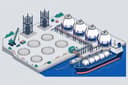 E1 LPG Offtake AgreementA long-term deal with E1 gives the planned Gulf Coast export build-out an anchor buyer before it opens. Construction, permits and connections come first; the initial plant and jointly owned terminal are due in 2028.
A long-term deal with E1 gives the planned Gulf Coast export build-out an anchor buyer before it opens. Construction, permits and connections come first; the initial plant and jointly owned terminal are due in 2028.
In plain English
The customer comes before the new machinery. E1, the named buyer, has promised to take a large share of MPC's output from two planned plants that separate mixed fuel liquids into products such as propane.
That promise helps support construction of the plants and a Gulf Coast export terminal co-owned with ONEOK. Once operating, the system would earn from processing and moving those liquids onto ships. Until then it produces no sales: permits, building work, pipe connections and enough supply from producers all have to arrive on schedule.
Competes with Enterprise fractionation and export terminals (Enterprise Products Partners) · Grand Prix-to-Galena Park chain (Targa Resources)
 Renewable DieselTwo plants generated $2.81 billion of 2025 sales but lost $110 million. Output rebounded after maintenance; the harder test is whether feedstock costs, selling prices and government clean-fuel rewards can produce a durable profit.
Two plants generated $2.81 billion of 2025 sales but lost $110 million. Output rebounded after maintenance; the harder test is whether feedstock costs, selling prices and government clean-fuel rewards can produce a durable profit.
In plain English
Made from fats and plant oils rather than crude, renewable diesel can go into an ordinary diesel engine. MPC produces it at Dickinson and through its half of a Martinez venture with Neste, then sells it to wholesalers, spot buyers and fuel dealers.
The gallon earns a fuel price plus government rewards for making a cleaner product. Against that sit the cost of feedstock, plant operation and downtime. That equation did not work in MPC's favor in 2025 even as sales grew, making this a real business with meaningful output—not yet a dependable earner.
Competes with Diamond Green Diesel (Valero Energy and Darling Ingredients) · Rodeo Renewable Energy Complex (Phillips 66)
Named in filings, launches and programs
- Services and otherServiceNon-product work across refining and midstream; much of the midstream portion is already represented by the two infrastructure service cards.
- AsphaltProduct lineA 78,000-barrel-a-day refinery output sold into paving and roofing markets.
- PropaneProduct lineA 97,000-barrel-a-day fuel used mainly for home heating, with industrial and chemical uses too.
- Heavy Fuel OilProduct lineA 94,000-barrel-a-day refinery product sold as fuel for ships and industrial customers.
- Petroleum CokeProduct lineA solid refinery by-product sold in fuel-grade and processed industrial forms; demand from heavy industry sets its value.
- Marathon Lubricants (Performance Series)BrandPassenger-car and heavy-duty motor oils sold through distributors and industrial channels.
- Marathon ARCO RewardsCustomer programA loyalty program for both fuel brands that encourages repeat visits rather than producing a separately disclosed sales line.
- LF BioenergyBrand · RampingA 49.9%-owned developer turning waste into pipeline-ready renewable gas, with six facilities operating and another under construction at year-end.
- Green Bison Soy ProcessingBrandMPC's 25%-owned venture with ADM processes soybeans and can supply oil for roughly 75 million gallons of renewable diesel a year.
- Cincinnati Aggregation FacilityEcosystemCollects and processes fats and oils before they become feedstock for MPC's renewable-diesel plants.
- Beatrice Pretreatment FacilityEcosystemPrepares harder-to-use, lower-carbon fats and oils so MPC's renewable-diesel plants can process them.
Services and otherService
Non-product work across refining and midstream; much of the midstream portion is already represented by the two infrastructure service cards.
AsphaltProduct line
A 78,000-barrel-a-day refinery output sold into paving and roofing markets.
PropaneProduct line
A 97,000-barrel-a-day fuel used mainly for home heating, with industrial and chemical uses too.
Heavy Fuel OilProduct line
A 94,000-barrel-a-day refinery product sold as fuel for ships and industrial customers.
Petroleum CokeProduct line
A solid refinery by-product sold in fuel-grade and processed industrial forms; demand from heavy industry sets its value.
Marathon Lubricants (Performance Series)Brand
Passenger-car and heavy-duty motor oils sold through distributors and industrial channels.
Marathon ARCO RewardsCustomer program
A loyalty program for both fuel brands that encourages repeat visits rather than producing a separately disclosed sales line.
LF BioenergyBrand · Ramping
A 49.9%-owned developer turning waste into pipeline-ready renewable gas, with six facilities operating and another under construction at year-end.
Green Bison Soy ProcessingBrand
MPC's 25%-owned venture with ADM processes soybeans and can supply oil for roughly 75 million gallons of renewable diesel a year.
Cincinnati Aggregation FacilityEcosystem
Collects and processes fats and oils before they become feedstock for MPC's renewable-diesel plants.
Beatrice Pretreatment FacilityEcosystem
Prepares harder-to-use, lower-carbon fats and oils so MPC's renewable-diesel plants can process them.