
Monolithic Power Systems (MPWR)
Designs integrated power semiconductors for data centers, vehicles, computing, communications, consumer, and industrial systems.
Something off on this page? Send us feedback.
Monolithic Power Systems designs tiny parts and modules that deliver the right amount of electricity inside servers, cars, computers, networks and everyday electronics. Its center of gravity is moving quickly toward the machines behind artificial intelligence, while its older computer and consumer lines are growing more slowly. It designs rather than owns the factories, and most sales pass through a small group of distributors.
Item facts: FY2025 · year ended Dec 31, 2025, from filings, earnings calls and company pages.
Judgment weights, not filed revenue
The band summarizes business focus and direction. ~ marks estimates.
6 in detail · 15 more below

Enterprise Data
Power systems for artificial-intelligence chips and servers. In Q2 FY2026, sales jumped 164.3% from a year earlier to $380.6 million; watch whether customer approvals turn that burst into durable shipments rather than a single fast ramp.
Competes with Digital controllers and switching parts that feed processors (Renesas) · High-density converter modules for server power (Infineon) · Vertical power modules placed close to processors (Vicor)
In plain English
Picture the power strip behind a giant computer, shrunk down and built around its hungriest chips. Enterprise Data includes the controllers, conversion blocks and compact modules that take electricity from a server and feed each processor exactly what it needs.
Makers of artificial-intelligence processors, server boards and complete servers approve MPS parts for a design, then buy units as they build those machines. More power-hungry processors need more parts and denser modules, so MPS can earn more from each server. The approval process makes a winning design sticky, but losing one can quickly cut shipments.
Communications
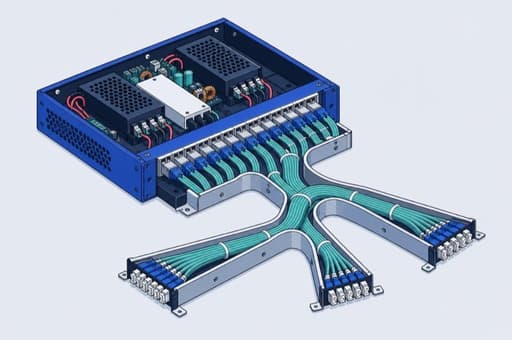
Power parts inside the fast network boxes that connect data centers. Q2 FY2026 sales rose 78.3% from a year earlier to $131.6 million; watch whether newer, faster links keep pulling more MPS parts into each box.
Competes with Temperature controllers, switches and power modules for glass-fiber links (Analog Devices) · Telecom power-converter blocks and local regulators (Texas Instruments)
In plain English
Every burst of data between computers passes through boxes that steer traffic and small modules that send it through hair-thin glass cables. MPS supplies the parts that lower, steady and protect the electricity inside those boxes and modules.
Network-switch and optical-module makers choose these parts while designing new equipment. Distributors then supply the chips and compact power assemblies as that equipment enters production. Faster connections pack more electronics into tight spaces, creating more places for MPS to sell. Delayed data-center construction or a slow changeover to the next network speed pushes those sales out.
Storage and Computing
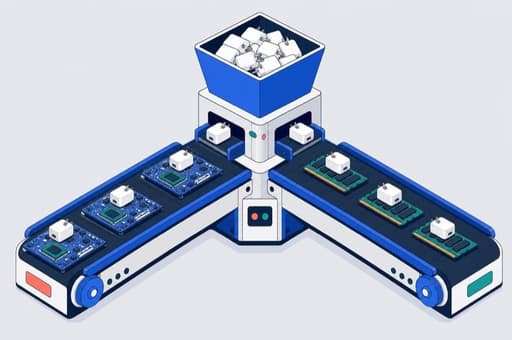
Electricity-management parts for computers, memory boards and storage machines. FY2025 sales climbed 46.0% to $732.5 million, but first-half FY2026 fell 2.5%; new high-speed memory orders must outrun weak notebook demand.
Competes with PMIC5030 and PMIC5020 power chips for fast memory boards (Renesas) · TPS53830A and power converters for fast memory boards (Texas Instruments)
In plain English
The unglamorous job here is keeping a computer's many parts fed without wasting electricity or damaging them. MPS sells chips and modules that adjust power for notebooks, desktop computers, memory boards and storage hardware. Its newer parts also help very fast memory communicate and receive power.
Computer makers, memory suppliers and storage-equipment companies approve MPS inside a product, then order through distributors as they assemble it. A successful placement can repeat for the life of that model. Sales still rise and fall with notebook replacements and memory inventories, so newer high-speed memory wins are the route to steadier growth.
Automotive
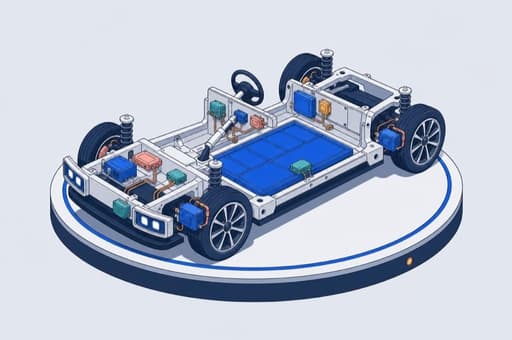
Power, sensing, motion, lighting and sound parts for cars. FY2025 sales rose 43.1% to $592.5 million, yet Q2 FY2026 growth slowed to 8.2%; watch how quickly newly shipping places in vehicle designs become volume sales.
Competes with FS85 vehicle safety power chip (NXP) · FlexPower chips, electronic safety switches and power parts for sectioned vehicle wiring (Texas Instruments)
In plain English
A modern car needs dozens of small electrical gatekeepers. MPS parts feed cameras and dashboard screens, move motors, manage batteries, drive lights and speakers, and protect circuits when something goes wrong.
Automakers and the suppliers that build major car systems test and approve each part for a specific place in a vehicle design. Once that car enters production, MPS is paid for every chip or module shipped, mostly through distributors. Those approvals can produce sales for years, but they take a long time and depend on how many vehicles the customer ultimately builds.
Consumer
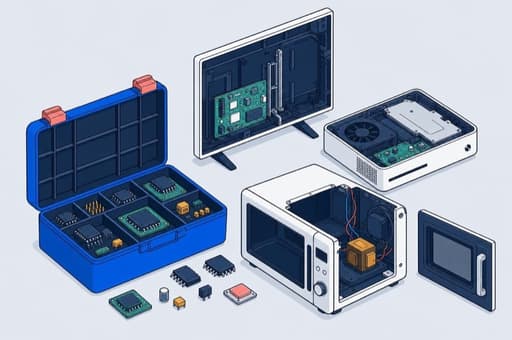
Power and control parts for televisions, monitors, game systems, appliances and portable devices. Q2 FY2026 sales slipped 4.8% from a year earlier to $56.8 million; its job is breadth, not leading the present growth surge.
Competes with InnoSwitch appliance and adapter power chips (Power Integrations) · Wall-power switching and display-light parts (Texas Instruments)
In plain English
Open a television, game system or kitchen appliance and electricity must be converted, divided and sent to the right places. MPS supplies the chips that do that work, plus parts that control screens, backlights, charging and speakers.
Device and appliance makers select the parts for each model; distributors keep enough on hand for many customers and replenish them as products sell. High production runs can create a lot of unit sales, but buyers are price-conscious and can cut orders quickly when store demand weakens. This is a broad base of everyday uses, not the company's current growth center.
Industrial
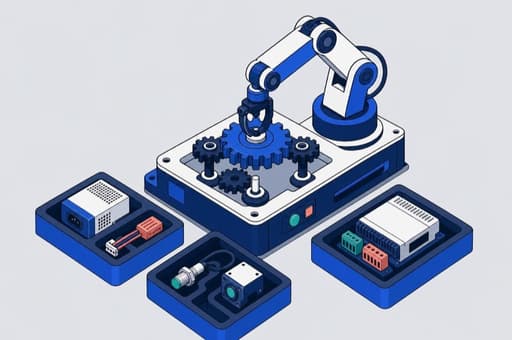
Power and motion parts for factories, robots, buildings, clean-energy equipment and medical machines. FY2025 sales grew 35.3% to $199.4 million; watch approved designs become orders, because management described FY2026 mainly as a placement-winning year.
Competes with MAX22200 valve and brushed-motor driver (Analog Devices) · iMOTION IMC100 and IMC300 motor-control chips (Infineon)
In plain English
Factories need motors to turn precisely, robots to stop safely and measuring equipment to receive clean, steady electricity. MPS combines power parts with motor controls, battery monitors, sensors and signal-reading chips so an equipment maker can buy more of the electrical system from one supplier.
Engineers approve those parts while building a machine, often with help from MPS and its distributors. MPS earns when the customer later manufactures that design. Industrial products may stay in production for years, but testing and approval move slowly; winning a place today can mean meaningful shipments much later.


 Enterprise DataPower systems for artificial-intelligence chips and servers. In Q2 FY2026, sales jumped 164.3% from a year earlier to $380.6 million; watch whether customer approvals turn that burst into durable shipments rather than a single fast ramp.
Power systems for artificial-intelligence chips and servers. In Q2 FY2026, sales jumped 164.3% from a year earlier to $380.6 million; watch whether customer approvals turn that burst into durable shipments rather than a single fast ramp.
In plain English
Picture the power strip behind a giant computer, shrunk down and built around its hungriest chips. Enterprise Data includes the controllers, conversion blocks and compact modules that take electricity from a server and feed each processor exactly what it needs.
Makers of artificial-intelligence processors, server boards and complete servers approve MPS parts for a design, then buy units as they build those machines. More power-hungry processors need more parts and denser modules, so MPS can earn more from each server. The approval process makes a winning design sticky, but losing one can quickly cut shipments.
Competes with Digital controllers and switching parts that feed processors (Renesas) · High-density converter modules for server power (Infineon) · Vertical power modules placed close to processors (Vicor)
 CommunicationsPower parts inside the fast network boxes that connect data centers. Q2 FY2026 sales rose 78.3% from a year earlier to $131.6 million; watch whether newer, faster links keep pulling more MPS parts into each box.
Power parts inside the fast network boxes that connect data centers. Q2 FY2026 sales rose 78.3% from a year earlier to $131.6 million; watch whether newer, faster links keep pulling more MPS parts into each box.
In plain English
Every burst of data between computers passes through boxes that steer traffic and small modules that send it through hair-thin glass cables. MPS supplies the parts that lower, steady and protect the electricity inside those boxes and modules.
Network-switch and optical-module makers choose these parts while designing new equipment. Distributors then supply the chips and compact power assemblies as that equipment enters production. Faster connections pack more electronics into tight spaces, creating more places for MPS to sell. Delayed data-center construction or a slow changeover to the next network speed pushes those sales out.
Competes with Temperature controllers, switches and power modules for glass-fiber links (Analog Devices) · Telecom power-converter blocks and local regulators (Texas Instruments)
 Storage and ComputingElectricity-management parts for computers, memory boards and storage machines. FY2025 sales climbed 46.0% to $732.5 million, but first-half FY2026 fell 2.5%; new high-speed memory orders must outrun weak notebook demand.
Electricity-management parts for computers, memory boards and storage machines. FY2025 sales climbed 46.0% to $732.5 million, but first-half FY2026 fell 2.5%; new high-speed memory orders must outrun weak notebook demand.
In plain English
The unglamorous job here is keeping a computer's many parts fed without wasting electricity or damaging them. MPS sells chips and modules that adjust power for notebooks, desktop computers, memory boards and storage hardware. Its newer parts also help very fast memory communicate and receive power.
Computer makers, memory suppliers and storage-equipment companies approve MPS inside a product, then order through distributors as they assemble it. A successful placement can repeat for the life of that model. Sales still rise and fall with notebook replacements and memory inventories, so newer high-speed memory wins are the route to steadier growth.
Competes with PMIC5030 and PMIC5020 power chips for fast memory boards (Renesas) · TPS53830A and power converters for fast memory boards (Texas Instruments)
 AutomotivePower, sensing, motion, lighting and sound parts for cars. FY2025 sales rose 43.1% to $592.5 million, yet Q2 FY2026 growth slowed to 8.2%; watch how quickly newly shipping places in vehicle designs become volume sales.
Power, sensing, motion, lighting and sound parts for cars. FY2025 sales rose 43.1% to $592.5 million, yet Q2 FY2026 growth slowed to 8.2%; watch how quickly newly shipping places in vehicle designs become volume sales.
In plain English
A modern car needs dozens of small electrical gatekeepers. MPS parts feed cameras and dashboard screens, move motors, manage batteries, drive lights and speakers, and protect circuits when something goes wrong.
Automakers and the suppliers that build major car systems test and approve each part for a specific place in a vehicle design. Once that car enters production, MPS is paid for every chip or module shipped, mostly through distributors. Those approvals can produce sales for years, but they take a long time and depend on how many vehicles the customer ultimately builds.
Competes with FS85 vehicle safety power chip (NXP) · FlexPower chips, electronic safety switches and power parts for sectioned vehicle wiring (Texas Instruments)
 ConsumerPower and control parts for televisions, monitors, game systems, appliances and portable devices. Q2 FY2026 sales slipped 4.8% from a year earlier to $56.8 million; its job is breadth, not leading the present growth surge.
Power and control parts for televisions, monitors, game systems, appliances and portable devices. Q2 FY2026 sales slipped 4.8% from a year earlier to $56.8 million; its job is breadth, not leading the present growth surge.
In plain English
Open a television, game system or kitchen appliance and electricity must be converted, divided and sent to the right places. MPS supplies the chips that do that work, plus parts that control screens, backlights, charging and speakers.
Device and appliance makers select the parts for each model; distributors keep enough on hand for many customers and replenish them as products sell. High production runs can create a lot of unit sales, but buyers are price-conscious and can cut orders quickly when store demand weakens. This is a broad base of everyday uses, not the company's current growth center.
Competes with InnoSwitch appliance and adapter power chips (Power Integrations) · Wall-power switching and display-light parts (Texas Instruments)
 IndustrialPower and motion parts for factories, robots, buildings, clean-energy equipment and medical machines. FY2025 sales grew 35.3% to $199.4 million; watch approved designs become orders, because management described FY2026 mainly as a placement-winning year.
Power and motion parts for factories, robots, buildings, clean-energy equipment and medical machines. FY2025 sales grew 35.3% to $199.4 million; watch approved designs become orders, because management described FY2026 mainly as a placement-winning year.
In plain English
Factories need motors to turn precisely, robots to stop safely and measuring equipment to receive clean, steady electricity. MPS combines power parts with motor controls, battery monitors, sensors and signal-reading chips so an equipment maker can buy more of the electrical system from one supplier.
Engineers approve those parts while building a machine, often with help from MPS and its distributors. MPS earns when the customer later manufactures that design. Industrial products may stay in production for years, but testing and approval move slowly; winning a place today can mean meaningful shipments much later.
Competes with MAX22200 valve and brushed-motor driver (Analog Devices) · iMOTION IMC100 and IMC300 motor-control chips (Infineon)
Named in filings, launches and programs
- Power Modules, Intelli-Module, and Z-Axis Power DeliveryProduct line · RampingPack several power parts together and place them close to, or beneath, hungry processors; FY2025 module sales set a record, without a separate revenue figure.
- High Voltage AC to DC for 800V data-center architecturesProduct line · Pre-revenueConverts very high-voltage building power for future data centers; customer sampling had begun by July 2026, but no sales were disclosed.
- High-speed DDR5 memory componentsProduct line · RampingParts that connect and power the current generation of fast computer memory; sampling began in early FY2026 and initial orders followed in Q2.
- 48V e-fuse and kilowatt-level zonal controllerProduct · RampingAn electronic safety switch and high-power controller launched for newer vehicle wiring systems in FY2025.
- Battery ManagementProduct lineCharging, monitoring, protection and balancing parts sold across cars, robots, energy equipment and consumer devices.
- eMotionPlatformMotor-control hardware and software for robots and other moving machines; robotics remains a possible accelerator, not a separately disclosed sales line.
- Class-D Audio and AxignBrandChips that drive speakers efficiently, expanded by the wholly owned Axign digital-feedback business acquired in 2024.
- Data ConvertersProduct lineParts that translate real-world signals into computer-readable values and back, adding another piece to MPS's complete electrical systems.
- SensorsProduct lineParts that measure angle, electrical current and three-dimensional position in moving machines, cars and industrial equipment.
- IsolationProduct lineParts that pass power or signals while keeping dangerous voltage from crossing into sensitive circuits.
- AC/DCProduct lineA broad family that turns wall power into the lower, controlled electricity needed by equipment across MPS's end markets.
- LED Drivers and Lighting ControlProduct lineControls electricity for building lights, screen backlights and vehicle lighting; these products now sit across several end markets.
- BA100 ControllerProduct · Pre-revenueBuilding-control hardware awaiting finished software and customer installations as of July 2026; no sales were disclosed.
- ECARX strategic cooperationCustomer program · AnnouncedWork with ECARX, a vehicle-technology company, on car intelligence, robotics and delivery; no purchase amount or volume was promised.
- Distributor sales channelEcosystemIn Q2 FY2026, 88% of sales flowed through distributors; unnamed Distributors A, B and D handled 28%, 15% and 10%.
Power Modules, Intelli-Module, and Z-Axis Power DeliveryProduct line · Ramping
Pack several power parts together and place them close to, or beneath, hungry processors; FY2025 module sales set a record, without a separate revenue figure.
High Voltage AC to DC for 800V data-center architecturesProduct line · Pre-revenue
Converts very high-voltage building power for future data centers; customer sampling had begun by July 2026, but no sales were disclosed.
High-speed DDR5 memory componentsProduct line · Ramping
Parts that connect and power the current generation of fast computer memory; sampling began in early FY2026 and initial orders followed in Q2.
48V e-fuse and kilowatt-level zonal controllerProduct · Ramping
An electronic safety switch and high-power controller launched for newer vehicle wiring systems in FY2025.
Battery ManagementProduct line
Charging, monitoring, protection and balancing parts sold across cars, robots, energy equipment and consumer devices.
eMotionPlatform
Motor-control hardware and software for robots and other moving machines; robotics remains a possible accelerator, not a separately disclosed sales line.
Class-D Audio and AxignBrand
Chips that drive speakers efficiently, expanded by the wholly owned Axign digital-feedback business acquired in 2024.
Data ConvertersProduct line
Parts that translate real-world signals into computer-readable values and back, adding another piece to MPS's complete electrical systems.
SensorsProduct line
Parts that measure angle, electrical current and three-dimensional position in moving machines, cars and industrial equipment.
IsolationProduct line
Parts that pass power or signals while keeping dangerous voltage from crossing into sensitive circuits.
AC/DCProduct line
A broad family that turns wall power into the lower, controlled electricity needed by equipment across MPS's end markets.
LED Drivers and Lighting ControlProduct line
Controls electricity for building lights, screen backlights and vehicle lighting; these products now sit across several end markets.
BA100 ControllerProduct · Pre-revenue
Building-control hardware awaiting finished software and customer installations as of July 2026; no sales were disclosed.
ECARX strategic cooperationCustomer program · Announced
Work with ECARX, a vehicle-technology company, on car intelligence, robotics and delivery; no purchase amount or volume was promised.
Distributor sales channelEcosystem
In Q2 FY2026, 88% of sales flowed through distributors; unnamed Distributors A, B and D handled 28%, 15% and 10%.