
Microsoft (MSFT)
Builds Azure cloud infrastructure, Microsoft 365 software, Windows, developer tools, and gaming platforms.
Something off on this page? Send us feedback.
Microsoft is becoming a company that rents computing power and adds AI helpers to the work software already used by businesses everywhere. Those two engines now supply most of its sales, while older licenses, Windows, games, advertising and support round out the machine. The bet is expensive: datacenters are absorbing cash faster, and much of the promised future demand depends on one unusually large customer.
Item facts: FY2026 · year ended Jun 30, 2026, from filings, earnings calls and company pages.
Judgment weights, not filed revenue
The band summarizes business focus and direction. ~ marks estimates.
9 in detail · 14 more below
Microsoft 365 cloud
Workplace subscriptions spanning Office, Teams, security, developer tools and Copilot produced $100.30B in FY2026. Watch whether customers keep adding paid AI help—and use it enough to support the shift from simple per-person pricing.
Competes with Google Workspace (Alphabet) · Slack (Salesforce)
In plain English
Think of Microsoft 365 as the shared desk drawer for a company: email, documents, meetings, file storage, security and now an assistant that can draft or search. Workers open it every day, which makes switching awkward.
Businesses usually pay for each person who gets access, then pay more for richer bundles or heavier use of the AI assistant. Microsoft keeps earning as long as those accounts stay active. The next leg depends on turning Copilot trials into habits that employers judge worth renewing.
Productivity and server licensing
Licenses for server, database, Office and developer software produced $37.29B in FY2026. Its job is dependable renewal cash; the risk is that customers move more of their computing into rented online services.
Competes with Red Hat Enterprise Linux (Red Hat/IBM) · Oracle Database (Oracle)
In plain English
Some organizations still keep important software on computers they control. Microsoft sells them permission to run Windows Server, SQL Server, Office and developer tools, often with updates and help attached.
It works like buying a durable machine and renewing its maintenance plan instead of renting the machine by the hour. Customers pay for time-limited or permanent licenses and may keep paying for upgrades and support. Compatibility with years of existing company systems makes the line sticky, even as more work moves online.
Industry solutions
Business tools for sales, hiring, app building and healthcare produced $20.35B in FY2026. Growth depends on whether companies reshape everyday work around them rather than merely adding another subscription.
Competes with Salesforce Sales Cloud (Salesforce) · SAP S/4HANA Cloud (SAP)
In plain English
Picture the control panel behind a business. Dynamics keeps track of customers and company resources; Power Apps lets staff assemble simple tools; LinkedIn products help recruiters and sellers; the healthcare line handles specialized work.
Microsoft charges for each user, for bundles of prepaid use, or for the amount consumed. Consultants and software partners often help fit the tools into a customer’s routines, making a successful setup harder to replace. The hard part is persuading workers to change familiar processes and keeping company data governed as it moves between tools.
Frontier and support services
Engineers, setup help, training and ongoing support produced $8.26B in FY2026. This is an attachment business: it grows when customers need human help turning Microsoft’s increasingly complicated tools into working systems.
Competes with Accenture consulting services (Accenture) · IBM Consulting (IBM)
In plain English
Software gets messy after the sale. Companies need help connecting old systems, setting rules, training workers and fixing trouble, so Microsoft sells support agreements and hands-on engineering alongside its products.
Customers pay for that expertise directly or through continuing service plans. Microsoft also works with outside implementation firms, which widens its reach but creates overlap over who does the paid work. This line is much smaller than the software it supports; its value is making large deployments actually work and keeping customers from walking away frustrated.
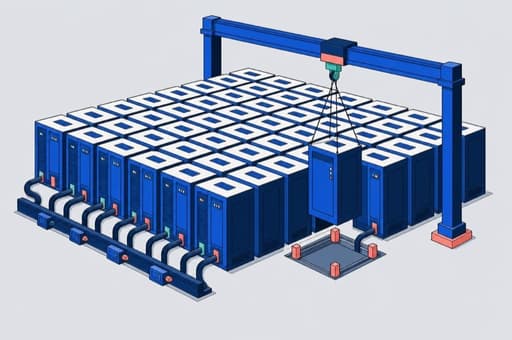
Azure
Microsoft’s rented computing and application machinery produced $101.94B in FY2026, yet demand still outran available room. Watch how quickly new datacenters become usable without power, land, networks or chips holding them back.
Competes with Amazon Web Services (Amazon) · Google Cloud Platform (Alphabet)
In plain English
Instead of buying and maintaining rooms full of computers, a business can rent Azure’s machines over the internet. It pays for storage, computing and ready-made building blocks as it uses them, much as a factory pays for power and equipment time.
Microsoft earns more when customers run more software or AI jobs. That requires spending first on land, power lines, networks, servers and chips, then filling the finished sites with paying work. Demand is strong enough that Microsoft cannot yet supply all of it, so construction speed and keeping expensive equipment busy decide how attractive the growth becomes.

OpenAI Azure services commitment
OpenAI was 45% of Microsoft’s commercial order book in January, making it the anchor buyer behind this vast promise of future business. Watch whether OpenAI consumes what it pledged and whether newer customers make those commitments less dependent on it.
Competes with OpenAI–AWS and Amazon Bedrock (Amazon) · Oracle Cloud Infrastructure and Stargate (Oracle)
In plain English
OpenAI, an AI company, agreed to buy a very large amount of Azure computing. Think of a factory reserving years of output from its main power supplier: Microsoft builds capacity with that demand in mind, then earns as OpenAI actually uses the machines.
The relationship also includes Microsoft owning part of OpenAI, having permission to use its technology and sharing some commercial revenue. Azure remains OpenAI’s primary computing partner, but other companies can now license the technology too. That makes this both a powerful source of demand and a knot of dependencies between one unusually important customer and supplier.
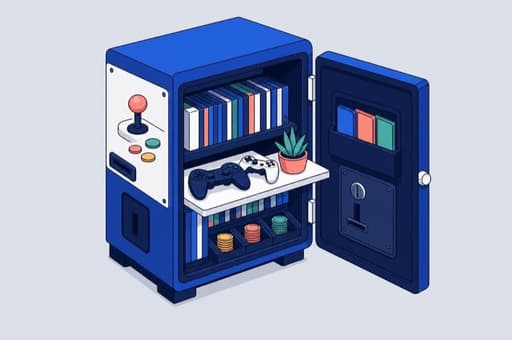
XBOX
XBOX sells consoles, games, in-game extras and recurring access to a catalog. Revenue fell 7% even as the wider games market grew, so fresh hits and a stable studio roster matter more than another hardware cycle.
Competes with PlayStation 5 and PlayStation Plus (Sony) · Nintendo Switch 2 and Switch Online (Nintendo)
In plain English
A console is only the front door. Once players enter XBOX, Microsoft can sell them games, extra items inside games, advertising, online access and a recurring pass to a rotating library; it also takes a cut when others sell through its stores.
Hardware puts the system in living rooms but is the weaker piece, while content and subscriptions keep earning after the machine is sold. That loop needs a steady flow of games people care about. Falling sales and planned studio sales make the future release schedule the central question.
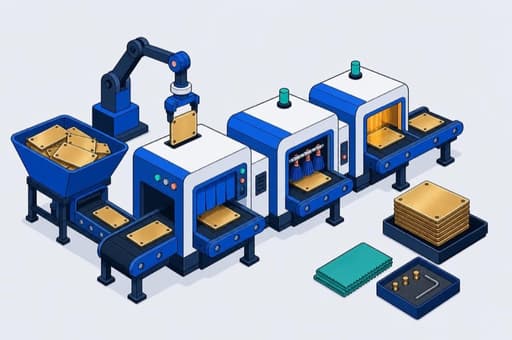
Windows OEM and devices
Windows fees on new PCs plus Surface and accessories form a mature line whose combined revenue fell 1% in FY2026. It rises and falls with computer replacement cycles, while Microsoft’s devices face component costs and rivals.
Competes with macOS on Mac (Apple) · ChromeOS on Chromebooks (Alphabet)
In plain English
Most people meet this business when they buy a new PC. The computer maker pays Microsoft to install Windows before the machine reaches the box, so each shipment creates a fee. Microsoft also sells its own Surface computers and accessories.
That makes revenue depend on how many PCs manufacturers ship, which Windows version buyers choose and what Microsoft can charge for hardware. It is a mature, cyclical line rather than the company’s growth engine: a weak replacement year or costly memory parts can hurt even when Windows remains widely attached to new machines.
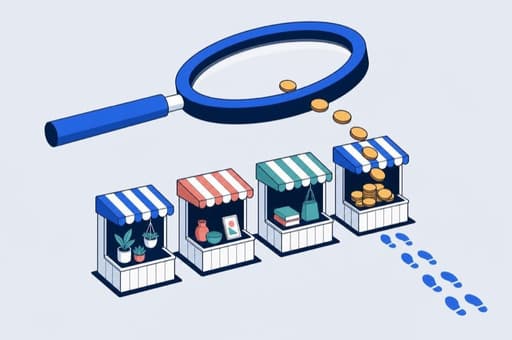
Search and advertising
Search ads, LinkedIn marketing and paid memberships, and consumer services produced $24.84B in FY2026. The watch is whether better AI answers deepen use without weakening the clicks and placements advertisers fund.
Competes with Google Search Ads (Alphabet) · Amazon Sponsored Ads (Amazon)
In plain English
Someone searches Bing, browses through Edge or visits LinkedIn, and Microsoft gets a chance to place a paid message beside what that person wants. Advertisers pay to reach that attention; publishing partners may receive a portion for sending traffic.
LinkedIn adds a second payer: professionals who buy upgraded memberships. The whole line therefore earns from both businesses buying visibility and individuals buying extra access. More useful AI answers can attract people, but Microsoft still needs those visits to lead to ad spots or subscriptions that customers consider worth the money.


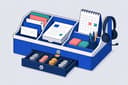 Microsoft 365 cloudWorkplace subscriptions spanning Office, Teams, security, developer tools and Copilot produced $100.30B in FY2026. Watch whether customers keep adding paid AI help—and use it enough to support the shift from simple per-person pricing.
Workplace subscriptions spanning Office, Teams, security, developer tools and Copilot produced $100.30B in FY2026. Watch whether customers keep adding paid AI help—and use it enough to support the shift from simple per-person pricing.
In plain English
Think of Microsoft 365 as the shared desk drawer for a company: email, documents, meetings, file storage, security and now an assistant that can draft or search. Workers open it every day, which makes switching awkward.
Businesses usually pay for each person who gets access, then pay more for richer bundles or heavier use of the AI assistant. Microsoft keeps earning as long as those accounts stay active. The next leg depends on turning Copilot trials into habits that employers judge worth renewing.
Competes with Google Workspace (Alphabet) · Slack (Salesforce)
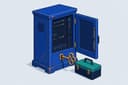 Productivity and server licensingLicenses for server, database, Office and developer software produced $37.29B in FY2026. Its job is dependable renewal cash; the risk is that customers move more of their computing into rented online services.
Licenses for server, database, Office and developer software produced $37.29B in FY2026. Its job is dependable renewal cash; the risk is that customers move more of their computing into rented online services.
In plain English
Some organizations still keep important software on computers they control. Microsoft sells them permission to run Windows Server, SQL Server, Office and developer tools, often with updates and help attached.
It works like buying a durable machine and renewing its maintenance plan instead of renting the machine by the hour. Customers pay for time-limited or permanent licenses and may keep paying for upgrades and support. Compatibility with years of existing company systems makes the line sticky, even as more work moves online.
Competes with Red Hat Enterprise Linux (Red Hat/IBM) · Oracle Database (Oracle)
 Industry solutionsBusiness tools for sales, hiring, app building and healthcare produced $20.35B in FY2026. Growth depends on whether companies reshape everyday work around them rather than merely adding another subscription.
Business tools for sales, hiring, app building and healthcare produced $20.35B in FY2026. Growth depends on whether companies reshape everyday work around them rather than merely adding another subscription.
In plain English
Picture the control panel behind a business. Dynamics keeps track of customers and company resources; Power Apps lets staff assemble simple tools; LinkedIn products help recruiters and sellers; the healthcare line handles specialized work.
Microsoft charges for each user, for bundles of prepaid use, or for the amount consumed. Consultants and software partners often help fit the tools into a customer’s routines, making a successful setup harder to replace. The hard part is persuading workers to change familiar processes and keeping company data governed as it moves between tools.
Competes with Salesforce Sales Cloud (Salesforce) · SAP S/4HANA Cloud (SAP)
 Frontier and support servicesEngineers, setup help, training and ongoing support produced $8.26B in FY2026. This is an attachment business: it grows when customers need human help turning Microsoft’s increasingly complicated tools into working systems.
Engineers, setup help, training and ongoing support produced $8.26B in FY2026. This is an attachment business: it grows when customers need human help turning Microsoft’s increasingly complicated tools into working systems.
In plain English
Software gets messy after the sale. Companies need help connecting old systems, setting rules, training workers and fixing trouble, so Microsoft sells support agreements and hands-on engineering alongside its products.
Customers pay for that expertise directly or through continuing service plans. Microsoft also works with outside implementation firms, which widens its reach but creates overlap over who does the paid work. This line is much smaller than the software it supports; its value is making large deployments actually work and keeping customers from walking away frustrated.
Competes with Accenture consulting services (Accenture) · IBM Consulting (IBM)
 AzureMicrosoft’s rented computing and application machinery produced $101.94B in FY2026, yet demand still outran available room. Watch how quickly new datacenters become usable without power, land, networks or chips holding them back.
Microsoft’s rented computing and application machinery produced $101.94B in FY2026, yet demand still outran available room. Watch how quickly new datacenters become usable without power, land, networks or chips holding them back.
In plain English
Instead of buying and maintaining rooms full of computers, a business can rent Azure’s machines over the internet. It pays for storage, computing and ready-made building blocks as it uses them, much as a factory pays for power and equipment time.
Microsoft earns more when customers run more software or AI jobs. That requires spending first on land, power lines, networks, servers and chips, then filling the finished sites with paying work. Demand is strong enough that Microsoft cannot yet supply all of it, so construction speed and keeping expensive equipment busy decide how attractive the growth becomes.
Competes with Amazon Web Services (Amazon) · Google Cloud Platform (Alphabet)
 OpenAI Azure services commitmentOpenAI was 45% of Microsoft’s commercial order book in January, making it the anchor buyer behind this vast promise of future business. Watch whether OpenAI consumes what it pledged and whether newer customers make those commitments less dependent on it.
OpenAI was 45% of Microsoft’s commercial order book in January, making it the anchor buyer behind this vast promise of future business. Watch whether OpenAI consumes what it pledged and whether newer customers make those commitments less dependent on it.
In plain English
OpenAI, an AI company, agreed to buy a very large amount of Azure computing. Think of a factory reserving years of output from its main power supplier: Microsoft builds capacity with that demand in mind, then earns as OpenAI actually uses the machines.
The relationship also includes Microsoft owning part of OpenAI, having permission to use its technology and sharing some commercial revenue. Azure remains OpenAI’s primary computing partner, but other companies can now license the technology too. That makes this both a powerful source of demand and a knot of dependencies between one unusually important customer and supplier.
Competes with OpenAI–AWS and Amazon Bedrock (Amazon) · Oracle Cloud Infrastructure and Stargate (Oracle)
 XBOXXBOX sells consoles, games, in-game extras and recurring access to a catalog. Revenue fell 7% even as the wider games market grew, so fresh hits and a stable studio roster matter more than another hardware cycle.
XBOX sells consoles, games, in-game extras and recurring access to a catalog. Revenue fell 7% even as the wider games market grew, so fresh hits and a stable studio roster matter more than another hardware cycle.
In plain English
A console is only the front door. Once players enter XBOX, Microsoft can sell them games, extra items inside games, advertising, online access and a recurring pass to a rotating library; it also takes a cut when others sell through its stores.
Hardware puts the system in living rooms but is the weaker piece, while content and subscriptions keep earning after the machine is sold. That loop needs a steady flow of games people care about. Falling sales and planned studio sales make the future release schedule the central question.
Competes with PlayStation 5 and PlayStation Plus (Sony) · Nintendo Switch 2 and Switch Online (Nintendo)
 Windows OEM and devicesWindows fees on new PCs plus Surface and accessories form a mature line whose combined revenue fell 1% in FY2026. It rises and falls with computer replacement cycles, while Microsoft’s devices face component costs and rivals.
Windows fees on new PCs plus Surface and accessories form a mature line whose combined revenue fell 1% in FY2026. It rises and falls with computer replacement cycles, while Microsoft’s devices face component costs and rivals.
In plain English
Most people meet this business when they buy a new PC. The computer maker pays Microsoft to install Windows before the machine reaches the box, so each shipment creates a fee. Microsoft also sells its own Surface computers and accessories.
That makes revenue depend on how many PCs manufacturers ship, which Windows version buyers choose and what Microsoft can charge for hardware. It is a mature, cyclical line rather than the company’s growth engine: a weak replacement year or costly memory parts can hurt even when Windows remains widely attached to new machines.
Competes with macOS on Mac (Apple) · ChromeOS on Chromebooks (Alphabet)
 Search and advertisingSearch ads, LinkedIn marketing and paid memberships, and consumer services produced $24.84B in FY2026. The watch is whether better AI answers deepen use without weakening the clicks and placements advertisers fund.
Search ads, LinkedIn marketing and paid memberships, and consumer services produced $24.84B in FY2026. The watch is whether better AI answers deepen use without weakening the clicks and placements advertisers fund.
In plain English
Someone searches Bing, browses through Edge or visits LinkedIn, and Microsoft gets a chance to place a paid message beside what that person wants. Advertisers pay to reach that attention; publishing partners may receive a portion for sending traffic.
LinkedIn adds a second payer: professionals who buy upgraded memberships. The whole line therefore earns from both businesses buying visibility and individuals buying extra access. More useful AI answers can attract people, but Microsoft still needs those visits to lead to ad spots or subscriptions that customers consider worth the money.
Competes with Google Search Ads (Alphabet) · Amazon Sponsored Ads (Amazon)
Named in filings, launches and programs
- LinkedInBrandProfessional network whose hiring and sales tools sit in Industry solutions, while advertising and paid memberships sit in Search and advertising.
- GitHubBrandDeveloper collaboration home split between Microsoft 365 cloud services and the older licensed-software line.
- GitHub CopilotService · RampingAI coding helper with roughly fifty million users, moving toward charges for both each user and the amount used.
- Microsoft SecurityProduct lineDefender, Sentinel, Entra and Purview protect identities, devices and company data across Azure and Microsoft 365.
- Microsoft FabricPlatform · RampingData-analysis platform with tens of thousands of paying customers, sold as part of Microsoft’s wider work and computing stack.
- Microsoft FoundryPlatform · RampingAzure workshop for building applications with different AI models, used by roughly one hundred thousand customers.
- Power PlatformPlatformPower Apps and Power Automate let workers build simple tools and automate repetitive steps inside Industry solutions.
- Health and Life Sciences cloudProduct line · RampingHealthcare-focused AI and online services now counted inside Industry solutions rather than Azure.
- Dragon CopilotService · RampingHealthcare assistant that listens during clinical work and prepares documentation, inside Health and Life Sciences cloud.
- Anthropic Azure compute commitmentCustomer programAnthropic, an AI company, committed $30B of Azure purchases plus a large block of additional computing capacity.
- Microsoft Frontier Co.ServiceCustomer-embedded engineering group that helps large organizations turn Microsoft AI tools into working systems.
- Microsoft MarketplaceEcosystemStorefront where partner software can be bought using money enterprises have already committed to Microsoft cloud services.
- SurfaceBrandMicrosoft’s own PCs and accessories, counted inside Windows OEM and devices.
- XBOX Game PassServiceRecurring game catalog and community service inside XBOX content and services.
LinkedInBrand
Professional network whose hiring and sales tools sit in Industry solutions, while advertising and paid memberships sit in Search and advertising.
GitHubBrand
Developer collaboration home split between Microsoft 365 cloud services and the older licensed-software line.
GitHub CopilotService · Ramping
AI coding helper with roughly fifty million users, moving toward charges for both each user and the amount used.
Microsoft SecurityProduct line
Defender, Sentinel, Entra and Purview protect identities, devices and company data across Azure and Microsoft 365.
Microsoft FabricPlatform · Ramping
Data-analysis platform with tens of thousands of paying customers, sold as part of Microsoft’s wider work and computing stack.
Microsoft FoundryPlatform · Ramping
Azure workshop for building applications with different AI models, used by roughly one hundred thousand customers.
Power PlatformPlatform
Power Apps and Power Automate let workers build simple tools and automate repetitive steps inside Industry solutions.
Health and Life Sciences cloudProduct line · Ramping
Healthcare-focused AI and online services now counted inside Industry solutions rather than Azure.
Dragon CopilotService · Ramping
Healthcare assistant that listens during clinical work and prepares documentation, inside Health and Life Sciences cloud.
Anthropic Azure compute commitmentCustomer program
Anthropic, an AI company, committed $30B of Azure purchases plus a large block of additional computing capacity.
Microsoft Frontier Co.Service
Customer-embedded engineering group that helps large organizations turn Microsoft AI tools into working systems.
Microsoft MarketplaceEcosystem
Storefront where partner software can be bought using money enterprises have already committed to Microsoft cloud services.
SurfaceBrand
Microsoft’s own PCs and accessories, counted inside Windows OEM and devices.
XBOX Game PassService
Recurring game catalog and community service inside XBOX content and services.