
NextEra Energy (NEE)
Runs Florida's largest electric utility and develops energy infrastructure across North America.
Something off on this page? Send us feedback.
NextEra Energy is mostly Florida’s electric utility, with a second business that builds and owns power plants, batteries and transmission lines for customers across North America. The Florida operation supplies the dependable base; contracted projects are the growth engine. It is now leaning harder into always-available power for data centers, while a proposed combination with Dominion could make regulated utilities even more central.
Item facts: FY2025 · year ended Dec 31, 2025, from filings, earnings calls and company pages.
Judgment weights, not filed revenue
The band summarizes business focus and direction. ~ marks estimates.
10 in detail · 15 more below
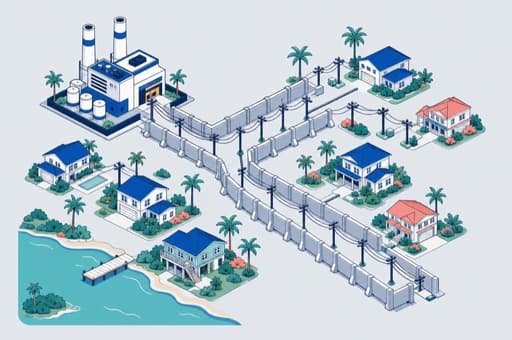
Florida Power & Light Company
Florida’s local electric service produced $18.262 billion in FY2025 revenue, making it the company’s dependable core. More customers and approved grid spending help it grow; storms, weather and regulatory decisions decide how smooth that growth is.
Competes with Duke Energy Florida retail service (Duke Energy) · Tampa Electric service (Emera)
In plain English
Most of the company is this familiar monthly bill. FPL generates electricity, carries it over its lines and delivers it to more than six million Florida accounts; homes bought most of the power sold directly to customers.
Customers pay for the power they use and for keeping the system ready. The state regulator approves which costs can go into bills and what return FPL may earn on money invested in plants, wires and storm protection. That makes the local business steady, but not automatic: storms, fuel costs and permission to recover spending still matter.
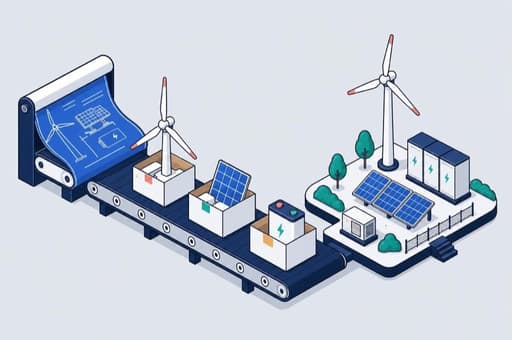
NextEra Energy Resources
The nationwide project arm builds and owns power plants, batteries, lines and fuel infrastructure. By July 2026 its contracted construction queue had risen quickly; turning those promises into operating assets depends on permits, grid connections, equipment, capital and on-time building.
Competes with Onshore wind portfolio (Invenergy) · Gas fleet and 5.4 GW program (NRG)
In plain English
Think of this as an energy builder with a long landlord phase. It finds a site, arranges permission to connect, finances and constructs the equipment, then usually keeps ownership after the project switches on.
Utilities, public power groups and companies sign long agreements to buy the electricity or reserve output. Those promises make projects easier to finance and can produce years of payments, but a signed deal is not yet a running plant. NextEra still has to secure permits, connect to the network and fund construction before the queue becomes sales.
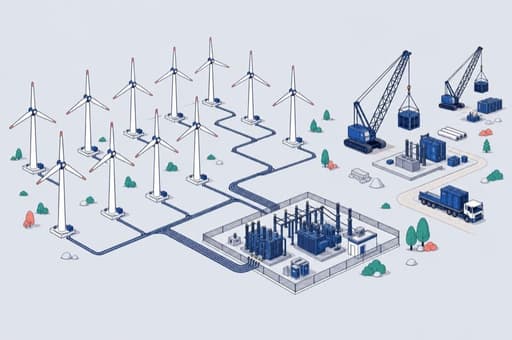
Wind Facilities
Rows of turbines turn moving air into electricity sold under long agreements. The operating fleet held about 22.4 gigawatts of generating capacity at FY2025 year-end, but newer growth attention is shifting toward batteries, transmission and power available around the clock.
Competes with Onshore wind portfolio (Invenergy) · U.S. onshore wind fleet (RWE)
In plain English
A turbine is a tall generator whose blades are pushed by the wind. NextEra groups many of them on windy land, connects the site to the power network and usually keeps running it for years.
Before building, a utility, public power group or company commonly agrees to buy the electricity and credits that certify its clean source. That long promise supports financing and becomes payment as the site produces. Wind itself is free, but the business still depends on good sites, permits, a network connection and equipment that stays available.
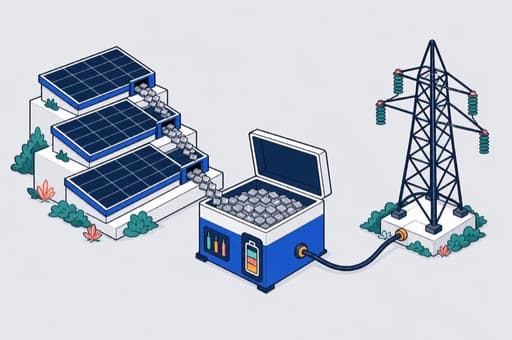
Solar Facilities
Large solar fields sell daytime electricity under long agreements, often beside batteries that move delivery into later hours. NextEra owned about 10.5 gigawatts of generating capacity at FY2025 year-end; land, equipment supply and network connections govern the pace.
Competes with Utility-scale solar/storage projects (Origis Energy) · Solar portfolio (Invenergy)
In plain English
Sunlight hits rows of panels and comes out as electricity. One field can feed a utility or a large company, and a nearby battery can hold some output until it is more useful.
Buyers such as Meta and Entergy commit through long purchase agreements, giving NextEra a dependable customer before construction. The company earns as completed sites deliver power and credits that certify its clean source. Plenty of demand does not remove the practical bottlenecks: a project still needs suitable land, panels, permission to build and a place on the power network.
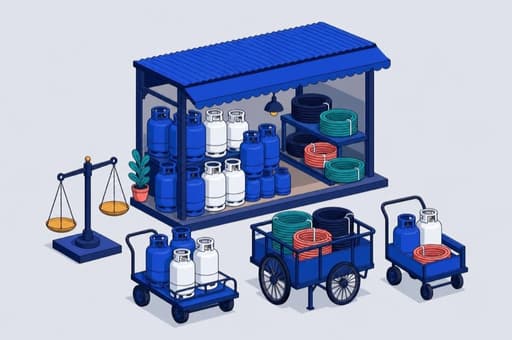
Customer Supply, including Symmetry Energy Solutions
This service buys and resells power, gas, reserved supply and help managing energy needs. FY2025 revenue grew by $300 million before Symmetry joined in January 2026; weather, customer usage and differences between buying and selling prices can make results uneven.
Competes with Competitive power/gas supply (Constellation NewEnergy) · Champion Energy Services (Calpine)
In plain English
Here the company acts more like an energy shopkeeper than a plant owner. It gathers electricity and gas from generators, producers, pipelines and storage, then packages that supply for businesses, towns and retail accounts. Symmetry adds gas supply, storage and delivery planning across thousands of accounts.
A customer may pay NextEra to cover everything it needs, not merely a fixed amount. That creates repeat business and fees for managing supply, but it also leaves NextEra exposed when weather or usage differs from the forecast. Profit comes from buying, moving and reselling energy well—not simply from selling more of it.
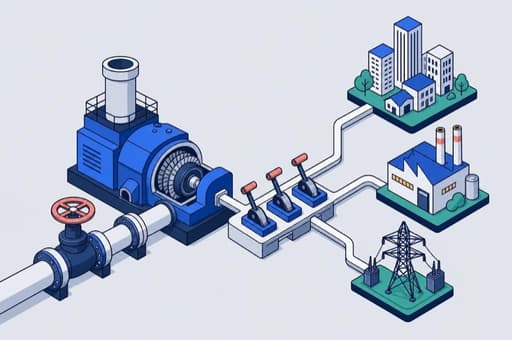
Natural Gas Generation Facilities
These operating plants burn gas to make controllable electricity when customers or power markets need it. They complement weather-dependent wind and solar; fuel prices, emissions rules and how often each plant runs determine the result.
Competes with Gas generation fleet (Calpine) · Gas fleet and 5.4 GW program (NRG)
In plain English
Unlike a wind or solar site, a gas plant can be switched up when power is needed. Fuel turns a turbine, the turbine makes electricity, and the output helps cover hours when other sources are unavailable.
Utilities, large users and shared markets that match power sellers with buyers pay for delivered electricity or for keeping output ready. NextEra earns from plants already running under contracts and in those markets. This fleet is separate from the mostly unbuilt data-center program; its economics hinge on gas supply, operating time, environmental permission and market rules.
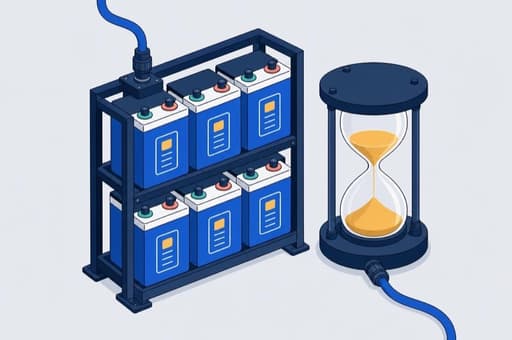
Battery Storage Facilities
Large batteries store electricity when it is plentiful and return it when the network needs help. About 5.2 gigawatts of output capacity were operating at FY2025 year-end, with another wave entering the construction queue in Q2 FY2026.
Competes with Standalone battery projects (Plus Power) · Solar-plus-storage projects (Origis Energy)
In plain English
Picture rechargeable batteries scaled up from a phone to rows of shipping-container-sized boxes. They take in electricity, hold it and release it later, which makes a solar field useful after the sun goes down.
Utilities, large power users and market operators pay for stored power, quick backup and readiness. NextEra often builds batteries beside solar projects, sharing the connection and customer agreement. The opportunity is growing, but usable income depends on safe operation, how much each battery wears with repeated use and the rules for selling its help to the network.
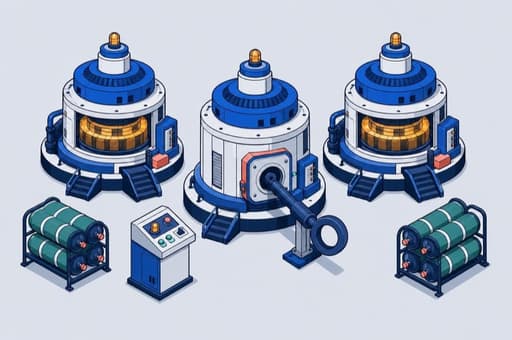
Nuclear Facilities — Point Beach, Seabrook and Duane Arnold Energy Center
Point Beach and Seabrook provide steady power today. The growth piece is the planned 615-megawatt Duane Arnold restart for Google; government approval, skilled labor, equipment and a safe return to service stand between promise and revenue.
Competes with Crane Clean Energy Center restart (Constellation) · Palisades restart (Holtec)
In plain English
Nuclear plants are built to run for long stretches, producing electricity whether the sun shines or the wind blows. NextEra already operates Point Beach and Seabrook, while Duane Arnold is a closed Iowa plant it plans to restart.
Buyers pay through long power agreements, giving the plants predictable demand for their steady output. Google signed a twenty-five-year agreement behind Duane Arnold, whose return is targeted for early 2029. Restarting an old plant is not like flipping a switch: regulators must approve it, specialized workers and parts must be ready, and outages must stay under control.
NextEra Energy Transmission
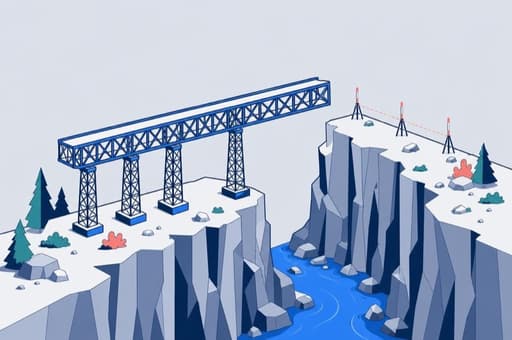
This business builds and owns the high-voltage lines that move large amounts of electricity. A 137-mile New Mexico line entered service in June 2026; winning projects is only the start, because routes, permits and who pays can delay construction.
Competes with LS Power Grid projects (LS Power) · North Plains Connector (Grid United)
In plain English
Power plants are useful only if electricity can reach people. This unit builds the long-distance lines that act like highways between generation and local networks, then keeps those routes operating.
Regional planners choose needed projects, and approved charges are collected from utilities and their customers over time. NextEra earns an allowed profit on the money invested once assets enter service. Before that can happen, each line needs a route, land permission, public approval, construction crews and agreement on which customers bear the cost—often a slower path than the engineering alone suggests.
15 by 35 Origination Channel
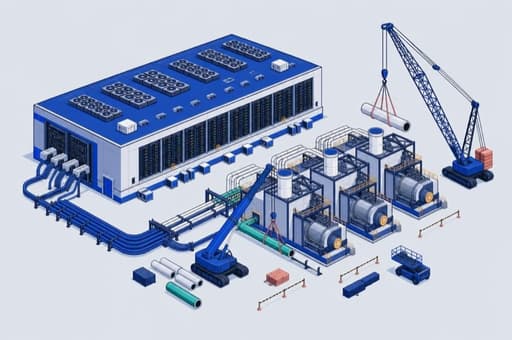
NextEra aims to put 15 gigawatts of new generation into service for data-center hubs by FY2035. The ambition is large, but most named capacity remains developmental; customer contracts, fuel, permits and completed data centers must arrive together.
Competes with 5.4 GW program (NRG / GE Vernova / Kiewit) · Up-to-4-GW program (Chevron / Engine No. 1 / GE Vernova)
In plain English
Data centers use enormous amounts of electricity every hour, so NextEra is trying to sell them a whole power plan rather than a single plant. The program gathers sites, generation and connections around these large buyers.
A data-center operator such as Google would promise to buy power for years, allowing NextEra to finance construction and earn once the equipment runs. The target includes substantial gas generation, with other technologies depending on each site. For now this is mainly a route to future contracts: announced locations and possible capacity do not pay until buyers commit and projects are actually built.


 Florida Power & Light CompanyFlorida’s local electric service produced $18.262 billion in FY2025 revenue, making it the company’s dependable core. More customers and approved grid spending help it grow; storms, weather and regulatory decisions decide how smooth that growth is.
Florida’s local electric service produced $18.262 billion in FY2025 revenue, making it the company’s dependable core. More customers and approved grid spending help it grow; storms, weather and regulatory decisions decide how smooth that growth is.
In plain English
Most of the company is this familiar monthly bill. FPL generates electricity, carries it over its lines and delivers it to more than six million Florida accounts; homes bought most of the power sold directly to customers.
Customers pay for the power they use and for keeping the system ready. The state regulator approves which costs can go into bills and what return FPL may earn on money invested in plants, wires and storm protection. That makes the local business steady, but not automatic: storms, fuel costs and permission to recover spending still matter.
Competes with Duke Energy Florida retail service (Duke Energy) · Tampa Electric service (Emera)
 NextEra Energy ResourcesThe nationwide project arm builds and owns power plants, batteries, lines and fuel infrastructure. By July 2026 its contracted construction queue had risen quickly; turning those promises into operating assets depends on permits, grid connections, equipment, capital and on-time building.
The nationwide project arm builds and owns power plants, batteries, lines and fuel infrastructure. By July 2026 its contracted construction queue had risen quickly; turning those promises into operating assets depends on permits, grid connections, equipment, capital and on-time building.
In plain English
Think of this as an energy builder with a long landlord phase. It finds a site, arranges permission to connect, finances and constructs the equipment, then usually keeps ownership after the project switches on.
Utilities, public power groups and companies sign long agreements to buy the electricity or reserve output. Those promises make projects easier to finance and can produce years of payments, but a signed deal is not yet a running plant. NextEra still has to secure permits, connect to the network and fund construction before the queue becomes sales.
Competes with Onshore wind portfolio (Invenergy) · Gas fleet and 5.4 GW program (NRG)
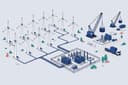 Wind FacilitiesRows of turbines turn moving air into electricity sold under long agreements. The operating fleet held about 22.4 gigawatts of generating capacity at FY2025 year-end, but newer growth attention is shifting toward batteries, transmission and power available around the clock.
Rows of turbines turn moving air into electricity sold under long agreements. The operating fleet held about 22.4 gigawatts of generating capacity at FY2025 year-end, but newer growth attention is shifting toward batteries, transmission and power available around the clock.
In plain English
A turbine is a tall generator whose blades are pushed by the wind. NextEra groups many of them on windy land, connects the site to the power network and usually keeps running it for years.
Before building, a utility, public power group or company commonly agrees to buy the electricity and credits that certify its clean source. That long promise supports financing and becomes payment as the site produces. Wind itself is free, but the business still depends on good sites, permits, a network connection and equipment that stays available.
Competes with Onshore wind portfolio (Invenergy) · U.S. onshore wind fleet (RWE)
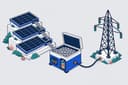 Solar FacilitiesLarge solar fields sell daytime electricity under long agreements, often beside batteries that move delivery into later hours. NextEra owned about 10.5 gigawatts of generating capacity at FY2025 year-end; land, equipment supply and network connections govern the pace.
Large solar fields sell daytime electricity under long agreements, often beside batteries that move delivery into later hours. NextEra owned about 10.5 gigawatts of generating capacity at FY2025 year-end; land, equipment supply and network connections govern the pace.
In plain English
Sunlight hits rows of panels and comes out as electricity. One field can feed a utility or a large company, and a nearby battery can hold some output until it is more useful.
Buyers such as Meta and Entergy commit through long purchase agreements, giving NextEra a dependable customer before construction. The company earns as completed sites deliver power and credits that certify its clean source. Plenty of demand does not remove the practical bottlenecks: a project still needs suitable land, panels, permission to build and a place on the power network.
Competes with Utility-scale solar/storage projects (Origis Energy) · Solar portfolio (Invenergy)
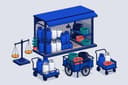 Customer Supply, including Symmetry Energy SolutionsThis service buys and resells power, gas, reserved supply and help managing energy needs. FY2025 revenue grew by $300 million before Symmetry joined in January 2026; weather, customer usage and differences between buying and selling prices can make results uneven.
This service buys and resells power, gas, reserved supply and help managing energy needs. FY2025 revenue grew by $300 million before Symmetry joined in January 2026; weather, customer usage and differences between buying and selling prices can make results uneven.
In plain English
Here the company acts more like an energy shopkeeper than a plant owner. It gathers electricity and gas from generators, producers, pipelines and storage, then packages that supply for businesses, towns and retail accounts. Symmetry adds gas supply, storage and delivery planning across thousands of accounts.
A customer may pay NextEra to cover everything it needs, not merely a fixed amount. That creates repeat business and fees for managing supply, but it also leaves NextEra exposed when weather or usage differs from the forecast. Profit comes from buying, moving and reselling energy well—not simply from selling more of it.
Competes with Competitive power/gas supply (Constellation NewEnergy) · Champion Energy Services (Calpine)
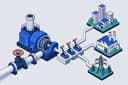 Natural Gas Generation FacilitiesThese operating plants burn gas to make controllable electricity when customers or power markets need it. They complement weather-dependent wind and solar; fuel prices, emissions rules and how often each plant runs determine the result.
These operating plants burn gas to make controllable electricity when customers or power markets need it. They complement weather-dependent wind and solar; fuel prices, emissions rules and how often each plant runs determine the result.
In plain English
Unlike a wind or solar site, a gas plant can be switched up when power is needed. Fuel turns a turbine, the turbine makes electricity, and the output helps cover hours when other sources are unavailable.
Utilities, large users and shared markets that match power sellers with buyers pay for delivered electricity or for keeping output ready. NextEra earns from plants already running under contracts and in those markets. This fleet is separate from the mostly unbuilt data-center program; its economics hinge on gas supply, operating time, environmental permission and market rules.
Competes with Gas generation fleet (Calpine) · Gas fleet and 5.4 GW program (NRG)
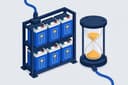 Battery Storage FacilitiesLarge batteries store electricity when it is plentiful and return it when the network needs help. About 5.2 gigawatts of output capacity were operating at FY2025 year-end, with another wave entering the construction queue in Q2 FY2026.
Large batteries store electricity when it is plentiful and return it when the network needs help. About 5.2 gigawatts of output capacity were operating at FY2025 year-end, with another wave entering the construction queue in Q2 FY2026.
In plain English
Picture rechargeable batteries scaled up from a phone to rows of shipping-container-sized boxes. They take in electricity, hold it and release it later, which makes a solar field useful after the sun goes down.
Utilities, large power users and market operators pay for stored power, quick backup and readiness. NextEra often builds batteries beside solar projects, sharing the connection and customer agreement. The opportunity is growing, but usable income depends on safe operation, how much each battery wears with repeated use and the rules for selling its help to the network.
Competes with Standalone battery projects (Plus Power) · Solar-plus-storage projects (Origis Energy)
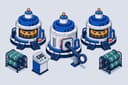 Nuclear Facilities — Point Beach, Seabrook and Duane Arnold Energy CenterPoint Beach and Seabrook provide steady power today. The growth piece is the planned 615-megawatt Duane Arnold restart for Google; government approval, skilled labor, equipment and a safe return to service stand between promise and revenue.
Point Beach and Seabrook provide steady power today. The growth piece is the planned 615-megawatt Duane Arnold restart for Google; government approval, skilled labor, equipment and a safe return to service stand between promise and revenue.
In plain English
Nuclear plants are built to run for long stretches, producing electricity whether the sun shines or the wind blows. NextEra already operates Point Beach and Seabrook, while Duane Arnold is a closed Iowa plant it plans to restart.
Buyers pay through long power agreements, giving the plants predictable demand for their steady output. Google signed a twenty-five-year agreement behind Duane Arnold, whose return is targeted for early 2029. Restarting an old plant is not like flipping a switch: regulators must approve it, specialized workers and parts must be ready, and outages must stay under control.
Competes with Crane Clean Energy Center restart (Constellation) · Palisades restart (Holtec)
 NextEra Energy TransmissionThis business builds and owns the high-voltage lines that move large amounts of electricity. A 137-mile New Mexico line entered service in June 2026; winning projects is only the start, because routes, permits and who pays can delay construction.
This business builds and owns the high-voltage lines that move large amounts of electricity. A 137-mile New Mexico line entered service in June 2026; winning projects is only the start, because routes, permits and who pays can delay construction.
In plain English
Power plants are useful only if electricity can reach people. This unit builds the long-distance lines that act like highways between generation and local networks, then keeps those routes operating.
Regional planners choose needed projects, and approved charges are collected from utilities and their customers over time. NextEra earns an allowed profit on the money invested once assets enter service. Before that can happen, each line needs a route, land permission, public approval, construction crews and agreement on which customers bear the cost—often a slower path than the engineering alone suggests.
Competes with LS Power Grid projects (LS Power) · North Plains Connector (Grid United)
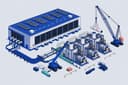 15 by 35 Origination ChannelNextEra aims to put 15 gigawatts of new generation into service for data-center hubs by FY2035. The ambition is large, but most named capacity remains developmental; customer contracts, fuel, permits and completed data centers must arrive together.
NextEra aims to put 15 gigawatts of new generation into service for data-center hubs by FY2035. The ambition is large, but most named capacity remains developmental; customer contracts, fuel, permits and completed data centers must arrive together.
In plain English
Data centers use enormous amounts of electricity every hour, so NextEra is trying to sell them a whole power plan rather than a single plant. The program gathers sites, generation and connections around these large buyers.
A data-center operator such as Google would promise to buy power for years, allowing NextEra to finance construction and earn once the equipment runs. The target includes substantial gas generation, with other technologies depending on each site. For now this is mainly a route to future contracts: announced locations and possible capacity do not pay until buyers commit and projects are actually built.
Competes with 5.4 GW program (NRG / GE Vernova / Kiewit) · Up-to-4-GW program (Chevron / Engine No. 1 / GE Vernova)
Named in filings, launches and programs
- Regulated Natural Gas Transmission NetworkEcosystemPipeline stakes earn from gas transport reserved by customers, adding a small steady infrastructure business beyond electricity.
- Meta Clean Energy ContractsCustomer program · RampingEleven power agreements and two energy-service deals cover 2.5 gigawatts, including solar paired with batteries.
- Entergy Joint Development AgreementCustomer program · RampingA five-year framework targets up to 4.5 gigawatts of new solar and storage beyond projects already under development.
- Two Fortune 50 Framework AgreementsCustomer program · AnnouncedFrameworks with two unnamed non-technology companies cover up to 10.5 gigawatts through 2030; none entered the project queue initially.
- U.S.–Japan Gas Generation ProgramCustomer program · AnnouncedCommercial terms and a financing milestone support up to 10 gigawatts of planned U.S. gas-powered generation.
- Paducah American Energy HubCustomer program · AnnouncedA Western Kentucky data-center campus and dedicated-energy project could reach 4.6 gigawatts, but remains a development plan.
- GE Vernova Gas-Generation FrameworkEcosystem · AnnouncedThe equal development partnership seeks large, long-contracted gas projects and may build plants for customers to take over.
- Xcel Energy Joint Development AgreementCustomer program · AnnouncedThe partners plan generation, storage and transmission across Xcel’s eight-state territory; no operating project is yet described.
- Basin Electric Combined-Cycle ProjectCustomer program · AnnouncedA planned 1.5-gigawatt North Dakota gas plant would serve a cooperative power customer.
- RewirePlatform · RampingGoogle Cloud-backed software tools help operate assets and develop products; early tools are live, but outside revenue is undisclosed.
- Dominion Energy CombinationBrand · AnnouncedDominion shareholders approved the proposed stock-and-cash combination; other approvals remain before the targeted second-half 2027 closing.
- Caliber Resource PartnersBrandAcquired in June 2026, Caliber owns non-operating interests in more than 7,500 producing wells across major U.S. shale regions.
- XPLR InfrastructureBrandNextEra subsidiaries owned 52.5% at FY2025 year-end; guarantees and a $700 million write-down keep this infrastructure owner relevant.
- FPL SolarTogetherCustomer programFlorida customers can subscribe to dedicated FPL solar capacity and receive bill credits tied to the program.
- Renewable FuelsProduct lineSmall activities making gas from waste and other renewable sources remain in the portfolio, without separately material revenue disclosed.
Regulated Natural Gas Transmission NetworkEcosystem
Pipeline stakes earn from gas transport reserved by customers, adding a small steady infrastructure business beyond electricity.
Meta Clean Energy ContractsCustomer program · Ramping
Eleven power agreements and two energy-service deals cover 2.5 gigawatts, including solar paired with batteries.
Entergy Joint Development AgreementCustomer program · Ramping
A five-year framework targets up to 4.5 gigawatts of new solar and storage beyond projects already under development.
Two Fortune 50 Framework AgreementsCustomer program · Announced
Frameworks with two unnamed non-technology companies cover up to 10.5 gigawatts through 2030; none entered the project queue initially.
U.S.–Japan Gas Generation ProgramCustomer program · Announced
Commercial terms and a financing milestone support up to 10 gigawatts of planned U.S. gas-powered generation.
Paducah American Energy HubCustomer program · Announced
A Western Kentucky data-center campus and dedicated-energy project could reach 4.6 gigawatts, but remains a development plan.
GE Vernova Gas-Generation FrameworkEcosystem · Announced
The equal development partnership seeks large, long-contracted gas projects and may build plants for customers to take over.
Xcel Energy Joint Development AgreementCustomer program · Announced
The partners plan generation, storage and transmission across Xcel’s eight-state territory; no operating project is yet described.
Basin Electric Combined-Cycle ProjectCustomer program · Announced
A planned 1.5-gigawatt North Dakota gas plant would serve a cooperative power customer.
RewirePlatform · Ramping
Google Cloud-backed software tools help operate assets and develop products; early tools are live, but outside revenue is undisclosed.
Dominion Energy CombinationBrand · Announced
Dominion shareholders approved the proposed stock-and-cash combination; other approvals remain before the targeted second-half 2027 closing.
Caliber Resource PartnersBrand
Acquired in June 2026, Caliber owns non-operating interests in more than 7,500 producing wells across major U.S. shale regions.
XPLR InfrastructureBrand
NextEra subsidiaries owned 52.5% at FY2025 year-end; guarantees and a $700 million write-down keep this infrastructure owner relevant.
FPL SolarTogetherCustomer program
Florida customers can subscribe to dedicated FPL solar capacity and receive bill credits tied to the program.
Renewable FuelsProduct line
Small activities making gas from waste and other renewable sources remain in the portfolio, without separately material revenue disclosed.