
Nu (NU)
Runs a branchless financial platform across Brazil, Mexico, and Colombia.
Something off on this page? Send us feedback.
Nubank is a bank with no branches. It hands people a purple credit card, learns from how they spend, and uses that record to decide how much more to lend them — all funded by the savings its own customers park with it. Almost all of the money still comes from Brazil. Mexico is the second act, and the United States has only just opened.
Item facts: FY2025 · year ended Dec 31, 2025, from filings, earnings calls and company pages.
Judgment weights, not filed revenue
The band summarizes business focus and direction. ~ marks estimates.
8 in detail · 17 more below
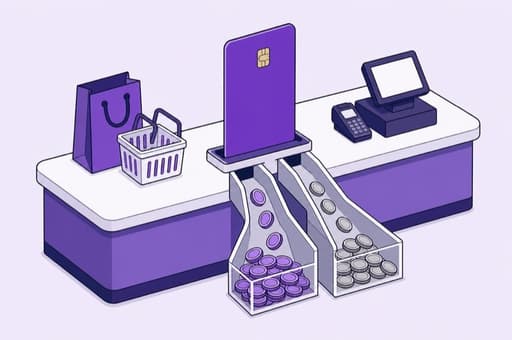
Nu Credit Card
The no-annual-fee purple Mastercard that brings customers in and pays most of the bills: roughly four in every ten revenue dollars, on a $26 billion balance by mid-2026, up 35% in a year. Growth now comes from raising limits, not signing up new people.
Competes with Credit cards (Itaú) · Mercado Pago credit card (MercadoLibre) · Fee-light digital cards (C6 Bank)
In plain English
Start with a credit card that costs nothing to hold. Swipe it and Nu gets paid twice: a small fee comes back on the purchase itself — Mastercard sets what that fee is — and if you don't clear the bill in full, you pay interest on the rest.
Interest is the bigger half. But the swiping does something interest can't: every purchase tells Nu what you buy and whether you pay on time, and that record is what Nu leans on when it decides how much more to lend you. Part of the swipe money goes straight back out as rewards, so what Nu keeps is what's left after that.
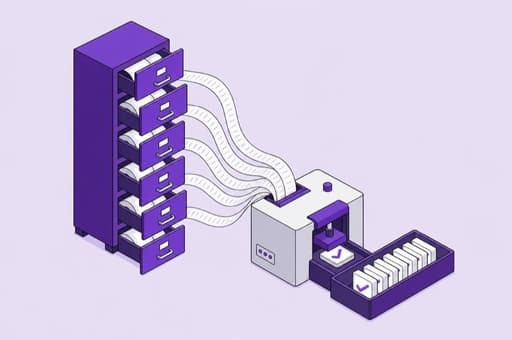
NuFormer
An in-house model trained on more than a decade of spending records from over 100 million customers. Nothing about it is sold; it surfaces as who gets approved and how big a limit they get. It started in cards and is now aimed at personal loans too.
Competes with Credit scoring from bureau files (Itaú) · Credit-scoring stack (MercadoLibre)
In plain English
Think of the oldest, most patient teller in the bank — one who has watched a hundred million people pay, miss and catch up for over ten years, and remembers every bit of it. NuFormer is that memory turned into software.
It earns nothing directly. What it does is set the dials on everything else: who gets a card, how high the limit goes, which loan gets approved. Management put a small gain in Nu's share of Brazilian card spending in late 2025 down to limit increases the model suggested. Separately, chat robots now handle more than sixty percent of Brazilian customer conversations.

Personal Loans
Loans with nothing standing behind them, sold to people who already carry the card. The book reached $10.3 billion by mid-2026, up 45% — the fastest-growing big line, and the one critics point at when they worry about Brazilian borrowers.
Competes with Personal loans (Banco Inter) · Mercado Crédito consumer lending (MercadoLibre) · Personal credit (Itaú)
In plain English
No house, no car, no wage pledged — just a promise to pay it back. Nu offers these loans mostly to people already holding its card, so it isn't guessing: it has watched them for years before the offer ever appears.
The money comes from customers' own savings, which Nu borrows at a rate tied to what Brazilian banks charge each other and lends out at a much higher one. The gap is the profit. The catch is plain: when a borrower stops paying there is nothing to take back, and Nu books the losses it expects early, before the interest shows up. It quit this business in late 2022 and came back with rebuilt models.

Payroll-Backed Loans
Loans taken out of a paycheck before the worker ever sees it, with the wage itself as the security. Still small — roughly three cents of every revenue dollar, $3.1 billion lent by mid-2026 — and a November 2025 rule change cut one big source by half or more.
Competes with Consignado privado (MercadoLibre) · Consignado payroll book (Banco do Brasil) · Payroll lending (Banco Pan)
In plain English
The tidiest kind of consumer loan in Brazil: repayment leaves the wage before it reaches the worker, so there is little chance of the money going somewhere else first. Rates are capped by rule, which keeps the margin thin.
Nu is a latecomer here. Payroll lending has long belonged to the big state and private banks, and management describes its own position as tiny — under one percent of the market. Getting in means signing up employers and public bodies one contract at a time, which is slow. And the government sets the terms: new rules in late 2025 on one federal program cut Nu's lending there by more than half.
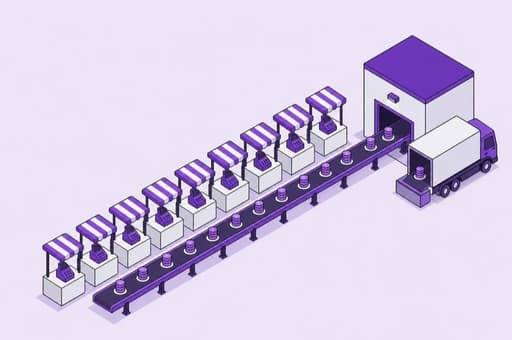
Business Accounts & Working Capital
Accounts and small loans for 6.8 million Brazilian corner shops and one-person firms — around a third of that market, signed up at almost no cost. Lending to companies roughly tripled during 2025, to $766 million.
Competes with Seller credit (MercadoLibre) · Merchant accounts (PagBank) · Business accounts (Banco Inter)
In plain English
The corner bakery, the hairdresser, the guy with a van. In Brazil most small firms are one person doing everything, and that person is usually already a Nu customer — which is why opening a business account for them costs Nu almost nothing, and why it now serves something like a third of the country's small businesses.
The money arrives the way it does everywhere else at Nu: lending. Loans to companies roughly tripled inside a year, from about a quarter of a billion dollars to three-quarters of a billion, and the in-house model Nu built for consumers is now being tried on small-business cards. It is still about one cent of every revenue dollar.
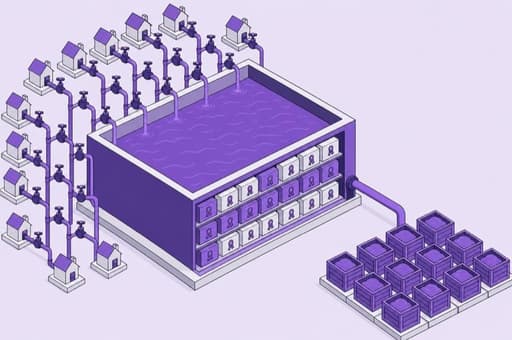
Deposits and Savings
$45.3 billion of customer money by mid-2026. Nu deliberately lends out less than it takes in, and much of the rest sits in government and interbank paper — interest worth a quarter of all revenue, and it shrinks whenever Brazil cuts rates.
Competes with Remunerated wallet balances (Mercado Pago) · Deposits and CDBs (Itaú) · Deposits and CDBs (Banco do Brasil)
In plain English
Customers keep their spending money and their savings in a Nu account. Nu pays them a rate pegged to what Brazilian banks charge each other overnight — the full rate once the money has sat for thirty days, a touch above it if the money is locked up for a term.
Nu chooses not to lend all of it. Deposits grew far slower than credit last year, on purpose, and a large slice sits instead in government and interbank paper, earning interest that came to a quarter of all revenue. So savings pay Nu twice: as cheap fuel for loans, and as a return on what is left over. Rates cut both ways — when Brazil's rate falls this line shrinks, but borrowing gets cheaper and loan demand picks up.

Nu México
16 million customers by mid-2026 — roughly one Mexican adult in six — and, since August, a full bank rather than a lender on a narrower licence. It already earns more per customer than Brazil did at the same stage, but Brazil still supplies nine of every ten revenue dollars.
Competes with Mercado Pago Mexico (MercadoLibre) · Licensed digital bank (Plata) · Card-first accounts (Stori)
In plain English
Mexico today is roughly where Brazil was around 2020. Nu handed out cards and savings accounts there under a limited licence, gathered sixteen million customers, and in August 2026 began operating as a full bank.
That switch matters because a bank can take wages directly. Once the salary lands in the account, the account becomes the one people actually use, and Nu can lend against what it watches going in and out. The money then arrives exactly as it does at home: interest on cards and loans, plus what the deposits earn. Two things sit in the way — most Mexicans still prefer cash, and a rival, Plata, won its own banking licence before Nu did.

Nu US and Nu Global
Opened September 2026: a savings account paying 3.50% a year, a no-fee cashback card, and free transfers into Latin American payment systems. Nu has no US banking licence of its own yet, so it borrows a partner's. Management calls the cost capped.
Competes with High-yield checking and card (SoFi) · Chime account (Chime) · Multi-currency account (Wise)
In plain English
Nu's natural first customers in America are Latin Americans living there — and Nu already banks the other end of that line. So in September 2026 it opened a US account: savings paying three and a half percent a year, a card that hands a little back on every purchase, and transfers south that cost nothing to send.
It can't do this on its own paperwork yet. A partner, Lead Bank, supplies the licence and issues the cards while Nu waits for American regulators to finish. Alongside it sits Nu Global, an account holding dollars and euros for people in dozens of countries, using digital versions of those currencies issued by the payments firm Circle.


 Nu Credit CardThe no-annual-fee purple Mastercard that brings customers in and pays most of the bills: roughly four in every ten revenue dollars, on a $26 billion balance by mid-2026, up 35% in a year. Growth now comes from raising limits, not signing up new people.
The no-annual-fee purple Mastercard that brings customers in and pays most of the bills: roughly four in every ten revenue dollars, on a $26 billion balance by mid-2026, up 35% in a year. Growth now comes from raising limits, not signing up new people.
In plain English
Start with a credit card that costs nothing to hold. Swipe it and Nu gets paid twice: a small fee comes back on the purchase itself — Mastercard sets what that fee is — and if you don't clear the bill in full, you pay interest on the rest.
Interest is the bigger half. But the swiping does something interest can't: every purchase tells Nu what you buy and whether you pay on time, and that record is what Nu leans on when it decides how much more to lend you. Part of the swipe money goes straight back out as rewards, so what Nu keeps is what's left after that.
Competes with Credit cards (Itaú) · Mercado Pago credit card (MercadoLibre) · Fee-light digital cards (C6 Bank)
 NuFormerAn in-house model trained on more than a decade of spending records from over 100 million customers. Nothing about it is sold; it surfaces as who gets approved and how big a limit they get. It started in cards and is now aimed at personal loans too.
An in-house model trained on more than a decade of spending records from over 100 million customers. Nothing about it is sold; it surfaces as who gets approved and how big a limit they get. It started in cards and is now aimed at personal loans too.
In plain English
Think of the oldest, most patient teller in the bank — one who has watched a hundred million people pay, miss and catch up for over ten years, and remembers every bit of it. NuFormer is that memory turned into software.
It earns nothing directly. What it does is set the dials on everything else: who gets a card, how high the limit goes, which loan gets approved. Management put a small gain in Nu's share of Brazilian card spending in late 2025 down to limit increases the model suggested. Separately, chat robots now handle more than sixty percent of Brazilian customer conversations.
Competes with Credit scoring from bureau files (Itaú) · Credit-scoring stack (MercadoLibre)
 Personal LoansLoans with nothing standing behind them, sold to people who already carry the card. The book reached $10.3 billion by mid-2026, up 45% — the fastest-growing big line, and the one critics point at when they worry about Brazilian borrowers.
Loans with nothing standing behind them, sold to people who already carry the card. The book reached $10.3 billion by mid-2026, up 45% — the fastest-growing big line, and the one critics point at when they worry about Brazilian borrowers.
In plain English
No house, no car, no wage pledged — just a promise to pay it back. Nu offers these loans mostly to people already holding its card, so it isn't guessing: it has watched them for years before the offer ever appears.
The money comes from customers' own savings, which Nu borrows at a rate tied to what Brazilian banks charge each other and lends out at a much higher one. The gap is the profit. The catch is plain: when a borrower stops paying there is nothing to take back, and Nu books the losses it expects early, before the interest shows up. It quit this business in late 2022 and came back with rebuilt models.
Competes with Personal loans (Banco Inter) · Mercado Crédito consumer lending (MercadoLibre) · Personal credit (Itaú)
 Payroll-Backed LoansLoans taken out of a paycheck before the worker ever sees it, with the wage itself as the security. Still small — roughly three cents of every revenue dollar, $3.1 billion lent by mid-2026 — and a November 2025 rule change cut one big source by half or more.
Loans taken out of a paycheck before the worker ever sees it, with the wage itself as the security. Still small — roughly three cents of every revenue dollar, $3.1 billion lent by mid-2026 — and a November 2025 rule change cut one big source by half or more.
In plain English
The tidiest kind of consumer loan in Brazil: repayment leaves the wage before it reaches the worker, so there is little chance of the money going somewhere else first. Rates are capped by rule, which keeps the margin thin.
Nu is a latecomer here. Payroll lending has long belonged to the big state and private banks, and management describes its own position as tiny — under one percent of the market. Getting in means signing up employers and public bodies one contract at a time, which is slow. And the government sets the terms: new rules in late 2025 on one federal program cut Nu's lending there by more than half.
Competes with Consignado privado (MercadoLibre) · Consignado payroll book (Banco do Brasil) · Payroll lending (Banco Pan)
 Business Accounts & Working CapitalAccounts and small loans for 6.8 million Brazilian corner shops and one-person firms — around a third of that market, signed up at almost no cost. Lending to companies roughly tripled during 2025, to $766 million.
Accounts and small loans for 6.8 million Brazilian corner shops and one-person firms — around a third of that market, signed up at almost no cost. Lending to companies roughly tripled during 2025, to $766 million.
In plain English
The corner bakery, the hairdresser, the guy with a van. In Brazil most small firms are one person doing everything, and that person is usually already a Nu customer — which is why opening a business account for them costs Nu almost nothing, and why it now serves something like a third of the country's small businesses.
The money arrives the way it does everywhere else at Nu: lending. Loans to companies roughly tripled inside a year, from about a quarter of a billion dollars to three-quarters of a billion, and the in-house model Nu built for consumers is now being tried on small-business cards. It is still about one cent of every revenue dollar.
Competes with Seller credit (MercadoLibre) · Merchant accounts (PagBank) · Business accounts (Banco Inter)
 Deposits and Savings$45.3 billion of customer money by mid-2026. Nu deliberately lends out less than it takes in, and much of the rest sits in government and interbank paper — interest worth a quarter of all revenue, and it shrinks whenever Brazil cuts rates.
$45.3 billion of customer money by mid-2026. Nu deliberately lends out less than it takes in, and much of the rest sits in government and interbank paper — interest worth a quarter of all revenue, and it shrinks whenever Brazil cuts rates.
In plain English
Customers keep their spending money and their savings in a Nu account. Nu pays them a rate pegged to what Brazilian banks charge each other overnight — the full rate once the money has sat for thirty days, a touch above it if the money is locked up for a term.
Nu chooses not to lend all of it. Deposits grew far slower than credit last year, on purpose, and a large slice sits instead in government and interbank paper, earning interest that came to a quarter of all revenue. So savings pay Nu twice: as cheap fuel for loans, and as a return on what is left over. Rates cut both ways — when Brazil's rate falls this line shrinks, but borrowing gets cheaper and loan demand picks up.
Competes with Remunerated wallet balances (Mercado Pago) · Deposits and CDBs (Itaú) · Deposits and CDBs (Banco do Brasil)
 Nu México16 million customers by mid-2026 — roughly one Mexican adult in six — and, since August, a full bank rather than a lender on a narrower licence. It already earns more per customer than Brazil did at the same stage, but Brazil still supplies nine of every ten revenue dollars.
16 million customers by mid-2026 — roughly one Mexican adult in six — and, since August, a full bank rather than a lender on a narrower licence. It already earns more per customer than Brazil did at the same stage, but Brazil still supplies nine of every ten revenue dollars.
In plain English
Mexico today is roughly where Brazil was around 2020. Nu handed out cards and savings accounts there under a limited licence, gathered sixteen million customers, and in August 2026 began operating as a full bank.
That switch matters because a bank can take wages directly. Once the salary lands in the account, the account becomes the one people actually use, and Nu can lend against what it watches going in and out. The money then arrives exactly as it does at home: interest on cards and loans, plus what the deposits earn. Two things sit in the way — most Mexicans still prefer cash, and a rival, Plata, won its own banking licence before Nu did.
Competes with Mercado Pago Mexico (MercadoLibre) · Licensed digital bank (Plata) · Card-first accounts (Stori)
 Nu US and Nu GlobalOpened September 2026: a savings account paying 3.50% a year, a no-fee cashback card, and free transfers into Latin American payment systems. Nu has no US banking licence of its own yet, so it borrows a partner's. Management calls the cost capped.
Opened September 2026: a savings account paying 3.50% a year, a no-fee cashback card, and free transfers into Latin American payment systems. Nu has no US banking licence of its own yet, so it borrows a partner's. Management calls the cost capped.
In plain English
Nu's natural first customers in America are Latin Americans living there — and Nu already banks the other end of that line. So in September 2026 it opened a US account: savings paying three and a half percent a year, a card that hands a little back on every purchase, and transfers south that cost nothing to send.
It can't do this on its own paperwork yet. A partner, Lead Bank, supplies the licence and issues the cards while Nu waits for American regulators to finish. Alongside it sits Nu Global, an account holding dollars and euros for people in dozens of countries, using digital versions of those currencies issued by the payments firm Circle.
Competes with High-yield checking and card (SoFi) · Chime account (Chime) · Multi-currency account (Wise)
Named in filings, launches and programs
- Nu ColombiaBrand · RampingThird market: past 5 million customers and $3.3 billion of deposits by mid-2026, about two cents of every revenue dollar split by country.
- Nubank UltravioletaBrandHigh-income tier launched in 2021, around a million customers; card spending up 41% and invested balances up 37% in the year to mid-2026.
- Nubank CromaProduct lineSubscription tier launched July 2026 at R$39 a month, waived for heavy spenders: platinum card, 0.8% cashback, a higher-paying savings pot, free mobile data.
- Nubank+Product linePaid rewards tier; together with Ultravioleta it carries the rewards Nu has promised customers but not yet handed over.
- NuCelServiceMobile phone service running on Claro's network since January 2025; passed a million customers in June 2026.
- NuPayPlatformNu's pay-at-checkout button; Amazon's Brazilian store added it in November 2025, with instalments stretching to 24 payments.
- NuTravelServiceIn-app travel booking with a price guarantee, sold bundled with the multi-currency account.
- Nu Marketplace / Nu ShoppingPlatformShops inside the banking app; more than 12 million customers were using Nu's non-banking services at the end of 2025.
- Nu Investimentos and Nu Asset ManagementBrandA brokerage bought in June 2021 and a fund manager holding R$6.6 billion of client money at the end of 2025.
- NuLife insuranceServiceCover written by partner insurers and sold through the app; it brought in $35.5 million of commission in 2025.
- Money Boxes (Caixinhas / Cajitas)ProductSavings pots inside the account; the Mexican version paid between 7.3% and 15.0% a year at the end of 2025.
- Pix with AIProductBrazil's instant payments with an assistant built in; more than 10 million people used it each month at the end of 2025.
- Under-18 credit cardProductA card for teenagers, launched in 2025 to start the relationship years before anyone's first salary.
- Fresh StartCustomer programProgram for customers who fell behind; 1.8 million renegotiated under Brazil's government Desenrola scheme in the second quarter of 2026.
- Colombia subscription credit cardProductA paid-tier card in Colombia that let Nu say yes to more applicants.
- Banco Porto Real de InvestimentosBrand · AnnouncedAgreed in July 2026 to buy this wholesale-credit bank, founded in 1992; Brazil's central bank still has to approve the deal.
- Nubank N.A.Brand · Pre-revenueThe Delaware entity meant to hold Nu's own US banking licence; American regulators gave it conditional approval in January 2026.
Nu ColombiaBrand · Ramping
Third market: past 5 million customers and $3.3 billion of deposits by mid-2026, about two cents of every revenue dollar split by country.
Nubank UltravioletaBrand
High-income tier launched in 2021, around a million customers; card spending up 41% and invested balances up 37% in the year to mid-2026.
Nubank CromaProduct line
Subscription tier launched July 2026 at R$39 a month, waived for heavy spenders: platinum card, 0.8% cashback, a higher-paying savings pot, free mobile data.
Nubank+Product line
Paid rewards tier; together with Ultravioleta it carries the rewards Nu has promised customers but not yet handed over.
NuCelService
Mobile phone service running on Claro's network since January 2025; passed a million customers in June 2026.
NuPayPlatform
Nu's pay-at-checkout button; Amazon's Brazilian store added it in November 2025, with instalments stretching to 24 payments.
NuTravelService
In-app travel booking with a price guarantee, sold bundled with the multi-currency account.
Nu Marketplace / Nu ShoppingPlatform
Shops inside the banking app; more than 12 million customers were using Nu's non-banking services at the end of 2025.
Nu Investimentos and Nu Asset ManagementBrand
A brokerage bought in June 2021 and a fund manager holding R$6.6 billion of client money at the end of 2025.
NuLife insuranceService
Cover written by partner insurers and sold through the app; it brought in $35.5 million of commission in 2025.
Money Boxes (Caixinhas / Cajitas)Product
Savings pots inside the account; the Mexican version paid between 7.3% and 15.0% a year at the end of 2025.
Pix with AIProduct
Brazil's instant payments with an assistant built in; more than 10 million people used it each month at the end of 2025.
Under-18 credit cardProduct
A card for teenagers, launched in 2025 to start the relationship years before anyone's first salary.
Fresh StartCustomer program
Program for customers who fell behind; 1.8 million renegotiated under Brazil's government Desenrola scheme in the second quarter of 2026.
Colombia subscription credit cardProduct
A paid-tier card in Colombia that let Nu say yes to more applicants.
Banco Porto Real de InvestimentosBrand · Announced
Agreed in July 2026 to buy this wholesale-credit bank, founded in 1992; Brazil's central bank still has to approve the deal.
Nubank N.A.Brand · Pre-revenue
The Delaware entity meant to hold Nu's own US banking licence; American regulators gave it conditional approval in January 2026.