
NVR (NVR)
Builds primarily pre-sold homes under Ryan Homes, NVHomes and Heartland Homes.
Something off on this page? Send us feedback.
NVR builds houses and sells them one family at a time, under the Ryan Homes, NVHomes and Heartland Homes names. What sets it apart is what it refuses to do: it does not buy and develop land, only the right to take finished lots as it needs them, so its cash stays out of the dirt. Its oldest and biggest market is the stretch around Washington, D.C., and the housing cycle is currently against it.
Item facts: FY2025 · year ended Dec 31, 2025, from filings, earnings calls and company pages.
Judgment weights, not filed revenue
The band summarizes business focus and direction. ~ marks estimates.
7 in detail · 8 more below
Homebuilding Mid Atlantic
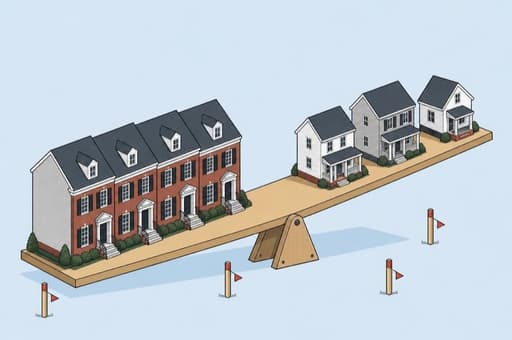
NVR's home ground — Maryland, Virginia, West Virginia, Delaware and Washington, D.C. — and its biggest single source of money at $4.37B in 2025. It is also where the slowdown landed first: sales here fell about a quarter in the first half of 2026.
Competes with Homebuilding segment (D.R. Horton) · Pulte Homes and Centex (PulteGroup) · Upper-end homes in the D.C. corridor (Toll Brothers)
In plain English
Start where the company started. NVR grew up around Washington, D.C., and that corridor — with Maryland, Virginia, West Virginia and Delaware — still brings in more money than any other region.
Nothing counts as a sale until the keys change hands. A family picks a house and a lot, waits months while it goes up, and only at the closing table does the money land in NVR's accounts. All three of its house names sell here, from first houses to the expensive ones, making this the one region with the full ladder of prices. After building costs, about twenty-three dollars of every hundred was left in 2025.
Ryan Homes
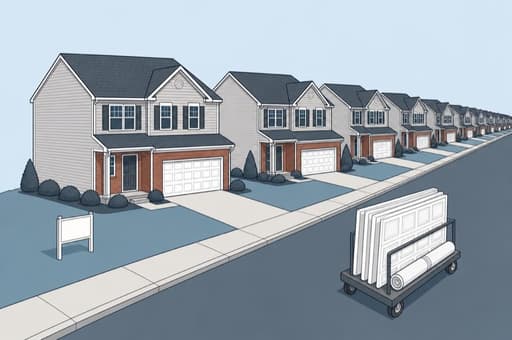
The volume brand — first houses and first trade-ups, on sale in roughly thirty of NVR's thirty-seven metro areas. Company-wide, about 11,000 homes were on order and not yet handed over at mid-2026, worth roughly $5.0B: the clearest read on the next few quarters.
Competes with Express Series (D.R. Horton) · Centex (PulteGroup) · Tradition Series (D.R. Horton)
In plain English
The sign on most NVR lawns. Ryan Homes is the everyday brand — a set of floor plans put up again and again across most of the company's markets, sold to people buying a first house or trading up once.
Repetition is the point: same plans, same materials, one house at a time to ordinary families, with no big customer whose loss would matter. What does matter is the mortgage rate. These are the buyers who feel a higher monthly payment first, and in the three months to June 2026 NVR took more orders than a year earlier only by accepting a lower average price on them.
Homebuilding Mid East
New York, Ohio, western Pennsylvania, Indiana and Illinois: $1.88B in 2025, flat on the year. Lower prices, steadier results — profit per house barely moved in the first half of 2026, the calmest of the four regions.
Competes with Centex, Pulte Homes and Del Webb (PulteGroup) · Express Series (D.R. Horton) · Homebuilding (Lennar)
In plain English
Smaller price tags, fewer surprises. In Ohio, Indiana, Illinois, New York and western Pennsylvania, houses sell for less than NVR's average, so each sale is a smaller slice of a bigger pile of sales.
That cuts both ways. Cheaper homes are easier for local families to afford, which is why its profit per house held while others slipped — but buyers at the lower end are also the first to stop qualifying for a loan when mortgage rates climb. Pittsburgh is the odd corner: the one place NVR sells under the Heartland Homes name, aimed at people moving up to something larger.
Homebuilding North East
New Jersey and eastern Pennsylvania — the smallest region at $1.20B in 2025 and the richest, keeping about a quarter of each sales dollar after building costs. That cushion shrank the hardest of the four in the first half of 2026.
Competes with Homes in New Jersey and suburban Philadelphia (Toll Brothers) · John Wieland Homes (PulteGroup) · Emerald Homes (D.R. Horton)
In plain English
Hard places to build are good places to sell. New Jersey and the Philadelphia suburbs approve new lots slowly, so there is never much fresh supply, and houses that are scarce hold their price.
NVR sells its dressier NVHomes product here alongside starter houses, which is part of why its smallest region by sales earns the most on each one. The flip side arrived in 2026. Buyers at these prices usually have to sell the home they already own before they can move, so when the market cools they wait — and the region with the fattest margin had the most of it to hand back.
Homebuilding South East
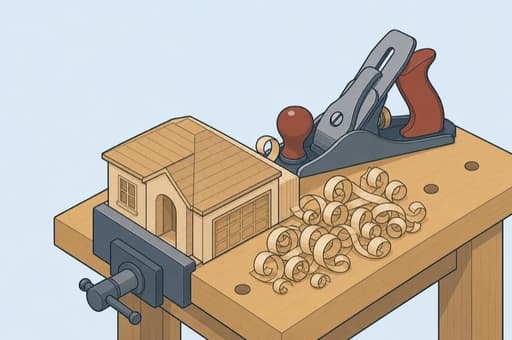
The Carolinas, Tennessee, Florida, Georgia and Kentucky: $2.64B in 2025, and the first region where profit cracked — about eighteen dollars of every hundred left after building costs, down from twenty-two. In the first half of 2026 it was the steadiest line.
Competes with Sunbelt homebuilding (D.R. Horton) · Homebuilding (Meritage Homes) · Homebuilding (Lennar)
In plain English
The move-south region. Families heading for the Carolinas, Tennessee, Georgia and Florida have been NVR's growth story for the past decade, and almost everything it puts up there carries the Ryan Homes name.
Growth here is bought. Builders in these markets compete with sweeteners — chiefly help with the buyer's monthly mortgage payment — and in 2025 that showed up as the thinnest profit per house of the four regions. The deal is plain: keep the houses moving, accept less on each one. It is also where the money already placed on future lots is most exposed when buyers stop showing up.

Lot purchase agreements
The lot book under every house: roughly 175,000 finished lots held with about $1.0B of deposits by mid-2026, more of both than six months earlier even as sales fell. Walking away costs only the deposit — about $75.9M went that way in 2025.
Competes with Forestar lot development (D.R. Horton) · Owned land pipeline (PulteGroup) · Finished lots for sale (Independent land developers)
In plain English
The usual way to build houses is to buy a field, put in the roads and sewers, and wait years to make the money back. NVR mostly does not. It pays a developer a deposit — up to about a tenth of the price — for the right to buy finished lots later, then takes them a few at a time as it needs somewhere to build.
Closer to holding a table at a restaurant than to buying the restaurant. If a neighbourhood goes quiet, NVR walks away and loses the deposit, nothing more. The reward is that its cash is not buried in dirt, which is what lets it hand so much profit back to shareholders.
NVR Mortgage
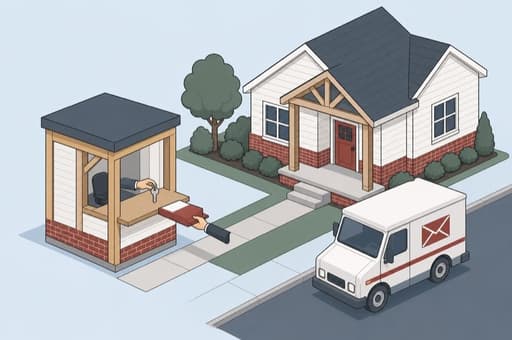
The in-house lender for NVR's own buyers: $229.7M of revenue in 2025 but $152.0M of profit before tax — roughly nine dollars of every hundred NVR makes before tax. Watch the share of buyers it signs up — 87%, then 85% by mid-2026.
Competes with DHI Mortgage (D.R. Horton) · Pulte Mortgage (PulteGroup) · Home loans arranged at closing (Retail and correspondent lenders)
In plain English
A lending desk at the end of the hallway. Buy an NVR house and the company offers to write the mortgage too; about eighty-five of every hundred buyers said yes in mid-2026.
It does not keep the loans. Within roughly a month each one is sold on to the big government-backed mortgage buyers, and NVR keeps the difference between what the loan cost to make and what they pay for it. That is why a line worth barely two cents of every sales dollar throws off close to a tenth of the profit: no land, no houses, nothing left on the books — just paperwork riding on a sale already made.


 Homebuilding Mid AtlanticNVR's home ground — Maryland, Virginia, West Virginia, Delaware and Washington, D.C. — and its biggest single source of money at $4.37B in 2025. It is also where the slowdown landed first: sales here fell about a quarter in the first half of 2026.
NVR's home ground — Maryland, Virginia, West Virginia, Delaware and Washington, D.C. — and its biggest single source of money at $4.37B in 2025. It is also where the slowdown landed first: sales here fell about a quarter in the first half of 2026.
In plain English
Start where the company started. NVR grew up around Washington, D.C., and that corridor — with Maryland, Virginia, West Virginia and Delaware — still brings in more money than any other region.
Nothing counts as a sale until the keys change hands. A family picks a house and a lot, waits months while it goes up, and only at the closing table does the money land in NVR's accounts. All three of its house names sell here, from first houses to the expensive ones, making this the one region with the full ladder of prices. After building costs, about twenty-three dollars of every hundred was left in 2025.
Competes with Homebuilding segment (D.R. Horton) · Pulte Homes and Centex (PulteGroup) · Upper-end homes in the D.C. corridor (Toll Brothers)
 Ryan HomesThe volume brand — first houses and first trade-ups, on sale in roughly thirty of NVR's thirty-seven metro areas. Company-wide, about 11,000 homes were on order and not yet handed over at mid-2026, worth roughly $5.0B: the clearest read on the next few quarters.
The volume brand — first houses and first trade-ups, on sale in roughly thirty of NVR's thirty-seven metro areas. Company-wide, about 11,000 homes were on order and not yet handed over at mid-2026, worth roughly $5.0B: the clearest read on the next few quarters.
In plain English
The sign on most NVR lawns. Ryan Homes is the everyday brand — a set of floor plans put up again and again across most of the company's markets, sold to people buying a first house or trading up once.
Repetition is the point: same plans, same materials, one house at a time to ordinary families, with no big customer whose loss would matter. What does matter is the mortgage rate. These are the buyers who feel a higher monthly payment first, and in the three months to June 2026 NVR took more orders than a year earlier only by accepting a lower average price on them.
Competes with Express Series (D.R. Horton) · Centex (PulteGroup) · Tradition Series (D.R. Horton)
 Homebuilding Mid EastNew York, Ohio, western Pennsylvania, Indiana and Illinois: $1.88B in 2025, flat on the year. Lower prices, steadier results — profit per house barely moved in the first half of 2026, the calmest of the four regions.
New York, Ohio, western Pennsylvania, Indiana and Illinois: $1.88B in 2025, flat on the year. Lower prices, steadier results — profit per house barely moved in the first half of 2026, the calmest of the four regions.
In plain English
Smaller price tags, fewer surprises. In Ohio, Indiana, Illinois, New York and western Pennsylvania, houses sell for less than NVR's average, so each sale is a smaller slice of a bigger pile of sales.
That cuts both ways. Cheaper homes are easier for local families to afford, which is why its profit per house held while others slipped — but buyers at the lower end are also the first to stop qualifying for a loan when mortgage rates climb. Pittsburgh is the odd corner: the one place NVR sells under the Heartland Homes name, aimed at people moving up to something larger.
Competes with Centex, Pulte Homes and Del Webb (PulteGroup) · Express Series (D.R. Horton) · Homebuilding (Lennar)
 Homebuilding North EastNew Jersey and eastern Pennsylvania — the smallest region at $1.20B in 2025 and the richest, keeping about a quarter of each sales dollar after building costs. That cushion shrank the hardest of the four in the first half of 2026.
New Jersey and eastern Pennsylvania — the smallest region at $1.20B in 2025 and the richest, keeping about a quarter of each sales dollar after building costs. That cushion shrank the hardest of the four in the first half of 2026.
In plain English
Hard places to build are good places to sell. New Jersey and the Philadelphia suburbs approve new lots slowly, so there is never much fresh supply, and houses that are scarce hold their price.
NVR sells its dressier NVHomes product here alongside starter houses, which is part of why its smallest region by sales earns the most on each one. The flip side arrived in 2026. Buyers at these prices usually have to sell the home they already own before they can move, so when the market cools they wait — and the region with the fattest margin had the most of it to hand back.
Competes with Homes in New Jersey and suburban Philadelphia (Toll Brothers) · John Wieland Homes (PulteGroup) · Emerald Homes (D.R. Horton)
 Homebuilding South EastThe Carolinas, Tennessee, Florida, Georgia and Kentucky: $2.64B in 2025, and the first region where profit cracked — about eighteen dollars of every hundred left after building costs, down from twenty-two. In the first half of 2026 it was the steadiest line.
The Carolinas, Tennessee, Florida, Georgia and Kentucky: $2.64B in 2025, and the first region where profit cracked — about eighteen dollars of every hundred left after building costs, down from twenty-two. In the first half of 2026 it was the steadiest line.
In plain English
The move-south region. Families heading for the Carolinas, Tennessee, Georgia and Florida have been NVR's growth story for the past decade, and almost everything it puts up there carries the Ryan Homes name.
Growth here is bought. Builders in these markets compete with sweeteners — chiefly help with the buyer's monthly mortgage payment — and in 2025 that showed up as the thinnest profit per house of the four regions. The deal is plain: keep the houses moving, accept less on each one. It is also where the money already placed on future lots is most exposed when buyers stop showing up.
Competes with Sunbelt homebuilding (D.R. Horton) · Homebuilding (Meritage Homes) · Homebuilding (Lennar)
 Lot purchase agreementsThe lot book under every house: roughly 175,000 finished lots held with about $1.0B of deposits by mid-2026, more of both than six months earlier even as sales fell. Walking away costs only the deposit — about $75.9M went that way in 2025.
The lot book under every house: roughly 175,000 finished lots held with about $1.0B of deposits by mid-2026, more of both than six months earlier even as sales fell. Walking away costs only the deposit — about $75.9M went that way in 2025.
In plain English
The usual way to build houses is to buy a field, put in the roads and sewers, and wait years to make the money back. NVR mostly does not. It pays a developer a deposit — up to about a tenth of the price — for the right to buy finished lots later, then takes them a few at a time as it needs somewhere to build.
Closer to holding a table at a restaurant than to buying the restaurant. If a neighbourhood goes quiet, NVR walks away and loses the deposit, nothing more. The reward is that its cash is not buried in dirt, which is what lets it hand so much profit back to shareholders.
Competes with Forestar lot development (D.R. Horton) · Owned land pipeline (PulteGroup) · Finished lots for sale (Independent land developers)
 NVR MortgageThe in-house lender for NVR's own buyers: $229.7M of revenue in 2025 but $152.0M of profit before tax — roughly nine dollars of every hundred NVR makes before tax. Watch the share of buyers it signs up — 87%, then 85% by mid-2026.
The in-house lender for NVR's own buyers: $229.7M of revenue in 2025 but $152.0M of profit before tax — roughly nine dollars of every hundred NVR makes before tax. Watch the share of buyers it signs up — 87%, then 85% by mid-2026.
In plain English
A lending desk at the end of the hallway. Buy an NVR house and the company offers to write the mortgage too; about eighty-five of every hundred buyers said yes in mid-2026.
It does not keep the loans. Within roughly a month each one is sold on to the big government-backed mortgage buyers, and NVR keeps the difference between what the loan cost to make and what they pay for it. That is why a line worth barely two cents of every sales dollar throws off close to a tenth of the profit: no land, no houses, nothing left on the books — just paperwork riding on a sale already made.
Competes with DHI Mortgage (D.R. Horton) · Pulte Mortgage (PulteGroup) · Home loans arranged at closing (Retail and correspondent lenders)
Named in filings, launches and programs
- NVHomesBrandThe move-up and luxury name, sold in a handful of metros from Delaware to Philadelphia — why NVR's price range stretches to roughly $2.3 million.
- Heartland HomesBrandA move-up and luxury brand that sells only in the Pittsburgh area, inside the Midwest region.
- NVR Settlement ServicesServiceHandles the closing paperwork and title checks on NVR's own sales, earning commissions and fees that are counted inside the mortgage line.
- Land development joint venturesBrandFive land-development partnerships, about $78.1M invested at the end of 2025, with NVR usually a minority partner risking only what it has put in or promised.
- Directly owned raw groundProduct lineThe exception to the no-land rule: roughly $39.3M of ground NVR owned outright at the end of 2025, expected to yield about 2,300 finished lots.
- Loan sales to the agenciesServiceEach new mortgage is passed on to Fannie Mae, Freddie Mac or Ginnie Mae channels within about thirty days of closing, the job of collecting the payments going with it.
- land.nvrinc.comEcosystemA web page inviting landowners and developers to offer land or finished lots straight to NVR — the front door of the lot pipeline.
- Townhomes and condominiumsProduct lineNVR does not only build standalone houses: attached townhomes and condominiums are part of the line-up too.
NVHomesBrand
The move-up and luxury name, sold in a handful of metros from Delaware to Philadelphia — why NVR's price range stretches to roughly $2.3 million.
Heartland HomesBrand
A move-up and luxury brand that sells only in the Pittsburgh area, inside the Midwest region.
NVR Settlement ServicesService
Handles the closing paperwork and title checks on NVR's own sales, earning commissions and fees that are counted inside the mortgage line.
Land development joint venturesBrand
Five land-development partnerships, about $78.1M invested at the end of 2025, with NVR usually a minority partner risking only what it has put in or promised.
Directly owned raw groundProduct line
The exception to the no-land rule: roughly $39.3M of ground NVR owned outright at the end of 2025, expected to yield about 2,300 finished lots.
Loan sales to the agenciesService
Each new mortgage is passed on to Fannie Mae, Freddie Mac or Ginnie Mae channels within about thirty days of closing, the job of collecting the payments going with it.
land.nvrinc.comEcosystem
A web page inviting landowners and developers to offer land or finished lots straight to NVR — the front door of the lot pipeline.
Townhomes and condominiumsProduct line
NVR does not only build standalone houses: attached townhomes and condominiums are part of the line-up too.