
ON Semiconductor (ON)
Power, analog, and sensing semiconductors for vehicles, factories, energy systems, and AI data centers.
Something off on this page? Send us feedback.
onsemi makes the chips that handle electricity — the parts that switch and steer power inside electric cars, solar farms and factory machines — plus the camera chips that let machines see. Car demand shrank for two years and has only just turned up. The growth now comes from AI datacenters, which need power carried from the grid all the way to their processors, and that is where the company is aiming itself.
Item facts: FY2025 · year ended December 31, 2025, from filings, earnings calls and company pages.
Judgment weights, not filed revenue
The band summarizes business focus and direction. ~ marks estimates.
8 in detail · 9 more below
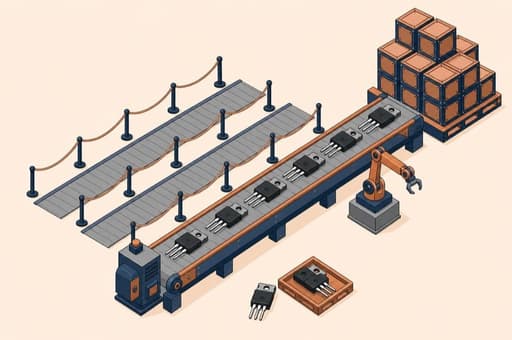
Power Solutions Group
The heavy-current side of onsemi and its biggest line: silicon and silicon-carbide switches for electric cars, solar, storage and datacenter power. Sales grew 19% year over year last quarter, but it earns the thinnest margin of the three groups.
Competes with CoolMOS and IGBT power switches (Infineon) · STPOWER silicon carbide (STMicroelectronics) · SiC MOSFETs and bare die (Wolfspeed)
In plain English
Think of the biggest muscles in an electrical system. These are the chips that switch heavy current on and off — the parts inside an electric car's drive unit, a solar inverter, a charging post. onsemi builds them in its own factories and sells them by the part, to carmakers' suppliers and to the firms that assemble datacenter power gear.
Because the factories are owned rather than rented, profit depends on how full they run. Idle machines still cost money: when the plants were a little over half full, margins collapsed; as the lines filled back up, margin came back too. This year orders have been arriving faster than parts ship out.
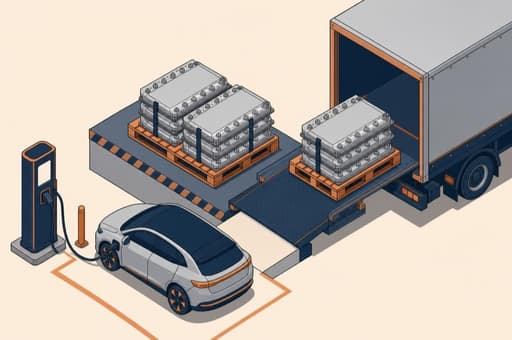
EliteSiC
onsemi's silicon-carbide switches — the premium power parts inside electric drivetrains, chargers and grid storage. Sales to Chinese electric-car makers are up 60–70% this year and datacenter use is climbing, but STMicroelectronics holds the larger slice of this market.
Competes with STPOWER SiC MOSFETs (STMicroelectronics) · CoolSiC MOSFETs (Infineon) · SiC bare die and modules (Wolfspeed)
In plain English
Silicon carbide is a tougher material than ordinary silicon: it takes higher voltage, runs hotter and wastes less energy as heat. In a car that means a smaller, lighter drive system. EliteSiC is onsemi's family of those parts, sold to the people building traction drives, on-board chargers, fast-charging posts, solar inverters and grid batteries.
The catch is who buys them. Most demand has come from electric cars, and outside China those sales stalled. Growth now leans on Chinese carmakers such as Geely's Zeekr and Xiaomi, on Rivian's R2 charging, and newly on datacenters — while the bigger share of the silicon-carbide market belongs to STMicroelectronics.
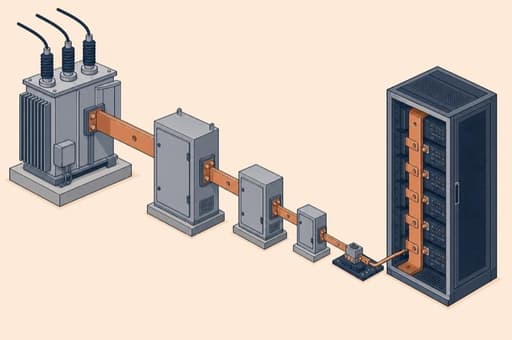
AI Data Center Power
The new engine: power conversion from the grid all the way to the processor, counted inside the power and control chip lines. More than $250M in 2025, guided to more than double this year, with a 2030 goal above $2.5B — off a small base, and Infineon has the broader lineup.
Competes with CoolSiC and CoolGaN 800 V designs (Infineon) · GaNFast and GeneSiC high-voltage parts (Navitas) · Multiphase voltage regulators (Monolithic Power Systems)
In plain English
Every AI datacenter takes electricity from the grid at high voltage and has to step it down, stage after stage, until it reaches the processors. onsemi sells parts for each step of that staircase — the big transformers, the rack power supplies, the battery backup that carries the load if the grid hiccups, and the small converters sitting right beside the processor board.
Who pays: the firms that build racks and power shelves, among them Delta, Lite-On and Great Wall. onsemi is also designing alongside NVIDIA, whose rack plans push the industry to a higher-voltage standard, and Amazon Web Services has taken power-supply and battery-backup parts.
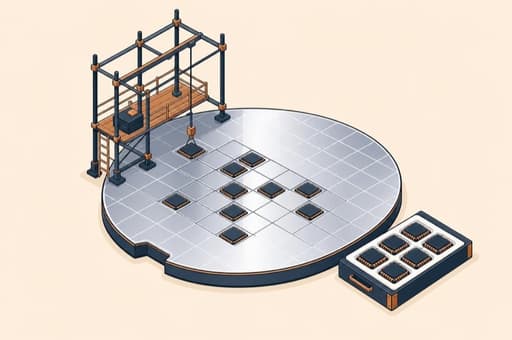
Embedded Power Platform
Announced in September 2026: a way of building power parts in which the silicon wafer itself becomes the base of the package. onsemi claims 3–5x the power in the same space. Nothing sold yet — Subaru has agreed to evaluate it.
Competes with AmpStack MOSFET packaging (Alpha and Omega Semiconductor) · Integrated power modules (Infineon) · Embedded-die power packaging (STMicroelectronics)
In plain English
A chip normally sits in a little plastic case, and the case is what gets soldered onto a board. onsemi's new idea skips most of that: use the silicon wafer itself as the foundation and embed the switches, their drivers and their controllers into one co-designed block.
The pitch to customers is size and heat — onsemi claims three to five times the power in the same space, 15% lower losses in an electric-car drive, circuit breakers for AI racks about half as big, and roughly four-month development cycles. None of it is money yet: samples go out this year to automotive and AI customers, and Subaru is evaluating it for future electrified vehicles.
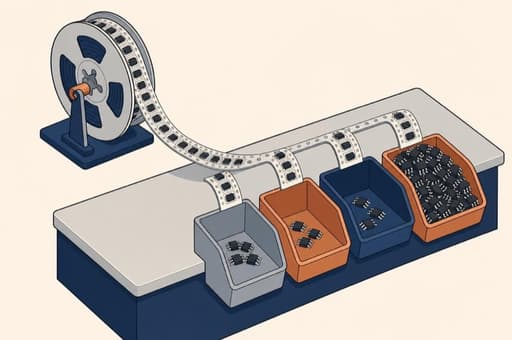
Analog and Mixed-Signal Group
The margin engine: small power-management and sensor-interface chips that keep better than half of every sales dollar. It is also the line that stopped growing — down 2% year over year last quarter while the power side grew 19%.
Competes with Catalog power-management analog (Texas Instruments) · Car power-and-network control chips (NXP) · Automotive analog chips (Renesas)
In plain English
The quiet half of the company. These are the small chips that manage and measure rather than move heavy current: they hold voltages steady, read what a sensor is telling the system, and pass messages between parts of a car or a machine.
They cost little to make next to what they sell for, which is why this group keeps about twice as much of each sales dollar as the power side does. Buyers are carmakers, factory-equipment builders and medical firms — Dexcom puts onsemi's low-power parts in its continuous glucose monitors. More than half of onsemi's sales reach customers through distributors rather than directly, and one distributor alone is about a tenth of the whole company's revenue; onsemi does not say which.
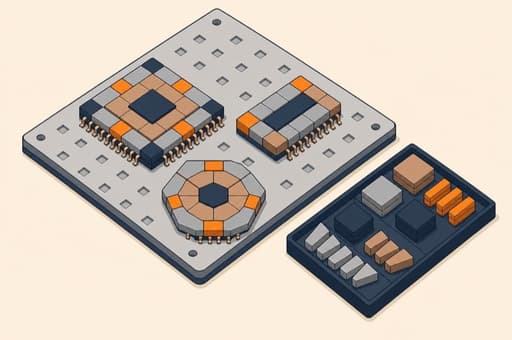
Treo Platform
onsemi's build-from-blocks analog platform, launched late in 2024. Parts made this way keep 60–70 cents of every dollar they sell for, and the designs in the pipeline are worth over $1B across their lifetimes, but revenue is still tiny.
Competes with Catalog analog chip families (Texas Instruments) · Zonal networking chips (NXP) · In-car Ethernet chips (Microchip)
In plain English
Designing an analog chip from scratch is slow work. Treo turns it into something closer to assembling from a kit: a library of ready-made circuit blocks, all built on one modern manufacturing recipe, snapped together into whatever part a customer asks for — a voltage regulator here, a sensor interface there.
Two things make it matter. Parts built this way keep 60–70 cents of every sales dollar, well above the company average, and one large North American customer is designing more than thirty Treo parts into a single vehicle platform. Sales are still small: they grew about half again in one quarter, from very little.
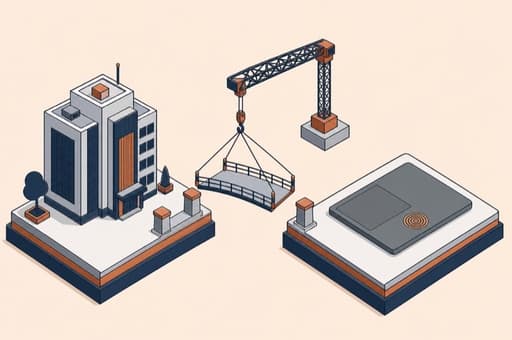
Synaptics
A pending all-stock purchase, about $7B, closing mid-2027: touch, fingerprint, wireless and on-device AI chips added to onsemi's power and sensing. Synaptics brings roughly $1.2B of annual sales, and today's owners give up about an eighth of the company.
Competes with On-device AI microcontrollers (NXP) · Edge-AI processors (Renesas) · Wi-Fi and Bluetooth combo chips (Broadcom)
In plain English
Buying a neighbour rather than building one. Synaptics makes the chips that let gadgets sense touch and fingerprints, connect over Wi-Fi and Bluetooth, and run small AI models on the device itself instead of sending everything away to a datacenter. onsemi supplies the power and the eyes; the idea is to sell the whole set.
The price is around $7B, paid entirely in onsemi shares, so Synaptics' owners end up holding roughly an eighth of the combined company and no cash leaves the bank. Nothing happens until the middle of 2027, and it still needs shareholder and competition-regulator approval. onsemi expects about $200M a year of cost savings afterwards.

Intelligent Sensing Group
The camera-chip business: image sensors for cars, machine vision and robots, at a middling margin. It is the line that has not recovered — quarterly sales sit below their late-2024 level while Sony holds more than half of this market.
Competes with IMX automotive image sensors (Sony) · OX automotive sensor family (OMNIVISION)
In plain English
Cameras for machines rather than people. These chips are the light-sensing squares behind a lens — in a car's forward-facing camera, a factory inspection rig, a robot's eye — turning what arrives as light into something a computer can act on. onsemi also makes the parts that tidy up and process that picture.
Money comes the same way as everywhere else here: parts shipped and priced one by one, mostly to carmakers and their suppliers, with an eight-megapixel front-vision sensor spreading across models. The problem is scale. Sony holds more than half of the image-sensor market, and onsemi's quarterly sales have not climbed back to where they stood at the end of 2024.


 Power Solutions GroupThe heavy-current side of onsemi and its biggest line: silicon and silicon-carbide switches for electric cars, solar, storage and datacenter power. Sales grew 19% year over year last quarter, but it earns the thinnest margin of the three groups.
The heavy-current side of onsemi and its biggest line: silicon and silicon-carbide switches for electric cars, solar, storage and datacenter power. Sales grew 19% year over year last quarter, but it earns the thinnest margin of the three groups.
In plain English
Think of the biggest muscles in an electrical system. These are the chips that switch heavy current on and off — the parts inside an electric car's drive unit, a solar inverter, a charging post. onsemi builds them in its own factories and sells them by the part, to carmakers' suppliers and to the firms that assemble datacenter power gear.
Because the factories are owned rather than rented, profit depends on how full they run. Idle machines still cost money: when the plants were a little over half full, margins collapsed; as the lines filled back up, margin came back too. This year orders have been arriving faster than parts ship out.
Competes with CoolMOS and IGBT power switches (Infineon) · STPOWER silicon carbide (STMicroelectronics) · SiC MOSFETs and bare die (Wolfspeed)
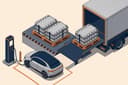 EliteSiConsemi's silicon-carbide switches — the premium power parts inside electric drivetrains, chargers and grid storage. Sales to Chinese electric-car makers are up 60–70% this year and datacenter use is climbing, but STMicroelectronics holds the larger slice of this market.
onsemi's silicon-carbide switches — the premium power parts inside electric drivetrains, chargers and grid storage. Sales to Chinese electric-car makers are up 60–70% this year and datacenter use is climbing, but STMicroelectronics holds the larger slice of this market.
In plain English
Silicon carbide is a tougher material than ordinary silicon: it takes higher voltage, runs hotter and wastes less energy as heat. In a car that means a smaller, lighter drive system. EliteSiC is onsemi's family of those parts, sold to the people building traction drives, on-board chargers, fast-charging posts, solar inverters and grid batteries.
The catch is who buys them. Most demand has come from electric cars, and outside China those sales stalled. Growth now leans on Chinese carmakers such as Geely's Zeekr and Xiaomi, on Rivian's R2 charging, and newly on datacenters — while the bigger share of the silicon-carbide market belongs to STMicroelectronics.
Competes with STPOWER SiC MOSFETs (STMicroelectronics) · CoolSiC MOSFETs (Infineon) · SiC bare die and modules (Wolfspeed)
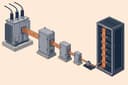 AI Data Center PowerThe new engine: power conversion from the grid all the way to the processor, counted inside the power and control chip lines. More than $250M in 2025, guided to more than double this year, with a 2030 goal above $2.5B — off a small base, and Infineon has the broader lineup.
The new engine: power conversion from the grid all the way to the processor, counted inside the power and control chip lines. More than $250M in 2025, guided to more than double this year, with a 2030 goal above $2.5B — off a small base, and Infineon has the broader lineup.
In plain English
Every AI datacenter takes electricity from the grid at high voltage and has to step it down, stage after stage, until it reaches the processors. onsemi sells parts for each step of that staircase — the big transformers, the rack power supplies, the battery backup that carries the load if the grid hiccups, and the small converters sitting right beside the processor board.
Who pays: the firms that build racks and power shelves, among them Delta, Lite-On and Great Wall. onsemi is also designing alongside NVIDIA, whose rack plans push the industry to a higher-voltage standard, and Amazon Web Services has taken power-supply and battery-backup parts.
Competes with CoolSiC and CoolGaN 800 V designs (Infineon) · GaNFast and GeneSiC high-voltage parts (Navitas) · Multiphase voltage regulators (Monolithic Power Systems)
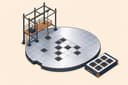 Embedded Power PlatformAnnounced in September 2026: a way of building power parts in which the silicon wafer itself becomes the base of the package. onsemi claims 3–5x the power in the same space. Nothing sold yet — Subaru has agreed to evaluate it.
Announced in September 2026: a way of building power parts in which the silicon wafer itself becomes the base of the package. onsemi claims 3–5x the power in the same space. Nothing sold yet — Subaru has agreed to evaluate it.
In plain English
A chip normally sits in a little plastic case, and the case is what gets soldered onto a board. onsemi's new idea skips most of that: use the silicon wafer itself as the foundation and embed the switches, their drivers and their controllers into one co-designed block.
The pitch to customers is size and heat — onsemi claims three to five times the power in the same space, 15% lower losses in an electric-car drive, circuit breakers for AI racks about half as big, and roughly four-month development cycles. None of it is money yet: samples go out this year to automotive and AI customers, and Subaru is evaluating it for future electrified vehicles.
Competes with AmpStack MOSFET packaging (Alpha and Omega Semiconductor) · Integrated power modules (Infineon) · Embedded-die power packaging (STMicroelectronics)
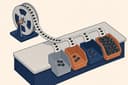 Analog and Mixed-Signal GroupThe margin engine: small power-management and sensor-interface chips that keep better than half of every sales dollar. It is also the line that stopped growing — down 2% year over year last quarter while the power side grew 19%.
The margin engine: small power-management and sensor-interface chips that keep better than half of every sales dollar. It is also the line that stopped growing — down 2% year over year last quarter while the power side grew 19%.
In plain English
The quiet half of the company. These are the small chips that manage and measure rather than move heavy current: they hold voltages steady, read what a sensor is telling the system, and pass messages between parts of a car or a machine.
They cost little to make next to what they sell for, which is why this group keeps about twice as much of each sales dollar as the power side does. Buyers are carmakers, factory-equipment builders and medical firms — Dexcom puts onsemi's low-power parts in its continuous glucose monitors. More than half of onsemi's sales reach customers through distributors rather than directly, and one distributor alone is about a tenth of the whole company's revenue; onsemi does not say which.
Competes with Catalog power-management analog (Texas Instruments) · Car power-and-network control chips (NXP) · Automotive analog chips (Renesas)
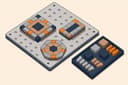 Treo Platformonsemi's build-from-blocks analog platform, launched late in 2024. Parts made this way keep 60–70 cents of every dollar they sell for, and the designs in the pipeline are worth over $1B across their lifetimes, but revenue is still tiny.
onsemi's build-from-blocks analog platform, launched late in 2024. Parts made this way keep 60–70 cents of every dollar they sell for, and the designs in the pipeline are worth over $1B across their lifetimes, but revenue is still tiny.
In plain English
Designing an analog chip from scratch is slow work. Treo turns it into something closer to assembling from a kit: a library of ready-made circuit blocks, all built on one modern manufacturing recipe, snapped together into whatever part a customer asks for — a voltage regulator here, a sensor interface there.
Two things make it matter. Parts built this way keep 60–70 cents of every sales dollar, well above the company average, and one large North American customer is designing more than thirty Treo parts into a single vehicle platform. Sales are still small: they grew about half again in one quarter, from very little.
Competes with Catalog analog chip families (Texas Instruments) · Zonal networking chips (NXP) · In-car Ethernet chips (Microchip)
 SynapticsA pending all-stock purchase, about $7B, closing mid-2027: touch, fingerprint, wireless and on-device AI chips added to onsemi's power and sensing. Synaptics brings roughly $1.2B of annual sales, and today's owners give up about an eighth of the company.
A pending all-stock purchase, about $7B, closing mid-2027: touch, fingerprint, wireless and on-device AI chips added to onsemi's power and sensing. Synaptics brings roughly $1.2B of annual sales, and today's owners give up about an eighth of the company.
In plain English
Buying a neighbour rather than building one. Synaptics makes the chips that let gadgets sense touch and fingerprints, connect over Wi-Fi and Bluetooth, and run small AI models on the device itself instead of sending everything away to a datacenter. onsemi supplies the power and the eyes; the idea is to sell the whole set.
The price is around $7B, paid entirely in onsemi shares, so Synaptics' owners end up holding roughly an eighth of the combined company and no cash leaves the bank. Nothing happens until the middle of 2027, and it still needs shareholder and competition-regulator approval. onsemi expects about $200M a year of cost savings afterwards.
Competes with On-device AI microcontrollers (NXP) · Edge-AI processors (Renesas) · Wi-Fi and Bluetooth combo chips (Broadcom)
 Intelligent Sensing GroupThe camera-chip business: image sensors for cars, machine vision and robots, at a middling margin. It is the line that has not recovered — quarterly sales sit below their late-2024 level while Sony holds more than half of this market.
The camera-chip business: image sensors for cars, machine vision and robots, at a middling margin. It is the line that has not recovered — quarterly sales sit below their late-2024 level while Sony holds more than half of this market.
In plain English
Cameras for machines rather than people. These chips are the light-sensing squares behind a lens — in a car's forward-facing camera, a factory inspection rig, a robot's eye — turning what arrives as light into something a computer can act on. onsemi also makes the parts that tidy up and process that picture.
Money comes the same way as everywhere else here: parts shipped and priced one by one, mostly to carmakers and their suppliers, with an eight-megapixel front-vision sensor spreading across models. The problem is scale. Sony holds more than half of the image-sensor market, and onsemi's quarterly sales have not climbed back to where they stood at the end of 2024.
Competes with IMX automotive image sensors (Sony) · OX automotive sensor family (OMNIVISION)
Named in filings, launches and programs
- Hyperlux image sensorsProduct lineonsemi's branded camera-chip family for cars and factories, sold inside the image-sensor group.
- 10BASE-T1S Ethernet, SmartFETs and eFusesProduct line · RampingThe kit for cars wired in zones rather than wire-by-wire: simple in-car networking plus electronic fuses; designs in the pipeline topped $400M in early 2026.
- EliteSiC hybrid storage power modulesProduct linePower blocks mixing two switch types for utility-scale batteries; a 500kW version began sampling in mid-2026 and storage sales are guided up about 40%.
- Vcore point-of-load powerProduct line · RampingThe last converter before a processor, built on technology bought from Aura Semiconductor in 2025 and aimed at AI server boards.
- SiC JFETProduct line · RampingA different kind of silicon-carbide switch; it contributed to 2025's datacenter sales and won a place in a circuit breaker with no moving parts.
- Vertical GaN (vGaN)Product · AnnouncedA homegrown gallium nitride process from the Syracuse, New York plant, announced in late 2025; first sales guided to 2027, with GM as development partner.
- PowerTrench MOSFETs and FS7 IGBTsProduct lineThe plain-silicon workhorse lines of the power group; FS7 is paired with silicon carbide inside Sungrow's power modules.
- SWIR, single-photon and position sensingProduct line · RampingSensing beyond an ordinary camera — picking up light our eyes miss, catching single specks of light, tracking position — aimed at robots and industrial machines.
- Aerospace, defense and securityCustomer programParts sold into aircraft, defense and security systems; revenue rose about 70% in 2025, though onsemi does not size the line.
Hyperlux image sensorsProduct line
onsemi's branded camera-chip family for cars and factories, sold inside the image-sensor group.
10BASE-T1S Ethernet, SmartFETs and eFusesProduct line · Ramping
The kit for cars wired in zones rather than wire-by-wire: simple in-car networking plus electronic fuses; designs in the pipeline topped $400M in early 2026.
EliteSiC hybrid storage power modulesProduct line
Power blocks mixing two switch types for utility-scale batteries; a 500kW version began sampling in mid-2026 and storage sales are guided up about 40%.
Vcore point-of-load powerProduct line · Ramping
The last converter before a processor, built on technology bought from Aura Semiconductor in 2025 and aimed at AI server boards.
SiC JFETProduct line · Ramping
A different kind of silicon-carbide switch; it contributed to 2025's datacenter sales and won a place in a circuit breaker with no moving parts.
Vertical GaN (vGaN)Product · Announced
A homegrown gallium nitride process from the Syracuse, New York plant, announced in late 2025; first sales guided to 2027, with GM as development partner.
PowerTrench MOSFETs and FS7 IGBTsProduct line
The plain-silicon workhorse lines of the power group; FS7 is paired with silicon carbide inside Sungrow's power modules.
SWIR, single-photon and position sensingProduct line · Ramping
Sensing beyond an ordinary camera — picking up light our eyes miss, catching single specks of light, tracking position — aimed at robots and industrial machines.
Aerospace, defense and securityCustomer program
Parts sold into aircraft, defense and security systems; revenue rose about 70% in 2025, though onsemi does not size the line.