
Otis (OTIS)
Installs elevators and escalators, then maintains and modernizes them through a global service network.
Something off on this page? Send us feedback.
Otis puts elevators and escalators into buildings, then keeps them running for the next twenty or thirty years. Selling the machine barely pays; the decades of servicing that follow carry almost all of the profit. New-equipment sales have been shrinking for years, so the company leans harder on the machines already installed — and, increasingly, on rebuilding the worn-out ones.
Item facts: FY2025 · year ended Dec 31, 2025, from filings, earnings calls and company pages.
Judgment weights, not filed revenue
The band summarizes business focus and direction. ~ marks estimates.
7 in detail · 14 more below
Maintenance
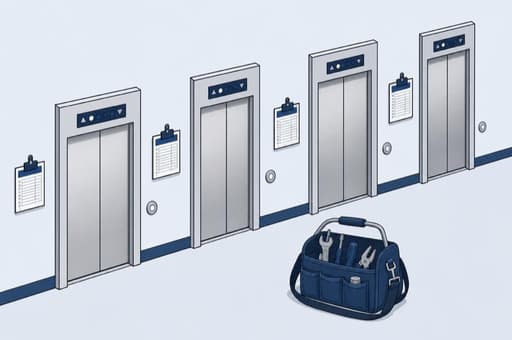
Yearly per-unit contracts covering roughly 2.5 million elevators and escalators, plenty of them built by other makers. The portfolio kept growing through 2025; then Otis put $50M behind retention and pricing, and by midyear said retention outside China had slipped.
Competes with KONE Care DX maintenance (KONE) · Schindler Ahead maintenance (Schindler) · Independent maintenance contracts (Local service firms)
In plain English
An elevator is not something a building owner can leave alone — safety codes require regular inspection, and when one stops, people are stuck in it. So almost every unit in a serious building sits under a contract with somebody, and Otis holds about two and a half million of them, including on machines other manufacturers installed.
The owner pays a set fee per unit per year and a mechanic comes round on a schedule, the way a dentist books check-ups. Servicing — these visits plus the repairs and upgrades they lead to — earns roughly nine-tenths of the profit Otis's two halves make between them; selling new machines earns the rest. Renewal is the whole game.
Otis ONE
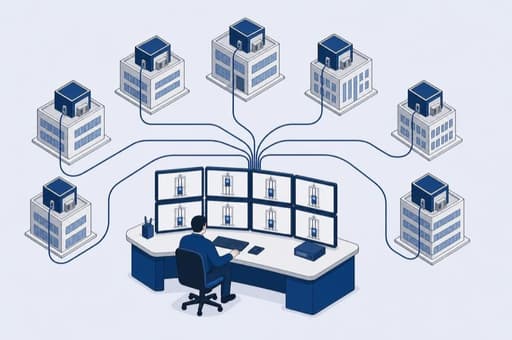
Remote monitoring on roughly 1.1 million of the machines Otis looks after, warranty units included. Very little is billed on its own — paid subscriptions grew about a third in 2025 — but it feeds repair work and the case for renewing.
Competes with 24/7 Connected Services (KONE) · Schindler Ahead digital services (Schindler)
In plain English
Every connected elevator phones home. Equipment on the machine watches how it is running and sends that back to Otis's round-the-clock care centres over the internet, which is how a problem gets caught before it becomes a breakdown.
Roughly 1.1 million units are hooked up. Customers mostly do not buy this as a product; it pays for itself sideways — fewer emergency call-outs, a mechanic who turns up knowing which part to bring, and something to point at when the contract comes up for renewal. There is a paid tier as well, sold with the high-rise line, and those subscriptions grew by about a third in 2025.
New Equipment
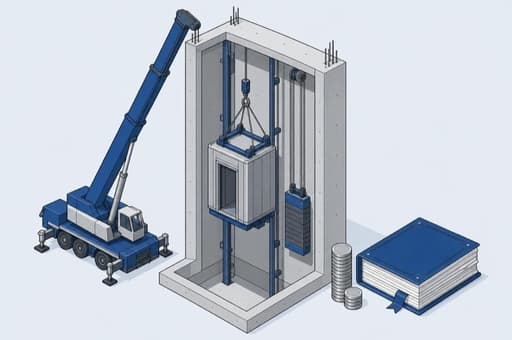
Elevators, escalators and moving walkways designed, built and installed project by project — $4,989M of sales in 2025 but only $240M of profit, because the real payoff is the service contract behind it. Across the whole company about $19.7B of sold work was still to be delivered at mid-2026.
Competes with DX class elevators (KONE) · Schindler 5000 / 5500 / 7000 (Schindler) · TK Elevator new installations (TK Elevator)
In plain English
Sold project by project. A developer putting up a tower orders the lifts months or years ahead; Otis builds them in one of its sixteen factories and its own crews fit them on site alongside the builders.
What looks strange is how little it earns — under five cents of profit on each dollar of sales in 2025, thinner than the year before. That is close to the point. The unit that goes in today becomes a maintenance contract tomorrow and stays one for twenty or thirty years, so Otis is really selling the machine to win the decades of servicing that follow. Sales peaked in 2024 and have flattened since.
Gen3 and Gen360
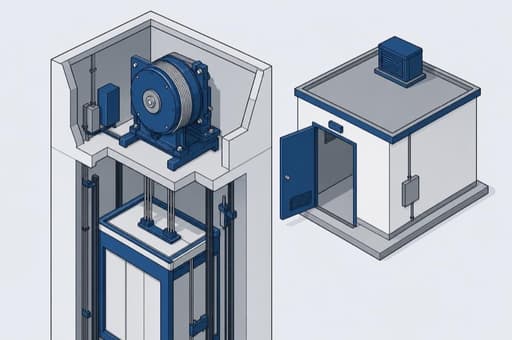
The two designs most Otis elevators are built from. Gen3 arrives already connected to Otis's monitoring; Gen360 swaps mechanical parts for electronic ones to free up space in the shaft. Gen3 was extended into rebuild work across Europe, the Middle East and Africa in mid-2026.
Competes with DX class elevators (KONE) · Schindler 5500 (Schindler)
In plain English
Two house designs, the way a carmaker builds many models off a couple of platforms. Gen3 succeeded Gen2 — over a million of those sold since 2000, and they are now the machines Otis comes back to modernize — and it ships with the link to Otis's monitoring switched on. Gen360 replaces a lot of mechanical parts with electronic ones.
Both run on a compact motor that turns the ropes directly instead of through a gearbox: Otis puts it at about 80% smaller and up to 50% more efficient than the geared kind. The pitch to a developer is the same ride in less of the building.
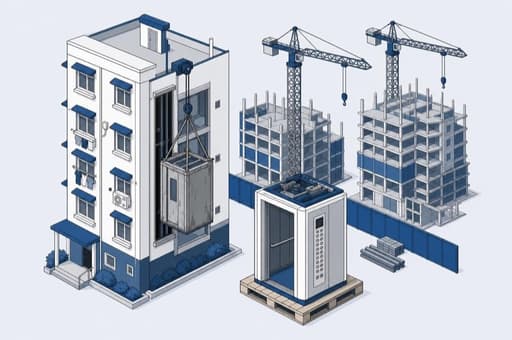
China operations
Sales here fell from about $2.6B in 2022 to $1.65B in 2025 as property building slowed and prices were cut. The mix has flipped: in the June quarter of 2026 new-equipment sales fell by high-teens percentages while orders to upgrade old units more than doubled.
Competes with Shanghai Mitsubishi elevators (Shanghai Mitsubishi) · SJEC elevators and escalators (SJEC) · Elevators in China (Schindler)
In plain English
China is where Otis's story ran backwards. It was an equipment market above all — management framed it a couple of years ago as roughly two-thirds new machines — and then construction slowed, prices sank in a market holding more factory capacity than it needed, and the revenue fell by more than a third between 2022 and 2025.
The other half is what is growing. The country has something like twelve million elevators already installed and more than two million of them past fifteen years old, the age at which rebuilds start coming up. Otis also bought out the minority partner in its Otis Electric joint venture, finishing a multi-year reshaping of the business there.
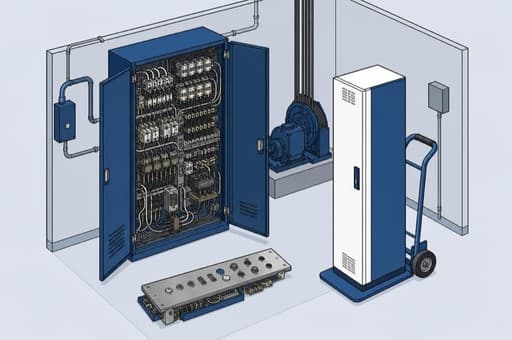
Modernization
Rebuilding tired elevators — controllers, drives, motors, cabs — in Otis's own machines and in rivals'. Sales grew 24% in the June quarter of 2026 with orders on the books up about a quarter; some 8 million of the world's roughly 22 million elevators are old enough to qualify.
Competes with ReNew / RePlace / ReStore (Schindler) · KONE modernization (KONE) · Component-level upgrades (Local service firms)
In plain English
Elevators wear out from the inside first. After twenty-odd years the controller, the motor and the cab are tired while the shaft and the rails are perfectly fine, so an owner buys a rebuild instead of a new building. Otis sells those rebuilds — kits from its own factories — into machines it installed and into machines its rivals installed.
The work is sold in phases so a block is not without its lift for months and the bill can be spread across budgets. Management likes the word evergreen: a rebuilt elevator eventually needs rebuilding again. The constraint is people — Otis said getting mechanics trained and on the job was holding it back in 2026.
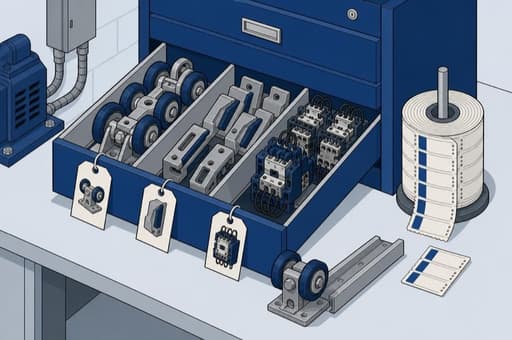
Repair
Parts and fixes on machines already under contract, billed job by job. Sales grew 12% in the June quarter of 2026 — the fastest in ten quarters — against 3% for maintenance, as connected machines turn faults into booked work.
Competes with 24/7 Connected Services (KONE) · Schindler Ahead fault detection (Schindler) · One-off repair jobs (Local service firms)
In plain English
The call-out that turns into an invoice. The maintenance contract covers the routine visits; when a part actually fails — or the monitoring flags one on its way out — replacing it is charged on top, job by job.
That makes it an unusually easy sale: the customer is already on the contract and the work grows as the machines under it age, though an owner can still hand a one-off job to an independent firm. The catch is that the whole stream hangs on the contract underneath it. Lose the maintenance, and the repairs walk out of the door with it.


 MaintenanceYearly per-unit contracts covering roughly 2.5 million elevators and escalators, plenty of them built by other makers. The portfolio kept growing through 2025; then Otis put $50M behind retention and pricing, and by midyear said retention outside China had slipped.
Yearly per-unit contracts covering roughly 2.5 million elevators and escalators, plenty of them built by other makers. The portfolio kept growing through 2025; then Otis put $50M behind retention and pricing, and by midyear said retention outside China had slipped.
In plain English
An elevator is not something a building owner can leave alone — safety codes require regular inspection, and when one stops, people are stuck in it. So almost every unit in a serious building sits under a contract with somebody, and Otis holds about two and a half million of them, including on machines other manufacturers installed.
The owner pays a set fee per unit per year and a mechanic comes round on a schedule, the way a dentist books check-ups. Servicing — these visits plus the repairs and upgrades they lead to — earns roughly nine-tenths of the profit Otis's two halves make between them; selling new machines earns the rest. Renewal is the whole game.
Competes with KONE Care DX maintenance (KONE) · Schindler Ahead maintenance (Schindler) · Independent maintenance contracts (Local service firms)
 Otis ONERemote monitoring on roughly 1.1 million of the machines Otis looks after, warranty units included. Very little is billed on its own — paid subscriptions grew about a third in 2025 — but it feeds repair work and the case for renewing.
Remote monitoring on roughly 1.1 million of the machines Otis looks after, warranty units included. Very little is billed on its own — paid subscriptions grew about a third in 2025 — but it feeds repair work and the case for renewing.
In plain English
Every connected elevator phones home. Equipment on the machine watches how it is running and sends that back to Otis's round-the-clock care centres over the internet, which is how a problem gets caught before it becomes a breakdown.
Roughly 1.1 million units are hooked up. Customers mostly do not buy this as a product; it pays for itself sideways — fewer emergency call-outs, a mechanic who turns up knowing which part to bring, and something to point at when the contract comes up for renewal. There is a paid tier as well, sold with the high-rise line, and those subscriptions grew by about a third in 2025.
Competes with 24/7 Connected Services (KONE) · Schindler Ahead digital services (Schindler)
 New EquipmentElevators, escalators and moving walkways designed, built and installed project by project — $4,989M of sales in 2025 but only $240M of profit, because the real payoff is the service contract behind it. Across the whole company about $19.7B of sold work was still to be delivered at mid-2026.
Elevators, escalators and moving walkways designed, built and installed project by project — $4,989M of sales in 2025 but only $240M of profit, because the real payoff is the service contract behind it. Across the whole company about $19.7B of sold work was still to be delivered at mid-2026.
In plain English
Sold project by project. A developer putting up a tower orders the lifts months or years ahead; Otis builds them in one of its sixteen factories and its own crews fit them on site alongside the builders.
What looks strange is how little it earns — under five cents of profit on each dollar of sales in 2025, thinner than the year before. That is close to the point. The unit that goes in today becomes a maintenance contract tomorrow and stays one for twenty or thirty years, so Otis is really selling the machine to win the decades of servicing that follow. Sales peaked in 2024 and have flattened since.
Competes with DX class elevators (KONE) · Schindler 5000 / 5500 / 7000 (Schindler) · TK Elevator new installations (TK Elevator)
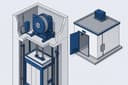 Gen3 and Gen360The two designs most Otis elevators are built from. Gen3 arrives already connected to Otis's monitoring; Gen360 swaps mechanical parts for electronic ones to free up space in the shaft. Gen3 was extended into rebuild work across Europe, the Middle East and Africa in mid-2026.
The two designs most Otis elevators are built from. Gen3 arrives already connected to Otis's monitoring; Gen360 swaps mechanical parts for electronic ones to free up space in the shaft. Gen3 was extended into rebuild work across Europe, the Middle East and Africa in mid-2026.
In plain English
Two house designs, the way a carmaker builds many models off a couple of platforms. Gen3 succeeded Gen2 — over a million of those sold since 2000, and they are now the machines Otis comes back to modernize — and it ships with the link to Otis's monitoring switched on. Gen360 replaces a lot of mechanical parts with electronic ones.
Both run on a compact motor that turns the ropes directly instead of through a gearbox: Otis puts it at about 80% smaller and up to 50% more efficient than the geared kind. The pitch to a developer is the same ride in less of the building.
Competes with DX class elevators (KONE) · Schindler 5500 (Schindler)
 China operationsSales here fell from about $2.6B in 2022 to $1.65B in 2025 as property building slowed and prices were cut. The mix has flipped: in the June quarter of 2026 new-equipment sales fell by high-teens percentages while orders to upgrade old units more than doubled.
Sales here fell from about $2.6B in 2022 to $1.65B in 2025 as property building slowed and prices were cut. The mix has flipped: in the June quarter of 2026 new-equipment sales fell by high-teens percentages while orders to upgrade old units more than doubled.
In plain English
China is where Otis's story ran backwards. It was an equipment market above all — management framed it a couple of years ago as roughly two-thirds new machines — and then construction slowed, prices sank in a market holding more factory capacity than it needed, and the revenue fell by more than a third between 2022 and 2025.
The other half is what is growing. The country has something like twelve million elevators already installed and more than two million of them past fifteen years old, the age at which rebuilds start coming up. Otis also bought out the minority partner in its Otis Electric joint venture, finishing a multi-year reshaping of the business there.
Competes with Shanghai Mitsubishi elevators (Shanghai Mitsubishi) · SJEC elevators and escalators (SJEC) · Elevators in China (Schindler)
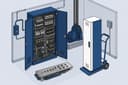 ModernizationRebuilding tired elevators — controllers, drives, motors, cabs — in Otis's own machines and in rivals'. Sales grew 24% in the June quarter of 2026 with orders on the books up about a quarter; some 8 million of the world's roughly 22 million elevators are old enough to qualify.
Rebuilding tired elevators — controllers, drives, motors, cabs — in Otis's own machines and in rivals'. Sales grew 24% in the June quarter of 2026 with orders on the books up about a quarter; some 8 million of the world's roughly 22 million elevators are old enough to qualify.
In plain English
Elevators wear out from the inside first. After twenty-odd years the controller, the motor and the cab are tired while the shaft and the rails are perfectly fine, so an owner buys a rebuild instead of a new building. Otis sells those rebuilds — kits from its own factories — into machines it installed and into machines its rivals installed.
The work is sold in phases so a block is not without its lift for months and the bill can be spread across budgets. Management likes the word evergreen: a rebuilt elevator eventually needs rebuilding again. The constraint is people — Otis said getting mechanics trained and on the job was holding it back in 2026.
Competes with ReNew / RePlace / ReStore (Schindler) · KONE modernization (KONE) · Component-level upgrades (Local service firms)
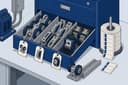 RepairParts and fixes on machines already under contract, billed job by job. Sales grew 12% in the June quarter of 2026 — the fastest in ten quarters — against 3% for maintenance, as connected machines turn faults into booked work.
Parts and fixes on machines already under contract, billed job by job. Sales grew 12% in the June quarter of 2026 — the fastest in ten quarters — against 3% for maintenance, as connected machines turn faults into booked work.
In plain English
The call-out that turns into an invoice. The maintenance contract covers the routine visits; when a part actually fails — or the monitoring flags one on its way out — replacing it is charged on top, job by job.
That makes it an unusually easy sale: the customer is already on the contract and the work grows as the machines under it age, though an owner can still hand a one-off job to an independent firm. The catch is that the whole stream hangs on the contract underneath it. Lose the maintenance, and the repairs walk out of the door with it.
Competes with 24/7 Connected Services (KONE) · Schindler Ahead fault detection (Schindler) · One-off repair jobs (Local service firms)
Named in filings, launches and programs
- SkyRiseProduct lineThe high-rise elevator system, sold into residential, commercial and mixed-use skyscrapers.
- SkyRise ModProduct lineThe rebuild package for high-rise elevators, unveiled in November 2025 alongside the other new modernization kits.
- Link escalators and Link ModProduct lineThe escalator line, plus the scalable version for rebuilding old escalators that Otis unveiled in November 2025.
- Gen3 ComfortProductA rebuild version of Gen3 for homes, launched for China in November 2025.
- Compass 360ProductThe system that sorts waiting passengers by the floor they want and sends the ones going the same way up together.
- eView in-car displayProductThe screen above the doors inside the car, wired through to Otis's emergency-call and customer-care network.
- OTISLINEServiceThe round-the-clock care centres that take emergency calls from inside cars and escalate faults to a mechanic.
- Otis VeevaProduct line · AnnouncedAccessibility products for ageing populations, introduced in April 2026; no revenue disclosed yet.
- Otis AI inspection robot and AI agentProduct · AnnouncedTools shown in November 2025 to help inspect equipment and diagnose faults; still early.
- Service Operating Model programCustomer program · AnnouncedA reorganisation of how the roughly 45,000 field workers spend their day, announced July 2026 as successor to the earlier UpLift programme.
- Service Excellence and pricing investmentCustomer program$50M earmarked in April 2026 to hold on to service customers and make price increases stick; $15M of it spent by the June quarter.
- Bolt-on service acquisitionsBrandAbout $100M spent in 2025 buying up small maintenance portfolios outright, rather than winning those units contract by contract. Sellers undisclosed.
- London Underground escalator modernizationCustomer program · AnnouncedA programme to rebuild escalators on the London Underground, announced in January 2026.
- Burj Khalifa modernization and service extensionCustomer programAn upgrade plus a ten-year service extension at the tower, announced by Otis; the scope was not detailed.
SkyRiseProduct line
The high-rise elevator system, sold into residential, commercial and mixed-use skyscrapers.
SkyRise ModProduct line
The rebuild package for high-rise elevators, unveiled in November 2025 alongside the other new modernization kits.
Link escalators and Link ModProduct line
The escalator line, plus the scalable version for rebuilding old escalators that Otis unveiled in November 2025.
Gen3 ComfortProduct
A rebuild version of Gen3 for homes, launched for China in November 2025.
Compass 360Product
The system that sorts waiting passengers by the floor they want and sends the ones going the same way up together.
eView in-car displayProduct
The screen above the doors inside the car, wired through to Otis's emergency-call and customer-care network.
OTISLINEService
The round-the-clock care centres that take emergency calls from inside cars and escalate faults to a mechanic.
Otis VeevaProduct line · Announced
Accessibility products for ageing populations, introduced in April 2026; no revenue disclosed yet.
Otis AI inspection robot and AI agentProduct · Announced
Tools shown in November 2025 to help inspect equipment and diagnose faults; still early.
Service Operating Model programCustomer program · Announced
A reorganisation of how the roughly 45,000 field workers spend their day, announced July 2026 as successor to the earlier UpLift programme.
Service Excellence and pricing investmentCustomer program
$50M earmarked in April 2026 to hold on to service customers and make price increases stick; $15M of it spent by the June quarter.
Bolt-on service acquisitionsBrand
About $100M spent in 2025 buying up small maintenance portfolios outright, rather than winning those units contract by contract. Sellers undisclosed.
London Underground escalator modernizationCustomer program · Announced
A programme to rebuild escalators on the London Underground, announced in January 2026.
Burj Khalifa modernization and service extensionCustomer program
An upgrade plus a ten-year service extension at the tower, announced by Otis; the scope was not detailed.