
Everpure (P)
Builds all-flash storage and data platforms for enterprise workloads.
Something off on this page? Send us feedback.
Everpure — until this year, Pure Storage — builds the fast solid-state machines that large organisations keep their working data on. Most of the money comes from those systems and from the never-ending upgrade plans attached to them, which turn a replacement decision into a renewal. The newer bet is selling its flash technology into the giant cloud companies' own datacenters, where it has two buyers and a queue of committed orders.
Item facts: FY2026 · year ended February 1, 2026, from filings, earnings calls and company pages.
Judgment weights, not filed revenue
The band summarizes business focus and direction. ~ marks estimates.
7 in detail · 9 more below
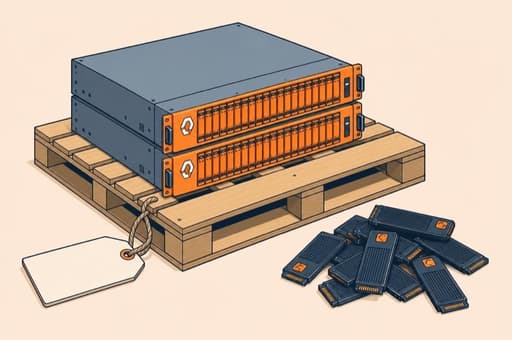
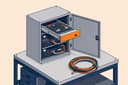
FlashArray family
The storage machines the company was founded on and still its biggest single line, at roughly a third of revenue. Lately customers buy fewer boxes at higher prices; the cost of raw memory chips is the thing to watch.
Competes with PowerStore / PowerMax (Dell) · AFF all-flash arrays (NetApp) · Alletra Storage MP (HPE)
In plain English
Think of where a hospital, a bank or an airline keeps every record it cannot afford to lose — not a filing cabinet but a cabinet of memory chips, the same kind that sits inside a phone, stacked and wired so thousands of people can read and write at once.
Everpure builds those cabinets and sells them through resellers rather than direct. The customer pays once for the box, with the software that runs it included, and the sale is booked on delivery. The flash chips inside are bought as bare parts, so when chip prices jumped Everpure could either absorb it or raise its own list prices. It did some of both.
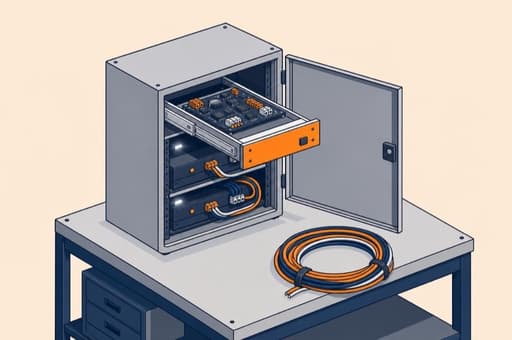
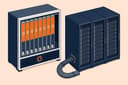
Evergreen//Forever and Evergreen//Flex
The upgrade-and-support plans attached to every installed machine — the reason a customer renews instead of shopping around. Work already promised but not yet billed stood at $4.1B in the summer quarter, up 44% on a year earlier.
Competes with ProSupport maintenance contracts (Dell) · AFF support & Keystone renewals (NetApp) · GreenLake for Block Storage (HPE)
In plain English
Most computer gear gets hauled away and replaced every few years. Evergreen//Forever sells the opposite deal: pay a yearly fee and Everpure keeps the machine current, sliding in faster brains and more capacity without ever switching it off.
It is closer to a maintenance plan on a house that quietly rebuilds the house. The customer stops comparing replacement quotes, and Everpure keeps billing an account it has already won, with renewals flowing back through the same reseller that sold the original system. Evergreen//Flex is the variation that lets a customer shuffle capacity it has paid for around the machines it already owns.
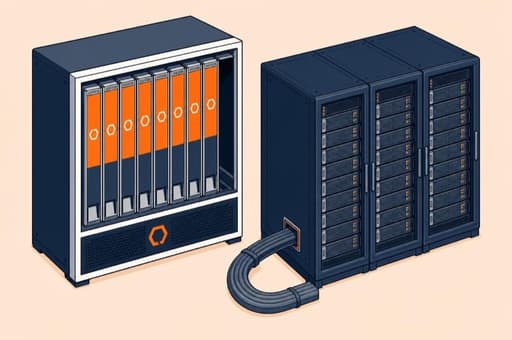
FlashBlade family
The line built for mountains of loose files, and the one carrying the AI story — //EXA aims at the heaviest training setups. Roughly a sixth of revenue; demand follows how many rooms of AI chips get built.
Competes with VAST Data Platform (VAST Data) · WekaFS (WEKA) · PowerScale (Dell)
In plain English
Some data will not sit in neat rows — video, scans, sensor logs, the piles an AI model chews through. FlashBlade is built for that: many slim storage blades working as one pool that gets wider every time another blade goes in.
Who pays? Companies standing up rooms full of AI chips, and the specialist clouds that rent those rooms out. Everpure says its storage is increasingly bought alongside those graphics chips, and it leans on public speed tests to prove the machines can keep up. Named buyers include Samsung Electronics and the AI service provider STN; a major global bank standardised its graphics-chip service on the line.
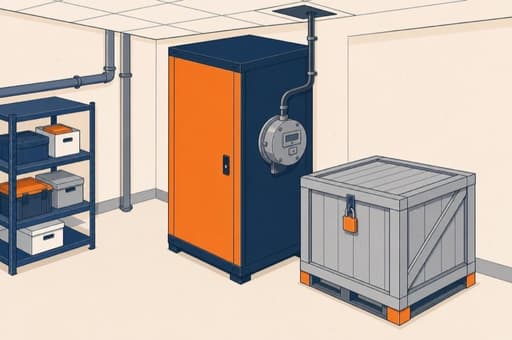
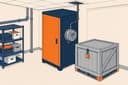
Evergreen//One
Storage delivered like a utility: Everpure owns the equipment sitting in the customer's building and bills for what gets used. New commitments in the summer quarter were up 121% on a year earlier — growth the company funds by buying the machines itself.
Competes with APEX (Dell) · GreenLake (HPE) · Keystone (NetApp)
In plain English
Instead of buying a storage system, a customer signs up for capacity the way a household signs up for water: the meter runs, the bill follows, and somebody else owns the pipes. Everpure installs its own arrays on the customer's floor, promises a level of performance, and charges for use.
That swap changes who carries the cost. The company pays for the hardware up front and collects over years, which is why its spending on equipment keeps climbing. The money also arrives slowly — a customer's whole multi-year commitment is promised on day one but reaches revenue a slice at a time, so the reported growth looks tamer than the demand behind it.
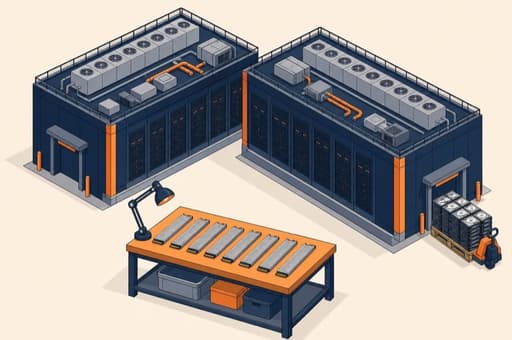
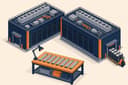
Hyperscale DirectFlash solutions
Everpure's flash-handling technology sold into the giant cloud companies' own storage. Two buyers so far — Meta, named, and a second unnamed top-five cloud — with committed volumes running into 2028; the money lands unevenly, weighted to the back half of the year.
Competes with Nearline hard drives (Seagate) · Nearline hard drives (Western Digital) · High-capacity QLC SSDs (Kioxia)
In plain English
The companies that run the world's largest datacenters buy storage by the truckload and assemble it themselves. What Everpure sells them is not a finished machine but the clever part: software and modules that manage raw flash memory directly, so one of those giant operators can retire the off-the-shelf drives and spinning hard disks from its bulk storage.
Since early 2026 the buyer purchases the memory chips itself and pays Everpure mainly for the technology, which is why this line earns much fatter margins than selling boxes does. Two customers exist: Meta, which started shipping last fiscal year above the volumes originally planned, and one that will not be named.
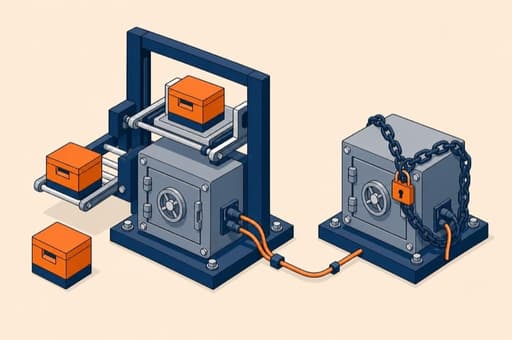
Portworx by Everpure
Software that gives short-lived app components somewhere durable to keep their data; today it is sold mainly as a way off VMware. A few percent of revenue, in a field that is splintering — both it and its closest rival slipped in buyer rankings this year.
Competes with OpenShift Data Foundation (Red Hat) · Trident / Trident Protect (NetApp) · Rancher (Rancher Labs)
In plain English
Modern software is often chopped into small pieces that start and stop all day, which is fine until one of them is holding something you need to keep — a bank balance, a customer record. Portworx is the layer underneath that remembers: it hands each piece storage that survives, copies it, and moves it between machines.
Customers buy it as software, increasingly on fixed-term licences, and the reason they are buying now is that many are moving old virtual-machine estates off VMware and need this plumbing on the way. Everpure says its VMware-alternative products together run at well over a hundred million dollars a year. NVIDIA and SiriusXM are named users.
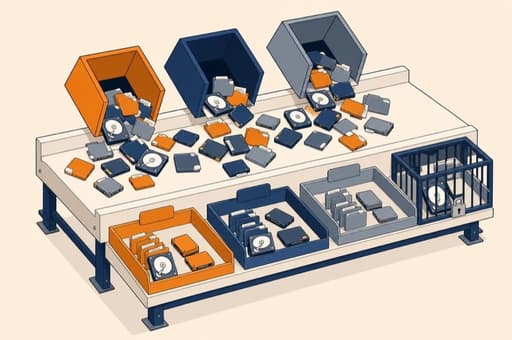
Everpure Data Intelligence
Bought this year, it finds and labels a company's data wherever it sits so the company can safely point AI at it. No revenue disclosed; guidance treats it as about $12M of cost this year, paying back within two.
Competes with BigID discovery & governance (BigID) · Varonis access intelligence (Varonis) · Cyera data security (Cyera)
In plain English
Before a company turns an AI assistant loose on its files, somebody has to know what is in them — which spreadsheets hold salaries, which folders hold medical records, which of it is junk. This is the sweep that goes looking: across cloud apps, office servers and machines out in the field, tagging what it finds.
Everpure bought the maker, 1touch, and closed the deal in May 2026. The plan is to sell it to customers it already serves and fold it into the software that runs inside the arrays. Nothing has been said about what it earns; management reports strong interest, and the cost of owning it is small.


 FlashArray familyThe storage machines the company was founded on and still its biggest single line, at roughly a third of revenue. Lately customers buy fewer boxes at higher prices; the cost of raw memory chips is the thing to watch.
The storage machines the company was founded on and still its biggest single line, at roughly a third of revenue. Lately customers buy fewer boxes at higher prices; the cost of raw memory chips is the thing to watch.
In plain English
Think of where a hospital, a bank or an airline keeps every record it cannot afford to lose — not a filing cabinet but a cabinet of memory chips, the same kind that sits inside a phone, stacked and wired so thousands of people can read and write at once.
Everpure builds those cabinets and sells them through resellers rather than direct. The customer pays once for the box, with the software that runs it included, and the sale is booked on delivery. The flash chips inside are bought as bare parts, so when chip prices jumped Everpure could either absorb it or raise its own list prices. It did some of both.
Competes with PowerStore / PowerMax (Dell) · AFF all-flash arrays (NetApp) · Alletra Storage MP (HPE)
 Evergreen//Forever and Evergreen//FlexThe upgrade-and-support plans attached to every installed machine — the reason a customer renews instead of shopping around. Work already promised but not yet billed stood at $4.1B in the summer quarter, up 44% on a year earlier.
The upgrade-and-support plans attached to every installed machine — the reason a customer renews instead of shopping around. Work already promised but not yet billed stood at $4.1B in the summer quarter, up 44% on a year earlier.
In plain English
Most computer gear gets hauled away and replaced every few years. Evergreen//Forever sells the opposite deal: pay a yearly fee and Everpure keeps the machine current, sliding in faster brains and more capacity without ever switching it off.
It is closer to a maintenance plan on a house that quietly rebuilds the house. The customer stops comparing replacement quotes, and Everpure keeps billing an account it has already won, with renewals flowing back through the same reseller that sold the original system. Evergreen//Flex is the variation that lets a customer shuffle capacity it has paid for around the machines it already owns.
Competes with ProSupport maintenance contracts (Dell) · AFF support & Keystone renewals (NetApp) · GreenLake for Block Storage (HPE)
 FlashBlade familyThe line built for mountains of loose files, and the one carrying the AI story — //EXA aims at the heaviest training setups. Roughly a sixth of revenue; demand follows how many rooms of AI chips get built.
The line built for mountains of loose files, and the one carrying the AI story — //EXA aims at the heaviest training setups. Roughly a sixth of revenue; demand follows how many rooms of AI chips get built.
In plain English
Some data will not sit in neat rows — video, scans, sensor logs, the piles an AI model chews through. FlashBlade is built for that: many slim storage blades working as one pool that gets wider every time another blade goes in.
Who pays? Companies standing up rooms full of AI chips, and the specialist clouds that rent those rooms out. Everpure says its storage is increasingly bought alongside those graphics chips, and it leans on public speed tests to prove the machines can keep up. Named buyers include Samsung Electronics and the AI service provider STN; a major global bank standardised its graphics-chip service on the line.
Competes with VAST Data Platform (VAST Data) · WekaFS (WEKA) · PowerScale (Dell)
 Evergreen//OneStorage delivered like a utility: Everpure owns the equipment sitting in the customer's building and bills for what gets used. New commitments in the summer quarter were up 121% on a year earlier — growth the company funds by buying the machines itself.
Storage delivered like a utility: Everpure owns the equipment sitting in the customer's building and bills for what gets used. New commitments in the summer quarter were up 121% on a year earlier — growth the company funds by buying the machines itself.
In plain English
Instead of buying a storage system, a customer signs up for capacity the way a household signs up for water: the meter runs, the bill follows, and somebody else owns the pipes. Everpure installs its own arrays on the customer's floor, promises a level of performance, and charges for use.
That swap changes who carries the cost. The company pays for the hardware up front and collects over years, which is why its spending on equipment keeps climbing. The money also arrives slowly — a customer's whole multi-year commitment is promised on day one but reaches revenue a slice at a time, so the reported growth looks tamer than the demand behind it.
Competes with APEX (Dell) · GreenLake (HPE) · Keystone (NetApp)
 Hyperscale DirectFlash solutionsEverpure's flash-handling technology sold into the giant cloud companies' own storage. Two buyers so far — Meta, named, and a second unnamed top-five cloud — with committed volumes running into 2028; the money lands unevenly, weighted to the back half of the year.
Everpure's flash-handling technology sold into the giant cloud companies' own storage. Two buyers so far — Meta, named, and a second unnamed top-five cloud — with committed volumes running into 2028; the money lands unevenly, weighted to the back half of the year.
In plain English
The companies that run the world's largest datacenters buy storage by the truckload and assemble it themselves. What Everpure sells them is not a finished machine but the clever part: software and modules that manage raw flash memory directly, so one of those giant operators can retire the off-the-shelf drives and spinning hard disks from its bulk storage.
Since early 2026 the buyer purchases the memory chips itself and pays Everpure mainly for the technology, which is why this line earns much fatter margins than selling boxes does. Two customers exist: Meta, which started shipping last fiscal year above the volumes originally planned, and one that will not be named.
Competes with Nearline hard drives (Seagate) · Nearline hard drives (Western Digital) · High-capacity QLC SSDs (Kioxia)
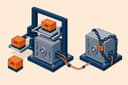 Portworx by EverpureSoftware that gives short-lived app components somewhere durable to keep their data; today it is sold mainly as a way off VMware. A few percent of revenue, in a field that is splintering — both it and its closest rival slipped in buyer rankings this year.
Software that gives short-lived app components somewhere durable to keep their data; today it is sold mainly as a way off VMware. A few percent of revenue, in a field that is splintering — both it and its closest rival slipped in buyer rankings this year.
In plain English
Modern software is often chopped into small pieces that start and stop all day, which is fine until one of them is holding something you need to keep — a bank balance, a customer record. Portworx is the layer underneath that remembers: it hands each piece storage that survives, copies it, and moves it between machines.
Customers buy it as software, increasingly on fixed-term licences, and the reason they are buying now is that many are moving old virtual-machine estates off VMware and need this plumbing on the way. Everpure says its VMware-alternative products together run at well over a hundred million dollars a year. NVIDIA and SiriusXM are named users.
Competes with OpenShift Data Foundation (Red Hat) · Trident / Trident Protect (NetApp) · Rancher (Rancher Labs)
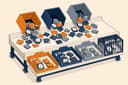 Everpure Data IntelligenceBought this year, it finds and labels a company's data wherever it sits so the company can safely point AI at it. No revenue disclosed; guidance treats it as about $12M of cost this year, paying back within two.
Bought this year, it finds and labels a company's data wherever it sits so the company can safely point AI at it. No revenue disclosed; guidance treats it as about $12M of cost this year, paying back within two.
In plain English
Before a company turns an AI assistant loose on its files, somebody has to know what is in them — which spreadsheets hold salaries, which folders hold medical records, which of it is junk. This is the sweep that goes looking: across cloud apps, office servers and machines out in the field, tagging what it finds.
Everpure bought the maker, 1touch, and closed the deal in May 2026. The plan is to sell it to customers it already serves and fold it into the software that runs inside the arrays. Nothing has been said about what it earns; management reports strong interest, and the cost of owning it is small.
Competes with BigID discovery & governance (BigID) · Varonis access intelligence (Varonis) · Cyera data security (Cyera)
Named in filings, launches and programs
- Purity Operating EnvironmentPlatformThe software under every array, handling blocks, files and objects alike; its licence rides along in the price of the hardware.
- Everpure FusionPlatformThe control layer that pools every array a customer owns; more than 2,000 of roughly 15,000 customers had switched it on by August 2026.
- Pure1 / Pure1 CopilotPlatformAI-assisted monitoring that watches a customer's whole fleet and helps push changes to it; it kept its pre-rebrand name.
- Everpure Data StreamProduct · RampingKit for getting company data ready for AI models, built with Supermicro on NVIDIA's design; on sale since June 2026, first sales that summer.
- Evergreen//One for AIServiceA pay-for-what-you-use version of the storage service aimed at AI work, announced March 2026.
- Everpure Cloud / Cloud Block StoreServiceThe same storage software running inside public clouds; counted in the VMware-replacement line that runs at well over $100M a year.
- Real-time Enterprise FileProductA platform that serves files and blocks of data from the same system.
- FlashStack / AIRI//SProductPre-packaged racks bundling Everpure storage with servers and networking, including a ready-made configuration for AI work.
- Everpure Resilience serviceServiceA disaster-recovery service for VMware setups: the customer pays Everpure to keep a way back when its own systems go down.
Purity Operating EnvironmentPlatform
The software under every array, handling blocks, files and objects alike; its licence rides along in the price of the hardware.
Everpure FusionPlatform
The control layer that pools every array a customer owns; more than 2,000 of roughly 15,000 customers had switched it on by August 2026.
Pure1 / Pure1 CopilotPlatform
AI-assisted monitoring that watches a customer's whole fleet and helps push changes to it; it kept its pre-rebrand name.
Everpure Data StreamProduct · Ramping
Kit for getting company data ready for AI models, built with Supermicro on NVIDIA's design; on sale since June 2026, first sales that summer.
Evergreen//One for AIService
A pay-for-what-you-use version of the storage service aimed at AI work, announced March 2026.
Everpure Cloud / Cloud Block StoreService
The same storage software running inside public clouds; counted in the VMware-replacement line that runs at well over $100M a year.
Real-time Enterprise FileProduct
A platform that serves files and blocks of data from the same system.
FlashStack / AIRI//SProduct
Pre-packaged racks bundling Everpure storage with servers and networking, including a ready-made configuration for AI work.
Everpure Resilience serviceService
A disaster-recovery service for VMware setups: the customer pays Everpure to keep a way back when its own systems go down.