
PG&E (PCG)
Owner of Northern and Central California's regulated gas-and-electric utility.
Something off on this page? Send us feedback.
PG&E is the regulated utility that keeps electricity and natural gas moving across Northern and Central California. Everyday service still pays nearly all the bills, while the company hardens its network against wildfire and prepares for data centers and customer-owned batteries. After California's latest wildfire-liability proposal fell short, management is reconsidering the pace of that build; the whole model depends on regulators letting bills repay approved work and lenders keeping money available.
Item facts: FY2025 · year ended Dec 31, 2025, from filings, earnings calls and company pages.
Judgment weights, not filed revenue
The band summarizes business focus and direction. ~ marks estimates.
6 in detail · 11 more below
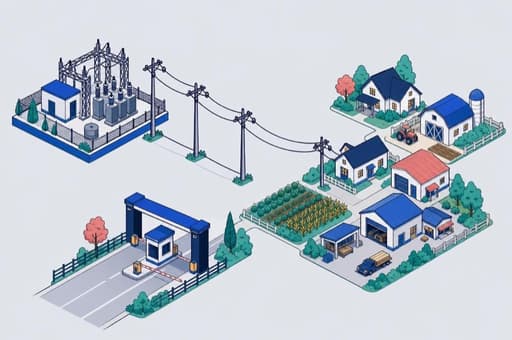
Electric Utility Operations
Electricity delivery and supply brought in $18.318 billion in FY2025. Regulators largely set what PG&E may collect, so approved spending and cost control matter more than selling extra power.
Competes with Bundled electric service (Southern California Edison) · Electric service (San Diego Gas & Electric)
In plain English
Flip a switch in Northern or Central California and PG&E may be the company carrying the electricity to you. It buys or generates power, moves it over long-distance lines, and delivers it through local wires to homes, farms and businesses. Other suppliers can sell the power itself, but PG&E still handles delivery and safety.
Customers pay monthly bills whose basic amount is set by state and federal regulators. Those bills cover running costs and can repay approved construction with an allowed profit. Fuel and purchased power mostly pass through, making permission to recover spending more important than how many extra units customers use.
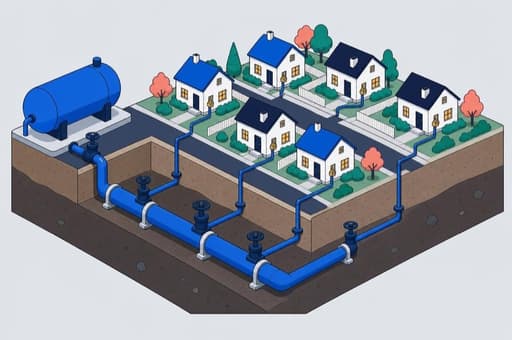
Natural Gas Utility Operations
Gas procurement, transport, storage and delivery produced $6.617 billion in FY2025. Winter supports demand, but wider electrification could gradually shrink how much gas customers need.
Competes with Gas distribution and procurement (Southern California Gas Company) · Gas service (San Diego Gas & Electric)
In plain English
The winter-heating side of PG&E serves millions of gas accounts. The utility buys gas, stores it, and moves it through large and small pipes; some customers buy their own gas and pay PG&E only to carry it. More than nine in ten accounts use the bundled version, where PG&E supplies both fuel and delivery.
Bills fund this service under state-approved rules, while the gas itself and transport costs are largely passed on. That makes safe pipes, storage and timely permission to collect costs the economic core. One unnamed supplier provided more than half of the gas PG&E bought, creating a notable supply dependency.
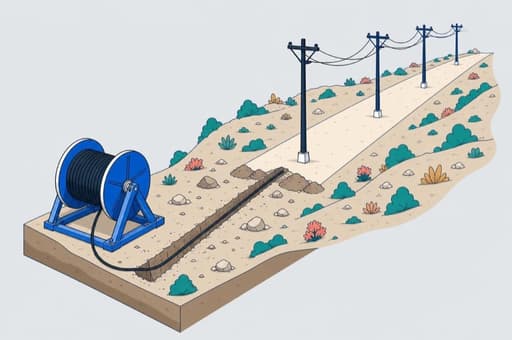
Wildfire Mitigation Program
PG&E is burying or strengthening lines and improving inspections and shutoffs, with $16 billion assigned in July 2026 before the broader construction plan entered review. Watch whether regulators approve repayment and whether the work actually limits fire losses.
Competes with 2026–2028 Wildfire Mitigation Plan (Southern California Edison) · 2026–2028 Wildfire Mitigation Plan (San Diego Gas & Electric)
In plain English
A power line in a high-fire-risk area can become a liability as well as an asset. PG&E lowers that danger by burying some wires, covering others, replacing poles, clearing vegetation, inspecting equipment, adding sensors and switching power off when conditions become severe.
This work is woven into the electricity business rather than sold separately. Contractors and equipment makers are paid first; PG&E can earn back approved construction through future customer bills, often with an allowed profit. If regulators reject costs, permits slow the work or company equipment starts a fire, shareholders can be left with losses instead.
Diablo Canyon Power Plant
This two-unit nuclear plant supplies steady electricity within PG&E's bundled service and ran at 90% of full-year output in FY2025. Federal licenses extend much longer, but California permission currently ends in 2030.
Competes with Palo Verde Generating Station (Arizona Public Service) · Columbia Generating Station (Energy Northwest)
In plain English
Think of Diablo Canyon as a large, steady power source tucked inside PG&E's broader electricity service. Its two units can produce 2,240 megawatts, and customers receive that power as part of the overall mix rather than buying a separate Diablo Canyon plan.
PG&E recovers approved fuel, maintenance and operating costs through electric bills. The plant's usefulness depends on staying available, meeting federal nuclear-safety rules and retaining state permission to operate. That last clock matters most: renewed federal licenses reach into the following decade, while California authority currently stops in 2030.
Data Center Pipeline
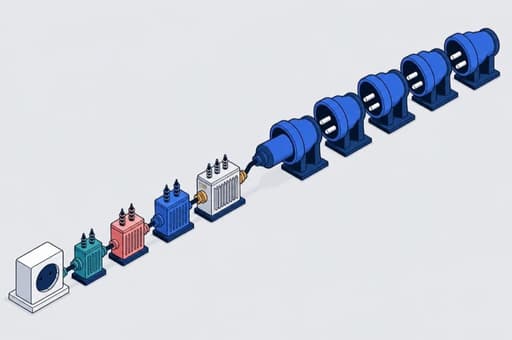
Very large electricity users have requested more than 12 gigawatts of connections, but these are not firm orders. PG&E targets 1.8 gigawatts online by 2030; deposits, permits, equipment and available capacity decide what becomes real.
Competes with Flexible Data Center pilot (Silicon Valley Power) · Large-customer pricing plans (NV Energy)
In plain English
A data center cannot simply plug into the nearest wall. These unusually large electricity users may need new wires, substations and other equipment before PG&E can connect them. Equinix already has one named site live, while Microsoft and STACK have proposed projects in San Jose.
Customers fund specific connection work, and once a site starts running it pays continuing electric bills. PG&E may also earn on approved network construction. The long request list is closer to a crowded reservation book than prepaid sales: many proposed connections can disappear or arrive late, so the smaller goal for power actually switched on is the more useful guide.
Virtual Power Plants
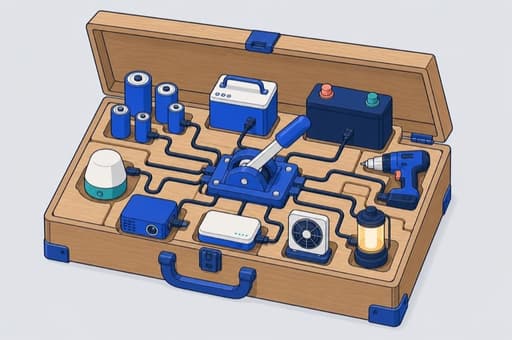
PG&E is linking customer batteries, controllable devices and two-way electric-car charging so they can respond together when the grid needs help. The 2027 goal exceeds 20,000 enrolled devices; adoption and equipment compatibility determine the payoff.
Competes with Emergency Load Reduction Program VPP/VGI tracks (San Diego Gas & Electric) · Smart Energy Program (Southern California Edison)
In plain English
Instead of relying only on one large power plant, PG&E is trying to coordinate thousands of small energy tools already sitting in homes and fleets. A home battery, an adjustable device or an electric car that can send power back may each contribute a little during a grid event; software makes them act as one group.
This is a customer program, not a separate subscription business. Households and fleets provide flexible electricity, equipment partners sell and coordinate the devices, and PG&E seeks approval to recover program costs through utility bills. The idea only becomes useful at scale if people enroll and different brands of equipment can work together.


 Electric Utility OperationsElectricity delivery and supply brought in $18.318 billion in FY2025. Regulators largely set what PG&E may collect, so approved spending and cost control matter more than selling extra power.
Electricity delivery and supply brought in $18.318 billion in FY2025. Regulators largely set what PG&E may collect, so approved spending and cost control matter more than selling extra power.
In plain English
Flip a switch in Northern or Central California and PG&E may be the company carrying the electricity to you. It buys or generates power, moves it over long-distance lines, and delivers it through local wires to homes, farms and businesses. Other suppliers can sell the power itself, but PG&E still handles delivery and safety.
Customers pay monthly bills whose basic amount is set by state and federal regulators. Those bills cover running costs and can repay approved construction with an allowed profit. Fuel and purchased power mostly pass through, making permission to recover spending more important than how many extra units customers use.
Competes with Bundled electric service (Southern California Edison) · Electric service (San Diego Gas & Electric)
 Natural Gas Utility OperationsGas procurement, transport, storage and delivery produced $6.617 billion in FY2025. Winter supports demand, but wider electrification could gradually shrink how much gas customers need.
Gas procurement, transport, storage and delivery produced $6.617 billion in FY2025. Winter supports demand, but wider electrification could gradually shrink how much gas customers need.
In plain English
The winter-heating side of PG&E serves millions of gas accounts. The utility buys gas, stores it, and moves it through large and small pipes; some customers buy their own gas and pay PG&E only to carry it. More than nine in ten accounts use the bundled version, where PG&E supplies both fuel and delivery.
Bills fund this service under state-approved rules, while the gas itself and transport costs are largely passed on. That makes safe pipes, storage and timely permission to collect costs the economic core. One unnamed supplier provided more than half of the gas PG&E bought, creating a notable supply dependency.
Competes with Gas distribution and procurement (Southern California Gas Company) · Gas service (San Diego Gas & Electric)
 Wildfire Mitigation ProgramPG&E is burying or strengthening lines and improving inspections and shutoffs, with $16 billion assigned in July 2026 before the broader construction plan entered review. Watch whether regulators approve repayment and whether the work actually limits fire losses.
PG&E is burying or strengthening lines and improving inspections and shutoffs, with $16 billion assigned in July 2026 before the broader construction plan entered review. Watch whether regulators approve repayment and whether the work actually limits fire losses.
In plain English
A power line in a high-fire-risk area can become a liability as well as an asset. PG&E lowers that danger by burying some wires, covering others, replacing poles, clearing vegetation, inspecting equipment, adding sensors and switching power off when conditions become severe.
This work is woven into the electricity business rather than sold separately. Contractors and equipment makers are paid first; PG&E can earn back approved construction through future customer bills, often with an allowed profit. If regulators reject costs, permits slow the work or company equipment starts a fire, shareholders can be left with losses instead.
Competes with 2026–2028 Wildfire Mitigation Plan (Southern California Edison) · 2026–2028 Wildfire Mitigation Plan (San Diego Gas & Electric)
 Diablo Canyon Power PlantThis two-unit nuclear plant supplies steady electricity within PG&E's bundled service and ran at 90% of full-year output in FY2025. Federal licenses extend much longer, but California permission currently ends in 2030.
This two-unit nuclear plant supplies steady electricity within PG&E's bundled service and ran at 90% of full-year output in FY2025. Federal licenses extend much longer, but California permission currently ends in 2030.
In plain English
Think of Diablo Canyon as a large, steady power source tucked inside PG&E's broader electricity service. Its two units can produce 2,240 megawatts, and customers receive that power as part of the overall mix rather than buying a separate Diablo Canyon plan.
PG&E recovers approved fuel, maintenance and operating costs through electric bills. The plant's usefulness depends on staying available, meeting federal nuclear-safety rules and retaining state permission to operate. That last clock matters most: renewed federal licenses reach into the following decade, while California authority currently stops in 2030.
Competes with Palo Verde Generating Station (Arizona Public Service) · Columbia Generating Station (Energy Northwest)
 Data Center PipelineVery large electricity users have requested more than 12 gigawatts of connections, but these are not firm orders. PG&E targets 1.8 gigawatts online by 2030; deposits, permits, equipment and available capacity decide what becomes real.
Very large electricity users have requested more than 12 gigawatts of connections, but these are not firm orders. PG&E targets 1.8 gigawatts online by 2030; deposits, permits, equipment and available capacity decide what becomes real.
In plain English
A data center cannot simply plug into the nearest wall. These unusually large electricity users may need new wires, substations and other equipment before PG&E can connect them. Equinix already has one named site live, while Microsoft and STACK have proposed projects in San Jose.
Customers fund specific connection work, and once a site starts running it pays continuing electric bills. PG&E may also earn on approved network construction. The long request list is closer to a crowded reservation book than prepaid sales: many proposed connections can disappear or arrive late, so the smaller goal for power actually switched on is the more useful guide.
Competes with Flexible Data Center pilot (Silicon Valley Power) · Large-customer pricing plans (NV Energy)
 Virtual Power PlantsPG&E is linking customer batteries, controllable devices and two-way electric-car charging so they can respond together when the grid needs help. The 2027 goal exceeds 20,000 enrolled devices; adoption and equipment compatibility determine the payoff.
PG&E is linking customer batteries, controllable devices and two-way electric-car charging so they can respond together when the grid needs help. The 2027 goal exceeds 20,000 enrolled devices; adoption and equipment compatibility determine the payoff.
In plain English
Instead of relying only on one large power plant, PG&E is trying to coordinate thousands of small energy tools already sitting in homes and fleets. A home battery, an adjustable device or an electric car that can send power back may each contribute a little during a grid event; software makes them act as one group.
This is a customer program, not a separate subscription business. Households and fleets provide flexible electricity, equipment partners sell and coordinate the devices, and PG&E seeks approval to recover program costs through utility bills. The idea only becomes useful at scale if people enroll and different brands of equipment can work together.
Competes with Emergency Load Reduction Program VPP/VGI tracks (San Diego Gas & Electric) · Smart Energy Program (Southern California Edison)
Named in filings, launches and programs
- Pacific Gas and Electric CompanyBrandThe regulated operating utility produces nearly all company revenue and sends permitted cash to its parent.
- Project PolarisCustomer programA $15 billion federal guarantee could support hydro, storage, transmission and flexible-power projects; none had been drawn by February 2026.
- SHARECustomer program · AnnouncedA home-energy proof of concept announced in September 2026, built with Google, Rewiring America and device partners.
- Vehicle-to-Everything (V2X)Customer program · RampingPilots let compatible electric cars send power to homes, businesses, school buses or the wider network.
- EMBERPOINTProduct · Pre-revenueA multi-company wildfire sensing and response venture targeting demonstrations in 2026; its ownership and economics remain undisclosed.
- Hydroelectric GenerationEcosystemConventional hydro and the Helms pumped-storage facility provide 3,840 megawatts within the electricity supply.
- Battery Energy StorageEcosystem · RampingPG&E owns 183 megawatts, has about 3,024 megawatts under contract and operating, and had procured another 1,884 megawatts for later use.
- Enhanced Powerline Safety SettingsEcosystemFast fault detection can shut lines down before they ignite fires, at the cost of more service interruptions.
- Public Safety Power ShutoffCustomer programPG&E deliberately turns off power during severe fire weather when equipment and vegetation risks become too high.
- California Alternate Rates for EnergyCustomer programAn income-based bill discount funded through the regulated customer system.
- Pacific Energy Risk SolutionsBrandA captive insurer created to handle insurance transactions and manage PG&E's wildfire self-insurance program.
Pacific Gas and Electric CompanyBrand
The regulated operating utility produces nearly all company revenue and sends permitted cash to its parent.
Project PolarisCustomer program
A $15 billion federal guarantee could support hydro, storage, transmission and flexible-power projects; none had been drawn by February 2026.
SHARECustomer program · Announced
A home-energy proof of concept announced in September 2026, built with Google, Rewiring America and device partners.
Vehicle-to-Everything (V2X)Customer program · Ramping
Pilots let compatible electric cars send power to homes, businesses, school buses or the wider network.
EMBERPOINTProduct · Pre-revenue
A multi-company wildfire sensing and response venture targeting demonstrations in 2026; its ownership and economics remain undisclosed.
Hydroelectric GenerationEcosystem
Conventional hydro and the Helms pumped-storage facility provide 3,840 megawatts within the electricity supply.
Battery Energy StorageEcosystem · Ramping
PG&E owns 183 megawatts, has about 3,024 megawatts under contract and operating, and had procured another 1,884 megawatts for later use.
Enhanced Powerline Safety SettingsEcosystem
Fast fault detection can shut lines down before they ignite fires, at the cost of more service interruptions.
Public Safety Power ShutoffCustomer program
PG&E deliberately turns off power during severe fire weather when equipment and vegetation risks become too high.
California Alternate Rates for EnergyCustomer program
An income-based bill discount funded through the regulated customer system.
Pacific Energy Risk SolutionsBrand
A captive insurer created to handle insurance transactions and manage PG&E's wildfire self-insurance program.